When my younger sister called in November 2022 to say she was getting married, I was slow to connect the dots.
“YAAAAY!” I screeched into the phone. Meg had been my maid of honour a couple of years earlier, and now I’d be hers. I turned and roared over my shoulder, “Meg and Ken got engaged!” in the general direction of my husband, Nick.
Advertisement
From 10 feet away, he grinned and winced, possibly reflecting on his own marriage to a human car alarm. However, after a giddy few minutes of chatter, the realisation hit me like a bridal bouquet to the face: “Oh, crap.”
“Yep,” Meg said.
“I have to give a speech at your wedding, don’t I?”
“Yep,” Meg confirmed.
And just like that, my excitement mutated into 270 days of dread.
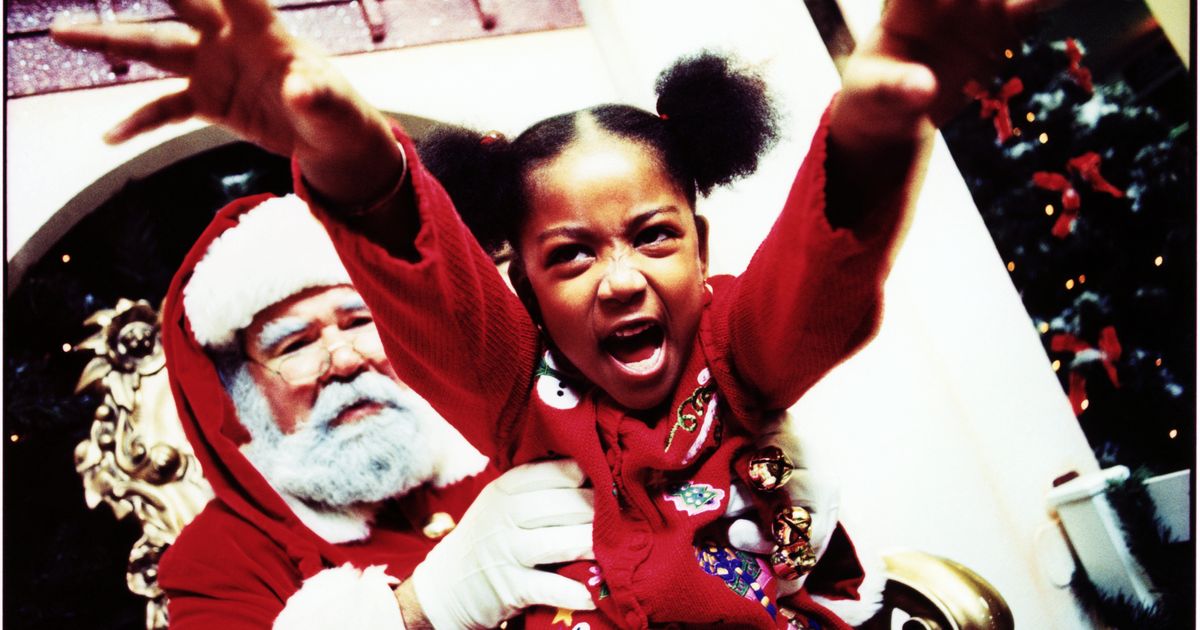
Some people get butterflies in front of an audience. For me, it’s killer bees. My extreme fear of public speaking, or glossophobia, isn’t mere nervousness – it’s a personal horror show.
Advertisement
My symptoms are intense: chest pain, a churning stomach, and knees so trembly I’d make a newborn giraffe look graceful. As in any good scary movie, the danger feels real.
Whether it’s five people or 50, my nervous system floods with adrenaline like I’m facing Hannibal Lecter instead of some barely interested co-workers.
Why such an extreme reaction? Science has my back. The human brain is wired to perceive public speaking as a genuine threat, a response rooted in our evolutionary history.
Advertisement
When we look at an audience, all those eyes staring back can trigger the same primal fear our ancestors felt on the savannah. As comedian Deborah Frances-White said in her 2015 Ted Talk, “the fear of public speaking is essentially the fear of being eaten because audiences look a lot like lions”.
Logically, I know I’m not in mortal danger, but my lizard brain disagrees. The fear is bad enough, but the social pressure – the dread of being judged and the lack of control – makes it worse.
I panic about losing my train of thought, about saying something stupid that gets immortalised in a group chat, and about mispronouncing words I should know. (A co-worker once called me “brave” for using the word niche in a presentation. Is it nitch or neesh? I learned a dozen synonyms so I never have to say it again.)
Advertisement
My fear is irrational, but I’m not alone.
Comedian Jerry Seinfeld once joked that for many people, their top fear isn’t death – it’s public speaking. “This means, to the average person, if you have to be at a funeral, you would rather be in the casket than doing the eulogy,” he quipped.
Of course, plenty of things are scarier than public speaking. In the 2024 Chapman University Survey of American Fears, nearly 29% of respondents named it as a top phobia. It didn’t even crack the top 10 list.
Still, for people who do have this fear, it can be paralysing – even for those accustomed to the spotlight.
Advertisement
I’ve never gone near a world stage, and I hope to keep it that way. But I find comfort in horror stories like these, as if they’re talismans that might protect me against embarrassment.
Advertisement
I’m unsure when or why my glossophobia started, but by high school, I avoided public speaking at all costs. That choice profoundly shaped my experiences, friendships and mental health. Although I was interested in theatre, for instance, I stuck to stage crew. Auditioning for the fall play was simply out of the question.
Yet as my fear of public speaking swelled, so did my love for writing. English class became a sanctuary. Unlike public speaking, writing offered the glorious freedom to edit what I wanted to say, to tinker until my words felt just right. I could substitute one for another, sculpt them into sentences, and create something resonant and articulate and unmistakably me.
After high school, I attended the University of Iowa, home of the world famous Writers’ Workshop. The sidewalks of downtown Iowa City are studded with bronze plaques honouring writers like Flannery O’Connor and Kurt Vonnegut.
Advertisement
As an English major, I devoured works by George Eliot, David Foster Wallace and Mary Oliver. I found my voice in literary critiques and painstakingly crafted essays. The written word never made my palms sweat, at least not until the due date. And I made sure to avoid any elective that mentioned “oral presentation” in its syllabus.
Core classes were another story. For my social science credit, I took Introduction to American Foreign Policy. That end-of-semester presentation still haunts me. I remember the hot flush of my cheeks, the stuttering of my heartbeat, and the sickening realisation that my audience was too uncomfortable to make eye contact.
But that’s the thing about public speaking: the more you avoid it, the more daunting it becomes.
With each presentation, I unconsciously trained my brain to accept distress as part of the process. I convinced myself there was nothing I could do to overcome my fear. My worsening anxiety shaped my career prospects, too.
Advertisement
As I approached graduation, I ruled out public-facing professions like teaching and law. Instead, I envisioned myself as a book editor, accompanied by a red pen and the relative safety of solitude.
By 2010, when I landed my first publishing job, my public speaking fear was debilitating. As it turned out, making books required constant collaboration. The corporate environment only made things worse. Each workday felt like a high-stakes performance, and my older colleagues were intimidating with their dark suits and Blackberries. And there were So. Many. Meetings. I came home drained every night.
“I had to talk in a meeting today,” I’d groan to my then-boyfriend Nick, collapsing in a heap on the couch.
Advertisement
“And you knew what you were talking about,” he’d respond gently. But logic offered little comfort in the face of my mental and physical anguish.
As time went on, I discovered that promotions and new jobs didn’t alleviate my distress – the stakes only got higher. The irony was hard to swallow. I had an English degree, a discipline rooted in critical thinking and the beauty of language.
Yet there I was, reduced to a Wacky Waving Inflatable Tube Man in front of people who rattled off buzzwords like “synergy” with a straight face.
Advertisement
My panic about public speaking was all-consuming. It kept me up at night, savaged my weekends, and manifested as migraines. It held me back from new opportunities – No way I can do that job, I’d think.
I tried to compensate by overpreparing for presentations, but robotic rehearsals usually backfired. Instead of boosting my confidence, I felt like an actor searching for a cue card. And the typical “overcome your fear” advice never seemed to help.
Think about your audience. Trust me, I am.
Make eye contact. But now I’ve forgotten what I was saying.
Try a power pose. Well, I’m standing on a step stool because I’m too short for the podium, so that ship has sailed.
Advertisement
Five years passed. Finally, I asked for help.
In 2015, during an annual checkup, I blurted out that public speaking anxiety was ruining my life. I had friends who took Xanax for their anxiety disorders, I explained. Was that an option for me? My doctor sat back in her seat and said something that shocked me: “I understand.”
She told me she suffered from the same fear and coped by taking a beta-blocker before speaking at conferences. I perked up.
Advertisement
Beta-blockers are often prescribed for heart conditions. They’re not FDA-approved to treat performance anxiety, but for decades, physicians have prescribed them “off label” as relief from its physical symptoms. These medications block the effects of adrenaline, essentially stopping the “fight-or-flight” feeling in its tracks. No shaking, no racing heart, and, unlike Xanax, no risk of addiction.
My doctor wrote me a prescription for propranolol – a tiny orange tablet to swallow 30 minutes before public speaking. She explained it had minimal adverse effects and that I was a good candidate for it. A little drowsiness instead of blistering panic? I practically skipped to the pharmacy.
That 10-milligram pill changed my life.
Propranolol doesn’t treat anxiety itself, so profound dread remained my constant companion. But during my next presentation, I was startled to discover my legs didn’t wobble when I approached the podium. My hands were steady and dry as I clutched the remote. Most surprising of all, my head stayed clear.
Advertisement
With the humiliating physical symptoms under control, I could focus on what I needed to say. I wasn’t enjoying myself, but the situation was tolerable. After I returned to my seat amid applause, I went limp with relief. And what was that – a tiny twinge of hope? Finally, I had something in my tool kit to help me function like a normal adult.
I had intended for propranolol to be a temporary solution to my public speaking fear, but it soon found a permanent home in my purse. The medication helped with performance evaluations, job interviews, difficult conversations, and – let’s be honest – Election Night 2020.
That year, I moved into a senior leadership position at work and started running meetings instead of attending them. It was a whole new fear unlocked.
Advertisement
“I wouldn’t know you were nervous if you hadn’t told me,” a work friend remarked once. “You seemed so chill today.”
“Excellent. I’ve fooled you all,” I joked.
On the outside, propranolol did help me appear calmer in the spotlight. But the internal doomscrolling remained, and the contrast between my exterior composure and inner chaos made me feel like a fraud.
Advertisement
In 2021, I took a big step and found a therapist. Erica (not her real name) wasn’t seeing patients in person because of the pandemic, but telehealth suited me fine.
Over the next couple years, Erica taught me to trust “Future Jenna.” I discovered I didn’t need the ritual of overpreparing. I could ignore the inner voice that said, You suck at presentations, because years of evidence proved otherwise.
I realised I didn’t need propranolol every time. Instead, Erica taught me grounding techniques like progressive muscle relaxation. She helped me understand that adrenaline before public speaking could be energizing rather than something to suppress with medication. And, ultimately, Erica listened to a lot of yapping about Meg’s wedding, which was planned for August 2023.
Advertisement
Each exciting wedding planning milestone – dress shopping, food tasting – was also a stressful reminder of my impending speech. Meg would’ve let me off the hook if I’d asked, but hot, squirming shame held me back. I was the older sister – the matron of honour. I didn’t want to let her and Ken down.
As mid-August rolled around, I felt ready. I had written a heartfelt, funny toast. And I decided to give it without propranolol. It would be a test of my hard-won coping strategies, in front of the friendliest audience I could hope for.
Advertisement
Meg’s wedding arrived on a scorching hot Chicago day. And it’s true that I overprepared: I printed and stashed not two but three copies of my speech. It’s also true I had no trace of propranolol in my system. I finally learned vulnerability doesn’t make us weak – even if your knees shake during a wedding toast.
At the reception, when the DJ called my name, Nick squeezed my hand hard. As I stood to accept the microphone, my heart started galloping – not entirely without fear, but mostly from sincere joy. I turned to my beautiful sister and my new brother-in-law and beamed.
There’s a video of the speech somewhere. I’m still working up the courage to watch it.
Jenna Jakubisin is an editor and science writer. She has an MA in Science Writing from Johns Hopkins University and a BA in English from the University of Iowa. Her work has appeared in Undark, Science Editor, and others. She lives and works near Chicago, Illinois.
Advertisement
Do you have a compelling personal story you’d like to see published on HuffPost? Find out what we’re looking for here and send us a pitch at pitch@huffpost.com.