‘Heel Walks’ Can Make Your Shins Stronger And Improve Your Balance

We’ve written before at HuffPost UK about “Japanese walking,” “incline walking”, “6-6-6 walking”, and “retro walking”.

But if you want to strengthen your calves and shins, either for running or just for better mobility, some experts, like physical therapist Dr Jo, reccomend “heel walking”.

In the caption of a YouTube video, they shared: “Walking on heels is a great exercise for helping with lower leg injuries and muscle imbalances. It can also help with ankle pain and plantar fasciitis.”

What are heel walks?

Happily, it doesn’t involve walking in high heels.

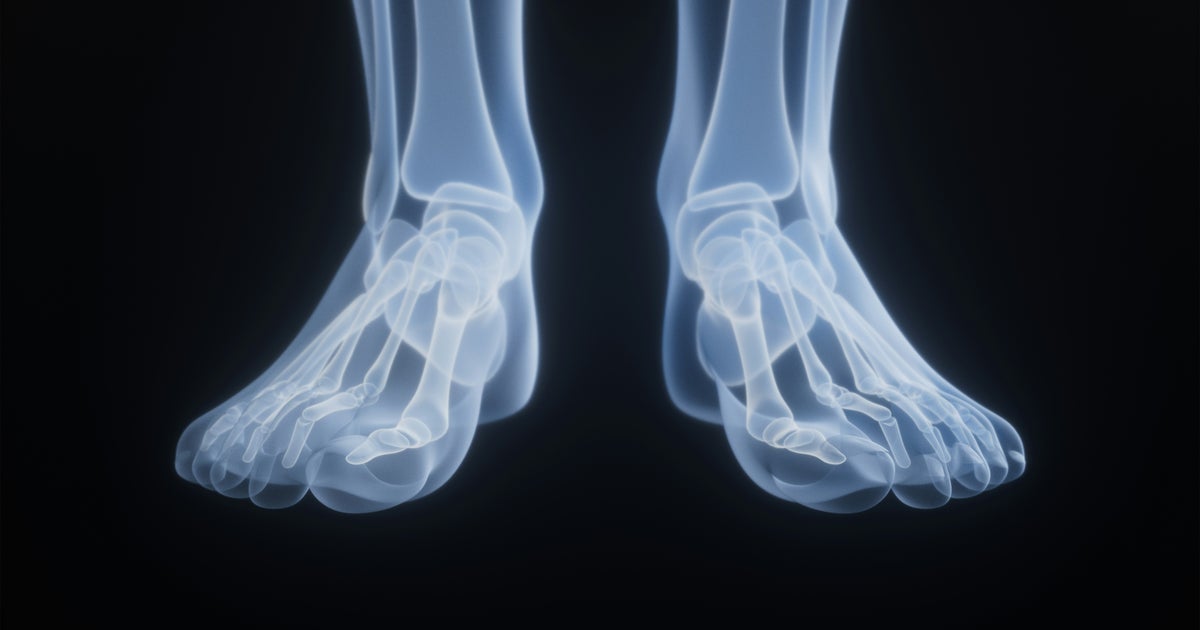
They’re performed by lifting your toes and the balls of your feet up and walking on a flat surface on your heels. You can go forward or backwards with your feet hip-width apart, physical therapist group Therapeutic Associates Inc shared.

They should be short, small steps. “The aim is to point your toes as much as you can towards the ceiling so there is as much dorsiflexion in the ankle as possible,” said Runna.

You should keep your upper body tall with your eyes looking straight forward. Tuck your elbows in and let your arms follow your leg movements.

Keep your glutes and hips tucked in.

Theraputic Associates Inc added, “you may want to perform this exercise to fatigue as in, you can’t keep your toes up off the ground anymore and exhaust the shin muscles”.

What are the benefits of heel walks?

Runna explained that, “Heel walks are a very simple but effective warm-up exercise for the muscle that runs along the front of the shin bone (tibialis anterior).”

This is responsible for keeping your feet lifted and preventing a condition called “foot drop”. Calling it an “underappreciated muscle,” Mirafit added that a strong tibialis anterior contributes to healthy movements of the lower leg which are “all essential when it comes to everyday life and specifically when walking and hiking.”

It may help to prevent shin splints, increase your balance and mobility, and reduce your risk of overuse injuries because they make you better at absorbing shocks, they continued.

Heel walks also stretch your calf muscles and strengthen the flexors in your foot, Runna said.

Share Button

If You Need Running Motivation, Here Are Eight Of Its Greatest Benefits

About six and a half million adults in the UK were regular runners from 2023-24, or just over 9% of the population.

Still, not everyone sticks to it. In one paper, 11% of people who said they wanted to run a marathon quit the sport entirely before they got close to the start line.

But you don’t need to break records to see the health benefits of running. Here, we thought we’d share some of the (many) advantages of the sport – just in case you needed a little extra motivation.

1) It may be beneficial for your joints

You might have grown up hearing that running wrecks your knees (I did). But a systematic review of 17 studies found that “In the short term, running is not associated with worsening [patient-reported outcomes] or radiological signs of knee [osteoarthritis] and may be protective against generalised knee pain.”

2) It can boost your mood

A review of over 100 studies concluded that running appeared to have “important positive implications for mental health, particularly depression and anxiety disorders”.

And another paper found that a single 10-minute run can help to boost participants’ mood and even executive function.

3) It could help you live longer

More proof that small efforts are far better than nothing in a 2015 paper, researchers noted that five to 10 minutes of running a day and/or running slower than 9.6km/hour was linked to a lower risk of all-cause and cardiovascular mortality.

4) It’s really, really good for your heart

Running is a cardio workout, so perhaps it’s no wonder it’s so good for our hearts. It’s linked to lower cholesterol, better blood pressure, and a decreased risk of adverse cardiovascular events, like heart attacks or strokes.

5) It can strengthen your bones

Scientists found that marathon runners’ bones may be denser than those of their non-running counterparts.

6) It’s a great way to get a good night’s sleep

Exercise, especially exercise with outdoor light exposure (e.g. running in your local park) is linked to better sleep quality and improved sleep habits.

7) It can make your legs stronger

Like walking, running can help to build your leg strength. But it can plateau after a while, which is why it’s important to mix in some strength training.

8) Your endurance will improve

Running trains the heart and lungs, meaning you’ll be able to exercise harder, for longer, once you get into the habit.

What about the downsides?

While running is good for us, there are some downsides.

A 2020 paper found that injury rates were about 20% among runners, especially those with weaker hips. The risk is higher for new runners.

Strength training, including that which targets the hamstrings, knee-stabilising methods, hips, and glutes, can reduce your likelihood of getting injured.

Like HIIT, overdoing running can lead to insomnia. About a third of all runners are believed to suffer some form of overtraining syndrome.

If you notice mood changes, fatigue, poor sleep, and getting sick more often, get more rest and let your running shoes breathe for a while.

Remember that running three days a week is enough to lower your risk of early death by 40%, and that five to 10 minutes of running does a lot of good.

Share Button

The ‘7/10’ Rule: Giving 100% In Interval Training Might Hold You Back

If you’re a runner, it can feel tempting to go above your limits to improve your pace, duration, VO2 max, and other metrics.

But lots of research suggests that going easy is beneficial. Elite athletes only spend about 20% of their time intensively training, for instance – they’re mostly “zone 2” running.

You might think the exception to that is the speedy part of interval training, which sees runners switch between jogs and sprints.

But even in those, researchers think we should only be giving it a seven out of 10 effort.

Why might “7/10 effort” help runners?

Researchers wanted to see how running at different intensities affected people’s VO2 max, or their ability to use oxygen efficiently, and their heart rates.

They asked participants to run three times. Each run was three minutes each, with two minutes’ rest in between.

Runners were asked to run at three different levels of perceived intensity: 6/10, 7/10, and 8/10 effort. That was measured by how hard the participants felt they were pushing themselves in their run (they were told to keep the level of difficulty the same throughout).

The longer you spend close to your maximum VO2 and heart rate during exercise, the more your aerobic capacity will increase.

The scientists noticed that people who ran with 6/10 effort in interval training spent less time at 90% of their VO2 max and heart rate levels.

But for those giving it a 7/10 or 8/10, the results were about the same; they spent roughly as long in the 0% or higher zone. And training at 7/10 provided less “ventilatory stress,” or difficulty breathing, than doing so at 8/10.

In other words, 6/10 seemed not to benefit interval runners as much as running at a 7/10 or 8/10. Both of those had the same potential to improve participants’ fitness, but the harder workout was more stressful with no added benefits.

Does the 7/10 rule always help runners?

Probably not. Different runs, and even walks, have their own benefits for runners; this test was only done on interval runs, which involve shorter sprints.

The runners only spent nine minutes in total at this higher level of effort, too. Training your aerobic capacity is helpful for more efficient running, but running slowly and long can train your endurance.

But for short bursts of interval training, the study suggests that forcing yourself too far beyond your limit might not necessarily be better. And as anyone who’s struggled with exhausting sprints will know, any mercy is welcome.

Share Button

5 Science-Backed Ways To Speed Up Your Running Pace

I was a relatively normal person before I started running, but now, I accost my friends with topics like my VO2 max and “Jeffing”.

I can’t help it. Every runner I know wants to run a little faster and a little longer than their current PB.

So, we thought we’d share some science-backed ways to boost your pace:

1) Try tempo runs, like Fartlek sessions

The Swedish “speed play” method is a kind of interval training. It involves running at a slower pace for a set period, then sprinting for another preset interval.

There are no set rules as to what those intervals are.

“Fartlek and other types of tempo runs are a great way of getting your body used to small and frequent changes in pace, whether that be during hilly terrain or because you’re struggling during a particular section of the race,” Nuffield Health’s personal training lead, Nuffield Health, previously said.

One paper found that six sessions of sprint interval training improved the pace of seasoned athletes.

This doesn’t strictly have to be Fartlek training; it can be something like “Jeffing”, or the “run-walk-run” method, too.

2) Follow the 80/20 rule

According to Angela Ruskin University, “elite runners spend around 80% of their time training at what’s termed zone 2 running – a running pace which raises your heart rate, but is still slow enough that you can hold a conversation”.

Only about 20% of the time is spent at race pace, they added.

Zone 2 training happens below the lactate threshold, which means your muscles don’t get as tired after long distances.

That means you can build up a better aerobic base, which can really help you run faster for longer.

3) Try a “pyramid” running plan and get your miles in

One paper, which looked at 119,452 marathon runners in the 16 weeks preceding their races, found that “The fastest runners in this dataset featured large training volumes”.

In other words, the more kilometres under your belt, the faster you’ll probably run.

And among the fastest runners, a “pyramidal” running programme was more common.

That is another form of interval training which sees you ramp up from shorter, faster intervals to longer, slower parts, and then returning to smaller, speedier runs again at the end.

4) Don’t neglect strength training

A meta-analysis of 31 studies found that “strength training with high loads, plyometric training, and a combination of strength training methods may improve running economy in middle- and long-distance runners”.

And the better your running economy, the faster and longer you’ll be able to go.

But in this research, high-load strength training – working with heavy weights – might be especially helpful for those with a high VO2 max and faster running speeds.

5) Try plyometrics

Plyometrics, or exercises which lengthen, then rapidly shorten, your muscles, have been linked to improved explosive power.

One paper found that three plyometric sessions a week can reduce the “cost of running” (or energy used running) in athletes by about 6%. And another found that it increases stride length, too; both of which can improve your pace.

Share Button

The Science Behind When You’re Too Old To Be A Runner

Every New Year, many of us make the resolution to take up exercising more often and what could be more accessible to us than running. Simply throw on some trainers and go, right?

Then the year goes by, the resolution slowly goes down the drain and uh, maybe next year will be the time that we’re running 10k’s and eyeing up the London Marathon ballot.

However, is there an age when we’re simply too old to be trying to take up this sport? Isn’t it going to be rougher on our knees as we age?

Isn’t running bad for the knees?

Writing for The Conversation, Hunter Bennett, a Lecturer in Exercise Science, University of South Australia argues that actually, running could help our knees as we age.

One way to think of this is to not think of our body as something that decays over time. Bennett explains: “Your body isn’t simply a pile of bones and cartilage that gets worn down with every step. It is a living dynamic system that grows and adapts in response to the loads that are placed upon it.”

With this in mind, he says that the more we use our knees, the more benefits we’ll experience.

He says: “Your knee joint is incredibly strong and designed to move. The cartilage inside your knee is a strong, flexible, connective tissue that cushions and protects the bones of your knee joint.

“There is good evidence to show when someone’s load is removed – for example, during prolonged bed rest or immobilisation – their bone and cartilage begins to deteriorate.”

This makes perfect sense.

So, when are we too old for running?

Bennett says: “Unfortunately (at least to my knowledge) there is no strong evidence examining what happens when you pick up running later in life. However, other lines of research do suggest it is likely safe and effective.

“A 2020 study demonstrated that older adults (65 years and older) who start high intensity jump training (known as “plyometric” training) not only see improvements in strength and function, but also find it safe and enjoyable.”

He went on to explain that these types of training lead to higher joint loads than running, giving us a fair indication that running later in life is safe.

How to get started with running

Bennett advises: “Like any type of exercise, your muscles and joints need time to adapt to the new load that is being placed upon them.

“With this in mind, it’s best to start with intervals where you walk for a short period, then jog for a short period. Then you can gradually increase your running distance over time, giving your body time to adapt.”

The NHS Couch to 5k plan is ideal for this.

Share Button

This 1 Type of Walking Could Be The Key For Upping Your Step Count Without Wrecking Your Body

Want to add some extra challenge to your walk? Or want to tone down your too-tough run? “Jeffing” may be your answer.

Jeffing is a training method that comprises both running and walking intervals during a workout. It was founded by Jeff Galloway, an Olympic runner, who came up with the run-walk concept to help folks of all levels run further, protect themselves from injuries and enjoy running more, according to Galloway’s website.

The method is known by a few different names, such as the Galloway run-walk program and the run-walk method, but they all have the same goal: to help people build endurance, run faster and move more by employing both running and walking intervals during a workout.

Here’s what jeffing might look like: Going for a two-minute run followed by a three-minute walk and repeating that a few times for a full workout.

Whether you’re a runner or not, jeffing is a way to make running more accessible and for your step count to skyrocket in the process. Here’s what to know:

‘Jeffing’ is useful for runners of all levels, but is especially valuable for beginners.

Jeffing is good for anyone to try, whether you’re running a marathon or lacing up your shoes for the first time ever.

“I’ve always thought of Galloway’s run-walk as taking what he did when he was an Olympic runner … and … [bringing it] to people like my mom who never thought that they could be a runner,” said Randy Accetta, the director of coaching education at the Road Runners Club of America and founder of Run Tucson.

Runners training for races are known to employ this run-walk (or run-jog) method in their training, Accetta added.

While jeffing can help someone running a high-stakes race cross the finish line, it can also be a particularly good strategy for new runners, said Jeff Dengate, the runner-in-chief for Runner’s World magazine.

“We’ve seen this time and time again where somebody [takes] up running, they head out their driveway, and they think, ‘I have to be a runner. I have to be fast,’ so they get down the road and they’re just cooked, they’re just exhausted,” Dengate said.

For new runners, having a run-walk strategy can keep that exhaustion from happening. “It’s a really good introduction to running,” said Riley Buchholz, the men’s and women’s cross country coach at Temple University in Philadelphia. And it can be protective.

“A lot of people don’t realize that whenever you’re running, you’re applying three to four times your body weight [on your joints] — so, it’s a lot on the body to handle, especially if you just start pumping out miles at a harder effort that you aren’t used to. It takes time to adapt to that,” Buchholz explained.

A mix of running and walking when you head out to the trail or track can help protect your body from that impact.

Jeffing is a run-walk method that can help build up endurance and muscle strength.

FG Trade Latin via Getty Images

Jeffing is a run-walk method that can help build up endurance and muscle strength.

It can help build up strength and endurance.

Don’t let the walking fool you. If your goal is to build up your running capability, this jeffing still has a place in your training.

Alternating between running and walking can help you build up your lung capacity, endurance, and muscles, noted Buchholz before adding, “Anytime you’re exercising, you’re getting better.”

“It helps a lot of people build, not only the stamina, the endurance, but also speed,” Dengate said. “Runners can get faster by using those little walk breaks as well.”

Jeffing is also a good way to learn your preferred pace and effort, Buchholz said.

It takes some of the pressure off running, too.

Anyone who has gone for a run knows the feeling of wanting to stop for a break but feeling guilty about the pause. While there is never a reason to feel guilty (movement is movement), jeffing helps take away those bad feelings during exercise.

“It gives us all the opportunity to exercise without having to feel bad about wanting to stop,” Accetta said. “In the Galloway run-walk, you [intentionally take] the walk breaks. So you know going in that you’re going to run for five minutes and walk for a minute.”

That way, when you’re done with your workout, you can proudly check it off your to-do list because you set out to run and walk from the beginning, Accetta added. “And that’s different than, ‘oh my god, I’m so tired, I need to take a nap. I need to stop walking’ and then stressing whether … you’re ‘quitting’ or not.”

Here’s how to try it:

While some people choose to follow a formula such as one-to-one efforts (meaning, for example, five minutes of running followed by five minutes of walking), there really isn’t a hard-and-fast rule, according to Accetta.

“I think the beauty of … jeffing, or run-walk, is that you can manipulate the effort and rest intervals to fit the physical and emotional needs of the athlete as well as the terrain,” Accetta explained. “For me, there is no perfect ratio.”

It’s all up to you how you start. New runners could try running for 30 seconds, followed by a three-minute walk, or even 15 seconds of running, followed by a three-minute walk. Experienced runners could run for 10 minutes and follow it up with a 30-second walk. There is no wrong formula.

Buchholz said he generally recommends a one-to-four ratio for beginner runners. “Normally, the running is the one and the four is your walking,” he said.

This means if you’re moving for 20 minutes, five minutes can be spent running and 15 can be spent walking, Buchholz said.

If you do want a specific formula, Dengate said there are run-walk calculators online that can help you determine your pace and timing based on your mile time.

When it comes to pace, there are a few things to keep in mind. An everyday jog pace shouldn’t totally deplete you, according to Dengate. “We usually say to use the talk test. If you can’t carry a conversation with the person next to you, you’re probably running too fast on most days.”

“But then, how fast do we do those walk intervals? It’s not a full recovery — you want to walk with purpose … I like to tell people, move like you’re a New Yorker going down the sidewalk. You’re getting somewhere,” Dengate explained.

If you slow down too much during your walk interval, it’s hard to start running again, Dengate added.

Movement should feel good and rewarding, so take the pressure away and keep that in mind when you head outside for your weekly jeffing.

“Far too often we thought of running as punishment for other sports, or it’s something I have to do,” Dengate said. “I like to remind people, running is something we get to do. We’re fortunate enough to be able to have that opportunity to go out and spend that time doing it, so go have fun with it.”

Share Button

Keep Getting Running Injuries? The ‘UHBE’ Test Could Reveal Why

You may already know how many sit-ups and push-ups you’re meant to be able to do by age and gender, as well as how long you’ll ideally be able to hold a plank or stand on one leg.

These can measure everything from your biological age to your dementia risk.

But what about your balance and stability – factors Harvard Health says can influence your risk of falling and injury, and which are key to pain-free running?

The key to ensuring those are in the best possible nick, they add, is strengthening your core (a group of muscles that extends far beyond the six-pack abs you may associate with a strong core).

As it turns out, the best way to test your core strength also seems to reveal the strength of your hip flexors too – all key muscles to prevent running injury.

Try a unilateral hip bridge endurance test (UHBE)

A 2016 paper sought to find the best way to measure core strength at a clinical level.

The scientists assessed two common core stability tests: the trunk stability test (TST) and the unilateral hip bridge endurance test (UHBE).

The TST is essentially a push-up test. It asks participants to lie face down on the ground and push their body up with their hands planted on the floor.

Their back, shoulders, and knees should not sag or dip. This test is scored from 0-3, with 0 meaning they failed to complete the move and had pain (3 is a perfect, pain-free push-up).

The unilateral hip bridge endurance test asks people to lie down flat and lift their hips up from the surface they’re lying on, lifting one leg.

They are asked to keep their hips straight, avoiding dipping up buckling, for about 10 seconds. Pain, inability to complete the move to the full 10 seconds, and not feeling the move in your glutes can all be signs of issues.

Researchers found that compared to the TST, the UBHE test seemed to be far better at gauging your core strength, especially as it relates to your lower body.

It’s also a great way to assess your glute and hip strength, and because it’s a unilateral move, you can see whether one side is weaker than the other.

<div class="js-react-hydrator" data-component-name="YouTube" data-component-id="3154" data-component-props="{"itemType":"video","index":19,"contentIndexByType":1,"contentListType":"embed","code":"

","type":"video","meta":{"author":"RunDNA","author_url":"https://www.youtube.com/channel/UC-xAU5AQTq434VNHNd5Bi2Q","cache_age":86400,"description":"Unilateral Hip Bridge Endurance \n\nThe Unilateral Hip Bridge Endurance (UHBE) test is part of the gait capacity screen, designed to assess core stability and endurance necessary for walking. \n\nTo perform the UHBE test: \nThe participant lies on their back with knees bent and feet flat on the ground, bringing their heels as close to their bottom as possible. \n\nThe participant crosses their arms over their chest. \n\nInstruct the participant to lift their hips as high as possible, then extend one leg straight without letting the hips drop. \n\nKey observations: \nThe participant should maintain this position for 10 seconds without losing height or rotating the hips. \n\nMonitor if the participant feels the effort predominantly in their glutes rather than their back or hamstrings. If the effort is felt mainly in the back or hamstrings, the test is marked as unable. \n\nEnsure there is no pain during the test. \n\nThe leg that remains on the ground is the one being scored. \n\nThis test helps evaluate core and gluteal muscle endurance, which are crucial for maintaining stability and proper gait mechanics during walking.","options":{"_cc_load_policy":{"label":"Closed captions","value":false},"_end":{"label":"End on","placeholder":"ex.: 11, 1m10s","value":""},"_start":{"label":"Start from","placeholder":"ex.: 11, 1m10s","value":""}},"provider_name":"YouTube","thumbnail_height":720,"thumbnail_url":"https://i.ytimg.com/vi/7IS0C5L6HUo/maxresdefault.jpg","thumbnail_width":1280,"title":"Unilateral Hip Bridge Endurance Test","type":"video","url":"https://www.youtube.com/watch?v=7IS0C5L6HUo","version":"1.0"},"flags":[],"enhancements":{},"fullBleed":false,"options":{"theme":"life","device":"desktop","editionInfo":{"id":"uk","name":"U.K.","link":"https://www.huffingtonpost.co.uk","locale":"en_GB"},"originalEdition":"uk","isMapi":false,"isAmp":false,"isAdsFree":false,"isVideoEntry":false,"isEntry":true,"isMt":false,"entryId":"6842f49de4b043146daa7436","entryPermalink":"https://www.huffingtonpost.co.uk/entry/hip-bridge-test-running-injuries_uk_6842f49de4b043146daa7436","entryTagsList":"health,fitness,running","sectionSlug":"lifestyle","deptSlug":null,"sectionRedirectUrl":null,"subcategories":"","isWide":false,"isShopping":false,"headerOverride":null,"noVideoAds":false,"disableFloat":false,"isNative":false,"commercialVideo":{"provider":"custom","site_and_category":"uk.lifestyle","package":null},"isHighline":false,"vidibleConfigValues":{"cid":"60afc140cf94592c45d7390c","disabledWithMapiEntries":false,"overrides":{"all":"60b8e525cdd90620331baaf4"},"whitelisted":["56c5f12ee4b03a39c93c9439","56c6056ee4b01f2b7e1b5f35","59bfee7f9e451049f87f550b","5acccbaac269d609ef44c529","570278d2e4b070ff77b98217","57027b4be4b070ff77b98d5c","56fe95c4e4b0041c4242016b","570279cfe4b06d08e3629954","5ba9e8821c2e65639162ccf1","5bcd9904821576674bc55ced","5d076ca127f25f504327c72e","5b35266b158f855373e28256","5ebac2e8abddfb04f877dff2","60b8e525cdd90620331baaf4","60b64354b171b7444beaff4d","60d0d8e09340d7032ad0fb1a","60d0d90f9340d7032ad0fbeb","60d0d9949340d7032ad0fed3","60d0d9f99340d7032ad10113","60d0daa69340d7032ad104cf","60d0de02b627221e9d819408"],"playlists":{"default":"57bc306888d2ff1a7f6b5579","news":"56c6dbcee4b04edee8beb49c","politics":"56c6dbcee4b04edee8beb49c","entertainment":"56c6e7f2e4b0983aa64c60fc","tech":"56c6f70ae4b043c5bdcaebf9","parents":"56cc65c2e4b0239099455b42","lifestyle":"56cc66a9e4b01f81ef94e98c"},"playerUpdates":{"56c6056ee4b01f2b7e1b5f35":"60b8e525cdd90620331baaf4","56c5f12ee4b03a39c93c9439":"60d0d8e09340d7032ad0fb1a","59bfee7f9e451049f87f550b":"60d0d90f9340d7032ad0fbeb","5acccbaac269d609ef44c529":"60d0d9949340d7032ad0fed3","5bcd9904821576674bc55ced":"60d0d9f99340d7032ad10113","5d076ca127f25f504327c72e":"60d0daa69340d7032ad104cf","5ebac2e8abddfb04f877dff2":"60d0de02b627221e9d819408"}},"connatixConfigValues":{"defaultPlayer":"16b0ecc6-802c-4120-845f-e90629812c4d","clickToPlayPlayer":"823ac03a-0f7e-4bcb-8521-a5b091ae948d","videoPagePlayer":"05041ada-93f7-4e86-9208-e03a5b19311b","defaultPlaylist":"2e062669-71b4-41df-b17a-df6b1616bc8f"},"topConnatixThumnbailSrc":"data:image/png;base64,iVBORw0KGgoAAAANSUhEUgAAAAEAAAABCAQAAAC1HAwCAAAAC0lEQVR42mNkYAAAAAYAAjCB0C8AAAAASUVORK5CYII=","customAmpComponents":[],"ampAssetsUrl":"https://amp.assets.huffpost.com","videoTraits":null,"positionInUnitCounts":{"buzz_head":{"count":0},"buzz_body":{"count":0},"buzz_bottom":{"count":0}},"positionInSubUnitCounts":{"article_body":{"count":17},"blog_summary":{"count":0},"before_you_go_content":{"count":0}},"connatixCountsHelper":{"count":0},"buzzfeedTracking":{"context_page_id":"6842f49de4b043146daa7436","context_page_type":"buzz","destination":"huffpost","mode":"desktop","page_edition":"en-uk"},"tags":[{"name":"Health","slug":"health","links":{"relativeLink":"news/health","permalink":"https://www.huffingtonpost.co.uk/news/health","mobileWebLink":"https://www.huffingtonpost.co.uk/news/health"},"section":{"title":"Life","slug":"lifestyle"},"topic":{"title":"Health","slug":"health","overridesSectionLabel":false},"url":"https://www.huffingtonpost.co.uk/news/health/"},{"name":"fitness","slug":"fitness","links":{"relativeLink":"news/fitness","permalink":"https://www.huffingtonpost.co.uk/news/fitness","mobileWebLink":"https://www.huffingtonpost.co.uk/news/fitness"},"relegenceSubjectId":979690,"section":{"title":"Life","slug":"lifestyle"},"topic":{"title":"Fitness","slug":"fitness","overridesSectionLabel":false},"url":"https://www.huffingtonpost.co.uk/news/fitness/"},{"name":"running","slug":"running","links":{"relativeLink":"news/running","permalink":"https://www.huffingtonpost.co.uk/news/running","mobileWebLink":"https://www.huffingtonpost.co.uk/news/running"},"relegenceSubjectId":6375567,"url":"https://www.huffingtonpost.co.uk/news/running/"}],"isLiveblogLive":null,"isLiveblog":false,"cetUnit":"buzz_body","bodyAds":["

\r\n\r\n HPGam.cmd.push(function(){\r\n\t\treturn HPGam.render(\"inline-1\", \"entry_paragraph_1\", false, false);\r\n });\r\n\r\n","

\r\n\r\n HPGam.cmd.push(function(){\r\n\t\treturn HPGam.render(\"inline\", \"entry_paragraph_2\", false, false);\r\n });\r\n\r\n","

\r\n\r\n HPGam.cmd.push(function(){\r\n\t\treturn HPGam.render(\"inline-2\", \"entry_paragraph_3\", false, false);\r\n });\r\n\r\n","

\r\n\r\n HPGam.cmd.push(function(){\r\n\t\treturn HPGam.render(\"inline-infinite\", \"repeating_dynamic_display\", false, false);\r\n });\r\n\r\n"],"adCount":0},"isCollectionEmbed":false}”>

How can I improve my core and hip strength?

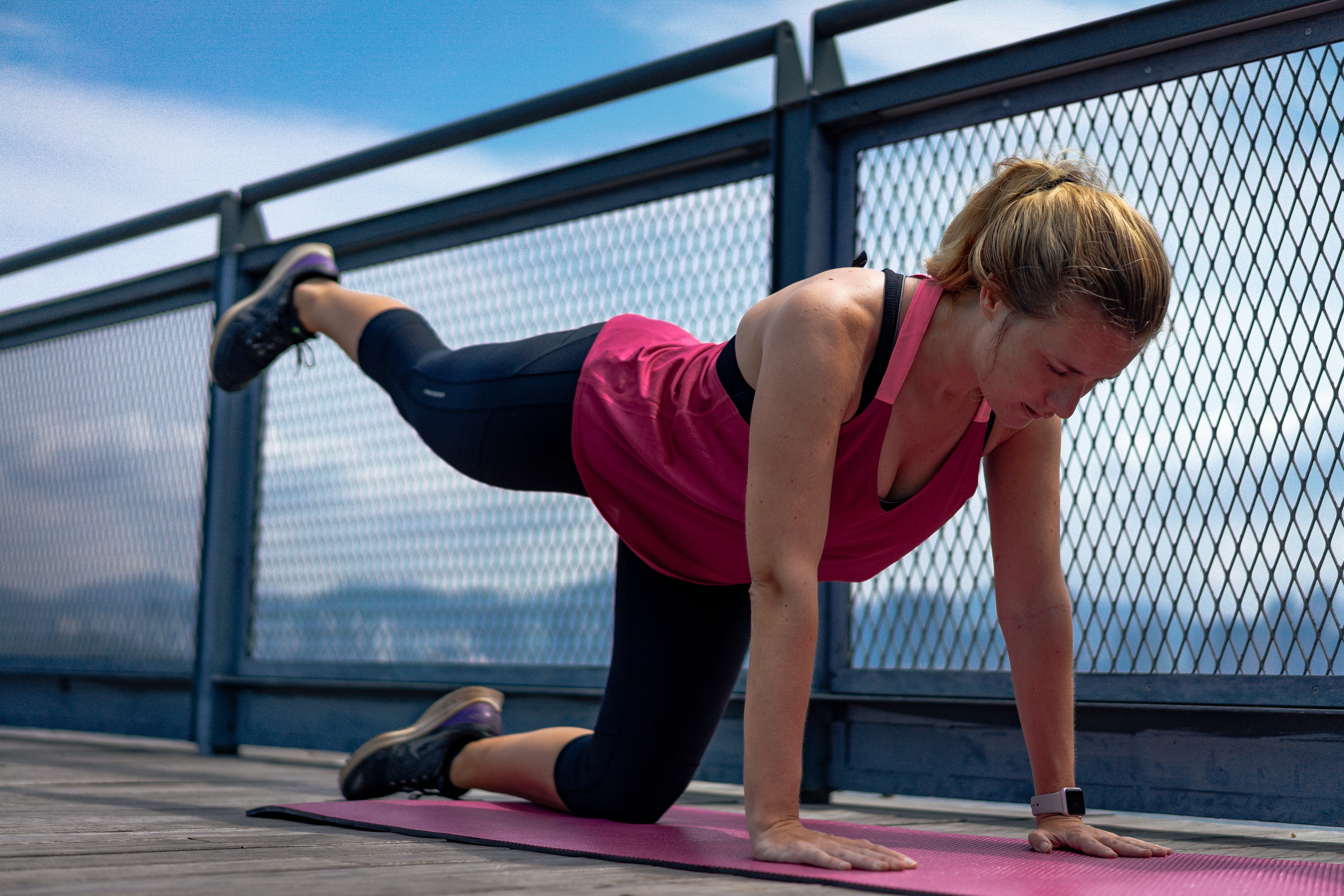
Ironically, the move UBHE test emulates – a single-leg hip bridge – can help to grow and stabilise your lower core and hip flexors.

Trying a front plant with a banded hip extension or trying a standing knee lift can also help, Runner’s World says.

Harvard adds that something as mundane as housework and gardening can strengthen your key stability muscles too.

Whichever weakness or imbalance you need to address, though, the UBHE test may be an underrated way to find out about it in the first place.

Share Button