Doctor Shares Five Simple Daily Habits That Could Add Years To Your Life

It turns out that tiny changes – minutes more exercise, a few grams more veggies – can make a surprisingly large difference to your longevity and heart attack risk.

And Dr Dominic Greenyer, a private GP at The Health Suite, said that those lifestyle changes become medically obvious in time.

“If you followed two twins over time, you would often see clear differences in their skin, body composition, energy levels and overall health depending on how they live,” Dr Greenyer said.

“Ageing is not just about time passing. It’s about how well the body is maintained.”

Here, he shared the five factors he feels make all the difference:

1) Building and maintaining muscle

As we age, our muscles begin to wane – a process called sarcopenia. If we do nothing to maintain or build it, some research says we’re expected to lose half our muscle mass by 80.

“One of the biggest predictors of healthy ageing is muscle mass,” Dr Greenyer said.

2) Prioritising sleep and recovery

“Chronic poor sleep can accelerate ageing at a cellular level,” Dr Greenyer said.

“It affects hormones, recovery, inflammation and even visible signs like skin quality.”

Experts think that following a “7-1” sleeping rule (getting at least seven hours of sleep a night, with no more than an hour’s variance between bedtimes and wake-up times) could add years to your life.

3) Reducing inflammation through lifestyle choices

In and of itself, inflammation isn’t a problem – it can help our bodies to heal and may be an important part of muscle growth.

But “inflammaging” can occur when inflammation is chronic, and might contribute to conditions such as heart disease, type 2 diabetes, dementia, and frailty.

It “is influenced by diet, stress, alcohol intake and overall lifestyle,” Dr Greenyer said.

Those who eat whole foods, stay active, and manage stress well may have less unwanted inflammation, he added.

4) Maintaining “metabolic flexibility”

This is the ability to respond well to changing metabolic demands. It allows you to switch between burning carbohydrates and fat; a more flexible metabolism is linked to better ageing.

“When this is impaired, people are more prone to energy crashes, fat gain and insulin resistance,” Dr Greenyer said. Exercise, eating well, and avoiding constant snacking may help, he added.

5) Enjoying life, in moderation

There’s lots of research to support the idea that enjoying ourselves – be it through socialising or even eating some candy – might help us to live longer.

“There is good evidence that polyphenol-rich foods such as dark chocolate can support cardiovascular health when consumed in moderation,” Dr Greenyer added. “Just as important is maintaining strong social connections, which are consistently associated with longer lifespan and better mental wellbeing.”

He ended, “The difference comes from small choices repeated over years – but they should still allow you to enjoy life.”

Share Button

The Vegetable A Cardiologist Says Is ‘Underrated’ For Heart Health

It doesn’t really matter which fruit and vegetables you choose – the British Heart Foundation (BHF) says that eating at least five portions a day can lower your risk of heart and circulatory disease.

And eating roughly two servings of fruit and three of veg daily could even lead to a longer life.

But once you’ve hit those goals, the kinds of produce you choose might make a good thing even greater.

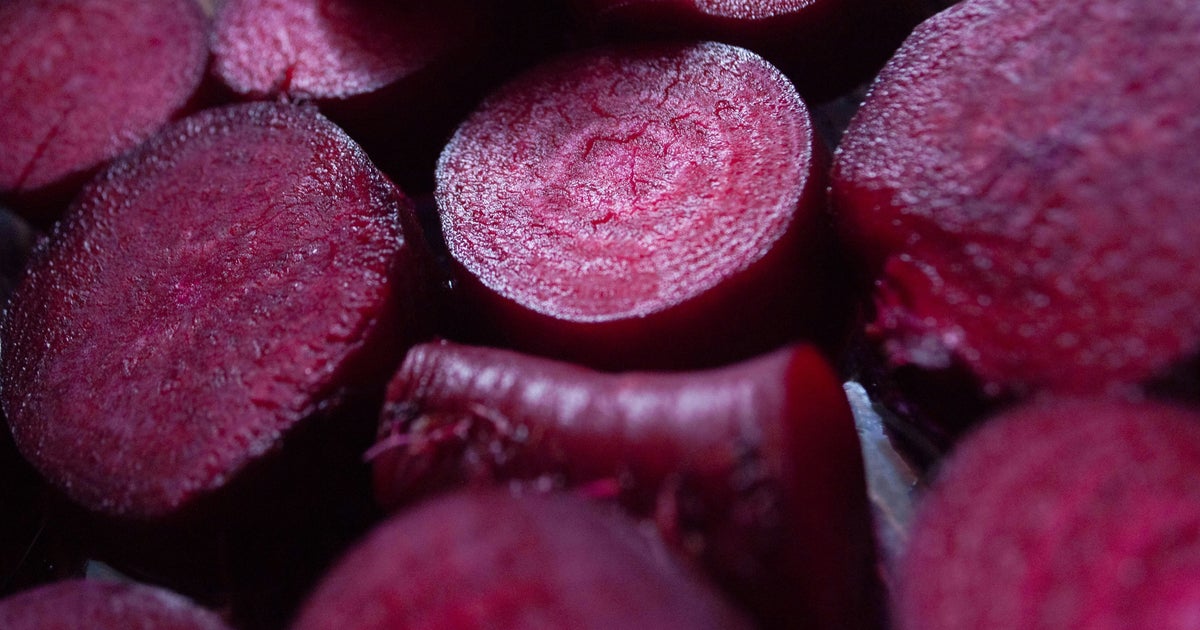
Cardiologist Dr Francesco Lo Monaco, founder of the National Heart Clinic on Harley Street and author of Heart Saviour, has shared a vegetable he deems “underrated” for heart health: beetroot.

It’s “one of those foods that looks simple, but works on your cardiovascular system in remarkable ways,” the expert said.

Here’s how:

1) Beetroot could support your blood vessels

Beetroot is high in nitrates, which our bodies turn into nitric oxide. And nitric oxide is really good at helping our blood vessels to relax and dilate.

“This means better circulation, lower blood pressure, and a healthier endothelium, the inner lining of your vessels,” the expert said.

Some small studies have linked beetroot juice consumption to lower blood pressure, though the BHF has said kale, spinach, celery, bananas, and strawberries are also high in nitrates.

2) Beetroot could help to prevent stiff arteries

“Beetroot helps your arteries stay elastic, something medications alone can’t always achieve,” Dr Lo Monaco explained.

One study, which focused on men over 60, found the result after giving them beetroot juice supplements. Again, though, the study’s lead author said: “it doesn’t need to be beetroot juice, just a good, healthy source of nitrate.

“A big green leafy salad does the same thing. The added benefit of fresh vegetables is that they also have the ability to reduce oxidative stress, another problem that increases with age.”

3) Beetroot could help the heart to recover from stress

“Beetroot can reduce the damage caused when blood flow returns to the heart after being temporarily restricted,” the cardiologist stated.

A 2014 paper found that patients who’d suffered an ischemia-reperfusion injury saw better heart function after consuming beetroot juice.

4) Beetroot could help to protect the hearts of those already at risk

“Hypertension, diabetes, inflammation, high homocysteine – beetroot supports many of the pathways that become dysfunctional in these conditions,” Dr Lo Monaco.

Among those with type 2 diabetes, eating 100g of raw beetroot a day for eight weeks was associated with better metabolic health and improved cognition. And the nitric oxide effect we mentioned earlier may make the food especially beneficial for those with high blood pressure.

So, while it should never be used to replace medication and though a balanced overall diet is still better than consuming one “superfood”, the cardiologist ended: “Beetroot actively supports vascular repair, arterial youth, and heart performance in ways most people never hear about.

“Making small changes such as this is how you improve retention and longevity.”

Share Button

Researchers Warn Autism In Menopause Is A Major Overlooked Gap In Women’s Health

We’ve written before at HuffPost UK about how menopause is increasingly driving women with suspected ADHD to get a formal diagnosis. The life stage can “amplify ADHD-related challenges,” Eve Lepage, a reproductive health specialist at Clue, shared with us previously. Scientists have long suspected that hormones like oestrogen can affect how ADHD presents.

But researchers only began formally tracking ADHD symptoms across women’s menstrual cycles recently, with scientists calling the much-reported issue scientifically “overlooked”.

And in an article published in Frontiers in Reproductive Health, study authors wrote that “Autistic women navigating the menopause transition face a constellation of challenges that remain critically understudied”.

Issues with body awareness, sensory overstimulation, and systemic barriers can make the experience uniquely challenging for autistic women, they added.

Here, HuffPost UK spoke to Dr Claire Agathou, a GP with a specialist interest in women’s health and the co-founder of A-Z General Practice at HCA’s The Wellington Hospital, about the topic.

How might autism affect menopause and vice versa?

Dr Agathou told us that menopause “can affect virtually every aspect of a woman’s wellbeing from sleep and mood to concentration, memory and temperature regulation – and for autistic women there may be an additional layer of complexity”.

Emerging research suggests that autistic women might experience an intensification of autistic traits during the transition – “In particular, sensory
sensitivities may become more pronounced, emotional regulation can become more difficult, and changes in sleep, concentration and executive function may have a disproportionately disruptive effect on everyday life”.

Take, for instance, a hot flush, the GP said. “For someone who already experiences heightened sensitivity to temperature, clothing or touch, it may become intensely uncomfortable or overwhelming.

“Similarly, sleep disruption and the cognitive symptoms commonly described as ‘brain fog’ may compound existing difficulties with executive function, planning or managing competing demands”.

As with women who have ADHD, Dr Agathou continued, autistic women might find it harder to “mask” their neurodivergence during menopause.

Strategies they may have spent years adopting in order to hide struggles or navigate their professional or social sphere could be harder to maintain, which may be distressing, “particularly for women who have spent much of their adult lives functioning at a very high level, some without recognising that they may have autism”.

However, the doctor stressed that not every autistic person going through menopause will necessarily have a more intense experience.

“Menopause itself varies enormously between individuals. At present,
the evidence base is relatively small, so we need to listen to women’s individual
experiences rather than make assumptions based simply on a diagnosis,” she said.

Both autism and menopause are “historically neglected” in scientific research

When asked how we can support autistic women through menopause, Dr Agathou said it’s important to recognise the experience isn’t uniform.

“Healthcare professionals should actively ask about sensory symptoms, sleep, emotional regulation, executive functioning and the impact symptoms are having on day-to-day life, rather than focusing solely on hot flushes or changes to periods,” she said, adding that clear, written explanations and avoiding info-dumping on patients might also help some women.

“We should also recognise that autistic women may describe or experience internal bodily sensations differently, which can sometimes make identifying and communicating symptoms more difficult”.

But unfortunately, she continued, the intersection of menopause and autism simply isn’t all that well-studied.

“There are two historically neglected areas intersecting here. Women have traditionally been under-recognised in autism research because our understanding of autism was largely developed from studies of boys and men.

“Many autistic women… therefore reached adulthood without a diagnosis, often becoming very skilled at masking their difficulties. At the same time, menopause itself has historically been under-researched, and, for many years, women’s symptoms were too readily normalised or dismissed,” the GP explained.

“When those two gaps overlap, it isn’t surprising that autistic women going through menopause have received relatively little attention.”

This, despite some early evidence suggesting that menopause can be especially difficult and/or have unique side effects for some autistic women.

“The key message is that we shouldn’t assume menopause looks the same for every woman,” Dr Agathou ended.

“If somebody tells us that this transition has fundamentally changed how they are able to function, we need to listen, explore why, and provide care that reflects their individual needs.”

Meanwhile, the Frontiers In Reproductive Health study argued: “As the autistic population ages, and as researchers continue to learn more about the presentation of autism in the female population, it will be imperative to support autistic females in their experience of menopause”.

Share Button

People With ADHD And Autism May Be 4x Likelier To Face Tissue Disorders

But according to a new analysis, it seems neurodivergent people of all genders might be more likely to face a group of conditions known as connective tissue disorders.

The finding, which is based on health data from 117 million US adults and teens aged 15 and over, found that the issues were “consistently more common” among people who weren’t neurodivergent, and “were most likely for patients who were diagnosed with ASD [autism] and ADHD”.

What are connective tissue disorders?

These include many diseases and disorders that affect the tissue that supports our organs, body structure, and muscles. They might impact people’s bones, ligaments, skin, cartilage, and tendons.

Per the Cleveland Clinic, “as these tissues are in almost every part of your body, connective tissue diseases can also affect you all over. They might affect one or two types of tissues throughout your body or many. They can also affect many organs”.

Connective tissue disorders can present as hypermobility (being able to move your joints or body parts outside of their usual range), Ehlers-Danlos and Marfan syndrome, and inflammatory conditions like lupus.

How much more likely are people with ADHD and autism to have connective tissue disorders?

This analysis suggested that the breakdown was as follows:

  • People with both ADHD and autism were 4.38x more likely to have an inherited structural connective tissue disorder and 3.4x likelier to have a hypermobility spectrum disorder,
  • People with ADHD only were 1.7x more likely to have an inherited structural connective tissue disorder and 1.48x likelier to have a hypermobility spectrum disorder,
  • People with autism only were 3.11x more likely to have an inherited structural connective tissue disorder and 2.03x likelier to have a hypermobility spectrum disorder.

Overall, connective tissue disorders were still relatively rare in these groups – heritable structural disorders were seen in roughly 12 out of 1,000 autism-only patients and 21 per 1,000 patients with both ADHD and autism.

But that’s a big leap from the comparison sample without either ADHD or autism – among those, the disorders appeared in 3 or 4 per 1,000 cases.

Previous research had suggested that “In neurodivergent adults, there is a strong link between the expression of joint hypermobility, dysautonomia, and pain, more so than in the comparison group”.

Some studies have shown that people with the connective tissue disorder Ehlers-Danlos syndrome are more likely to have autism and/or ADHD.

Share Button

5 Physical Signs You’re Facing Chronic Stress, According To A Psychologist

A majority of UK adults say they’ve dealt with stress so intense that it’s left them feeling completely overwhelmed.

And chronic stress – worries and/or pressures that keep you in a state of high alert for long, continuous periods of time – has been linked to worse health outcomes, like sleep issues and higher blood pressure.

Sometimes, though, chronic stress lasts so long that it can be hard to tell it apart from “regular life”.

Thankfully, Dr Bijal Chheda, a consultant psychologist and founder of Nos Curare, has shared seven signs your body might give to suggest you’re dealing with the ongoing issue.

1) Persistent headaches

“Stress is a well-recognised trigger for tension-type headaches because it can cause the muscles around the scalp and neck to remain tense,” the psychologist said.

“Over time, the nervous system may become more sensitive to these pain signals, meaning headaches that were once occasional begin occurring more regularly.”

If you’re experiencing this symptom, keep a diary detailing when the headaches happen, how long they last, and what, if anything, helps. If the problem keeps coming back or don’t improve, speak to your GP.

2) Stomach cramps

Yep – stress really can mess up your stomach. For instance, the NHS said, it can slow digestion down.

“During periods of prolonged stress, communication between the brain and gut can become disrupted, affecting how the gut functions,” Dr Chheda added.

“The bowel muscles may contract irregularly, triggering cramps and leaving the stomach feeling unsettled.”

If this happens, she advised that diaphragmatic breathing may help – though again, see your doctor if the symptom doesn’t let up.

3) Tense muscles

When we’re chronically stressed, “the body may remain slightly prepared for action, maintaining a low level of muscle contraction,” the expert explained.

“Over time, this can make it difficult for certain muscles to fully relax, leaving areas such as the shoulders or neck feeling tight.”

Sounds like you? Progressive muscle relaxation can help.

4) Ongoing fatigue

I know, I know: supposedly, everyone’s tired. But that doesn’t mean you have to accept constant low-level exhaustion, or that it’s normal.

“Under stress, the body shifts its energy towards responding to whatever feels threatening, and away from the processes that help it recover. This is why so many people under pressure find it difficult to fully relax, even when there is nothing immediate left to respond to,” the psychologist stated.

“Over time, chronic stress can become exhausting, causing even routine tasks to feel more physically demanding. Rather than trying to push through the fatigue, build short periods of genuine recovery into the day.”

5) Disrupted sleep

Though settling down for a good night’s sleep sounds relaxing, Dr Chheda said these quiet periods can make stressful thoughts louder. “This may also keep cortisol levels elevated later than usual, making it harder for the body to shift naturally into rest,” she said.

“As a result, falling asleep may take longer, while small disturbances may be more likely to wake you during the night.”

Following a consistent sleep routine, avoiding screens before bed, and a relaxing hobby like reading can all help, she ended.

But if the issue persists – you guessed it – it might be time to speak to a medical professional.

Share Button

From ‘Hara Hachi Bu’ To Daily Movement: The Simple Japanese Rules For Healthy Ageing

We’ve written before at HuffPost UK about “ikigai”, a phenomenon the Japanese government’s site describes as “that which brings value and joy to life: from people, such as one’s children or friends, to activities including work and hobbies”.

Ikigai could help us to lead happier, healthier lives as we age.

And think tank and charity The King’s Trust has suggested that the UK could stand to learn from another of the country’s policies – community gathering places, or CGPs.

In a project run with the International Longevity Centre UK, they wrote, “In our roundtable, CGPs were pointed to as a key example of the kind of preventive, community-based initiatives that Japanese policymakers view as key to both tackling the health effects of ageing and preventing loneliness and social isolation.

“Evidence suggests that CGPs have been reasonably successful in these aims.”

Japan was chosen as an example because almost a third of its population is aged 65 or above.

What are CGPs?

CGPs “arrange community activities ranging from exercise classes to hobby groups, with the aim of improving health and cognition, preventing frailty and fostering social connection,” The King’s Fund’s site reads.

Residents usually lead these events, which are “free or extremely cheap”.

They’re described as being a key part of Japan’s healthy ageing policy.

Social isolation has been linked to a shorter lifespan, increased dementia risk, and worse mental health.

Research has shown GCPs might lead to better mental and physical health, though they benefit some more than others

A 2026 paper found that among older adults who didn’t exercise regularly, participating in CGPs seemed to lower the risk of developing cognitive disabilities.

This effect wasn’t seen among those who already worked out, though.

Women, those over 75, people who live alone, those on low incomes, and rural residents appeared to get more out of the scheme.

Another study showed that monthly CGP participants tended to have lower disability prediction scores and greater levels of happiness. “Higher frequency of participation was associated with lower disability scores and greater happiness,” it reads.

Associate Professor Uemura, who conducted research into GCPs, said: “These findings support a growing direction in long-term care prevention policy, which creates opportunities for participation that are accessible to older adults who may find regular exercise difficult.

“We hope this evidence will help inform community-based initiatives that support a wide range of older adults and contribute to policies aimed at reducing health inequalities.”

Share Button

‘Second Grief’ – Why Death Breaks So Many Friendships Apart

Speaking to The Times recently, actor Richard E. Grantwho lost his wife of 35 years, voice coach Joan Washington, in 2021 – said the experience led him to cut certain friends out of his life for good.

“There are people that have been edited out of my life, and I will never see them again,” he shared, speaking about friends who became distant after his wife’s death. “If I had done that to them, I wouldn’t be able to look them in the face.”

I’ve heard a similar sentiment from many bereaved loved ones (I’ve been blindsided by it, too). Something tragic happens, and just when you need support the most, people you’d have thought were closest to you appear to fade away.

Or maybe you feel you can never “connect” the same with your old pals after such a life-changing event (another common issue friends have shared).

What’s happening here? HuffPost UK spoke to BACP-registered therapist Laurie Hole about why friendships so often fall apart after a death.

Why do so many friendships break apart after a death?

Hole said that while death is universal, the topic of grief remains incredibly taboo for many.

“We are generally very under-equipped to understand grief or know how to support somebody through it,” she explained.

“Until you experience a significant loss, it can be almost impossible to comprehend the enormity of it – and even the grieving person themselves may struggle to make sense of what they are experiencing.”

That might mean those suffering a terrible loss feel the responsibility to explain their feelings or the nature of their pain when they might be least equipped to do so.

Therefore, the griever might isolate themselves first: “Sometimes withdrawing from friendships becomes a way of protecting already very limited emotional reserves”.

Other times, the therapist added, “Another person’s loss can bring up [friends’] own unacknowledged or unresolved grief, or confront them with feelings about death and mortality that they would rather avoid. They may have their own life challenges that mean they simply don’t have the capacity they ordinarily would.”

She said this isn’t always intentional, though it still stings.

“And sometimes people genuinely believe they are saying or doing something helpful, but it lands painfully. Good intentions don’t necessarily prevent hurt, particularly when we have so few conversations about what grief actually looks and feels like.”

How can I be a better friend to a grieving person?

Given how little grief and death are talked about, Hole shared some guidelines that can help you if your friend is going through it.

These are:

  1. Ban the phrase “at least”. The therapist said we should avoid sentences like “’At least they lived a long life’, ‘at least they’re no longer suffering’, ‘at least you had the time you did’ – however well-intentioned, trying to find a positive in somebody’s loss can feel incredibly devastating to the person hearing it”.
  2. Forget about timelines. When someone loses a loved one, Hole said, don’t try to give them a schedule for getting over the pain or “accepting” their loss. “Instead of asking whether they have accepted or moved on from the death yet, you could ask, ‘How is grief showing up for you right now?’ Be curious about their experience rather than assuming what it should look like,” she advised.
  3. Read up. You might not be able to imagine your friend’s pain, but it can help to “read memoirs and accounts of grief rather than expecting your friend to teach you everything – while remembering that nobody else’s grief will be exactly like theirs”.
  4. Don’t forget big dates. Check in on “the dates that matter: the anniversary of the death, birthdays and other significant occasions. And if you knew the person who died, share your memories,” the expert advised.
  5. Say their loved one’s name. “People sometimes worry that mentioning somebody who has died will remind the grieving person of their loss, but they haven’t forgotten,” stated Hole. “Hearing their loved one’s name can instead be a reminder that this person mattered to other people too.”

When should I give up on a friendship that’s suffering after a death?

Sadly, Hole said, “Friendships don’t necessarily have to last a lifetime, and losing friendships following bereavement can itself become another loss that has to be processed. The death of someone you love is already a profound loss; discovering that some of your friendships cannot survive your grief can become another loss that has to be grieved”.

There’s no right or wrong answer when it comes to breaking a friend off, she continued. “Repair might involve acknowledging what happened, listening without becoming defensive, and taking responsibility for the impact – even when causing hurt was never the intention.

“But if somebody who is grieving has explicitly communicated what they need or set boundaries and a friend continually ignores or dismisses those needs, it is reasonable to consider whether that friendship can support them at this point in their life. Sometimes that means temporarily stepping back; sometimes it means allowing the relationship to end.”

Sometimes, the therapist shared, grief can expose existing problems that were easier to hide before a death. And bereavement can make someone who used to put up with a lot more bad behaviour less forbearing, too.

“If maintaining a friendship is repeatedly causing more hurt, it may be worth asking whether that person can still have a place in your life in the same way they did before.”

Share Button

The Question Psychologists Want You To Ask If You Keep Arguing With Your Partner

For five decades, psychologists Dr John Gottman and Dr Julie Schwartz Gottman of the Gottman Institute (GI) have studied couples and the issues that affect them.

This experience led them to develop their “four horsemen” theory of divorce, which found evidence to suggest that criticism, contempt, defensiveness, and stonewalling usually precede separation.

Their research also showed that couples’ problems tended to split into three groups: solvable problems and perpetual problems.

Working out which one you and your partner are arguing about, the GI says, can help you identify the kinds of resolution you need.

What are solvable problems?

Solvable problems come about due to situational issues that don’t feel integral to a person’s character. That might mean one person is taking on the lion’s share of the housework, or you might disagree on a specific issue with your child.

GI notes that solvable problems in one couple might be perpetual problems (more on those later) for another. But the difference is in how the pair feels about it: “The conflict is simply about that topic, and there may not be a deeper meaning behind each partner’s position”.

Happily, solvable problems can usually be, well, solved through conversation and careful planning.

Maybe you can assign certain household domains to one another, for instance, or agree to compromise on where to spend Christmas.

What are perpetual problems?

These make up most (69%) of the arguments, the psychologists found.

Perpetual problems are ongoing differences or misalignments that are fundamental to you or your partner’s needs or lifestyles. For instance, maybe your beau values the financial benefits that can come with working hard over a fulfilling work-life balance.

So, you two might keep having what seems like the same argument about late nights and missed dinners.

Because they reflect core parts of each member in the relationship, perpetual problems will recur. If you like to see your family twice a week and they need more “me” time, compromise might leave both parties feeling like they’re denying a big part of themselves pretty regularly.

In this case, the goal should be to “establish a dialogue about the perpetual problem that communicates acceptance of your partner with humour, affection, and even amusement”.

Identify the drive, identity, belief, or “dream” behind each of your behaviours: this can make discussing the problem easier. Ask your partner to do the same, and try to get curious about their feelings instead of trying to “solve” the issue: this can create a healthier dialogue.

This will be an ongoing conversation, so try to get good at – and respectful in – having it.

Share Button

‘Normal’ Means Different Things To GPs And Patients, And It May Affect Treatment

Let’s say you go to your doctor with a documented, ongoing case of psoriasis. You might complain of itchy and flaky skin.

To your surprise, though, your GP tells you these symptoms are “normal”. You might feel dismissed or as if your problems can’t be addressed; maybe you’ll be less likely to seek treatment.

At least, that’s what a recent study published in Nature Human Behaviour suggests.

It said that, while doctors might hope to reassure patients by calling well-understood symptoms “normal,” data shows it could actually make people with health issues think nothing can be done about their problems.

That might mean they don’t look for or ask about solutions like medications, even when they may be both available and useful.

Professor On Amir, the study’s senior author, told Pulse Today: “Doctors shouldn’t stop reassuring patients. But they should make their meaning unmistakable”.

So, HuffPost UK spoke to Dr Dominic Greenyer, a GP and director at The Health Suite, about what “normal” means to a doctor.

Wait – doesn’t ‘normal’ mean everything’s fine?

I’ll be honest: I always thought being told an issue is “normal” by a doctor meant everything was OK, and nothing more could be done.

But sometimes, Dr Greenyer said, that’s a miscommunication.

“When a doctor describes a symptom as ‘normal’, they will often mean that it’s common, expected in a particular situation, or consistent with a certain stage of life. It does not necessarily mean the symptom is insignificant, imaginary or something the patient simply has to tolerate,” he said.

For instance, hot flushes are “normal” during menopause and perimenopause, and pain is “normal” after surgery. However, the GP said that doesn’t mean they need to be tolerated or that they can’t be addressed with appropriate medication.

“’Common’ and ‘untreatable’ are two very different things,” he added.

And, the doctor said, doctors might say lab results or exams that fall within an expected range are normal.

“In that context, it may reassure us that we have not found evidence of a particular disease, but it does not automatically explain why someone feels unwell or mean that no further help is available,” he claimed.

“This study highlights how easily well-intentioned reassurance can be misunderstood. A doctor may be trying to say, ‘This is recognised, and you are not alone’, while the patient hears, ‘There is nothing wrong, and nothing can be done’. Clinicians need to make that distinction explicit.”

Reassurance alone might not be enough

In the Nature study, the authors tested two ways to close that communication gap: asking doctors to explain what “normal” means in a medical sense when using the word, and offering some next steps to patients after normalising their symptoms.

Both appeared to lead to better results.

Dr Greenyer said: “Ideally, reassurance should be followed by a clear plan. That might involve discussing treatment options, explaining how long the symptom is expected to last, arranging follow-up or telling the patient what changes should prompt them to seek help again.”

And if that doesn’t happen, it might be worth your while taking the lead.

“Patients should not be afraid to ask, ‘When you say normal, do you mean it is harmless, or simply that it is common?’. They can also ask whether treatment is available and what they should do if the symptom persists, worsens, or begins affecting everyday life,” the GP concluded.

“Being told something is normal should never be interpreted as an instruction to ignore a significant change in your health. If symptoms are severe, persistent, worsening or accompanied by warning signs such as unexplained weight loss, unusual bleeding, a new lump, chest pain or breathing difficulties, further medical advice may still be needed.”

Share Button

I Added A Baking Staple To My Chickpeas, And It Made Them Silkier And Creamier Than Ever

I’ve been banging on about the merits of slow cookers, especially during a heatwave, all summer.

Even though they’re usually associated with stodgy winter dishes, their lower temperature and enhanced insulation mean they don’t warm your kitchen up as much as you’d expect.

Alongside a delicious coconut lentil soup and some Greek-inspired mains, I’ve been batch-cooking my own chickpeas, too. (Yes, canned is easier, but tinned chickpeas are also designed to keep their shape in the container, meaning they’re never quite soft enough for dishes like hummus).

Still, it wasn’t until last week that I tried a long-standing trick to make them softer, creamier, and more delicious – and I wish I’d started years before.

Add baking soda to your chickpeas

Hummus, chickpeas

Amy Glover / HuffPost UK

Hummus, chickpeas

I usually add garlic, salt, and chilli to my chickpea water for a bit of added flavour. Salt might have a small advantage in softening them, but for the best results, you need baking soda.

There’s some interesting science behind the addition. When you add the baking staple to chickpea water, it slowly replaces the legumes’ rigid calcium ions with bendier sodium ions.

And the alkaline nature of baking soda also breaks down the bonds that hold their pectins (a type of plant fibre) together.

Combined, those factors mean that baking soda makes chickpeas soft, squidgy, and almost fudgy.

Their skins also soften and even begin to flake away depending on how long you cook them. That, I find, is especially useful for hummus – though I like a looser, softer chickpea for things like salads and chickpea curries, too.

Chickpeas in the slow cooker: then in a curry

Amy Glover / HuffPost UK

Chickpeas in the slow cooker: then in a curry

I was amazed by how well the trick worked. Compared to chickpeas I’d stewed for hours, those cooked with baking soda became softer much faster – and eliminated that harder centre I could never quite coax into silky perfection.

How much baking soda should I add to my chickpeas?

You don’t need much to see impressive results. I use about a teaspoon per 500g of dry chickpeas, but some recipes halve that.

The amount you’ll need to add depends, partly, on how long you’re cooking chickpeas for. If you’re making them on the hob, more baking soda will be better; however in the slow cooker, where they stew for hours, try less.

Serious Eats notes that you don’t have to spend hours on the method if you don’t have time. You can soften tinned chickpeas using baking soda, too: just drain them, add enough liquid to cover them, and whack in some baking soda while they boil. Half a teaspoon per 400g can of chickpeas should do the job.

Test the chickpeas as they cook to make sure they haven’t collapsed completely. Once they’ve reached the desired texture, you can remove them and drain them.

This has an added benefit: the chickpea water from baking-soda-cooked legumes is a bit bitter and unpleasant. So, if you need to use this for your recipe, you can save the liquid from the can and use that later on.

Share Button