The number of UK daily Covid cases is in six figures for the third time as another record high was reached.
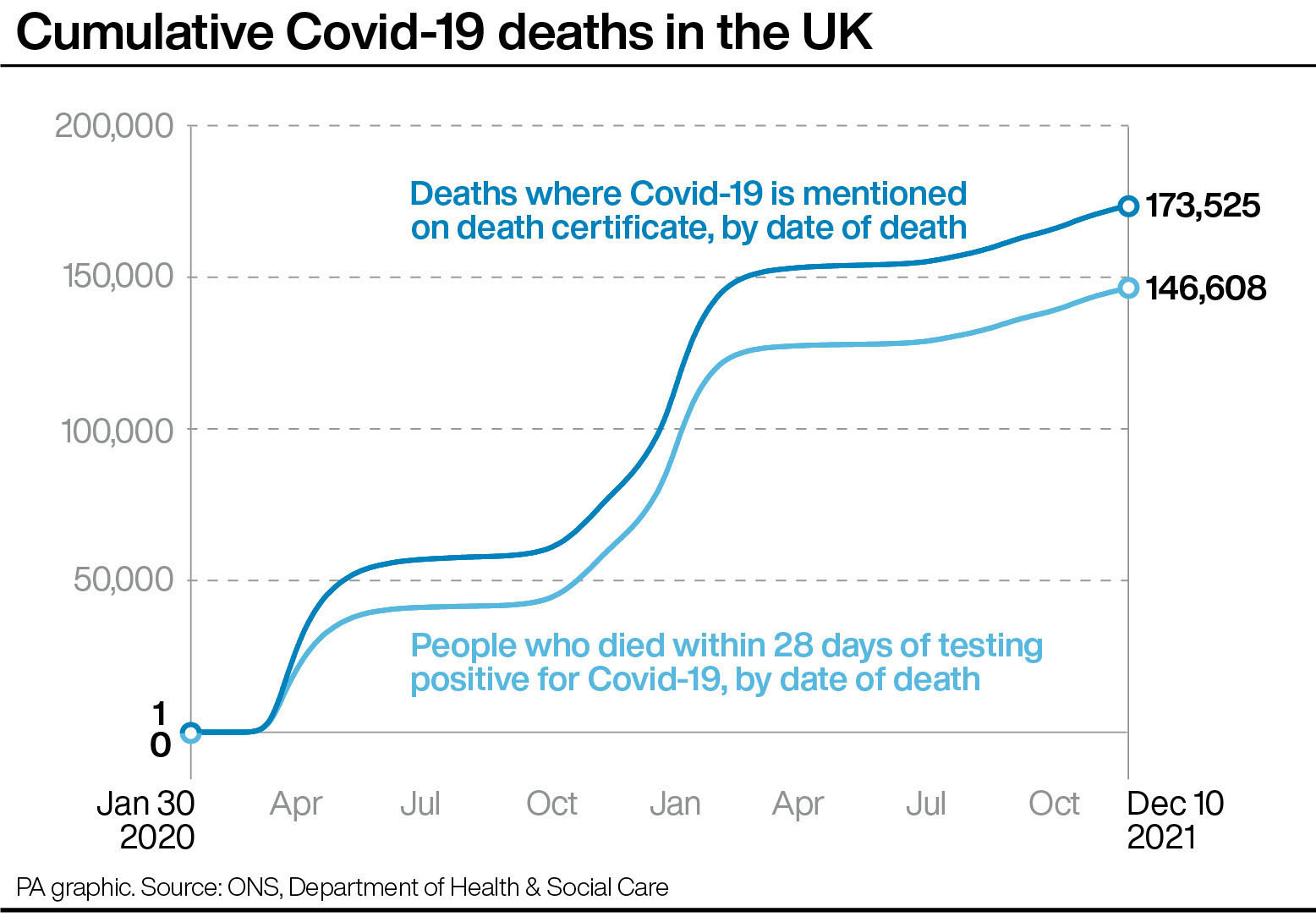
The government said lab-confirmed coronavirus cases were 122,186 as of 9am on Thursday, and a further 137 people had died within 28 days of testing positive for Covid.
Meanwhile, new data has emerged showing that Covid infection levels have reached a new record high after a senior health official said findings that the Omicron variant is milder offer a “glimmer of Christmas hope”.
Advertisement
An estimated 1.7 million people in the UK had Covid-19 in the week ending December 19, the highest number since comparable figures began in autumn 2020, the Office for National Statistics (ONS) said.
The new interim data, published on Friday, also shows that around one in 35 people in private households in England had Covid-19 in the week to December 19 – up from one in 45 in the seven days to December 16.
Advertisement
This is the highest estimate for England since the ONS began estimating community infection levels for England in May 2020, and is equivalent to around 1.5 million people.
The latest figures come after UK Health Security Agency (UKHSA) chief executive Dr Jenny Harries said data suggesting Omicron may be less likely to lead to serious illness than the Delta variant of coronavirus offers a “glimmer of Christmas hope”.
But she warned that it is too early to downgrade the threat from the new strain, which is still spreading rapidly across the UK.
Dr Harries told BBC Radio 4’s Today programme that more information is needed, particularly about the impact on elderly and more vulnerable patients.
Advertisement
She added: “There is a glimmer of Christmas hope in the findings that we published yesterday, but it definitely isn’t yet at the point where we could downgrade that serious threat.”
The UKHSA estimates that someone with Omicron is between 31% and 45% less likely to attend A&E and 50% to 70% less likely to be admitted to hospital than an individual with the Delta variant.
This is a breaking news story and will be updated. Follow HuffPost UK on Twitter, Facebook and Instagram.
The museum this month dressed their likeness of the singer in a Christmas outfit, but it wasn’t the seasonal attire that got every’s attention. It was the statue’s poor resemblance to the nine-time Grammy winner.
The fan response on Twitter also declared the exhibit to be in a hopeless place.
“That wax figure of Rihanna is a hate crime,” one person tweeted.
New data has emerged showing that Covid infection levels have reached a new record high after a senior health official said findings that the Omicron variant is milder offer a “glimmer of Christmas hope”.
An estimated 1.7 million people in the UK had Covid-19 in the week ending December 19, the highest number since comparable figures began in autumn 2020, the Office for National Statistics (ONS) said.
Advertisement
The new interim data, published on Friday, also shows that around one in 35 people in private households in England had Covid-19 in the week to December 19 – up from one in 45 in the seven days to December 16.
This is the highest estimate for England since the ONS began estimating community infection levels for England in May 2020, and is equivalent to around 1.5 million people.
Advertisement
In London this rises to around one in 20 people likely to test positive for Covid-19, the highest proportion for any region in England, the ONS said.
North-east England had the lowest proportion, at around one in 55.
Advertisement
The ONS also said that Covid infections compatible with the Omicron variant have increased in all regions in England with “substantial regional variation”, with the highest rates in London and the lowest in the North East.
The latest figures come after UK Health Security Agency (UKHSA) chief executive Dr Jenny Harries said data suggesting Omicron may be less likely to lead to serious illness than the Delta variant of coronavirus offers a “glimmer of Christmas hope”.
But she warned that it is too early to downgrade the threat from the new strain, which is still spreading rapidly across the UK.
Dr Harries told BBC Radio 4’s Today programme that more information is needed, particularly about the impact on elderly and more vulnerable patients.
Advertisement
She added: “There is a glimmer of Christmas hope in the findings that we published yesterday, but it definitely isn’t yet at the point where we could downgrade that serious threat.”
The UKHSA estimates that someone with Omicron is between 31% and 45% less likely to attend A&E and 50% to 70% less likely to be admitted to hospital than an individual with the Delta variant.
The rapid spread of Omicron has seen it become the “dominant strain now right across the UK”, and Dr Harries said cases are still doubling across “most regions” of the country.
Dr Harries added: “What we have got now is a really fine balance between something that looks like a lower risk of hospitalisation – which is great news – but equally a highly transmissible variant and one that we know evades some of our immune defences, so it is a very balanced position.”
The UKHSA data has fuelled speculation in Westminster that further restrictions can be avoided in England after Christmas.
The number of UK daily Covid cases has reached another record high.
The government said lab-confirmed coronavirus cases were 119,789 as of 9am on Thursday, and a further 147 people had died within 28 days of testing positive for Covid.
It comes as Covid infection levels reached a record high in the UK – but the government maintained no further restrictions will be set out before Christmas.
Advertisement
An estimated 1.4 million people in the UK had the virus in the week ending December 16, the highest number since comparable figures began in autumn 2020, the Office for National Statistics (ONS) said.
The data emerged within hours of Sajid Javid telling broadcasters the government is not planning to make any more announcements on restrictions in England this week.
Advertisement
It follows a warning from NHS national medical director Professor Stephen Powis that the service is on a “war footing” as the Omicron variant sweeps through the country.
In other developments:
– Javid welcomed studies suggesting Omicron may cause less severe illness than earlier strains but he warned it could still lead to “significant” hospital admissions.
– The ONS said the percentage of people testing positive for Covid in the latest week is estimated to have increased in all regions of England except the north-east, south-west and West Midlands, where the trend is uncertain.
Advertisement
– New figures from NHS England showed one in five patients waited at least half-an-hour to be handed over from ambulance teams to A&E staff at hospitals in England last week.
In England, around one in 45 people in private households had Covid in the week to December 16, up from one in 60 the previous week, according to the latest ONS estimates.
Equivalent to about 1.2 million people, this is the highest number since the ONS began estimating infection levels for England in May 2020.
This is a breaking news story and will be updated. Follow HuffPost UK on Twitter, Facebook and Instagram.
The UK has recorded 106,122 daily Covid-19 cases – the first time the total has gone above six figures as the Omicron surge continues.
The lab-confirmed coronavirus cases were as of 9am on Wednesday, the government said, which added a further 140 people had died within 28 days of testing positive for Covid.
Advertisement
It comes as Boris Johnson has been urged to outline his post-Christmas Covid strategy, as Wales became the latest part of the UK to outline a tightening of restrictions.
The prime minister has reassured people that no further curbs will be introduced in England before December 25, given there is not enough evidence on the severity of the Omicron variant and hospital admission to justify stricter measures.
Advertisement
But in Wales, first minister Mark Drakeford has announced new measures to be introduced from 6am on Boxing Day and claimed Johnson and his Cabinet are “paralysed by their internal divisions”.
Elsewhere, a new formulation of the Pfizer/BioNTech coronavirus vaccine has been approved for use in children aged five to 11.
Advertisement
The Joint Committee on Vaccination and Immunisation (JCVI) is advising that children aged five to 11, who are in a clinical risk group, or who are a household contact of someone (of any age) who is immunosuppressed, should be offered a primary course of vaccination.
it was also reported that UK Government scientists are set to conclude that Omicron is causing a milder disease than the Delta strain in most Britons.
Politico’s London Playbook said the UK Health Security Agency is expected to publish early real-world data on the disease’s severity before Christmas, with its findings also suggesting Omicron is not necessarily mild enough to avoid large numbers of hospital admissions.
This is a breaking news story and will be updated. Follow HuffPost UK on Twitter, Facebook and Instagram.
Omicron’s rapid takeover has left most of us feeling pretty deflated – at best – about the coming months.
Worries about further restrictions, another lockdown and the variant’s major threat to general public health have already overshadowed this festive period.
Advertisement
But it’s not all bad. Here are five snippets of good Covid-related news that might have slipped under your radar.
1. More than two thirds of eligible adult population have now been boosted
Advertisement
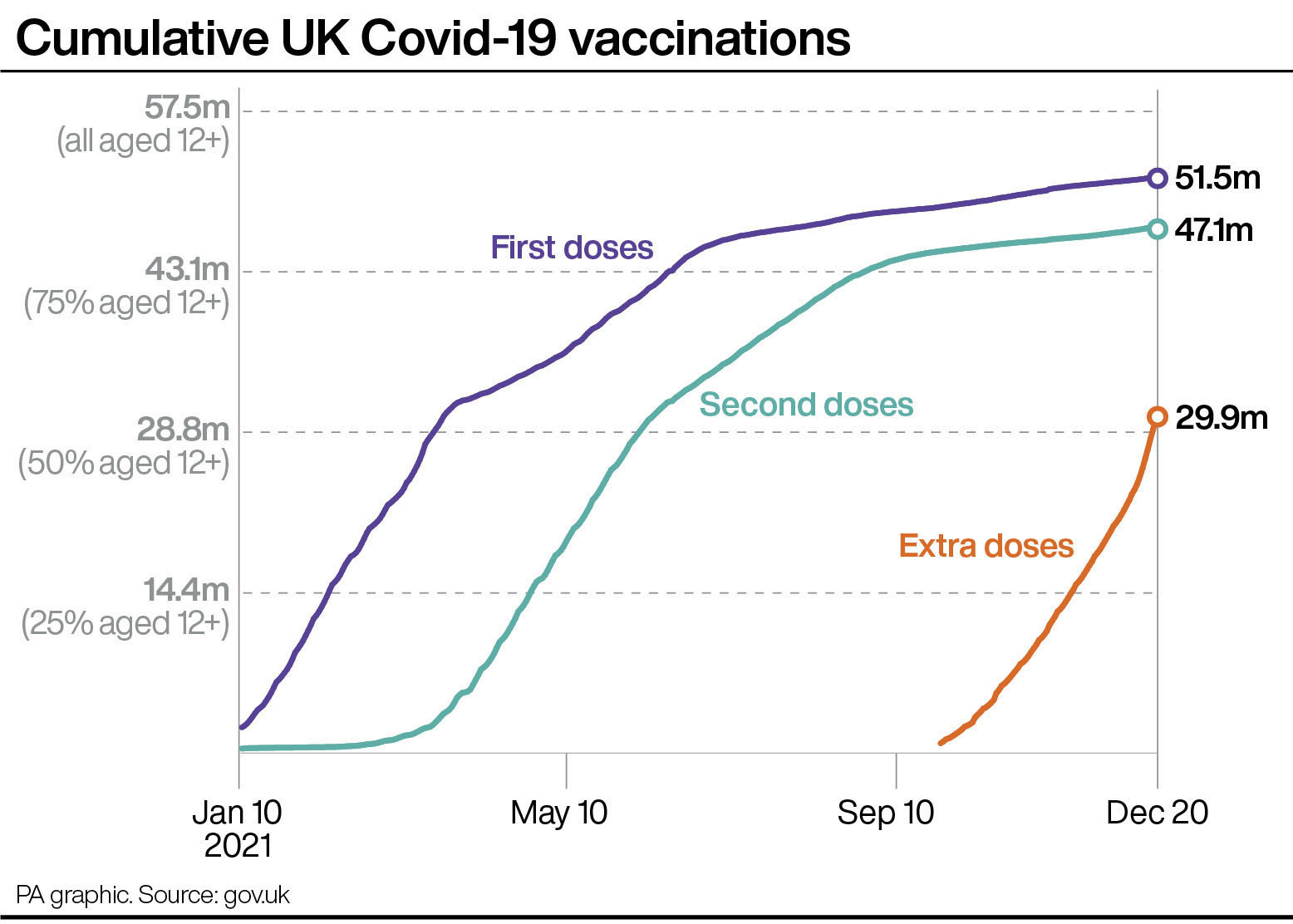
According to NHS England, more than two thirds of those aged 18 and over who are eligible for a booster vaccine have received it.
The news follows the huge extended rollout from the health service which meant the NHS would have to administer around one million booster shots in the days leading up to the end of December.
Advertisement
Prime minister Boris Johnson wanted every eligible adult to be offered a booster shot before the end of the year, a target denounced as overly ambitious when it was first revealed.
Now, 25,130,453 people who had their second dose more than three months ago have already been boosted in England.
More than 1.5 million boosters were also reported across Saturday and Sunday, making the booster campaign the most successful vaccine drive in the health service’s history.
PA GraphicsPress Association Images
Cumulative UK Covid-19 vaccinations
2. Registered deaths fall to the lowest level in two months
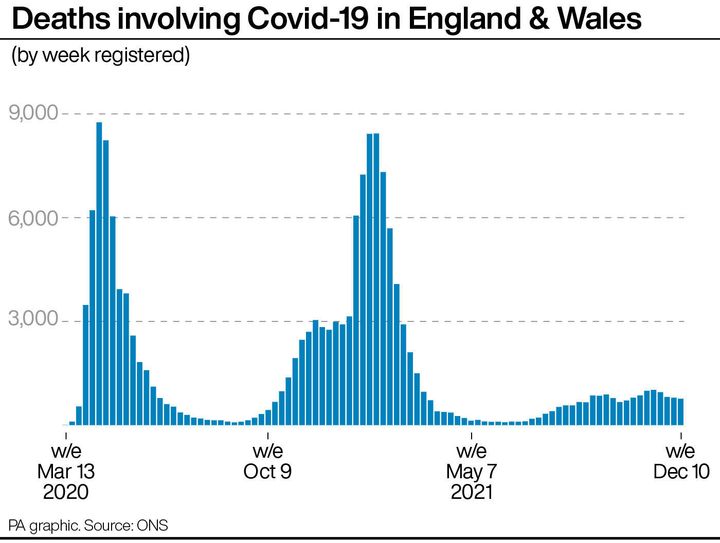
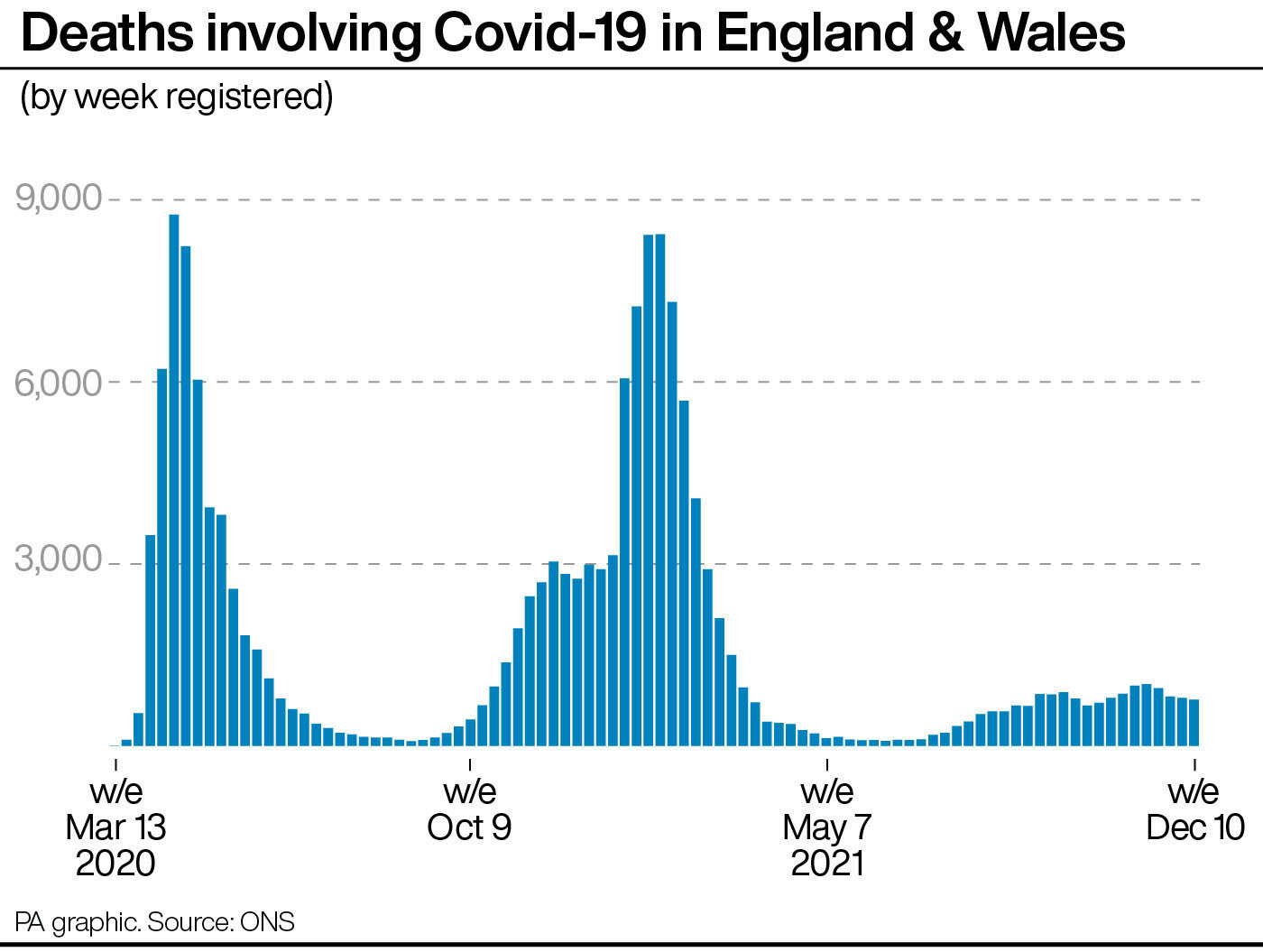
The Office for National Statistics (ONS) has revealed that weekly registered deaths linked to Covid in England and Wales have fallen to a rate lower than those seen in October.
According to the ONS, there were 764 deaths in the week leading up to 10 December with “novel coronavirus” on the death certificate.
This equates to 6.4% of all deaths registered over that seven-day period. This is a decrease from the previous week, when 792 deaths were recorded.
It also meant these latest figures are the lowest since 15 October, when there were 713 recorded Covid deaths.
However, these numbers do not reflect the impact from Omicron just yet. There is always a two-to-three week lag between infection and hospitalisations, and the new variant only swept into the UK at the beginning of the month.
So, despite the high transmissibility of Omicron, cases may have reached their peak in Britain.
However, the exact reason behind the plateauing cases is unclear. Experts have pointed to a potential reduction of tests being taken, the booster taking effect, or the new measures introduced have led the public to be more cautious.
Advertisement
It is also still too early to predict if Omicron has actually reached its highest levels in the UK.
4. A positive picture is emerging from South Africa
Omicron was first reported in the South African province of Gauteng back on 24 November, and yet case numbers already appear to be dropping off.
South Africa hit a peak close to 27,000 daily cases last Thursday. On Tuesday, this had dropped to 15,000 cases.
The highly transmissible variant is estimated to account for 90% of Covid cases in Gauteng since mid-November – but cases there peaked at 16,000 on 12 December and have since dropped to 3,300 on Tuesday.
Speaking to Associated Press, the senior researcher at the Vaccines and Infectious Diseases Analytics department from the South African University of Witwatersrand, Marta Nunes, said: “It was a short wave…and the good news is that it was not very severe in terms of hospitalisations and deaths.”
However, professor Chris Whitty, chief medical officer for England, took on the data surrounding South Africa last week and warned that in some cases it had been “over-interpreted”.
TOLGA AKMEN via Getty Images
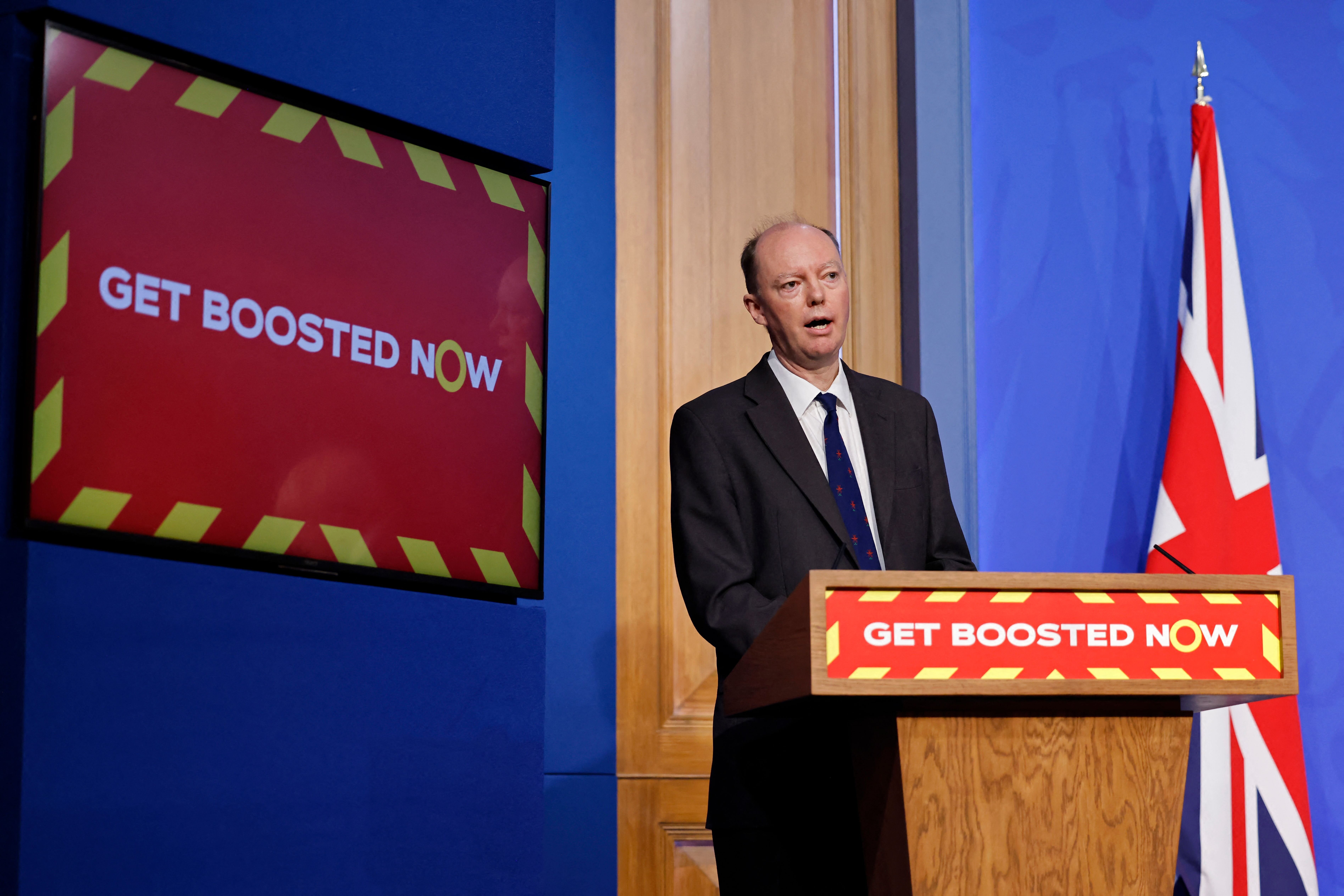
Chris Whitty has warned not to put too much hope on the stats coming from South Africa
He explained: “The amount of immunity for this wave [in South Africa is] because of a prior Delta wave and vaccination is far higher than it was for their last wave and, therefore, the fact they have a lower hospitalisation rate this time is unsurprising.
“That doesn’t mean there is some degree of milder disease — that is possible — but I think there is a danger that people have over-interpreted this to say this is not a problem and there’s nothing to worry about. I want to be clear, I am afraid [Omicron] is going to be a problem.”
Tony Blair has said “you’re an idiot” if you have no health reason not to get vaccinated against Covid but still have not had the jab.
In an interview with Times Radio, the former prime minister said it would now be “incredibly difficult” for the government to introduce another full lockdown.
Advertisement
“One of the reasons I’m not in favour of shutting everything down is I’m not sure with this Omicron thing there’s anything you can do,” he said. “You’ve just got to give people the best protection.”
Blair added: “If you’re not vaccinated at the moment and you’re, you’re eligible and you’ve got no health reason for not being vaccinated, you’re not just irresponsible, I mean, you’re an idiot. I’m sorry, I mean, truthfully you are.”
Advertisement
It came as Boris Johnson was urged to outline his post-Christmas Covid strategy.
The prime minister has ruled out introducing new rules before Christmas, but there is an expectation tighter restrictions will be brought in soon after.
Advertisement
Gillian Keegan, a health minister, warned earlier today there is “uncertainty” around people making new year’s eve plans.
“We can’t predict what the data is going to tell us before we’ve got the data,” she told LBC.
“We are trying to take a balanced and proportionate approach so that people can see their families over Christmas to try and plan some stuff. But of course it is difficult to anticipate.”
But Labour pressed for decisions to be made as soon as possible. Shadow work and pensions secretary Jon Ashworth told Sky News: “People are anticipating that some form of restrictions will come in post-Christmas, and I think we just need to give people certainty.
Advertisement
Elsewhere, it was reported that UK Government scientists are set to conclude that Omicron is causing a milder disease than the Delta strain in most Britons.
Politico’s London Playbook said the UK Health Security Agency is expected to publish early real-world data on the disease’s severity before Christmas, with its findings also suggesting Omicron is not necessarily mild enough to avoid large numbers of hospital admissions.
Professor Lawrence Young, a virologist and professor of molecular oncology at Warwick Medical School, University of Warwick, says that having no restrictions for Christmas means we’ll be paying for it later.
“This is a very risky approach and is very likely to result in the need for more stringent restrictions in the near future,” he says.
“Given the extraordinarily and inexorable rapid spread of the omicron variant, it’s never been more important for people to take individual responsibility to protect themselves, their families and friends.”
He adds that it may take individual initiative to curb the spread of Covid (which, unfortunately might mean cancelling any New Year party you may have had planned).
Professor Young adds: “While we are hopeful that vaccines will do a lot of the heavy lifting when it comes to keeping omicron under control, other interventions are also required to prevent case numbers rising and the NHS becoming overwhelmed. Limiting the size of gatherings, avoiding crowded indoor spaces with poor ventilation, wearing a face covering and frequent use of lateral flow tests are all protective measures that we can take to limit the spread of this variant.”
If we aren’t being responsible with our Covid measures, and if the government aren’t more stern, then consequence will be severe, he adds.
“If the omicron variant continues to spread at the current rate, it is inevitable that more restrictions will be necessary in England. Waiting for case numbers and hospitalisations to increase is likely to be too late to suppress the spread of the omicron variant and will subject the NHS to unprecedented pressure.”
Prof. Young believes we need to “buy time” to ensure the booster jabs have taken effect and” not let Omicron continue to spread unfettered”.
“A short circuit break now would have prevented more people from getting infected and from having to isolate which is now impacting many essential services,” he says. “Have we learnt nothing from our previous experiences with coronavirus? Dither and delay will only mean more harsh measures later while we run the very real risk of many folk getting sick and massive disruption due to staff absences.”
So whatever your New Year plans, celebrate safely.
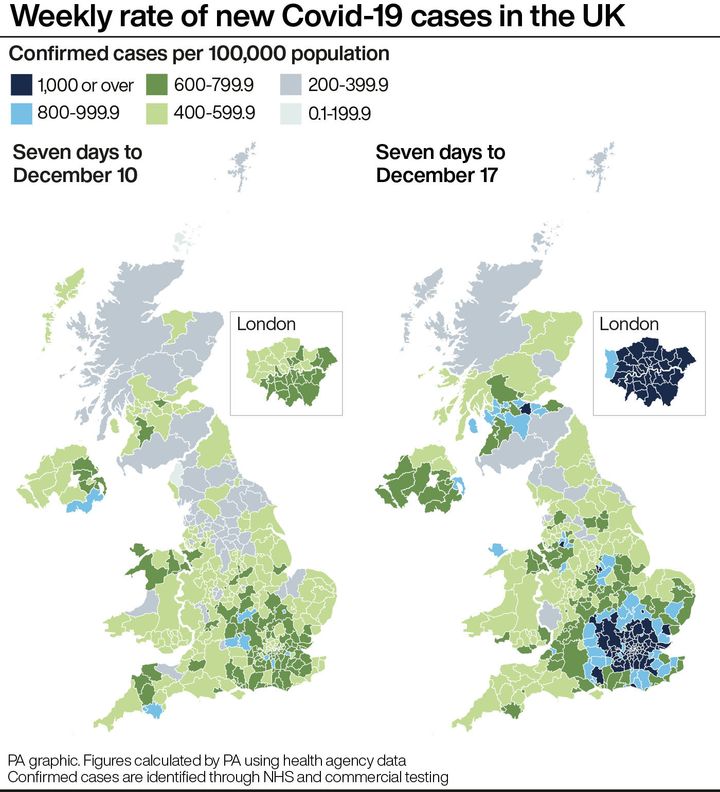
So when it comes to weighing up the impact of Omicron and the potential damage from new Covid measures, the government and its scientific advisers are expected to look to the capital first to gage just what this new variant might do.
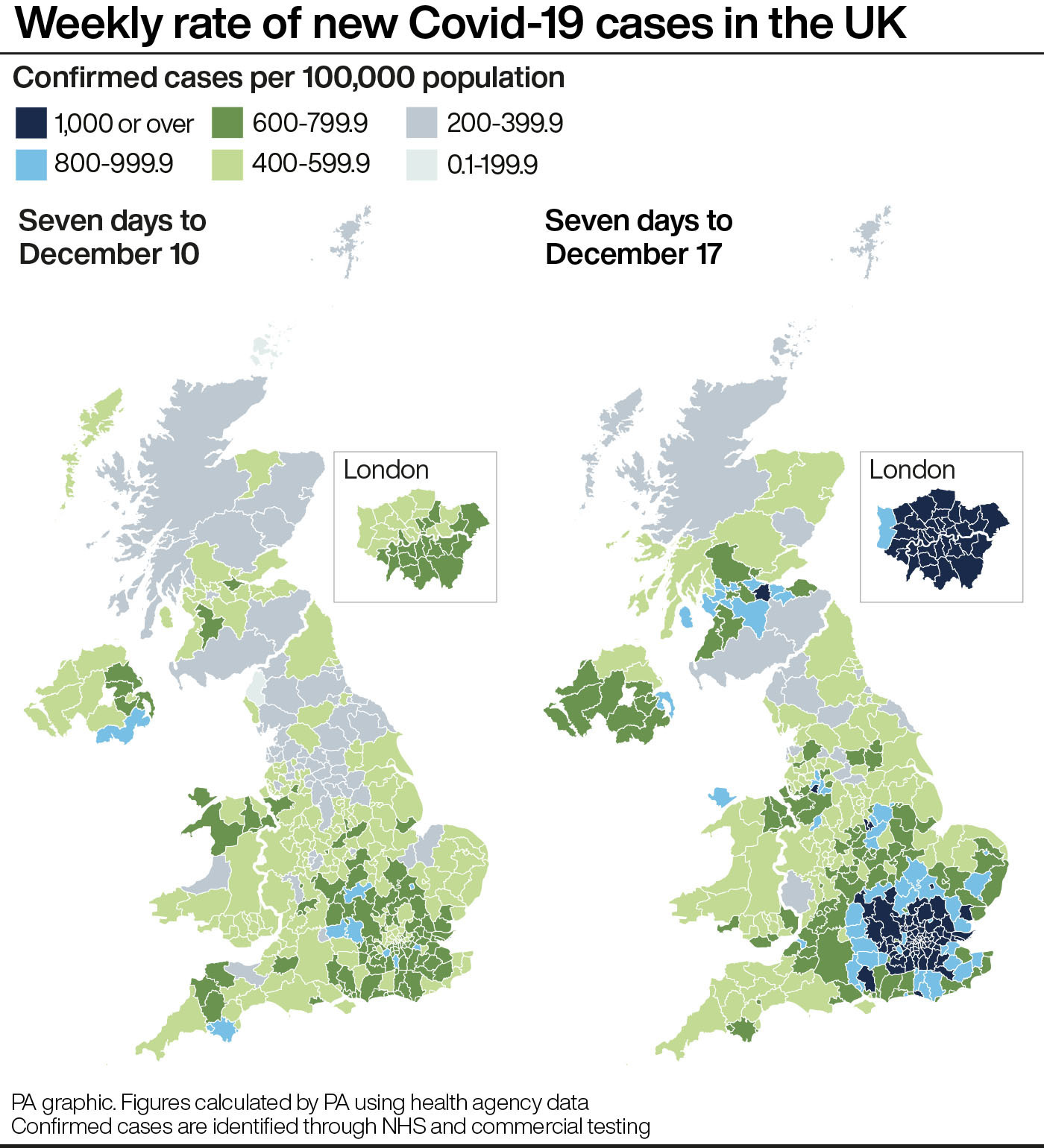
For the week ending 16 December, there were more than 800 positive cases per 100,000 population in every London borough.
PA Graphics/Press Association Images
Weekly rate of new Covid-19 cases in the UK show how London infections have shot up in recent weeks
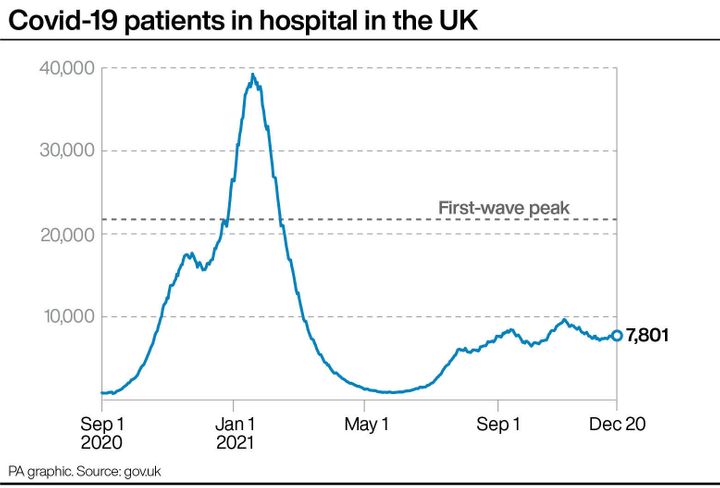
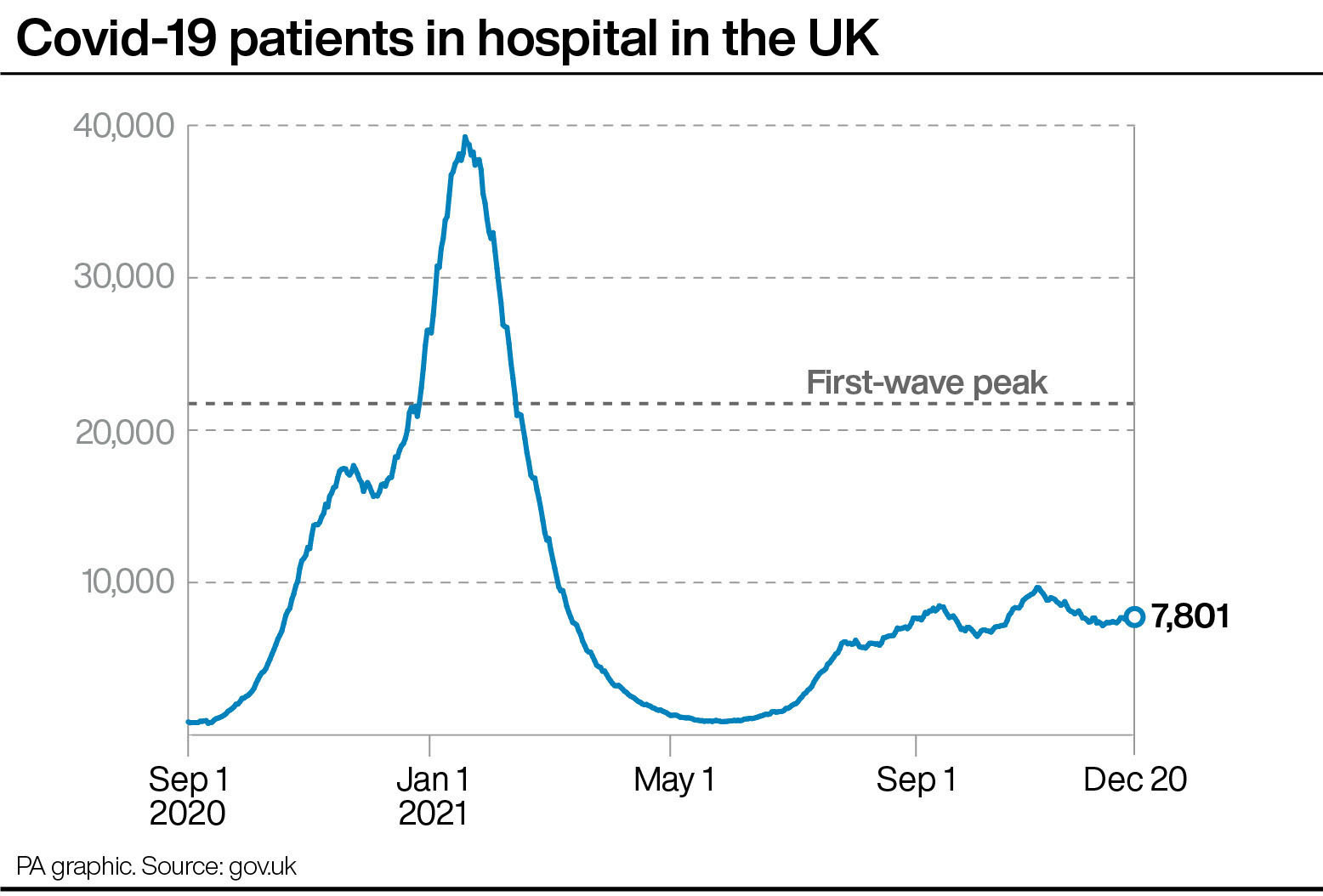
There were 1,904 total patients in London hospitals with Covid on Tuesday, up by approximately 600 compared to Tuesday 14 December.
On Sunday 19 December, 245 new patients were admitted to hospital in London with Covid.
There were 201 Covid patients in ventilation beds in London, an increase of seven since last week, and 19 people died in the city’s hospitals after testing positive for Covid.
Advertisement
According to Jane Merrick in the i, experts are most interested in the hospitalisation rate.
If the hospitalisations exceed around 400 Covid patients a day in London, that could put intense pressure on the NHS – meaning the virus was causing too much damage to the health service and more restrictions would be needed.
PA GraphicsPress Association Images
Covid-19 patients in hospital in the UK
Why does this matter?
If hospitalisation numbers become too high in London, that suggests the rest of the country would soon follow suit.
As prime minister Boris Johnson has explained, scientists are still not clear how severe Omicron can be in some people who get infected.
Without this knowledge the government does not want to press on with introducing further restrictions.
PA GraphicsPress Association Images
Deaths involving Covid-19 in England & Wales
How hopeful should we be?
It’s important to note that hospitalisations lag behind infection rates by approximately two weeks.
But, as Omicron tightened its grip on London at the start of December, there is a chance that the low hospital admission rate may indicate the new variant truly isn’t as severe as the previous strains.
Approximately 1,904 people are in hospital now compared to 3,367 last year.
The World Health Organisation’s professor Paul Hunter told The Times that current Omicron infections were less than half of the original forecast – expected to be at 200,000 positive cases a day by 20 December.
He added: “It’s possible that something is changing with the epidemiology of Omicron – it’s possible that it’s not growing at the rate that it was.”
What else could impact the UK’s Omicron response?
London’s infection rate is not the only factor which will influence the government’s Covid response, especially as the variant spread rapidly through the UK.
The priority is still whether or not the NHS can cope if there’s a surge in cases, especially if some healthcare workers are off sick themselves with the virus.
Cases across the UK seems to have stabilised at approximately 90,000 for the sixth day in a row, too, despite the concerning situation in London.