When Hollie was diagnosed with the big C, she feared her bond with Sydney would be lost forever.


When Hollie was diagnosed with the big C, she feared her bond with Sydney would be lost forever.

Saturn’s iconic rings seem to glow eerily in this incredible infrared picture, which also unveils unexpected features in Saturn’s atmosphere. See link to image below.
This image serves as context for an observing program that will test the telescope’s capacity to detect faint moons around the planet and its bright rings. Any newly discovered moons could help scientists put together a more complete picture of the current system of Saturn, as well as its past.
Methane gas absorbs almost all the sunlight falling on the atmosphere at this picture’s specific infrared wavelength (3.23 microns). As a result, Saturn’s familiar striped patterns aren’t visible because the methane-rich upper atmosphere blocks our view of the primary clouds. Instead, Saturn’s disk appears dark, and we see features associated with high-altitude stratospheric aerosols, including large, dark, and diffuse structures in Saturn’s northern hemisphere that don’t align with the planet’s lines of latitude. Interestingly, researchers previously spotted similar wave-like in early JWST NIRCam observations of Jupiter.
Unlike the atmosphere, Saturn’s rings lack methane, so at this infrared wavelength, they are no darker than usual and thus easily outshine the darkened planet. This new image of Saturn also reveals intricate details within the ring system, showcasing several of the planet’s moons like Dione, Enceladus, and Tethys.
“We are very pleased to see JWST produce this beautiful image, which is confirmation that our deeper scientific data also turned out well,” said Dr. Matthew Tiscareno, a senior research scientist at the SETI Institute who led the process of designing this observation. “We look forward to digging into the deep exposures to see what discoveries may await.”
Over the past few decades, missions like NASA’s Pioneer 11, Voyagers 1 and 2, the Cassini spacecraft and the Hubble Space Telescope have observed Saturn’s atmosphere and rings. The image captured by JWST is just a taste of what this observatory will uncover about Saturn in the coming years as scientists. This image is part of a suite of deeply exposed images where researchers hope to identify new ring structures and perhaps even new moons of Saturn.
Moving from the inner to the outer features of Saturn’s rings, we can observe the dark C ring, the bright B ring, the narrow and dark Cassini Division, and the medium-bright A ring with the dark Encke Gap near its outer edge. Additionally, off the outer edge of the A ring, we can see the narrow strand known as the F ring. The rings cast a shadow on the planet and vice versa, creating intriguing visual effects.
In-depth exposures not shown in this image will allow scientists to investigate Saturn’s fainter rings, including the thin G ring and diffuse E ring, which are not visible here. Saturn’s rings consist of an assortment of rocky and icy fragments, ranging in size from smaller than a grain of sand to as large as mountains on Earth. Recently, researchers used JWST to explore Enceladus and discovered a substantial plume emanating from the moon’s southern pole. This plume contains particles and copious amounts of water vapor, contributing to Saturn’s E ring.
Comparing the northern and southern poles of Saturn in this image, we can observe typical seasonal changes. It’s currently summertime in Saturn’s northern hemisphere, while the southern hemisphere emerges from winter darkness. However, the northern pole appears unusually dark, potentially due to an unknown seasonal process affecting polar aerosols. A faint brightening at the edge of Saturn’s disk might be attributed to high-altitude methane fluorescence or emission from the ionosphere’s trihydrogen ion (H3+). Spectroscopy from JWST could help confirm these possibilities.

How can you tell if a fruit fly is hungry? Ask a computer.
While that may sound like a bad dad joke, it’s reality at Tulane University, where researchers have developed a new A.I. tool that can tell you if a fruit fly is hungry, sleepy or singing (yes, fruit flies sing).
Dubbed MAFDA (for Novel Machine-learning-based Automatic Fly-behavioral Detection and Annotation) the system uses cameras and a newly developed software to track and identify complex interactive behaviors of individual flies within a larger group. This allows researchers to compare and contrast the behaviors of fruit flies with different genetic backgrounds.
For more than a century, scientists have used fruit flies’ simple genome and short lifespan to decode mysteries of inheritance and immunity in humans with studies of Drosophila melanogaster nabbing six Nobel Prizes. Fruit flies and humans share 60 percent of the same DNA.
Previous algorithms were less accurate at tracking individual flies within a group, but the MAFDA system makes studying the tiny, winged insects easier.
“Fruit flies are like pioneers in the discovery of new things, from the chromosome theory of inheritance to innate immunity,” said corresponding author Wu-Min Deng, PhD., professor of biochemistry and molecular biology and the Gerald & Flora Jo Mansfield Piltz Endowed Professor in Cancer Research at Tulane School of Medicine. “To be able to quantify the flies’ behavior is really a step forward in behavior studies.”
Wenkan Liu, a School of Medicine graduate student who developed the MAFDA system, said the significance of the platform is “undeniable.”
“It speeds up research, minimizes human error, and provides intricate insights into behavior genetics,” Liu said. “This tool is potentially pivotal as it enhances reproducibility and paves the way for new explorations in large-scale behavioral analysis.”
MAFDA was developed as part of a recent study, which discovered that the gene that causes flies to perceive pheromones is the same gene that controls pheromone production. These findings, published in Science Advances, challenge the status quo view that separate genes control pheromone production and perception and have broad applications in the fields of human behavioral evolution, metabolism and sex dimorphism.
Going forward, the researchers hope to see MAFDA used in a variety of applications. Jie Sun, lead author and postdoctoral fellow at Tulane School of Medicine, said MAFDA could eventually be used to study other insects as well as mice and fish, and the system may be useful in studying drug effects.
“The more information we give the machine, the better it gets at correctly identifying different behaviors from courtship to feeding and so on,” Sun said. “This is a very important, meaningful tool.”
MAFDA is already in use on other research projects at Tulane, and researchers are working to package the system so it can be used by more scientists both at Tulane and around the world .
“That’s the goal,” Deng said. “The original idea was to be able to identify the health status of flies. That may be too much to ask right now, but we’re hoping this will be more broadly used by the community and hopefully in the future we can go in that direction.”

Flexible displays that can change color, convey information and even send veiled messages via infrared radiation are now possible, thanks to new research from the University of Illinois Urbana-Champaign. Engineers inspired by the morphing skins of animals like chameleons and octopuses have developed capillary-controlled robotic flapping fins to create switchable optical and infrared light multipixel displays that are 1,000 times more energy efficient than light-emitting devices.
The new study led by mechanical science and engineering professor Sameh Tawfick demonstrates how bendable fins and fluids can simultaneously switch between straight or bent and hot and cold by controlling the volume and temperature of tiny fluid-filled pixels. Varying the volume of fluids within the pixels can change the directions in which the flaps flip — similar to old-fashioned flip clocks — and varying the temperature allows the pixels to communicate via infrared energy.
The study findings are published in the journal Science Advances.
Tawfick’s interest in the interaction of elastic and capillary forces — or elasto-capillarity — started as a graduate student, spanned the basic science of hair wetting and led to his research in soft robotic displays at Illinois.
“An everyday example of elasto-capillarity is what happens to our hair when we get in the shower,” Tawfick said. “When our hair gets wet, it sticks together and bends or bundles as capillary forces are applied and released when it dries out.”
In the lab, the team created small boxes, or pixels, a few millimeters in size, that contain fins made of a flexible polymer that bend when the pixels are filled with fluid and drained using a system of tiny pumps. The pixels can have single or multiple fins and are arranged into arrays that form a display to convey information, Tawfick said.
“We are not limited to cubic pixel boxes, either,” Tawfick said. “The fins can be arranged in various orientations to create different images, even along curved surfaces. The control is precise enough to achieve complex motions, like simulating the opening of a flower bloom.”
The study reports that another feature of the new displays is the ability to send two simultaneous signals — one that can be seen with the human eye and another that can only be seen with an infrared camera.
“Because we can control the temperature of these individual droplets, we can display messages that can only be seen using an infrared device,” Tawfick said, “Or we can send two different messages at the same time.”
However, there are a few limitations to the new displays, Tawfick said.
While building the new devices, the team found that the tiny pumps needed to control the pixel fluids were not commercially available, and the entire device is sensitive to gravity — meaning that it only works while in a horizontal position.
“Once we turn the display by 90 degrees, the performance is greatly degraded, which is detrimental to applications like billboards and other signs intended for the public,” Tawfick said. “The good news is, we know that when liquid droplets become small enough, they become insensitive to gravity, like when you see a rain droplet sticking on your window and it doesn’t fall. We have found that if we use fluid droplets that are five times smaller, gravity will no longer be an issue.”
The team said that because the science behind gravity’s effect on droplets is well understood, it will provide the focal point for their next application of the emerging technology.
Tawfick said he is very excited to see where this technology is headed because it brings a fresh idea to a big market space of large reflective displays. “We have developed a whole new breed of displays that require minimal energy, are scaleable and even flexible enough to be placed onto curved surfaces.”
Illinois researchers Jonghyun Ha, Yun Seong Kim, Chengzhang Li, Jonghyun Hwang, Sze Chai Leung and Ryan Siu also participated in this research.
The Airforce Office of Scientific Research and the National Science Foundation supported this research.

Scientists have successfully tested a novel way of boosting honey bees’ immune systems to help them fend off deadly viruses, which have contributed to the major losses of the critical pollinator globally.
In a new study, the research team, which includes entomologists with the University of Florida, the Agricultural Research Service-USDA, Louisiana State University and the University of Nebraska-Lincoln, showed that prompting honey bees’ cells to produce free radicals helped the bees weather a host of viruses. In fact, the treatment greatly reduced, and in some cases, nearly eliminated virus activity in full scale field studies.
“This approach is especially exciting because it doesn’t just target a specific type of virus but helps with many different viruses,” said Daniel Swale, senior author of the study. Swale is the associate director for training and special projects in the UF Emerging Pathogens Institute and associate professor in the UF/IFAS entomology and nematology department.
“Additionally, we demonstrated that our treatment works both in the lab and in colonies that each contain 80,000 bees in the field. This is huge because, in a hive setting, bees are exposed to so many different viruses and stressors, so successfully controlling viruses in that environment is very encouraging,” said Swale, who completed some of this research while at Louisiana State University.
Honey bee colonies, and the beekeepers who manage them, play an important role in food production by pollinating many crops. In recent years, honey bee populations have seen significant declines, and viruses, while not the top cause of honey bee deaths, are among the main contributors.
“Varroa mites are the number one cause of honey bee losses, but it’s important to point out that varroa mites, aside from physically weakening bees, also transmit viruses to bees. If we can mitigate viruses in honey bee colonies, that would be a big step forward,” said Michael Simone-Finstrom, a co-author of the study and a research molecular biologist with the ARS Honey Bee Breeding, Genetics, and Physiology Research Lab in Baton Rouge, Louisiana.
In the experiment, the researchers used a compound called pinacidil to alter potassium ion channels, a protein found in the cells of bees’ and most living things. Altering these channels produced slightly more free radicals.
“While free radicals are often bad for cell health, in moderate amounts they can be therapeutic, as we see in this study. In this case, the additional free radicals signal to the immune system to ramp up, which helps the bees fight off viruses,” said Troy Anderson, a co-author of the paper and a professor of entomology at the University of Nebraska-Lincoln.
The scientists administered the drug to honey bee colonies by mixing it into sugar water and drizzling the water over the honey comb at night. The bees then consumed the sugar water and fed it to their young. During the day, bees are constantly moving in an out of the hive, so giving them the treatment at night maximizes the number of bees that will receive it.
The treatment protected bees from six potentially deadly honey bee viruses: Israeli acute paralysis virus, deformed wing viruses A and B, black queen cell virus and Lake Sinai viruses 1 and 2. The researchers also showed that pinacidil helped more bees survive in colonies heavily infested with varroa mites.
Administering pinacidil to commercial honey bee hives may only be feasible for some beekeepers, the researchers said, but the study opens the door to identifying other active ingredients that may work better and cost less.
“One of the big take-aways from this study is that potassium ion channels can be a target for improving immune system function in honey bees and possibly other insects. We would like to find a molecule, such as a peptide, or a new technology that has the same effect as pinacidil but is more accessible to beekeepers,” Swale said.

The universe is expanding; we’ve had evidence of that for about a century. But just how quickly celestial objects are receding from each other is still up for debate.
It’s no small feat to measure the rate at which objects move away from each other across vast distances. Since the discovery of cosmic expansion, its rate has been measured and re-measured with increasing precision, with some of the latest values ranging from 67.4 up to 76.5 kilometers per second per megaparsec, which relates the recession velocity (in kilometers per second) to the distance (in megaparsecs).
The discrepancy between different measurements of cosmic expansion is called the “Hubble tension.” Some have called it a crisis in cosmology. But for UC Santa Barbara theoretical astrophysicist Tejaswi Venumadhav Nerella and colleagues at the Tata Institute of Fundamental Research in Bangalore, India, and the Inter-University Center for Astronomy and Astrophysics in Pune, India, it is an exciting time.
Since the first detection of gravitational waves in 2015, detectors have been significantly improved and are poised to yield a rich haul of signals in the coming years. Nerella and his colleagues have come up with a method to use these signals to measure the universe’s expansion, and perhaps help to settle the debate once and for all. “A major scientific goal of future detectors is to deliver a comprehensive catalog of gravitational wave events, and this will be a completely novel use of the remarkable dataset,” said Nerella, co-author of a paper published in Physical Review Letters.
Measurements of the cosmic expansion rate boil down to velocity and distance. Astronomers use two kinds of methods to measure distances: the first start with objects with a known length (“standard rulers”) and look at how big they appear in the sky. These “objects” are features in cosmic background radiation, or in the distribution of galaxies in the universe.
A second class of methods starts with objects of known luminosity (“standard candles”) and measures their distances from Earth using their apparent brightness. These distances are connected to those of farther bright objects and so on, which builds up a chain of measurement schemes that is often called the “cosmic distance ladder.” Incidentally, gravitational waves themselves can also help measure cosmic expansion, since the energy released by the collision of neutron stars or black holes can be used to estimate the distance to these objects.
The method that Nerella and his co-authors propose belongs to the second class but uses gravitational lensing. This is a phenomenon that occurs when massive objects warp spacetime, and bend waves of all kinds that travel near the objects. In rare cases, lensing can produce multiple copies of the same gravitational wave signal that reach Earth at different times — the delays between the signals for a population of multiple imaged events can be used to calculate the universe’s expansion rate, according to the researchers.
“We understand very well just how sensitive gravitational wave detectors are, and there are no astrophysical sources of confusion, so we can properly account for what gets into our catalog of events,” Nerella said. “The new method has sources of error that are complementary to those of existing methods, which makes it a good discriminator.”
The sources of these signals would be binary black holes: systems of two black holes that orbit each other and ultimately merge, releasing massive amounts of energy in the form of gravitational waves. We haven’t yet detected strongly lensed examples of these signals, but the upcoming generation of ground-based detectors is expected to have the necessary level of sensitivity.
“We expect the first observation of lensed gravitational waves in the next few years,” said study co-author Parameswaran Ajith. Additionally, these future detectors should be able to see farther into space and detect weaker signals.
The authors expect these advanced detectors to start their search for merging black holes in the next decade. They anticipate recording signals from a few million black hole pairs, a small fraction (about 10,000) of which will appear multiple times in the same detector due to gravitational lensing. The distribution of the delays between these repeat appearances encodes the Hubble expansion rate.
According to lead author Souvik Jana, unlike other methods of measurement, this method does not rely on knowing the exact locations of, or the distances to, these binary black holes. The only requirement is to accurately identify a sufficiently large number of these lensed signals. The researchers add that observations of lensed gravitational waves can even provide clues on other cosmological questions, such as the nature of the invisible dark matter that makes up much of the energy content of the universe.
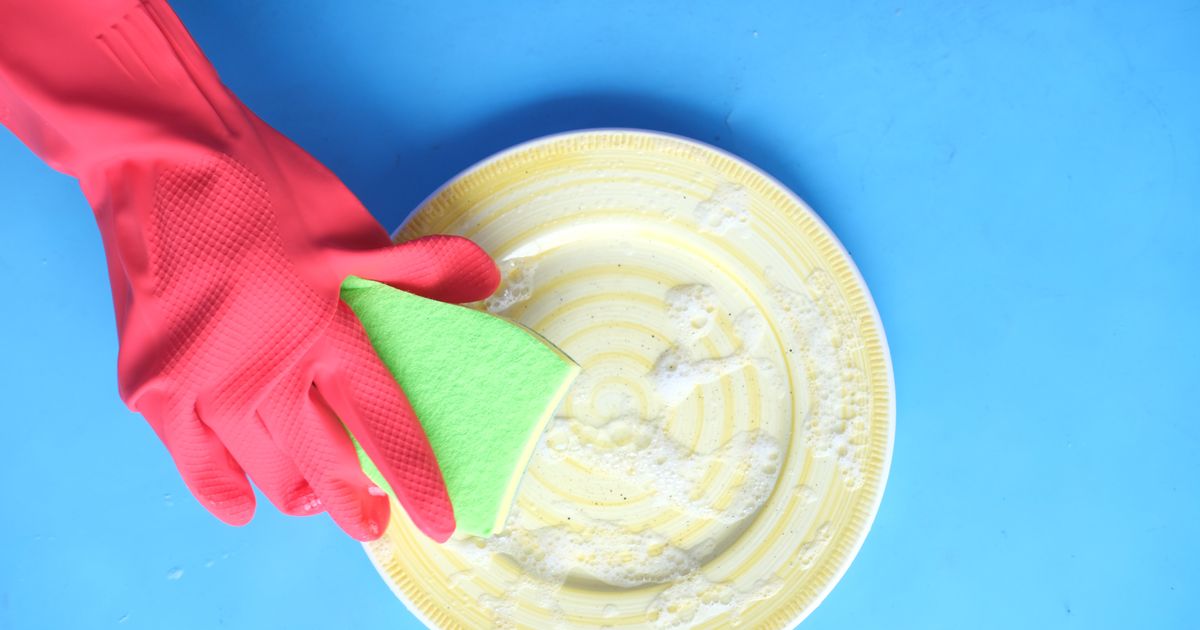
Where would we be without our trusty washing-up sponge? We use it to clean pretty much everything in our kitchen. Despite it being an item we use nearly every day, most of us aren’t changing our sponges as often as we should.
Think about it, when was the last time you swapped your sponge out for a new one? A few weeks ago? Two months ago? Well, I’m sure you’ll run to the shops and get a new one after realising how much bacteria is found in your favourite kitchen item.
Advertisement
A study found that one single sponge could hold up to more bacteria than the number of people living on this planet. Just let that sink in (pardon the pun).
“The sponge is humid and accumulates food residues which are also food for bacteria, leading to rapid growth of bacteria,” Trond Mretr, a research scientist at Nofima, a Norwegian food research institute said.
Though most of the bacteria found are not harmful, others like salmonella can spread from the sponge to kitchen surfaces, our hands and kitchen equipment which could lead to a potential illness.
What was most shocking to the researchers involved in the study was that the number of times the sponge was cleaned did not affect the level of growth of bacteria.
Advertisement
“The way the consumers used their sponges did not matter much regarding growth of bacteria. It is very difficult for consumers to avoid bacterial growth in the sponges as long as the sponges are not replaced daily,” Mretr explains.
Another study published in Scientific Reports in Germany found that different methods of cleaning sponges such as microwaving or cleaning them with boiling water did not actually get rid of all the bacteria found on the sponge.
Experts suggest using a kitchen brush instead of a sponge, as they found that harmful bacteria has a higher chance of survival in sponges than in brushes.
If you do want to keep using your trusty sponge, make sure they’re replaced at least once a week. Happy cleaning.

Looking for a new job can feel like a job in itself. You spend so much time sending CVs, cover letters, and preparing for interviews that it eventually starts to feel like a chore.
The whole experience can make you so desperate for a job that you start missing potential warning signs that maybe the job on offer isn’t actually that great. When we’re looking for a new employer, we sometimes forget that we should be interviewing them too. Not everything that glitters is gold, especially when it comes to jobs.
Advertisement
It seems that more Brits are realising this as the search term ‘interview red flags,’ has received a 309.87% increase in the past month, according to Google Trends Data.
Fortunately for us, Tayo Ademolu at Translayte.com has shared the 10 job interview red flags to look out for throughout the interview process with HuffPost UK, so you’ll never wish you said no to an offer again.
It’s not unusual for employers to be a few minutes late for an interview, especially if they work in a fast-paced environment.
However, some interviewers can leave candidates waiting in Zooms or physical waiting rooms as an act of power play. If your interviewer leaves you waiting without a form of explanation, this might indicate that they tend to exert power.
Advertisement
It’s natural to feel nervous before or after an interview but if you leave a meeting with a potential employer interview second-guessing yourself you might need to assess that.
If you find that your interviewer is downplaying your experience or is surprised at your salary expectations this may be a sign that they’re attempting to dampen your confidence in a bid to gain an exceptional skillset for a lower-than-average salary.
Most job interviews will consist of two to three interview stages. However, if each interview lasts several hours, and includes multiple tasks to the point where it feels that you’re working for them for free, you might need to run.
Ultimately, a workplace that is familiar with your CV and references should not feel the need to put you through several interviews.
If the interview is overly extensive, you should consider if it’s a workplace culture that you really wish to be a part of.
Advertisement
If you have entered the interview stages, the workplace should be transparent when discussing salaries. If they are increasingly vague, this could be a red flag as it may be lower than the industry standard.
Part of the interview process is figuring out if a candidate can fit in with the culture of the company. But, it’s not acceptable for an interviewer to ask personal questions.
Asking if you have children (or plan to), your marital status, your age, or your family background are definite red flags.
Does the interviewer frequently talk of after-work drinks, drunken Thursdays, or boozy Friday lunches? After-work drinks are great however if the workplace promotes a ‘work hard, play hard’ culture, there may be an unsaid rule that workplace drinks are mandatory and promote an unhealthy work culture.
Instagrammable offices are cool to look at, but you should be careful of companies that are keen to offer perks that have game rooms and free snacks. Are they offering catering throughout the day because they expect you to consistently work overtime?
Advertisement
These places often use perks in place of pay rises too, so you should be wary of that.
If the person interviewing you is looking at their phone or taking part in separate conversations, it could be a sign that they don’t respect you or their colleagues in the workplace.
There’s nothing worse than waiting back on the result of an interview. During the interview, you should ask when you expect to hear from them.
If they leave you waiting several weeks, this is a red flag as it may indicate an unnecessary exertion of power, disorganisation, or lack of respect.
So you’ve managed to get the job, congrats! But, is your potential new place of work pushing you to hand in your notice and start?
Any new workplace should understand that you may take a reasonable amount of time to accept the role. Any pushiness from your potential new workplace may highlight an issue within the company.
Advertisement


Chew on this: A photo of a freeway exit is going viral because of its apparent connection to cannibalism.
On Wednesday, the Placerville office of the California Highway Patrol posted a photo on Facebook of the Donner Lake exit on Interstate 80.
Advertisement
The lake just happens to be named after the Donner Party, a group of Midwestern pioneers who were forced to spend the winter of 1846–47 in the Sierra Nevada mountain range.
Legend has it that some of the members survived by eating others in their party, though a more recent archeological study turned up no physical evidence of cannibalism.
CalTrans public information officer Steve Nelson told HuffPost that there are 38 restaurants off of that exit, “so the sign is appropriate to notify motorists, but [we] also understand the irony and that it may be considered insensitive.” He said the department is looking into the post.
Advertisement
Still, for some Facebook commenters, the cannibal connection was enough to provide food for thought.
One person commented, “I heard there is a party going on up there,” to which the Placerville CHP’s social media page replied cheekily, “Slowly dwindling, but yes.”
Others chimed in with their own tasteless comments: “For a fine dining experience, visit beautiful Donner Lake,” to which another person replied, “bring the family.”
One person joked that the food around the lake “was finger-licking good,” while another said that “the ribs and shoulder are amazing [there] but I wasn’t a fan of the liver and onions.”
After one person praised the post, the Placerville CHP account replied, “just trying to be humerus.”


Sometime in politics, perception is everything.
Appearing on the BBC’s Sunday with Laura Kuenssberg last weekend, Rishi Sunak said the government must “hold our nerve” in the quest to bring down inflation, even if it means higher interest rates for a while.
However, his comments were interpreted as a message to the country at large, that we all just have to suck up higher mortgage and rent costs, on top of rising food and energy bills, until things get better at some point in the future.
Advertisement
Coming from any prime minister that would be a tough political message to sell; coming from one as personally wealthy – and mortgage-free – as Sunak, it is even tougher.
And while politicians’ personal financial circumstances are usually off-limits, the PM’s opponents spot a major weakness and are beginning to take advantage.
At prime minister’s questions on Wednesday, SNP Westminster leader Stephen Flynn asked Sunak: “May I ask him, the near billionaire, when was the last time that he struggled to pay a bill?”
The fact that he completely avoided answering the question merely confirmed how uncomfortable this topic is for the PM.
Advertisement
Labour leader Keir Starmer also made a point of mentioning this week that his own mortgage has gone up – a less-than-subtle invitation for voters to compare his situation with that of the prime minister.
Gabriel Milland, partner for research at Portland Communications, has carried out focus groups across the country, gauging the views of ordinary voters on the main issues of the day. His findings are a mixed bag for Sunk.
“Generally speaking, it’s not as if voters have a problem with Sunak being wealthy per se,” he told HuffPost UK.
“You have to remember that the kind of salaries that all MPs, let alone frontbenchers, earn places them far above average or median earnings. To most people, all politicians are very well off.
“Where it does become a problem is if politicians appear to be trying to be something that they are not. Boris Johnson never made any bones about the fact that he is, relatively speaking, very posh. Even working class voters accepted him for that.
Advertisement
“What absolutely did cut through in the groups last year was the incident with the contactless payment card and and when he filled up a car with petrol and it turned out not to be his.”
Milland added: “There’s a danger of over-stating all this though. What the public absolutely do want is the sense that the government on their side and doing stuff to help them.
“They’re not that bothered if Sunak himself is facing the same sort of worries over his gas bill that they are.”
However, a senior Labour source said that their own focus groups suggest voters can make the distinction between a PM who is wealthy but seemingly in touch with their concerns – like David Cameron – and one whose unimaginable fortune means he has no idea about ordinary people’s lives.
“We’ve always tried to avoid doing stuff on him being rich, but gradually we’ve started to pick up that people see him as being out of touch,” he told HuffPost UK.
Advertisement
“In focus groups we gets lots of ‘he’s a billionaire’ and ‘he’s part of the jet set elite’.”
This is confirmed by research carried out in April by the More in Common think tank, in which one voter described the prime minister as “far too rich for my liking”.
Another added: “Someone who’s grown up within the wealth that surrounds him and always has done can’t possibly understand what it’s like for somebody like me.”
The Labour source said that rather than directly attack Sunak’s wealth, they want to convince the public that he’s out of touch with their concerns.
“It’s not how much money that’s in his bank account that matters, it’s things like the US green card, his wife’s non-dom status and him flying round the country in a helicopter,” they said.
“It builds up a picture of someone who’s out of touch and doesn’t have any idea of how you live your life.”
Advertisement

No10 Downing Street
Sunak’s huge personal fortune is at least some comfort for him after another dreadful few days in Number 10.
It was supposed to be ‘NHS week’, when the government set out how it would tackle the many problems facing the health service and culminating in the long-awaited workforce plan setting out a strategy to recruit more doctors and nurses.
But the PM was blown off course by the latest twists in the partygate saga, the Rwanda policy being ruled illegal by the Court of Appeal and, finally, the dramatic resignation from the government of Zac Goldsmith.
Rumours are rife that the PM might try to reset his government with a pre-summer recess reshuffle in what many will see as a last-ditch attempt to save a premiership that is barely eight months old.
Advertisement
As one gloomy Tory aide observed: “There can’t be any more wheels to fall off of this particular shit wagon.”