The PM insists he won’t back down against striking workers, as nurses demand a 19% pay rise.


The PM insists he won’t back down against striking workers, as nurses demand a 19% pay rise.

Using satellite monitoring data, researchers have developed a deep learning algorithm that could provide real-time monthly land use and land cover maps for parts of India.
One of the 10 most forest-rich countries in the world, about 80.9 million hectares of trees cover India — about 25% of the nation — but this is a significant decline from years past. Between the 1890s and the 1990s, a combination of rapid economic development and overexploitation of local resources led to India losing nearly 80% of its native forest area. Now, as India’s forests still continue to disappear, researchers are focused on helping preserve what remains.
“Our work was done in an effort to help India’s government and industries improve the country’s attempts at forest sustainability,” said Ying Zuo, lead author of the project and a graduate student in earth sciences at The Ohio State University.
The land use monitoring system was trained using data provided by Norway’s International Climate and Forests Initiative (NICFI), an enterprise of the Norwegian government that aims to reduce the destruction of tropical forests, in part by providing high-resolution images of the world’s tropics. The product is generated using images from PlanetScope, a constellation of satellites that takes daily images of the entire globe.
By combining the NICFI products’ data with a global land cover map produced by Tsinghua University, their deep learning model was able to acquire a more detailed type of base map of the area.
“In an effort to combine two datasets into the same system, we resampled them into the same spatial resolution and aligned each pixel to create an image-labeled paired training dataset,” said Zuo. “The process helps us to assimilate the two datasets so they can be used to train our deep learning model.” This essentially merges thousands of small pictures into one larger base map.
After training their deep learning model on these new satellite images, the team was able to process 10 base maps of the area, ranging from January to October 2022.
The research poster was presented last week at the annual meeting of the American Geophysical Union. During her presentation, Zuo said that using these maps, the team was able to detect seasonal shifts across India, such as changes to barren land, how crop land was affected by monsoons during the rainy season, and the distribution of forests in mountainous regions.
One conclusion from the study was that it is vital for ecologists to more closely study the seasonal impact of monsoons on India’s forest cover. Understanding these seasonal changes can help scientists understand the effects of climate change on forests.
“As the average temperature of our Earth increases, natural hazards will become a lot more frequent, so having these maps at our disposal benefits everyone’s understanding of how this problem affects life on Earth,” she said.
Additionally, if the team can expand the timespan of these base maps over several years instead of several months, Zuo said better results could help scientists study other annual changes around the globe, such as floods.
“The characteristics of local forests and their surrounding habitats might likely be different in other regions,” said Zuo. “But with the help of more detailed datasets, our work could easily be used in areas of the world where detecting and alerting the public to forest degradation and its side effects need to become a priority.”
Co-authors of the poster include C.K Shum, Rongjun Qin, Yuanyuan Jia, Guixiang Zhang and Shengxi Gui, all researchers at Ohio State. This work was supported by the USAID Forest Sustainability Project.
Story Source:
Materials provided by Ohio State University. Original written by Tatyana Woodall. Note: Content may be edited for style and length.

Biodegradable medical gowns, designed to be greener than conventional counterparts, actually produce harmful greenhouse gases, according to new research published Dec. 20 in the Journal of Cleaner Production.
The use of disposable plasticized medical gowns — both conventional and biodegradable — has surged since the onset of the COVID-19 pandemic. Landfills now brim with them.
Because the biodegradable version decomposes faster than conventional gowns, popular wisdom held that it offers a greener option by less space use and chronic emissions in landfills.
That wisdom may be wrong.
“There’s no magic bullet to this problem,” said Fengqi You, professor in energy systems engineering at Cornell University.
“Plasticized conventional medical gowns take many years to break down and the biodegradable gowns degrade much faster, but they produce gas emissions faster like added methane and carbon dioxide than regular ones in a landfill,” said You, who is a senior faculty fellow in the Cornell Atkinson Center for Sustainability. “Maybe the conventional gowns is not so bad.”
According to this research led by Cornell doctoral student Xiang Zhao, biodegradable gown production poses an additional 11% higher ecotoxicity rate than conventional alternatives.
Adopting landfill gas capture and utilization processes in biodegradable gown sanitary landfills can reduce 9.79% of greenhouse emissions, life-cycle landfill use by nearly 49%, and save at least 10% fossil resources by employing onsite power co-generation, the researchers found.
Conventional gowns are environmentally and socially sustainable because they can pose 14% less toxicity to humans, cause 10% fewer greenhouse gas emissions, and are nearly 10% less toxic to freshwater when compared to biodegradable gowns in landfills with extra gas emissions.
Improving the gas capture efficiency above 85% can make biodegradable gowns more environmentally sustainable than conventional gowns.
“It’s nice to break down the plastic into smaller things,” Zhao said. “But those small things eventually decompose into gas and if we don’t capture them, they become greenhouse gases that go into the air.”
Funding for this research was provided by the Cornell Center for Materials Research (CCMR) with funding from the NSF and New York State Empire State Development’s Division of Science, Technology, and Innovation.
Story Source:
Materials provided by Cornell University. Original written by Blaine Friedlander, courtesy of the Cornell Chronicle. Note: Content may be edited for style and length.

Whether it’s on television or in a movie, we love the villain.
No matter how egotistical, power hungry or greedy the person is, many of us are still attracted to their dark side — in part because we suspect some may have a redeeming quality. In fact, according to a new University of Michigan study, both adults and children more often reported that villains were inwardly good than that heroes were inwardly bad.
“In other words, people believe there is a mismatch between a villain’s outward behaviors and their inner, true self, and this is a bigger gap for villains than for heroes,” said Valerie Umscheid, U-M psychology doctoral student and the study’s lead author.
Inside, villains are a little less evil than they outwardly seem while heroes are fully good guys inside and out.
Umscheid and colleagues conducted three studies with 434 children (ages 4-12) and 277 adults to determine how individuals make sense of antisocial acts committed by evil-doers. They focused on participants’ judgments of both familiar and novel fictional villains and heroes, such as Disney’s Ursula from “The Little Mermaid” and Pixar’s Woody from “Toy Story.”
Study 1 established that children viewed villains’ actions and emotions as overwhelmingly negative. This suggests that children’s well-documented tendency to judge people as good does not prevent their appreciation of extreme forms of villainy.
Studies 2 and 3 assessed children’s and adults’ beliefs regarding heroes’ and villains’ moral character and true selves, using an array of converging evidence, including how a character felt inside, whether a character’s actions reflected their true self and whether a character’s true self could change over time.
Across these measures, the research indicated that both children and adults consistently evaluated villains’ true selves to be overwhelmingly evil and much more negative than heroes’. At the same time, researchers also detected an asymmetry in the judgments, wherein villains were more likely than heroes to have a true self that differed from their outward behavior.
Both children and adults believed characters like Ursula had some inner goodness, despite the bad/immoral actions they regularly engage in, Umscheid said.
The study, published in Cognition, was co-authored by Craig Smith, senior associate librarian, University Library; Felix Warneken and Susan Gelman, both U-M professors of psychology; and Henry Wellman, U-M professor emeritus of psychology.
Story Source:
Materials provided by University of Michigan. Note: Content may be edited for style and length.
What you need to know about emergency care during the ambulance strike.
Nurses in Northern Ireland, Wales and England stage industrial action, calling for fair pay.
The service says it is “under huge pressure” and is experiencing hospital handover delays.
Health Minister Will Quince advises the public not to take risks during Wednesday’s industrial action.
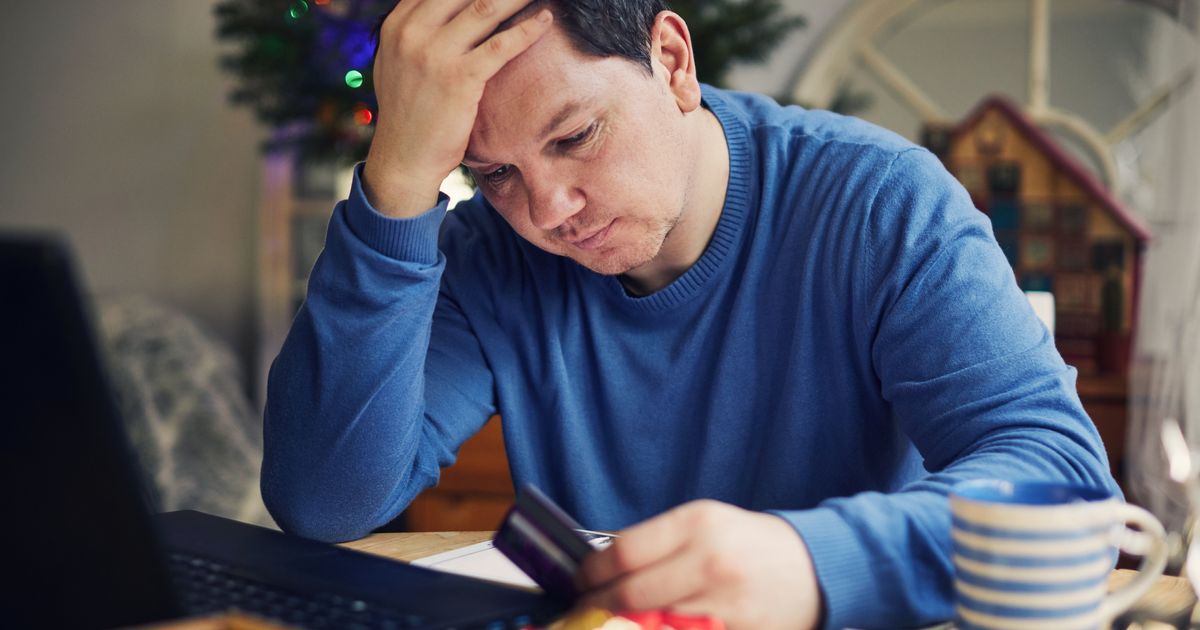
With both Christmas and New Year’s Day falling on a Sunday this year, the following Monday and Tuesday become bank holidays – which means the day you get paid will be moving.
The majority of companies opt to move their December pay date forward in this situation, which can feel like a real festive treat for employees at the time.
Advertisement
But come January, when you’ve potentially had 40 days or more between pay cheques, the disruption to your usual budget can really hit hard.
Every year when this happens, you’ll see tweets on social media with people joking about January pay day feeling a million years away.
Advertisement
But with the cost of living so high this year and people’s finances already at breaking point, for many households this will be no laughing matter.
All this means that preparing for the inevitable Christmas pay gap is even more essential than usual.
If you’ve already been paid this month, try to avoid using those early funds to pay for last-minute Christmas gifts and extras that aren’t essential.
To help with budgeting, Mat Megens, CEO of money-saving app HyperJar, recommends dividing your December salary into five as soon as it hits your account.
“If you’re used to a monthly salary lasting four weeks you can come unstuck when you’re paid earlier than usual in December,” he tells HuffPost UK.
Advertisement
“So make sure you divide what you have by five (depending when you’re paid) – not four – to get you through to that next pay cheque at the end of January.”
If you receive Universal Credit alongside your salary, a shift in pay date can also change the benefits you receive – something to factor into any budgeting.
Advertisement
Anna Stevenson, senior benefits specialist at the charity Turn2us, explains: “Unfortunately, if you’re on Universal Credit, this can cause problems, because it might look to Universal Credit that you got twice as much pay in the month as you actually did.
“Your employer is supposed to report pay on the usual pay date, even when they pay early but it might be a good idea to remind them of this and point them to the HMRC guidance.”
If you think your Universal Credit payment has been cut in January, Stevenson advises contacting the Department for Work and Pensions (DWP) to explain what has happened.
“If it has been cut, be sure to ask for an RTI (real time information) dispute,” she says.
“This means that the DWP can investigate and re-assign your missing payment to your next month’s payment. It is worth noting this can take over a month to rectify, so it is best to talk to your employer before you are paid to prevent this happening.”
Others have shared their own tips on social media, such as setting some money aside and ‘paying yourself’ on your usual pay date.
Advertisement
Megens provides us with these further tips for staying on top of your budget when your pay date has moved:
Swap brands for supermarket own-label
Food is one of our biggest monthly expenses. You can save around £40 in January by swapping big brands for supermarket own-label equivalents.Forget regifting… resell instead
If you don’t have gift receipts, head to auction sites like eBay, or try Depop and Vinted for clothes and accessories, to get some cash back in your pocket in January.Have a strategy for the sales
Set yourself a limit if you’re spending in the Boxing Day and New Year sales and don’t get carried away. Only buy what you’ve planned for, and double check the price now so you’re sure you’re getting a genuine bargain.Take control: plan for pressure points
Use any downtime between Christmas and New Year to take your first budgeting steps into 2023. Plan for the year’s financial pinch points – those big expenses that come up every year, like house insurance, holidays and Christmas. Note when they’re due and how much you need to start putting aside to pay for them and avoid getting into debt.
And if you’re doing all that and you’re still worried about money, Stevenson says it’s worth checking whether you’re eligible for state support.
Advertisement
“Millions of people miss out on thousands of pounds each year because they’re not sure what they’re entitled to,” she says – urging people use the free Turn2us Benefits Calculator to find out what extra help may be available to you and your family at this time.
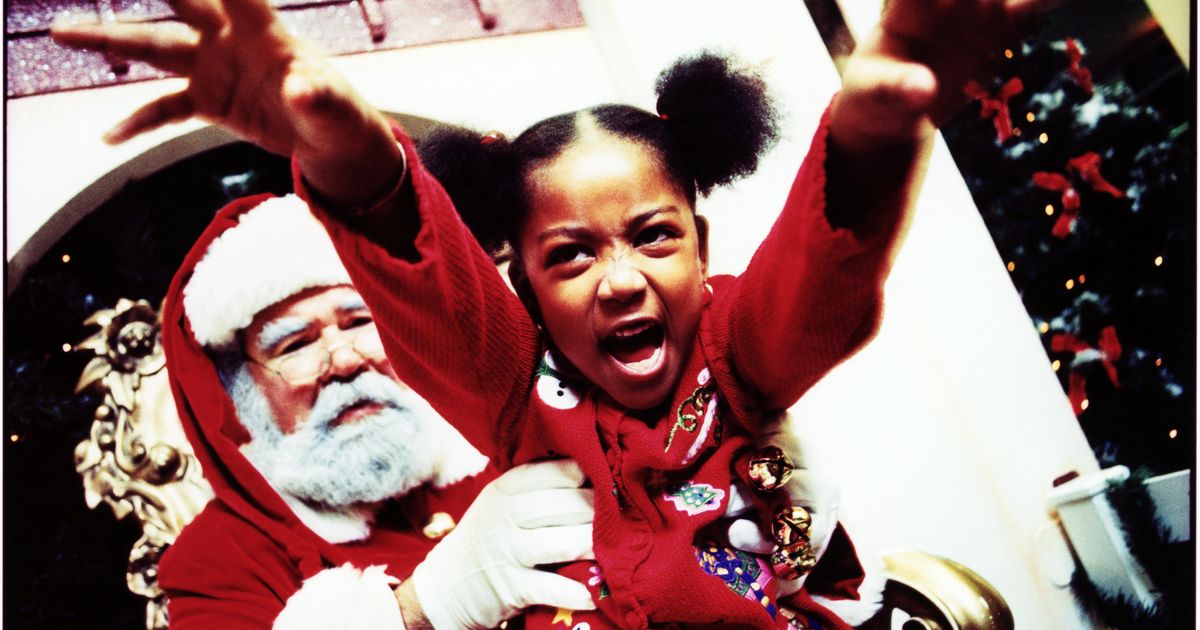
If you’ve taken your child to see Santa recently, chances are they’ll have reacted one of three ways: they’ll have been shy and a bit unsure, they’ll have been super excited and loved the experience, or they’ll have become really upset.
“If you’ve ever been to a Santa’s grotto it is very common to see kids responding fearfully when it’s their turn to see Santa,” says counsellor Chris Boobier. “The photos are not as parents expected, with many children in tears.”
Advertisement
Sometimes this fear of Saint Nick can spiral into something more. Year-on-year data reveals that Google searches for ‘Santaphobia’ have increased by 56% since last December, according to analysis by Crafted Beds, while searches for ‘fear of Santa’ have risen by 31%.
If you think about it, it makes total sense that children would be wary of this strange man dressed in a bright red outfit with fake facial hair. Especially if they’ve been warned against interacting with strangers.
Then you’ve got all the additional storylines that surround Santa. The fact he watches over kids and knows if they’ve been naughty or nice, that he can squeeze down the chimney and drop presents into their bedrooms when they’re asleep.
“It completely goes against everything that is regularly taught about safety, causing conflicted feelings,” says Boobier.
Advertisement
On top of that, come December – heck, November – Santa is everywhere. “Now that you can write to Santa, get Santa to call you, go and see Santa, track him through the air, there is a lot ‘more’ of Santa than ever before and it can be overwhelming,” says the therapist.
“He changes size and shape, has different voices and it doesn’t quite add up: kids are smart and know something is afoot, but also believe what they are told.”
Then you’ve got the over-stimulating environment in which you usually find Santa – the bright lights, loud sounds and crowds of people at his grotto.
Combine that with a couple of years of not socialising much (thanks Covid) and it’s really no wonder more kids aren’t shaking in their boots on coming face-to-face with Mr Claus himself.
“We are in a post Covid world where children under four have not been socialised as much as before because of lockdowns,” says Counselling Directory member Claire Elmes. “This is feeding into many social difficulties, including visiting Santa.”
Advertisement
The point at which being scared of Santa turns into a full-blown phobia is usually after a negative experience has occurred and the child has linked this to Santa in some way. You might find, as a parent, that anything related to Santa or Christmas then triggers your child, causing a physical and emotional reaction.
You might even notice they start to react negatively to anyone wearing similar red coats, says hypnotherapist Penny Ling: “Our brain’s pattern match for danger. A person with a phobia of spiders will jump at a tomato stalk, so it stands to reason a child phobic about Santa will respond with fear around red coats and long white beards.”
Symptoms of Santaphobia could include your child feeling more anxious than usual, not wanting to go to bed on their own or having difficulty sleeping, says Boobier.
“They may want to avoid anything too ‘Christmassy’ like grottos or certain movies, and not talk about Santa. They may request stockings are not put in their room,” he adds.
Some children, on being faced with Santa, might become agitated and want to leave, adds Ling, who is a member of Hypnotherapy Directory. They might start crying or wet themselves if they are not taken out of the situation early enough.
Advertisement
If you’ve got this far, you’ve probably established that your child has a phobia of Santa – or at the very least, is uncomfortable by his presence. So what can you do about it?
Preparation is key ahead of a trip to see Father Christmas, says Claire Elmes. She recommends discussing what is likely to happen at the grotto and showing your child pictures of Santa ahead of it so they know and are prepared for what to expect.
“Explain that some children find him a bit scary and that’s ok, you will be with them and it is all safe,” she says. Sometimes it can be helpful to go with another child who is OK with Santa.
If you do get to the grotto and they become upset, don’t force them to sit on Saint Nick’s lap or have pictures taken, it’s not going to be enjoyable for the child or help their fear.
“Acknowledge their feelings,” suggests Elmes, “and accept they may not be ready. Gently encourage them to be a safe distance and observe others if possible.”
Advertisement
Boobier adds that parents might want to find other photo opportunities where their child can be themselves and be happy.
Sometimes as parents it can be hard to put ourselves in our kids’ shoes and you might even tell your child to “stop being silly” because it’s “just Santa”. But Ling suggests this is unhelpful.
“Try to be encouraging, showing that other children are enjoying the experience and it’s just new for them,” she says.
Chris Boobier is also keen to convey that children begin to have awareness for make believe and reality between the ages of three and five, so anything up to the age of five could be completely real to them.
“The idea they are being watched and don’t want to be on the naughty list will feel very real,” he says. “Knowing to what depth our children believe this Christmas magic can help with pulling back on some on the ever-growing Christmas traditions we create (Elf on the Shelf, anyone?) and reduce the ongoing hype that Christmas has become.”
Advertisement
Elmes agrees: “As tempting as it is try not to use Santa as a bribe for being good (we’ve all been there!) telling children he is always watching can also be a bit scary.”
Let your child tell you they are afraid of Santa and really listen to how they feel, allowing them time and space to explain why, suggest therapists.
“Whilst this can feel a bit sad for parents as they go to all the effort to make Christmas magical, listening and understanding how your child feels without dismissing their feelings is the key to helping your child cope at Christmas time,” Boobier adds.
“They may tell you what would feel better for them and some traditions could be altered as they grow up.”
However you feel about your child’s response to Santa, Chris Boobier encourages parents to keep perspective: “Most children grow out of a fear for Santa past the age of five, depending on development progress, when they can confidently distinguish the difference between fantasy and reality – and they will become excited again about Santa Claus.”
Advertisement

