Man Arrested On Suspicion Of Assaulting Katie Price Has Been Re-Bailed By The Police

Mike Marsland via Getty Images

Katie Price at the National Television Awards earlier this month

According to The Sun, this was done to allow the police more time to continue their investigation and decide how it would be best to proceed.

Katie previously told the tabloid the day after the alleged incident: “I’ve got a big bruise, my face is all puffy, and I went to hospital. I’m still all dazed. I’m devastated. I’ve told police that I was assaulted, and am in shock that this happened.”

The Celebrity Big Brother winner’s fiancé, car dealer and former Love Island contestant Carl Woods, subsequently insisted that he has “never and never would do anything to hurt Katie”.

Ricky Vigil M via Getty Images

Carl Woods and Katie Price

“I have remained quiet until now due to the investigation being carried out by the police,” he wrote on Instagram. “However, I have found it so difficult to keep quiet on social media due to the speculation and shocking abuse that I have received.

“Anybody who thinks I hit Katie, you’re completely delusional and have no idea of the reality of the situation

Following this, Katie insisted that she and Carl are still together.

Share Button

Children face ‘agonising’ waits for mental health care

Data from half England’s specialist services found a fifth have waited more than 12 weeks in the pandemic.

Share Button

Depression: Diagnosis is key

Mayo Clinic does not endorse companies or products. Advertising revenue supports our not-for-profit mission.

Advertising & Sponsorship

Mayo Clinic Marketplace

Check out these best-sellers and special offers on books and newsletters from Mayo Clinic.

Share Button

Modern activities follow the contours of ancient Teotihuacan

A lidar mapping study using a cutting-edge aerial mapping technology shows ancient residents of Teotihuacan moved astonishing quantities of soil and bedrock for construction and reshaped the landscape in a way that continues to influence the contours of modern activities in this part of Mexico. The work is published in the open-access journal, PLOS One.

The paper also shows how Teotihuacan’s engineers re-routed two rivers to align with points of astronomical significance, identified hundreds of previously unknown architectural features, and documented over 200 archaeological features that have been destroyed by mining and urbanization since the 1960s.

“We don’t live in the past, but we live with the legacies of past actions. In a monumental city like Teotihuacan, the consequences of those actions are still fresh on the landscape,” said first author Nawa Sugiyama, a professor of anthropology at UC Riverside.

Teotihuacan, about 25 miles northeast of modern Mexico City, was the largest city in the Americas and one of the largest anywhere in the ancient world. It existed from about 100 BCE-550 CE — about 1,000-2,000 years ago — and covered 8 square miles. At its height, it consisted of numerous pyramids, plazas, and well-designed residential and commercial neighborhoods housing a population of around 100,000. Some of the pyramids and other structures are visible above ground today, but most of the city’s remains lie buried beneath modern fields, buildings, and other activity areas.

To map the below-ground parts of Teotihuacan, Nawa Sugiyama and co-authors Saburo Sugiyama at Arizona State University; Tanya Catignani at George Mason University; Adrian S. Z. Chase at Claremont University; and Juan C. Fernandez-Diaz at Houston University used lidar, a mapping technology that measures the amount of time it takes light from a laser to bounce back from an object. Archaeologists often use lidar to discover buried features covered by dense forests or open fields but rarely deploy the technology where archaeological remains lie beneath urban areas.

“Lidar is often perceived as revolutionary tool to find ancient features hidden in plain sight, but we found the lidar map to be extremely messy and hard to interpret. Many of the features we identified were modern with ancient roots. But then we realized there is a far more interesting story behind this trend,” said Nawa Sugiyama.

Because the sheer scale of construction at Teotihuacan suggested massive modification of the ancient landscape, Sugiyama’s group thought that lidar could help elucidate the relationship between the layout of Teotihuacan and modern activities that overlay it. The researchers confirmed the lidar findings with surveys by foot and comparisons to previous mapping efforts.

They found that the builders of Teotihuacan leveled the ground down to the bedrock and, in some cases, quarried the bedrock itself to use as construction and fill material. In just one portion of the city, called the Plaza of the Columns Complex, the authors calculated that roughly 372,056 square meters of artificial ground accumulated over the course of roughly 300 years of construction that had been quarried elsewhere in the Teotihuacan Valley. In three of the main pyramid complexes, the authors estimate that 2,423,411 square meters of rock, dirt, and adobe had been used.

This major reshaping of the landscape affects the arrangement of modern construction and activities. The authors found that 65% of urban areas contained property or modern features that aligned orthogonally within 3 degrees of 15 degrees east of astronomical north — the same alignment as Teotihuacan. Rock fences were built along areas that lidar and excavation revealed to have underground ancient walls that made modern-day plowing difficult.

Teotihuacan engineers also rerouted the Rio San Juan and the San Lorenzo River, which cross the city. Rio San Juan follows the Teotihuacan orientation for 3 km as it traverses the city center while the San Lorenzo River has a very distinct orientation, 8 degrees south of astronomical east for 4.9 km. Previous research has interpreted them as major canals of symbolic and calendric significance.

The lidar map also showed that other sections of canals and rivers, many still actively used today, were altered at various points along its course, frequently coinciding with the Teotihuacan directionalities. A total of 16.9 km of the hydrological systems visible on the modern terrain had origins in the Early Classic Teotihuacan landscape.

On the lidar map, the group identified 298 features and 5,795 human-made terraces that had not been previously recorded. However, they also identified over 200 known features that have been destroyed by mining since 2015.

“We can’t fight modern urbanization. The lidar map provides a snapshot of these ancient features that are being abolished at an alarming rate that would otherwise go unnoticed. It’s one of many ways we can preserve our heritage landscape,” said Nawa Sugiyama.

The authors plan to use their lidar map to create a three-dimensional geospatial database that allows them to visualize stratigraphic and surface data, natural and artificial features, and to document the true extent of humans as geomorphic agents over long periods of time in the Teotihuacan Valley.

Share Button

Research guides future of plastic waste chemical recycling

New research from Cornell University aims to ease the process of chemical recycling — an emerging industry that could turn waste products back into natural resources by physically breaking plastic down into the smaller molecules it was originally produced from.

In a new paper, “Consequential Life Cycle Assessment and Optimization of High-Density Polyethylene Plastic Waste Chemical Recycling,” published in the Sept. 13 issue of the journal ACS Sustainable Chemistry & Engineering, Fengqi You, the Roxanne E. and Michael J. Zak Professor in Energy Systems Engineering and doctoral student Xiang Zhao detail a framework incorporating several mathematical models and methodologies that factor everything from chemical recycling equipment, processes and energy sources, to environmental effects and the market for end products.

The framework is the first comprehensive analysis of its kind that quantifies the life-cycle environmental impacts of plastic waste chemical recycling, such as climate change and human toxicity.

Billions of tons of plastic have been produced since the 1950s, yet most of it — 91%, according to one often cited study — has not been recycled. While growing landfills and contaminated natural areas are among the concerns, the failure to reduce and reuse plastic is also seen by some as a missed economic opportunity.

That’s why the emerging industry of chemical recycling is capturing the attention of the waste industry and researchers like You, who is helping to identify optimal technologies for chemical recycling and providing a roadmap for the future of the industry.

Not only does chemical recycling create a ‘circular economy,’ in which a waste product can be turned back into a natural resource, but it opens the door for plastics such as high-density polyethylene — used to produce items such as rigid bottles, toys, underground pipes, and mail package envelopes — to be recycled more commonly.

You’s framework can quantify the environmental consequences of market dynamics that typical life-cycle sustainability assessments would overlook. It’s also the first to combine superstructure optimization — a computational technique for searching over a large combinatorial space of technology pathways for minimizing cost — with life-cycle analysis, market information and economic equilibrium.

The paper highlights the benefits of consequential life-cycle optimization when compared with more traditional analytical tools. In one scenario, to maximize economic outcomes while minimizing environmental impacts, life-cycle optimization produced a more than 14% decrease in greenhouse gas emissions and a more than 60% reduction of photochemical air pollution when compared with the attributional life-cycle assessment approach typically used in environmental assessment studies.

While the analysis gives industry experts and policy makers a general pathway for advancing chemical recycling and a circular economy for plastics, a myriad of choices and variables along the technological path must be considered. For instance, if the market demand for basic chemicals like ethylene and propylene is strong enough, the framework recommends a specific type of chemical separation technology, while if butane or isobutene are desired, another type technology is optimal.

“It’s a chemical process and there are so many possibilities,” You said. “If we want to invest in chemical recycling, what technology would we use? That really depends on the composition of our waste, the variants of polyethylene plastic, and it depends on current market prices for end products like fuels and hydrocarbons.”

Environmental consequences of chemical recycling depend on variables such as supplier process of chemical feedstocks and products. For instance, the framework found that producing butene onsite as opposed to having it supplied can reduce photochemical air pollution from recycling plants by nearly 20%, while onsite use of natural gas increases more than 37% of potentially harmful ionizing radiation.

“There’s always something we can twist and adjust in the technology and process, and that’s the tricky part,” said You, who added that as new chemical recycling techniques emerge and markets change, consequential life-cycle optimization will remain a powerful tool for guiding the emerging industry.

The research was supported in part by the National Science Foundation.

Story Source:

Materials provided by Cornell University. Original written by Syl Kacapyr, courtesy of the Cornell Chronicle. Note: Content may be edited for style and length.

Share Button

Loss of picky-eating fish threatens coral reef food webs

Coral reefs all over the world, already threatened by rising temperatures brought about by climate change, also face serious challenges from the possibility of fish species extinctions. According to a paper out today in the Proceedings of the National Academy of Sciences, the networks of predator fish and their prey found on coral reefs all over the world are remarkably similar, and those predator fish are pickier eaters than previously thought. These delicate ecosystems become even more vulnerable when these specialized hunters go extinct.

Coral reefs are some of the most diverse ecosystems on Earth, providing critical habitat for thousands of species that sustain economies and provide for the diets and livelihoods of millions of people. In the largest and most comprehensive study of its kind, researchers from France and The University of Texas at Austin concluded that coral reef food webs are more delicate than previously thought. Researchers made the conclusion after synthesizing the stomach contents of most fish species found on six coral reef systems around the world.

The team revealed that the vast majority of reef fish species are very picky about what they eat, rather than opportunistically feeding on anything they could find. Although reefs will probably withstand the loss of several prey species, the loss of a single larger fish species may jeopardize the ecosystem.

“It’s remarkable that we see similar patterns in coral reef systems all over the world. Extinctions, particularly of larger fish species, may have significant impacts for coral reef systems,” said Jordan Casey, an assistant professor of marine science at UT Austin’s Marine Science Institute (UTMSI) and an author on the paper.

Many conditions can cause the local loss of fish species, such as climate change, commercial fishing and pollution. Such fish declines may leave an increasing number of prey uneaten, creating imbalances in the food web.

“Reefs rely on the efficient utilization of all creatures,” said Simon Brandl, also an author and an assistant professor at UTMSI. “If a fish specializes on eating a certain type of snail and that fish disappears, the snail might not be eaten and live happily ever after. This creates a dead end for the food it could provide to other coral reef creatures. Good news for the snail. Bad news for everything else living there.”

The study examined the feeding habits of more than 600 species found on six different coral reefs near Okinawa, Hawaii, the West Indies, New Caledonia, Madagascar and the Marshall Islands. Despite regional differences, the food webs had a strikingly similar structure: 67% of species were specialized feeders with strong preferences for specific prey items, despite the tremendous diversity of available food on coral reefs.

“Coral reefs are important to humans for a number of reasons,” Casey said. “They are a critical source of food for many people. They are also popular tourist destinations and economic engines for a number of countries. However, coral reefs can only provide these key ecosystem services if food webs remain intact.”

Story Source:

Materials provided by University of Texas at Austin. Note: Content may be edited for style and length.

Share Button

Covid vaccination begins for UK 12 to 15 year olds

It is part of the drive to get more people protected ahead of winter as the pandemic continues.

Share Button

Pfizer/BioNTech jab safe for children aged five to 11

The positive trial results could pave the way for vaccinating children younger than 12, if approved.

Share Button

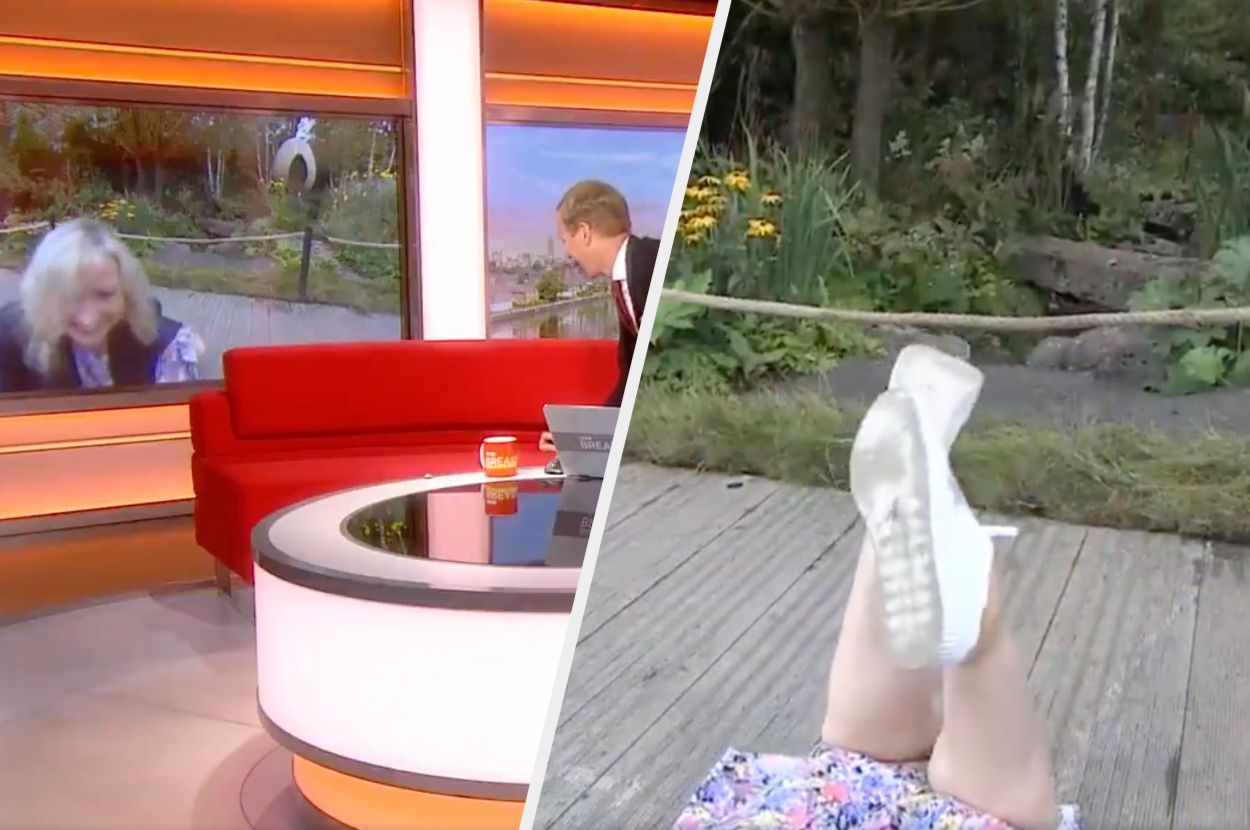
Carol Kirkwood Dragged To Floor By Guide Dog During Live BBC Breakfast Broadcast

BBC Breakfast star Carol Kirkwood was left red-faced – but unscathed – during Monday morning’s show when she found herself dragged to the floor by a guide dog.

During the live broadcast, Carol was presenting a segment remotely while holding the dog named Flash, praising her good behaviour to Dan Walker and Louise Nugent.

Unfortunately for Carol, that was short-lived.

A few moments later, the Labrador apparently tired of her TV appearance and made a bolt for it, taking Carol with her and leaving her face down on the ground.

“We’ve got a Kirkwood down!” Dan announced. “Someone save Carol!”

After gathering herself and putting her earpiece back in, which had been knocked out during the tumble, Carol assured her co-hosts she was doing alright, adding: “She’s a very strong girl, Flash.”

BBC

Don’t worry, folks. She’s alright!

Fortunately, Carol saw the funny side of the gaffe, and quickly reposted it on her Twitter page later in the morning:

However, regular BBC Breakfast viewers will know this isn’t the first time that Carol has found herself at the centre of a canine-related blunder.

Last summer, she found herself tongue-tied while presenting live from Greenwich Park, where she highlighted just how many dog-walkers could be seen around her.

Except… that’s not quite what the tongue-tied former Strictly Come Dancing star ended up saying.

“We’ve seen lots of doggers,” she announced, before quickly correcting herself, adding: “Not doggers of course. Lots of dog walkers and joggers around here during the course of this morning.”

BBC Breakfast airs every weekday from 6am on BBC One.

Share Button

Sikh MP Speaks Out About ‘Taliban’ Jibes And Racist Attacks Outside Parliament

Joe Giddens – PA Images via Getty Images

Tan Dhesi, Labour Party MP for Slough

A Sikh MP has spoken out about the “Taliban” jibes he faces and how a visitor was attacked outside parliament for wearing a turban. 

Tanmanjeet Dhesi, who is Britain’s first turban-wearing MP, said racism was a “common experience” for many people from ethnic minorities. 

He told Gloria De Piero on GB News he had been called “Taliban” over the last couple of decades, adding: “After the 9/11 attacks – the level of racism towards people, especially with turbans like me, or with beards, that increased substantially. 

“In the US – our close friend and allies – there, Sikhs were shot dead, just because they had a turban and beard. 

“People made Islamophobic remarks, calling them the Taliban, and then more than one individual was shot dead, because of that hatred – which is unfortunately instilled in so many people across not only North America, but Europe too.”

He said people could not imagine the impact the Taliban and Mujahideen had on Sikhs in Afghanistan who faced “significant persecution”. 

The MP for Slough added: “Don’t think that minorities like the Sikhs or Hindus see the Taliban as some sort of heroes. They have faced the persecution and discrimination from those religious extremists.”

He has previously spoken out about how children tried to tear his turban off when he was at school, but warned it was a “similar experience” for many.

Dhesi described how an Indian guest, who came to visit him in the House of Commons to discuss the climate crisis, faced the same abuse. 

The Labour MP added: “As he was queueing up outside parliament – somebody, filled with so much hatred, went along and disparaging remarks to him, Islamophobic remarks to him, saying ‘go back to your country’, and so on. 

“He also, unfortunately, also tried to pull off his turban. While I was trying to console him – and it was lucky the police were there, who caught it on CCTV – I just felt so shameful, that this had happened outside our parliament.

“What image is that going to make of our country, as he goes back to Punjab, as he goes back to India? And unfortunately, it made news within the Sikh media – that this had happened outside the House of Commons, for which people have a great and higher regard – thinking of it as the mother of all parliaments.”

He said the incident demonstrated how common the problem was and how we need to tackle racism “head on”.

The interview is due to be aired on Monday at 12.40pm.

Share Button