Cities are making mammals bigger

A new study shows urbanization is causing many mammal species to grow bigger, possibly because of readily available food in places packed with people.

The finding runs counter to many scientists’ hypothesis that cities would trigger mammals to get smaller over time. Buildings and roads trap and re-emit a greater degree of heat than green landscapes, causing cities to have higher temperatures than their surroundings, a phenomenon known as the urban heat island effect. Animals in warmer climates tend to be smaller than the same species in colder environments, a classic biological principle called Bergmann’s Rule.

But Florida Museum of Natural History researchers discovered an unexpected pattern when they analyzed nearly 140,500 measurements of body length and mass from more than 100 North American mammal species collected over 80 years: City-dwelling mammals are both longer and heftier than their rural counterparts.

“In theory, animals in cities should be getting smaller because of these heat island effects, but we didn’t find evidence for this happening in mammals,” said study lead author Maggie Hantak, a Florida Museum postdoctoral researcher. “This paper is a good argument for why we can’t assume Bergmann’s Rule or climate alone is important in determining the size of animals.”

Hantak and her collaborators created a model that examined how climate and the density of people living in a given area — a proxy for urbanization — influence the size of mammals. As temperatures dropped, both body length and mass increased in most mammal species studied, evidence of Bergmann’s Rule at work, but the trend was stronger in areas with more people.

Surprisingly, mammals in cities generally grew larger regardless of temperature, suggesting urbanization rivals or exceeds climate in driving mammal body size, said Robert Guralnick, Florida Museum curator of biodiversity informatics.

“That wasn’t what we expected to find at all,” he said. “But urbanization represents this new disturbance of the natural landscape that didn’t exist thousands of years ago. It’s important to recognize that it’s having a huge impact.”

About a decade ago, scientists began to raise the alarm that warmer temperatures brought by climate change are causing many animal species to grow smaller over time. While many of the consequences of shifting body size are unknown, researchers cautioned that smaller animals may have smaller or fewer offspring, creating a feedback loop, and shrinking prey could also put pressure on meat-eaters to find more resources.

Guralnick and Hantak said they hope their findings will lead more researchers to add urbanization to their analyses of changing body size.

“When we think about what’s going to happen to mammalian body size over the next 100 years, a lot of people frame that as global warming causing animals to get smaller,” Guralnick said. “What if that isn’t the biggest effect? What if it’s that urbanization is going to lead to fatter mammals?”

Not all animals respond to human-induced environmental changes in the same way, Hantak added. The researchers also investigated how the effects of climate and urbanization may be tempered or amplified by the behavior and habits of certain species.

They found animals that use hibernation or torpor, a temporary way of slowing metabolic rate and dropping body temperature, shrank more dramatically in response to increases in temperature than animals without these traits. The finding could have important implications for conservation efforts, Hantak said.

“We thought species that use torpor or hibernation would be able to hide from the effects of unfavorable temperatures, but it seems they’re actually more sensitive,” she said.

While cities radically transform the landscape, they provide animals with new opportunities as well as threats, Guralnick said. The abundance of food, water and shelter and relative lack of predators in cities may help certain species succeed in comparison with their neighbors in rural areas. The results of the 2020 U.S. Census show that almost all human population growth over the past decade has occurred in the nation’s metro areas. As urbanization ramps up, animals could be divided into “winners and losers,” and mammal distributions may shift, he said.

“Animals that like living in urban environments could have a selective advantage while other species may lose out because of the continued fragmentation of landscapes,” Guralnick said. “This is relevant to how we think about managing suburban and urban areas and our wildlands in 100 years.”

While bigger is often better biologically, the long-term consequences to urban mammals of eating a diet of human food waste have yet to be determined, Hantak said.

“When you change size, it could change your whole lifestyle,” she said.

Hantak and her collaborators were able to conduct the study thanks to thousands of measurements collected by natural historians in the field and museums. The research team used information from three databases: VertNet, the National Science Foundation’s National Ecological Observatory Network (NEON) and the North American Census of Small Mammals (NASCM). Cumulatively, this data offers a broadscale view of how increasing urbanization is impacting mammals with very different life histories, from wolves, bobcats and deer to bats, shrews and rodents, Guralnick said.

“Museum collections have the power to tell us stories about the natural world,” he said. “Because we have these collections, we can ask questions about what mammals looked like before humans dominated the landscape. Digitizing specimen data unlocks these resources so that everyone can make discoveries about our planet.”

The researchers published their findings in Communications Biology.

Bryan McLean of the University of North Carolina Greensboro and Daijiang Li of Louisiana State University also co-authored the study. McLean and Li are former Florida Museum postdoctoral researchers.


Share Button

Study details robust T-cell response to mRNA COVID-19 vaccines — a more durable source of protection

Messenger-RNA (mRNA) vaccines against the coronavirus that causes COVID-19 provoke a swift and strong response by the immune system’s T cells — the heavy armor of the immune system — according to a study from researchers in the Perelman School of Medicine at the University of Pennsylvania. Although recent studies of vaccines tend to focus on the antibody response, the T-cell response is also an important and potentially more durable source of protection — yet little has been reported so far on the T-cell response to COVID-19 vaccines.

In the new study, which appears in the journal Immunity, the Penn Medicine researchers analyzed the T-cell responses in 47 healthy people who received two doses of the Moderna and Pfizer/BioNTech mRNA vaccines.

The results reveal the complex details of how the T-cell response to these vaccines unfolds, and underline the importance of a second dose for people with no history of COVID-19. The findings showed, however, that in people with a history of COVID-19, the T-cell response was already robust after the first vaccine dose, with no significant increase after the second dose, which may have implications for potential future booster shots.

“Our findings underscore the fact that we need to look at T cells, not just antibodies, if we want a complete picture of the vaccine response for those who have not had COIVD-19 and for those who have recovered from the disease,” said senior author E. John Wherry, PhD, chair of the department of Systems Pharmacology and Translational Therapeutics and director of the Penn Institute of Immunology in the Perelman School of Medicine at the University of Pennsylvania.

Antibodies are forked proteins secreted by immune cells called B cells; they can bind tightly to specific viral structures on virus-infected cells. T cells also have antibody-like receptors that enable tight binding to specific viral structures, but they are whole cells, some of which — called “killer” T-cells — are capable of directly killing virus-infected cells they encounter. T cells therefore have long been regarded as the heavy armor of the immune system. Their responses to vaccines are harder to study than antibody responses, though, so less is known about those responses, including in the case of COVID-19.

Researchers examined in detail the T-cell responses to mRNA vaccination in 36 healthy people who had no history of COVID-19, and 11 people who had previously recovered from COVID-19.

In the group of participants who did not previously have COVID-19, they found that the first vaccine dose elicited a rapid and strong response from helper T cells called CD4 T cells — some of which help marshal an antibody response, while others stimulate the proliferation of CD8 killer T cells. The strengths of those initial CD4 T cell responses generally predicted the later strengths of antibody and killer T-cell responses. However, the killer T cells tended not to appear in large numbers until after the second vaccine dose — confirming the importance of that second dose for people with no COVID-19 history.

By contrast, in the prior-COVID-19 group, helper and killer T cells specific for the COVID-19 coronavirus were already substantially present before the first dose. After that first dose, T cell numbers rose somewhat, but did not significantly increase after the second dose.

“For people who haven’t had COVID-19, the first dose powerfully primes the pump, and the second dose turns on the whole engine — but having had COVID-19 is like having had that first vaccine dose already,” Wherry said. “It is important to point out, however, that a complete understanding of the relative importance of these T cell responses, compared to antibody, in protection from future infections will require larger clinical studies.”

The results also showed that the T-cell response in the weeks after mRNA vaccination includes T-cell types normally elicited by natural infection — and in general, natural viral infection is known to be capable of inducing T-cell protection that lasts years and even decades.

“We need to do follow-up studies to confirm the longevity of the T-cell response to vaccination, but our results here support the idea that that response can be long-lasting,” Wherry said.

Support for the research was provided by the National Institutes of Health (AI105343, AI082630, AI108545, AI155577, AI149680, AI152236, AI082630, HL143613, P30-AI0450080, T32 AR076951-01, T32 CA009140, T32 AI055400, U19AI082630), the Allen Institute for Immunology, the Cancer Research Institute, the Chen Family Research Fund, the Parker Institute for Cancer Immunotherapy, the Penn Center for Research on Coronavirus and Other Emerging Pathogens, the University of Pennsylvania Perelman School of Medicine COVID Fund, the University of Pennsylvania Perelman School of Medicine 21st Century Scholar Fund, and Jeffrey Lurie, Joel Embiid, Josh Harris, and David Blitzer.

Share Button

Only Time Will Tell: Did Boris Johnson Really Mark 11am Silence At 11.14?

Twitter @10DowningStreet

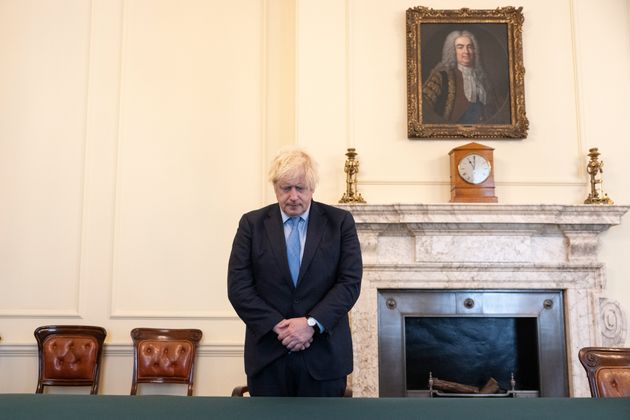
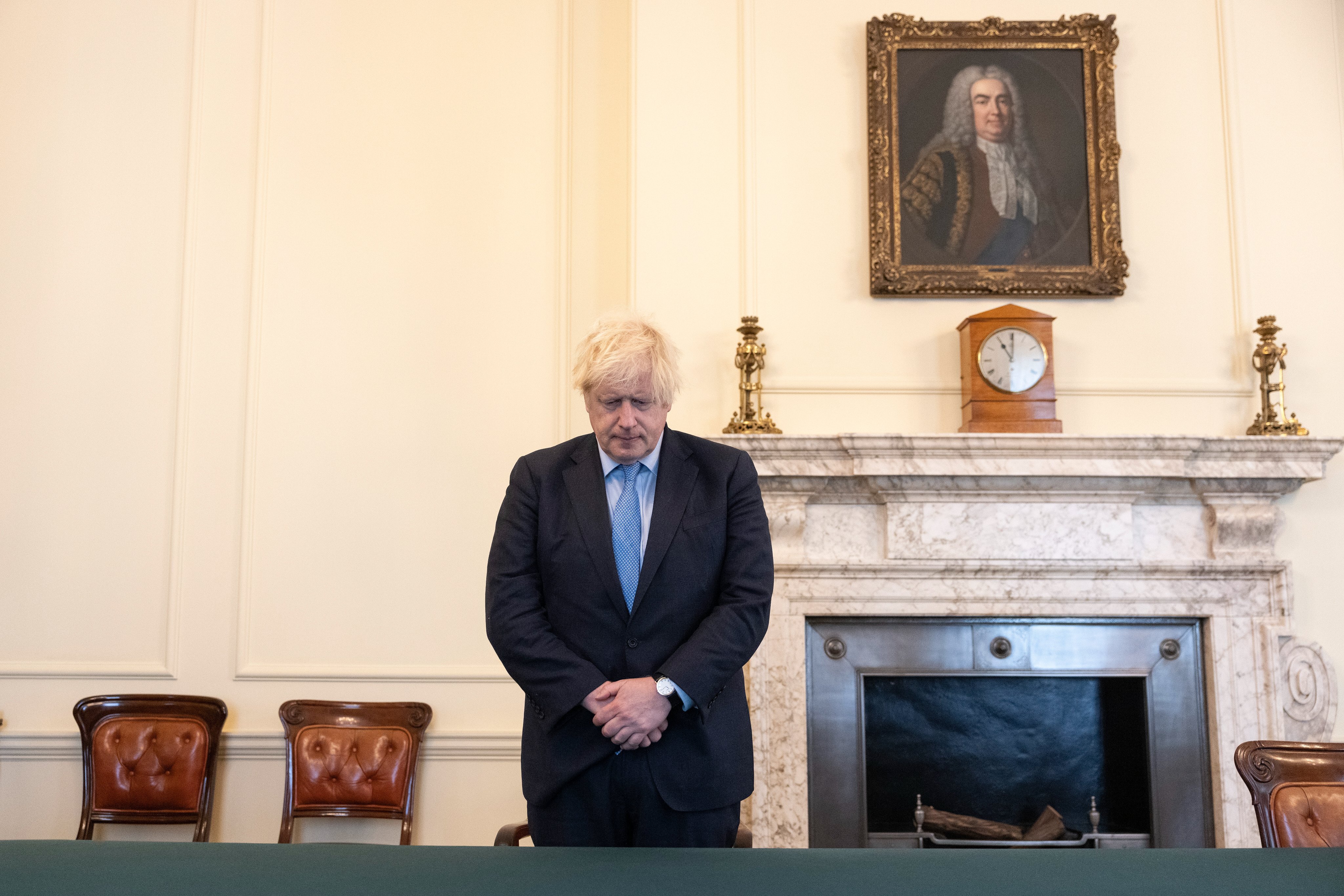
Boris Johnson marking the 11am silence for victims of the Plymouth shooting. 

Twitter users were unimpressed when the prime minister posted a photograph of himself marking Monday’s 11am silence when his watch clearly said it was 11.14am – but just how accurate were these criticisms?

Boris Johnson released the images as a tribute to the five victims of last week’s devastating Plymouth shooting on Monday.

One Twitter user commented: “They cared enough to turn back the clock on the mantelpiece but forgot his wrist watch.”

Another account criticised the claim that the prime minister was honouring the 11am silence, and compared the two different times on the mantlepiece clock and on Johnson’s watch. They asked in their caption: “You sure about that?” 

Others questioned why it took so long for the photograph to be uploaded to social media as it appeared online at 12.37pm.

One account noted: “Took one hour and 36 minutes to write this tweet and upload this photo? Or maybe, given the different times on the clock and watch, it was a belated, hastily assembled piece of gesture politics?”

Another account dubbed the photograph as “embarrassing”.

Journalist Chris Stokel-Walker also weighed in on the debate, and tweeted: “Absolutely incredible scenes as Boris Johnson’s watch gives away that this wasn’t actually taken at 11am, despite the clock in the background.”

However, he later tweeted in defence of the photograph after reportedly hearing more about the photograph’s origins.

He deleted his original tweet, and added: “For transparency: deleting the screenshotted tweet below before it gets picked up by conspiracists after being told the EXIF data shows the watch is wrong, the clock is right.”

The EXIF data means the Exchangeable Image File Format and refers to the accurate data about the image’s origins stored in the camera when a photograph is taken.

A Downing Street official also claimed that it was actually the watch which was running 14 minutes fast, and that the image was taken at 11am.

Johnson also acknowledged the horrendous incident last week, tweeting: “My thoughts are with the friends and family of those who lost their lives and with all those affected by the tragic incident in Plymouth last night. I thank the emergency services for their response.”

The prime minister was not the only one to honour the horrifying shooting in Plymouth, which was the worst seen in the UK for a decade.

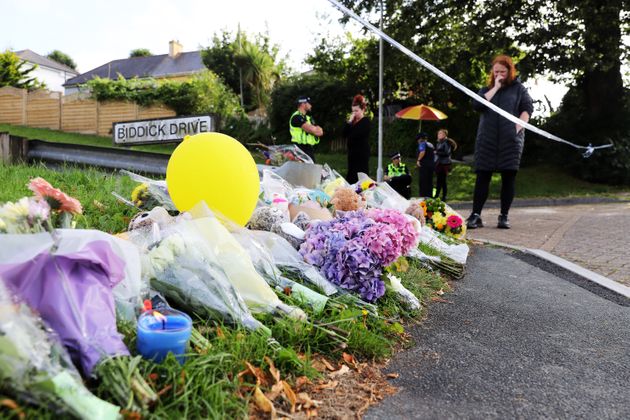
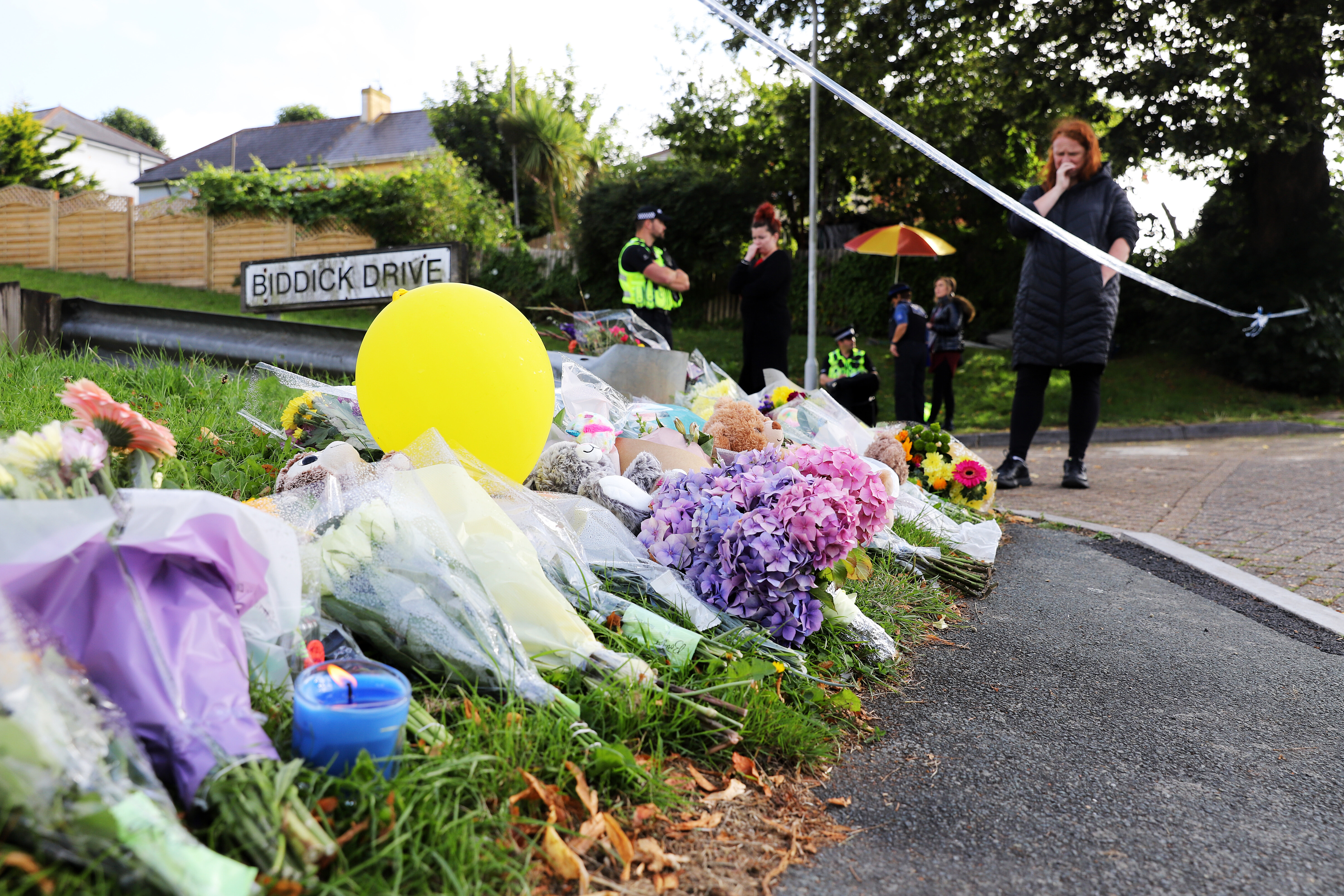
Approximately 200 people gathered outside Plymouth city centre at 11am on Monday to mourn the lives lost.

William Dax via Getty Images

Members of the public place flowers at the entrance of Biddick Drive, where Davison began his killing spree last week

Jake Davison, a 22-year-old, shot his mother Maxine Davison, 51, dead in Biddick Drive, before shooting 3-year-old Sophie Martyn, and her father 43-year-old Lee Martyn on the street.

Davison went on to kill Stephen Washington, 59, and 66-year-old Kate Shepherd.

Davison was a licensed firearms holder, raising serious questions about the government’s current gun laws and prompting widespread calls for change.

The government has confirmed that it is preparing statutory guidance to help promote high standards of decision-making within gun licensing applications.

The Home Office wants future gun applications to cover the social media of individuals too.

Davison’s YouTube channel and Facebook account showed he referred to himself as the “terminator” and held misogynistic views.

All police forces in England and Wales have been advised to review their current processes and assess existing licences.

Share Button

Twitter’s new design to get fix after headache complaints

Unveiled last week, the redesign involved high-contrast colours and a custom-designed font, Chirp.

Share Button

Covid: Daughter of Oxfordshire man urges caution

David Allum, 58, died after complications from Covid-19 despite receiving both vaccine doses.

Share Button

Covid rules: What’s changing in Wales, Scotland, England and Northern Ireland?

Lockdown rules are changing across the UK, but some restrictions remain in place.

Share Button

The Mistakes Many People Make When Doing A Downward Dog

You’re reading Move, the nudge we need to get active, however makes us happiest and healthiest.

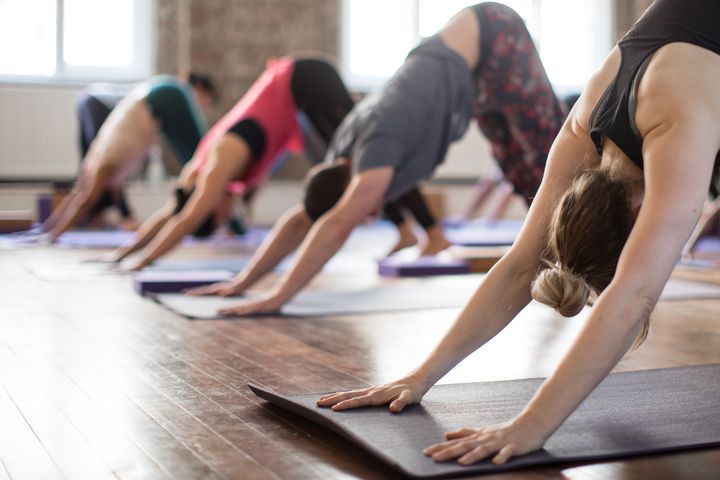
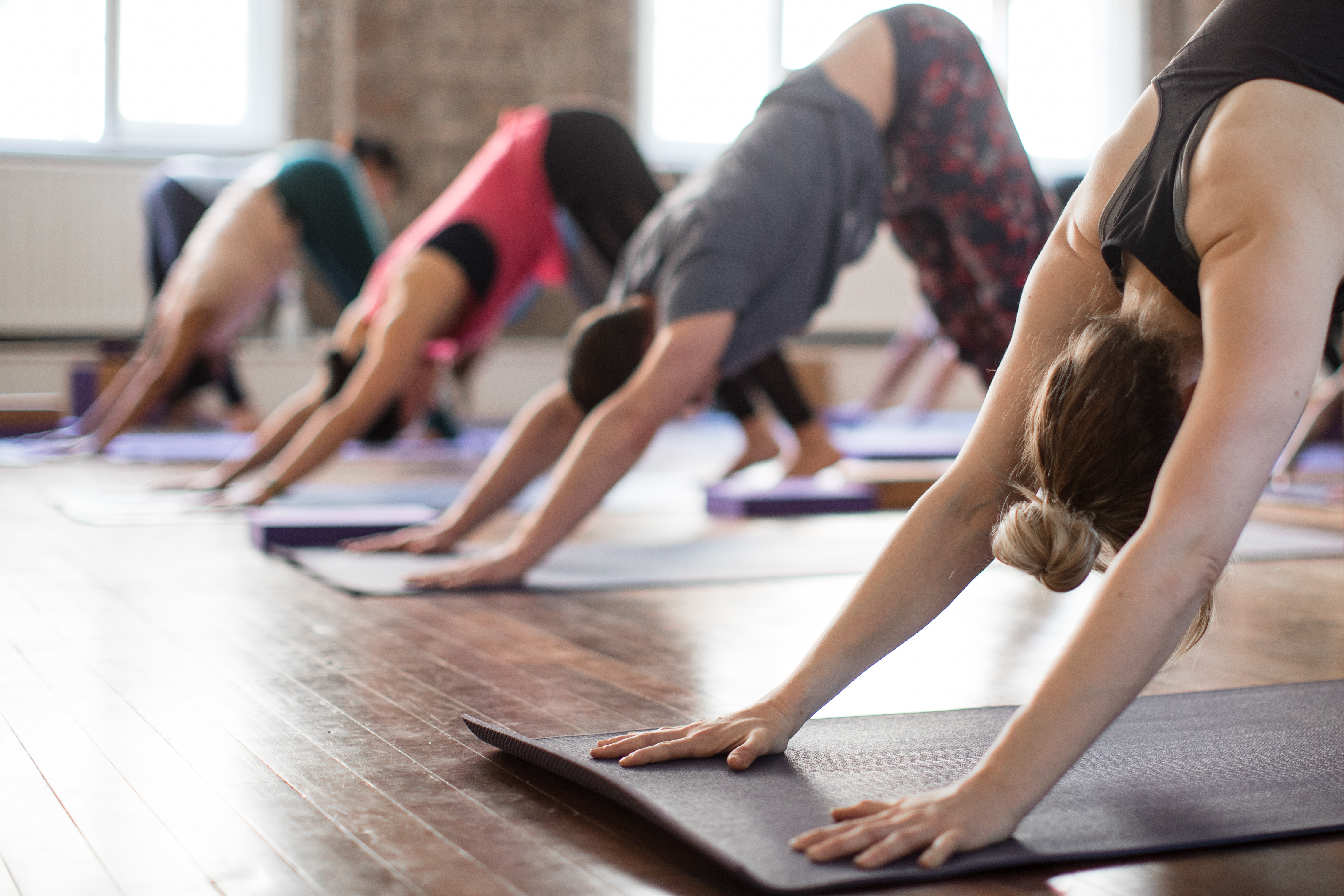
When you think of yoga, you probably immediately picture the downward facing dog pose – or Adho Mukha Svanasanaas, as it’s called in Sanskrit. It’s widely considered as the mother of all yoga poses. Even non-yogis tend to know it.

The downward dog is great for strengthening your body, as well as providing balance for mind and body. And it can easily be snuck in-between tea breaks if you’re still working from home (guilty).

“The pose enhances flexibility in the shoulders, hips and thoracic spine,” says Naomi Annand, author of Yoga: a Manual for Life and founder of east London yoga studio Yoga on the Lane. “It lengthens the hamstrings and calves and strengthens the long spinal muscles, quadriceps, rotator cuff, and triceps to name just the main muscle groups used.”

Think of it as a mind and body MOT. Bodies respond well to doing things little and often, so even if you don’t have 90-minutes, you can squeeze in a stretch here and there. “Every time you do yoga, you’re building resilience and creating new little imprints in your nervous system,” adds Annand.

However famous the pose may be, it’s quite an intense posture and there’s a lot to pay attention to. So, here’s how to make sure you’re doing it properly.

1. Align your body correctly

As one of the more well-known yoga poses, the downward facing dog gives off the impression that it’s a straightforward pose, says Triyoga teacher, Christian Di Giorgio. But many people slip into misalignments.

The focus should be on lengthening the trunk and visualising an inverted “V” shape with your body, he says, with the coccyx at the apex. “Beginners should keep the arms locked and use them to press the spine and hips up and back whilst straightening the legs to lift the tail bone higher.”

2. Keep enough space between your hands and feet

Di Giorgio says not keeping enough space between the hands and feet is a common mistake he sees in yoga classes. “This forces the spine to curve and compress instead of lengthening healthily as it should,” he says.

So, how much space should you keep? “You should aim to use much more of the mat when doing downward facing dog,” he tells HuffPost UK.

“Lie on your front with the toes tucked under and the finger tips level with the collar bones and lift up from there. An overly short stance can require too much stretch on the back and leg muscles, causing the spine to bulge outwards as it would when slumping in a chair. We are trying to correct the problems of long sitting not exacerbate them!”

3. Don’t fixate on putting your heels down

Many people have a fixation on getting their heels down, flat to the floor, when doing the pose, adds Di Giorgio. “Forget putting your heels on the floor,” he says, “this is advanced work!”

While placing the heels down firmly gives a good grounding in the pose, Di Giorgio says this is more like a “cherry on the cake”.

“Over months and years, as hamstrings and calves lengthen then students should strive to get the heels down but not at the expense of compromising the spine.”

Yoga class at Triyoga

Yoga class at Triyoga

4. Look after your wrists

It’s important to look after hands and wrists which, over time, can cause injury. “Some tend to lean heavily on the wrist bones which are not designed to bear weight, leading to potential repetitive strain injuries,” says Di Giorgio.

“They should try to spread the palms and fingers and press them strongly into the mat. This forces the forearm muscles to be more active and offloads the wrist bones.”

5. Adjust the pose to your level if needed

If you’re finding the pose difficult, keep in mind you can tailor it to your abilities. “You might not be as able-bodied or want to throw yourself into such a dramatic stretch, but there are alternatives like the puppy pose, which is the downward dog, but on the knees,” says Annand. “It’s a little more gentle.”

There are also options to make it more advanced. “Try more broadening of the shoulders and opening of the armpits and chest, so that the lungs can remain open and free whilst keeping the neck passive,” suggests Di Giorgio.

“The abdomen and pubic area should be more lifted and toned as the waist lengthens much more. Work the calves and ankles harder to ground the heels without compromising the extension of the spine.”

Move celebrates exercise in all its forms, with accessible features encouraging you to add movement into your day – because it’s not just good for the body, but the mind, too. We get it: workouts can be a bit of a slog, but there are ways you can move more without dreading it. Whether you love hikes, bike rides, YouTube workouts or hula hoop routines, exercise should be something to enjoy.

Share Button

Covid: Self-isolation ends for double-jabbed and under-18s

Rules change in England and Northern Ireland for contacts of people who test positive for Covid.

Share Button

Covid: 16 and 17-year-olds in England to be offered jab by 23 August

Those in England will be offered a jab or the chance to book one by 23 August, the government says.

Share Button

New Banksy Artwork Defaced In ‘Selfish And Mindless Way’

A local council has said it is “appalled” that a new Banksy artwork that had brought excitement to a seaside town has been defaced.

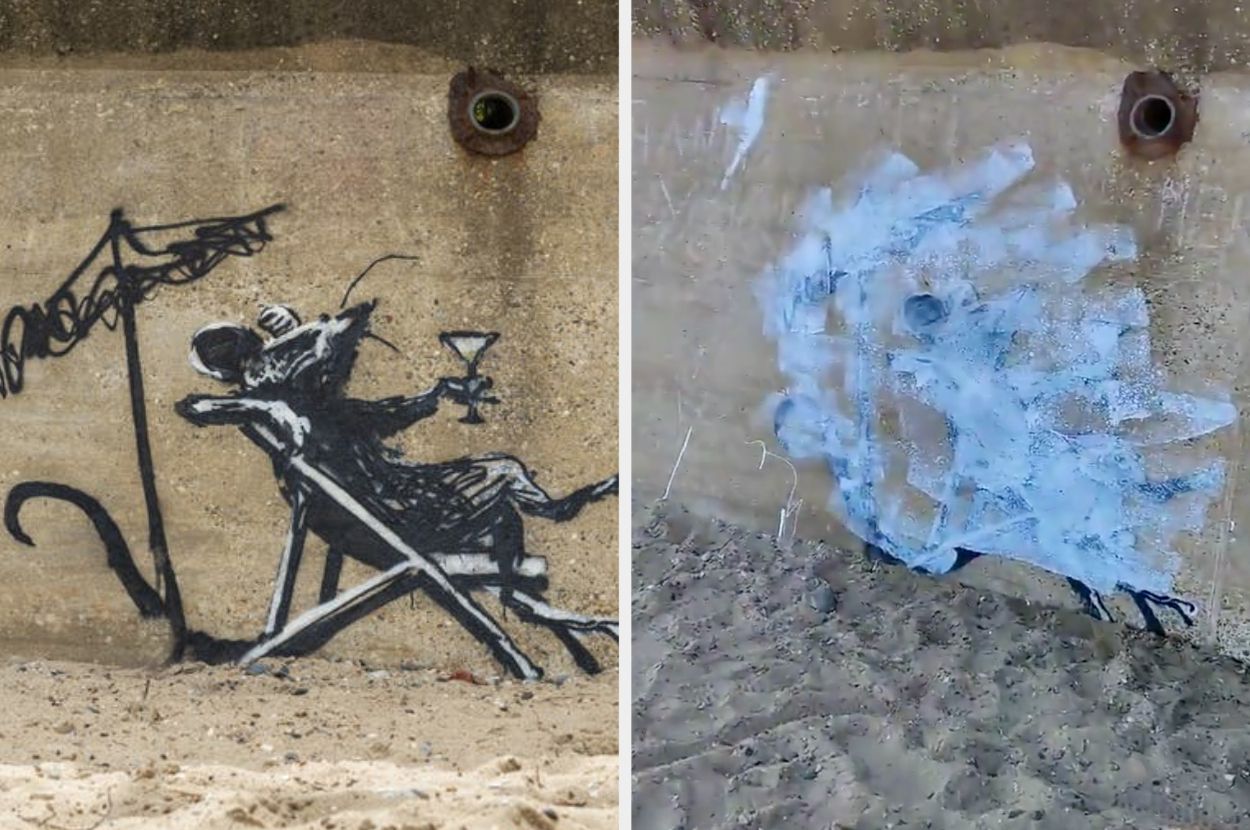
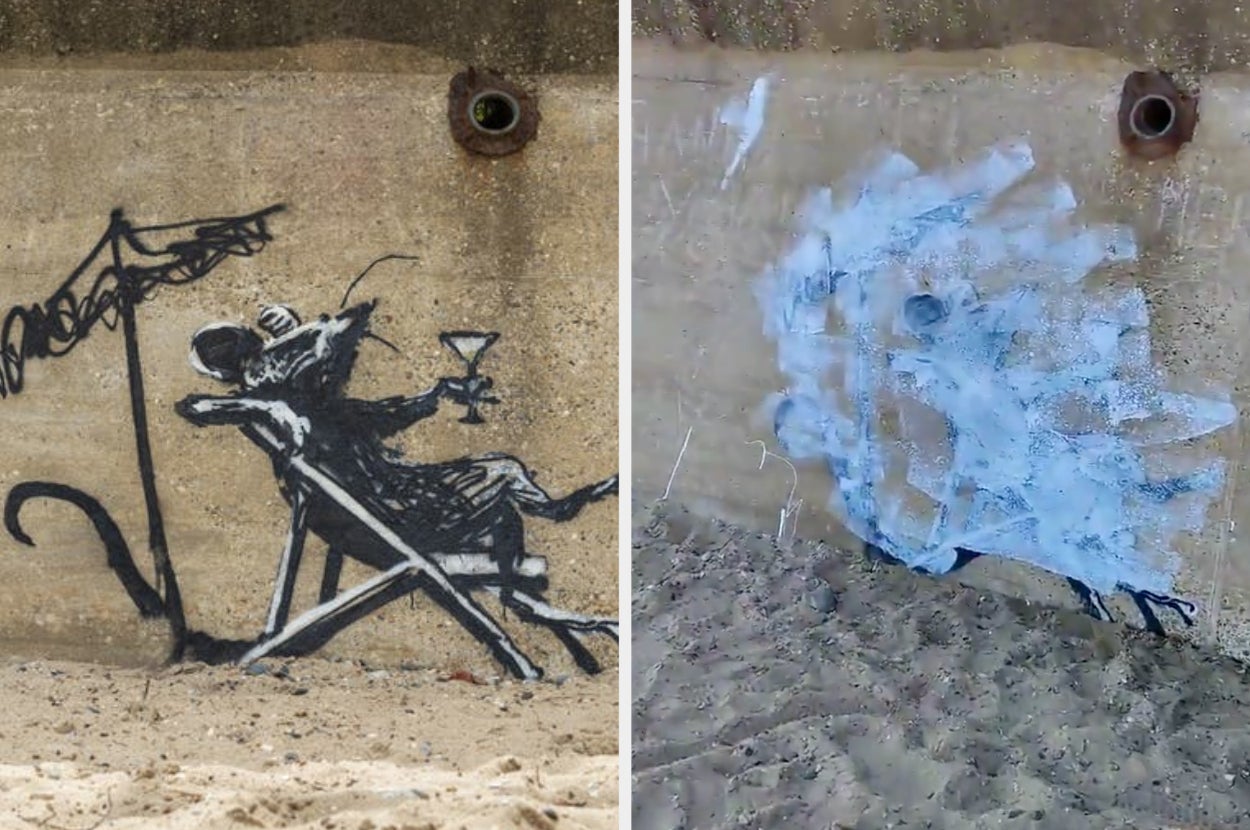
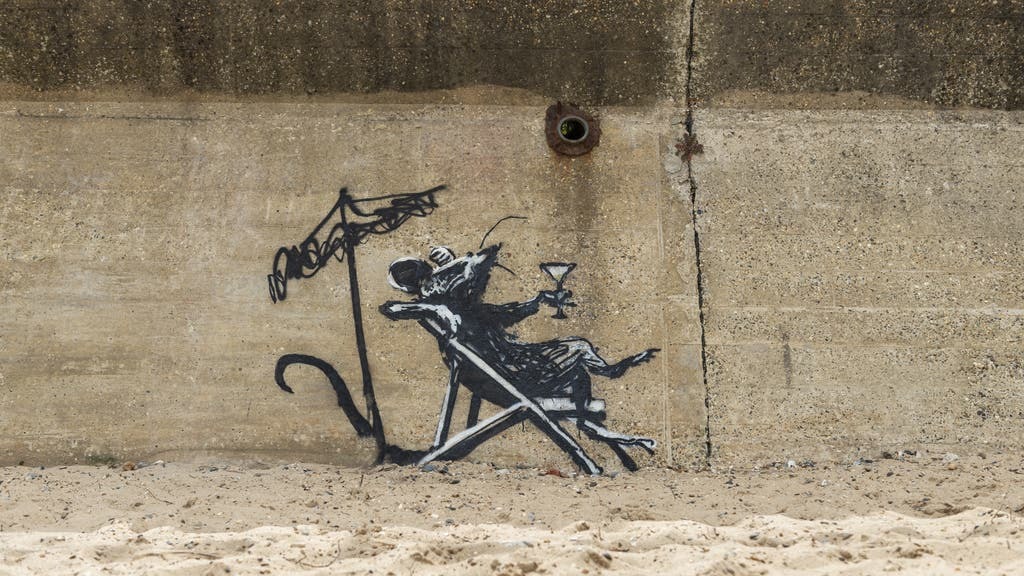
The elusive artist famed for his street art recently paid a visit to Lowestoft, leaving behind a painting of a rat sitting on a deckchair.

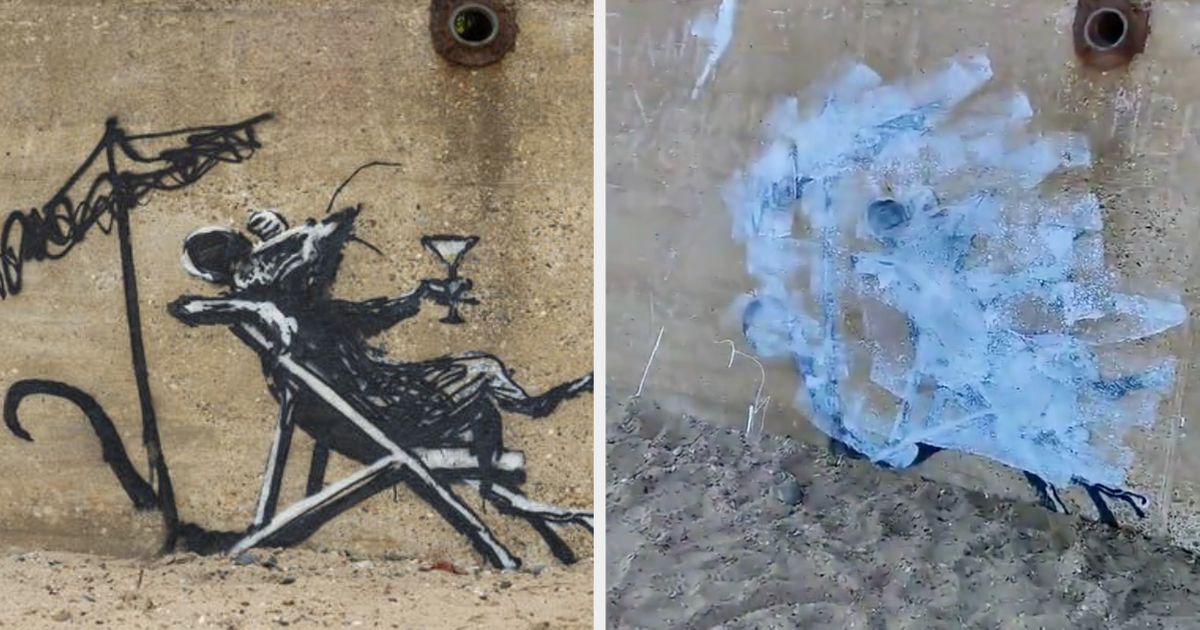
But residents in the Suffolk town awoke on Sunday to the news that the new attraction had been daubed with white paint.

In a statement, East Suffolk Council said: “We are naturally appalled that someone has chosen to behave in such a selfish and mindless way given how excited we all are by the appearance of these works here on the east coast.

“We are, however, hopeful that this particular work can be restored, and are engaging with specialists.”

The council said that prior to the rat art being confirmed as a genuine Banksy it had placed an order for protective materials to safeguard the piece.

It added: “In the interim, we have also employed security patrols to visit each site and on this occasion, our patrols actually interrupted the individual defacing this work and prevented any further damage occurring.

“We are very grateful for the huge goodwill of local people who are proud of these artworks, but we would kindly ask people not to try and repair the works themselves and to please leave this to professional restorers.”

Share Button