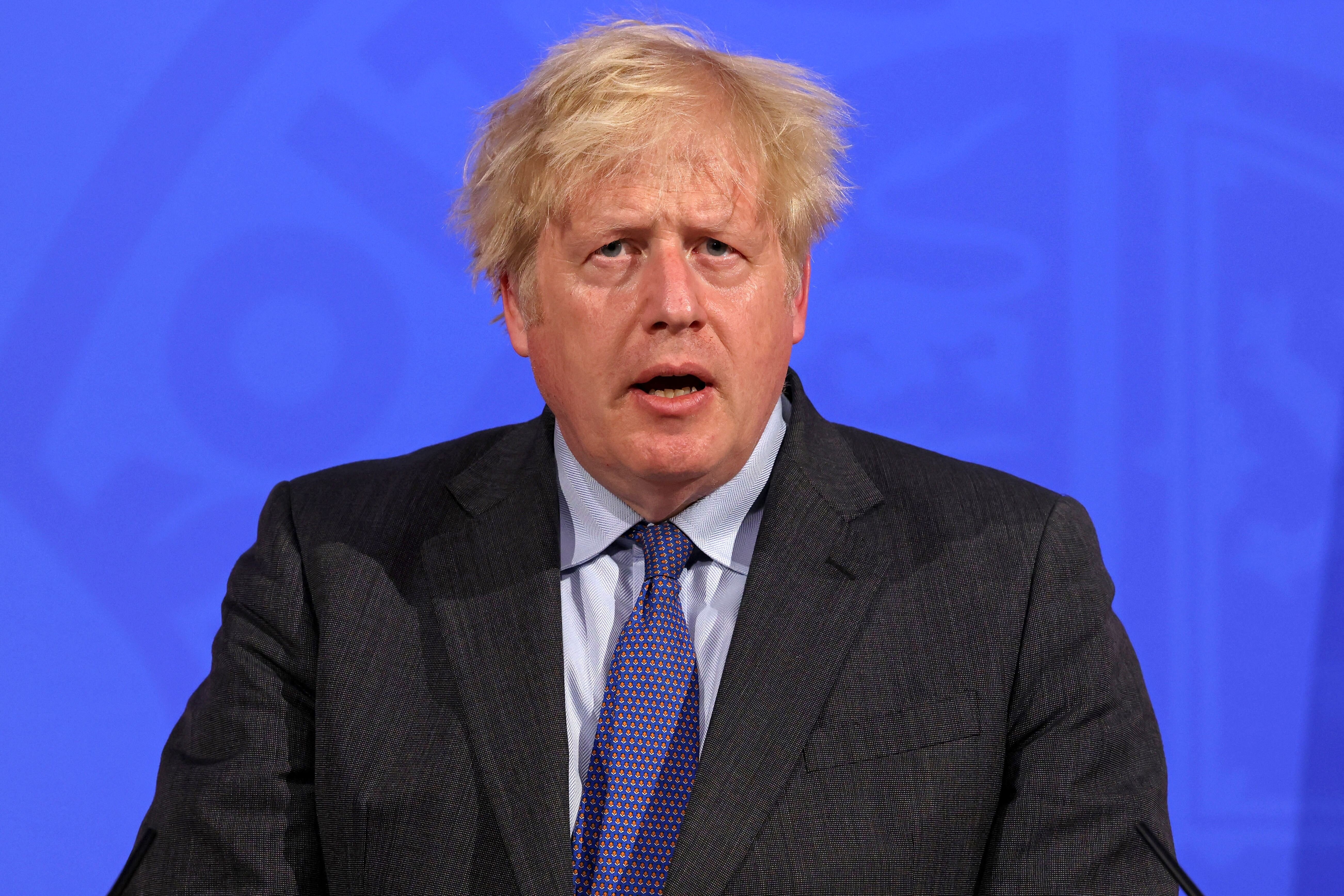
Boris Johnson’s Next Headache Is How To Pay For The Pandemic

You’re reading The Waugh Zone, our daily politics briefing. Sign up now to get it by email in the evening.

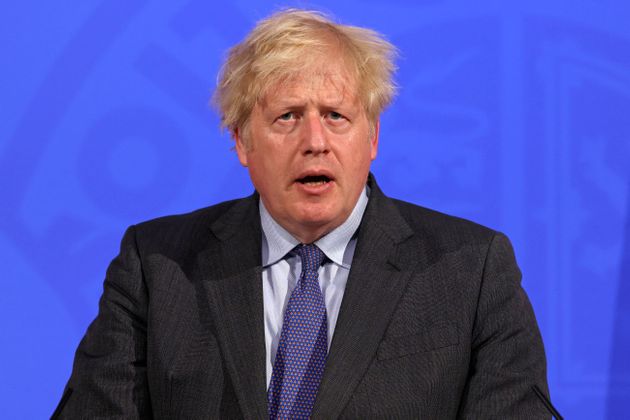
Follow the money. That line from All The President’s Men has ever since been a pretty good guide to a lot of politics ever since, on both sides of the Atlantic. And as the row continues over Boris Johnson’s ‘big bang’ removal of Covid restrictions on July 19, all the prime minister’s men (and women) are switching focus to the financial and economic consequences of the pandemic.

After spending unprecedented peacetime sums on direct wage support, the Treasury is obviously keen to start balancing the books as soon as possible. Last month, the most significant clue that the PM would not allow further delay beyond July 19 came not in any Department of Health announcement but in Rishi Sunak ruling out any change to his timetable for furlough.

Indeed, despite the four-week extension of lockdown, the state’s element of furlough support was cut as planned on July 1. With struggling hospitality firms forced to find extra cash to support workers, it would have been politically unsustainable to further extend lockdown at the same time as Treasury help was withdrawn. The full removal of furlough by the end of September is another reminder of Sunak’s determination to start going ‘back to normal’.

Economic issues certainly dominated the cabinet meeting today, with Sunak leading the discussion to mark nearly a year since his ‘Plan for Jobs’ was unveiled. He also pointed to the fourth month in a row of falling unemployment, and new OBR figures showing two million fewer people were out of work compared to their original forecast.

Liz Truss gave an update on a new Global Investment Summit in October, building on the new giga-battery factory investment in Sunderland. Business secretary Kwasi Kwarteng told colleagues of his forthcoming “innovation strategy”. So, it’s easy to see why the PM summed up at the end by telling his cabinet that “jobs, investment and innovation” would be at the core of his government’s mission “as we emerge from this pandemic”.

But even as the chancellor cited the OBR, there was less welcome news from the watchdog in its latest “fiscal risks” report, which warned he would have to find £10bn a year to fund a black hole on health, education and transport spending caused by the pandemic. Health alone needs £7bn more than current plans allow.

As well as the pandemic, record public debt and climate change (or rather a failure to act early enough on climate change) were the other big risks, the OBR said. No.10 insisted the figures were merely “illustrative”, but those ministers and Tory MPs who back carbon taxes will have been emboldened by predictions that delaying climate action will cost more in the long term.

The black hole in the public finances looks all the more stark when set against the £37bn earmarked for Test and Trace for two years. Which is why I suspect the Treasury will end up raiding that budget as the number of tests actually decreases in coming months (the Test and Trace budget is already underspent for last year, though few have noticed).

Meanwhile, Gavin Williamson confirmed under-18s who had contact with positive Covid cases would no longer need to isolate from August 16. Sajid Javid said adults with two jabs would also be free of the need to isolate, and would not need regular testing to remain free either (such people would be ‘advised’ to take one PCR test, not a daily lateral flow test).

Of course, simply allowing many more people to avoid isolation will be welcome news not just for the individual but also for the Treasury. More people can keep earning and, surely not a coincidence, there will be less demand for people to be paid by the state to stay at home. Sunak strongly resisted calls from people like Jeremy Hunt to offer a simple salary-replacement payment to encourage more people not to infect others.

If you’re worried about losing income from being forced into self-quarantine, you do indeed ‘follow the money’ – via your wages, because the Treasury isn’t going to offer the generous sick pay many have called for. Yet with spending cuts ruled out by the PM, he and Sunak are going to have to work out whether they tax more or borrow more.

The third option of funding public services from ‘the proceeds of growth’ looks unlikely, with anaemic growth rates forecast once the ‘bounceback’ runs its course this year and next. With inflation causing jitters about servicing the current debt mountain, it may be that Tory tax rises (perhaps with the cover of climate change) become a reality.

The PM is taking a risk on unlocking a country with soaring case rates, but the OBR warning shows he faces equally difficult calls on the public finances – even if his public health gamble pays off. Get it wrong and both our health and wealth will suffer from yet another winter lockdown.

That’s why perhaps the most damaging OBR data was this: the UK fall in GDP in 2020 was the second worst behind Spain and the worst in the G7. Johnson messaged Dominic Cummings last year that the UK could end up with “the double distinction of being the European country with the most fatalities and the biggest economic hit”.

Though the UK is not quite the worst, we are certainly near the top of the wrong kind of league tables. The PM will be hoping the feelgood factor of England winning the Euro football championship helps him politically, and everyone is desperate to have some kind of summer joy after our long, long hibernation. But the facts of life of the UK’s finances are as tricky for him as the facts of death of our Covid record.

Share Button

Emma Willis Reveals Her Strictly Come Dancing Dreams And We Are Absolutely Here For It

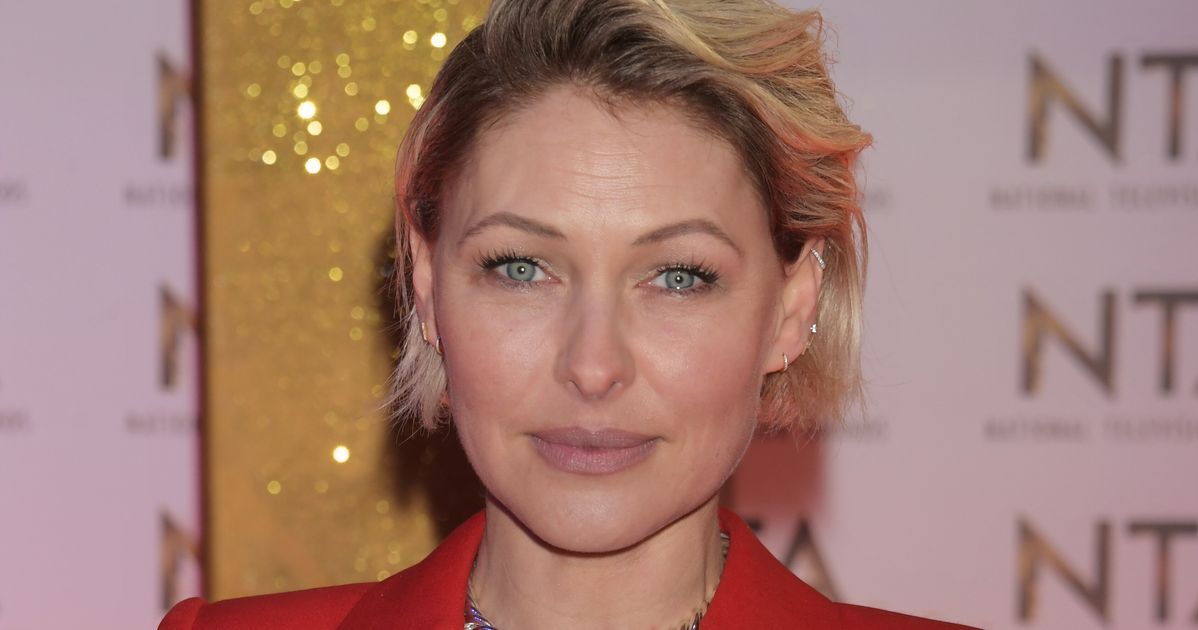
As Strictly Come Dancing bosses finalise this year’s line-up, they may want to consider approaching Emma Willis if they have not already. 

The former Big Brother presenter has admitted she would take part in the BBC ballroom show “in a heartbeat”.

Emma – who hosts The Voice UK and fronted The Circle before it was cancelled in May – said she would jump at the chance if she can find room in her diary.

David M. Benett via Getty Images

Emma Willis 

David M. Benett via Getty Images

Maya Jama is one of the stars rumoured for Strictly this year

One person who won’t be joining the line up though is Joe Wicks – and the Body Coach’s reason for “definitely not” ever appearing isn’t exactly the healthiest of excuses.

Speaking to Radio Times, he said: “Publicly dancing on a dance floor, out there and exposed on my own, is my worst fear,” he explains.

“I can only ever really have a dance when I’ve had a drink, so to do Strictly I’d have to be steaming.”

Strictly Come Dancing returns to BBC One in the autumn. 

Share Button

Culture of blame holding back maternity safety, report finds

An MPs’ report finds a “culture of blame” preventing staff admitting mistakes and lessons being learned.

Share Button

Covid-19: New rules for schools in England to be set out

It is expected that testing of pupils will replace the need to send entire class “bubbles” home.

Share Button

Is Boris Johnson’s ‘Big Bang’ Just The Levelling Down Of England’s Covid Protections?

You’re reading The Waugh Zone, our daily politics briefing. Sign up now to get it by email in the evening.

You know it’s time to get worried when Boris Johnson starts talking about honesty. Last year, when he was still refusing to trigger lockdown ahead of the first Covid wave, he actually said “I must level with you, level with the British public, many more families are going to lose loved ones before their time”.

He wasn’t so much levelling with us as admitting belatedly that his own inaction was going to lead to large numbers of fatalities. We now know that “herd immunity”, or at least a mistaken belief that the public wouldn’t accept lockdown, lay behind that apparently fatalism on the part of the PM. Patrick Vallance’s warning that a “good outcome” would be 20,000 deaths was more right than anyone guessed.

On Monday, as he set out his ‘Big Bang’ plan to remove all restrictions on July 19, he was at it again. “We must be honest with ourselves,” he said, “that if we can’t reopen our society in the next few weeks, when we will be helped by the arrival of summer and by the school holidays, then we must ask ourselves: when will we be able to return to normal?”

Of course, there was nothing honest about the false choice he then presented (Dominic Cummings reminded us that Johnson “lies – so blatantly, so naturally, so regularly – that there is no real distinction possible with him, as there is with normal people, between truth and lies.). The PM claimed those who wanted a further delay to the lifting of restrictions wanted to reopen “in the winter”, when the virus will have an advantage, “or not at all this year.”

In fact, his own new timetable, of mid-September for every adult being double-jabbed, presented a real alternative for some critics. Greater Manchester Metro Mayor Andy Burnham, hardly a man who wants restrictions to stay a minute longer than necessary, said that deadline would be the perfect time to think about ending mask wearing.

In other areas of unlocking, such as the end of the work-from-home guidance, a slight further delay to September is attractive to others. And even this prime minister’s gift for shape-shifting can’t turn September into “winter”. Several scientists had been urging less of a “Big Bang” and more of a further phased removal of curbs to smooth out their impact.

To be fair, Johnson did have Chris Whitty on hand to say that “at a certain point” further delay doesn’t reduce hospitalisations and deaths, it just postpones them. But Whitty’s and Sir Patrick Vallance’s caution was palpable on the key issue of mask-wearing, their unease reflected in the way the PM talked swiftly about making decisions on economic and not just health grounds.

The chief medical officer set out his three scenarios for personally using a face covering, but more important perhaps was the immediate context in which he placed those conditions. He pointedly said he would keep wearing a mask right now, “particularly at this point when the epidemic is clearly significant and rising”.

But all the caveats Whitty used for when he would deploy a mask – any situation with an indoor crowded space, when told to by a ‘competent authority’, and when others feel ‘uncomfortable’ – just made the case for continued regulation to avoid individuals having to negotiate and police each scenario themselves.

The real significance of the masks debate is that it gets to the heart of the PM’s shift from governmental action to individual action. With previous Conservative administrations having sold off several nationalised industries, there’s little left to flog off other than Channel 4. But on Covid protections, it now feels as if Boris Johnson wants to privatise government responsibility too. Forget levelling up, this seems to be a levelling down of the morality tale of the pandemic.

One problem with this outsourcing of responsibility is that wearing face coverings is actually (as Vallance pointed out) about protecting others rather than yourself, it’s about public health, not private morality. That sense of duty is precisely why many people get jabbed: it protects them but ultimately protects the whole of society from transmission of a highly infectious virus.

At one point on Monday, some in government even hinted that the clinically vulnerable who want to travel on Tubes should only do so off-peak. There is certainly going to be a battle royal with groups such as Blood Cancer UK, which point out that ditching masks is going to effectively force people off public transport. Let’s see if London Mayor Sadiq Khan makes it a condition of carriage.

The PM’s “if not now, when?” approach was also a real contrast with his earlier pledge to be driven by data not dates. And in his punchiest response to any of the coronavirus updates since the start of the pandemic, Keir Starmer was quick to say Johnson was being “reckless”. Starmer also said ministers should hold off on ditching masks, introduce proper ventilation support and promise to pay more to people to self isolate.

The confused public health message on masks left Johnson saying he would wear one on a packed Tube but not in an empty, late night, inter-city train carriage. Most worrying of all however is not the lack of clarity but the potential tensions it sets up. Appeals to ‘courtesy’ may not work when both mask-backers and mask-haters have strongly held views.

I was struck recently by polling showing that lockdown sceptics tend to be Brexiteers, while lockdown supporters tend to be Remainers. Risk maximisers versus risk minimisers. Gamblers versus safety-firsts. As if the nation isn’t riven enough.

With his latest laissez faire policy on masks, the PM appears yet again prepared to let those divisions play out. Which in turn gives Starmer, if he somehow captures a weariness of all the them-and-us politics, the chance to present himself as potentially a healer of the nation, post-Brexit, post-pandemic.

All of us will be crossing our fingers that the government has got its unlockdown calculations right. But if hospitalisation numbers do start going up, Johnson’s political nerve really will be tested. It’s also worth remembering, as Patrick Vallance reminded us, that we will have to wait until next week for the very latest modelling on the actual number of deaths this ‘Freedom Day’ policy entails.

Share Button

Covid: Most rules set to end in England, says PM

Boris Johnson says the success of the vaccine means England can begin to look beyond restrictions.

Share Button

Kind Strangers Track Down Discontinued Toy For Disabled Teen

A teenager has been blown away by the kindness of strangers, who’ve rallied together to track down a discontinued toy her disabled sister loves to bits.

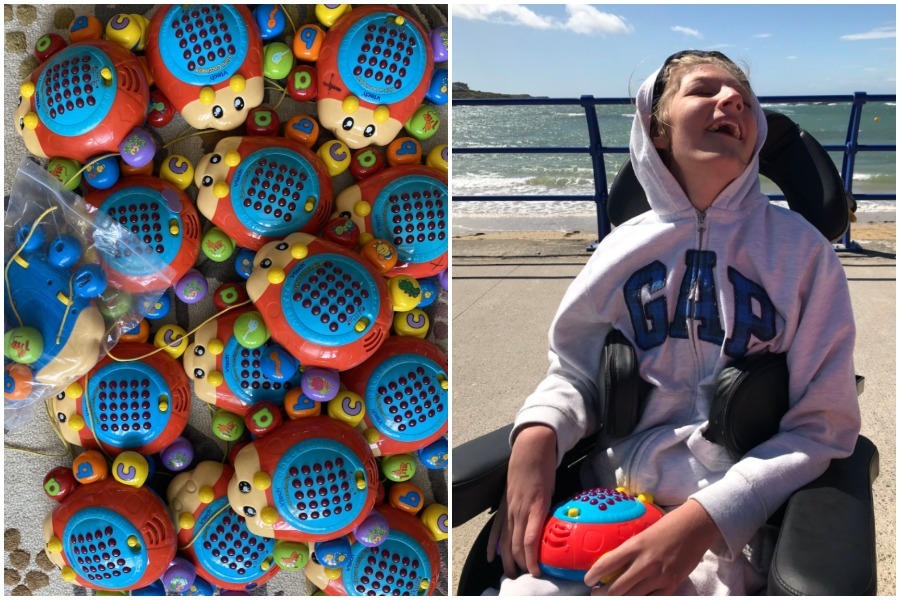
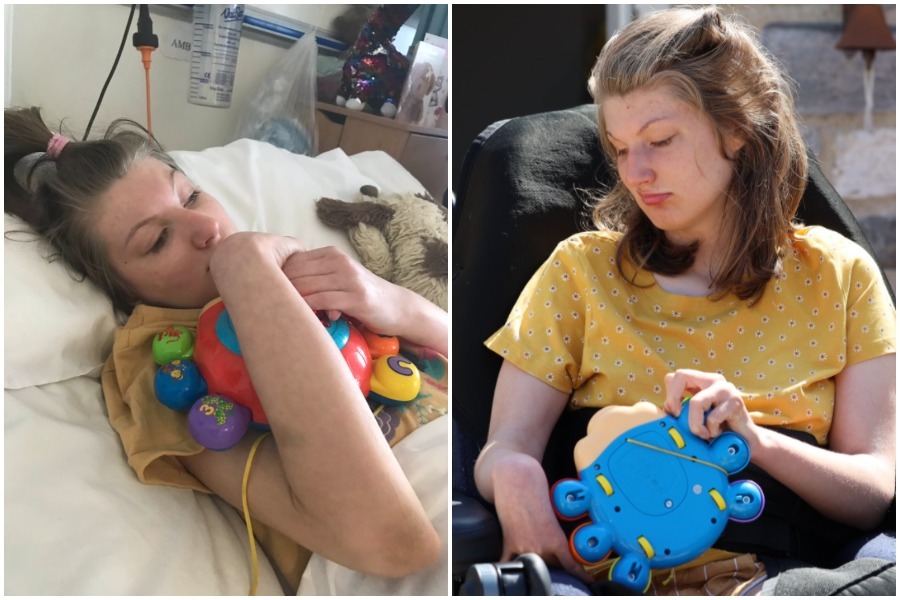
Josie Wheel, 18, from Coventry, tweeted to ask if anyone had access to a Vtech Light Up Learning Bug, which has been her 15-year-old sister’s favourite toy since her second birthday. Her sister, Rosie, has Profound Multiple Learning Difficulties, or PMLD, and Josie says she’s grown to rely on her beloved toy.

“Rosie loves everything about her ladybug – it fulfils all her sensory needs as it’s tactile, has flashing lights, and sings songs,” Josie Wheel tells HuffPost UK.

“Ladybug is her whole life, it goes on holiday with her, to hospital, she has one at school. It is the first thing she wants when she wakes up and the last thing she has before she goes to bed.”

Wheel asked for those who have a working toy to get in touch and was quickly contacted by people around the world. “Countless people” have offered to try to fix Rosie’s broken toys, while others have been bombarding Vtech with emails to see if they can do anything to help.

People in the UK have located toys from local sellers and strangers from countries including Malta, Spain and France have helped to translate messages from sellers abroad.

“The offers have been so crazy!” says Wheel. “It feels pretty surreal because we had no idea that this would take off as much as it has. We have searched for her ladybug before and it’s never had this kind of reach! It’s so amazing to see so many people offer to help in so many ways.”

Share Button

Double-Jabbed Adults Will No Longer Have To Isolate At Home After Covid ‘Contact’

JONATHAN BUCKMASTER via Getty Images

Double-jabbed adults will no longer be forced to isolate at home after coming into contact with someone with Covid, Boris Johnson has declared.

The prime minister announced the radical new move as he also revealed that the gap between first and second vaccine doses would be slashed from 12 weeks to just 8 weeks for all under-40s, with the aim of getting everyone fully protected by mid-September.

The proposals, which depend on the final data on the spread of the virus being confirmed next Monday, were part of a raft of measures set to kick in on so-called Freedom Day on July 19.

The changes to the home quarantine restrictions for double-vaccinated individuals will mean that for the first time in more than a year the public can continue to go about their daily life even after being classed as a “contact” of someone with Covid.

However, some people will still have to isolate at home for 10 days, including those who test positive or those who are explicitly asked to quarantine by the Test and Trace service.

Speaking at a Downing Street press conference, Johnson said: “We will continue from Step Four [of his ‘roadmap’ out of lockdown], to manage the virus with a test, trace and isolate system that is proportionate to the pandemic.

“You will have to self isolate if you test positive, or are told to do so by NHS test and trace. But we’re looking to move to a different regime for fully vaccinated contacts of those testing positive, and also for children.”

Johnson and his fellow ministers have come under huge pressure in recent weeks to show that double-vaccination with Pfizer or AstraZeneca will finally have real benefits in terms of personal freedoms.

Both vaccines reduce the chances of serious Covid illness by more than 90%, including the Delta variant of the virus, and the government is keen to continue the UK’s reputation as the least vaccine hesitant nation in the world.

On Monday, the issue was highlighted when the Duchess of Cambridge was required under current rules to stay at home despite being double-jabbed, after she was told she had come into contact with someone with Covid in recent days.

Under the new system, a “proportionate” test, trace and isolate system will be kick in from July 19m with symptomatic testing continuing and free basic rapid testing extended until 30th September. Contact tracing will continue.

The vaccine rollout will be accelerated across England by reducing the dose interval for under-40s, from 12 weeks to eight. This will mean every adult has the chance to be double-jabbed by mid September.

In recent days, vaccine centres have been inundated with over-18s who want to get their second jab much sooner than the 12 weeks technically allowed at present.

Pfizer’s guidance is that a gap of just three weeks is required for minimum protection and some GPs and health centres have been allowing such fast-tracked dosing rather than have to throw away valuable vaccines at the end of their working day.

All over-50s are already allowed to cut the dosing gap to eight weeks and that will apply to all age groups under Johnson’s latest proposals.

Share Button

Global BECCS potential is largely constrained by sustainable irrigation

A new collaborative research led by researchers from the National Institute for Environmental Studies, Potsdam Institute for Climate Impact Research, Ritsumeikan University, and Kyoto University found that although unlimited irrigation could increase global BECCS potential (via the increase of bioenergy production) by 60-71% by the end of this century, sustainably constrained irrigation would increase it by only 5-6%. The study has been published in Nature Sustainability on July 5.

Bioenergy with carbon capture and storage (BECCS) is a process of extracting bioenergy from biomass, then capturing and storing the carbon to a geological reservoir. It is a negative emission technology since the biomass is produced by plants through photosynthesis that can uptake the carbon dioxide from atmosphere. To achieve the 2°C or 1.5°C climate goal, large-scale deployment of BECCS was assumed to be prominent in many previous studies. However, this caused increasing concerns on the challenges brought to water and land resources to grow the bioenergy crops. For example, existing studies have showed that irrigation to achieve considerable bioenergy crop production needed for BECCS potential comparable to the requirement of 2°C or 1.5°C climate goal would lead to severe water stress even than climate change itself.

Under this context, where and to what extent irrigation can enhance the global BECCS potential remains unknown under sustainable water use. “Here, we define it as water use securing the local and downstream water availability for conventional water use and environmental flow requirements, suppressing nonrenewable water resources withdrawal, and preventing additional water stress.” explains lead author Zhipin Ai from National institute for environmental studies, Japan.

The study was based on simulations with a spatially explicit representation of bioenergy crop plantations and water cycle in an internally consistent model framework. To quantitatively determine the constraints of irrigation water resources, the researchers designed distinct irrigation ways (unlimited irrigation, sustainable irrigation, and no irrigation) with bioenergy crops planted on land scenarios with strict land protections to prevent adverse effects on biodiversity, food production, land degradation, and desertification due to large-scale land conversion.

The study found that, under the rain fed condition, the average global BECCS potential in 2090 was 0.82-1.99 Gt C yr-1. The BECCS potential reached 1.32-3.42 Gt C yr-1 (60% and 71% increases compared to that under rainfed condition) under full irrigation, whereas under sustainable irrigation, the BECCS potential was 0.88-2.09 Gt C yr-1 (5% and 6% increases compared to that under rainfed condition). The BECCS potential under sustainable irrigation is close to the lower limit of 1.6-4.1 Gt C yr-1, which is the required amount of BECCS in 2100 that consistent with the 1.5°C or 2°C climate goal as documented in the IPCC Special Report on Global Warming of 1.5ºC.

Given the many negative environmental impacts of large-scale deployment of BECCS, the researchers suggest that comprehensive assessments of the BECCS potential that consider both potential benefits and adverse effects are necessary for simultaneously achieving the multiple sustainable development goals on climate, water, land, etc. “In addition, considering the relatively low biophysically constrained BECCS potential under sustainable water and land use scenarios, a critical reexamination of the contribution of BECCS towards achieving the Paris Agreement goal is needed.” says co-author Vera Heck from the Potsdam Institute for Climate Impact Research.

This study was supported by the Environment Research and Technology Development Fund (JPMEERF20202005, JPMEERF15S11418, and JPMEERF20211001) of the Environmental Restoration and Conservation Agency of Japan.

Story Source:

Materials provided by National Institute for Environmental Studies. Note: Content may be edited for style and length.

Share Button

Psychedelic spurs growth of neural connections lost in depression

The psychedelic drug psilocybin, a naturally occurring compound found in some mushrooms, has been studied as a potential treatment for depression for years. But exactly how it works in the brain and how long beneficial results might last is still unclear.

In a new study, Yale researchers show that a single dose of psilocybin given to mice prompted an immediate and long-lasting increase in connections between neurons. The findings are published July 5 in the journal Neuron.

“We not only saw a 10% increase in the number of neuronal connections, but also they were on average about 10% larger, so the connections were stronger as well,” said Yale’s Alex Kwan, associate professor of psychiatry and of neuroscience and senior author of the paper.

Previous laboratory experiments had shown promise that psilocybin, as well as the anesthetic ketamine, can decrease depression. The new Yale research found that these compounds increase the density of dendritic spines, small protrusions found on nerve cells which aid in the transmission of information between neurons. Chronic stress and depression are known to reduce the number of these neuronal connections.

Using a laser-scanning microscope, Kwan and first author Ling-Xiao Shao, a postdoctoral associate in the Yale School of Medicine, imaged dendritic spines in high resolution and tracked them for multiple days in living mice. They found increases in the number of dendritic spines and in their size within 24 hours of administration of psilocybin. These changes were still present a month later. Also, mice subjected to stress showed behavioral improvements and increased neurotransmitter activity after being given psilocybin.

For some people, psilocybin, an active compound in “magic mushrooms,” can produce a profound mystical experience. The psychedelic was a staple of religious ceremonies among indigenous populations of the New World and is also a popular recreational drug.

It may be the novel psychological effects of psilocybin itself that spurs the growth of neuronal connections, Kwan said.

“It was a real surprise to see such enduring changes from just one dose of psilocybin,” he said. “These new connections may be the structural changes the brain uses to store new experiences.”

Story Source:

Materials provided by Yale University. Original written by Bill Hathaway. Note: Content may be edited for style and length.

Share Button