Wedding Restrictions After June 21: What You Need To Know

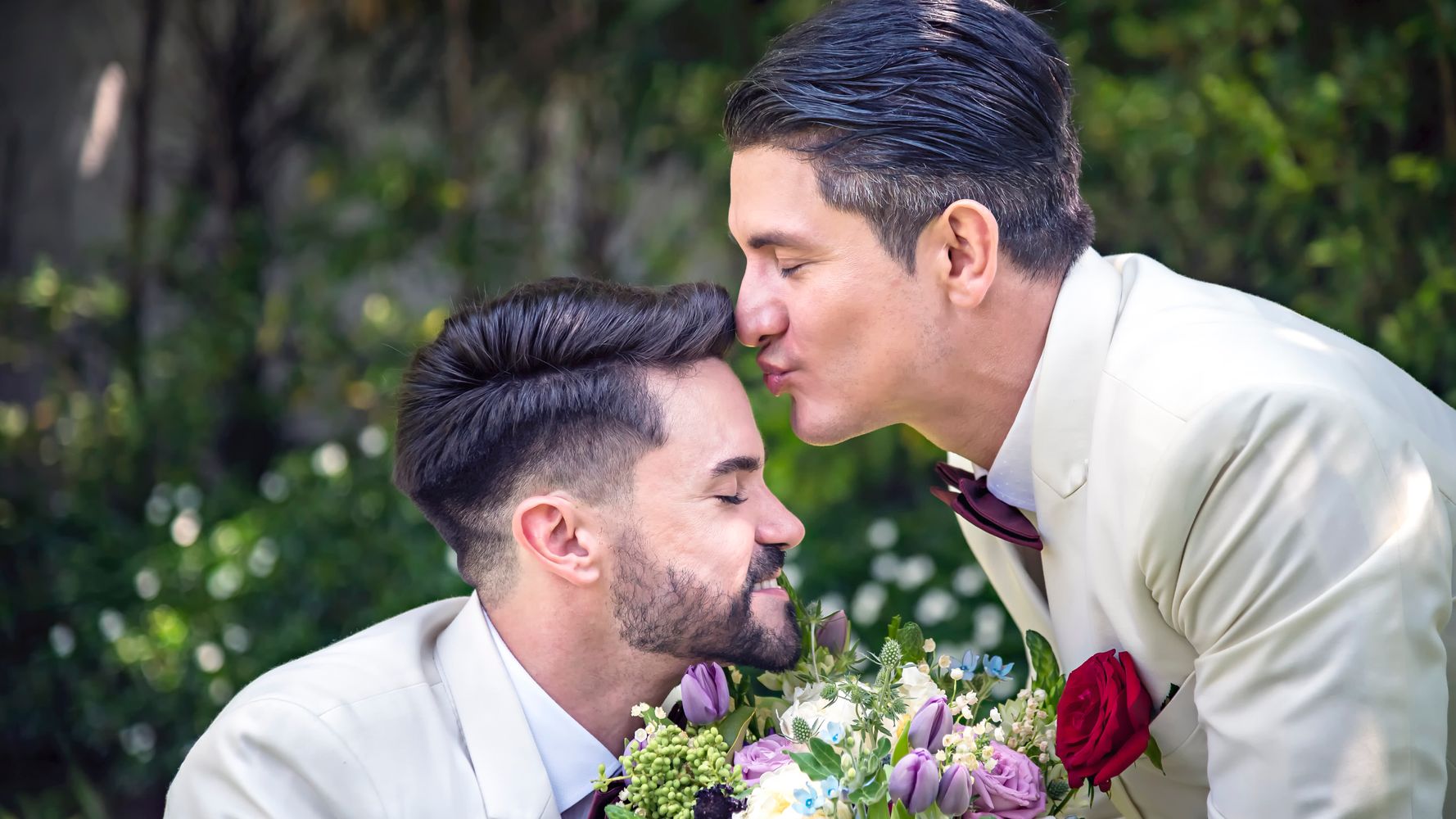
The 30-guest limit at weddings in England has been lifted, despite a four-week delay to the ending of lockdown.

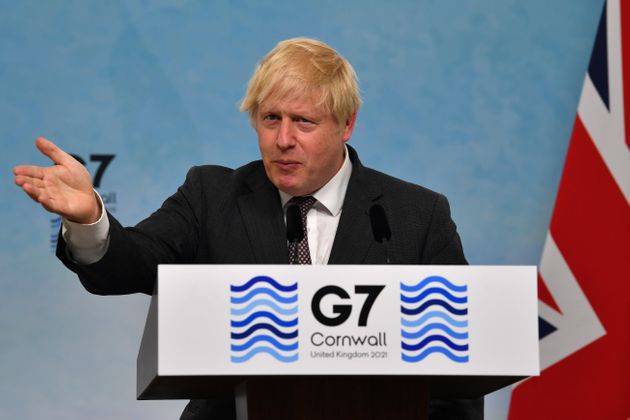
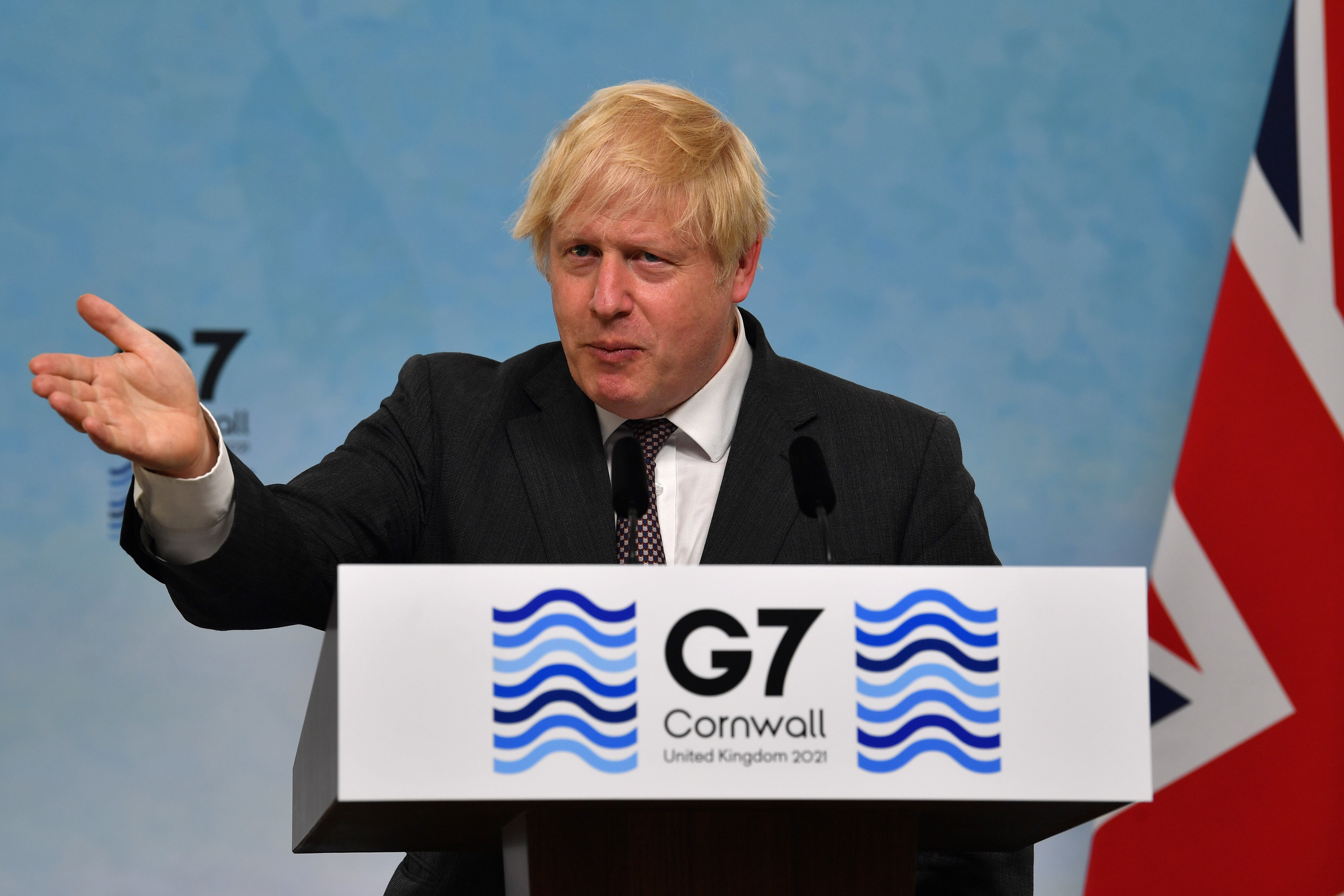
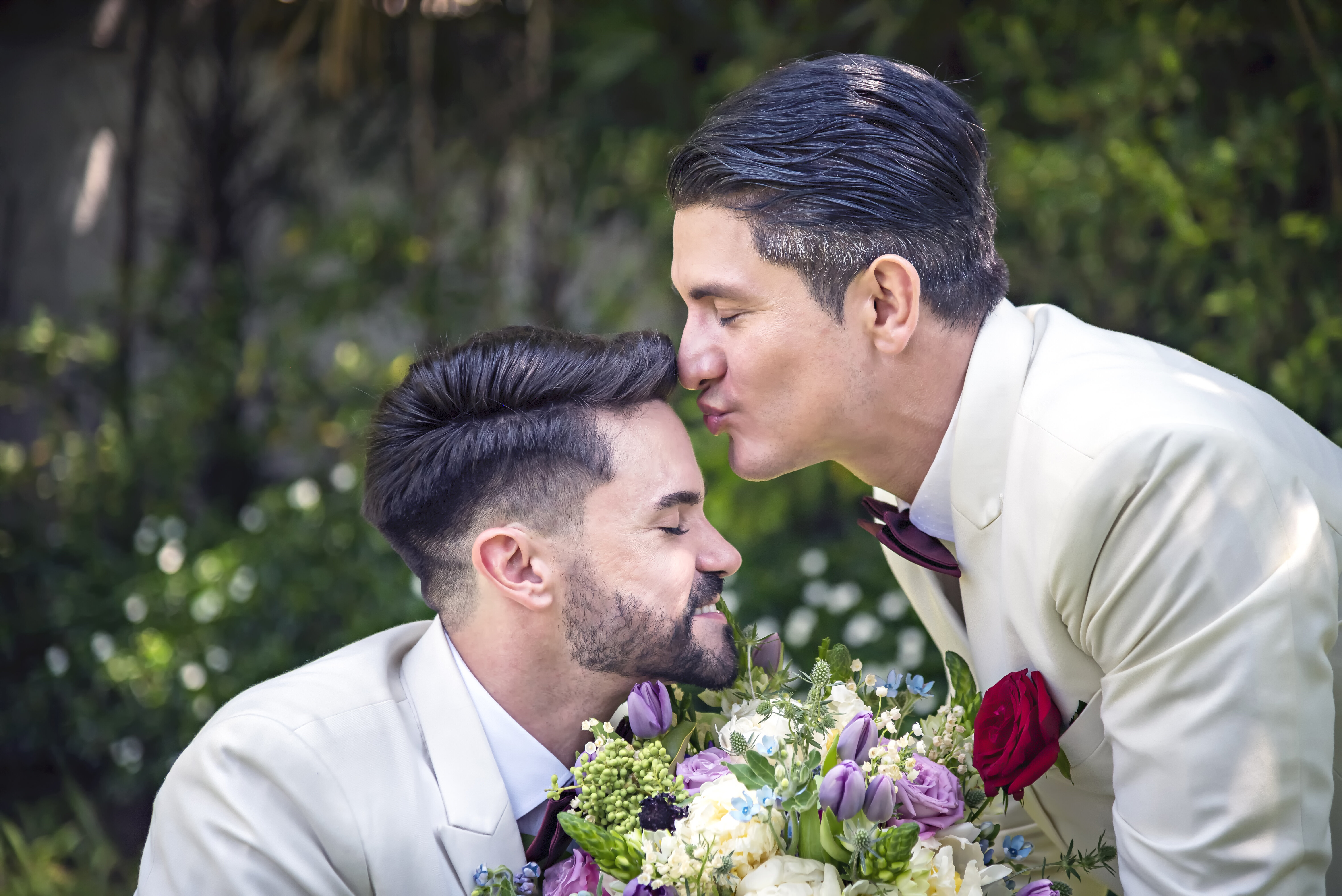
From June 21, people can have more than 30 guests at a wedding, “provided social distancing remains in place”, Boris Johnson announced at a Downing Street press conference on Monday – welcome news to the many couples who have postponed their celebrations time and time again.

He told the Downing Street press conference that the spread of the Delta variant meant the government and public “faced a very difficult choice” between continuing with Step 4 of the roadmap on June 21 or giving the NHS “a few more crucial weeks” to get all remaining vaccinations administered.

“And since today I cannot say that that we have met all our four tests for proceeding with Step 4 on June 21, I think it is sensible to wait just a little longer,” he said.

It is not yet confirmed if there will be an upper limit on guest numbers, but the Mirror has reported that capacity limits may be the highest number of people wedding venues can accommodate while still being Covid-secure.

“I am sorry for all the disappointment that’s going to be caused by going a bit slower as we are today,” the prime minster told a journalist and bride-to-be who said she had already twice postponed her wedding.

The reporter had questioned why testing and vaccination status could not be used to open up weddings in the same way as football matches, and said weddings felt “bottom of the priority list despite being significant life events without which some people cannot progress with their lives.”

Boris Johnson, who married his wife Carrie in a secret ceremony in Westminster Cathedral on May 29 attended by 30 people, said he was sorry for the “many, many businesses” affected by delays – adding “it’s a few weeks that I think is worth it to get those jabs in”.
Share Button

Lockdown Extension: The New Roadmap For Lifting Covid Restrictions In England

England’s long-awaited exit from lockdown has been delayed, with Boris Johnson warning a spike in cases of the Delta variant could lead to a surge in hospitalisations.  

This is the new timeline for reaching stage 4 of the government’s roadmap.

Stage 4 – July 19

The prime minister had hoped to lift the remaining social distancing rules on June 21.

But speaking at a press conference on Monday, he confirmed this date has been pushed back to July 19.

There will be a check point on June 28, where the government will review the infection data, if it still looks bad then the current Covid rules will be kept in place until July 19.

Confirmation, or otherwise, of the July 19 unlocking will be made on July 12.

The previous three stages of the unlocking, were as below.

Stage 1 – March 8 

Two people were allowed to meet for a coffee or picnic and were allowed to meet one other from another household outdoors.

All schools and colleges returned.

Care home visits indoors resumed, with residents allowed one regular named visitor.

The government’s ‘stay at home’ order remained in place. 

March 29 

The rule of six on socials gathering returned. It allowed six people from up to two households to meet outside or in private gardens. 

The stay at home advice was replaced by new guidance to “stay local where possible”.

People were asked to work at home if they could, however, and the overseas travel ban remained in place. 

People were allowed to travel to meet someone but not stay overnight. 

Outdoor facilities such as tennis courts, golf courses and basketball courts reopened.  

Stage 2 – April 12 

Non-essential retail and personal care businesses, such as hairdressers and nail salons, reopened. 

Pubs and restaurants reopened but only for outdoor hospitality, although table service was compulsory.

Public buildings, including libraries, reopened.

People were allowed begin to exercising indoors with the reopening of gyms and swimming pools.

Driving lessons resumed. Weddings and funerals resumed with guests of up to 30 and wakes could include 15 people. 

People were allowed to stay in self-contained holiday lets or camp sites where facilities are not shared, but only with members of their own household.  

Stage 3 – May 17

Pubs and restaurants could begin hosting people indoors.

Gatherings outdoors were allowed for up to 30 people. 

The rule of six/group comprised of two households was also extended to include indoor settings.

Overnight stays were permitted. 

The ban on international travel was lifted, replaced with a traffic light system with different destinations rated green, amber or red.

Hotels and museums could reopen. 

There were also new rules on entertainment venues, such as cinemas and theatre, and indoor sports venues. 

Indoors venues could host 1,000 people or be half full, whichever number was lower. Outdoors, a maximum capacity of 4,000, or half full whichever was lower, was allowed. 

For larger football stadiums, such as Wembley, the crowd could be as large as 10,000 or the venue be a quarter full. 

Exercising indoors in larger groups was allowed, so, for example, exercise classes could resume. 

Share Button

Covid: Lockdown easing in England to be delayed by four weeks

Most current Covid rules will remain for four more weeks after 21 June, government sources say.

Share Button

Covid-19: Vaccine booster study begins in Cambridge

The Cov-Boost study is testing seven vaccines to see which works best as a third dose.

Share Button

Headache and runny nose linked to Delta variant

People may need to be on the lookout for different Covid symptoms, according to researchers.

Share Button

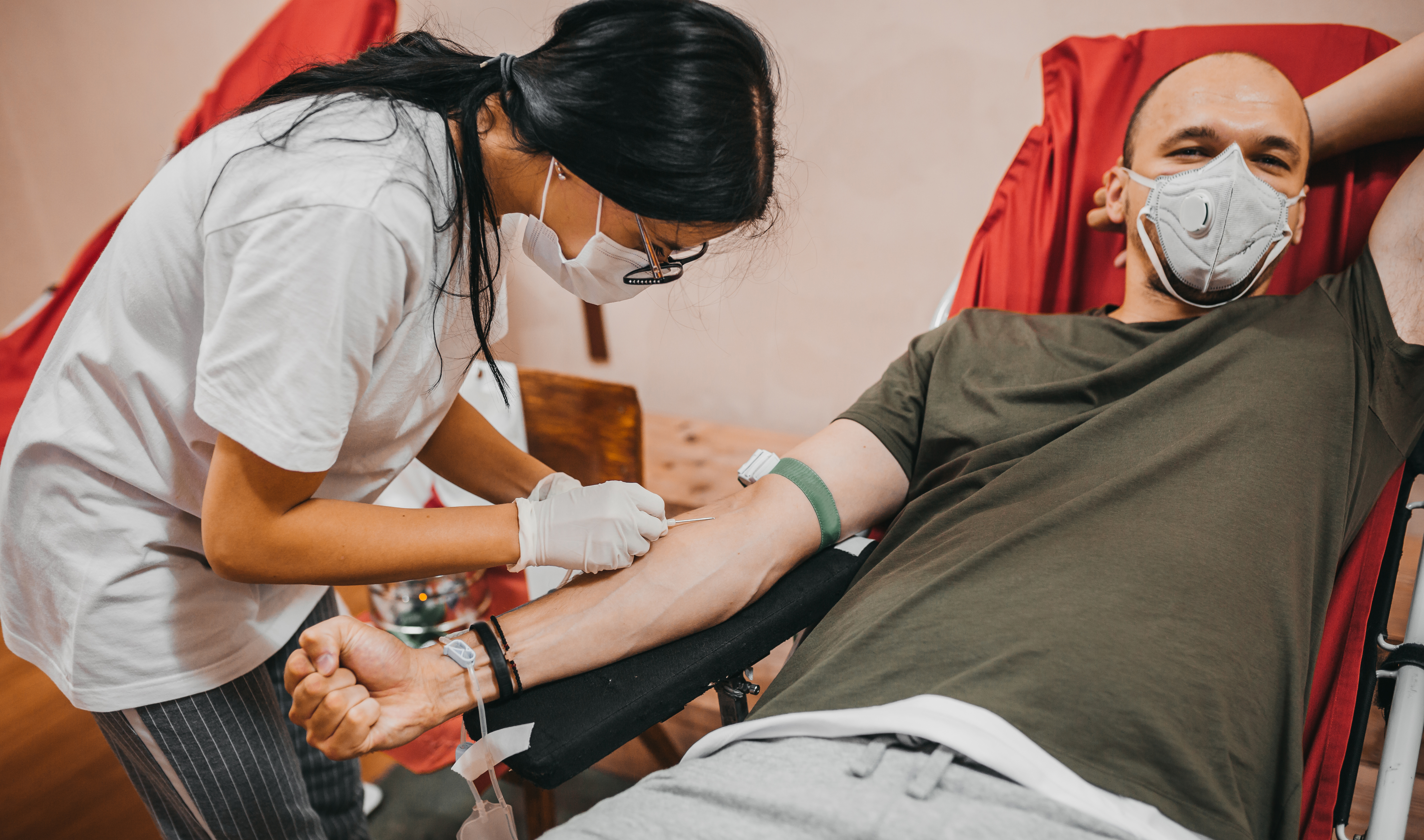
It’s Official: More Gay And Bi Men Can Now Give Blood

After a long wait, gay and bisexual men are able to donate blood more freely, following an overhaul of “dehumanising” blood donation rules.

Under the old rules, gay and bi men were unable to donate blood unless they’d abstained from sexual activity for more than three months. They were also specifically asked about their sexuality on donation forms.

The reasoning given was that “at a population level, men who have sex with men are at an increased risk of acquiring certain infections through sex”.

But under the new rules in England, Scotland and Wales, eligibility to give blood will be based on individual circumstances surrounding health, travel and sexual behaviours instead.

What does the rule change mean?

Any individual who attends to give blood – regardless of gender – will be asked if they’ve had sex and, if so, about recent sexual behaviours.

Those who’ve had the same sexual partner for the last three months will be eligible to donate – regardless of gender or sexuality.

People will also be able to donate if they have a new sexual partner with whom they’ve not had anal sex and there is no known recent exposure to an STI or recent use of PrEP or PEP.

To mitigate risks, those who’ve had anal sex with a new partner or with multiple partners in the last three months will not be able to give blood, but may be eligible in the future.

Donors who have been recently treated for gonorrhoea will be deferred and anyone who’s ever received treatment for syphilis will not be able to give blood.

Wasn’t this rule change announced last year?

Yes, but it’s only just coming into play from June 14.

The changes follow an evidence-based review by the FAIR (For the Assessment of Individualised Risk) steering group led by NHS Blood and Transplant.

The new donor selection system is designed to be fairer and will also maintain the UK’s status as one of the safest blood supplies in the world. Data around the impact of the donor selection changes will be kept under review and assessed 12 months after implementation to determine if changes are needed.

How do people feel about it?

Commenting on the rule changes when they were first announced in December, Adam Bloodworth wrote for HuffPost UK: “What people may not realise is that dehumanising rules like these reinforce feelings of shame that many LGBTQ people carry around with them as a heavy mental burden each day.

“By being discounted from an activity most people are encouraged to do, we’re reminded that we are perceived to be ‘different’ by some in society – no matter how many times people tell us we aren’t.”

Ethan Spibey was prevented from donating blood due to his sexuality – he’d wanted to do his bit and donate after a blood donor saved his grandfather’s life, but was unable to do so. Spibey, who has since been campaigning for a change to donation rules and founded FreedomToDonate, said: “The work of the FAIR steering group shows that simply being a man who has sex with men is not a good enough reason to exclude someone from donating blood.

“This is more than just about a fairer and more inclusive system, it’s about those who rely on blood, and giving blood literally saves lives. I can’t wait to finally repay that first pint. I would encourage anyone who is able to safely donate blood to register to do so.”

How to donate blood

Gay and bi men who’ve previously been turned away for blood donation can call NHS Blood and Transplant on 0300 123 23 23, which can review the new guidelines with you and, if eligible, book your next appointment.

Robbie de Santos, from the charity Stonewall, welcomed the “historic change”.

“We want to see a blood donation system that allows the greatest number of people to donate safely and we will continue to work with government to build on this progress and ensure that more people, including LGBT+ people, can donate blood safely in the future,” he said.

Share Button

Will Lockdown Be Extended? What We Know About Covid Rules On June 21

After weeks of ‘will they won’t they’ debate about whether Boris Johnson will delay the June 21 final lifting of Covid restrictions, we are finally about to find out what happens next.

The prime minister will deliver a press conference on Monday evening at which he will set out his plan for step four of the road map out of lockdown.

A delay is widely expected, amid a spike in Covid cases driven by the Delta variant first detected in India.

But there remain questions over how long it will be, whether rules for weddings or other activities could be relaxed, and what a delay means for the government’s pandemic strategy.

Here’s what we know so far:

What is happening with England’s lockdown?

The prime minister will meet senior ministers and officials on Sunday evening to make a final decision about whether to proceed with the June 21 unlocking.

He is then expected to deliver his verdict to the nation during a Monday evening press conference from Downing Street, after racing back from the Nato summit in Brussels.

Will lockdown easing be delayed?

Johnson looks almost certain to delay the widespread easing of restrictions, admitting over the weekend there are “grounds for caution”.

Reports suggest that he is mulling over a two or four-week delay.

But the smart money looks on the latter with England’s chief medical officer Chris Whitty reportedly favouring a longer delay.

Scientists advising the government have also now predicted that the PM will announce a delay on Monday.

Why will the June 21 unlocking be delayed?

The latest figures from Public Health England (PHE) on Friday showed there have been 42,323 cases of the Delta variant confirmed in the UK, up by 29,892 from the previous week.

It estimates the strain is 60% more transmissible compared with the previously dominant Alpha, or Kent, variant, and that cases are doubling every four-and-a-half days in some parts of England.

The Delta variant also now accounts for 96% of new infections.

Johnson said on Saturday that cases and hospitalisations are now going up and that he has “serious concern” about this potentially feeding through to more deaths.

Foreign secretary Dominic Raab said on Sunday that ministers would be looking at whether vaccinations have “broken the link” between rising cases and rising hospitalisations, “not just severed or weakened it”.

Professor Andrew Hayward, a member of the Nervtag group which advises ministers on new respiratory diseases, said it was clear the country was facing a “substantial” third wave of the disease.

He said the key issue was the extent to which that led to more people becoming seriously ill and requiring hospital treatment.

“We still don’t know how bad it could be,” he told BBC’s The Andrew Marr Show.

But what about Covid vaccines?

More than three quarters (78.9%) of adults have now had their first dose of the vaccine.

But the latest PHE estimates suggest that one dose of Pfizer or AstraZeneca is only around 33% effective against the Delta variant, compared with around 50% against the previously dominant Alpha variant.

Encouragingly though, once people have two jabs the vaccines’ effectiveness is only slightly reduced – from around 88% to 80%.

The problem is only 56% of adults have had both jabs, so a delay would give the NHS more time to give more people their second dose, and so reduce the risk of rising hospitalisations that could put the NHS under pressure.

Johnson said on Saturday that “we need to make sure we give the vaccines extra legs.”

On the plus side, deaths are still very low, although there is always a lag between rising cases feeding through to more deaths.

Could a lockdown delay last longer than four weeks?

WPA Pool via Getty Images

Boris Johnson has refused to say whether the June 21 schedule could be pushed back. 

At a Sunday press conference to close the G7 summit in Cornwall, Johnson refused to say whether the June 21 schedule could be pushed back longer than four weeks.

Foreign secretary Dominic Raab meanwhile said that unlocking needed to be “irreversible” and so the government needed to proceed “carefully and cautiously”.

“We don’t want to yo-yo back in and out of measures,” he said.

He also refused to rule out the possibility that restrictions could stay in place beyond the end of July.

“We want to be irreversible so we have just got to be careful that we are there in terms of data,” he said.

Professor Stephen Reicher, a member of the Scientific Pandemic Insights Group on Behaviours (Spi-B), has meanwhile warned that there is a risk the Covid situation could go “backwards”.

He called on the government to provide more financial support to help people self isolate to stop the spread of the virus.

Could there still be some relaxation of Covid rules?

HuffPost UK last week revealed that Michael Gove said he would “bet” on some kind of “relaxation” of restrictions.

Reports suggest that Johnson may delay most of the roadmap, but lift the cap on the number of people who can attend weddings, which is currently at 30.

The PM may also choose to relax rules around attendance of large events to enable at least half-full stadiums at Euro 2020 games hosted at Wembley, including the final.

Will there be a backlash?

Polling by Opinium suggested broad public support for the government’s approach, with 54% in favour of a delay and 37% against.

But there is frustration among some Conservative MPs – already unhappy over the impact on the economy and on civil liberties – at the prospect of further delay.

Writing in the Mail on Sunday, Sir Graham Brady, the influential chairman of the backbench Tory 1922 Committee, said that it must be the final time.

“On any reasonable assessment we should be still on target for lifting restrictions on June 21,” he wrote.

“There is no excuse for this further catastrophic delay. It is unacceptable to restrict people’s most fundamental rights. And it must never ever happen again.”

Share Button

Covid-19: Hospital data key to 21 June lockdown end, says Raab

Dominic Raab says the decision depends on breaking the link between cases and hospital admissions.

Share Button

G7: World leaders promise one billion Covid vaccine doses for poorer nations

PM Boris Johnson rejects criticism the donation is not enough, saying “we are going flat out”.

Share Button

G7 Leaders Fall Short Of Directly Sharing 1bn Vaccine Doses Around The World

Leaders of the G7 group of wealthy nations have fallen short of directly providing one billion Covid vaccine doses to poorer countries over the next year.

The final communique of the Boris Johnson-hosted summit in Cornwall revealed that the leaders only managed to commit to sharing 870m spare doses over the next year, despite a high profile commitment to a billion.

The document insists that taken together with separate financial commitments it would mean the G7 has shared more than two billion doses since the start of the pandemic, and has met the 1bn target for the next year.

But the leaders are facing criticism from the likes of Oxfam, which accused leaders of “cooking the books” with its vaccine figures.

“A billion vaccine doses would have been a drop in the bucket, but they didn’t even manage that,” the charity said.

Earlier, former UK prime minister Gordon Brown said the summit will go down as “unforgivable moral failure” as the World Health Organisation (WHO) estimates that 11bn doses – more than ten times the number pledged – are needed to stamp out the pandemic.

At his closing summit press conference, Johnson rejected Brown’s criticism, highlighting US president Joe Biden’s commitment to providing 500m Pfizer vaccines for 92 low and lower-middle income countries and the African Union.

 “This is another billion made up of a massive contribution by the United States and other friends,” the UK prime minister said.

He said the UK’s contribution is another 100m from now to next June of the vaccines.

He said: “Already of the 1.5bn vaccines that have been distributed around the world, I think that people in this country should be very proud that half a billion of them are as a result of the actions taken by the UK government in doing that deal with the Oxford scientists and AstraZeneca to distribute it at cost.”

He added: “We are going flat out and we are producing vaccines as fast as we can, and distributing them as fast as we can”. 

The target to vaccinate the world by the end of next year will be done “very largely thanks to the efforts of the countries who have come here today”, according to Johnson.

But Oxfam’s head of inequality policy Max Lawson said leaders had “cooked the books” on vaccines and “completely failed” to meet the challenge of the biggest health emergency in a century.

“This G7 summit will live on infamy,” he concluded.

Edwin Ikhuoria, of the anti-poverty campaign One, said: “Throughout the summit we have heard strong words from the leaders but without the new investment to make their ambitions a reality.

“Crucially, the failure to get life-saving vaccines to the whole planet as fast as possible, means this was not the historic moment that people around the world were hoping for and leaves us little closer to ending the pandemic.”

What else was agreed at the G7 summit? 

Covid

G7 leaders renewed calls for a further investigation into the origin of Covid-19, following Biden’s surprise decision to order US intelligence agencies to continue probing the Wuhan “lab leak” theory.

The final summit communique called for a “timely, transparent, expert-led, and science-based WHO [World Health Organisation]-convened phase 2 Covid-19 origins study” including in China.

Johnson said that the best advice available to him remained that the virus jumped species from an animal.

However he said that it was important to keep an open mind as to what exactly happened.

“At the moment, the advice that we have had is that it doesn’t look as though this particular disease of zoonotic origin came from a lab,” he said.

“Clearly anybody sensible would want to keep an open mind about that.”

China

America’s wariness of China is continuing despite Biden replacing Donald Trump in the White House.

The president managed to convince leaders to sign up to a rival to Beijing’s influential Belt and Road investment programme in an effort to counter growing Chinese influence.

The Build Back Better World (B3W) programme will fund infrastructure, including green technology, and support growth in developing countries.

Leaders meanwhile pledged to call on China to “respect human rights and fundamental freedoms”, including in Xinjiang where Uighurs are believed to be suffering brutal human rights abuses that some say amount to genocide.

It also raised the situation in Hong Kong, calling on Beijing to respect its “rights, freedoms and high degree of autonomy”.

But reports suggest that there were some disagreements over how strong the language on China should be.

Environment

The G7 is committed to supporting a green revolution that creates jobs, cuts emissions and seeks to limit the rise in global temperatures to 1.5 degrees

Leaders set out the action they will take to slash carbon emissions, including measures like ending the use of unabated coal power – although they were unable to set a deadline for this.

The leaders did commit to ending funding for carbon-emitting overseas projects by the end of the year but the failure to agree a timeline may worry Johnson in the run-up to the Cp26 climate summit in Glasgow at which he is hoping to strike a much bigger global deal.

The G7 also set a goal of conserving or protecting at least 30% of their land and marine areas by 2030 as part of a push to reach that level of protection globally.

But Oxfam criticised the failure to make new pledges of climate finance, arguing that developing nations were looking for progress ahead of Cop26.

“Vague promises of new financing for green development projects should not distract from this goal,” the charity said.

Share Button