Water treatment: Removing hormones with sunlight

Micropollutants such as steroid hormones contaminate drinking water worldwide and pose a significant threat to human health and the environment even in smallest quantities. Until now, easily scalable water treatment technologies that remove them efficiently and sustainably have been lacking. Scientists at the Karlsruhe Institute of Technology (KIT) developed a new chemical process for removing hormones. It takes advantage of the mechanisms of photocatalysis and transforms the pollutants into potentially safe oxidation products. The team reports on this in the scientific journal Applied Catalysis B: Environmental.

Organic pollutants such as pharmaceuticals, pesticides, and hormones — even at nanoscale concentrations — contaminate drinking water in a way that poses significant risks to humans, animals, and the environment. In particular, the steroid hormones estrone, estradiol, progesterone, and testosterone can cause biological damage in humans and wildlife. The European Union has therefore set strict minimum quality standards for safe and clean drinking water, which must also be taken into account in the development of new technologies for water treatment. “The challenge for science is to develop more sensitive methods to target the hormone molecules,” says Professor Andrea Iris Schäfer, Head of the Institute for Advanced Membrane Technology (IAMT) at KIT. The main problem is that steroid hormones are very hard to detect in water. “There is one hormone molecule for every quintillion water molecules. This is an extremely low concentration,” explains the expert.

Detecting — and Removing — Micropollutants

With conventional water treatment technologies, wastewater treatment plants can neither find nor remove micropollutants. Researchers at the IAMT and the KIT Institute of Microstructure Technology (IMT) are therefore working on new methods to not only detect and measure micropollutants, but also remove them. A new, photocatalytic process proves to be promising. The scientists coated a commercially available large-pore polymer membrane with Pd(II)-porphyrin, a palladium-containing, light-sensitive molecule that can absorb visible radiation. Exposure to radiation with simulated sunlight initiates a chemical process that produces so-called singlet oxygen, a highly reactive oxygen species. The singlet oxygen specifically “attacks” the hormone molecules and converts them into potentially safe oxidation products. “It is crucial that we coat the surface of each pore with the photosensitizer molecule, increasing the surface area of attack,” explains Roman Lyubimenko, a scientist at IAMT and IMT.

Significant Reduction of the Estradiol Concentration

The chemical decomposition of steroid hormones and the filtration of other micropollutants can be realized in a single module. With this process, filtering of 60 to 600 liters of water per square meter of membrane is possible in one hour. The scientists were able to reduce the concentration of estradiol, the most biologically active steroid hormone, by 98 percent from 100 to 2 nanograms per liter. “This means that we are already very close to the EU target value of one nanogram per liter,” emphasizes Schäfer. The next goal of the research team is to further optimize the photocatalytic process and transfer it to a larger scale. Open issues are to find out how much light intensity and how much porphyrin will be needed and whether the costly palladium from the platinum group of metals can be replaced by other metals.

Story Source:

Materials provided by Karlsruher Institut für Technologie (KIT). Note: Content may be edited for style and length.


Share Button

Jeremy Paxman Reveals Parkinson’s Disease Diagnosis

Photoshot via Getty Images

Jeremy Paxman

In a statement to the PA news agency, Jeremy said: “I can confirm I have recently been diagnosed with Parkinson’s disease. I am receiving excellent treatment and my symptoms are currently mild.

“I plan to continue broadcasting and writing for as long as they’ll have me and have written about my diagnosis in more detail for the June issue of the marvellous Saga Magazine.

“I will not be making any further comment.”

Jeremy is perhaps best known as the former host of BBC Two’s Newsnight. 

He presented the flagship current affairs programme from 1989 to 2014, during which time he interviewed high-profile figures from politics and culture.

He has also fronted University Challenge since 1994, making him the longest serving current quizmaster on UK TV.

Share Button

Nanoparticles: The complex rhythm of chemistry

Most of commercial chemicals are produced using catalysts. Usually, these catalysts consist of tiny metal nanoparticles that are placed on an oxidic support. Similar to a cut diamond, whose surface consists of different facets oriented in different directions, a catalytic nanoparticle also possesses crystallographically different facets — and these facets can have different chemical properties.

Until now, these differences have often remained unconsidered in catalysis research because it is very difficult to simultaneously obtain information about the chemical reaction itself and about the surface structure of the catalyst. At TU Wien (Vienna), this has now been achieved by combining different microscopic methods: with the help of field electron microscopy and field ion microscopy, it became possible to visualize the oxidation of hydrogen on a single rhodium nanoparticle in real time at nanometer resolution. This revealed surprising effects that will have to be taken into account in the search for better catalysts in the future. The results have now been presented in the scientific journal Science.

The rhythm of chemical reactions

“In certain chemical reactions, a catalyst can periodically switch back and forth between an active and an inactive state,” says Prof. Günter Rupprechter from the Institute of Materials Chemistry at TU Wien. “Self-sustaining chemical oscillations can occur between the two states — the chemist Gerhard Ertl received the Nobel Prize in Chemistry for this discovery in 2007.”

This is also the case with rhodium nanoparticles, which are used as a catalyst for hydrogen oxidation — the basis of every fuel cell. Under certain conditions, the nanoparticles can oscillate between a state in which oxygen molecules dissociate on the surface of the particle and a state in which hydrogen is bound.

Incorporated oxygen changes the surface behaviour

“When a rhodium particle is exposed to an atmosphere of oxygen and hydrogen, the oxygen molecules are split into individual atoms at the rhodium surface. These oxygen atoms can then migrate below the uppermost rhodium layer and accumulate as the subsurface oxygen there,” explains Prof. Yuri Suchorski, the first author of the study.

Through interaction with hydrogen, these stored oxygen atoms can then be brought out again and react with hydrogen atoms. Then, there is again room for more oxygen atoms inside the rhodium particle and the cycle starts again. “This feedback mechanism controls the frequency of the oscillations,” says Yuri Suchorski.

Until now, it was thought that these chemical oscillations always took place synchronously in the same rhythm over the entire nanoparticle. After all, the chemical processes on the different facets of the nanoparticle surface are spatially coupled, as the hydrogen atoms can easily migrate from one facet to the adjacent facets.

However, the results of the research group of Prof. Günther Rupprechter and Prof. Yuri Suchorski show that things are actually much more complex: Under certain conditions, the spatial coupling is lifted and adjacent facets suddenly oscillate with significantly different frequencies — and in some regions of the nanoparticle, these oscillating “chemical waves” do not propagate at all.

“This can be explained on an atomic scale,” says Yuri Suchorski. “Under the influence of oxygen, protruding rows of rhodium atoms can emerge from a smooth surface.” These rows of atoms can then act as a kind of “wave breaker” and hamper the migration of hydrogen atoms from one facet to another — the facets become decoupled.

If this is the case, the individual facets can form oscillations of different frequences. “On different facets, the rhodium atoms are arranged differently on the surface,” says Günther Rupprechter. “That’s why the incorporation of oxygen under the differing facets of the rhodium particle also proceeds at different rates, and so oscillations with different frequencies result on crystallographically different facets.”

A hemisphere tip as a nanoparticle model

The key to unravelling this complex chemical behaviour lays in using a fine rhodium tip as a model for a catalytic nanoparticle. An electric field is applied, and due to the quantum mechanical tunnelling effect, electrons can leave the tip. These electrons are accelerated in the electric field and hit a screen, where a projection image of the tip is then created with a resolution of around 2 nanometers.

In contrast to scanning microscopies, where the surface sites are scanned one after the other, such parallel imaging visualizes all surface atoms simultaneously — otherwise it would not be possible to monitor the synchronization and desynchronization of the oscillations.

The new insights into the interaction of individual facets of a nanoparticle can now lead to more effective catalysts and provide deep atomic insights into mechanisms of non-linear reaction kinetics, pattern formation and spatial coupling.

Research funded by the Austrian Science Fund (FWF) within Project “Spatial-temporal phenomena on surface structure libraries.”

Video: https://www.youtube.com/watch?v=9g7Q4dh_baA

Share Button

Contaminated blood inquiry: Matt Hancock to give evidence

The health secretary will face questions about compensation for victims of contaminated blood on Friday.

Share Button

Covid: Stillbirth and prematurity risks may be higher in pregnancy

The overall risks remain low for pregnant women but coronavirus may increase stillbirths, a study suggests.

Share Button

Will COVID-19 eventually become just a seasonal nuisance?

Within the next decade, the novel coronavirus responsible for COVID-19 could become little more than a nuisance, causing no more than common cold-like coughs and sniffles. That possible future is predicted by mathematical models that incorporate lessons learned from the current pandemic on how our body’s immunity changes over time. Scientists at the University of Utah carried out the research, now published in the journal Viruses.

“This shows a possible future that has not yet been fully addressed,” says Fred Adler, PhD, professor of mathematics and biological sciences at the U. “Over the next decade, the severity of COVID-19 may decrease as populations collectively develop immunity.”

The findings suggest that changes in the disease could be driven by adaptations of our immune response rather than by changes in the virus itself. Adler was senior author on the publication with Alexander Beams, first author and graduate student in the Department of Mathematics and the Division of Epidemiology at University of Utah Health, and undergraduate co-author Rebecca Bateman.

Although SARS-CoV-2 (the sometimes-deadly coronavirus causing COVID-19) is the best-known member of that virus family, other seasonal coronaviruses circulate in the human population — and they are much more benign. Some evidence indicates that one of these cold-causing relatives might have once been severe, giving rise to the “Russian flu” pandemic in the late 19th century. The parallels led the U of U scientists to wonder whether the severity of SARS-CoV-2 could similarly lessen over time.

To test the idea, they built mathematical models incorporating evidence on the body’s immune response to SARS-CoV-2 based on the following data from the current pandemic.

  • There is likely a dose response between virus exposure and disease severity.
    • A person exposed to a small dose of virus will be more likely to get a mild case of COVID-19 and shed small amounts of virus.
    • By contrast, adults exposed to a large dose of virus are more likely to have severe disease and shed more virus.
    • Masking and social distancing decrease the viral dose.
  • Children are unlikely to develop severe disease.
  • Adults who have had COVID-19 or have been vaccinated are protected against severe disease.

Running several versions of these scenarios showed that the three mechanisms in combination set up a situation where an increasing proportion of the population will become predisposed for mild disease over the long term. The scientists felt the transformation was significant enough that it needed a new term. In this scenario, SARS-CoV-2 would become “Just Another Seasonal Coronavirus,” or JASC for short.

“In the beginning of the pandemic, no one had seen the virus before,” Adler explains. “Our immune system was not prepared.” The models show that as more adults become partially immune, whether through prior infection or vaccination, severe infections all but disappear over the next decade. Eventually, the only people who will be exposed to the virus for the first time will be children — and they’re naturally less prone to severe disease.

“The novel approach here is to recognize the competition taking place between mild and severe COVID-19 infections and ask which type will get to persist in the long run,” Beams says. “We’ve shown that mild infections will win, as long as they train our immune systems to fight against severe infections.”

The models do not account for every potential influence on disease trajectory. For example, if new virus variants overcome partial immunity, COVID-19 could take a turn for the worse. In addition, the predictions rely on the key assumptions of the model holding up.

“Our next step is comparing our model predictions with the most current disease data to assess which way the pandemic is going as it is happening,” Adler says. “Do things look like they’re heading in a bad or good direction? Is the proportion of mild cases increasing? Knowing that might affect decisions we make as a society.”

The research, published as “Will SARS-CoV-2 Become Just Another Seasonal Coronavirus?,” was supported by COVID MIND 2020 and the University of Utah.

Story Source:

Materials provided by University of Utah Health. Note: Content may be edited for style and length.

Share Button

Covid: Test and Trace failure helped Indian variant spread, report says

Several councils did not receive up-to-date Covid data for almost three weeks, the BBC learns.

Share Button

Twitter Is Obsessed With Prince William’s Vaccination Gun Show

It looks like Prince William’s Covid-19 vaccine came with some mighty big guns.

The Duke of Cambridge got his shot from NHS staff at the Science Museum in London on Tuesday, and he and wife Kate Middleton have since posted a photo of the vaccination on their various social media accounts.

But while the photo was meant to promote the value of getting the Covid-19 shot, many people were focused on “guns” – specifically the one located where the duke’s right arm is supposed to be.

The pic got people pumped (in a manner of speaking).

One woman was so impressed by William’s muscles that she made a humble request to his father, Prince Charles: “He needs another jab in the other arm.”

Share Button

Jeremy Corbyn ‘Should Be Honest’ About Covid Jab, Starmer Aide Says

Jeremy Corbyn should be “honest” about whether he has had his coronavirus vaccination or not, an aide to Keir Starmer has said.

Sharon Hodgson told HuffPost UK’s Commons People podcast the ex-Labour leader should not have any privacy concerns around telling people he has had the jab.

Corbyn is 71 years old, so has been eligible for a vaccine since January.

But his office has failed to respond to requests from HuffPost UK asking if he had had the vaccine, although his parliamentary office told the Guido Fawkes website this week that Corbyn “doesn’t normally comment on personal health matters”.

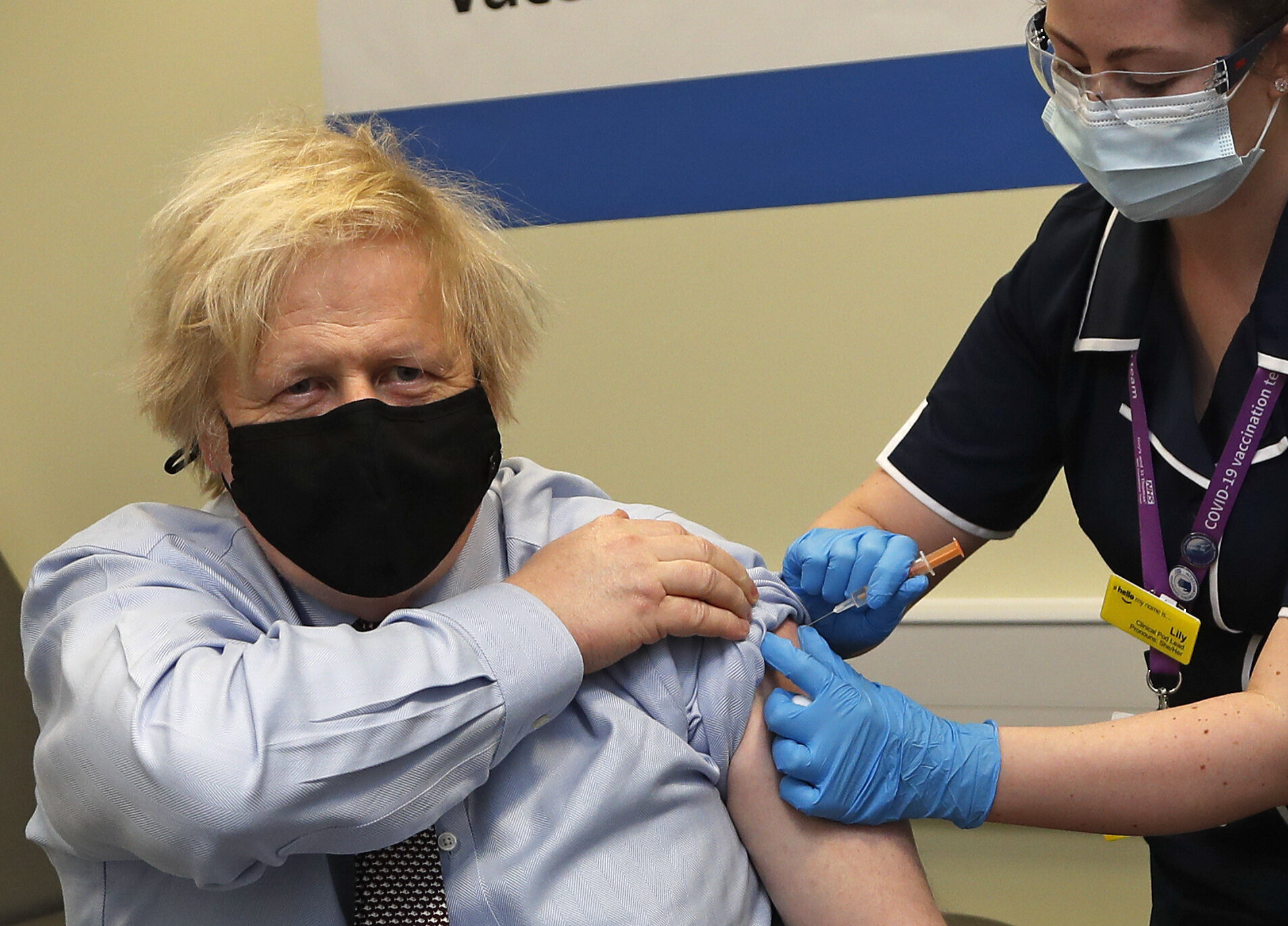
Boris Johnson in March invited photographers to London’s St Thomas’ hospital when he received his first dose of the Oxford/AstraZeneca vaccine.

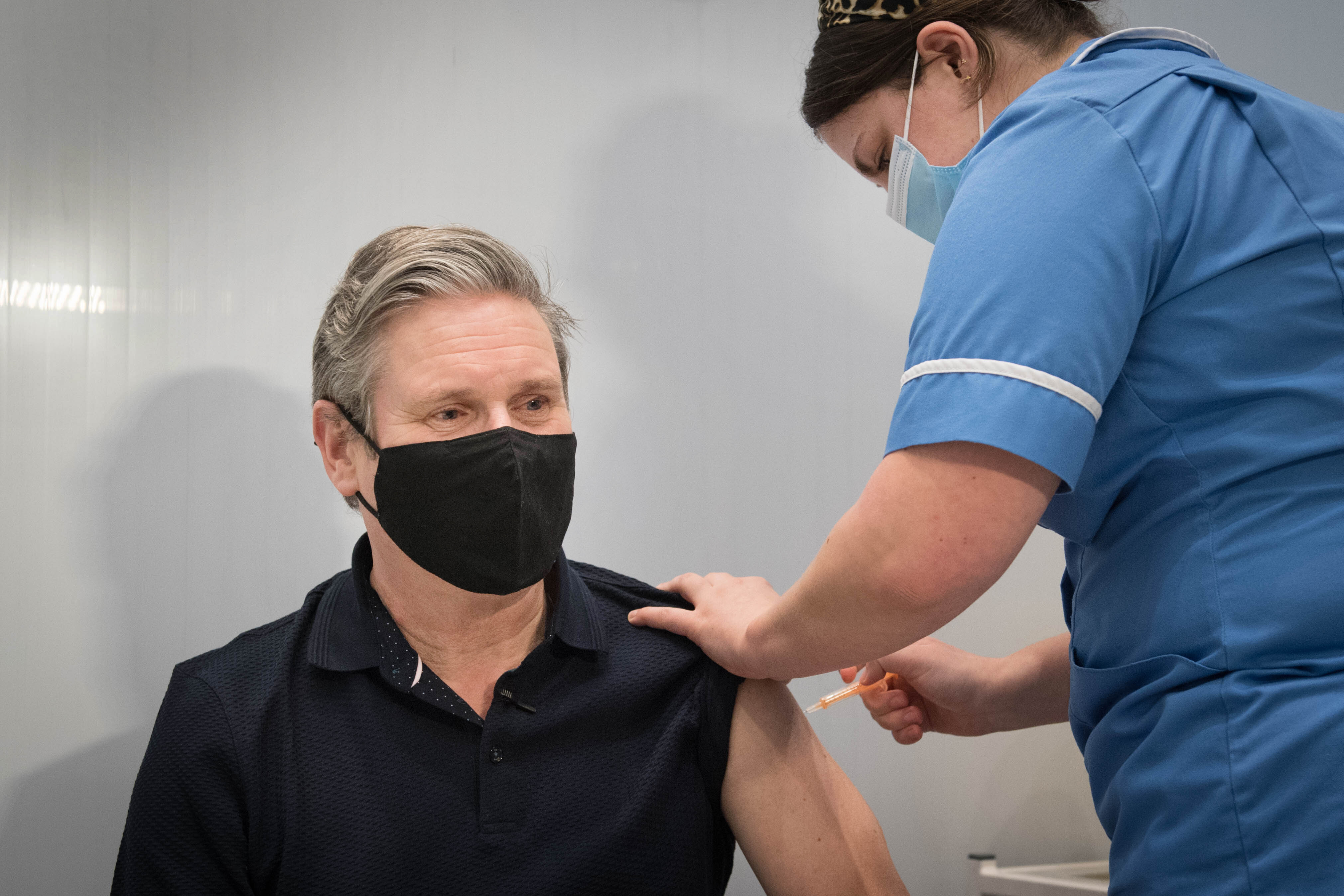
Starmer was also photographed getting the jab at the Francis Crick Institute in his Holborn and St Pancras constituency in March.

Both used the opportunities to encourage others to get vaccinated.

WPA Pool via Getty Images

Boris Johnson receives the first dose of the AstraZeneca vaccine administered by nurse and clinical pod lead, Lily Harrington at St.Thomas’ Hospital on March 19

Stefan Rousseau – PA Images via Getty Images

Keir Starmer receives his first dose of the AstraZeneca coronavirus vaccine from midwife, Emily Malden at the Francis Crick Institute in his Holborn and St Pancras seat, in March

Hodgson, a Labour MP who is Starmer’s new parliamentary private secretary, said Corbyn should follow other MPs in being open about whether he has had the jab as she was asked whether it could help boost take-up.

She told Commons People: “It’s not a privacy thing.

“I can’t imagine why anybody would want to say that’s a private matter between me and my jab.

“It’s not, it’s either you’ve had the jab or you haven’t.

“So yeah, if you’ve had the jab you should say and if he hasn’t then he needs to sort of be honest I suppose about that.”

It comes after Downing Street urged people who are refusing to get vaccinated to “think of others” and get the jab to help protect over-50s and vulnerable patients with immunity problems, amid localised spikes in the India Covid variant.

The prime minister has warned that the variant could delay England’s final exit from lockdown restrictions on June 21, prompting criticism from Tory MPs like Conor Burns, who said that it would not be right to keep the country in partial lockdown simply because vaccine hesitant people were refusing the jab.

Share Button

PIP implant victims ‘elated’ by compensation win

Women who had the breast implants say they are delighted by the “victory” after 10 years fighting for justice.

Share Button