The country records 314,835 new daily cases as Delhi hospitals fear running out of oxygen in hours.


The country records 314,835 new daily cases as Delhi hospitals fear running out of oxygen in hours.

Downing Street has announced an internal inquiry into the leak of private text messages between Boris Johnson and billionaire James Dyson over the tax status of his employees.
The prime minister promised the businessman he would “fix” the issue after personal lobbying from Dyson via texts.
Dyson was seeking assurances before he agreed to build ventilators at the height of the coronavirus crisis. In the end, Dyson never supplied any ventilators to the NHS.
Labour has demanded an urgent investigation be conducted by parliament’s liaison committee, which is made of up senior MPs.
Speaking during PMQs on Wednesday, Labour leader Keir Starmer suggested it was “one rule for those that have got the prime minister’s phone number, another for everybody else”.
The text messages were obtained by the BBC. Asked if there would be a leak inquiry, the prime minister’s spokesperson said on Thursday: “I can confirm that, yes, we have instructed the Cabinet Office to look into this.”
Downing Street also said it will publish correspondence between Johnson and Dyson “shortly”.
“The prime minister said in the House he’s happy to share all the details with the House, as he shared them with his officials,” the spokesperson said.
“That’s what we’re working on, we’re pulling together that information.”
No.10 also did not deny reports, including in The Times, that cabinet secretary Simon Case advised Johnson to change his phone number because of concerns over the ease with which lobbyists and others from the business world were able to contact him.
The spokesperson said: “We don’t get into details of the advice provided between a cabinet secretary and a prime minister ,and so I’m not going to do that in this instance.”


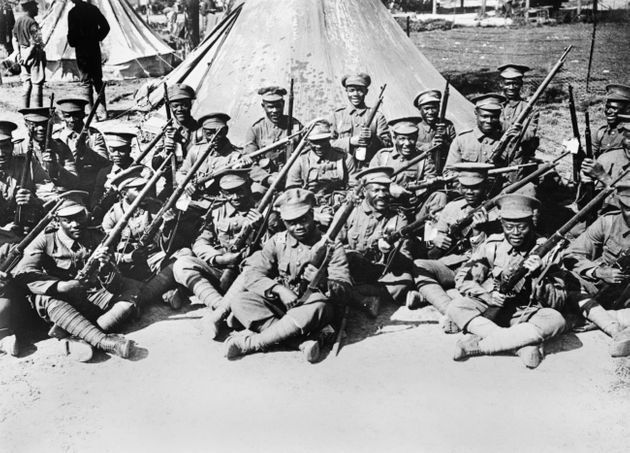
“Pervasive racism” underpinned a failure to properly commemorate potentially hundreds of thousands of predominantly Black and Asian service personnel who died fighting for the British Empire, an investigation has found.
The Commonwealth War Graves Commission (CWGC) apologised after its investigation found those individuals were not formally remembered in the same way as their white comrades.
Defence secretary Ben Wallace on Thursday morning told the Commons: “The number of casualties commemorated unequally, the number commemorated without names and the number otherwise entirely unaccounted for is not excusable.” He accepted that “prejudice” had played a part.
The investigation discovered at least 116,000 predominantly African and Middle Eastern First World War casualties “were not commemorated by name or possibly not commemorated at all”.

Martin Keene/PA
The figure could be as high as 350,000, according to the report obtained by the PA news agency after it was first reported by the Guardian.
Most of the men were commemorated by memorials that did not carry their names.
When war broke out in 1914, King George V called for “men of every class, creed and colour” to join the fight. What was then the British West Indies is thought to have sent 16,000 soldiers to join the English forces, plus some 4,500 volunteers, who arrived in special contingents.
In 1915, the British West Indies Regiment (BWIR) was formed, comprising two thirds of its men from Jamaica and the rest hailing from the Bahamas to then British Guiana.
But Caribbean soldiers were not permitted to fight as equals against their white compatriots, with most serving for lower pay in the Labour Corps, according to the BBC.
One who was commemorated however was Walter Tull, who was a footballer and the first Black Army officer to command troops in a regular unit.
He died aged 29 while leading an attack on the Western Front during the second Battle of the Somme on March 25, 1918.
Tull served as a second lieutenant, leading men into battle at a time when the Army forbade a person of non-European descent becoming an officer.
As well as being one of the most celebrated Black British soldiers of the Great War, Tull was also one of the first Black professional football players in England, playing for Tottenham Hotspur while overcoming racial discrimination.
The investigation also estimated that between 45,000 and 54,000 Asian and African casualties were “commemorated unequally”.
Some were commemorated collectively on memorials, unlike those in Europe, and others, who were missing, were only recorded in registers rather than in stone.
In 2018 a war memorial featuring a Sikh soldier to honour the many from the Indian subcontinent who fought in both world wars was unveiled in Smethwick, Birmingham.
The special committee behind the investigation was established by the CWGC in 2019 after a critical documentary on the issue, titled Unremembered and presented by Labour MP David Lammy.
Originally named the Imperial War Graves Commission, it was founded in 1917 to commemorate those who died in the war.
IWM via Imperial War Museums via Getty I
The investigation found that the failure to properly commemorate the individuals was “influenced by a scarcity of information, errors inherited from other organisations and the opinions of colonial administrators”.
“Underpinning all these decisions, however, were the entrenched prejudices, preconceptions and pervasive racism of contemporary imperial attitudes,” it added.
One example given is based on communications in 1923 between F.G. Guggisberg, the governor of the Gold Coast colony, now Ghana, and Arthur Browne, from the commission.
At a meeting in London, it was said that the governor said “the average native of the Gold Coast would not understand or appreciate a headstone” as he argued for collective memorials.
A response from Arthur Browne showed “what he may have considered foresight, but one that was explicitly framed by contemporary racial prejudice”, according to the report.
“In perhaps two or three hundred years’ time, when the native population had reached a higher stage of civilisation, they might then be glad to see that headstones had been erected on the native graves and that the native soldiers had received precisely the same treatment as their white comrades,” he said.
In its response to the report, the CWGC says it “acknowledges that the Commission failed to fully carry out its responsibilities at the time and accepts the findings and failings identified in this report and we apologise unreservedly for them”.
In a statement CWGC director general Claire Horton said: “The events of a century ago were wrong then and are wrong now.
“We recognise the wrongs of the past and are deeply sorry and will be acting immediately to correct them.”
Lammy, the shadow justice secretary, said: “No apology can ever make up for the indignity suffered by the unremembered.
“However, this apology does offer the opportunity for us as a nation to work through this ugly part of our history – and properly pay our respects to every soldier who has sacrificed their life for us.”


Ella Adoo-Kissi-Debrah’s mother calls on the government to “reduce air pollution immediately”.
Bridgerton star Nicola Coughlan could not control her excitement after finding out Kim Kardashian was a fan of her’s – and it appears the feeling was very much mutual.
The pair shared a Twitter love-in after the actor revealed the Kardashians were a source of inspiration for her on the set of the hit Netflix period drama.
On Tuesday, Nicola tweeted: “As the world’s number one @bridgerton Stan does @KimKardashian know that the Kardashians were a massive inspiration for the Featheringtons and we talked about them all the time during our fittings? Because I feel like she should know this.”

Netflix/Shutterstock
And sure enough, it wasn’t long before Nicola’s tweet caught Kim’s attention, and her mind was blown.
“WHAT?!?! I am freaking out!!!!!!” Kim wrote. “This tweet was sent to me on my @bridgerton group chat! Can I please come to a fitting?!?! It would make my whole life!!!!!! I love you Lady W!!!”
Nicola. whose Bridgerton character Penelope Featherington was revealed to be the mysterious Lady Whistledown, replied: “Omg yesss of course we would love to have you!
“Also did you know that Mr Pearl made your corset for the Met Gala and the very next one he made was mine for Bridgerton? You’ve been part of the Bridgerton world for longer than you know.”
Kim then tweeted: “OMG I’m gonna faint!!!!!! Does this make me an honorary Duchess in Bridgerton ?!?!?!? I am the corset Queen!!!”
Nicola then gave her the ultimate honour, tweeting: “Why of course, Duchess Kardashian of Calabasas! Lady Whistledown is happy to declare you the season’s true incomparable.”
“I will wear this title proudly and not let you down Lady Whistledown!” Kim insisted.
Speaking to her followers, who were living for the exchange as much as she was, Nicola tweeted: “You know I’ve loved Kim for like over a decade, I can’t even deal.”
There’s a real possibility of Kim’s dreams coming true too, as earlier this month, it was confirmed that a third and fourth series of Bridgerton have now been commissioned, on top of a previously-announced second season.
Jonathan Bailey’s character Anthony Bridgerton will take centre stage in the second series, with Sex Education star Simone Ashley joining the cast as Kate, a new love interest for him.
However, it has been confirmed that Regé-Jean Page will not be appearing in the second series as the Duke Of Hastings, which did not go down well with fans.
The show’s producer Shonda Rhimes has since spoken out to deny reports that Regé-Jean turned down an offer to appear in another series.
Bridgerton is available to stream on Netflix now.


Kirsty O’Connor – PA Images via Getty Images
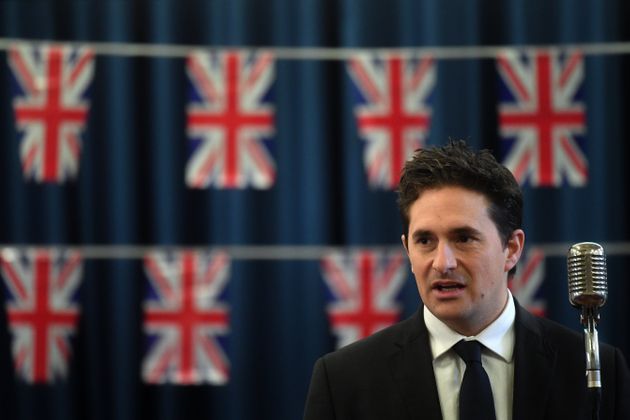
Sacked veterans minister Johnny Mercer has said Westminster politics is a “cesspit” and Boris Johnson’s government “the most distrustful, awful” place he has ever worked.
Mercer left the government on Tuesday expressing frustration at a lack of progress over legislation to protect British soldiers who served in the Troubles.
Ministers have since promised to bring forward legislation to protect from historical prosecutions veterans who served in Northern Ireland, which the Tories promised in their 2019 election manifesto.
But Mercer said “the truth is that nothing has been done” as he said of ministers: “Shooting straight is not one of their finest qualities.”
The former Army officer said he thought Johnson is “deeply committed” to the manifesto promise but said the prime minister “should expect” his ministers to show the same level of responsibility.
Speaking to Times Radio, the former Army officer said: “This is the most distrustful, awful environment I’ve ever worked in, in government.
“Almost nobody tells the truth is what I’ve worked out over the last 36 hours.
“And, you know, so so I don’t think anyone really can get on their high horse about trust and ethics and all the rest of it in politics, because as far as I’m concerned, most of it is a bit of a cesspit, I think we do have a clear commitment to follow through on our promises and do right by those who serve.”
Mercer also accused the government of leaking his plans to resign and then lying about it.
“It’s pretty clear that not everyone tells the truth up here do they.
“I mean, I told people, I was resigning as a courtesy to government.
“Three hours later, it’s in the press.
“And an hour later, there’s someone following me around London with a camera.
“And, of course, they all denied they ever leaked it.
“It’s ridiculous.
The Plymouth Moor View MP said the government was guilty of “gross betrayal of people who signed up to serve in the military” by failing to protect UK soldiers.
“The reality is that for these people, their experiences after having served this nation, 50 years later, they are constantly being dragged over to Northern Ireland, and asked to relive their experiences, it is people are drinking themselves to death. It is breaking up families, it is ruining our finest people,” he said.
“And all they did was serve at the behest of this government at the behest of the House of Commons, to uphold the rule of law on the peace in Northern Ireland.”
Mercer’s replacement Leo Docherty told the Commons on Wednesday: “A bill will soon come forward from the Northern Ireland Office that will protect our Northern Ireland veterans of Operation Banner and address the legacy of the Troubles.”
Johnson also told MPs that the government would be “bringing forward further measures in due course” when challenged by the DUP to protect Northern Ireland veterans from “vexatious” prosecutions.
Downing Street said details of the new legislation would be confirmed in the Queen’s Speech on May 11.

Kirsty O’ConnorPA
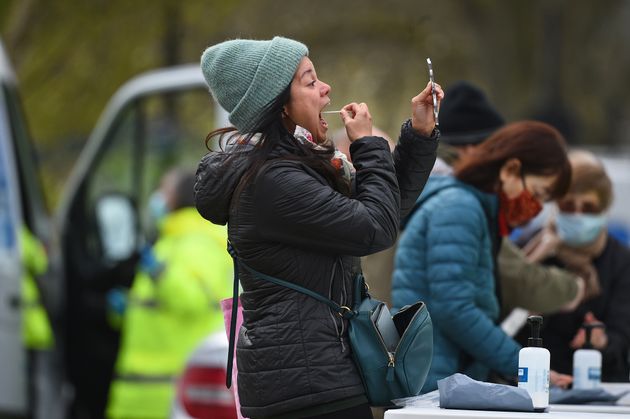
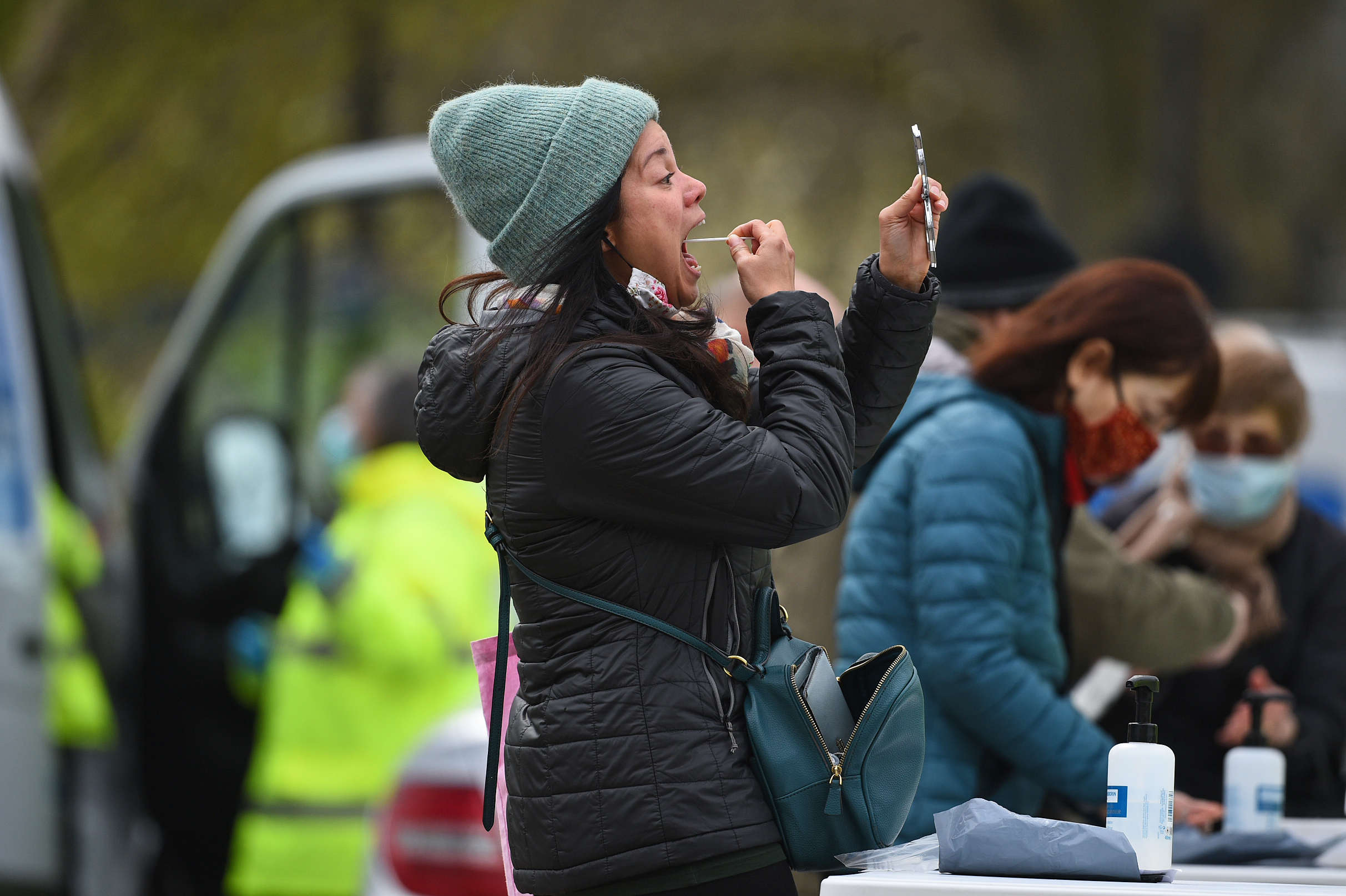
Surge testing is to begin in parts of Birmingham after a case of the Covid-19 variant first identified in South Africa was confirmed there.
The Department of Health and Social Care said the patient had “self-isolated and their contacts have been identified”.
Health officials added in a statement: “Initial investigations indicate that this case is not linked to a case previously identified in the Birmingham and Sandwell areas.”
The testing will be targeted at households in the city’s Alum Rock, Glebe Farm and Tile Cross areas.
Officially, 600 people in the UK have contracted the South African coronavirus variant according to the government website – but that was based on figures up to April 14.
This is unlikely to be an accurate portrayal of how far the mutation has spread since hundreds of thousands of people have been swabbed during previous rounds of surge testing elsewhere in the country, on top of which it can take days for samples to have genomic sequencing carried out. The process is the only way to detect which variant of coronavirus someone is infected with.
Other areas where cases of the South Africa variant have been found include the London boroughs of Barnet, Harrow, Hillingdon, Lambeth, Southwark and Wandsworth.
The South Africa strain is classed as a “variant of concern” – the most serious classification issued by Public Health England – because there are fears it may be less susceptible to vaccines and could spread more easily.
The DHSC said everybody aged 16 years and over who is contacted from the new areas would be “strongly encouraged to take a Covid-19 PCR test”, whether or not they are symptomatic.
For anyone testing positive for a key variant, enhanced contact tracing – looking back over an extended period in order to determine the route of transmission – will be used.
Meanwhile, anyone with symptoms is urged to book a free test online or by phone.
And the government is asking people to continue using twice-weekly rapid lateral flow testing alongside any PCR surge testing they do.
Last week surge testing was introduced in the city’s Ladywood, Jewellery Quarter and Soho ward, after a single positive case of the same variant.
Speaking at the time, the city’s public health director Dr Justin Varney said: “Testing is an important part of containing the spread of the virus.
“This new variant from South Africa presents a new risk so it is essential that all adults in the affected areas take up this offer of PCR testing to help us contain the spread quickly and identify any further local cases.
“There is financial and practical support available for those who test positive and have to isolate, and their contacts, and it is vital we all play our part in controlling this new challenge.”
Viruses by their nature mutate often, with more than 18,000 mutations discovered over the course of the Covid-19 pandemic, the overwhelming majority of which have no effect on the behaviour of the virus.

Scientists have spotted the largest flare ever recorded from the sun’s nearest neighbor, the star Proxima Centauri.
The research, which appears today in The Astrophysical Journal Letters, was led by the University of Colorado Boulder and could help to shape the hunt for life beyond Earth’s solar system.
CU Boulder astrophysicist Meredith MacGregor explained that Proxima Centauri is a small but mighty star. It sits just four light-years or more than 20 trillion miles from our own sun and hosts at least two planets, one of which may look something like Earth. It’s also a “red dwarf,” the name for a class of stars that are unusually petite and dim.
Proxima Centauri has roughly one-eighth the mass of our own sun. But don’t let that fool you.
In their new study, MacGregor and her colleagues observed Proxima Centauri for 40 hours using nine telescopes on the ground and in space. In the process, they got a surprise: Proxima Centauri ejected a flare, or a burst of radiation that begins near the surface of a star, that ranks as one of the most violent seen anywhere in the galaxy.
“The star went from normal to 14,000 times brighter when seen in ultraviolet wavelengths over the span of a few seconds,” said MacGregor, an assistant professor at the Center for Astrophysics and Space Astronomy (CASA) and Department of Astrophysical and Planetary Sciences (APS) at CU Boulder.
The team’s findings hint at new physics that could change the way scientists think about stellar flares. They also don’t bode well for any squishy organism brave enough to live near the volatile star.
“If there was life on the planet nearest to Proxima Centauri, it would have to look very different than anything on Earth,” MacGregor said. “A human being on this planet would have a bad time.”
Active stars
The star has long been a target for scientists hoping to find life beyond Earth’s solar system. Proxima Centauri is nearby, for a start. It also hosts one planet, designated Proxima Centauri b, that resides in what researchers call the “habitable zone” — a region around a star that has the right range of temperatures for harboring liquid water on the surface of a planet.
But there’s a twist, MacGregor said: Red dwarves, which rank as the most common stars in the galaxy, are also unusually lively.
“A lot of the exoplanets that we’ve found so far are around these types of stars,” she said. “But the catch is that they’re way more active than our sun. They flare much more frequently and intensely.”
To see just how much Proxima Centauri flares, she and her colleagues pulled off what approaches a coup in the field of astrophysics: They pointed nine different instruments at the star for 40 hours over the course of several months in 2019. Those eyes included the Hubble Space Telescope, the Atacama Large Millimeter Array (ALMA) and NASA’s Transiting Exoplanet Survey Satellite (TESS). Five of them recorded the massive flare from Proxima Centauri, capturing the event as it produced a wide spectrum of radiation.
“It’s the first time we’ve ever had this kind of multi-wavelength coverage of a stellar flare,” MacGregor said. “Usually, you’re lucky if you can get two instruments.”
Crispy planet
The technique delivered one of the most in-depth anatomies of a flare from any star in the galaxy.
The event in question was observed on May 1, 2019 and lasted just 7 seconds. While it didn’t produce a lot of visible light, it generated a huge surge in both ultraviolet and radio, or “millimeter,” radiation.
“In the past, we didn’t know that stars could flare in the millimeter range, so this is the first time we have gone looking for millimeter flares,” MacGregor said.
Those millimeter signals, MacGregor added, could help researchers gather more information about how stars generate flares. Currently, scientists suspect that these bursts of energy occur when magnetic fields near a star’s surface twist and snap with explosive consequences.
In all, the observed flare was roughly 100 times more powerful than any similar flare seen from Earth’s sun. Over time, such energy can strip away a planet’s atmosphere and even expose life forms to deadly radiation.
That type of flare may not be a rare occurrence on Proxima Centauri. In addition to the big boom in May 2019, the researchers recorded many other flares during the 40 hours they spent watching the star.
“Proxima Centauri’s planets are getting hit by something like this not once in a century, but at least once a day if not several times a day,” MacGregor said.
The findings suggest that there may be more surprises in store from the sun’s closest companion.
“There will probably be even more weird types of flares that demonstrate different types of physics that we haven’t thought about before,” MacGregor said.

The Endangered dryas monkey (Cercopithecus dryas), endemic to the Democratic Republic of the Congo, is one of Africa’s most mysterious primates. The discovery of the dryas monkey killed by a hunter in the buffer zone of Lomami National Park in 2014 has prompted field research of this small species (5-7 pounds). However, they are difficult to detect because they live in dense vegetation in secondary forest thickets.
Using non-invasive research and no-flash camera traps from 2014 to 2019, scientists from Florida Atlantic University in collaboration with researchers from the FZS-Lomami Project, Democratic Republic of the Congo, now have picture-perfect details on this elusive species. They have confirmed the occurrence of the dryas monkey at seven locations in both Lomami National Park and its buffer zone spanning a total area of 3,453 square kilometers, based on opportunistic reports provided by local village residents and park patrols.
Their findings, published in Oryx — The International Journal of Conservation, indicate that Lomami National Park and its buffer zone contain the greatest extent of the species’ known range, and Lomami is the only national park with a confirmed population.
Although camera traps — a method for capturing wild animals on film when researchers are not present — are widely used to detect and survey cryptic species, the FAU scientists had to develop specific camera trap methods and placements to reliably detect the dryas monkeys.
Daniel Alempijevic, M.S., first author and a doctoral student at FAU, and Kate Detwiler, Ph.D., senior author and an associate professor in the Department of Anthropology in FAU’s Dorothy F. Schmidt College of Arts and Letters, developed a species-specific multi-strata (0 to 29 meters) camera-trap technique to detect the species with a placement of three camera traps at each survey point, one each monitoring the ground, understory and canopy.
Alempijevic positioned the camera traps on game paths (0.2 to 0.5 meters above ground), shrubs and liana tangles (1.5 to 10 meters), and horizontal limbs (14.9 to 29 meters) forming pathways to adjacent tree crowns. He used a single rope technique to access the canopy, and a double-rope technique to move to the desired camera-trap location when needed. With the solicited information on the dryas monkeys from the residents of villages, he selected specific sites for camera-trap surveillance.
“We selected Bafundo Forest in the buffer zone for camera-trap surveillance, starting at the location where the first reported dryas monkey was killed by a hunter,” said Detwiler. “We established the second survey site 40 kilometers west of Bafundo Village, at Camp Bartho in Lomami National Park after a ranger patrol team saw a dryas monkey there in 2014.”
Camera traps accumulated 1,742 trap days on the ground, 2,821 trap days in the understory and 2,927 trap days in the canopy. Understory camera traps recorded 32 dryas monkey events, canopy camera traps detected a single event, and dryas monkeys were not detected by camera traps at ground level. The cameras that detected the species most frequently were those in the lower strata of the canopy and understory, at 2 to 10 meters above ground. At least 365 trap days are required to achieve a 95 percent detection probability, although dryas monkeys may be detected sooner in suitable habitats.
“Our camera-trap placements detected dryas monkeys almost exclusively in the understory across all surveys, regardless of canopy structure, which supports our hypothesis that the species appear to prefer structurally complex understories and forest edges,” said Alempijevic. “Because our camera traps on the ground did not detect dryas monkeys, it seems unlikely that they travel on the ground. Only one camera trap in the canopy detected a dryas monkey, suggesting that they rarely travel in the upper canopy.”
The researchers note that high heterozygosity and low inbreeding measures from genomic analysis of a hunter-killed dryas monkey (collected on Oct. 26, 2014) from Bafundo Forest suggest that it was a representative of a larger contiguous population.
“We recommend that researchers and conservationists working in the central basin of the Democratic Republic of the Congo mobilize local knowledge to identify other areas where the dryas monkey occurs and confirm any reports using our species-specific camera-trap placement technique,” said Detwiler.
Study co-authors are John A. Hart, Ph.D., and Terese B. Hart, Ph.D., Frankfurt Zoological Society, FZS-Lomami Project, Democratic Republic of the Congo.
L’Institut Congolais pour la Conservation de la Nature granted research permission to work in Lomami National Park. The local chiefs of Bafundo, Likandjo and Bote villages and the Balanga sector chief of Maniema Province granted permission to access the forest.
Funding for this research was generously provided by the Margot Marsh Biodiversity Foundation, Mohammed Bin Zayed Species Conservation Fund, FAU, Primate Conservation Incorporated, the Lukuru Foundation, International Primatological Society, Dynamic Youth Community and Indigogo crowd funding.

Astronomers have discovered a pulsar — a dense and rapidly spinning neutron star sending radio waves into the cosmos — using a low-frequency radio telescope in outback Australia.
The pulsar was detected with the Murchison Widefield Array (MWA) telescope, in Western Australia’s remote Mid West region.
It’s the first time scientists have discovered a pulsar with the MWA but they believe it will be the first of many.
The finding is a sign of things to come from the multi-billion-dollar Square Kilometre Array (SKA) telescope. The MWA is a precursor telescope for the SKA.
Nick Swainston, a PhD student at the Curtin University node of the International Centre for Radio Astronomy Research (ICRAR), made the discovery while processing data collected as part of an ongoing pulsar survey.
“Pulsars are born as a result of supernovae — when a massive star explodes and dies, it can leave behind a collapsed core known as a neutron star,” he said.
“They’re about one and a half times the mass of the Sun, but all squeezed within only 20 kilometres, and they have ultra-strong magnetic fields.”
Mr Swainston said pulsars spin rapidly and emit electromagnetic radiation from their magnetic poles.
“Every time that emission sweeps across our line of sight, we see a pulse — that’s why we call them pulsars,” he said. “You can imagine it like a giant cosmic lighthouse.”
ICRAR-Curtin astronomer Dr Ramesh Bhat said the newly discovered pulsar is located more than 3000 light-years from Earth and spins about once every second.
“That’s incredibly fast compared to regular stars and planets,” he said. “But in the world of pulsars, it’s pretty normal.”
Dr Bhat said the finding was made using about one per cent of the large volume of data collected for the pulsar survey.
“We’ve only scratched the surface,” he said. “When we do this project at full-scale, we should find hundreds of pulsars in the coming years.”
Pulsars are used by astronomers for several applications including testing the laws of physics under extreme conditions.
“A spoonful of material from a neutron star would weigh millions of tonnes,” Dr Bhat said.
“Their magnetic fields are some of the strongest in the Universe — about 1000 billion times stronger than that we have on Earth.”
“So we can use them to do physics that we can’t do in any of the Earth-based laboratories.”
Finding pulsars and using them for extreme physics is also a key science driver for the SKA telescope.
MWA Director Professor Steven Tingay said the discovery hints at a large population of pulsars awaiting discovery in the Southern Hemisphere.
“This finding is really exciting because the data processing is incredibly challenging, and the results show the potential for us to discover many more pulsars with the MWA and the low-frequency part of the SKA.”
“The study of pulsars is one of the headline areas of science for the multi-billion-dollar SKA, so it is great that our team is at the forefront of this work,” he said.
