One in every 42 children is born a twin and much has changed over the past 30 years, a report finds.


One in every 42 children is born a twin and much has changed over the past 30 years, a report finds.

The showy colors of some butterflies could advertise their speed and nimbleness, much like a coat of bright yellow paint on a sports car. A new study shows birds can learn to recognize these visual cues, avoiding not only butterflies they’ve failed to nab in the past but similar-looking species as well.
The research provides some of the strongest evidence to date for the idea of evasive mimicry, a strategy in which animals protect themselves from predators by matching the colors or patterns of agile relatives. First proposed more than 60 years ago, the hypothesis has been a challenge to test.
But in an experimental setting, researchers found that wild birds learned and remembered the wing patterns of artificial butterflies that evaded their attacks, as well as those that had a foul flavor, equally spurning both in follow-up tests and often ignoring lookalikes with similar color patterns. Unexpectedly, the birds learned to avoid evasive butterflies faster than distasteful ones.
The results suggest that being hard to catch may deter predators at least as effectively as chemical defenses.
“There’s a common idea that being distasteful is one of the best kinds of defense to have, but at least in this experiment, that didn’t prove to be the case,” said study co-author Keith Willmott, curator and director of the Florida Museum of Natural History’s McGuire Center for Lepidoptera and Biodiversity.
Most research on warning coloration has focused on species with chemical defenses and those that mimic them. Monarch butterflies, for example, sport bright wing patterns of black lines on a field of orange, indicating they contain bad-tasting toxins. A predator that eats one will likely avoid both monarchs and the similar-looking viceroy butterfly in the future.
But a growing number of studies suggest a flashy exterior can mean something entirely different: that an animal is quick. Predators learn to associate these kinds of patterns with a futile chase that leaves them hungry, and species that evolve imitations of these “racing stripes” can capitalize on a defensive strategy while reinforcing the visual message.
“When many species share the same color pattern, they’re better able to educate predators to avoid them,” Willmott said. “The more species that share it, the better.”
During his Ph.D. studies, Willmott worked on the classification of a group of fast-flying tropical butterflies known as Adelpha. At first, he found them nearly impossible to identify. It seemed the genus either contained only a few species with slight variations in wing pattern or dozens of species that looked virtually the same. The latter turned out to be the case, with more than 90 species making up the group. Like some researchers before him, Willmott began to wonder whether evasive mimicry could explain why so many species of Adelpha looked alike.
“It was always mysterious to me,” he said. “Species whose upper wings looked incredibly similar were distantly related, and we started to see cases where even subspecies of multiple species suddenly developed very unique color patterns. Really, the only way you can explain that is through mimicry.”
While other researchers suggested some Adelpha must have hidden chemical defenses, the explanation didn’t quite satisfy Willmott. Toxic butterflies are usually slow fliers with long wings and a propensity for playing dead when caught. Adelpha butterflies, however, don’t display these traits, having instead a short, stout thorax and smaller, triangular wings — characteristics that enable fast, erratic flight and sharp turns.
But he wasn’t sure how to test this hypothesis until a conversation with fellow researchers at a 2018 conference in India: Johanna Mappes was an expert at developing predator-prey experiments with wild birds; Pável Matos-Maraví was interested in the evasive behavior of skipper butterflies; and Marianne Elias and her Ph.D. student Erika Páez were eager to study what drove the evolution of wing color patterns in the genus Adelpha, including the possible effects of predators.
Simulating how evasive mimicry might play out in the wild appealed to the group. The ability of prey to escape predators’ attacks has been “virtually unstudied,” said Elias, a research group leader at the Institute of Systematics, Evolution, Biodiversity at the National Museum of Natural History in France.
Previous work had shown birds can identify the visual cues of evasive prey. Together, the team designed an experiment to test whether potential examples of evasive mimicry in Adelpha could be the result of natural selection.
At a special facility in Finland, the researchers collaborated with Janne Valkonen of the University of Jyväskylä to capture wild blue tits, birds that would never have encountered tropical Adelpha butterflies, and train them to catch a paper butterfly with an almond treat attached to its underside. Then, the birds were presented with a plain brown paper butterfly as a control and a paper butterfly with one of three common Adelpha wing patterns: a vertical white band on black forewings, a vertical orange band on black forewings or a combination of orange-striped forewings with white-striped hindwings.
The paper Adelpha butterfly either concealed an almond soaked in a bitter substance — a proxy for chemical defense — or evaded the bird’s attack by gliding away on a rail. The birds learned to connect a particular wing pattern with the negative experience of distastefulness or escape, eventually avoiding this butterfly and striking the control instead. In a final test, they were given four butterflies at the same time: the plain brown butterfly and all three Adelpha butterflies, including one with the pattern they had seen before.
They strongly avoided the butterfly they had learned to associate with the bitter almond or fast flight and often avoided butterflies that shared a similar color or pattern.
Birds were 1.6 times more likely to attack the distasteful butterfly than evasive ones, perhaps because they had varying levels of tolerance for the bad-tasting almond, said Páez, who co-led the study with Valkonen. After all, even a bitter morsel of food is better than nothing.
“Bad-tasting prey could provide a nutritive meal whereas missing prey completely cannot,” she said.
While birds tend to avoid colorful prey by default, the study provides evidence of learned behavior, Willmott said.
“This potentially explains many cases of apparent mimicry that lacked evidence of chemical defense.”
Matos-Maraví of the Biology Centre, Czech Academy of Sciences, and Mappes of the University of Jyväskylä and the University of Helsinki also co-authored the study.

As gatherings to observe whooping cranes join the ranks of online-only events this year, a new study offers insight into how the endangered bird is faring on a landscape increasingly dotted with wind turbines. The paper, published this week in Ecological Applications, reports that whooping cranes migrating through the U.S. Great Plains avoid “rest stop” sites that are within 5 km of wind-energy infrastructure.
Avoidance of wind turbines can decrease collision mortality for birds, but can also make it more difficult and time-consuming for migrating flocks to find safe and suitable rest and refueling locations. The study’s insights into migratory behavior could improve future siting decisions as wind energy infrastructure continues to expand.
“In the past, federal agencies had thought of impacts related to wind energy primarily associated with collision risks,” said Aaron Pearse, the paper’s first author and a research wildlife biologist for the U.S. Geological Survey’s Northern Prairie Wildlife Research Center in Jamestown, N.D. “I think this research changes that paradigm to a greater focus on potential impacts to important migration habitats.”
The study tracked whooping cranes migrating across the Great Plains, a region that encompasses a mosaic of croplands, grasslands and wetlands. The region has seen a rapid proliferation of wind energy infrastructure in recent years: in 2010, there were 2,215 wind towers within the whooping crane migration corridor that the study focused on; by 2016, when the study ended, there were 7,622 wind towers within the same area.
Pearse and his colleagues found that whooping cranes migrating across the study area in 2010 and 2016 were 20 times more likely to select “rest stop” locations at least 5 km away from wind turbines than those closer to turbines.
The authors estimated that 5% of high-quality stopover habitat in the study area was affected by presence of wind towers. Siting wind infrastructure outside of whooping cranes’ migration corridor would reduce the risk of further habitat loss not only for whooping cranes, but also for millions of other birds that use the same land for breeding, migration, and wintering habitat.
Story Source:
Materials provided by Ecological Society of America. Note: Content may be edited for style and length.

As the global population grows, the demand for food increases while arable land shrinks. A new University of Illinois study investigates how rice production in India can meet future needs by adapting to changing climate conditions and water availability.
“Rice is the primary crop in India, China, and other countries in Southeast Asia. Rice consumption is also growing in the U.S. and elsewhere in the world,” says Prasanta Kalita, professor in the Department of Agricultural and Biological Engineering at U of I and lead author on the study.
“If you look at where they traditionally grow rice, it is countries that have plenty of water, or at least they used to. They have tropical weather with heavy rainfall they depend on for rice production. Overall, about 4,000 liters of water go into production and processing per kilogram of rice,” he states.
Climate change is likely to affect future water availability, and rice farmers must implement new management practices to sustain production and increase yield, Kalita says.
The United Nations’ Food and Agriculture Organization (FAO) estimates the world population will grow by two billion people by 2050, and food demand will increase by 60%.
“We will need multiple efforts to meet that demand,” Kalita states. “And with two billion more people, we will also need more water for crop production, drinking water, and industrial use.”
Kalita and his colleagues conducted the study at the Borlaug Institute for South Asia’s research farm in Bihar, India. Farmers in the region grow rice during the monsoon season, when heavy rainfall sustains the crop.
The researchers collected data on rice yield and climate conditions, then used computer simulations to model future scenarios based on four global climate models. The purpose of the study was to estimate rice yield and water demand by 2050, and evaluate how farmers can adapt to the effects of climate change.
“As the weather changes, it affects temperature, rainfall, and carbon dioxide concentration. These are essential ingredients for crop growth, especially for rice. It’s a complicated system, and effects are difficult to evaluate and manage,” Kalita states.
“Our modeling results show the crop growth stage is shrinking. The time for total maturity from the day you plant to the day you harvest is getting shorter. The crops are maturing faster, and as a result, you don’t get the full potential of the yield.”
If farmers maintain current practices, rice yield will decrease substantially by 2050, the study shows. But various management strategies can mitigate the effects of climate change, and the researchers provide a series of recommendations.
Traditional rice farming involves flooding the fields with water. Rice transplants need about six inches of standing water. If fields aren’t level, it requires even more water to cover the crops, Kalita says. However, if farmers use direct-seeded rice instead of transplants, they can increase production while using significantly less water.
Another practice involves soil conservation technology. “The soil surface continuously loses water because of temperature, humidity, and wind. If you keep crop residue on the ground, it reduces the evaporation and preserves water. Furthermore, when the crop residue decomposes, it will help increase soil quality,” Kalita explains.
The researchers also suggest implementing strategies to prevent post-harvest crop losses. FAO estimates about 30% of crops are lost or wasted after harvest, so efforts to reduce those losses can further increase crop availability and food security.
Overall, the best approach to achieve a 60% increase in rice production while minimizing additional irrigation needs is a combination of conservation strategies and a 30% reduction in post-harvest loss, the researchers conclude.
Experts say the move reflects the heightened risks from coronavirus for people who are homeless.
A major study by biomedical database UK Biobank will examine the long-term impacts of coronavirus.
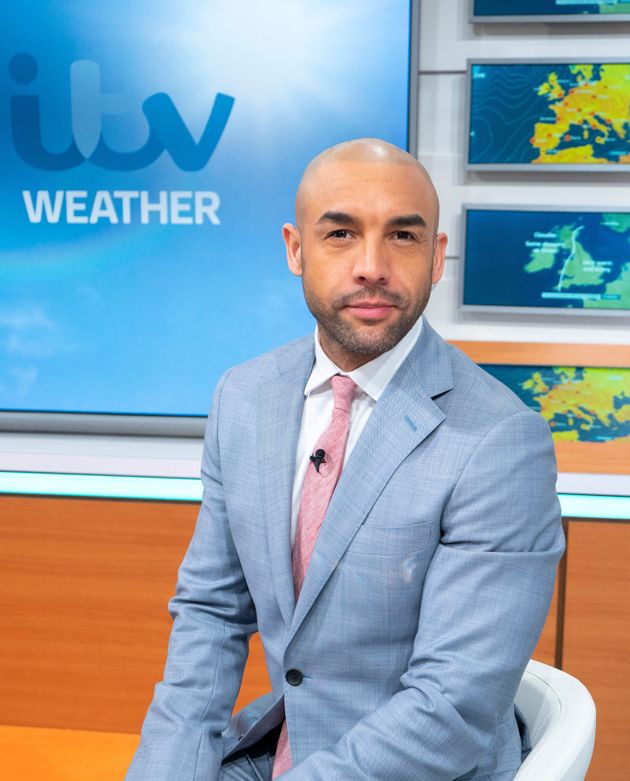
Good Morning Britain presenter Alex Beresford has spoken out following former co-host Piers Morgan’s departure from the show.
On Tuesday morning, the two GMB stars were involved in a heated exchange live on air about Meghan Markle, in which Alex called out Piers’ comments about the Duchess of Sussex made the previous day.
This ended in Piers storming out of the studio, which Alex branded “pathetic” and “diabololical behaviour”.
Following the news that Piers has now left the show permanently, Alex has shared his thoughts on Twitter.
ITV/Shutterstock
“There is so much that could be said,” he wrote, insisting that “Piers’ departure sincerely wasn’t the conclusion I was hoping for”.
Alex explained: “Over the lat few years, Piers and I have had a lively, cheeky on-air relationship.
“We both wanted to be on the show on Tuesday morning, and from our very public conversations on Twitter, we both knew how strongly our opinions differed on the treatment of Harry and Meghan pre and post the interview that has split the world.
“I hoped we could reach a place of understanding. It’s sad that we weren’t able to get there, but challenging this opinion was not an outrage. On this occasion, we have to agree to disagree.”
He added: “I didn’t want him to quit, but I did want him to listen. Personally, Piers has always supported my growth. He’s given me advice on several occasions and for that I am grateful. I wish him well!”
Alex previously tweeted, after his on-air exchange with Piers: “I wish I had the privilege to sit on the fence. In order for me to do that I would have to strip myself of my identity and that’s not something I can do.
“It’s not any of our places to pick apart claims of racism in order to make us to feel more comfortable.”
ITV faced calls to reprimand Piers Morgan after Monday’s show, when he cast doubt on Meghan Markle’s recent claims about her mental health and her experiences of racism after joining the Royal Family.
“I’m sorry, I don’t believe a word she says,” Piers said. “I wouldn’t believe her if she read me a weather report, and the fact that she’s fired up this onslaught against our royal family, I think is contemptible.”
It was later revealed Piers had sparked more than 40,000 complaints to Ofcom, after which it was announced he was leaving GMB effective immediately.

Ken McKay/ITV/Shutterstock
Since the news of his departure was confirmed, the divisive presenter doubled down on his views on Twitter, later telling reporters: “I believe in freedom of speech, I believe in the right to be allowed to have an opinion. If people want to believe Meghan Markle, that’s entirely their right.
“I don’t believe almost anything that comes out of her mouth and I think the damage she’s done to the British monarchy and to the Queen at a time when Prince Philip is lying in hospital is enormous and frankly contemptible.
“If I have to fall on my sword for expressing an honestly-held opinion about Meghan Markle and that diatribe of bilge that she came out with in that interview, so be it.”



The most popular songs to give birth to have been revealed – and Salt-N-Pepa’s Push It is shockingly absent.
Instead, mums-to-be seem to favour a chilled vibe, with Jack Johnson’s Better Together taking the top spot. The 2005 hit featured in more than half of the birth-related playlists analysed, with 460,197,498 plays on Spotify.
I Won’t Give Up by Jason Maraz came in second, featuring on 26 of the playlists with 530,386,616 plays overall. Meanwhile Make You Feel My Love by Adele took the third spot with 613,094,614 plays and appearing on 25 playlists.
Although he failed to make the top three, Ed Sheeran was the most popular birthing partner artist overall, with two of his songs making an appearance in the top 10.

The researchers, working with Supplement Place, collated a list of 16,000 songs using playlists created by users that included the words “childbirth”, “birthing”, “birth”, “labour”, “birthing at home” and “hypnobirthing”.
As well as looking at which songs and artists appeared most often, they looked at the average beats per minute (BPM) across all of the songs.
The average BPM was 118, which is around the same speed as Alicia Keys, If I Ain’t Got You, Mae Robinson’s What a Wonderful World and Patricia by Florence and The Machine.
The research follows previous analysis, which identified Jeremih’s All The Time as the most popular track to have sex to, with Often by The Weeknd and Genuine’s Pony also making the top 10.
Those lyrics have a lot to answer for.


The outpouring of pain and anger following the death of Sarah Everard is because women “have had enough”, says Mandu Reid, the leader of the Women’s Equality Party.
“We’ve had enough of the violence perpetrated against us by men, and we’ve had enough of police and politicians not taking it seriously,” the London Mayoral candidate tells HuffPost UK.
“We want to be free to walk the streets without fear of harassment or violence.”
Reid’s comments come ahead of a planned vigil on London’s Clapham Common on Saturday evening that thousands are anticipated to attend, and which organisers say is to “reclaim these streets and our public spaces”.
The 33-year-old’s disappearance on Wednesday March 3 between Clapham and Brixton, followed a week later by the arrest of a serving Metropolitan Police officer on suspicion of her murder, has shaken women to the core.
Because while we may not know Sarah Everard personally, many of us feel that we – or those we know – could easily be Sarah Everard: a woman who was simply walking home after meeting a friend.
The disturbing case has seen women share their own experiences of being followed home, as well as other forms of street harassment, intimidation and violence, both on social media and in private messages and conversations among friends.
Amid the public outpouring, one criminology expert warned women not to “get hysterical” in relation to Everard’s case.
Talking on BBC Radio 4′s Today programme, Professor Marion Fitzgerald of Kent University, said: “Women account for about a third of all murders. Men are far more likely to be murdered. Men are far more likely to be murdered by someone they don’t know. Men are far more likely to be murdered in a public place, and that hasn’t changed.
“I think I’m entitled to say as a woman, we shouldn’t pander to stereotypes and get hysterical.”
But the clear distress expressed on social media in recent days shows “just how differently women experience public space compared to men,” stresses Andrea Simon, director of End Violence Against Women (EVAW).
“The fact that the public conversation has for so long revolved around what actions women must take to ‘keep themselves safe’ rather than what drives perpetrators is really worrying,” she tells HuffPost.
Saturday’s vigil will take place around the bandstand on Clapham Common at 6pm, following reports that police knocked on doors in the area and told women “not to go out alone”.
“We believe that streets should be safe for women, regardless of what you wear, where you live or what time of day or night it is. We shouldn’t have to wear bright colours when we walk home and clutch our keys in our fists to feel safe,” the organisers wrote on Facebook.
“It’s wrong that the response to violence against women requires women to behave differently. In Clapham, police told women not to go out at night this week. Women are not the problem.”
Thousands online have been detailing the many ways women are taught to adjust their behaviour from a young age – stick to the main path, carry your keys, wear bright clothes and text a friend your whereabouts – in a moment reminiscent of #MeToo.
Although the recent social media conversation has been sparked by Everard’s case, women with many different stories have been stepping up to tell them.
Maya Tutton, co-founder of the campaign group Our Streets Now, points out that “public sexual harassment is universal” among women and girls – but the way it plays out is often more pronounced among discriminated groups.
“Not all experiences of public sexual harassment are the same. Sexism is often combined with racism, transphobia, ableism and fatphobia. These incidents are not only more common, but can escalate into racist, Islamophobic or homophobic hate crimes,” she says.
“Harassment doesn’t happen to one kind of body, and yet in our conversations it is so often the white, cisgendered heteronormative experience that is shared.”
The vigil is “for and about women, but open to all,” say the organisers, who urge participants to observe Covid-19 safety guidelines including wearing a mask, social distancing, downloading the NHS contact tracing app and turning their Bluetooth on.
Participants are invited to bring a light for those who’ve died at the hands of violent men, with a strong stance against victim-blaming – a rhetoric that has increased in the wake of Everard’s story.
Women on Twitter have been sharing historic examples, as well as incidents that show some men do not register the magnitude of the issue.
Our Streets Now is currently pushing for street harassment to be made illegal, through its #CrimeNotCompliment campaign, which demands a clear law that criminalises public sexual harassment.
Research conducted by the campaign group alongside Plan International UK found 76% of girls who have experienced harassment have never reported it to the police.
“As it stands, there is no UK law that fully criminalises public sexual harassment, leaving the perpetrators free to get away with it. As one of the girls we work with put it, you can be fined for dropping litter in the UK, but not for harassing a woman in public,” Tutton says. “The girls we work with tell us that they fear they won’t be taken seriously, or believed, if they report harassment, or that anything will be done.”
The group is also working in schools and higher education institutions to get public sexual harassment into the curriculum – for girls and boys. Simon would also like to see the narrative shift to focus on the behaviour of perpetrators.
“We’re always talking about how women ‘safety plan’ – text their friends in advance, walk with their keys in their hands, avoid empty tube carriages or poorly lit areas. But we rarely hear about what drives perpetrators to harm women and what needs to be put in place to stop this behaviour,” she says.
“Like with all acts of violence against women, we need solutions that target the behaviour of perpetrators and not risk blaming victims when they are attacked for simply going about their daily lives.”
Reid is hopeful this week will mark a “turning point” because “women won’t stay silent”.
“We need justice for Sarah and for all the women who have been killed, raped or abused. We need this to be a political and policing priority,” she says. “We need sufficient funding for prevention and support services. And we need equality, because violence against women is both the cause and consequence of women’s inequality.”


Scale of cancelled treatments is revealed with hospitals facing ‘dire’ backlog after Covid surge.
