US regulators say Johnson and Johnson’s single-shot vaccine is safe, and could be approved in days.


US regulators say Johnson and Johnson’s single-shot vaccine is safe, and could be approved in days.
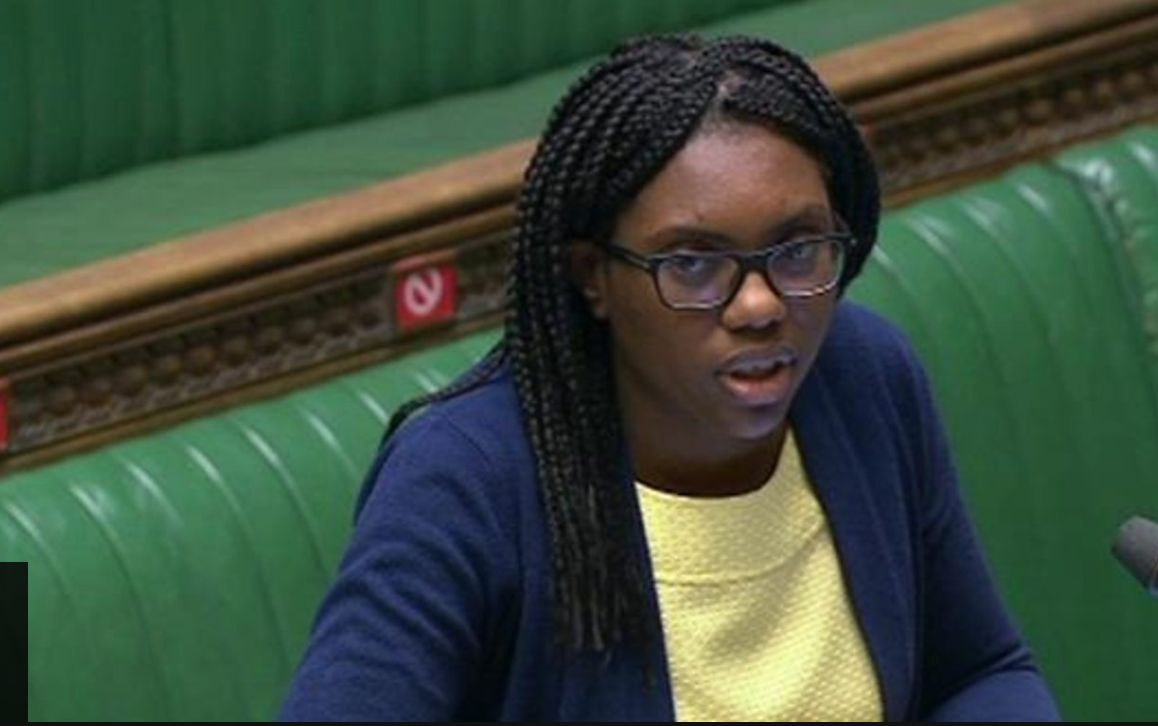
Some people call it “cancel culture”. Others call it accountability. Rightly or wrongly, your Twitter feed can get you in trouble at work, or worse. But we’ve now learned that members of our government are not held to the same standards as the rest of us.
It’s almost a month since Britain’s equalities minister posted an eight-tweet thread filled with false allegations about the conduct of HuffPost reporter Nadine White. Nadine had asked Kemi Badenoch, as one of parliament’s most senior Black MPs and the minister with the portfolio for race and inequality, why she hadn’t appeared in a video aimed at increasing uptake of the vaccine among Black people. She emailed the MP’s office, and the Treasury press team, where Badenoch also holds a ministerial role. Rather than respond via either of those channels, the minister fired off a Twitter tirade about how this routine press enquiry was a “sad insight into how some journalists operate”, describing it as “creepy and bizarre”. Nadine was forced to lock her Twitter account after she received abuse.
It took us a couple of hours to file a formal complaint with the Cabinet Office. It took them three and a half weeks to reply, but at last the government has seen fit to answer our complaint.
Their letter is short and to the point. “I note that the tweets were not issued from a government Twitter account but instead from a personal Twitter account,” writes Cabinet Office permanent secretary Alex Chisholm. “The minister is personally responsible for deciding how to act and conduct herself, and for justifying her own actions and conduct. As such, this is a matter on which the minister would be best placed to offer a response.”
The ministerial code states that “ministers of the Crown are expected to maintain high standards of behaviour and to behave in a way that upholds the highest standards of propriety”. But not, it seems, on their ministerial Twitter accounts.
We were not alone in mistakenly thinking that the minister’s verified Twitter account, in which she describes herself as “Treasury & Equalities Minister”, was in some way linked to her job
How stupid of us. It is cold comfort that we were not alone in mistakenly thinking that the minister’s verified Twitter account, in which she describes herself as “Treasury & Equalities Minister”, was in some way linked to her job. The National Union of Journalists called Badenoch’s original outburst about Nadine “frankly weird, completely out of order and an abuse of her privilege”. The Council of Europe’s Safety of Journalists Platform flagged the incident as a potential threat to media freedom under the European Convention on Human Rights. The European Centre for Press and Media Freedom, recorded the attack as a “violation of media freedom”. I wonder how many of Kemi Badenoch’s 40,000 followers are also under the impression that her Twitter account is a reflection of her professional role and work as an elected representative.
Also mistaken was No.10’s race adviser Samuel Kasumu, who was so upset about Kemi Badenoch’s behaviour that he handed in, but was then persuaded to withdraw, his resignation. Apparently unaware of that Kemi Badenoch’s official parliamentary Twitter account is only “personal”, he wrote: “I believe the Ministerial Code was breached. However, more concerning than the act was the lack of response internally. It was not OK or justifiable, but somehow nothing was said. I waited, and waited, for something from the senior leadership team to even point to an expected standard, but it did not materialise.”
Nadine is a reporter who has done crucial work for HuffPost UK on racial inequality in the UK, not least during the Covid pandemic. So it’s just as well that it was not in a ministerial capacity, but from her “personal Twitter account”, that the minister for equalities made a show of not understanding how news works. Had she only had her professional hat on, she might have remembered that journalists send literally hundreds of requests for comment every day to every institution in the UK in order to find out if a story is accurate. We don’t publish stories without doing this – indeed, no story was published in this case.
It is a little confusing that Kemi Badenoch published screenshots of messages sent to her professional address and the Treasury press office in a “personal” capacity. But it’s certainly a relief that, when she declared to her 39,000 followers that Nadine’s conduct was a “sad insight into how some journalists operate”, and accused HuffPost and Nadine of “looking to sow distrust”, she wasn’t speaking as a government minister – because these claims are not only unbecoming of a senior politician, but betray either an alarming ignorance of how the press fits into our democratic system or a cynical display of bad faith.
In the end, Kemi Badenoch broke her silence by contacting a journalist – not Nadine or anyone from HuffPost, but a reporter at her local paper, the Saffron Walden Reporter. In a statement, she repeated her defamatory allegations about Nadine, this time claiming we had “stoked” a “false story” on social media, claims that were withdrawn from publication when it was pointed out that there was no evidence for them.
This apparently did not trouble her ministerial employers in the Cabinet Office or No.10. Perhaps they might like to clarify whether someone is speaking in an official capacity when they begin a statement with the words “as Equalities Minister”.
It is absurd to any reasonable person to suggest the words of a minister are somehow less accountable if they are written by them on Twitter than a press release, or were given in an interview.
So who is responsible for the actions of the government’s ministers, if not the government? The Cabinet Office was clear: “This is a matter on which the minister would be best placed to offer a response.” No.10 agreed, with the prime minister’s press secretary saying it was “a matter for Kemi Badenoch” –although she added: “That would not be how we in No.10 would deal with these things.”
Kemi Badenoch’s office, however, does not agree that it her responsibility, telling Nadine this week: “She has nothing further to add beyond what is included in the letter sent earlier today from Alex Chisholm to your editor.” The same Alex Chisholm who made it very clear it was for her to respond.
This story is not just about a government machine that is out of touch with the realities of our digital lives. It is absurd to any reasonable person to suggest that the words of a minister are somehow less accountable if they are written by them on Twitter than if they appeared in a press release, or were given in an interview. If any member of the public were to tweet out emails sent to their work address, accompanied by a slew of false allegations, they would expect a swift call from HR. Indeed, someone might like to tell transport secretary Grant Shapps, who formally announces weekly updates to the government’s travel and quarantine policies through his own Twitter account, whose handle he literally read out in Parliament.
The ministerial code, which the government concluded Kemi Badenoch had not breached with her public attack on a journalist doing her job, is built around the loftily-titled Seven Principles of Public Life. Hopefully ministers are asked to read it when they enter office. “Accountability,” reads one principle. “Holders of public office are accountable for their decisions and actions and must submit themselves to whatever scrutiny necessary to ensure this.”
We’re a long way from David Cameron’s famously cringeworthy comment that “too many tweets might make a twat” – ministers of Kemi Badenoch’s generation are all too aware of how useful a platform Twitter is for their political and personal profile. But where they are rightly accountable for their conduct as elected representatives elsewhere in their lives, this effectively allows them impunity online.
The Cabinet Office themselves “noted” to us in their response that “the prime minister’s press secretary has already provided comments on this matter”, suggesting a tacit endorsement of their belief that this is not how a minister should behave. But both institutions apparently felt it was not their place to get involved.
Like a parent banning their teenager’s laptop but leaving them with a phone, Whitehall feels dangerously out of touch in providing such an obvious loophole. Remember next time you see a prospective candidate or councillor cancelled online for tweets they sent at university – our government ministers are allowed to say whatever they like.
Jess Brammar is editor-in-chief of HuffPost UK. Follow her on Twitter @jessbrammar


The government has been accused of using money as a way of blocking access to justice for bereaved Covid families.
Human rights lawyer Elkan Abrahamson says the government is using punitive costs orders to stymie the ability of thousands of grieving families to fight for a public inquiry into the handling of the pandemic.
“They’re opposing everyone who’s raising these issues and saying: ‘You’re going to have to pay us a fortune in costs if you lose,’” he said.
“They’re using money as a way of blocking access to justice. That’s what it boils down to.”
Abrahamson, who is head of major inquiries at Broudie Jackson Canter law firm, is acting for Covid-19 Bereaved Families for Justice in bringing legal action against the government.
The group of about 2,500 families is launching judicial review proceedings to try to compel the government to hold a public inquiry.
But before doing so they have been forced to raise substantial sums of money to cover the legal costs they could be forced to pay the government if the action is not successful.
Abrahamson said the government had refused to waive costs when asked by the campaign, but had also declined to tell the group how much it could seek to claim.
Covid-19 Bereaved Families for Justice began fundraising and has now got enough money to continue with its bid, which is expected to progress in the near future.
A separate case has shown the significant risks of bringing such legal challenges.
Earlier this month, the government asked for costs of up to £1m in a case brought by the Good Law Project for a judicial review over the award of contracts for personal protective equipment.
The action meant the small, not-for-profit organisation, which is funded by donations from the public, could have been liable for “eye-watering” costs if it lost the case.
“We cannot bear this kind of existential risk,” said Jolyon Maugham QC, director of Good Law Project.
The group applied to the High Court for a cost capping order to restrict the legal costs of both sides, which was granted on February 24.
It had asked for a cap of £100,000 but instead the order was granted at £250,000.
“If we lose the case, we are liable to pay a quarter of a million pounds to government, as well as needing to cover our own legal costs,” said Maugham.
“Despite huge support from members of the public, generous individuals and organisations, we are still short.”
Abrahamson said one compelling reason for holding a public inquiry into the pandemic is that the option of pursuing inquest proceedings has been effectively closed off to most families in relation to Covid-19 deaths.
“The coroners are very, very reluctant to actually look into anything more,” he said. “The guidance says if there’s an individual failing you can point to that leads to someone getting Covid, maybe they could look at it, but if it’s a generic failing, you can’t look at it.”
Deaths in relation to care home failings, failure to provide PPE, failings in the 111 system and delays in lockdown all fall outside this remit.
“The chief coroner has said there will be a [public] inquiry, but there isn’t one, that’s the problem,” said Abrahamson.
His firm is dealing with about 150 clients who want inquests to be held into the deaths of their loved ones.
But only five or six of these have actually moved forward to pre-inquest hearings, Abrahamson said.
HuffPost UK has approached the Cabinet Office for comment.


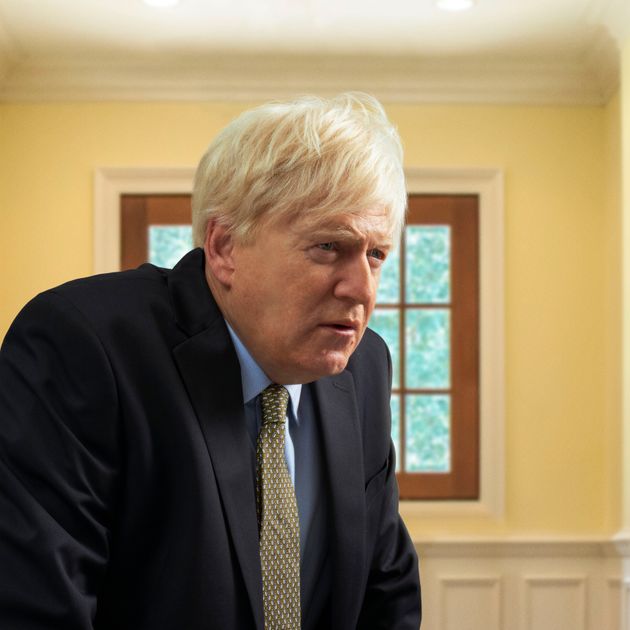
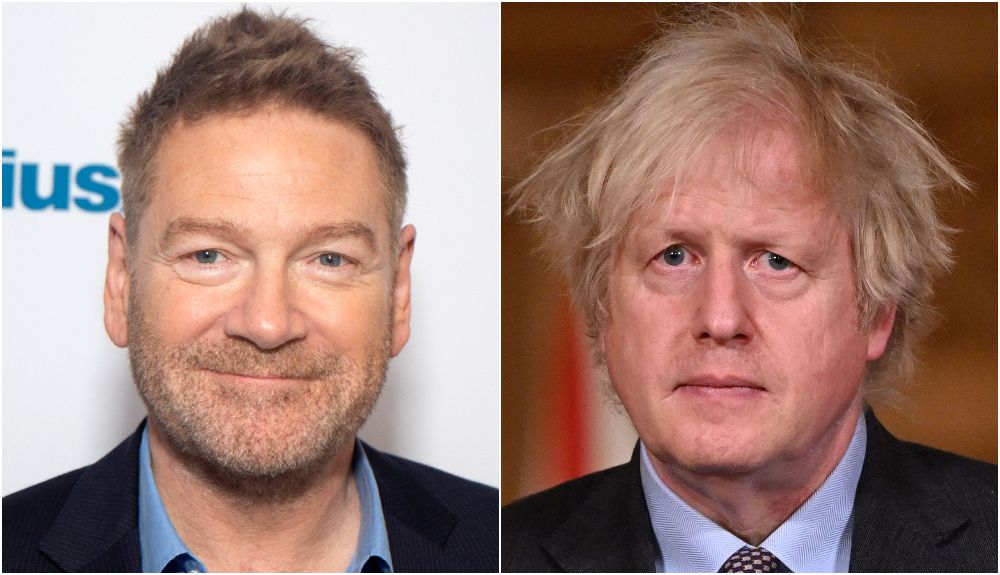
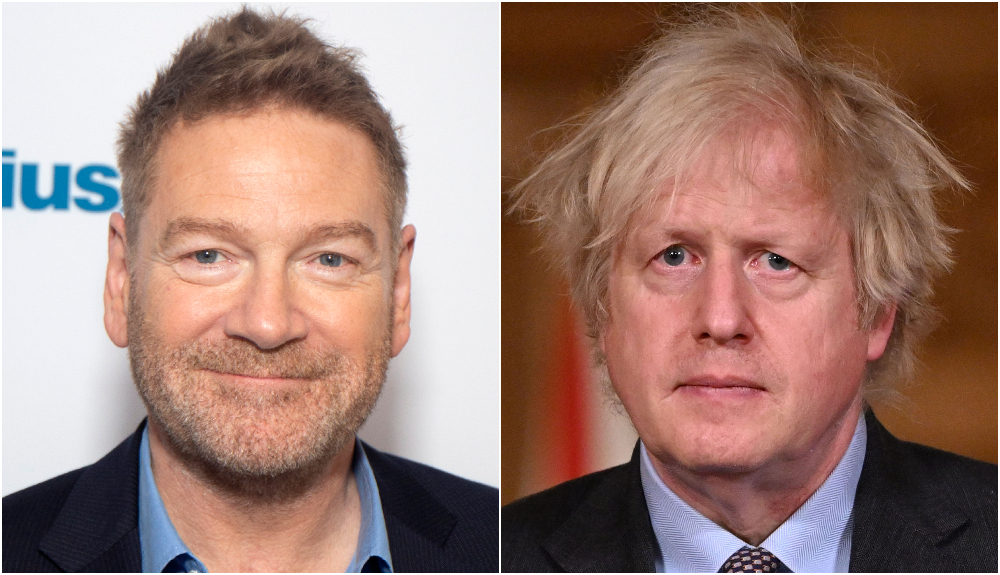
If you thought Boris Johnson’s Spitting Image puppet was uncanny, just wait until you see Kenneth Branagh as the prime minister.
Sky has unveiled a picture of the actor in character as the PM for new drama This Sceptred Isle, and it’s fair to say he bears more than a passing resemblance to Boris.
Admittedly, Kenneth’s blond wig looks a little less unkempt than the PM’s in recent weeks, thanks to the closure of hairdressers.
Sky
Filming has just commenced on This Sceptred Isle, which will focus on the events in government as the UK faced the first wave of the coronavirus pandemic.
Written by Michael Winterbottom and Kieron Quirke, it is based on the first-hand testimony of people from all walks of life; from Number 10, the Department of Health, The Scientific Advisory Group for Emergencies (SAGE), and from hospitals and care homes across the country.
Getty
Speaking about the series, Winterbottom said: “The first wave of the Covid-19 pandemic will be remembered forever. A time when the country came together to battle an invisible enemy. A time when people were more aware than ever of the importance of community.
“Our series weaves together countless true stories – from Boris Johnson in Number 10 to front line workers around the country – chronicling the efforts of scientists, doctors, care home workers and policy makers to protect us from the virus.”
This Sceptred Isle is expected to premiere on Sky Atlantic and NowTV in the autumn.
The boss of outsourcer Serco says there are now as many people being tested per week as vaccinated.
Symptoms left unchecked included lumps, changes to moles and coughing up blood, a survey finds.

People who have had evidence of a prior infection with SARS-CoV-2, the virus that causes COVID-19, appear to be well protected against being reinfected with the virus, at least for a few months, according to a newly published study from the National Cancer Institute (NCI). This finding may explain why reinfection appears to be relatively rare, and it could have important public health implications, including decisions about returning to physical workplaces, school attendance, the prioritization of vaccine distribution, and other activities.
For the study, researchers at NCI, part of the National Institutes of Health, collaborated with two health care data analytics companies (HealthVerity and Aetion, Inc.) and five commercial laboratories. The findings were published on Feb. 24 in JAMA Internal Medicine.
“While cancer research and cancer care remain?the?primary?focus of NCI’s work, we were eager to lend our expertise in serological sciences to help address the global COVID-19 pandemic, at the request of Congress,” said NCI Director Norman E. “Ned” Sharpless, M.D., who was one of the coauthors on the study. “We hope that these results, in combination with those of other studies, will inform future public health efforts and help in setting policy.”
“The data from this study suggest that people who have a positive result from a commercial antibody test appear to have substantial immunity to SARS-CoV-2, which means they may be at lower risk for future infection,” said Lynne Penberthy, M.D., M.P.H., associate director of NCI’s Surveillance Research Program, who led the study. “Additional research is needed to understand how long this protection lasts, who may have limited protection, and how patient characteristics, such as comorbid conditions, may impact protection. We are nevertheless encouraged by this early finding.”
Antibody tests — also known as serology tests — detect serum antibodies, which are immune system proteins made in response to a specific foreign substance or infectious agent, such as SARS-CoV-2.
This study was launched in an effort to better understand whether, and to what degree, detectable antibodies against SARS-CoV-2 protect people from reinfection with the virus. Working with HealthVerity and Aetion, NCI aggregated and analyzed patient information collected from multiple sources, including five commercial labs (including Quest Diagnostics and Labcorp), electronic medical records, and private insurers. This was done in a way that protects the privacy of an individual’s health information and is compliant with relevant patient privacy laws.
The researchers ultimately obtained antibody test results for more than 3 million people who had a SARS-CoV-2 antibody test between Jan. 1 and Aug. 23, 2020. This represented more than 50% of the commercial SARS-CoV-2 antibody tests conducted in the United States during that time. Nearly 12% of these tests were antibody positive; most of the remaining tests were negative, and less than 1% were inconclusive.
About 11% of the seropositive individuals and 9.5% of the seronegative individuals later received a nucleic acid amplification test (NAAT) — sometimes referred to as a PCR test — for SARS-CoV-2. The research team looked at what fraction of individuals in each group subsequently had a positive NAAT result, which may indicate a new infection. The study team reviewed NAAT results at several intervals: 0-30 days, 31-60 days, 61-90 days, and >90 days because some people who have recovered from a SARS-CoV-2 infection can still shed viral material (RNA) for up to three months (although they likely do not remain infectious during that entire period).
The team found that, during each interval, between 3% and 4% of the seronegative individuals had a positive NAAT test. But among those who had originally been seropositive, the NAAT test positivity rate declined over time. When the researchers looked at test results 90 or more days after the initial antibody test (when any coronavirus detected by NAAT is likely to reflect a new infection rather than continued virus shedding from the original infection), only about 0.3% of those who had been seropositive had a positive NAAT result — about one-tenth the rate in those who had been seronegative.
Although these results support the idea that having antibodies against SARS-CoV-2 is associated with protection from future infection, the authors note important limitations to this study. In particular, the findings come from a scientific interpretation of real-world data, which are subject to biases that may be better controlled for in a clinical trial. For example, it is not known why people who had tested antibody positive went on to have a PCR test. In addition, the duration of protection is unknown; studies with longer follow-up time are needed to determine if protection wanes over time.
To continue to comprehensively address this important research question, NCI is supporting clinical studies that monitor infection rates in large populations of people whose antibody status is known. These are known as “seroprotection” studies. NCI is also sponsoring ongoing studies using real-world data to assess the longer-term effect of antibody positivity on subsequent infection rates.
This research is part of a $306 million effort that NCI has taken on at the request of Congress to develop, validate, improve, and implement serological testing and associated technologies applicable to COVID-19. Through this appropriation, NCI is working with the Department of Health and Human Services; the National Institute of Allergy and Infectious Diseases, another part of NIH; and other government agencies to apply its expertise and advanced research capabilities to respond to this pandemic, including efforts to rigorously characterize the performance of serology assays.
The vaccine-sharing scheme aims to help poorer countries like Ghana get Covid-19 jabs.

Scientists have made a pivotal breakthrough in the quest to understand how single-cell green algae are able to keep track of the light as they swim.
A team of researchers from the University of Exeter’s flagship Living Systems Institute has discovered how the model alga Chlamydomonas is seemingly able to scan the environment by constantly spinning around its own body axis in a corkscrewing movement. This helps it respond to light, which it needs for photosynthesis.
The tiny alga, which is found abundantly in fresh-water ponds across the world, swims by beating its two flagella, hair-like structures that adopt a whip-like movement to move the cell. These flagella beat in much the same way as the cilia in the human respiratory system.
Chlamydomonas cells are able to sense light through a red eye spot and can react to it, known as phototaxis. The cell rotates steadily as it propels itself forwards using a sort of breaststroke, at a rate of about once or twice a second, so that its single eye can scan the local environment.
However, the intricate mechanism that allows the alga to achieve this helical swimming has been previously unclear.
IN the new study, the researchers first performed experiments which revealed that the two flagella in fact beat in planes that are slightly skewed away from each other.
Then, creating a sophisticated computer model of Chlamydomonas, they were able to simulate the flagella movement and reproduce the observed swimming behaviour.
The researchers discovered that the flagella were able to move the Chlamydomonas in a clockwise fashion with each power stroke, and then anticlockwise on the reverse stroke — akin to how a swimmer rocks back and forth when switching from one arm to another. Except here the cell feels no inertia.
Furthermore, they also deduced how simply by exerting slightly different forces on the two flagella, the alga can even steer, rather than just move in a straight line.
The researchers were able to show that by adding in an additional influence, such as light, the alga can navigate left or right by knowing which flagellum to stroke harder than the other.
Dr Kirsty Wan, who led the study said: “The question of how a cell makes these types of precise decisions can be a matter of life or death. It’s quite a remarkable feat of both physics and biology, that a single cell with no nervous system to speak of is able to do this…It’s an age-old mystery that my group is currently working hard to solve.”
For the study, the researchers were able to test various scenarios to determine which variables were influencing the trajectory. Their study showed that by varying different parameters, such as if one flagella is slightly stronger than another, the tilt plane of the flagella or its beat pattern, the algae can manipulate its own movement.
Team member Dr Dario Cortese added: “The agreement of our model with the experiments is surprising really, that we could effectively capture the complex 3D beat of the flagella with a very simple movement of a bead going around in circles.”
Story Source:
Materials provided by University of Exeter. Note: Content may be edited for style and length.

A study of spatial learning in mice shows that exposure to new experiences dampens established representations in the brain’s hippocampus and prefrontal cortex, allowing the mice to learn new navigation strategies. The study, published in Nature, was supported by the National Institutes of Health.
“The ability to flexibly learn in new situations makes it possible to adapt to an ever-changing world,” noted Joshua A. Gordon, M.D., Ph.D., a senior author on the study and director of the National Institute of Mental Health, part of NIH. “Understanding the neural basis of this flexible learning in animals gives us insight into how this type of learning may become disrupted in humans.”
Dr. Gordon co-supervised the research project with Joseph A. Gogos, M.D., Ph.D., and Alexander Z. Harris, M.D., Ph.D., both of Columbia University, New York City.
Whenever we encounter new information, that information must be consolidated into a stable, lasting memory for us to recall it later. A key mechanism in this memory consolidation process is long-term potentiation, which is a persistent strengthening of neural connections based on recent patterns of activity. Although this strengthening of neural connections may be persistent, it can’t be permanent, or we wouldn’t be able to update memory representations to accommodate new information. In other words, our ability to remember new experiences and learn from them depends on information encoding that is both enduring and flexible.
To understand the specific neural mechanisms that make this plasticity possible, the research team, led by Alan J. Park, Ph.D., of Columbia, examined spatial learning in mice.
Spatial learning depends on a key circuit between the ventral hippocampus (a structure located in the middle of the brain) and the medial prefrontal cortex (located just behind the forehead). Connectivity between these brain structures strengthens over the course of spatial learning. If the connectivity remains at maximum strength, however, it impairs later adaptation to new tasks and rules. The researchers hypothesized that exposure to a new experience may serve as an environmental trigger that dampens established hippocampal-prefrontal connectivity, enabling flexible spatial learning.
In the first task, the researchers trained mice to navigate a maze in a certain way to receive a reward. Some of the mice were then allowed to explore a space they hadn’t seen before, while others explored a familiar space. The mice then engaged in a second spatial task, which required that they switch to a new navigation strategy to get a reward.
As expected, all of the mice favored their original navigation strategy at first. But the mice that had explored a new space gradually overcame this bias and successfully learned the new navigation strategy about halfway through the 40-trial training session. When the researchers tested a subset of the mice on the first task again, they found that the novelty-exposed mice were able to switch back to the original strategy, indicating that they updated and chose their strategy according to the task demands.
Additional findings showed that the effects of novelty extended beyond new spaces: Encountering new mice before the second task also enhanced learning of the new reward strategy.
Changes in brain activity throughout training revealed the neuronal mechanisms that drive this novelty-enhanced learning. In rodents, there is a well-defined firing pattern in the hippocampus known as the theta wave, which is thought to play a central role in learning and memory. When Park and coauthors examined recordings from the ventral hippocampus, they found that the theta wave became stronger during exploration of the novel arena and the hour that followed; the theta wave decreased as the mice became familiar with the arena over the next two days. The researchers found that novelty exposure also disrupted encoding of the original navigation strategy, reorganizing the firing pattern of individual neurons in the ventral hippocampus to bring them in sync with the theta wave.
At the same time, neurons in the medial prefrontal cortex showed decreased theta wave synchrony, and correlations between hippocampal activity and prefrontal activity weakened. These and other findings suggest that novelty exposure dampened the synaptic connections between the ventral hippocampus and medial prefrontal cortex, resetting the circuit to allow for subsequent strengthening of connectivity associated with learning.
By triggering this reset, novelty appears to facilitate strategy updating in response to the task’s specific reward structure. Machine learning analyses indicated that, following novelty exposure, ventral hippocampal neurons switched encoding from a strategy that predicted reward on the first task to one that predicted reward on the second task. The task-specific information was then relayed to the medial prefrontal neurons, which updated encoding accordingly.
On a chemical level, the neurotransmitter dopamine acts as a key mediator of this plasticity. Several experiments showed that activating dopamine D1-receptors in the ventral hippocampus led to novelty-like effects, including dampened hippocampal-prefrontal connectivity and enhanced learning. Blocking D1-receptors prevented these novelty-induced effects.
Together, these findings shed light on some of the brain mechanisms that play a role in flexible information encoding.
“Our study points to novelty as one way to trigger the circuitry reset that facilitates spatial learning in mice,” said Park. “The next step is to build on these findings and explore whether novelty plays a similar role in human memory and learning.”
