Restrictions could be fully eased by 21 June under Boris Johnson’s roadmap – if all goes to plan.


Restrictions could be fully eased by 21 June under Boris Johnson’s roadmap – if all goes to plan.
First evidence jabs are having major impact on serious illness as well as cutting transmission.
Sarah Harding has said that the support of her fans following her cancer diagnosis has helped her “so much”, in an update posted on her Twitter page.
Last August, Sarah revealed that she had been diagnosed with breast cancer earlier in the year, which she was then informed had spread to other parts of her body.
The Girls Aloud star has now told her fans she has been able to finish writing her autobiography “in between treatments and hospital visits” for the disease.

Getty
In a Twitter post on Monday, Sarah wrote: “I know I’m not really that present on here which I promise I’ll try to get a bit better at, as honestly it means the world to me when I come on and see all your well wishes.
“Thank you for the love and support, on bad days it helps me so much.”
She continued: “Mum, the dogs and I had a really lovely but quiet Christmas together, which was different to my usual, but seemed a fitting way to end such a strange year. And since then, in between treatments and hospital visits I’ve managed to finish my book!
“I can’t believe I’ve actually gone and done it and it’s now at the printers! I’m so excited for it to come out.”
Sarah said she hoped her upcoming book – titled Hear Me Out – would “show people the real me, or perhaps remind them”.
“Because, somewhere – amongst the nightclubs, the frocks and hairdos, the big chart hits, and the glamour of being a popstar – the other Sarah Harding got utterly lost,” she said.
“She’s the one who’s been forgotten. And all I want is for you to hear her out.”
Sarah also noted that her book had been named after a song she wrote for Girls Aloud’s second album, as the lyrics had always “meant a lot” to her.
“It’s been lovely revisiting our songs, looking back over photos and writing down memories from my last 39 years,” she said. “I really hope you might enjoy reading about them too.”
Sarah’s diagnosis came as a shock to fans, with the star saying at the time she was “fighting as hard as I possibly can” to beat the disease.
The singer is best known as a member of the Brit Award-winning band Girls Aloud, who rose to fame on Popstars: The Rivals in 2002 and went on to score four UK number one singles.
Following the band’s split in 2013, Sarah launched a short-lived solo career, as well as appearing on reality TV shows like The Jump, Tumble and Celebrity Big Brother, which she won in 2017.


Photo by Chris Jackson – WPA Pool/Getty Images
Downing Street has dismissed suggestions that Boris Johnson’s fiancée Carrie Symonds is playing a “central role” in governing the country.
The prime minister’s press secretary Allegra Stratton described such claims as “incorrect”, pointing out that Symonds is on maternity leave and is due to take up a new job as head of communications for the Aspinall Foundation.
It came after the Bow Group, a Tory think-tank, called for an inquiry to determine her role in “governing” the UK, amid concern over her influence in No.10.
Symonds has become embroiled in a storm of briefings about a power struggle between competing factions inside No.10 after two of her allies, Baroness Finn and Henry Newman, were appointed as key Downing Street advisers.
Their appointments were followed by the resignation last week of former Vote Leave staffer and Dominic Cummings ally Oliver Lewis as head of No.10’s union unit, amid claims that the PM accused him of briefing journalists against Symonds’ ally Newman.
Key Johnson adviser Lord Frost, who worked closely with Lewis on Brexit negotiations, was also given a surprise promotion to the cabinet as the power struggle played out last week.
Some anonymous sources have briefed newspapers claiming Symonds’ influence hung over the wrangling.
But Stratton dismissed the claims.
Asked about the Bow Group’s suggestion that Symonds was playing a “central role in running the country, without any authority or accountability to do so”, Stratton told reporters: “It’s incorrect. The PM’s fiancée is on maternity leave, she’s raising their son Wilf and shortly she will be taking up a new role at wildlife charity the Aspinall Foundation.”
Stratton also stressed that the prime minister’s focus has been on the road map to lifting the coronavirus lockdown, which he will unveil on Monday.
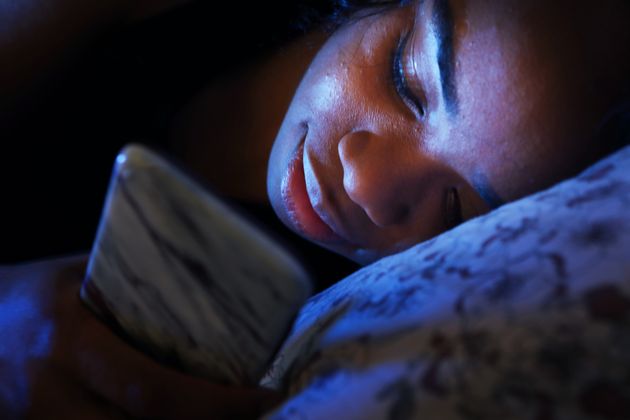
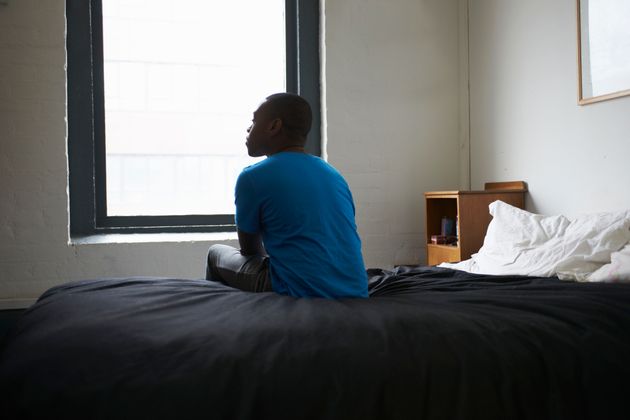
Black LGBT+ young people’s mental health has been severely impacted by the pandemic according to groundbreaking new research, HuffPost UK can reveal.
While LGBT+ young people are more than twice as likely to be worried about the state of their mental health than their non-LGBT+ peers since the pandemic began, a new survey by charity Just Like Us has shown that Black young people within this cohort face increased struggles.
Black LGBT+ young people are more likely to be concerned about their mental health with almost two-thirds (61%) worrying about this on a daily basis, compared to just over half (51%) of white LGBT+ young people.
Chief Executive of Just Like Us, Dominic Arnall, says the pandemic is the “biggest risk to the mental health of LGBT+ young people since Section 28” and is calling for greater awareness of the unique issues that young Black people in this group particularly face.
“It’s devastating to see that Black LGBT+ young people have been particularly impacted by the pandemic.
“There needs to be much more awareness around the issues that Black LGBT+ young people are facing, and an intersectional approach needs to be taken to inclusive education in schools and mental health care for young people.
“It’s so important that if you are celebrating LGBT+ History month or School Diversity Week, make sure you include a diverse range of LGBT+ people including Black LGBT+ people and engage with organisations that do specific work in this area.”
Peter Cade
Black LGBT+ young people are also more likely to be experiencing depression, anxiety disorder, panic attacks, and alcohol or drug dependence.
For white LGBT+ pupils, the likelihood of experiencing these are significantly lower: just under half of those surveyed say they have or are experiencing depression, an anxiety disorder, and fewer were enduring panic attacks, alcohol or drug dependence.
Black LGBT+ young people are also significantly more likely to be experiencing difficulties at home in lockdown, with a third (29%) reporting daily tension in the place they’re living, compared to a quarter (25%) of white LGBT+ young people.
Last year’s heightened racial tensions around Black Lives Matter protests have also compounded feelings of isolation among young, queer Black people.
Tara Moore
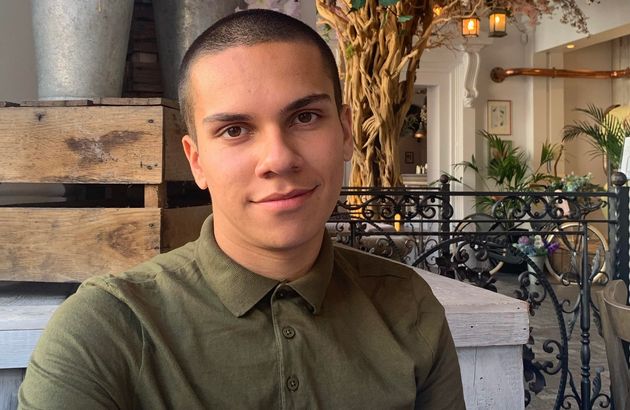
Samuel Picton, 20, who’s of dual ethnicity – white and Black Caribbean – said growing up in a small, predominantly white northern town can be quite isolating, due to limited understanding of being Black and LGBT+.
Speaking to HuffPost UK, he said: “I have friends who, like myself, are Black or mixed race and feel the same. I also know from my experience that the momentum that Black Lives Matter gained last summer had it’s challenges because of the pandemic. The protests were being blamed for a potential rise in Covid-19 cases, and the general experience of being on social media during this time – during a national lockdown – was very draining.”
Supplied
The Yorkshire-based student – who’s cisgender and gay – said while some young people have found an outlet through social media during the lockdown – it can be a toxic place that’s rife with negativity and, in his case, homophobia.
“I was removing people from my social media daily because of negative views. Social media in general can be so damaging to your mental health but I know many will have found an outlet in it during lockdown.
“To complicate things, seeing homophobic tweets from within the Black community then evokes the feeling of being othered within your own community. I’ve definitely been worried about my mental health over the past year because of these things […].”
Picton is a youth ambassador for Just Like Us ambassador and regularly speaks in schools – virtually at the moment – about being LGBT+ to help tackle the issues of isolation these pupils are facing.
Educational institutions need to do more, he said, and in this case use of technology could create safe spaces for students who require it.
“I think that a very small silver lining of this pandemic is that platforms such as Zoom have made it easier to create remote communities and this should definitely be utilised in the future in order to create safe spaces for young Black LGBT+ people,” Picton added.
“Having support groups in the local community would obviously be great, but certain communities may not have the funding, facilities or simply enough openly black LGBT+ people within them to make these groups up. Using Zoom to host groups, workshops, or just general chats with young Black LGBT+ people would definitely help to tackle these issues of isolation.”
Paula Abu
Speaking to the mental and emotional challenges faced by young LGBT+ people more generally, Dominic Arnall from Just Like Us said: “This is the biggest risk to the mental health of LGBT+ young people since Section 28.”
Section 28 of the Local Government Act, enacted in May 1988, prohibited “the promotion of homosexuality by local authorities”
“The pandemic has been a difficult period for everyone, but our research clearly demonstrates the impact of coronavirus and lockdown has not fallen evenly,” the chief executive added.
Moreover, the pandemic has particularly impacted the mental health of LGBT+ young people eligible for free school meals, transgender young people, and LGBT+ young people with a disability – 65% of these groups report are worrying on a daily basis for their mental health.
One secondary school pupil, 14-year-old Matthew, is pansexual and from Coventry. He said: “It has been a really scary time for everyone. I definitely feel less motivated and it’s very quiet.
“I also have had some panic attacks and am worried about being forgotten. If you don’t have a home life where people are accepting of being LGBT+, you need it to be accepted at school so you know it’s OK.”
Just Like Us surveyed 2,934 secondary school pupils (including 1,140 LGBT+ young people) in Years 7-13 (ages 11 to 18) across 375 schools and colleges in December 2020 and January 2021.
The data forms part of a larger report into inclusive education and the experiences of LGBT+ young people that charity Just Like Us is due to publish in June 2021.
Useful websites and helplines:


A ‘significant’ number of people with HIV feel unable to talk to their GP, a leading charity said.
All schools are expected to reopen on 8 March, with some outdoor socialising allowed from 29 March.

Circle Creative Studio via Getty Images
Surge testing is being rolled out in an area of Essex after a case of the South Africa coronavirus variant was found, the Department of Health has announced.
The increased surveillance will be undertaken in the CM13 postcode in Brentwood.
People living in the postcode area are “strongly encouraged” to take a test when offered, whether or not they have any symptoms of the virus.
A spokesman for the Department of Health said: “Working in partnership with the local authority, additional testing and genomic sequencing is being deployed to the CM13 postcode in Brentwood, Essex, where a single case of the Covid-19 variant first identified in South Africa has been found.”
The variant in question – also known as 501Y.V2 – was first detected in two people who arrived in the UK from South Africa in December 2020. ]
However, new cases have now been identified in people who haven’t travelled to the country, suggesting this variant could be spreading in the community.
The South African variant is thought to be far more transmissible, but not more lethal, than other variants of the coronavirus. There’s also emerging evidence to suggest it is less susceptible to immunity induced by the Covid-19 vaccines.
Surge testing has now been deployed in specific locations across numerous areas in England.
Sequencing of positive PCR tests – swabs that are processed in a laboratory – can take around two weeks, according to Public Health England.
The DHSC has said data on surge testing will be provided “in due course”.

Allowing families or friends to meet outside is “pretty safe” and will not contribute “much” to the spread of coronavirus, a government scientific adviser has said.
Sage member professor John Edmunds said allowing two households to meet outside would have little impact on the Covid R rate, which measures the number of people, on average, that each sick person will infect.
It comes amid reports that Boris Johnson will allow one-on-one outdoor meetings between different households in March and later wider gatherings of two households outside, to allow families to meet at Easter, when he sets out his plan to lift lockdown restrictions on Monday.
Asked if two households socialising outside was likely to have any effect on the R number, Edmunds told BBC One’s Andrew Marr Show: “Not much, mixing outside is pretty safe.”
It came as health secretary Matt Hancock said Covid restrictions will be eased step-by-step, with weeks in between each relaxation.
Schools are the government’s priority and are scheduled to open on March 8 and Hancock said the government wants to see what impact children returning to the classroom has on infection rates before significantly easing other restrictions.
He told Times Radio: “Hence there will be weeks between the steps so that we can watch carefully.”
Hancock also said social distancing measures and the wearing of face coverings are likely to continue but hinted that they may not be legally required once more people are vaccinated.
He added: “I want to see it more about personal responsibility over time as we have vaccinated more and more of the population.”
Edmunds, a member of the Scientific Advisory Group for Emergencies (Sage), warned that disruption would continue in schools until children were vaccinated.
The prime minister on Saturday set new targets for vaccinating all over-50s by April 15 and all British adults by the end of July but did not mention children.
Edmunds said: “I think there’s an argument for turning to children (in the vaccine rollout) as fast as we can.
“I mean, I have two children myself, they are in secondary schools and I think that there has been major disruption at schools and there will continue to be major disruption in schools until we have vaccinated our children.”
Edmunds also warned that reopening schools would likely increase the R number close to 1.
If it rises above 1, it means the epidemic is growing again in the UK.
As of Friday, R was estimated to be between 0.6 and 0.9.
Asked if he would be more comfortable opening primary schools and then secondary schools later, Edmunds said: “Obviously I’m just sticking to the epidemiology rather than other needs.
“Of course there’s great needs to get our kids back in schools as fast as we can.
“But sticking to the epidemiology, yeah, of course, it’s always safer to take smaller steps and evaluate.”
Meanwhile, leading Tory lockdown sceptic Mark Harper said all legal Covid restrictions should be lifted by the end of April when all over-50s will have been offered their first vaccine dose.
“We think at that point people should be able to get on with their lives,” the chair of the Covid Recovery Group told Marr.
“The government may still give them health advice and there may be things people do voluntarily, but the legal restrictions should fall away at the end of April.”
He rejected suggestions that restrictions should be kept in place simply to prevent the emergence of new variants, which have more chance of mutating the higher the rate of transmission.
Harper said: “The way you protect against variants is our fantastic genomic sequencing programme and the fact that all of our vaccine developers will respond to changes in the virus by altering the vaccine – that’s the way you protect against variants.
“If we are going to say we are so worried about a future variant that might not be susceptible to the vaccine, that’s a recipe for never unlocking our economy and our society, and I don’t think that’s really an acceptable proposition.”

Derry Girls star Nicola Coughlan has shared some extremely exciting news about the hit Channel 4 sitcom’s forthcoming return.
A third series of Derry Girls was confirmed to be in the works as far back as April 2019, but due to various factors – yes, we are mainly talking about that global pandemic we’re all still living through – production has been put on hold on several occasions.
When one fan tweeted Nicola saying he hoped Derry Girls would be back on our screens soon, the actor responded saying: “Can confirm Series 3 of Derry Girls is filming this year and I cannae bloody wait.”
She added: “Covid has pushed back filming several times which has been so shite, but honestly the storylines in this series are the best we’ve ever done so I can’t tell you how worth it the wait will have been.”
Covid has pushed back filming several times which has been so shite, but honestly the storylines in this series are the best we’ve ever done so I can’t tell you how worth it the wait will have been
— Nicola Coughlan (@nicolacoughlan) February 20, 2021
Derry Girls first debuted on Channel 4 in 2019, and later gained international appeal when it began streaming on Netflix in other territories.
As well as winning huge critical acclaim, Derry Girls has pulled in massive viewing figures, becoming the most-watched TV series in North Ireland since modern records began in 2002.

Channel 4


