Touchdown! NASA’s Mars Perseverance Rover safely lands on Red Planet

The largest, most advanced rover NASA has sent to another world touched down on Mars Thursday, after a 203-day journey traversing 293 million miles (472 million kilometers). Confirmation of the successful touchdown was announced in mission control at NASA’s Jet Propulsion Laboratory in Southern California at 3:55 p.m. EST (12:55 p.m. PST).

Packed with groundbreaking technology, the Mars 2020 mission launched July 30, 2020, from Cape Canaveral Space Force Station in Florida. The Perseverance rover mission marks an ambitious first step in the effort to collect Mars samples and return them to Earth.

“This landing is one of those pivotal moments for NASA, the United States, and space exploration globally — when we know we are on the cusp of discovery and sharpening our pencils, so to speak, to rewrite the textbooks,” said acting NASA Administrator Steve Jurczyk. “The Mars 2020 Perseverance mission embodies our nation’s spirit of persevering even in the most challenging of situations, inspiring, and advancing science and exploration. The mission itself personifies the human ideal of persevering toward the future and will help us prepare for human exploration of the Red Planet.”

About the size of a car, the 2,263-pound (1,026-kilogram) robotic geologist and astrobiologist will undergo several weeks of testing before it begins its two-year science investigation of Mars’ Jezero Crater. While the rover will investigate the rock and sediment of Jezero’s ancient lakebed and river delta to characterize the region’s geology and past climate, a fundamental part of its mission is astrobiology, including the search for signs of ancient microbial life. To that end, the Mars Sample Return campaign, being planned by NASA and ESA (European Space Agency), will allow scientists on Earth to study samples collected by Perseverance to search for definitive signs of past life using instruments too large and complex to send to the Red Planet.

“Because of today’s exciting events, the first pristine samples from carefully documented locations on another planet are another step closer to being returned to Earth,” said Thomas Zurbuchen, associate administrator for science at NASA. “Perseverance is the first step in bringing back rock and regolith from Mars. We don’t know what these pristine samples from Mars will tell us. But what they could tell us is monumental — including that life might have once existed beyond Earth.”

Some 28 miles (45 kilometers) wide, Jezero Crater sits on the western edge of Isidis Planitia, a giant impact basin just north of the Martian equator. Scientists have determined that 3.5 billion years ago the crater had its own river delta and was filled with water.

The power system that provides electricity and heat for Perseverance through its exploration of Jezero Crater is a Multi-Mission Radioisotope Thermoelectric Generator, or MMRTG. The U.S. Department of Energy (DOE) provided it to NASA through an ongoing partnership to develop power systems for civil space applications.

Equipped with seven primary science instruments, the most cameras ever sent to Mars, and its exquisitely complex sample caching system — the first of its kind sent into space — Perseverance will scour the Jezero region for fossilized remains of ancient microscopic Martian life, taking samples along the way.

“Perseverance is the most sophisticated robotic geologist ever made, but verifying that microscopic life once existed carries an enormous burden of proof,” said Lori Glaze, director of NASA’s Planetary Science Division. “While we’ll learn a lot with the great instruments we have aboard the rover, it may very well require the far more capable laboratories and instruments back here on Earth to tell us whether our samples carry evidence that Mars once harbored life.”

Paving the Way for Human Missions

“Landing on Mars is always an incredibly difficult task and we are proud to continue building on our past success,” said JPL Director Michael Watkins. “But, while Perseverance advances that success, this rover is also blazing its own path and daring new challenges in the surface mission. We built the rover not just to land but to find and collect the best scientific samples for return to Earth, and its incredibly complex sampling system and autonomy not only enable that mission, they set the stage for future robotic and crewed missions.”

The Mars Entry, Descent, and Landing Instrumentation 2 (MEDLI2) sensor suite collected data about Mars’ atmosphere during entry, and the Terrain-Relative Navigation system autonomously guided the spacecraft during final descent. The data from both are expected to help future human missions land on other worlds more safely and with larger payloads.

On the surface of Mars, Perseverance’s science instruments will have an opportunity to scientifically shine. Mastcam-Z is a pair of zoomable science cameras on Perseverance’s remote sensing mast, or head, that creates high-resolution, color 3D panoramas of the Martian landscape. Also located on the mast, the SuperCam uses a pulsed laser to study the chemistry of rocks and sediment and has its own microphone to help scientists better understand the property of the rocks, including their hardness.

Located on a turret at the end of the rover’s robotic arm, the Planetary Instrument for X-ray Lithochemistry (PIXL) and the Scanning Habitable Environments with Raman & Luminescence for Organics & Chemicals (SHERLOC) instruments will work together to collect data on Mars’ geology close-up. PIXL will use an X-ray beam and suite of sensors to delve into a rock’s elemental chemistry. SHERLOC’s ultraviolet laser and spectrometer, along with its Wide Angle Topographic Sensor for Operations and eNgineering (WATSON) imager, will study rock surfaces, mapping out the presence of certain minerals and organic molecules, which are the carbon-based building blocks of life on Earth.

The rover chassis is home to three science instruments, as well. The Radar Imager for Mars’ Subsurface Experiment (RIMFAX) is the first ground-penetrating radar on the surface of Mars and will be used to determine how different layers of the Martian surface formed over time. The data could help pave the way for future sensors that hunt for subsurface water ice deposits.

Also with an eye on future Red Planet explorations, the Mars Oxygen In-Situ Resource Utilization Experiment (MOXIE) technology demonstration will attempt to manufacture oxygen out of thin air — the Red Planet’s tenuous and mostly carbon dioxide atmosphere. The rover’s Mars Environmental Dynamics Analyzer (MEDA) instrument, which has sensors on the mast and chassis, will provide key information about present-day Mars weather, climate, and dust.

Currently attached to the belly of Perseverance, the diminutive Ingenuity Mars Helicopter is a technology demonstration that will attempt the first powered, controlled flight on another planet.

Project engineers and scientists will now put Perseverance through its paces, testing every instrument, subsystem, and subroutine over the next month or two. Only then will they deploy the helicopter to the surface for the flight test phase. If successful, Ingenuity could add an aerial dimension to exploration of the Red Planet in which such helicopters serve as a scouts or make deliveries for future astronauts away from their base.

Once Ingenuity’s test flights are complete, the rover’s search for evidence of ancient microbial life will begin in earnest.

“Perseverance is more than a rover, and more than this amazing collection of men and women that built it and got us here,” said John McNamee, project manager of the Mars 2020 Perseverance rover mission at JPL. “It is even more than the 10.9 million people who signed up to be part of our mission. This mission is about what humans can achieve when they persevere. We made it this far. Now, watch us go.”

More About the Mission

A primary objective for Perseverance’s mission on Mars is astrobiology research, including the search for signs of ancient microbial life. The rover will characterize the planet’s geology and past climate and be the first mission to collect and cache Martian rock and regolith, paving the way for human exploration of the Red Planet.

Subsequent NASA missions, in cooperation with ESA, will send spacecraft to Mars to collect these cached samples from the surface and return them to Earth for in-depth analysis.

The Mars 2020 Perseverance mission is part of NASA’s Moon to Mars exploration approach, which includes Artemis missions to the Moon that will help prepare for human exploration of the Red Planet.

JPL, a division of Caltech in Pasadena, California, manages the Mars 2020 Perseverance mission and the Ingenuity Mars Helicopter technology demonstration for NASA.

For more about Perseverance:

https://mars.nasa.gov/mars2020/

and

https://nasa.gov/perseverance

Share Button

Temperature affects susceptibility of newts to skin-eating fungus

Eastern newt populations in the northeastern United States and southeastern Canada are at greatest risk of infection with a new skin-eating fungus, Batrachochytrium salamandrivorans (Bsal), according to a study published February 18 in the open-access journal PLOS Pathogens by Matthew Gray of the University of Tennessee Institute of Agriculture, and colleagues.

Bsal was discovered killing salamanders in the Netherlands in 2010, and since then, the pathogen has spread to other European countries. Bsal is believed to be from Asia and is being spread through the international trade of amphibians, but it has not yet arrived in North America. As a proactive strategy for disease control, Gray and his colleagues evaluated how a range of environmental temperatures in North America could affect the invasion risk of Bsal into a widely distributed salamander species — the eastern newt.

The results show that eastern newt populations are at greatest risk for Bsal invasion in the northeastern United States, higher elevations of the Appalachian Mountains, and southeastern Canada — more northerly regions compared to previous assessments. Changes in eastern newt susceptibility to Bsal infection associated with temperature are likely an interaction between pathogen replication rate and host immune defenses, including changes in skin microbiome composition and the host’s ability to produce Bsal-killing proteins on the skin. The study provides new insights into how latitude, elevation and season can impact the epidemiology of Bsal. According to the authors, the results suggest that climate change will likely impact Bsal invasion probability, and strategies that manipulate the microclimate of newt habitats could be useful in managing Bsal outbreaks.

The authors conclude, “Our findings will help natural resource organizations entrusted with the management of wildlife diseases target high risk areas for Bsal surveillance in North America, and effectively respond to an outbreak if one occurs.”

Story Source:

Materials provided by PLOS. Note: Content may be edited for style and length.

Share Button

The original antigenic sin: How childhood infections could shape pandemics

A child’s first influenza infection shapes their immunity to future airborne flu viruses — including emerging pandemic strains. But not all flu strains spur the same initial immune defense, according to new findings published today by University of Pittsburgh School of Medicine virologists in the journal PLOS Pathogens.

“These results are relevant right now to the COVID-19 pandemic,” said senior author Seema Lakdawala, Ph.D., assistant professor of microbiology and molecular genetics at Pitt. “They may explain age-based distributions of SARS-CoV-2 disease severity and susceptibility.

“Having flu once does not make you immune to all future influenza viruses,” she said. “Nor does having had the original SARS virus in 2003 or any of the ‘common cold’ coronaviruses in circulation necessarily mean you can’t get infected with SARS-CoV-2. But your susceptibility to infection might be different than someone who has never encountered a coronavirus.”

Lakdawala and her colleagues devised an experiment using ferrets — which previous studies have shown have a similar susceptibility and immune response to flu as humans — and mimicked real-world, human conditions. The experiment was designed to test the concept of “The Original Antigenic Sin,” which is when a person’s first exposure to a pathogen imprints on their immunity to all future infections.

This phenomenon is seen in the populations affected by previous flu epidemics and pandemics. For example, the 2009 H1N1 flu pandemic disproportionately affected people ages 5 to 24, suggesting that older people had been exposed to a previous strain of flu that gave them lasting immunity, protecting them from the newer strain.

In the ferret experiment, the scientists infected different groups of ferrets who had never had the flu with one of two different strains of influenza — seasonal H3N2 flu or the 2009 pandemic H1N1 flu — and waited three months to allow the immune system to calm down and develop a more mature immunity to whichever strain they were exposed to.

Next, the ferrets with H3N2 immunity were exposed to ferrets contagious with H1N1 virus, and the ferrets with H1N1 immunity were exposed to ferrets contagious with H3N2 virus.

The scientists mimicked human workdays and weekends, comingling the contagious ferrets with their peers for 8 hours per day over five-day periods — much the way humans who work in cubicles would mix — or continuously over two days, similar to a family weekend.

The ferrets with previous H1N1 infection had protection against airborne transmission of H3N2 flu from a contagious peer. But ferrets with previous H3N2 infection didn’t have the same level of protection against H1N1 and got infected at the same rate as an animal without prior immunity.

“This was really surprising,” said Lakdawala. “Our immunity can shape how susceptible we are to subsequent infections, but that is not uniform. We have long ignored that not every strain of a virus is going to transmit through a population in the same way. That’s important to understand when preparing for future pandemics.”

The experiment did not reveal why the ferrets with previous H1N1 infection were protected against H3N2, nor why prior H3N2 infection didn’t block H1N1. But the scientists did find that the immunity was not due to neutralizing antibodies, which are antibodies acquired following vaccination or infection that specifically target and neutralize a defined pathogen. This finding indicates the immunity was likely driven by the adaptive immune response — meaning that the previous H1N1 infection primed the immune system to be on the lookout for H3N2 and quickly eliminate it.

Future study is needed to reveal the precise immunological mechanism underlying such an immune response, but Lakdawala said that doesn’t mean public health authorities should wait to put the findings into action, especially in the midst of the COVID-19 pandemic. Understanding the different ways that infections affect people based on prior exposure could be leveraged to target age-based interventions or vaccination programs.

Additional authors on this study include Valerie Le Sage, Ph.D., Jennifer E. Jones, Ph.D., Karen A. Kormuth, Ph.D., Eric Nturibi, Gabriella H. Padovani, Andrea J. French, Annika J. Avery, Richard Manivanh, Ph.D., Elizabeth E. McGrady, and Amar Bhagwat, all of Pitt; William J. Fitzsimmons and Adam S. Lauring, M.D., Ph.D., both of the University of Michigan; and Claudia P. Arevalo and Scott E. Hensley, Ph.D., of the University of Pennsylvania.

This research was supported by National Institute of Allergy and Infectious Diseases grants HHSN272201400007C, 1R01AI139063-01A1, 1R01AI113047, and HHSN272201400005C; the American Lung Association, the Charles E. Kaufman Foundation and the Burroughs Wellcome Fund.

Share Button

Covid: Three in 10 care home staff in England not vaccinated

In London only half of care workers have had a jab, despite being in the top four priority groups.

Share Button

Keir Starmer Calls For ‘British Recovery Bond’ So Savers Can Invest In Post-Covid Recovery

Keir Starmer has announced he would create a “British recovery bond” to help provide money for investment in communities, as he denied being too “soft” on Boris Johnson.

The Labour leader used a speech on Thursday to call for a new “partnership” between business and the state as the country rebuilds from the coronavirus crisis.

He said next month’s Budget represents a “fork in the road” for society, with a chance to reject the “insecure and unequal economy” of the past and “begin a new chapter in the history of our country”.

Starmer warned Conservative MPs “simply don’t believe that it’s the role of government to tackle inequality or insecurity”.

“I fear that the Conservatives are incapable of seizing this moment. That what we will get on March 3 will be short-term and it won’t even be a fix,” he said.

The Labour leader has been hit by criticism from his own side in recent weeks, with some MPs concerned he has not taken the fight to the government enough.

One MP on Labour’s left-wing told HuffPost UK of Starmer’s speech: “If that’s the new chapter then people won’t be rushing out to buy the book.”

But Starmer said while it was right to support the government when it took the correct action to deal with the pandemic, such as imposing lockdowns, “we have challenged them when we thought they were getting it wrong”.

“I don’t think that’s soft, I think that’s the national interest,” he said. “I think the public would say, in a time like this, you back the things that the government is doing right and you challenge things that you think they are getting wrong.”

Accusing the prime minister of setting out a “roadmap to yesterday”, Starmer said Labour would extend the furlough scheme, end the pay the freeze for key workers and not cut the £20 uplift to Universal Credit.

Labour said people investing their savings in its recovery bond would see it used to rebuild communities and supporting businesses across the country after the pandemic through the new National Infrastructure Bank.

The Bank of England has estimated that by June 2021 households will accumulate £250bn in savings. But it expected on only around 5% of the savings will be spent.

Starmer said his “British recovery bond” was a “longer-term, secure way of investing” for people to see a return on their investments that would also help “build the infrastructure of the future”.

He also said a Labour government would increase support available for new businesses to help create 100,000 start-ups over the next five years.

Share Button

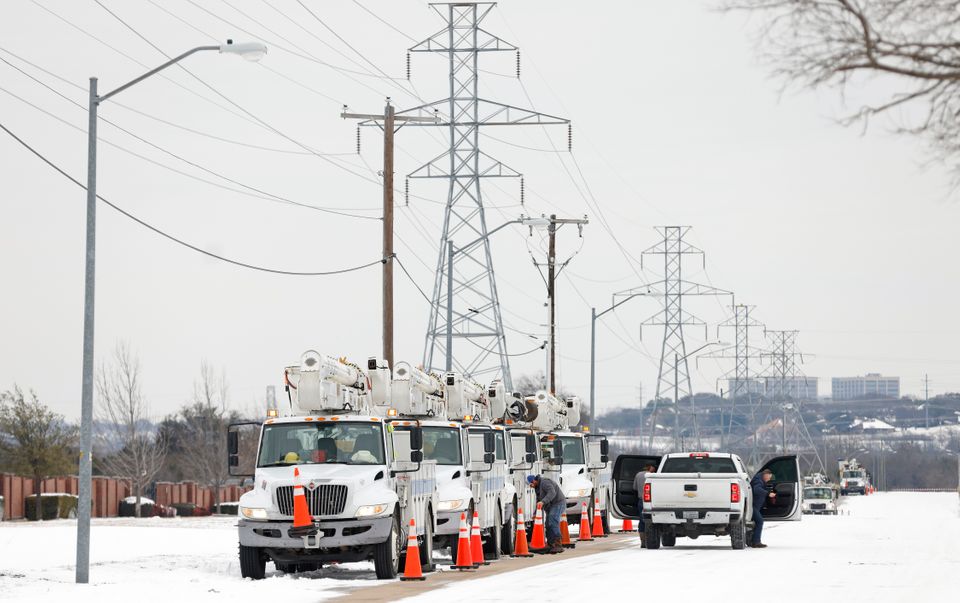
Texas Prisoners Freeze Without Hot Food Or Running Water

As a massive winter storm brought freezing temperatures and widespread power outages to Texas, people in jails there were left with no running water, no extra blankets and little food.

“We’re in here freezing to death and starving,” Finis Prendergast, a 42-year-old National Guard veteran who has been held in a Harris County jail for 29 months, told HuffPost on Wednesday. 

Mass power outages have plunged millions across the state into darkness with no heat, while temperatures have dropped below freezing in recent days. Officials still do not know when power will be broadly restored. 

Prendergast said that after power went out at the jail around 2am local time on Monday, generators kicked in, but power was restored in a limited fashion. Only one of five rows of lights in the dorm lit up, and plug sockets didn’t work. He said “cool air” has been blowing through the vents, and they weren’t given any dinner on Monday night. 

Nigel Patrick, a 37-year-old imprisoned in the same facility, confirmed Prendergast’s account that they hadn’t received dinner on Monday. He said that people had not received any extra blankets and were wrapped up “like a burrito” in the single thin blanket they already had.

On Tuesday night, officers distributed water bottles, which people incarcerated at the facility now must use for drinking, brushing their teeth, and washing their hands. Meanwhile, the nine toilets in the facility – which are used by dozens of people – have been filled up to the brim with urine and faeces. 

“It’s unbearable,” Patrick said on the phone from the jail, speaking to HuffPost and Texas Jail Project advocates. “I’ve been holding my bowels, needing to defecate for two days.”

In response to questions, the Harris County sheriff’s office directed HuffPost to its statements on Twitter, which confirmed that its three jail facilities lost water pressure, but said they still had power. The office claimed the heat was “working fine” and that people in its jails got three meals a day and extra blankets. 

The majority of people in jails across the United States are being held before their trial, many simply because they cannot afford bail. People in US prisons are also disproportionately Black.

Due to widespread power outages, there was a risk that many vials of the Covid-19 vaccine – which must be kept in sub-zero freezers – would go bad, so Prendergast, Patrick and others in Harris County jails received the vaccine yesterday.

Harris County is far from the only jail or prison system to fail its incarcerated population amid the storm. The Texas Jail Project has relayed reports from people in jails in several other counties who have said they have no access to running water. 

People in state prisons are also reporting that inadequate food and overworked prison staff amid the snowstorm, according to The Marshall Project.

Hundreds of women incarcerated at a federal medical prison in Fort Worth were also left “freezing” without heat amid the storm, the Forth Worth Star-Telegram reported.

Prendergast noted that they haven’t had a hot meal in days and instead of the usual bread with peanut butter and jelly in the mornings, today they got a small muffin – “incredibly tiny, like bite-size” – with three little packets of jelly and peanut butter. “What am I supposed to do with that?” he asked.

“This storm has really brought out some of the issues they have in the prison system,” said Tracy Williams, policy director at Texas Inmate Families Association, which represents families with loved ones in Texas prisons. He said his organisation has been getting emails about people imprisoned losing power and spending days without heat. “It speaks to some much needed change.”

Meanwhile, freezing temperatures are set to continue in Texas in the coming days.

Share Button

These Celebs Are Urging You To Get The Coronavirus Vaccine

Romesh Ranganathan, Beverley Knight and Denise Lewis want you to have the coronavirus vaccine.

The celebs appear in a new star-studded advert urging people from ethnic minority communities to take up the vaccine when they’re invited. The ad has been organised by actor and writer Adil Ray, best known for BBC One comedy Citizen Khan.

Research shows hesitancy in getting the vaccine is “disproportionately high” among Black, Asian, and minority ethnic groups. Data also suggests people from Black and south Asian backgrounds are more likely to die from Covid-19 than white people.

The ad – which features the likes of Meera Syal, Moeen Ali and David Olusoga, too – will air at 9.56pm on Thursday evening.

It’ll be screened across several networks, including ITV, Channel 4, and Channel 5, as well as multiple Sky TV channels. The makers expect it to reach an audience of around 10 million people.

“We are in unprecedented times and the fact remains that this pandemic disproportionately affects people from ethnic minority communities,” said Ray.

“It’s heartening to see the major broadcasters come together in an equally unprecedented television broadcast at this crucial time, an indication of how serious this situation is. We must all engage and encourage one another to do the right thing. The message is simple: take the vaccine, save lives.”

Medics have highlighted how structural inequalities within Britain’s healthcare system and racist historical medical practices have caused widespread distrust among minority groups, who have suffered poorer health outcomes throughout their lives.

Ivo Vlaev, professor of Behavioural Science at Warwick Business School and a member of the NHS Covid Behaviour Change Unit, said “fake news” is largely to blame for vaccine hesitancy. “Fake news and conspiracy theories about the Covid-19 vaccine seem to spread almost as fast as the virus itself,” he said.

“They range from the utterly outlandish, such as the vaccine containing a microchip allowing Bill Gates to track peoples movements, to claims it contains pork, which could cause even more harm among BAME group.”

Prof Vlaev said in addition to this, the government is “battling concerns around safety and critics arguing regulators approved the Pfizer vaccine too quickly”.

A key consideration when tackling vaccine take-up is where positive messages come from, he added.

“We know we trust messages more when the person delivering them is like us or we perceive them to be a figure of authority,” he said. “Therefore faith groups and charities that have the trust of the community have an important role to play. Trusted celebrities can also be more persuasive.”

Share Button

Strong decline in coronavirus across England since January, React study shows

Study finds infections fell by two-thirds – and more in London – but warns virus levels remain high.

Share Button

Covid: Ethnicity vaccine gaps in over-70s

Jabs have been given to just 49% of people from African backgrounds living in England.

Share Button

Never-before-seen antibody binding, informing liver cancer, antibody design

In structural biology, some molecules are so unusual they can only be captured with a unique set of tools. That’s precisely how a multi-institutional research team led by Salk scientists defined how antibodies can recognize a compound called phosphohistidine — a highly unstable molecule that has been found to play a central role in some forms of cancer, such as liver and breast cancer and neuroblastoma.

These insights not only set up the researchers for more advanced studies on phosphohistidine and its potential role in cancer, but will also enable scientists to manipulate the shape and atomic makeup of the antibodies’ binding sites in order to design ever more efficient antibodies in the future. The study was published in the Proceedings of the National Academy of Sciences on February 5.

“We are excited that these new antibody structures reveal novel principles of antigen binding. Now we can redesign these antibodies and engineer their properties to make them more efficient,” says Tony Hunter, Renato Dulbecco Chair and American Cancer Society Professor at Salk and the paper’s senior author. “This work may also provide other scientists with phosphohistidine antibodies that better suit their research purposes.”

Amino acids are joined together in precise sequences to form proteins, and several of them can undergo chemical transformations that can change the activity of the protein for better or worse. One such transformation is a process called phosphorylation, when a compound called phosphate is added to an amino acid, changing its shape and charge. Previously, Hunter showed that phosphorylation on the amino acid tyrosine can drive cancer progression, a discovery that led to numerous anticancer drugs. More recently, Hunter turned his attention to phosphorylation of the amino acid histidine (which creates phosphohistidine), suspecting that the process might also play a role in human disease.

Hunter developed a suite of antibodies able to bind to phosphohistidine in proteins, and used chemically stabilized phosphohistidine analogues to develop a series of monoclonal antibodies that could recognize these forms. The next step was to understand exactly how the antibodies are able to bind to phosphohistidine. This led Hunter to collaborate with Ian Wilson, the Hansen Professor of Structural Biology at the Scripps Research Institute and a world-renowned expert in using protein crystallography to define antibody structures, to study the structures of the phosphohistidine antibodies.

“My long-term colleague Tony and I have been collaborating on this project for the past seven years,” says Wilson. “We have obtained new insights into how antibodies can evolve to recognize phosphates linked to proteins, which is very satisfying.”

To find out how phosphohistidine is recognized, they needed to image their antibodies in the act of binding the phosphohistidine, and so formed crystals between each antibody bound to a phosphohistidine peptide.

“To understand the molecular interactions between the antibodies and phosphohistidine, we needed to look at them in great detail,” says first author Rajasree Kalagiri, a Salk postdoctoral researcher and expert in X-ray crystallography. “Once we got the antibodies to form crystals, we bombarded those crystals with X-rays to obtain a diffraction pattern. We then applied methods that transform the diffraction pattern into a three-dimensional electron density map, which was then used to discern the atomic structure of the antibodies.”

The two types of antibody crystal structures solved by the team revealed exactly how different amino acids are arranged around the phosphohistidine to bind it tightly. Their five structures more than double the number of phospho-specific antibody structures previously reported, and provide insights into how antibodies recognize both the phosphate and the linked histidine. They also reveal at a structural level how the two types of antibody recognize different forms of phosphohistidine, and this will allow the scientists to engineer improved antibodies in the future.

Story Source:

Materials provided by Salk Institute. Note: Content may be edited for style and length.

Share Button