Three-year-old Aarav Chopra died during a biopsy when his artery was pierced by a trainee doctor.


Three-year-old Aarav Chopra died during a biopsy when his artery was pierced by a trainee doctor.
Spinal Muscular Atrophy (SMA) causes progressive muscle weakness and, without treatment, can limit life expectancy to just two years.

Time crystals are unusual forms of matter made up of particles that “tick,” meaning they move back and forth in steady, repeating cycles. Scientists first predicted their existence and later confirmed them about a decade ago. Although practical uses have not yet been developed, these systems are considered promising for future technologies such as quantum computing and advanced data storage.
Over time, researchers have identified several kinds of time crystals, each with unique properties that could be useful in different applications.
A New Sound-Levitated Time Crystal
Physicists at New York University have now created a new version of a time crystal. In this system, tiny particles float on a cushion of sound and interact by exchanging sound waves. During these interactions, the particles behave in a way that appears to break Newton’s Third Law of Motion, which states that for every action, there is an equal and opposite reaction (i.e., forces always occur in balanced pairs). In this experiment, however, the particles do not follow that balance. Instead, they move in a nonreciprocal way, meaning their interactions are uneven and not mirrored.
The results, published in Physical Review Letters, point to new possibilities for using time crystals in technology and industry. Unlike many previous experiments, this system is visible to the naked eye and operates on a compact device about one foot tall that can be held in your hand.
“Time crystals are fascinating not only because of the possibilities, but also because they seem so exotic and complicated,” says Physics Professor David Grier, director of NYU’s Center for Soft Matter Research and the paper’s senior author. “Our system is remarkable because it’s incredibly simple.”
Insights Into Biology and Circadian Rhythms
The study, carried out with Mia Morrell, an NYU graduate student, and Leela Elliott, an NYU undergraduate, may also help scientists better understand biological timing systems such as circadian rhythms. Similar to these time crystals, some biochemical processes in the body involve nonreciprocal interactions, including how the body breaks down food.
How Sound Waves Keep Particles Floating
The time crystal itself is made from small styrofoam beads, similar to packing material, that are held in place by sound waves. This setup acts as an “acoustic levitator,” allowing the beads to remain suspended and still in mid-air.
“Sound waves exert forces on particles — just like waves on the surface of a pond can exert forces on a floating leaf,” explains Morrell. “We can levitate objects against gravity by immersing them in a sound field called a standing wave.”
When the levitated beads interact, they do so by scattering sound waves between one another.
Uneven Forces and Broken Symmetry
Larger beads scatter more sound than smaller ones. As a result, a larger particle has a stronger effect on a smaller particle than the smaller particle has on the larger one. This creates an imbalance in how they influence each other.
“Think of two ferries of different sizes approaching a dock,” says Morrell. “Each one makes water waves that pushes the other one around — but to different degrees, depending on their size.”
Because these interactions are carried by sound waves, they are not limited by Newton’s Third Law. This allows the beads to begin oscillating on their own while floating in mid-air, producing a steady rhythm that reflects the unusual forces at play.
The research was supported by grants from the National Science Foundation (DMR-21043837, DMR-2428983).

Expert comment provided by the European Institute for Gender Equality.
A Cambridge study found that in the UK, boys typically perform worse than girls in exams, from early years through to university.
Some researchers, including those commissioned by parliament’s Education Committee, have sought to find out why that is, while headlines posit that schools might be “biased” against boys.
Advertisement
We aren’t seeking to explain that difference here. Instead, we wanted to know whether the higher grades girls tend to get in school actually translate to better wages once they enter the workplace.
Here, we asked a spokesperson for the European Institute for Gender Equality (EIGE) about the topic.
An EIGE spokesperson said that girls’ academic achievements are a “long-standing achievement in the EU”.
Advertisement
Women increasingly outnumber men in completing third-level education, they added.
But “these stronger school outcomes do not automatically translate into equal outcomes later in life.
“Evidence consistently shows that structural inequalities in households, the labour market and public life continue to shape women’s opportunities, earnings, and career progression.”
Indeed, the author of the Cambridge study we mentioned earlier said that “apparent advantages” suggested by girls’ academic successes “are not necessarily carried through to employment”.
Advertisement
At its current rate, the Trade Union Congress says, the UK’s gender pay gap is not expected to close for another 30 years.
The EIGE spokesperson said that one-third of young men aged 15-24 believe men are better leaders than women, compared to 15% of young women.
Advertisement
“These attitudes shape unequal outcomes over the life course, [and] contribute to a persistent divide in the labour market, where women are overrepresented in public sectors such as education, health, and care – roles that are essential but often undervalued and lower paid,” they added.
Men, meanwhile, are likelier to work in higher-paying sectors.
Additionally, when women choose lucrative jobs, these tend to become lower-paid if others join them and the career is deemed “feminine”. The inverse appears to have happened in e.g. programming, when a formerly feminised role became male-dominated.
And “even when women enter the workforce with strong qualifications, they face barriers to career progression. Women remain underrepresented in senior and decision-making positions, which has a direct impact on earnings,” the spokesperson said.
Advertisement
For instance, in education, which is 76% female, men make an average of 17% more than women in the UK. As a percentage, men are significantly more likely than women to be headteachers (5.8% vs 3.9%).
“In addition, unequal sharing of care responsibilities means women are more likely to work part-time, take career breaks, or adjust their working patterns, all of which can slow career advancement and reduce lifetime earnings,” the EIGE spokesperson said.
“Women are also twice as likely as men to provide over 35 hours of childcare per week and, on average, receive only 75% of men’s pensions.”
Advertisement
Ultimately, “the assumption that better school results lead to better professional outcomes does not hold in reality. Addressing these gaps requires tackling structural inequalities that continue to limit women’s economic equality.”

Wes Streeting praises the “Herculean efforts” to protect people from the Kent meningitis outbreak.

Donald Trump has shared a Saturday Night Live UK sketch mocking Keir Starmer.
The US president posted the skit from the new Sky UK comedy show on his Truth Social account on Sunday.
In it, Starmer is portrayed as a weak and ineffectual prime minister who is scared of the US president.
Advertisement
At the start of the two-and-a-half minute clip, the PM is shown at his desk in 10 Downing Street waiting on a phone call from Trump.
At one point, he says to deputy PM David Lammy: “Oh golly, but what if Donald shouts at me? What day I say Lammy?”
To laughter from the audience, Lammy replies: “Just be yourself, prime minister. Yourself is who everyone likes.”
Advertisement
When Trump phones and says hello, Starmer screams and slams the phone down.
He then says: “Sod that scary, scary wonderful president. Why is he so difficult to talk to?”
Later in the sketch, Starmer says: “I’m out of my depth here, Lammy. How did Liz Truss make this job look so easy?”
When told by a “Gen Z adviser” what he should do to connect with Trump, the PM says: “I’ll try anything, I’ll do anything – except make a stand.”
Advertisement
Trump’s decision to post the sketch to his 12 million followers is another shot across Starmer’s bows as the war in Iran continues.
The US president has been angry with the PM ever since he initially refused his request for American jets to use RAF bases to attack the country.
Starmer has since said America can use the bases, but only to launch “defensive” missions against Iranian launch sites.
Advertisement
Trump has repeatedly attacked the PM, saying he is “not Winston Churchill” and accusing him of acting too slowly over the conflict.

Dietitian comment provided by registered dietitian Melissa Jaeger, head of nutrition at MyFitnessPal.
In recent weeks, we’ve asked dietitians to share the healthiest type of egg, rank the best breads, and tell us once and for all whether wholemeal pasta is always better than plain.
Advertisement
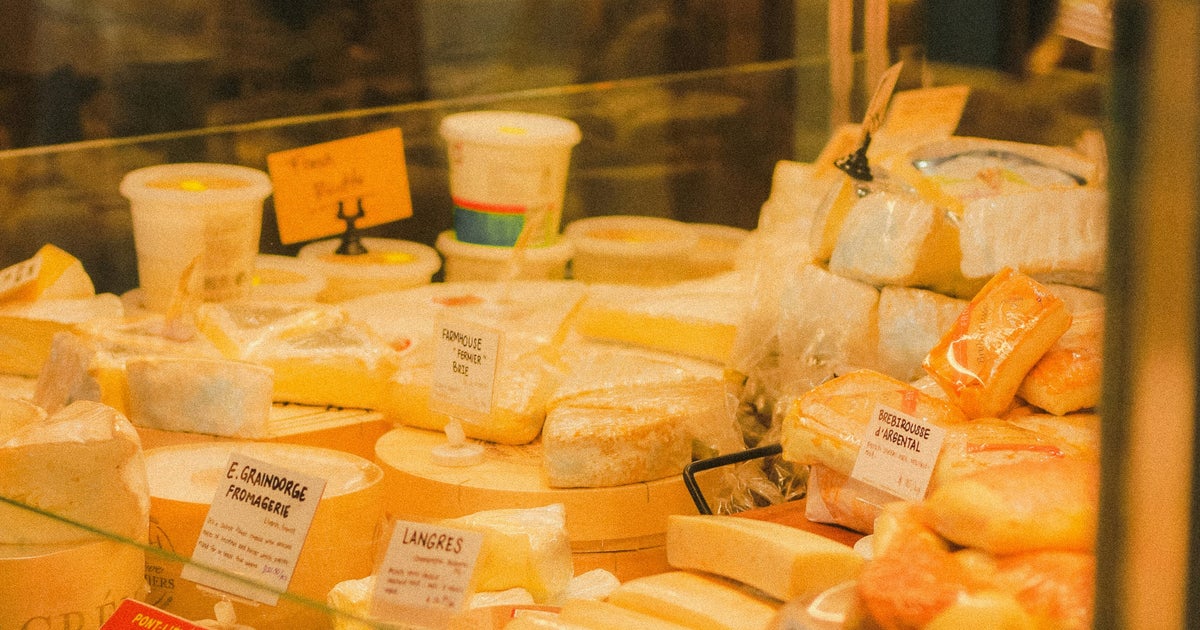
And this week, we’re speaking to registered dietitian Melissa Jaeger about cheese.
Is it ever good for us? If so, what are the best kinds? And how do the pros make cheese healthier?
“Cheese can absolutely be part of a balanced diet and offers several nutritional benefits. It’s an excellent source of high-quality protein and rich in calcium, which supports bone health,” Jaeger told us.
Calcium aside, its vitamin K content also helps to support your bones.
It contains vitamin B12, riboflavin, zinc, vitamin A, and phosphorus, too – “all nutrients that play vital roles in overall health”.
“There’s even an interesting benefit for dental health: eating cheese can increase pH levels in your mouth, leading to lower acid levels and less enamel breakdown, whilst calcium and phosphorus are boosted in saliva after consumption, helping to remineralise teeth,” the dietitian added.
Advertisement
But yes, there are some downsides.
“Cheese does contain 6 to 10g of fat per ounce, with more than half coming from saturated fat… guidelines recommend keeping saturated fat to around 7% of total calories (roughly 10-20g depending on your calorie needs),” Jaeger said.
“Elevated saturated fat intake can contribute to increased risk of cardiovascular disease and type 2 diabetes, so it’s worth being mindful of portion sizes.”
Advertisement
Jaeger said that different cheeses have different nutritional benefits, so it really depends on your goals.
“Swiss cheese stands out for having the lowest sodium content at around 55mg per ounce, making it a smart choice if you’re watching salt intake,” she said.
And if you’re trying to up your protein intake, sheep’s milk cheese contains “75% to 100% more protein than cow’s milk cheese and offers higher levels of phosphorus, vitamin B6, vitamin E, and calcium”.
Advertisement
Goat’s cheese also contains more protein on average than cow’s milk cheese (though less than sheep’s milk cheese), and is also higher in calcium, niacin, potassium, and iron.
Fresh goat’s cheese, or chèvre, “is a lighter option with only 4g of saturated fat per ounce”.
Lastly, if you have issues digesting lactose, you might benefit from trying harder cheeses.
“These are often well-tolerated because lactose is removed with the whey during cheese production, and what remains is broken down further during the ageing process,” said the dietitian.
Goats’ and sheep’s milk is also a little easier to digest, too.
If you do want to reduce your saturated fat intake, some naturally lower-fat versions include fresh goat’s cheese (chèvre), hard Parmesan, or feta, said the expert.
Advertisement
Of course, you can also opt for low-fat or reduced-fat varieties. “However, if you’re watching sodium intake, do check the nutrition label as these versions can be higher in salt compared to full-fat varieties,” she added.
But, Jaeger noted, “that doesn’t mean full-fat cheeses are off the table! You can absolutely work them into your diet whilst being mindful of saturated fat intake”.
She ended: “Try smaller amounts by sprinkling them over vegetables, soups, or salads rather than eating large portions on their own.
Advertisement
“Full-fat cheeses with more pungent, intense flavours are particularly brilliant for this approach, as you need less to achieve satisfying flavour.”

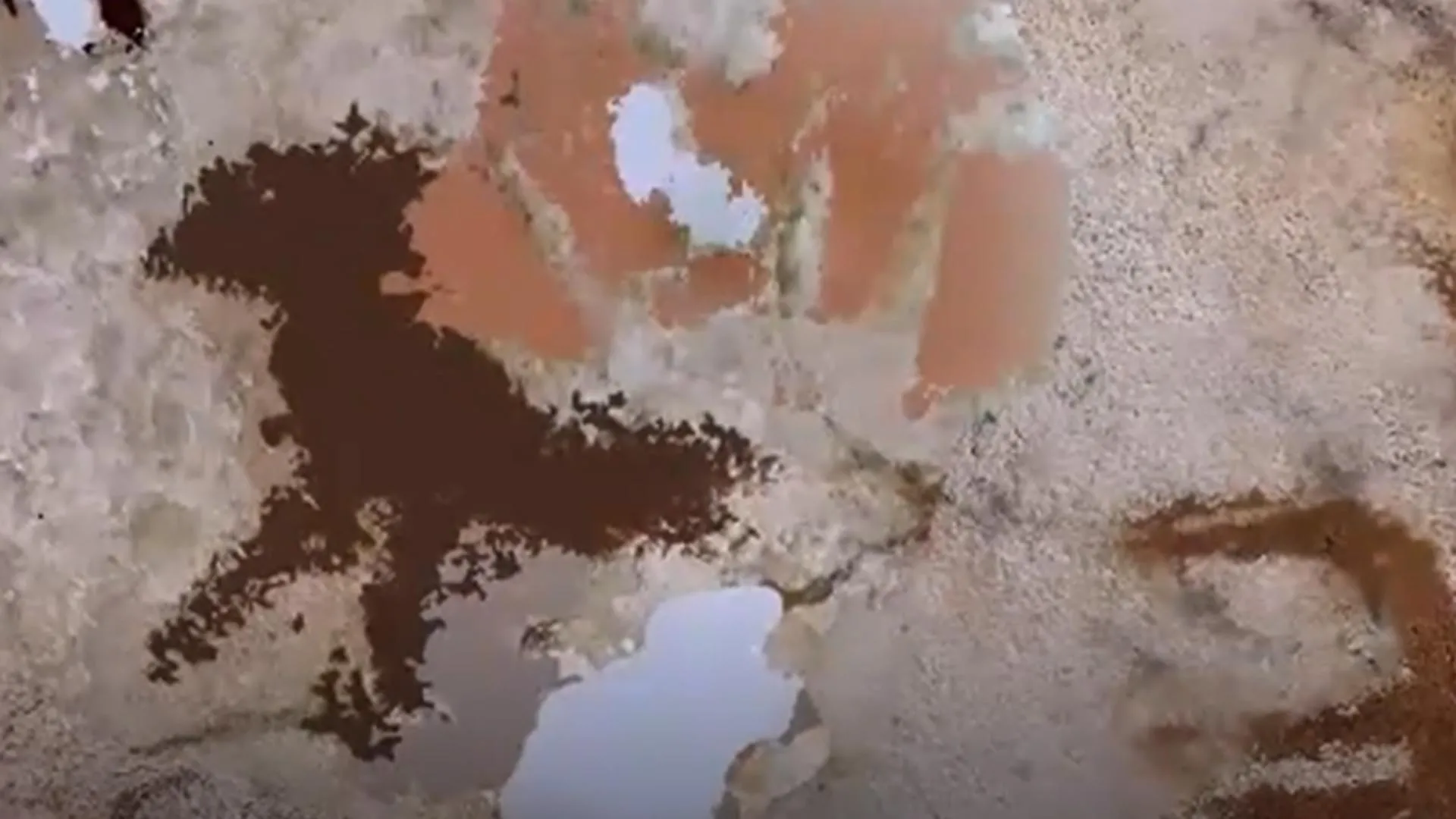
A simple hand stencil found on a cave wall in Indonesia has been identified as the oldest known example of rock art on Earth. It surpasses a previous discovery in the same region by at least 15,000 years.
An international research team led by Griffith University, Indonesia’s national research and innovation agency (BRIN), and Southern Cross University determined that these paintings on the island of Sulawesi were created at least 67,800 years ago.
Researchers say this breakthrough helps clarify when and how humans first reached Australia. The people who made the Sulawesi art were likely closely related to the ancestors of Indigenous Australians.
Ancient Handprint and Advanced Dating Techniques
The artwork was preserved in limestone caves in southeastern Sulawesi, on the nearby island of Muna. Scientists identified a partial hand stencil surrounded by much younger paintings.
To determine its age, the team used uranium-series dating, examining tiny mineral layers that had formed over and sometimes beneath the artwork in Liang Metanduno cave. This allowed them to establish when the paintings were created.
The hand stencil dates back at least 67,800 years, making it the oldest reliably dated cave art ever found. It is significantly older than another Sulawesi painting identified by the same team in 2024.
The findings also show that people continued creating art in this cave for a remarkably long time. Artistic activity spanned at least 35,000 years, lasting until around 20,000 years ago.
“It is now evident from our new phase of research that Sulawesi was home to one of the world’s richest and most longstanding artistic cultures, one with origins in the earliest history of human occupation of the island at least 67,800 years ago,” said Professor Maxime Aubert, an archaeologist and geochemist from the Griffith Centre for Social and Cultural Research (GCSCR), who co-led the study.
A Unique Claw-Like Handprint
The team noted that this hand stencil stands out as a unique variation of a common motif.
After it was first created, the image appears to have been intentionally modified. The outlines of the fingers were narrowed, giving the hand a claw-like appearance.
Professor Adam Brumm of Griffith University’s Australian Research Centre for Human Evolution (ARCHE), a co-leader of the study, said the meaning behind this alteration remains uncertain.
“This art could symbolize the idea that humans and animals were closely connected, something we already seem to see in the very early painted art of Sulawesi, with at least one instance of a scene portraying figures that we interpret as representations of part-human, part-animal beings,” Professor Brumm said.
Clues to Early Human Migration to Australia
Dr. Adhi Agus Oktaviana, a rock art specialist at BRIN and a team leader whose doctoral research at Griffith University contributed to the study, said the discovery has major implications for understanding the deep history of Australian Aboriginal culture.
“It is very likely that the people who made these paintings in Sulawesi were part of the broader population that would later spread through the region and ultimately reach Australia,” Dr. Oktaviana said.
For years, archaeologists have debated when humans first arrived on the ancient landmass known as Sahul, which once connected present-day Australia, Tasmania and New Guinea.
Some researchers support a short chronology, suggesting humans arrived around 50,000 years ago. Others favor a long chronology, placing their arrival at least 65,000 years ago.
“This discovery strongly supports the idea that the ancestors of the First Australians were in Sahul by 65,000 years ago,” Dr. Oktaviana said.
Migration Routes and Ongoing Research
Scientists have proposed two main pathways into Sahul. One is a northern route through Sulawesi and the ‘Spice Islands’ toward New Guinea. The other is a southern route that carried early seafarers more directly to Australia via Timor or nearby islands.
Professor Renaud Joannes-Boyau of the Geoarchaeology and Archaeometry Research Group (GARG) at Southern Cross University said the new evidence strengthens the case for the northern route.
“With the dating of this extremely ancient rock art in Sulawesi, we now have the oldest direct evidence for the presence of modern humans along this northern migration corridor into Sahul,” Professor Joannes-Boyau said.
“These discoveries underscore the archaeological importance of the many other Indonesian islands between Sulawesi and westernmost New Guinea,” said Professor Aubert, who continues working with colleagues to uncover more evidence of early human activity along this route with support from the Australian Research Council (ARC).
The ARC funding is part of a broader effort to study human origins. This includes the ARC Centre of Excellence for Transforming Human Origins Research, led by Griffith University, and the ARC Training Centre for Advancing Archaeology in the Resources Sector at Southern Cross University. These initiatives aim to expand knowledge of human evolution and help protect cultural heritage.
Additional support for the research came from Google Arts & Culture and the National Geographic Society.
The Sulawesi discoveries have also been featured in a documentary, ‘Sulawesi l’île des premières images,’ produced by ARTE and released in Europe.
The study, titled ‘Rock art from at least 67,800 years ago in Sulawesi,’ was published in Nature.
Sofii Lewis was diagnosed with postpartum psychosis tendencies and OCD after giving birth.
Nine-year-old Eliza’s mum says she was relieved when her daughter was diagnosed with the disease.
