Researchers unlock hidden dimensions inside a single photon

Physicists at the University of the Witwatersrand in South Africa, together with colleagues from the Universitat Autònoma de Barcelona, have shown how light at the quantum level can be deliberately shaped across space and time to produce high-dimensional and multidimensional quantum states. By carefully controlling a photon’s spatial pattern, timing, and spectrum, the team can design what are known as structured photons. These custom-built particles of light open new possibilities for high-capacity quantum communication and next-generation quantum technologies.

Their findings appear in a review published in Nature Photonics, which examines the rapid advances in creating, controlling, and measuring structured quantum light. The paper highlights a growing set of powerful tools, including on-chip integrated photonics, nonlinear optics, and multiplane light conversion. Together, these methods are transforming structured quantum states from laboratory concepts into practical systems for imaging, sensing, and quantum networks.

From Empty Toolbox to Advanced Quantum Control

Professor Andrew Forbes of Wits University, the study’s corresponding author, says the transformation in this field over the past 20 years has been remarkable. “The tailoring of quantum states, where quantum light is engineered for a particular purpose, has gathered pace of late, finally starting to show its full potential. Twenty years ago the toolkit for this was virtually empty. Today we have on-chip sources of quantum structured light that are compact and efficient, able to create and control quantum states.”

A major advantage of shaping photons is that it allows researchers to use high-dimensional encoding alphabets. In simple terms, each photon can carry more information and resist interference more effectively. That makes structured quantum light especially attractive for secure quantum communication systems.

Challenges in Long-Distance Quantum Communication

Despite the progress, real-world conditions still pose obstacles. Certain communication channels are not well suited for spatially structured photons, which limits how far these signals can travel compared to more traditional properties such as polarisation. “Although we have made amazing progress, there are still challenging issues,” says Forbes. “The distance reach with structured light, both classical and quantum, remains very low … but this is also an opportunity, stimulating the search for more abstract degrees of freedom to exploit.”

To address this limitation, researchers are exploring ways to give quantum states topological properties. Topological features can make quantum information more stable against disturbances. “We have recently shown how quantum wave functions naturally have the potential to be topological, and this promises the preservation of quantum information even if the entanglement is fragile,” says Forbes.

Multidimensional Entanglement and Future Applications

The review also outlines fast-moving developments in multidimensional entanglement, ultrafast temporal structuring, advanced nonlinear detection techniques, and compact on-chip devices that can generate or process higher-dimensional quantum light than ever before. These breakthroughs are paving the way for high-resolution quantum imaging, extremely precise measurement tools, and quantum networks capable of transmitting more data through multiple interconnected channels.

Overall, the field appears to be reaching a pivotal moment. Researchers believe quantum optics based on structured light is poised for major growth, with the future looking “very bright indeed” — but additional work is required to increase dimensionality, raise photon output, and design quantum states that can withstand realistic optical environments.


Share Button

The Science Behind ‘Headline Anxiety’: Why Our Brains Detach And How To Cope

It goes without saying that we are living through incredibly hard times. We are facing innumerable environmental crises, there is an alarming rise in far-right ideologies and we’re still feeling the social hits of the Covid-19 pandemic.

So, how do we cope? Why can we get up, make a cup of coffee, go to work and tune into our everyday life while knowing that we are surrounded by The Horrors? Are we monsters?

Well, no. But we are feeling emotionally detached and this is something our brains do to protect us. Unfortunately, it can also make us numb to what’s happening around us and less likely to take action.

How emotional detachment keeps us moving

VeryWellMind explains: “Emotional detachment refers to being disconnected or disengaged from other people’s feelings. It can involve an inability or unwillingness to get involved in other people’s emotional lives.

“While this detachment may protect people from stress, hurt, and anxiety, it can also interfere with a person’s psychological, social, and emotional well-being.”

It is completely understandable that we don’t know how to cope and so instead mentally detach without even knowing that we’re doing it. In fact, sometimes it’s necessary. Think of dealing with death admin following the loss of a loved one. Sometimes you just have to keep going.

This can lead us to something called ‘compassionate fatigue’

Psychology Today explains that while this phrase is most often applied to emergency and healthcare workers, “A secondary definition of compassion fatigue refers to the experience of any empathetic individual who is acutely conscious of societal needs but feels helpless to solve them.”

Sounds very familiar.

The psychology experts explain that it can be treated, though: “You can counteract such fatigue through regular exercise and healthy eating, a commitment to adequate rest and regular time off, and time in therapy. It also helps to set emotional boundaries without barricading yourself from the world.”

Reducing screen time is also incredibly beneficial.

Share Button

Neve Campbell Was Cast As Lara Croft In Tomb Raider Before Angelina Jolie

Neve Campbell has revealed that she was the original pick to play Lara Croft in the first Tomb Raider movie.

In a new interview with BuzzFeed UK, the Scream star was asked if there’d been any major roles she’d said no to over the course of her career, to which she confirmed: “I turned down Lara Croft.”

The role would eventually go to Angelina Jolie, who brought the iconic video game character to life in two action movies.

Angelina Jolie as Lara Croft in Tomb Raider

Alex Bailey/Lawrence Gordon/Mutual Film/Paramount/Kobal/Shutterstock

The character was later played on the big screen by Oscar winner Alicia Vikander, with Game Of Thrones star Sophie Turner currently shooting a new TV series in which she’ll play the Tomb Raider heroine.

“You make the choices that you make at the time,” Neve added during her BuzzFeed interview. “But certain ones I wasn’t available for, as well.

“Because I was so busy during Party Of Five, that took up 10 months of my year for six years. But listen, I’m grateful for everything that I’ve had.”

Neve went on to share that she also bagged the lead in Pearl Harbour opposite Ben Affleck, but had to withdraw due to scheduling issues.

“I kicked ass on that audition,” she recalled with a laugh. “I learned Japanese – I had my lines translated, and I went in and spoke Japanese in the audition. And I got it! But I couldn’t do it. And I worked really hard!”

Kate Beckinsale and Ben Affleck in 2001's Pearl Harbour
Kate Beckinsale and Ben Affleck in 2001’s Pearl Harbour

Touchstone/Jerry Bruckheimer Inc/Kobal/Shutterstock

To horror fans, Neve is best known for her performance as Sydney Prescott in the first five Scream movies.

Ahead of the sixth, she made the decision not to return due to issues relating to pay.

However, she’s due to appear in the seventh, although the production has been marred with controversy over the decision to drop lead actor Melissa Barrera after she voiced her support for Palestine amid the ongoing conflict in the Middle East.

Share Button

Jersey approves assisted dying law

Once the law is given Royal Assent the first legal assisted deaths could happen as early as 2027.

Share Button

Jersey passes assisted dying law – but what stage has proposal reached in UK’s parliaments?

Bills to let terminally ill people end their life are being considered at Westminster and in Scotland.

Share Button

‘I’m going to stick at it until I get a home’

There were 4,793 people sleeping on the streets on a single night last autumn.

Share Button

Racism and ‘poor’ staff relationships factors in maternity care failings, report finds

The interim report has identified problems “at every stage” of the maternity journey in England.

Share Button

Labour Accused Of By-Election Dirty Tricks Over ‘Fictitious’ Tactical Voting Group

Labour is embroiled in a dirty tricks row over a campaign leaflet featuring a “fictitious” tactical voting company.

The offending literature has been put through voters’ doors on the eve of Thursday’s crunch Gorton and Denton by-election.

It says: “The Tactical Choice says Vote Labour. Based on a new prediction made in the last 24 hours we are recommending voting Labour.”

However, no organisation called “Tactical Choice” appears to exist.

The leaflet says it is promoted on behalf of Labour candidate Angeliki Stogia.

Labour is locked in a three-way battle with the Green Party and Reform UK in the seat.

Bookies make the Greens odds-on favourites, followed by Reform and then Labour, for whom Andrew Gwynne won the seat at the 2024 general election with a majority of nearly 13,500.

Two real tactical voting organisations – Tactical.Vote and StopTheTories.Vote – have already recommended voters back the Greens to stop Reform winning.

The leaflet was sent "on behalf of" Labour candidate Angeliki Stogia.
The leaflet was sent “on behalf of” Labour candidate Angeliki Stogia.

Green party

A Green Party spokesperson said: “In a final throw of desperation, Labour have made up an entirely fictitious organisation called ‘Tactical Choice’ referencing them on their final leaflet.

“They’ve had to make this up because every actual tactical voting organisation has endorsed the Green Party as the best hope to keep Reform out in this election.

“We have great faith in the electorate seeing through these desperate Labour lies and uniting behind the Greens in the by-election tomorrow to beat Reform.

“Hope versus hate is on the ballot tomorrow. Let’s make sure the Greens’ message of hope wins.”

A Labour campaign spokesman did not deny that Tactical Choice appear to have been made up by the party in a bid to sway voters.

He said: “The Greens have been pumping out fake news and deploying dirty tactics for weeks. We’ll take no lectures from them.

“The only way to defeat Reform in this by-election is by backing Labour.”

Share Button

Sperm swim more quickly in summer, study finds

Understanding the seasonal patterns of sperm could improve fertility treatments, by optimising the timing of treatment, the reasearchers say.

Share Button

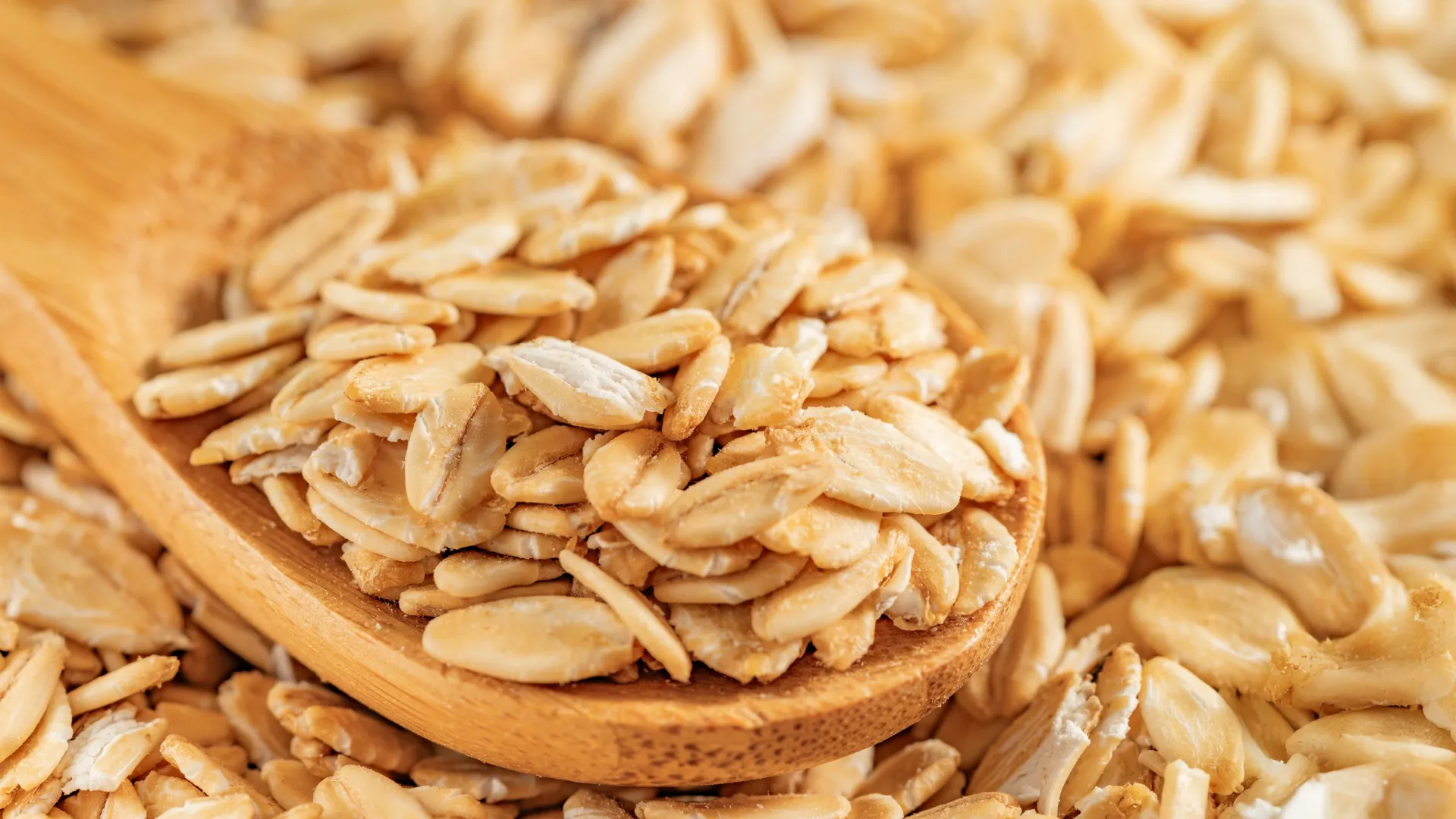
Just two days of oatmeal cut bad cholesterol by 10%

Eating mostly oatmeal for just two days may significantly reduce cholesterol, according to a clinical trial from the University of Bonn published in Nature Communications. The study focused on people with metabolic syndrome, a cluster of conditions that includes excess body weight, high blood pressure, elevated blood sugar, and abnormal blood lipid levels. Participants followed a calorie restricted plan made up almost entirely of oatmeal for 48 hours.

Compared with a control group that also reduced calories but did not eat oats, those on the oat based plan saw a markedly greater improvement in their cholesterol levels. The reduction remained noticeable even six weeks later. Researchers also found that the diet changed the balance of bacteria in the gut. Substances produced by these microbes appear to play an important role in the health benefits linked to oats.

A Historic Diabetes Therapy Revisited

Oats have long been associated with metabolic health. In the early 20th century, German physician Carl von Noorden used oats to treat patients with diabetes, reporting strong results. “Today, effective medications are available to treat patients with diabetes,” explains Marie-Christine Simon, junior professor at the Institute of Nutritional and Food Science at the University of Bonn. “As a result, this method has been almost completely overlooked in recent decades.”

The volunteers in the new study did not have diabetes, but they did have metabolic syndrome, which raises the risk of developing the disease. This condition is defined by excess weight, high blood pressure, elevated blood sugar, and disorders of lipid metabolism. “We wanted to know how a special oat-based diet affects patients,” says Simon, who is also a member of the Transdisciplinary Research Areas “Life & Health” and “Sustainable Futures” at the University of Bonn.

300 Grams of Oatmeal Per Day

During the intensive phase, participants ate boiled oatmeal three times daily and could only add small amounts of fruit or vegetables. In total, 32 women and men completed the two day oat based intervention. Each person consumed 300 grams of oatmeal per day and cut their usual calorie intake roughly in half. The control group also reduced calories but did not consume oats.

Both groups experienced some benefits from eating fewer calories. However, the improvements were stronger among those who ate oats. “The level of particularly harmful LDL cholesterol fell by 10 percent for them — that is a substantial reduction, although not entirely comparable to the effect of modern medications,” stresses Simon. “They also lost two kilos in weight on average and their blood pressure fell slightly.”

Lowering LDL cholesterol is especially important for heart health. When LDL levels are too high, cholesterol can build up inside artery walls, forming plaques that narrow blood vessels. These plaques may rupture during physical strain, emotional stress, or spikes in blood pressure. A resulting blood clot can completely block blood flow or travel to the heart or brain, triggering a heart attack or stroke.

Gut Microbiome Changes May Explain the Effect

To understand why oats had this impact, researchers examined the gut microbiome. “We were able to identify that the consumption of oatmeal increased the number of certain bacteria in the gut,” says Linda Klümpen, the study’s lead author. Scientists increasingly recognize that gut bacteria are central to how the body processes food. These microbes generate metabolic byproducts that nourish intestinal cells and support their normal function.

Some of these bacterial products also enter the bloodstream, where they can influence other organs. “For instance, we were able to show that intestinal bacteria produce phenolic compounds by breaking down the oats,” says Klümpen. “It has already been shown in animal studies that one of them, ferulic acid, has a positive effect on the cholesterol metabolism. This also appears to be the case for some of the other bacterial metabolic products.”

At the same time, certain microbes help eliminate the amino acid histidine. Without this process, the body can convert histidine into a compound believed to promote insulin resistance, a hallmark of diabetes mellitus.

Short Intensive Plan Outperformed Longer Moderate Intake

The cholesterol lowering effects were still visible six weeks after the two day intervention. “A short-term oat-based diet at regular intervals could be a well-tolerated way to keep the cholesterol level within the normal range and prevent diabetes,” says Junior Professor Simon.

However, the benefits were strongest when oats were consumed in high amounts alongside calorie restriction. In a separate six week phase, participants ate 80 grams of oatmeal per day without additional dietary limits. That approach produced only modest changes. “As a next step, it can now be clarified whether an intensive oat-based diet repeated every six weeks actually has a permanently preventative effect,” Simon adds.

How the Randomized Controlled Trials Were Conducted

A total of 68 people took part in the research. In the two day oat based study, 17 participants in the oat group and 15 in the control group completed the trial. Two individuals in the control group withdrew for personal reasons. In the six week intervention, 17 participants in each group finished the study. The researchers determined the group size of 17 per arm based on earlier interventional data.

Both the short and longer interventions were randomized controlled trials. In these “RCTs,” participants are assigned at random to different groups. One group receives the intervention being tested, in this case oats, while the control group does not. Ideally, participants are “blind” and unaware of which group they are in, which reduces placebo effects.

In nutrition studies, full blinding is often difficult because people usually know what they are eating. That was true here. However, the laboratory teams analyzing blood and stool samples were unaware of which group the samples came from. The same applied to blood pressure and weight measurements, reducing the chance that expectations could influence the results.

Before any dietary changes, researchers collected blood and stool samples and measured blood pressure, weight, height, waist circumference, and body fat. Follow up assessments took place immediately after the two day oat phase and again at two, four, and six weeks. The same measurements and sample collections were repeated each time. The six week oatmeal group underwent identical testing procedures.

Blood samples were analyzed for LDL cholesterol levels and for dihydroferulic acid, a phenolic compound thought to be produced by beneficial gut bacteria. Stool samples were used to identify bacterial species by isolating 16S RNA, a molecule unique to bacteria that varies slightly between species, much like a fingerprint. Researchers also examined which metabolic byproducts were present.

The study received funding from the German Federal Ministry of Education and Research (BMBF), the German Diabetes Association (DDG), the German Research Foundation (DFG), the German Cereal Processing, Milling and Starch Industries’ Association (VGMS), and RASO Naturprodukte.

Share Button