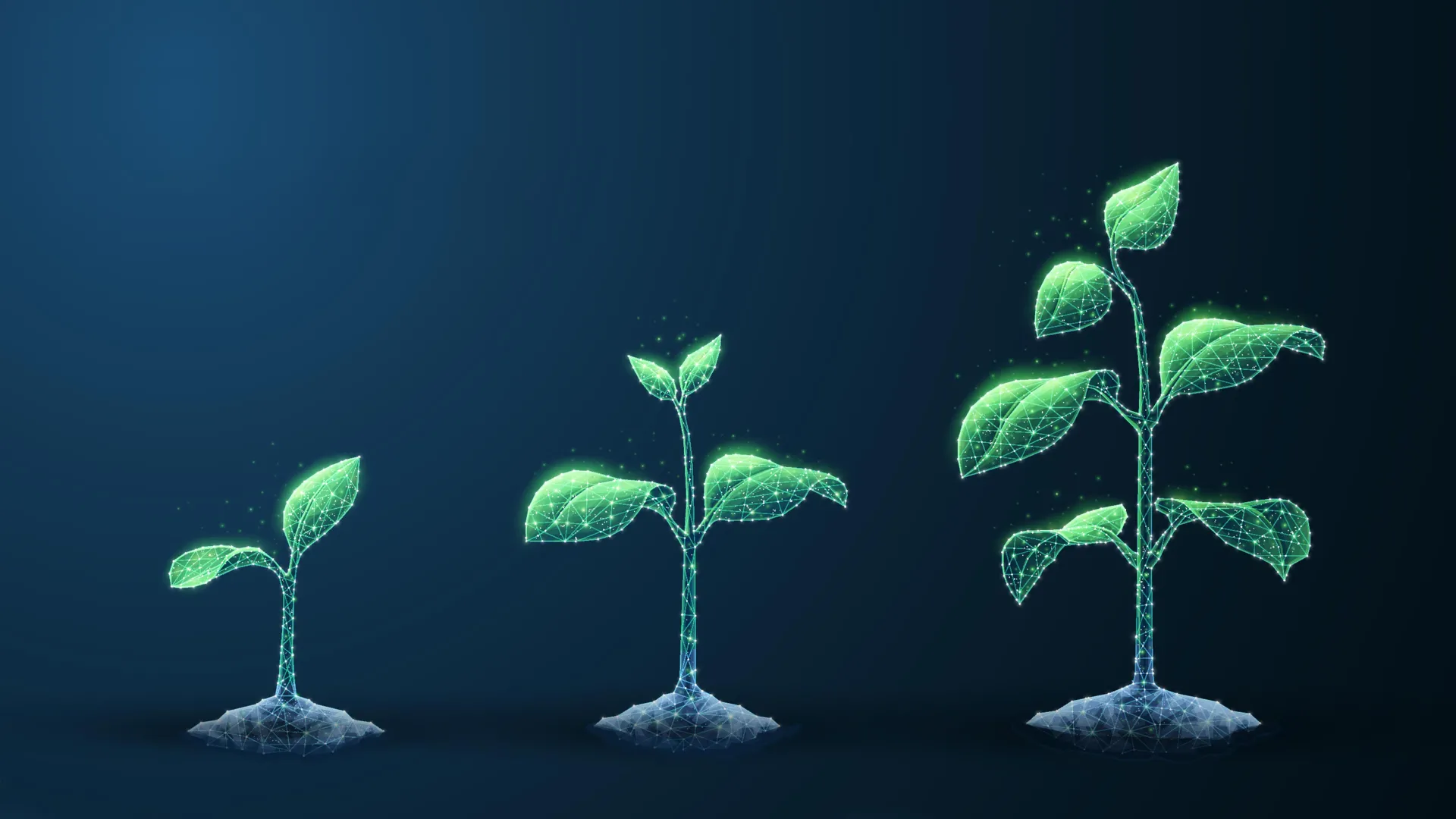
Scientists uncover a hidden universal law limiting life’s growth

A team of researchers, including a scientist from the Earth-Life Science Institute (ELSI) at the Institute of Science Tokyo in Japan, has identified a new principle in biology that mathematically explains why the growth of living organisms slows down when nutrients become plentiful. This well-known phenomenon is referred to as the “law of diminishing returns.”

How organisms grow in response to changing nutrient conditions has long been one of biology’s central questions. Across all forms of life — from microbes to plants and animals — growth depends on access to nutrients, energy, and the internal machinery of cells. Although scientists have studied how these factors affect growth, most research has focused on individual nutrients or specific biochemical pathways. What has remained unclear is how all these interconnected processes within a cell work together to control growth when resources are limited.

A Global Principle That Unites Living Systems

To explore this mystery, ELSI’s Specially Appointed Associate Professor Tetsuhiro S. Hatakeyama and RIKEN Special Postdoctoral Researcher Jumpei F. Yamagishi discovered a new unifying concept that describes how all living cells manage growth under resource constraints. Their work introduces what they call the global constraint principle for microbial growth — a framework that could reshape how scientists understand biological systems.

Since the 1940s, microbiologists have relied on the “Monod equation” to describe how microbes grow. This model shows that growth rates increase with added nutrients until they level off. However, the Monod equation assumes that only one nutrient or biochemical reaction limits growth at a time. In reality, cells perform thousands of simultaneous chemical processes that must share finite resources.

A Network of Constraints Inside Every Cell

According to Hatakeyama and Yamagishi, the traditional model captures only a small part of what’s happening. Instead of a single bottleneck, cellular growth is shaped by a complex network of limitations that interact to slow growth as nutrients accumulate. The global constraint principle explains that when one limiting factor — such as a nutrient — is alleviated, other constraints like enzyme production, cell volume, or membrane space begin to take over.

Using a technique known as “constraint-based modeling,” the team simulated how cells distribute and manage internal resources. Their results showed that while each additional nutrient helps microbes grow, its benefit gradually decreases — each one contributes less than the last.

“The shape of growth curves emerges directly from the physics of resource allocation inside cells, rather than depending on any particular biochemical reaction,” explains Hatakeyama.

Uniting Classic Laws of Biology

This new principle brings together two of biology’s foundational growth laws: the Monod equation and Liebig’s law of the minimum. Liebig’s law states that a plant’s growth is limited by whichever nutrient is scarcest (for example, nitrogen or phosphorus). Even if all other nutrients are plentiful, the plant can only grow as much as the least available one allows.

By merging these two concepts, the researchers created what they call a “terraced barrel” model. In this model, new limiting factors appear in stages as nutrient availability increases. This explains why organisms — from single-celled microbes to complex plants — experience diminishing growth returns even when conditions seem ideal, as each new stage reveals a fresh constraint.

Hatakeyama compares this to an updated version of Liebig’s famous barrel analogy, in which a plant’s growth is limited by its shortest stave, representing the scarcest resource. “In our model, the barrel staves spread out in steps,” he says, “each step representing a new limiting factor that becomes active as the cell grows faster.”

To test their hypothesis, the researchers built large-scale computer models of Escherichia coli bacteria. These models incorporated details about how cells use proteins, how crowded they are inside, and the physical limits of their membranes. The simulations accurately predicted the observed slowing of growth as nutrients were added and showed how oxygen and nitrogen levels affected the results. Laboratory experiments confirmed that the model’s predictions matched real biological behavior.

Toward Universal Laws of Life’s Growth

The discovery offers a new way to understand how life grows, without the need to model every molecule or reaction in detail. The global constraint principle provides a framework that unifies many aspects of biology. “Our work lays the groundwork for universal laws of growth,” says Yamagishi. “By understanding the limits that apply to all living systems, we can better predict how cells, ecosystems, and even entire biospheres respond to changing environments.”

This principle could have far-reaching applications. It may lead to more efficient microbial production in biotechnology, improved crop yields through better nutrient management, and stronger models for predicting how ecosystems respond to climate change. Future research may explore how this principle applies to different types of organisms and how multiple nutrients interact to influence growth. By bridging cellular biology with ecological theory, this study moves science closer to a universal framework for understanding life’s growth limits.

Earth-Life Science Institute (ELSI) is one of Japan’s prominent World Premiere International (WPI) research centers. It aims to drive breakthroughs in interdisciplinary science by attracting top researchers from around the world to collaborate on challenging scientific problems. ELSI’s mission focuses on studying the origin and co-evolution of Earth and life.

The Institute of Science Tokyo (Science Tokyo) was established on October 1, 2024, through the merger of Tokyo Medical and Dental University (TMDU) and Tokyo Institute of Technology (Tokyo Tech). Its mission is “Advancing science and human wellbeing to create value for and with society.”

Japan’s World Premier International Research Center Initiative (WPI), launched in 2007 by the Ministry of Education, Culture, Sports, Science and Technology (MEXT), supports a network of elite research centers that operate with a high degree of independence and global collaboration. The program is managed by the Japan Society for the Promotion of Science (JSPS).

RIKEN, Japan’s largest research institute for basic and applied science, produces over 2,500 papers each year in leading journals across physics, chemistry, biology, engineering, and medicine. Known for its interdisciplinary and international approach, RIKEN has earned a worldwide reputation for scientific excellence.

Share Button

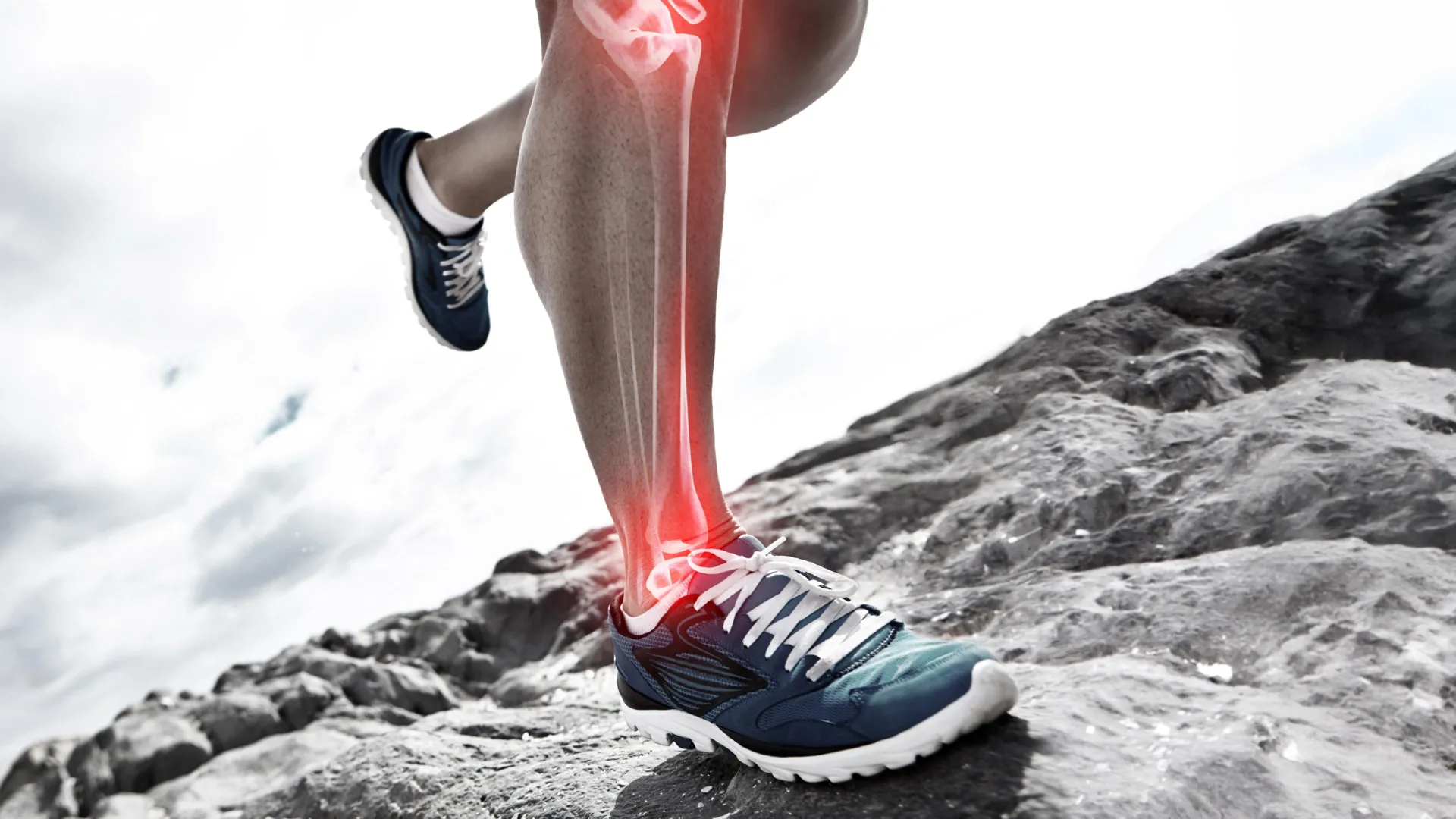
Running on little sleep? You’re twice as likely to get hurt

If you’re one of the 620 million people who regularly go for a run, you probably like to get an early start. But if you haven’t slept well the night before, you could be putting yourself at greater risk of injury.

A new study led by Professor Jan de Jonge, a work and sports psychologist at Eindhoven University of Technology in the Netherlands (and Adjunct Professor at the University of South Australia), found that insufficient and poor-quality sleep significantly increases the chance of getting hurt while running.

In a survey of 425 recreational runners, the researchers discovered that participants who reported shorter sleep duration, lower sleep quality, or frequent sleep problems were almost twice as likely to experience an injury compared to those who slept well.

The results, published in Applied Sciences, provide what Prof de Jonge calls “compelling evidence that sleep is a critical yet often overlooked component of injury prevention.”

“While runners specifically focus on mileage, nutrition and recovery strategies, sleep tends to fall to the bottom of the list,” he explains. “Our research shows that poor sleepers were 1.78 times more likely to report injuries than those with stable, good quality sleep, with a 68% likelihood of sustaining an injury over a 12-month period. That’s a strong reminder that how well you rest is just as important as how hard you train.”

Sleep: The Missing Element in Runner Recovery

Recreational running remains one of the most popular sports worldwide, yet it carries a substantial risk of injury. Studies estimate that up to 90% of runners will be injured at some point, resulting in millions of dollars lost each year in medical bills and missed work.

Prof de Jonge’s team took a comprehensive approach, examining sleep not only in terms of duration but also quality and disorders. This broader view helped identify how different aspects of sleep contribute to physical vulnerability.

“Sleep is a vital biological process that allows the body and mind to recover and adapt to the physical and mental demands of training,” says Prof de Jonge. “When sleep is disrupted or insufficient, the body’s ability to repair tissues, regulate hormones and maintain focus diminishes, all of which can increase injury risk.”

The study revealed that runners who struggled with falling asleep, woke up frequently during the night, or rarely felt rested were the most prone to injury. In contrast, those who maintained consistent sleep schedules and felt well-rested reported significantly fewer injuries.

Rethinking Training: Why Sleep Deserves Equal Priority

Prof de Jonge emphasizes that the research carries important lessons for both recreational and competitive runners, as well as for coaches and health professionals.

“We often assume that more training equals better performance, but that’s not necessarily the case,” he notes. “Runners (especially those balancing training with work, family and social commitments) may actually need more sleep than average adults to recover properly. Sleep should be treated as a performance priority, not an afterthought.”

Experts generally recommend seven to nine hours of sleep per night, though athletes often benefit from additional rest, including short naps, to enhance both physical and mental recovery.

To improve sleep quality, consistent bedtimes, limiting screen use before sleep, reducing caffeine and alcohol, and maintaining a quiet, cool environment are all advised.

“Sleep quality and sleep duration are both important, but quantity often provides the bed-rock,” Prof de Jonge concludes. “Sleep should be recognized not only as a recovery tool, but also as a potential predictor of injury vulnerability in recreational sports.”

The study, “Sleep Matters: Profiling Sleep Patterns to Predict Sports Injuries in Recreational Runners,” was published in Applied Sciences.

Share Button

Pharmacist suspended after BBC Botox sting

Cornelius Agoye was filmed supplying Botox to an undercover BBC researcher in a breach of the rules.

Share Button

Nearly all NHS trusts failing to hit cancer target

Experts say patients are being harmed by cancer diagnosis and treatment delays.

Share Button

Three easy ways to help you beat the winter blues

It’s easy to feel gloomy in winter, but here are three ways to help you manage the darker days and even embrace them.

Share Button

Cancer Charity Shares The Love After Alan Carr Donates His Celebrity Traitors Winnings

The children’s charity Neuroblastoma UK has heaped praise on Alan Carr if he donated his hefty prize money for winning The Celebrity Traitors to them.

Last week, it was revealed that Alan had done what four weeks earlier would have been unthinkable and pulled the wool over enough of his fellow players’ eyes to make it all the way to the end of The Celebrity Traitors.

Because of this, he managed to snag the full £87,500 prize pot for his charity, opting to give it all to Neuroblastoma UK, of which he is a patron.

Posting on Instagram after the episode aired, the charity said: “Alan, what a moment. We can’t tell you how grateful we are.

“We’ve adored watching you over the last three weeks; all the more so with that glimmer of hope that if you did well, it might just mean something big for our small charity. And you did it.”

Alan Carr reacts to his win during the Celebrity Traitors final

BBC/Studio Lambert/Paul Chappells

They continued: “As our faithful Patron for nine years, your commitment, compassion, and drive to bring hope to children and families facing this aggressive cancer have been nothing short of transformational. As a small charity with a big mission, you know how much this means to us.

“For many years, we’ve known you to be generous, warm, empathetic, and unfalteringly kind, and we’re so pleased the nation agrees with us on that. Now, we promise to do you proud. Our commitment to you is that through research, we will find better treatments and ultimately a cure for every child facing Neuroblastoma.”

Alan also said: “It’s an absolute privilege to be able to support Neuroblastoma UK, whether it’s raising awareness or funds, I’m so pleased I can use my platform to show how amazing this charity is.”

In one of the series’ more unexpectedly emotional moments, Alan broke down in tears of apparent guilt after it was revealed he’d deceived his fellow players for the duration of the game, to which they offered him assurance and reminded him to think of the charity he was helping.

He later told host Claudia Winkleman that Neuroblastoma UK is a “wonderful children’s cancer charity”, saying: “That money will change lives, thank you. All that lying, all that treachery, it was worth it, wasn’t it?”

After the first instalment of The Celebrity Traitors proved to be the most-watched TV moment of 2025 so far, it’s now been confirmed that a second season will arrive on our screens next year.

Share Button

4 Ways The Cold Weather Might Be Impacting Your Mouth (Yes, Really)

The cold weather can impact our bodies in so many ways, from making menopause symptoms worse to triggering arthritis flare ups.

But one little-known effect of the winter weather is that it can also trigger or worsen a range of dental problems, according to Dr Raj Juneja, principal dentist at Face Teeth Smile Dental Clinics.

So, in the spirit of staying informed – and preventing any issues from cropping up when the worst of the cold weather hits – here are just some of the ways cooler climes can impact your gnashers.

1. Tooth sensitivity

Dr Juneja said one of the most frequent issues dentists see during winter is tooth sensitivity.

When your tooth enamel (the outer layer of your teeth) becomes worn or thin, the underlying dentin and nerves are more exposed.

This means external stimuli – like hot or cold substances (yes, your morning coffee en route to work is very much included in that) – can reach the nerve and cause a sharp, shooting pain.

If you’ve noticed a bit of sensitivity, the dentist advises using a desensitising toothpaste and a soft-bristled brush, as well as avoiding acidic foods and whitening products that can thin the enamel further.

2. Cracked teeth and damaged fillings

Unfortunately, cold temperatures can also make teeth and dental restorations (like fillings and crowns) more brittle, said the dentist.

This is because when you go from warm to cold environments rapidly, your teeth can expand and contract slightly. Over time, this stress may lead to micro-fractures in enamel or even damage old fillings.

If you notice pain when biting or temperature sensitivity in a specific area, Dr Juneja recommends scheduling a dental check-up promptly, as early detection prevents small cracks from turning into a bigger issue.

3. Dry mouth and chapped lips

It’s not just your teeth which might be feeling the strain as the winter weather hits, as you ramp your heating up, you might notice you have a dry mouth. This can lead to bad breath, tooth decay and discomfort, said the dentist. You might notice your lips feel positively desert-like, too.

Dr Juneja’s advice? Stay hydrated, use a humidifier at home, and consider sugar-free lozenges or gum to stimulate saliva flow. He also advises applying a protective lip balm to prevent cracked lips and corners of the mouth.

4. Jaw tension and tooth grinding

Lastly, cold weather can cause people to clench their jaws or grind their teeth subconsciously, said the dentist, especially if you’re spending a fair bit of time shivering.

“This can worsen temporomandibular joint (TMJ) pain, lead to headaches, and wear down tooth enamel,” he said.

If you’ve noticed you’re a winter clencher, try relaxation exercises and keeping your face warm with a scarf. And don’t forget to ask your dentist about a night guard if you grind your teeth during sleep.

Keeping on top of dental check-ups can also help flag any signs of tooth damage or decay early on.

Good luck!

Share Button

Caroline Flack Documentary Search For The Truth Reviews: What Are Critics Saying?

A new documentary about the last months of Caroline Flack’s live has now arrived on Disney+.

Caroline Flack: Search For The Truth was made in collaboration with the late Love Island host’s mum, Christine, and explores various various threads leading up to the presenter’s suicide in February 2020.

An official synopsis released by Disney explains: “This [documentary] follows Caroline’s mother, Christine, as she investigates the truth about her daughter’s final months – uncovering new shocking details, asking difficult questions, and exposing the misrepresentations, pressures, and failures from institutions and decision makers that shaped Caroline’s final days.

“With access to powerful testimony from Caroline’s inner circle and those who were there, the series tells the story she never got to share and reveals an unprecedented look at what really happened to Caroline Flack.”

What are the reviews saying about Disney’s documentary Caroline Flack: Search For The Truth?

Many early reactions to the two-part series have been positive, with The Guardian praising it in a five-star review.

“You may well wonder about the duty of care the programme-makers have towards Christine, and, in fact, to the whole Flack family,” the review points out.

“Gladly, Search for the Truth is neither exploitative nor cheap. “It’s clear that Christine wasn’t merely parachuted in to front the series: rather, the episodes offer a window into the work she has been doing since her daughter’s death.”

Good Housekeeping described the show as “the docuseries everyone should see”, while a piece in British Vogue agreed: “I’ll admit that before watching the two-part series […] I wondered whether we really needed a retelling of Flack’s tragic demise. I was wrong.

“What had been missing all along, I now realise, was her voice. For all the archival footage out there, in the final days of her life, she was entirely absent from the narrative. According to Flack’s mother, she was advised by lawyers and agents to stay quiet – so she did. It meant that the case for the prosecution was repeated endlessly in the headlines, and on Twitter, but the case for the defence – Flack’s version of events – was never heard before she took her own life.”

Meanwhile, Celeb Mix’s take on the doc highlights that “for many viewers”, watching Caroline Flack: Search For The Truth will be a “painful” experience as it “revisits a tragedy that remains raw in the public consciousness”.

“But,” they add. “It also offers an opportunity for reflection – for empathy, and for change.”

<div class="js-react-hydrator" data-component-name="YouTube" data-component-id="2667" data-component-props="{"itemType":"video","index":16,"contentIndexByType":1,"contentListType":"embed","code":"

","type":"video","meta":{"author":"Disney Plus UK","author_url":"https://www.youtube.com/channel/UCBU3VGefEXS31DwIUfejPew","cache_age":86400,"description":"Christine Flack uncovers the shocking truths behind the untold story Caroline was never able to share.\n \nStream Caroline Flack: Search for the Truth on Disney+.\nhttps://www.disneyplus.com/en-gb/browse/entity-0ff31ea0-750f-4330-a913-b3d8c27d1aa0\n \nIn the UK and Ireland, Samaritans can be contacted on freephone 116 123, or email jo@samaritans.org or jo@samaritans.ie.\n\nFollow Disney+ UK for the latest:\nDisney+: https://www.disneyplus.com\nTikTok: https://www.tiktok.com/@DisneyPlusUK \nInstagram: https://www.instagram.com/DisneyPlusUK/\nFacebook: https://www.facebook.com/DisneyPlusUK \nX: https://twitter.com/DisneyPlusUK\n\n#Disney #CarolineFlackSearchForTheTruth #CarolineFlack","options":{"_cc_load_policy":{"label":"Closed captions","value":false},"_end":{"label":"End on","placeholder":"ex.: 11, 1m10s","value":""},"_start":{"label":"Start from","placeholder":"ex.: 11, 1m10s","value":""}},"provider_name":"YouTube","thumbnail_height":720,"thumbnail_url":"https://i.ytimg.com/vi/Ru9mUsYA0U0/maxresdefault.jpg","thumbnail_width":1280,"title":"Caroline Flack: Search For The Truth | Official Trailer | Disney+ UK","type":"video","url":"https://www.youtube.com/watch?v=Ru9mUsYA0U0","version":"1.0"},"flags":[],"enhancements":{},"fullBleed":false,"options":{"theme":"news","device":"desktop","editionInfo":{"id":"uk","name":"U.K.","link":"https://www.huffingtonpost.co.uk","locale":"en_GB"},"originalEdition":"uk","isMapi":false,"isAmp":false,"isMobile":false,"isAdsFree":false,"isVideoEntry":false,"isEntry":true,"isMt":false,"entryId":"6911d8f8e4b03f26059c8105","entryPermalink":"https://www.huffingtonpost.co.uk/entry/caroline-flack-documentary-search-for-truth-reviews_uk_6911d8f8e4b03f26059c8105","entryTagsList":"caroline-flack,disney-plus","sectionSlug":"entertainment","deptSlug":null,"sectionRedirectUrl":null,"subcategories":"","isWide":false,"isShopping":false,"headerOverride":null,"noVideoAds":false,"disableFloat":false,"isNative":false,"commercialVideo":{"provider":"custom","site_and_category":"uk.entertainment","package":null},"isHighline":false,"vidibleConfigValues":{"cid":"60afc140cf94592c45d7390c","disabledWithMapiEntries":false,"overrides":{"all":"60b8e525cdd90620331baaf4"},"whitelisted":["56c5f12ee4b03a39c93c9439","56c6056ee4b01f2b7e1b5f35","59bfee7f9e451049f87f550b","5acccbaac269d609ef44c529","570278d2e4b070ff77b98217","57027b4be4b070ff77b98d5c","56fe95c4e4b0041c4242016b","570279cfe4b06d08e3629954","5ba9e8821c2e65639162ccf1","5bcd9904821576674bc55ced","5d076ca127f25f504327c72e","5b35266b158f855373e28256","5ebac2e8abddfb04f877dff2","60b8e525cdd90620331baaf4","60b64354b171b7444beaff4d","60d0d8e09340d7032ad0fb1a","60d0d90f9340d7032ad0fbeb","60d0d9949340d7032ad0fed3","60d0d9f99340d7032ad10113","60d0daa69340d7032ad104cf","60d0de02b627221e9d819408"],"playlists":{"default":"57bc306888d2ff1a7f6b5579","news":"56c6dbcee4b04edee8beb49c","politics":"56c6dbcee4b04edee8beb49c","entertainment":"56c6e7f2e4b0983aa64c60fc","tech":"56c6f70ae4b043c5bdcaebf9","parents":"56cc65c2e4b0239099455b42","lifestyle":"56cc66a9e4b01f81ef94e98c"},"playerUpdates":{"56c6056ee4b01f2b7e1b5f35":"60b8e525cdd90620331baaf4","56c5f12ee4b03a39c93c9439":"60d0d8e09340d7032ad0fb1a","59bfee7f9e451049f87f550b":"60d0d90f9340d7032ad0fbeb","5acccbaac269d609ef44c529":"60d0d9949340d7032ad0fed3","5bcd9904821576674bc55ced":"60d0d9f99340d7032ad10113","5d076ca127f25f504327c72e":"60d0daa69340d7032ad104cf","5ebac2e8abddfb04f877dff2":"60d0de02b627221e9d819408"}},"connatixConfigValues":{"defaultPlayer":"16b0ecc6-802c-4120-845f-e90629812c4d","clickToPlayPlayer":"823ac03a-0f7e-4bcb-8521-a5b091ae948d","videoPagePlayer":"05041ada-93f7-4e86-9208-e03a5b19311b","defaultPlaylist":"2e062669-71b4-41df-b17a-df6b1616bc8f"},"topConnatixThumnbailSrc":"data:image/png;base64,iVBORw0KGgoAAAANSUhEUgAAAAEAAAABCAQAAAC1HAwCAAAAC0lEQVR42mNkYAAAAAYAAjCB0C8AAAAASUVORK5CYII=","customAmpComponents":[],"ampAssetsUrl":"https://amp.assets.huffpost.com","videoTraits":null,"positionInUnitCounts":{"buzz_head":{"count":0},"buzz_body":{"count":0},"buzz_bottom":{"count":0}},"positionInSubUnitCounts":{"article_body":{"count":17},"blog_summary":{"count":0},"before_you_go_content":{"count":0}},"connatixCountsHelper":{"count":0},"buzzfeedTracking":{"context_page_id":"6911d8f8e4b03f26059c8105","context_page_type":"buzz","destination":"huffpost","mode":"desktop","page_edition":"en-uk"},"tags":[{"name":"caroline flack","slug":"caroline-flack","links":{"relativeLink":"news/caroline-flack","permalink":"https://www.huffingtonpost.co.uk/news/caroline-flack","mobileWebLink":"https://www.huffingtonpost.co.uk/news/caroline-flack"},"relegenceId":3999657,"section":{"title":"Entertainment","slug":"entertainment"},"topic":{"title":"Caroline Flack","slug":"caroline-flack","overridesSectionLabel":false},"url":"https://www.huffingtonpost.co.uk/news/caroline-flack/"},{"name":"Disney Plus","slug":"disney-plus","links":{"relativeLink":"news/disney-plus","permalink":"https://www.huffingtonpost.co.uk/news/disney-plus","mobileWebLink":"https://www.huffingtonpost.co.uk/news/disney-plus"},"url":"https://www.huffingtonpost.co.uk/news/disney-plus/"}],"isLiveblogLive":null,"isLiveblog":false,"backfillRelatedArticles":[],"cetUnit":"buzz_body","enableIncontentPlayer":false,"bodyAds":["

\r\n\r\n HPGam.cmd.push(function(){\r\n\t\treturn HPGam.render(\"inline-1\", \"entry_paragraph_1\", false, false);\r\n });\r\n\r\n","

\r\n\r\n HPGam.cmd.push(function(){\r\n\t\treturn HPGam.render(\"inline\", \"entry_paragraph_2\", false, false);\r\n });\r\n\r\n","

\r\n\r\n HPGam.cmd.push(function(){\r\n\t\treturn HPGam.render(\"inline-2\", \"entry_paragraph_3\", false, false);\r\n });\r\n\r\n","

\r\n\r\n HPGam.cmd.push(function(){\r\n\t\treturn HPGam.render(\"inline-infinite\", \"repeating_dynamic_display\", false, false);\r\n });\r\n\r\n"],"adCount":0,"midArticleAdPartner":null},"isCollectionEmbed":false}”>

A piece published in The Independent also points out that it had actually been Caroline Flack’s own idea to create a documentary allowing her to put forward her side of the story, though she took her own life before she was able to make it happen.

The i Paper’s take agreed that the project makes for some “incredibly grim” viewing, noting: “The documentary is neither impassioned eulogy, nor sermon about the ills of social media pile-ons, nor screed against what seems now like such obvious wrongdoing – there have been many of all those in the wake of Flack’s death.

“Instead, it is a focused investigation into how Flack’s case was handled, powered by regret from her mother that she could not prevent the unthinkable.”

However, it’s worth noting, though, that not all of the coverage of the project has been so positive.

The Standard gave it just two stars, branding it “gruesome” and a “repellent true crime framing of a tragedy”, while describing certain sections as “tasteless”.

“In trying to clear Caroline’s name and point fingers, I fear Christine will activate the internet sleuths and their insatiable appetite for true crime,” The Standard’s critic opined.

Both episodes of Caroline Flack: Search For The Truth are now streaming on Disney+.

Help and support:

  • Mind, open Monday to Friday, 9am-6pm on 0300 123 3393.
  • Samaritans offers a listening service which is open 24 hours a day, on 116 123 (UK and ROI – this number is FREE to call and will not appear on your phone bill).
  • CALM (the Campaign Against Living Miserably) offer a helpline open 5pm-midnight, 365 days a year, on 0800 58 58 58, and a webchat service.
  • The Mix is a free support service for people under 25. Call 0808 808 4994 or email help@themix.org.uk
  • Rethink Mental Illness offers practical help through its advice line which can be reached on 0808 801 0525 (Monday to Friday 10am-4pm). More info can be found on rethink.org.
Share Button