The company is getting the funding to collect local stories of experiences of menopause.


The company is getting the funding to collect local stories of experiences of menopause.
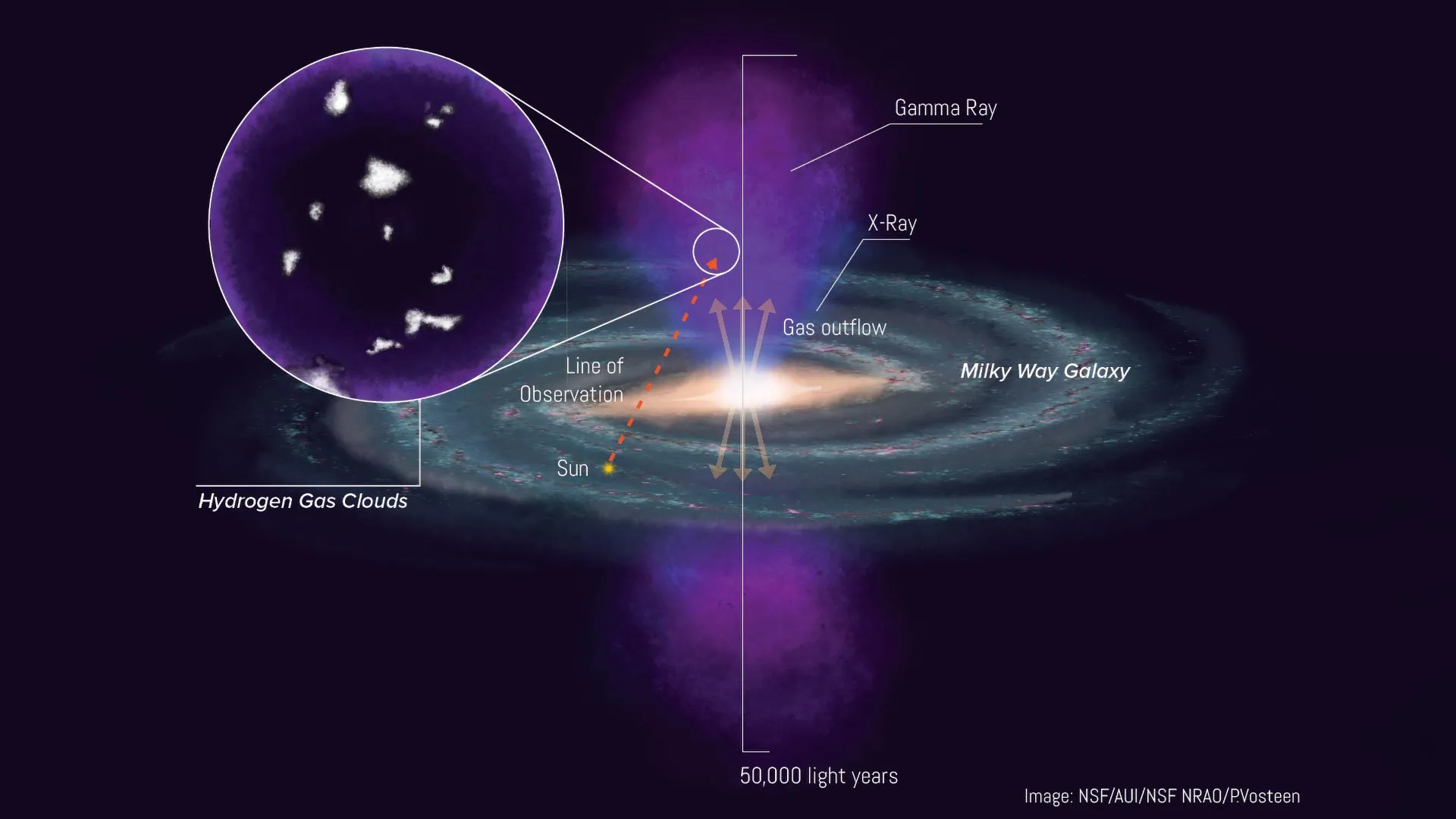
Researchers have found clouds of cold gas embedded deep within larger, superheated gas clouds — or Fermi bubbles — at the Milky Way’s center. The finding challenges current models of Fermi bubble formation and reveals that the bubbles are much younger than previously estimated.
“The Fermi bubbles are enormous structures of hot gas that extend above and below the disk of the Milky Way, reaching about 25,000 light years in each direction from the galaxy’s center — spanning a total height of 50,000 light years,” says Rongmon Bordoloi, associate professor of physics at North Carolina State University and corresponding author of the research.
“Fermi bubbles are a relatively recent discovery — they were first identified by telescopes that ‘see’ gamma rays in 2010 — there are different theories about how it happened, but we do know that it was an extremely sudden and violent event, like a volcanic eruption but on a massive scale.”
Bordoloi and the research team used the U.S. National Science Foundation Green Bank Telescope (NSF GBT) to observe the Fermi bubbles and get high resolution data about the composition of the gas within and the speed at which it is moving. These measurements were twice as sensitive as previous radio telescope surveys of the Fermi bubbles and allowed them to observe finer detail within the bubbles.
Most of the gas inside the Fermi bubbles is around 1 million degrees Kelvin. However, the research team also found something surprising: dense clouds of neutral hydrogen gas, each one measuring several thousand solar masses, dotted within the bubbles 12,000 light years above the center of the Milky Way.
“These clouds of neutral hydrogen are cold, relative to the rest of the Fermi bubble,” says Andrew Fox, ESA-AURA Astronomer at the Space Telescope Science Institute and coauthor of the paper.
“They’re around 10,000 degrees Kelvin, so cooler than their surroundings by at least a factor of 100. Finding those clouds within the Fermi bubble is like finding ice cubes in a volcano.”
Their existence is surprising because the hot (over 1 million degrees Kelvin), high-velocity environment of the nuclear outflow should have rapidly destroyed any cooler gas.
“Computer models of cool gas interacting with hot outflowing gas in extreme environments like the Fermi bubbles show that cool clouds should be rapidly destroyed, usually within a few million years, a timescale that aligns with independent estimates of the Fermi bubbles’ age,” Bordoloi says. “It wouldn’t be possible for the clouds to be present at all if the Fermi bubbles were 10 million years old or older.
“What makes this discovery even more remarkable is its synergy with ultraviolet observations from the Hubble Space Telescope (HST),” Bordoloi says. “The clouds lie along a sightline previously observed with HST, which detected highly ionized multiphase gas, ranging in temperatures from a million to 100,000 Kelvin — which is what you’d expect to see if a cold gas is getting evaporated.”
The team was also able to calculate the speed at which the gases are moving, which further confirmed the age.
“These gases are moving around a million miles per hour, which also marks the Fermi bubbles as a recent development,” Bordoloi says. “These clouds weren’t here when dinosaurs roamed Earth. In cosmic time scales, a million years is the blink of an eye.”
“We believe that these cold clouds were swept up from the Milky Way’s center and carried aloft by the very hot wind that formed the Fermi bubbles,” says Jay Lockman, an astronomer at the Green Bank Observatory and coauthor of the paper. “Just as you can’t see the motion of the wind on Earth unless there are clouds to track it, we can’t see the hot wind from the Milky Way but can detect radio emission from the cold clouds it carries along.”
This discovery challenges current understanding of how cold clouds can survive the extreme energetic environment of the Galactic Center, placing strong empirical constraints on how outflows interact with their surroundings. The findings provide a crucial benchmark for simulations of galactic feedback and evolution, reshaping our view of how energy and matter cycle through galaxies.
The work appears in Astrophysical Journal Letters and is supported by the National Science Foundation under grant number AST-2206853.
The weather alert service warns the public when high or low temperatures could damage their health.
The star illegally advertised prescription-only weight loss drugs, the advertising watchdog found.

The vast majority of UK voters back a wealth tax on the super-rich, a new poll has revealed.
According to the YouGov survey, 75% of Brits want to see a 2% charge on those worth more than £10 million.
Pressure of growing on chancellor Rachel Reeves to introduce a wealth tax in the Budget as she tries to plug another multi-billion pound hole in the nation’s finances.
Advertisement
Former Labour leader Neil Kinnock threw his weight behind the calls at the weekend.
He told Sky News: “This is a country which is very substantially fed up with the fact that whatever happens in the world, whatever happens in the UK, the same interests come out on top, unscathed all the time, while everybody else is paying more for gutted services.”
The YouGov poll found that 49% of people “strongly support” a wealth tax, with a further 26% saying they “somewhat support” it.
Only 13% say they oppose it, with 12% saying they don’t know.
According to separate research by the More in Common think-tank, a wealth tax would be the most popular tax policy the government could introduce.
Advertisement
But critics say the policy has never worked in other countries where it has been tried, mainly because the super-rich are highly mobile and simply move elsewhere in order to avoid it.
Reeves has previously ruled out a wealth tax, but No.10 failed to stamp out the speculation on Monday.
A spokesman for the prime minister said: “We have repeatedly said that those with the broadest shoulders should carry the greatest burden and the choices we’ve made reflect that.
Advertisement
“The top 1% of taxpayers contribute nearly a third of income tax.
“Revenue from wealth and asset taxes like capital gains tax and inheritance tax go towards funding tens of billions of pounds for the public services.
“The government is committed to ensuring that the wealthiest in our society pay their fair share of tax.”

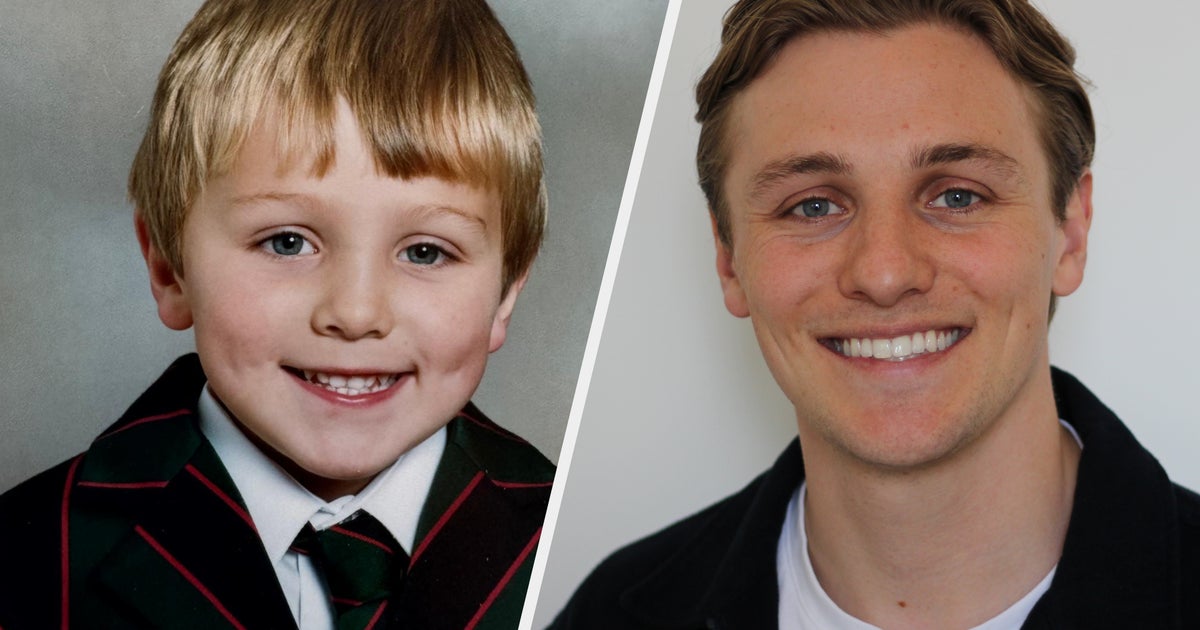
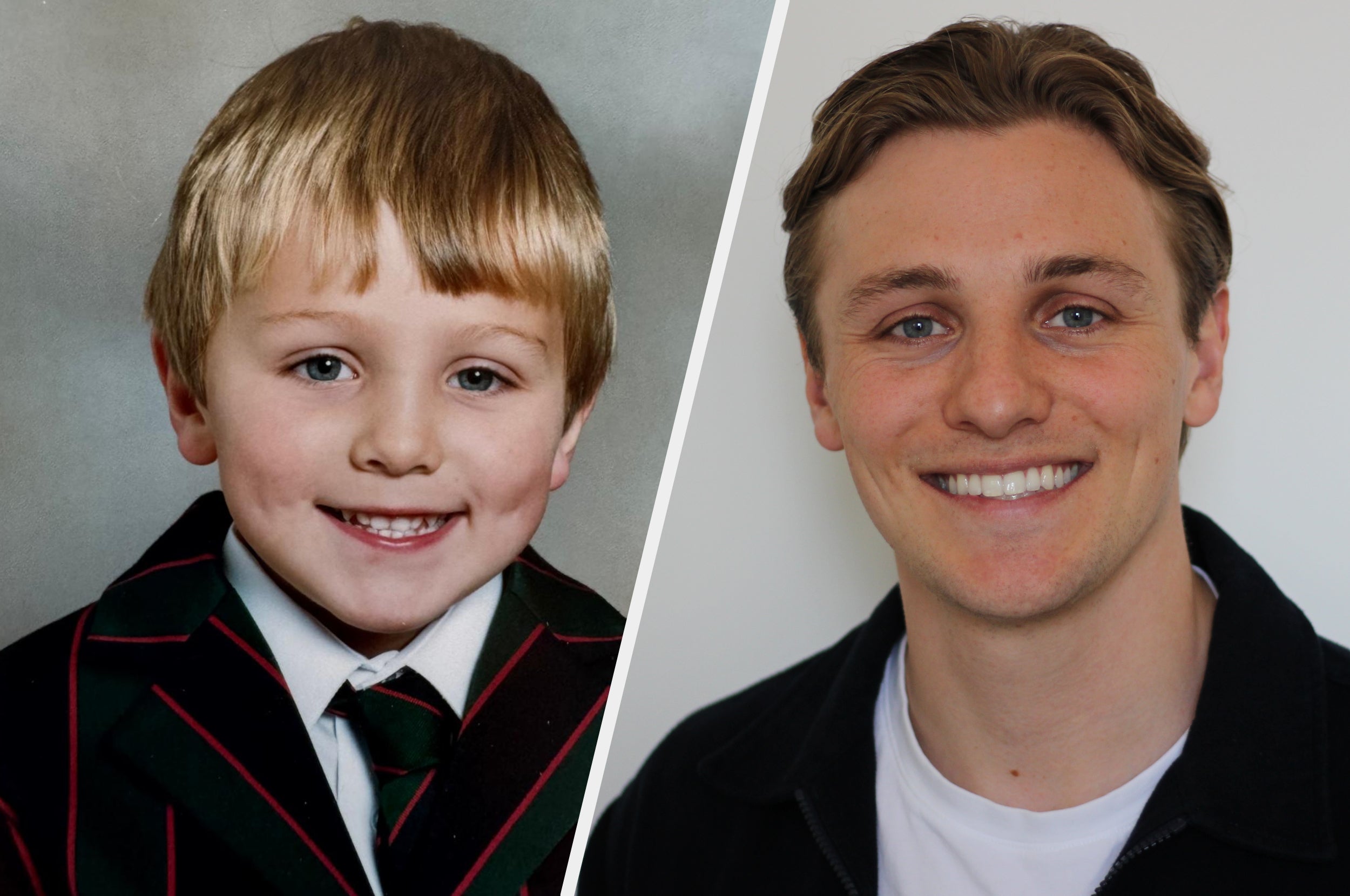
A young entrepreneur who “hated” school because of an undiagnosed learning disability has opened up about his experience in a bid to raise awareness among parents and teachers.
“I hated school. I thought I was just thick,” said Jamie Wace, from Devon. “I had siblings who were academic, but for me; reading, spelling, and working memory – I struggled with all of it.”
Advertisement
When Jamie was 13, a teacher noticed something “wasn’t quite right” with his school learning. Shortly after, his parents took him for a private assessment and he was diagnosed with dyslexia, a neurological difference which primarily affects reading and writing skills.
After the diagnosis, Jamie was able to adjust his way of learning at school. “My working memory is terrible, and I used to think that was just because I was stupid,” he recalled.
“Now I know that it’s a proper issue, and as a result, I was an avid notetaker at school after I knew this and I think that changed massively for me. I also just like was a bit less harsh on myself when I didn’t get something the first time.
Advertisement
“I was given extra time in exams, which was really helpful, but the main thing was discovering the things I could do well myself, as it is different for everyone.”
Prior to his diagnosis, Jamie said he had been in the bottom sets in classes at school, with predicted grades of Ds and Cs.
But after his diagnosis, his grades soared, with Jamie joining the top sets in all his classes within a year, and going on to achieve As and A*s in his exams.
Advertisement
“I was super lucky that my parents were able to take me for a private assessment,” Jamie recalled.
“I have no idea how long I could have been waiting to be tested via the local authority, and because I was 13, the waits could have meant some big impacts for my GCSEs.”
Jamie, who is 30, is on a mission to screen one million children across the UK for dyslexia.
He co-founded Talamo, alongside Leo Thornton and Sophie Dick, in 2022. The online screening tool offers schools a way to screen classes quickly and affordably, costing roughly £12 per child.
The tool asks children aged 7-16 years old a number of questions and then offers a report providing a scale of how likely they are to have dyslexia, their strengths, as well as areas where they might need more support – and how teachers and parents can offer that support.
Advertisement
It is 95% accurate, according to the Talamo website – last September, just 10 schools were using it. Fast forward to today and 300 are. Parents can also pay for a online screening test for £69 which culminates in an action plan of next steps for their child at home and school.
It’s worth noting this isn’t a formal dyslexia assessment, nor can it provide a diagnosis. Private dyslexia assessments can typically cost £350 and over depending on the provider. The British Dyslexia Association says the cost of an assessment with a specialist teacher is £690 and an assessment with a psychologist is £882, for example.
But the online screening tool could help parents decide whether they should seek (and pay for) a full diagnosis – especially as waiting times can vary, depending on where you’re based and whether you opt for face-to-face or a remote assessment. Even the NHS’s website acknowledges diagnosis to be a “time consuming and frustrating process”.
Advertisement
“I don’t want other children to feel this way,” said Jamie, discussing how growing up he struggled with “mental fatigue and self-doubt” because of his undiagnosed learning difficulty.
“Understanding how my brain worked gave me the confidence to study in a way that suited me, and that changed everything. I knew I wasn’t stupid, I just learn things differently,” he added. “It set me on a path to earning two degrees and even learning Mandarin.”
Research has found as many as 80% of dyslexics leave school undiagnosed. As Kate Griggs, founder of Made By Dyslexia, previously wrote in an op-ed on HuffPost UK: “It means many children and their parents are left to muddle through, not knowing why their children are struggling and without their amazing potential being recognised.”
Advertisement
In young children, it can manifest as slow speech development, muddling words up, showing no interest in letters or words, and difficulty learning to sing or recite the alphabet, according to the British Dyslexia Association.
In primary school, it can look like slow spoken or written language, difficulty concentrating and forgetting words. They might spell a word several different ways in a piece of writing, or use unusual sequencing of letters or words. And at secondary school level, pupils with dyslexia might have difficulty with punctuation and grammar, confuse upper and lower case letters, and have difficulty note-taking in class.
“There isn’t one simple checklist to notice the signs, and it can be subtle or less obvious in younger children, but that doesn’t mean it isn’t there,” said Jamie.
Advertisement
“Dyslexia doesn’t mean you’re less intelligent, it just means your brain works differently. But too many kids are told they’re lazy or slow, when really they just need the right support.”
Do you need to spend more to get the best for your chapped lips?
The group hopes to help women with newborn care, maternal health, and mental wellbeing.
The doctors’ union says it will seek fresh talks with ministers before setting strike days.
Until now, there had only been drugs for older children which carried an overdose risk for the young.
