Lack of medical oxygen affects millions

Six out of every ten people globally lack access to safe medical oxygen, resulting in hundreds of thousands of preventable deaths each year and reducing quality of life for millions more, an international report co-authored by the University of Auckland has found.

Associate Professor Stephen Howie from the University’s Faculty of Medical and Health Sciences (FMHS) was an adviser to the Lancet Global Health Commission on Medical Oxygen Security and co-author of its report Reducing global inequities in medical oxygen access released 18 February.

A key finding shows global access to medical oxygen is highly inequitable. Five billion people, mostly from low and middle-income countries don’t have access to safe, quality, affordable medical oxygen.

Associate Professor Howie, child health researcher and a specialist paediatrician says he hopes further lives will be saved because of this work, and that children and adults will not only survive but thrive.

The Auckland University team are leading the field to improve access to medical oxygen. Howie recently gave a plenary address at the World Lung Health Conference in Bali, spelling out the challenges and opportunities to tackle the global issue.

“I have been working in the area of oxygen treatment for oxygen-starved (hypoxic) illnesses for two decades, particularly in Africa and the Pacific. My first priority was children (naturally, as a paediatrician) but we learnt soon enough that solving the problem has to involve catering for all ages.

“It is such an obvious need. I saw it at the hospitals I worked at in Africa where needless death from diseases like pneumonia happened because oxygen supplies were short, and this hit families and staff very hard. It was at that time that we made it our goal that ‘no child should die for lack of oxygen’ and this applies to adults too.”

Fiji was particularly hard hit when the first waves of the COVID-19 pandemic arrived, at one point it had the highest rate of COVID-19 in the world. A close partnership between the Fiji Ministry of Health, the University of Auckland, Cure Kids and Fiji National University, funded by New Zealand MFAT and other donors, played an important role in supporting the pandemic response says Howie.

Share Button

Who gets the lion’s share? Ecologists highlight disparities in global biodiversity conservation funding

The extensive loss of biodiversity represents one of the major crises of our time, threatening not only entire ecosystems but also our current and future livelihoods. As scientists realise the magnitude and scale of ongoing extinctions, it is vital to ascertain the resources available for conservation and whether funds are being effectively distributed to protect species most in need.

A team of researchers from the School of Biological Sciences, The University of Hong Kong (HKU), addressed these questions in a recent paper in the Proceedings of the National Academy of Sciences (PNAS), USA, by compiling information on nearly 15,000 funded projects focused on species conservation. Professor Benoit GUÉNARD, the lead author of the study, noted that, “Our first conclusion is that funding for species conservation research remains extremely limited with only US$ 1.93 billion allocated over 25 years in the projects we assessed.”

The international conservation funding from 37 governments and NGOs represented a mere 0.3% and 0.01% of the annual budget of the NASA or US military, respectively. This stark comparison underscores the urgent need to dramatically increase such funding to slow global biodiversity loss.

The authors also examined the allocation of this funding to specific species or groups of organisms based on their conservation needs as assessed by the International Union for Conservation of Nature (IUCN) Red List, often called the ‘barometer of life’. Professor Guénard explains, “Based on previous literature-based studies, we expected biases towards vertebrates and, whilst this was true, we found the situation much worse than previously estimated. Even within vertebrates, many of the most threatened groups, like amphibians, were largely underfunded with declining funding trends over time.”

Another striking example can be found in reptiles, particularly lizards and snakes, where over a thousand species have been identified as threatened, yet 87% of the funding towards reptile conservation is directed towards the seven species of marine turtles. Professor Guénard states, “This highlights an important mismatch between scientific assessment of conservation and allocation of funding by conservation stakeholders, which appears to rely on the ‘charisma’ of species. This leads to nearly a third of the funding directed to non-threatened species while almost 94% of threatened species have not received any support.”

Some groups, like plants or insects, received a mere 6% each of the funding despite their vast diversity and the number of threatened species they include, while other major groups, such as fungi or algae, received virtually no funding.

Professor Alice HUGHES, a co-author of the study, echoed, “Our traditional view of what is threatened often does not align with species genuinely at threat, leaving many smaller, or ‘less charismatic’ species neglected. We urgently need to reframe this perspective and better allocate funding across taxa if we want any hope of redressing widespread population declines and the continued loss of biodiversity.”

Based on these findings, the researchers are calling for a new approach to conservation funding. Whilst species conservation is in dire need of additional funding, a more rigorous approach to selecting projects and species to receive those limited funds is urgently needed. Professor Guénard emphasises, “Conservation agencies and NGOs need to modify their philosophy towards conservation to protect all species, and not just a subset based on subjective criteria of charisma or beauty.”

In the future, the research team hopes their database can be expanded so information on funding allocation is more transparent and easily accessible. This would help evaluate existing gaps, plan effective future conservation efforts at a global scale, and reduce redundancy in funding for species that already receive the lion’s share of support.

Share Button

‘He was born navy blue’: Real-life stories behind Toxic Town Netflix series

The drama tells the story of how families fought for justice over their children’s birth defects.

Share Button

Over 50% of adults predicted to be obese by 2050

Levels look set to accelerate rapidly, particularly in lower-income countries.

Share Button

Over 50% of adults worldwide predicted to be obese or overweight by 2050

Levels look set to accelerate rapidly, particularly in lower-income countries.

Share Button

I’m A Travel Expert – Hearing This Code On A Plane Can Mean A Tragedy Has Occurred

Did you know that airline staff aren’t just being friendly when they greet you onto the plane?

Yup ― according to flight attendant Kat Kamalani, “when you’re walking on the aeroplane and you see our happy smiley face[s], we’re actually looking you up and down, and we are trying to find our ABPs”.

ABPs stands for “able-bodied passengers” – or people who can help in an emergency.

And now, travel experts from Wander have told us: “While most flights go smoothly, flight crews use a secret language to discreetly communicate situations ranging from lighthearted quirks to serious, even life-or-death emergencies – often without passengers ever noticing.”

Code 300 or ‘Angel’ spells tragedy, according to experts

“If you hear ‘Code 300’ or ‘Angel’ on a flight, it could mean someone has died onboard,” the experts at Wander said.

“These discreet codes allow the crew to handle the situation without alarming other passengers or drawing attention to the tragic event,” they claimed.

The International Air Transport Association (IATA) has a set of rules airlines are encouraged to follow when a passenger dies.

Staff are advised to move the deceased to a seat, ideally one with few passengers near it. Some companies place them in a zipped body bag.

They have to notify the destination airport ASAP so the appropriate services are present when they land.

“Take extra care when moving the person and be aware of the difficulty of the situation for companions and onlookers,” the IATA continues.

Other passengers are let off the plane first, while the dead passenger and any family accompanying them stay on board “until the proper local authority has arrived to take care of the body”.

Are there any other codes?

According to Wander, yes.

They say that a “code yellow” refers to “a minor medical situation” such as a passenger feeling lightheaded or nauseous.

“While not an emergency, this term lets crew members discreetly monitor the situation and prepare any necessary assistance,” they explained.

And airline staff referring to a person as a “mermaid” is a
“playful yet passive-aggressive nickname for a passenger who deliberately sprawls out across empty seats to deter others from sitting in their row,” they added.

The more you know…

Share Button

I’m A GP ― Never Ignore These 3 ‘Normal’ Seeming Symptoms

Tiredness is common complaint in the UK, which can make it hard to work out when to actually see a GP about your sleep issues.

Other potential symptoms ― severe period pain, bruises, and even fingernail changes ― can seem like “normal” signs, but are sometimes worth a trip to the doctor too.

In a helpful TikTok, Dr Ahmed, a GP, shared some information which might make the “normal or not?” call easier to make.

He said: “Here are three symptoms you may think are normal, but they are not, and you need to see a doctor if you have them.”

1) Back pain that lasts longer than six weeks

Though the issue is “very, very common” and “can have many causes, and most of them are completely benign,“Dr Ahmed says you really ought to see your GP if it lasts longer than six weeks.

It doesn’t matter how harmless you think the issue is ― “go to your doctor to make sure there’s no serious underlying cause” after the time ends, Dr Ahmed advised.

2) A sudden increase in eye floaters

Of course, eye floaters are common and usually aren’t cause for alarm. They “look a bit like squiggly worms ― some may be see-through” while others might be opaque, Dr Ahmed shared.

“It’s generally much worse when you look at bright light.”

While they’re usually completely harmless, Dr Ahmed says that if you experience a “sudden increase in the number of floaters” or lots of dark spots in your vision, you should get it checked out.

This “could be signs of a serious problem with the back of your eye, which could permanently affect your vision if it’s not treated quickly,” the NHS warns.

3) Chronic fatigue

“A lot of people may have” this but “ignore” it, Dr Ahmed says.

“Now I don’t just mean feeling a little bit tired all the time or if you’ve got a very good reason for feeling tired,” he explained.

He’s talking instead about “extreme fatigue, where you can’t function when there’s no obvious reason or cause, especially when this has started relatively recently.”

Though there could be “hundreds” of reasons for the change, a lot of them are worth speaking to your doctor about, he continued.

Share Button

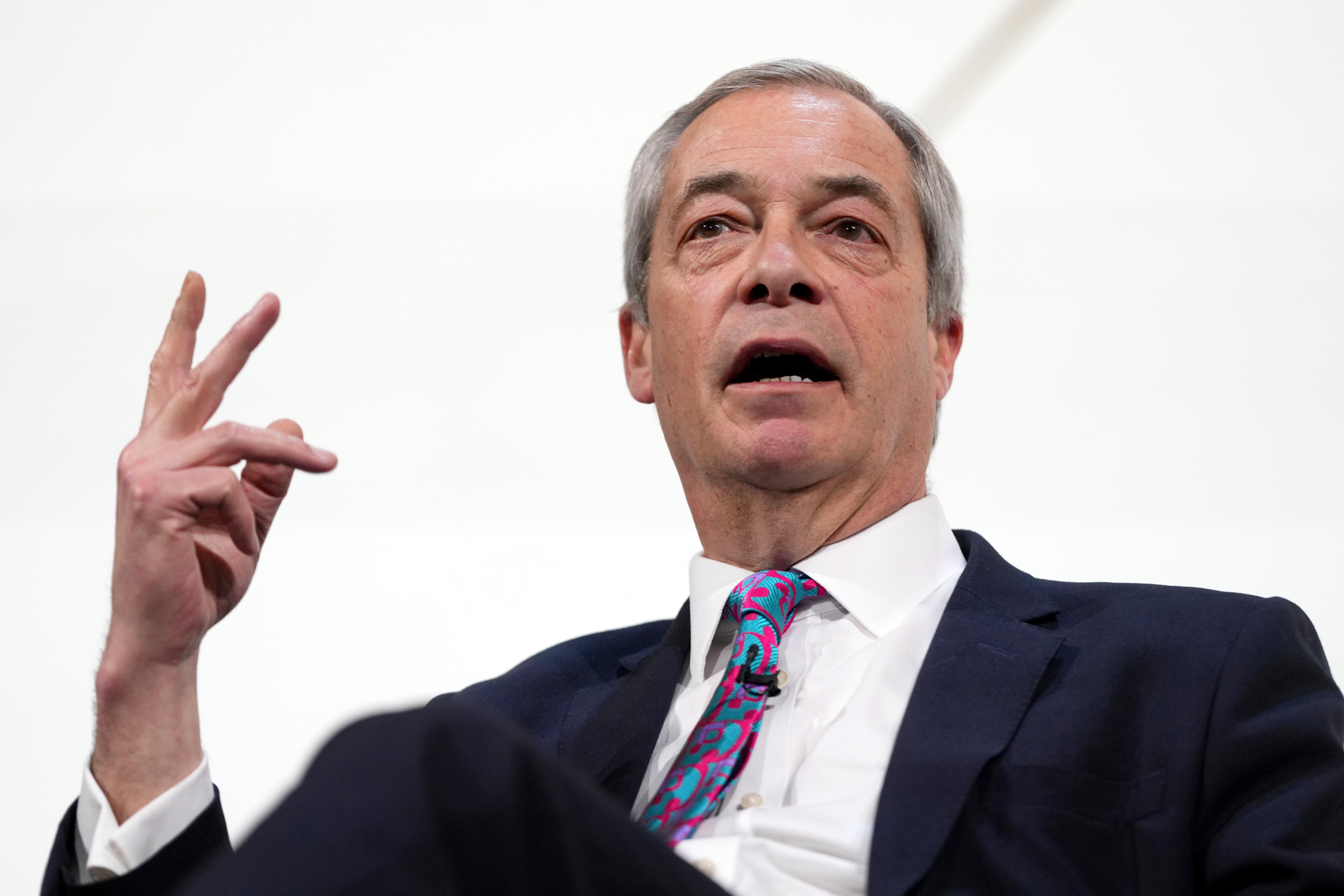
Nigel Farage Savaged Over ‘Morally Wrong’ Criticism Of Volodymyr Zelenskyy

Nigel Farage is facing a furious political backlash after he criticised Volodymyr Zelenskyy over his bust-up with Donald Trump in the Oval Office.

The Reform UK leader accused the Ukrainian president of showing “no respect” to Trump and said he should have dispensed with his usual military-style clothes and worn a suit.

Trump and his vice-president JD Vance ambushed Zelenskyy, accusing him of failing to show enough gratitude for the military support America has given Ukraine since the start of its war with Russia three years ago.

Speaking on LBC, Farage said: “I think President Zelenskyy was very unwise to tell the Americans what would happen to them if they didn’t back him. Yeah sure, Trump and Vance bit back, but I think in diplomatic terms, Zelenskyy played it very badly.”

He added: “I wouldn’t expect a guest to be rude to me in my own house, absolutely not. I would expect a guest to treat me with respect.”

Shadow foreign secretary Priti Patel said Farage was “completely wrong” to attack Zelenskyy.

Posting on X, she said: “President Zelenskyy is a hero, who has stood up to Putin’s aggression and led his country’s defence against their barbaric and illegal invasion over the last 3 years – and it is troubling to not hear the leader of Reform say that.

For Nigel Farage to sit there pointing the finger at Zelenskyy is both morally wrong and diplomatically counterproductive. At this uncertain and dangerous time, one would hope that MPs of all stripes would be putting our national interest first, rather than playing politics.

“But sadly, it is not surprising. Like Jeremy Corbyn, the leader of Reform UK seems to have history equivocating over Russia’s illegal war in Ukraine.”

<div class="js-react-hydrator" data-component-name="Twitter" data-component-id="9033" data-component-props="{"itemType":"rich","index":13,"contentIndexByType":1,"contentListType":"embed","code":"

Nigel Farage is completely wrong. President Zelenskyy is a hero, who has stood up to Putin’s aggression, and led his country’s defence against their barbaric and illegal invasion over the last 3 years – and it is troubling to not hear the Leader of Reform say that.

For Nigel…

— Priti Patel MP (@pritipatel) March 3, 2025

","type":"rich","meta":{"author":"Priti Patel MP","author_url":"https://twitter.com/pritipatel","cache_age":86400,"description":"Nigel Farage is completely wrong. President Zelenskyy is a hero, who has stood up to Putin’s aggression, and led his country’s defence against their barbaric and illegal invasion over the last 3 years – and it is troubling to not hear the Leader of Reform say that. For Nigel…— Priti Patel MP (@pritipatel) March 3, 2025\n\n\n","options":{"_maxwidth":{"label":"Adjust width","placeholder":"220-550, in px","value":""},"_theme":{"value":"","values":{"dark":"Use dark theme"}}},"provider_name":"Twitter","title":"Priti Patel MP on Twitter / X","type":"rich","url":"https://twitter.com/pritipatel/status/1896539706290294980","version":"1.0"},"flags":[],"enhancements":{},"fullBleed":false,"options":{"theme":"news","device":"desktop","editionInfo":{"id":"uk","name":"U.K.","link":"https://www.huffingtonpost.co.uk","locale":"en_GB"},"originalEdition":"uk","isMapi":false,"isAmp":false,"isAdsFree":false,"isVideoEntry":false,"isEntry":true,"isMt":false,"entryId":"67c5a8c4e4b04cc8a05f90e4","entryPermalink":"https://www.huffingtonpost.co.uk/entry/nigel-farage-savaged-over-morally-wrong-criticism-of-volodymyr-zelenskyy_uk_67c5a8c4e4b04cc8a05f90e4","entryTagsList":"nigel-farage,priti-patel,volodymyr-zelenskyy,@ai_seo_headline","sectionSlug":"politics","deptSlug":null,"sectionRedirectUrl":null,"subcategories":"","isWide":false,"headerOverride":null,"noVideoAds":false,"disableFloat":false,"isNative":false,"commercialVideo":{"provider":"custom","site_and_category":"uk.politics","package":null},"isHighline":false,"vidibleConfigValues":{"cid":"60afc140cf94592c45d7390c","disabledWithMapiEntries":false,"overrides":{"all":"60b8e525cdd90620331baaf4"},"whitelisted":["56c5f12ee4b03a39c93c9439","56c6056ee4b01f2b7e1b5f35","59bfee7f9e451049f87f550b","5acccbaac269d609ef44c529","570278d2e4b070ff77b98217","57027b4be4b070ff77b98d5c","56fe95c4e4b0041c4242016b","570279cfe4b06d08e3629954","5ba9e8821c2e65639162ccf1","5bcd9904821576674bc55ced","5d076ca127f25f504327c72e","5b35266b158f855373e28256","5ebac2e8abddfb04f877dff2","60b8e525cdd90620331baaf4","60b64354b171b7444beaff4d","60d0d8e09340d7032ad0fb1a","60d0d90f9340d7032ad0fbeb","60d0d9949340d7032ad0fed3","60d0d9f99340d7032ad10113","60d0daa69340d7032ad104cf","60d0de02b627221e9d819408"],"playlists":{"default":"57bc306888d2ff1a7f6b5579","news":"56c6dbcee4b04edee8beb49c","politics":"56c6dbcee4b04edee8beb49c","entertainment":"56c6e7f2e4b0983aa64c60fc","tech":"56c6f70ae4b043c5bdcaebf9","parents":"56cc65c2e4b0239099455b42","lifestyle":"56cc66a9e4b01f81ef94e98c"},"playerUpdates":{"56c6056ee4b01f2b7e1b5f35":"60b8e525cdd90620331baaf4","56c5f12ee4b03a39c93c9439":"60d0d8e09340d7032ad0fb1a","59bfee7f9e451049f87f550b":"60d0d90f9340d7032ad0fbeb","5acccbaac269d609ef44c529":"60d0d9949340d7032ad0fed3","5bcd9904821576674bc55ced":"60d0d9f99340d7032ad10113","5d076ca127f25f504327c72e":"60d0daa69340d7032ad104cf","5ebac2e8abddfb04f877dff2":"60d0de02b627221e9d819408"}},"connatixConfigValues":{"defaultPlayer":"8b034f64-513c-4987-b16f-42d6008f7feb","clickToPlayPlayer":"5a777b9b-81fe-41a6-8302-59e9953ee8a2","videoPagePlayer":"19654b65-409c-4b38-90db-80cbdea02cf4"},"topConnatixThumnbailSrc":"data:image/png;base64,iVBORw0KGgoAAAANSUhEUgAAAAEAAAABCAQAAAC1HAwCAAAAC0lEQVR42mNkYAAAAAYAAjCB0C8AAAAASUVORK5CYII=","customAmpComponents":[],"ampAssetsUrl":"https://amp.assets.huffpost.com","videoTraits":null,"positionInUnitCounts":{"buzz_head":{"count":0},"buzz_body":{"count":0},"buzz_bottom":{"count":0}},"positionInSubUnitCounts":{"article_body":{"count":8},"blog_summary":{"count":0},"before_you_go_content":{"count":0}},"connatixCountsHelper":{"count":0},"buzzfeedTracking":{"context_page_id":"67c5a8c4e4b04cc8a05f90e4","context_page_type":"buzz","destination":"huffpost","mode":"desktop","page_edition":"en-uk"},"tags":[{"name":"nigel farage","slug":"nigel-farage","links":{"relativeLink":"news/nigel-farage","permalink":"https://www.huffingtonpost.co.uk/news/nigel-farage","mobileWebLink":"https://www.huffingtonpost.co.uk/news/nigel-farage"},"url":"https://www.huffingtonpost.co.uk/news/nigel-farage/"},{"name":"priti patel","slug":"priti-patel","links":{"relativeLink":"news/priti-patel","permalink":"https://www.huffingtonpost.co.uk/news/priti-patel","mobileWebLink":"https://www.huffingtonpost.co.uk/news/priti-patel"},"url":"https://www.huffingtonpost.co.uk/news/priti-patel/"},{"name":"Volodymyr Zelenskyy","slug":"volodymyr-zelenskyy","links":{"relativeLink":"news/volodymyr-zelenskyy","permalink":"https://www.huffingtonpost.co.uk/news/volodymyr-zelenskyy","mobileWebLink":"https://www.huffingtonpost.co.uk/news/volodymyr-zelenskyy"},"url":"https://www.huffingtonpost.co.uk/news/volodymyr-zelenskyy/"}],"isLiveblogLive":null,"isLiveblog":false,"cetUnit":"buzz_body","bodyAds":["

\r\n\r\n HPGam.cmd.push(function(){\r\n\t\treturn HPGam.render(\"inline-1\", \"entry_paragraph_1\", false, false);\r\n });\r\n\r\n","

\r\n\r\n HPGam.cmd.push(function(){\r\n\t\treturn HPGam.render(\"inline\", \"entry_paragraph_2\", false, false);\r\n });\r\n\r\n","

\r\n\r\n HPGam.cmd.push(function(){\r\n\t\treturn HPGam.render(\"inline-2\", \"entry_paragraph_3\", false, false);\r\n });\r\n\r\n","

\r\n\r\n HPGam.cmd.push(function(){\r\n\t\treturn HPGam.render(\"inline-infinite\", \"repeating_dynamic_display\", false, false);\r\n });\r\n\r\n"],"adCount":0},"isCollectionEmbed":false}”>


Nigel Farage is completely wrong. President Zelenskyy is a hero, who has stood up to Putin’s aggression, and led his country’s defence against their barbaric and illegal invasion over the last 3 years – and it is troubling to not hear the Leader of Reform say that.

For Nigel…

— Priti Patel MP (@pritipatel) March 3, 2025

Lib Dem leader Ed Davey said: “Nigel Farage is once again showing his true colours as Trump’s own spokesman here in Britain.

“Zelenskyy showed courage and integrity in that room – in stark contrast to Farage’s cowardly approach of licking Trump’s boots.

“Farage is more focused on promoting Trump and Musk’s interests in the UK than British interests in the States. He was once again parroting White House talking points this morning, to the dismay of British people here at home.

“It’s clearer than ever that Nigel Farage is simply out for himself and his Mar-a-Lago cronies.”

Share Button