Advisers are asking the government to consider introducing MenB jabs following concerns over an outbreak in Kent earlier this year, in which two people died.


Advisers are asking the government to consider introducing MenB jabs following concerns over an outbreak in Kent earlier this year, in which two people died.
Woman’s Hour discusses fibroids and the need for greater knowledge about the pain they can cause women.

Claudia Winkleman has confirmed that she won’t be returning to her BBC chat show.
The Claudia Winkleman ran for eight weeks earlier this year, and was met with mixed reviews from both critics and viewers.
On Thursday, the Bafta winner announced that she had made the decision not to carry on with the format – at least for the time being.
Advertisement
“Sometimes you have to try something to see how it fits, and I realised I was just too nervous to enjoy it,” she said in a statement.
“Maybe one day I will give it another try, but for now I already have the best jobs in the world and absolutely love the shows I’m doing.”
Claudia added: “I’m incredibly grateful to the BBC for giving me the opportunity, to the guests who agreed to come and chat to me, and the production team who were simply excellent.”
Advertisement
The Claudia Winkleman Show was executive produced by Graham Norton, who previously jumped to his fellow presenter’s defence amid criticism aimed at her programme.
He told the Daily Mail: “What Claudia did was The Claudia Winkleman Show, and that’s what she’s supposed to be doing.
Advertisement
“She shouldn’t be trying to be me. She should be trying to be Claudia, and she nailed that.”
The BBC’s director of entertainment enthused: “Claudia’s warmth and quick wit made The Claudia Winkleman Show an absolute joy.
“Whilst we loved the show, we fully respect her decision and would like to thank Claudia and the brilliant team at So Television for bringing the series to screen on the BBC.”
Claudia can currently be seen in action in the latest season of the Channel 4 competition series The Piano, and will return to TV’s most famous castle for the second iteration of The Celebrity Traitors in the autumn.
Advertisement
This time around, the all-star cast will include comedians Miranda Hart, James Acaster and Joe Lycett, actor Bella Ramsey, former Little Mix star Leigh-Anne Pinnock and Oscar nominee Richard E Grant.

He tells an inquiry he believed a trust was ‘panicking’ and was discouraged from raising rota issues.
If you ask The New York Times, bare nails became a “status symbol” this year. Influencers like Alix Earle have rocked the style, as have the Olsen Twins and Zoë Kravitz.
But anyone who’s spent hours perfecting a “no-makeup” makeup routine will know that that chic, effortless look often relies on a series of artful touches.
Advertisement
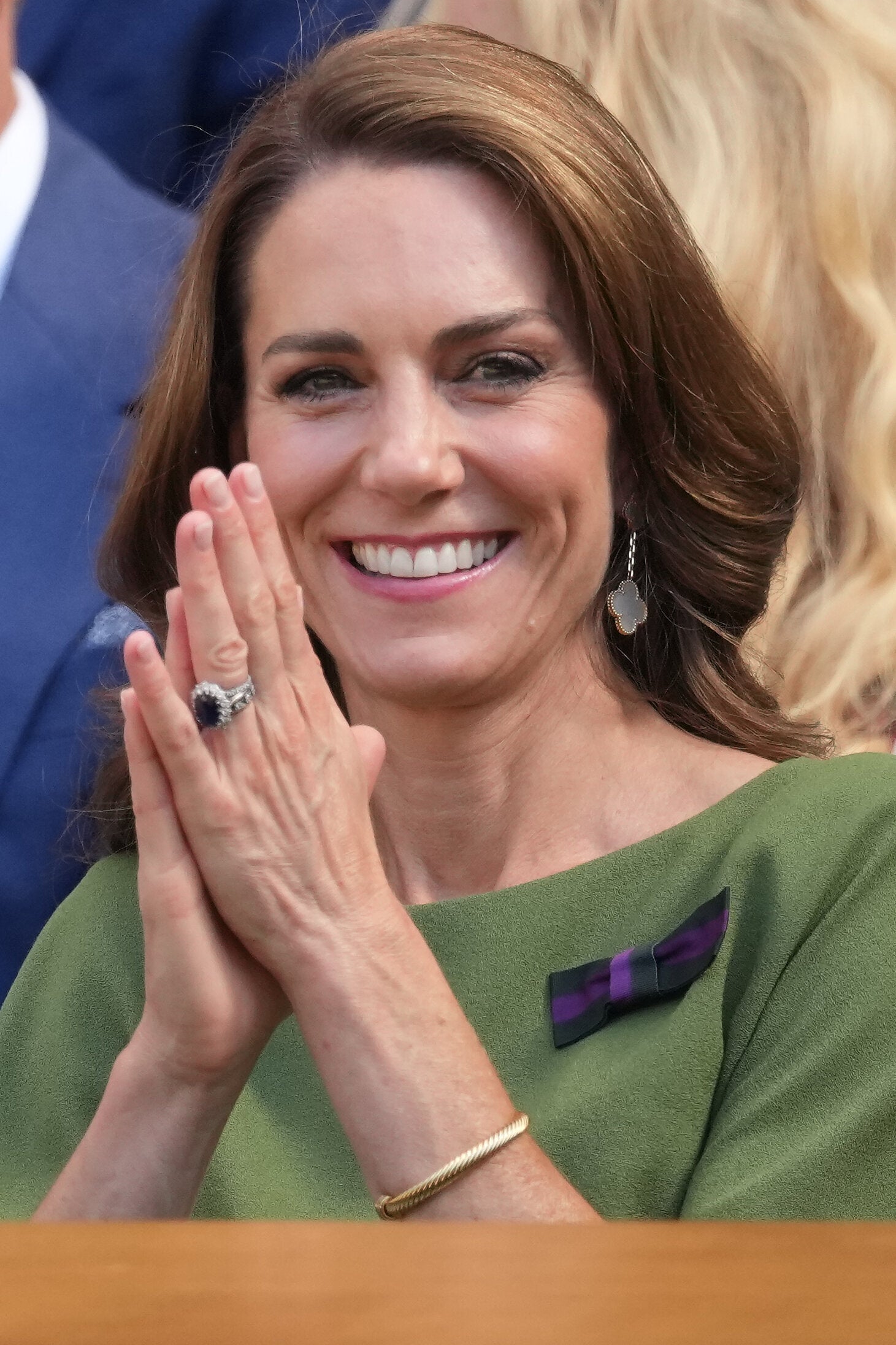
It’s pehaps unsurprising then that the Japanese manicure is now trending. This subtle nail style offers a ‘barely there’ look – similar to the manicure Kate Middleton sported at the Wimbledon final this year.
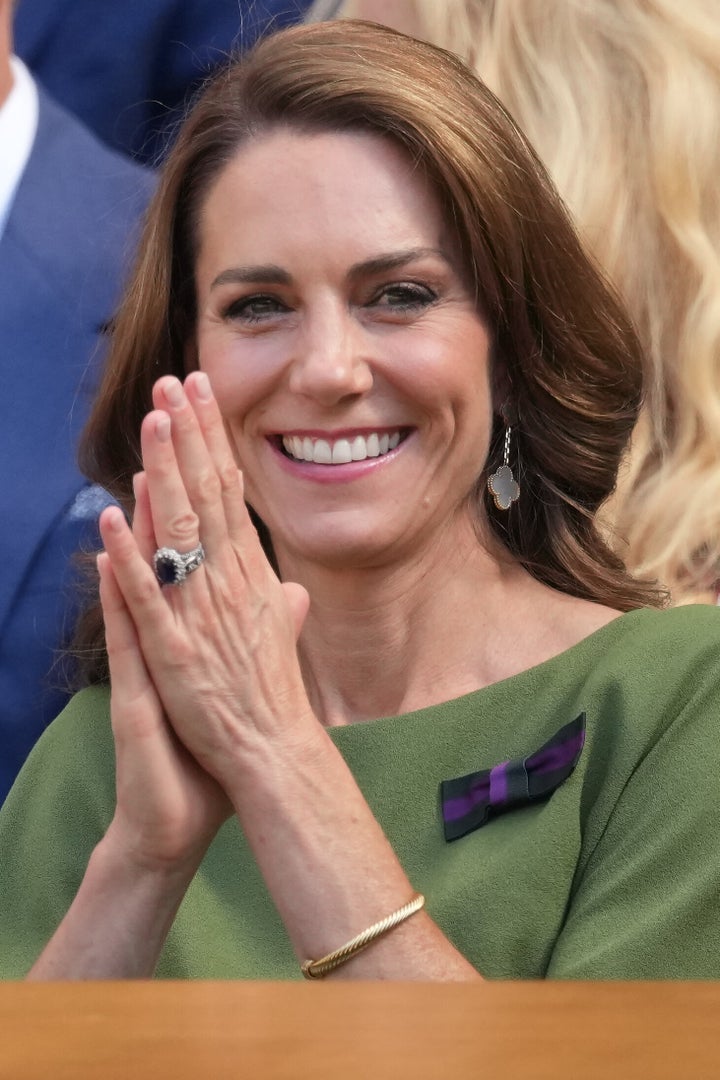
via Associated Press
Though it’s currently trending, the technique is actually ancient (likely hundreds of years old). It involves no polish, no varnish, and no gels.
Advertisement
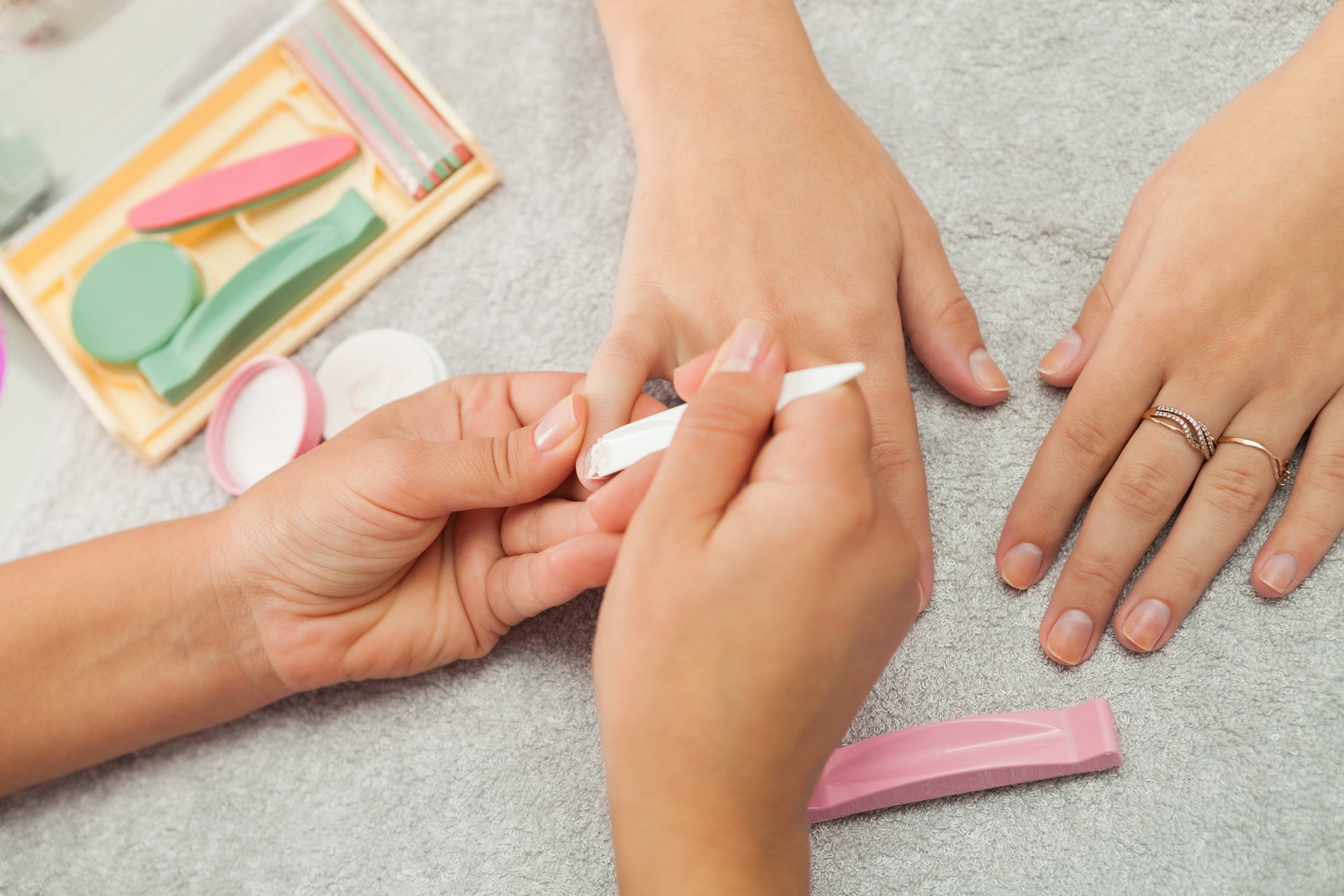
Popularised across the world by Japanese company P.Shine, the method instead relies on a two-step buffing process with a vitamin-rich paste and powder.
Firstly, the paste, which often contains algae, is carefully massaged into the nail using buffers (usually made of leather). This step is meant to nourish your nails.
Advertisement
Then, the powder (usually containing beeswax) is buffed on top. This step will make your nails seem glossy and shiny, almost as if you’re wearing clear polish.
Results can reportedly last for up to a month.
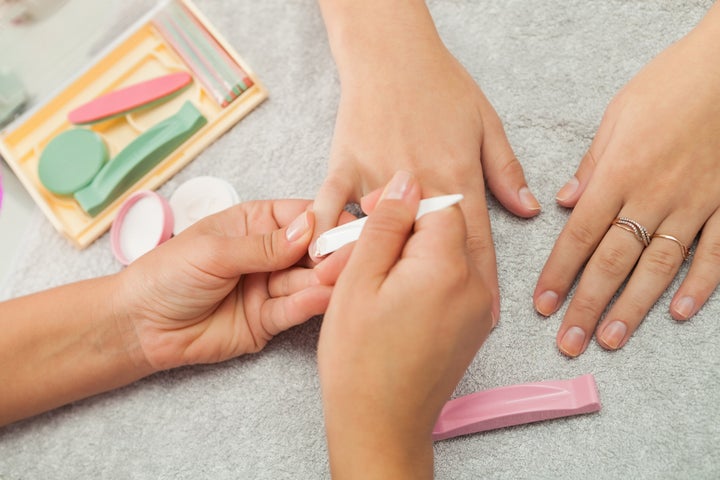
Alex_Doubovitsky via Getty Images
Well, it won’t create the damage that gel nails can sometimes cause if they’re left on too long or removed incorrectly. Your nails will be able to “breathe”, and you won’t have to use any polishes, varnishes, and your skin won’t be exposed to UV lamp rays either.
Advertisement
Speaking to Marie Claire, celebrity manicurist Sophia Stylianou said Japanese manicures are perfect for “anyone needing a nail reset, especially if you have weak, peeling, or brittle nails, or are just taking a break from gels or acrylics”.
The expert said the natural ingredients “help restore strength and shine without using polish or harsh chemicals”.
Still, some experts recommend waiting for a while to have a Japanese manicure if your nails have been left worse for wear by gels or false nails. That’s because the process involves buffing the nail plate, which may be weaker while damaged.
Advertisement
And Darya Kholodova, a nail technician and co-founder of Darlings Beauty Lab, told British Vogue that the technique’s greatest appeal is aesthetic.
“The main benefits are a healthy, natural shine, a clean and polished nail, and a relatively quick treatment time,” she said.

Volodymyr Zelenskyy has admitted he is “afraid of changes” as Keir Starmer prepares to step down as prime minister.
The outgoing PM has been a staunch supporter of Ukraine in its war against Russia throughout his two years in office.
Advertisement
He recalled how he proudly welcomed Zelenskyy to the UK in February 2025 after the Ukrainian leader was ambushed by the Trump administration and kicked out of the Oval Office.
Starmer has chosen to travel to the beleaguered country and remind Kyiv of the UK’s ongoing backing with just four days left in the job before Andy Burnham is given the keys to No.10.
Zelenskyy told the press during Starmer’s visit that he is “afraid of changes” with the UK PM set to step down and French president Emmanuel Macron expected to leave office next year.
Advertisement
He said: “Of course I’m afraid of changes, of course we are afraid because we are in the war each day.
“But again the priority is the relation between nations, not just between just people. I’m sure that these relations will not change, or we have to do our best not to lose such very good relations.”
“I hope we will never lose strong relations with the UK during or after the war.”
Starmer replied: “You won’t.”
Zelenskyy said he hopes to build “new strong relations” with the next prime minister and that he wants to have a meeting with Burnham “as soon as possible”.
Advertisement
Zelensky also awarded Starmer the Order of Freedom honour, which is Ukraine’s highest award for a foreign person.
Starmer shook Zelenskyy’s hand and said the award was “completely unexpected” and “very meaningful”, adding: “it really means a huge amount.”
A Downing Street spokesperson said the PM was “grateful and deeply humbled to receive the Order of Freedom for outstanding merit, the highest honour that can be given in Ukraine to anyone from another country”.
Advertisement
It is the second major honour the outgoing prime minister received this week for his work on the international stage.
He was unexpectedly awarded Légion d’honneur by French president Emmanuel Macron, becoming the first UK PM to ever receive the historic honour.
It was awarded in recognition of Starmer’s work in setting up the Coalition of the Willing, the group of countries chaired by France and the UK meant to help Ukraine.
Advertisement
On social media, Starmer wrote: “I’ve visited Ukraine four times as Prime Minister, and I’ve seen first-hand the devastation caused by Russia’s invasion. The UK’s support for Ukraine will never waver.
“That’s why we’re funding fighter jets for Ukraine, strengthening their ability to defend themselves while supporting thousands of skilled jobs in the UK. So good to see you again my friend, [Zelenskyy].”
Advertisement
Listen to Commons People, the podcast that makes politics easy. Every week, Kevin Schofield and Kate Nicholson unpack the week’s biggest stories to keep you informed. Join us for straightforward analysis of what’s going on at Westminster.

A senior Buddhist monk says Herefordshire has “everything” for a “person to be happy”.
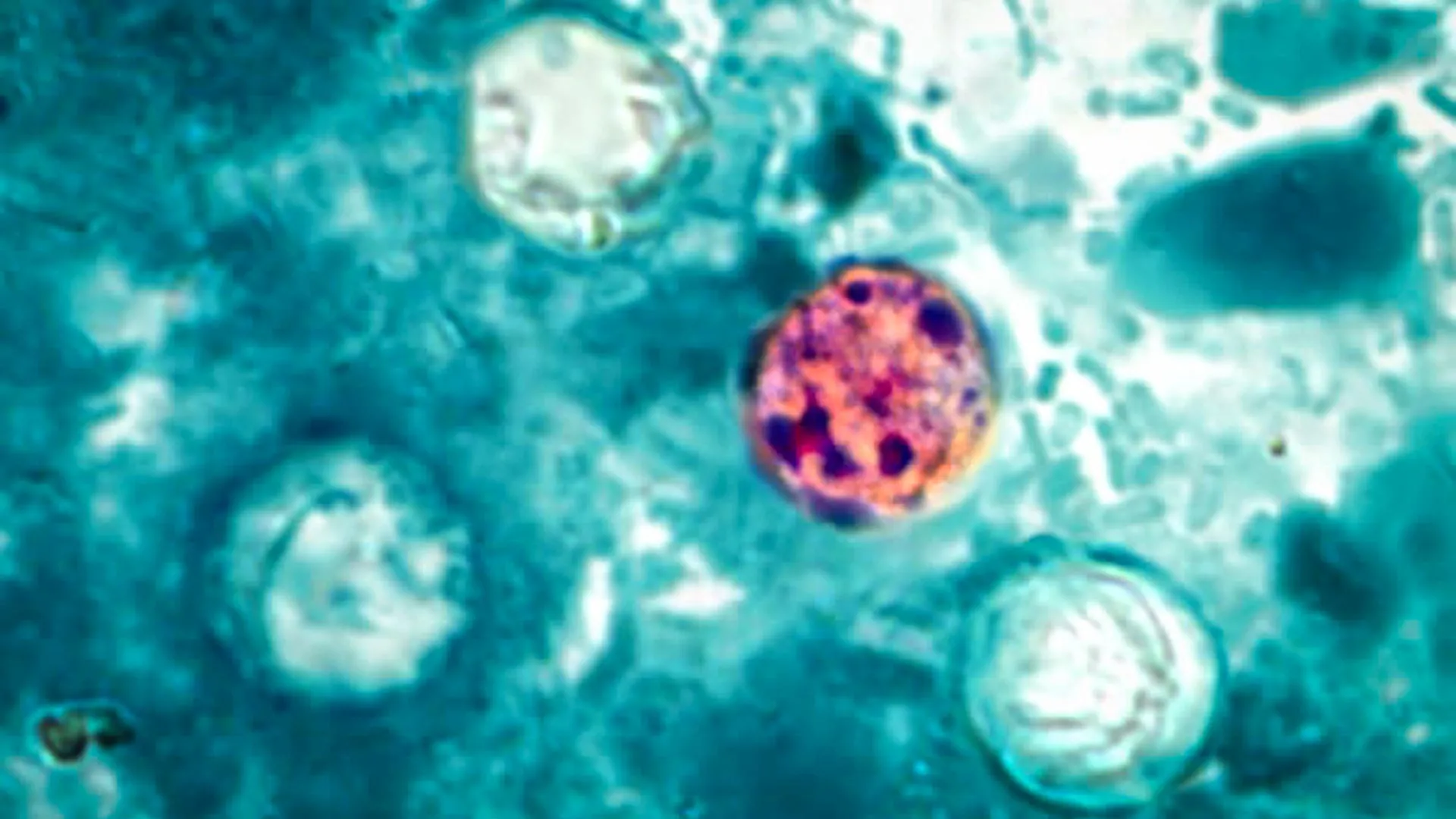
The U.S. Centers for Disease Control and Prevention (CDC) is working with state and federal health agencies to investigate several outbreaks of cyclosporiasis. Efforts to determine and confirm the sources of these outbreaks are still underway.
A large outbreak of cyclosporiasis has been reported in at least four Midwestern states. Public health officials are interviewing people who became sick to learn what foods they ate before their symptoms began.
So far, investigators have not confirmed a specific food as the source. Health agencies are continuing to gather information in an effort to identify what caused the outbreak.
Cases Have Increased Since May
The CDC says it is concerned about the rise in cyclosporiasis cases since the beginning of May. In addition to the large multistate outbreak, federal and state officials are investigating several other clusters of illness across the United States.
Cyclosporiasis is generally not life threatening, but some people can become very sick and may need to be hospitalized. Anyone experiencing possible symptoms should contact a healthcare provider promptly.
CDC and FDA Collecting Outbreak Data
The CDC, public health and regulatory agencies in several states, and the U.S. Food and Drug Administration (FDA) are reviewing multiple types of information as part of the investigation.
As of July 13, more than 400 people infected with Cyclospora had been reported to the CDC in connection with the outbreak. Cases have been identified in Michigan, Ohio, West Virginia, and Kentucky.
The CDC is also aware of additional illnesses that remain under investigation. People linked to the outbreak reported becoming sick on or after June 22, 2026.
Actual Case Count May Be Higher
Health officials believe the true number of illnesses is probably greater than the confirmed total. The outbreak may also extend beyond the four states where cases have already been identified.
Some infected people recover without seeking medical care and are never tested for Cyclospora. Recent illnesses may also be missing from the official count because it can take several weeks to determine whether a case is connected to an outbreak.
To help identify the source, public health officials collect information from patients about their age, race, ethnicity, other demographic details, and the foods they ate before becoming sick. These responses may reveal patterns that help investigators trace the contaminated food.
What To Do If You Have Symptoms
Contact your healthcare provider if you develop symptoms of cyclosporiasis.
Symptoms can vary and usually appear about one week after infection (ranging from 2 days to 2 weeks or more).
Without treatment, symptoms may continue for several days, a month, or even longer.
Help Investigators Find the Contaminated Food
People diagnosed with cyclosporiasis may be contacted by local or state health officials. Investigators may ask what they ate during the two weeks before they became ill.
Providing detailed information can help health agencies identify the food responsible for the outbreak.
How To Reduce Your Risk
Learn which foods are more likely to be associated with cyclosporiasis and what steps can help prevent infection.
Consumers should also stay up to date on food recalls and outbreaks.
Guidance for Healthcare Providers
Healthcare providers should report cyclosporiasis cases to their local health department.
Additional information about symptoms, treatment, and patient management is available through Clinical Care of Cyclosporiasis.

Researchers at the City College of New York are charting a fast-growing area of quantum science centered on materials only a few atoms thick. In these systems, light, electric charge, and magnetism are closely connected rather than behaving independently.
The work comes from physicist Vinod M. Menon’s Laboratory for Nano and Micro Photonics (LaNMP). Researchers believe these unusual interactions could eventually support advanced optoelectronic devices and quantum technologies that manipulate light, charge, and electron spin together.
When Light and Magnetism Interact
In a review published in Nature Materials, titled “Excitons in van der Waals magnetic materials,” the researchers examine recent progress involving layered magnetic semiconductors. These materials allow light-generated excitations called excitons to interact with magnetic order and with magnetic waves known as magnons.
An exciton forms when incoming light energizes an electron and causes it to move, leaving behind a positively charged “hole.” The electron and hole remain linked, forming an electrically neutral particle that can still interact strongly with light. Magnons are different. They are collective waves that travel through the organized magnetic structure of a material.
Scientists have spent years trying to unite the optical properties of exciton-rich semiconductors with magnetism. Earlier strategies included adding magnetic atoms to semiconductors or stacking atomically thin semiconductors on top of magnetic materials.
Van der Waals magnetic semiconductors provide a more direct approach. Within these crystals, excitons and magnetic moments can emerge from the same electronic orbitals. This shared origin allows light and magnetism to influence one another inside the material itself.
“In these materials, light and magnetism no longer operate as separate channels,” said Pratap Chandra Adak, a postdoctoral researcher in Menon’s group and lead author of the Review. “An exciton is not just a passive light-driven excitation sitting on top of the magnetism. It can sense the spin order and magnons, and under the right conditions, even help control the magnetic state itself.”
Reading Magnetic States With Light
The Review examines several important material platforms, including chromium triiodide, nickel phosphorus trisulfide, and chromium sulfur bromide. Research on these two-dimensional magnets has revealed several ways that excitons and magnetic behavior can affect each other.
Excitons can significantly strengthen magneto-optical effects, allowing scientists to identify magnetic states by observing changes in the polarization of light. Magnetic order can also alter the energy of excitons and influence where they are confined within a material.
Interactions between excitons and magnons can connect optical signals with magnetic activity occurring at gigahertz frequencies. The researchers also discuss exciton polaritons, hybrid particles that combine properties of light and matter and can transport optical information through a material.
“Over the past few years, this field has moved from detecting magnetism in atomically thin crystals to actively exploring how magnetic order can control light-matter interactions,” said Menon, professor of physics and senior author of the Review. “The goal of this article is to bring those developments into a coherent framework and identify where the field can go next.”
New Possibilities for Quantum Technology
The researchers identify several potential applications that would depend on precise control of light and magnetism at extremely small scales. These include magneto-photonic memory and data readout, all-optical logic, adjustable light-emitting devices, magneto-optic lasers, and polaritonic technologies.
Another promising application involves quantum transducers. These devices convert signals between microwave and optical frequencies, a capability that could become important for connecting components in future quantum networks.
Major Scientific Challenges Remain
Despite the rapid progress, much of this field remains unexplored. Many possible materials have not yet been studied in detail, and scientists still need better theoretical models that can predict how excitons, electron spins, lattice vibrations, and photons behave when they interact at the same time.
Future research could investigate moiré magnetic excitons, the optical control of spin textures, magneto-photonic devices, magnetic exciton polariton condensation, and the conversion of microwave signals into optical signals for quantum communication.
Other co-authors include Florian Dirnberger of the Technical University of Munich; Swagata Acharya of the National Laboratory of the Rockies; Akashdeep Kamra of Rheinland-Pfälzische Technische Universität Kaiserslautern-Landau; and Xiaodong Xu of the University of Washington.
The work at CCNY was supported by DARPA and the Gordon and Betty Moore Foundation.
Relationship OCD is gaining awareness, but limited data means little in known about how common the condition is.
