‘I Am Sorry’: Rishi Sunak Apologises To Former Tory MPs Who Lost Their Seats In Labour Landslide

Rishi Sunak has apologised to the hundreds of former Tory MPs who lost their seats in last week’s Labour landslide.

The former prime minister said “I am sorry” as he addressed the Commons for the first time as leader of the opposition.

Parliament returned just four days after Labour won a 174-seat majority as the Conservatives lost two-thirds of their MPs.

Keir Starmer, in his first Commons speech as prime minister, had earlier said it was time to “replace the politics of performance with a politics of service”.

Flanked by the 120 fellow Tory MPs who survived last week’s electoral massacre, Sunak said: “For those of us in my party, let me begin with a message for those who are no longer sitting behind me: I am sorry.

“We have lost too many diligent, community-spirited representatives whose wisdom and expertise will be missed in the debates the discussions ahead.

“It is important after 14 years in government that the Conservative Party rebuilds. So now we will take up the crucial role of His Majesty’s official opposition professionally, effectively and humbly.

“And restoring trust begins my remembering that being here is an opportunity to do what those we serve expect of us, and in our case that means holding the new government to account.”

For the first time in 14 years, Labour’s MPs are sitting on the government benches, even though there is not enough room for all 411 of them.

Speaking after Lindsay Hoyle was re-elected as Commons Speaker, Starmer said: “The need to restore trust should weigh heavily on every member here, new and returning alike. We all have a duty to show that politics can be a force for good.

“So whatever our political difference, it is now time to turn the page, unite in a common endeavour of national renewal, and make this new parliament a parliament of service.”

Share Button

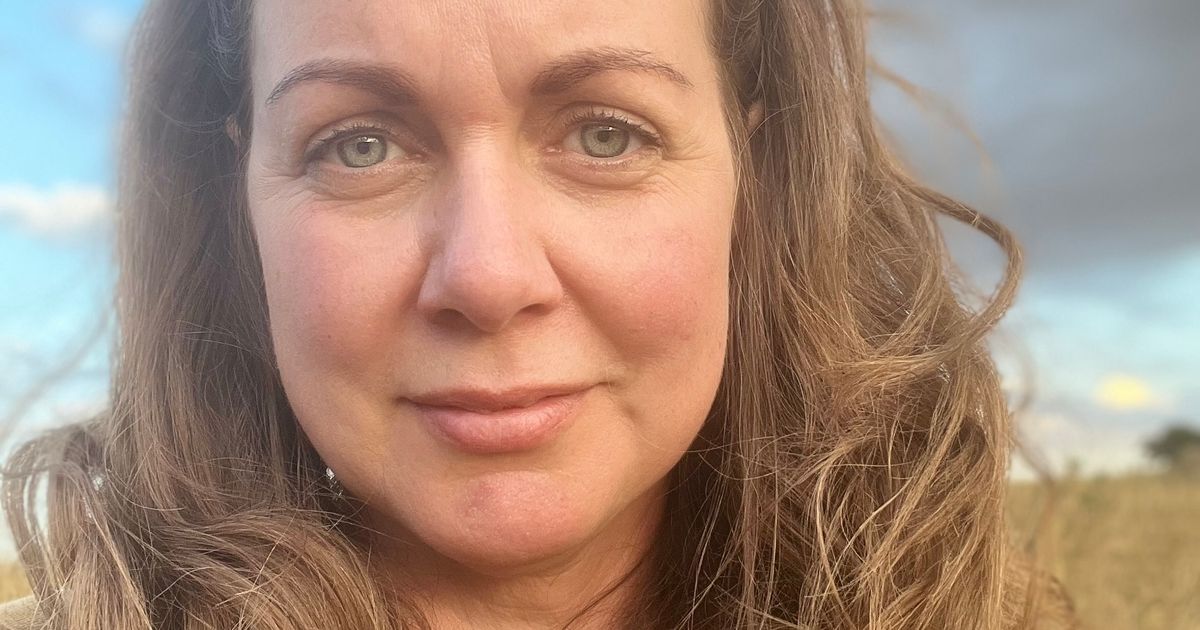
After Years Of Trying To Conceive, I Fell Pregnant As My Husband Discovered A Brain Tumour

Everything had always gone well in my life.

I think, on the balance of probability, I would probably even be called lucky.

Aged 33, I had a well-paid job, house in the country, fabulous friends and family, one relatively well-behaved spaniel and, to cap it all, a sporty, good-looking husband who was six years younger than me.

David and I had moved to Devon about a year after getting married and all we needed to complete our perfect unit was a baby. We had commenced trying for a baby in the same way we did everything: with enthusiasm, enjoyment, and commitment.

However, after months of trying our carefree attitude was replaced by ovulation strips, schedules and more than my fair share of having my legs propped up against our headboard!

‘Fun’ had definitely left the building.

Eventually we concluded that we might need intervention and sought out our local GP, who was extremely supportive. She told us that quite a lot of the time, as soon as people sought help, it all seemed to happen naturally but she agreed to refer us on for further investigations.

What happened next was not part of the plan.

One night, around 2am, I woke to find David having a seizure in bed. One of those scary ones you see on the television. I watched the person I loved most in the world contorted, shaking, grey foam laced with blood where he had bitten his tongue streaking the bedclothes. Then I watched him lose control of his bladder. Despite calling out, shouting and pleading with him, I couldn’t get through to him. He couldn’t hear me. I called for help.

The paramedics were amazing and being able to abdicate all responsibility for caring for the one that you love to a highly trained specialist was something that I never grew complacent about. I thanked them from the bottom of my heart.

Waking up the next morning was a slightly surreal experience. David didn’t understand why he was on a towel and why there was blood on the bedding and the carpet. It appeared that he had no recollection of what had happened.

What followed was over three weeks of tests, scans, appointments and follow ups which led us to a final consultation one early spring day. We were told that David had a brain tumour and that it had been the cause of the seizure. David now had epilepsy.

The tumour was the size of a small orange and it was sitting in the speech and memory part of David’s brain. What do you do with that information? How on earth are you meant to process that? Later we were given options: do nothing, do nothing then have surgery, have surgery. We opted for surgery. After all, if you take as much as you can away then there is less tumour to spread. It seemed logical.

But life continued. A couple of weeks later, David was out playing golf and I was painting up a ladder listening to the radio. ‘Stand by your Man’, a song I’m not particularly fond of, was playing and I was wailing along with Tammy Wynette at the top of my voice and somehow I knew all the words…how does that happen? What part of your brain stores the words to all the songs that you knew before you were sixteen? I digress. The wailing wasn’t strange, but the crying was. I put it down to the tumour news.

The next day I woke with sore breasts. Crying? Sore breasts? Surely, in amongst all this hideousness, we hadn’t forgotten the possibility that I might be pregnant. I did a test and yes, there were clearly two blue lines. We worked out the day that we conceived. It was a week before David’s seizure. It seemed miraculous.

Our happiness knew no bounds, there was no-one that I didn’t want to tell. David urged caution but there was no waiting the obligatory twelve weeks for me – I wanted the world to know we had joyous news. I needed a reason to be happy, to smile again.

The edge was taken off the tumour and life was rosy again. We put off surgery: we wanted to wait until the baby was born, just in case.

But the start of the pregnancy didn’t run as smoothly as expected, possibly because of the level of stress hormones that had been coursing around my body. About eight weeks in, I started to bleed and I was sent to our local hospital for tests. I remember saying to the nurse: ‘I can’t lose this baby, my husband has got a brain tumour’.

And reality struck.

My husband has got a brain tumour.

I’m pregnant and my husband has got a brain tumour.

A life for a life.

That was the start of our journey: in the space of a month I had received the best and worst news. I learned that I could cry with bone shattering grief whilst my soul soared with happiness. I was introduced to the tightrope I would balance on for the next twelve years of my life.

Seven months later we had our only son George. Nine months later David had his first craniotomy; an operation to remove as much of the tumour as possible. Nine months and one week later we were told that David’s brain cancer was terminal.

And then I was faced a choice: to go down or to go up; to be fearful or to have faith; to drown or to float. I chose to float.

David’s brain tumour progressed to a glioblastoma, the most aggressive form of brain tumour, in July 2020 and he died in May 2021 when his son, George, was 12 years old.

Clare Campbell-Cooper’s new book Choosing to Float is out now, priced at £8.99 and available from Amazon.co.uk. Clare will be giving at least 10% of her net royalties to Brain Tumour Research.

Share Button

Streeting begins talks to halt junior doctor strike

The new health secretary says reaching a fair pay deal is a top priority.

Share Button

Brain-imaging study reveals curiosity as it emerges

You look up into the clear blue sky and see something you can’t quite identify. Is it a balloon? A plane? A UFO? You’re curious, right?

A research team based at Columbia’s Zuckerman Institute has for the first time witnessed what is happening in the human brain when feelings of curiosity like this arise. In a study published in the Journal of Neuroscience, the scientists revealed brain areas that appear to assess the degree of uncertainty in visually ambiguous situations, giving rise to subjective feelings of curiosity.

“Curiosity has deep biological origins,” said corresponding author Jacqueline Gottlieb, PhD, a principal investigator at the Zuckerman Institute. The primary evolutionary benefit of curiosity, she added, is to encourage living things to explore their world in ways that help them survive.

“What distinguishes human curiosity is that it drives us to explore much more broadly than other animals, and often just because we want to find things out, not because we are seeking a material reward or survival benefit,” said Dr. Gottlieb, who is also a professor of neuroscience at Columbia’s Vagelos College of Physicians and Surgeons. “This leads to a lot of our creativity.”

Joining Dr. Gottlieb on the research were Michael Cohanpour, PhD, a former graduate student at Columbia (now a data scientist with dsm-firmenich), and Mariam Aly, PhD, also previously at Columbia and now an acting associate professor of psychology at the University of California, Berkeley.

In the study, researchers employed a noninvasive, widely used technology to measure changes in the blood-oxygen levels in the brains of 32 volunteers. Called functional magnetic resonance imaging, or fMRI, the technology enabled the scientists to record how much oxygen different parts of the subjects’ brains consumed as they viewed images. The more oxygen a brain region consumes, the more active it is.

To unveil those brain areas involved in curiosity, the research team presented participants with special images known as texforms. These are images of objects, such as a walrus, frog, tank or hat, that have been distorted to various degrees to make them more or less difficult to recognize.

The researchers asked participants to rate their confidence and curiosity about each texform, and found that the two ratings were inversely related. The more confident subjects were that they knew what the texform depicts, the less curious they were about it. Conversely, the less confident subjects were that they could guess what the texform was, the more curious they were about it.

Three pairs of texforms showing unrecognizable and clear versions of objects. (Credit: Gottlieb Lab/Columbia’s Zuckerman Institute)

Using fMRI, the researchers then viewed what was happening in the brain as the subjects were presented with texforms. The brain-scan data showed high activity in the occipitotemporal cortex (OTC), a region located just above your ears, which has long been known to be involved in vision and in recognizing categories of objects. Based on previous studies, the researchers expected that when they presented participants with clear images, this brain region would show distinct activity patterns for animate and inanimate objects. “You can think of each pattern as a ‘barcode’ identifying the texform category,” Dr. Gottlied said.

The researchers used these patterns to develop a measure, which they dubbed “OTC uncertainty,” of how uncertain this cortical area was about the category of a distorted texform. They showed that, when subjects were less curious about a texform, their OTC activity corresponded to only one barcode, as if it clearly identified whether the image belonged to the animate or the inanimate category. In contrast, when subjects were more curious, their OTC had characteristics of both barcodes, as if it could not clearly identify the image category.

Also active during the texform presentations were two regions in the front of the brain. One is the anterior cingulate cortex, which previous studies implicated in information gathering. The other is the ventromedial prefrontal cortex (vmPFC), which is involved in monitoring a person’s subjective perceptions of value and confidence about different situations. In the new study, both areas were more active when subjects reported being more confident in knowing a texform’s identity (and thus, less curious to see the clarified image).

This is really the first time we can link the subjective feeling of curiosity about information to the way your brain represents that information.

Importantly, said Dr. Gottlieb, vmPFC activity seemed to provide a neurological bridge between the subjective feeling of curiosity and the OTC certainty measure. It’s as though this region read out the uncertainty encoded by the distributed activity pattern in the OTC and helped a person decide if they needed to be curious about the texform.

“This is really the first time we can link the subjective feeling of curiosity about information to the way your brain represents that information,” Dr. Gottlieb said.

The study has two important implications, Dr. Gottlieb said. First, although the study focused on perceptual curiosity elicited by visual stimuli, people experience other forms of curiosity, such as curiosity about trivia questions and factual matters (i.e. how tall is the Eiffel tower?) or social curiosity (which restaurant did my friends go to last night?). One intriguing possibility of the study, she noted, is that the mechanism it has uncovered may generalize to other forms of curiosity. For example, an fMRI study investigating sounds of varying recognizability may show that auditory areas in the brain convey the uncertainty regarding the sound and the vmPFC reads out this uncertainty to determine curiosity.

A second possibility on Dr. Gottlieb’s mind is that the findings could have diagnostic and even therapeutic implications for those with depression, apathy or anhedonia (the inability to feel pleasure), which are conditions often marked by a lack of curiosity.

“Curiosity entails a sort of enthusiasm, a willingness to expend energy and investigate your surroundings. And it’s intrinsically motivated, meaning that nobody is paying you to be curious; you are curious merely based on the hope that something good will come when you learn,” Dr. Gottlieb said. “Those are just some of the amazing things about curiosity.”

Share Button

Stench of a gas giant? Nearby exoplanet reeks of rotten eggs, and that’s a good thing

An exoplanet infamous for its deadly weather has been hiding another bizarre feature — it reeks of rotten eggs, according to a new Johns Hopkins University study of data from the James Webb Space Telescope.

The atmosphere of HD 189733 b, a Jupiter-sized gas giant, has trace amounts of hydrogen sulfide, a molecule that not only gives off a stench but also offers scientists new clues about how sulfur, a building block of planets, might influence the insides and atmospheres of gas worlds beyond the solar system.

The findings are published today in Nature.

“Hydrogen sulfide is a major molecule that we didn’t know was there. We predicted it would be, and we know it’s in Jupiter, but we hadn’t really detected it outside the solar system,” said Guangwei Fu, an astrophysicist at Johns Hopkins who led the research. “We’re not looking for life on this planet because it’s way too hot, but finding hydrogen sulfide is a stepping stone for finding this molecule on other planets and gaining more understanding of how different types of planets form.”

In addition to detecting hydrogen sulfide and measuring overall sulfur in HD 189733 b’s atmosphere, Fu’s team precisely measured the main sources of the planet’s oxygen and carbon — water, carbon dioxide, and carbon monoxide.

“Sulfur is a vital element for building more complex molecules, and — like carbon, nitrogen, oxygen, and phosphate — scientists need to study it more to fully understand how planets are made and what they’re made of,” Fu said.

At only 64 light-years from Earth, HD 189733 b is the nearest “hot Jupiter” astronomers can observe passing in front of its star, making it a benchmark planet for detailed studies of exoplanetary atmospheres since its discovery in 2005, Fu said.

The planet is about 13 times closer to its star than Mercury is to the sun and takes only about two Earth days to complete an orbit. It has scorching temperatures of 1,700 degrees Fahrenheit and is notorious for vicious weather, including raining glass that blows sideways on winds of 5,000 mph.

As it did by detecting water, carbon dioxide, methane, and other critical molecules in other exoplanets, Webb gives scientists yet another new tool to track hydrogen sulfide and measure sulfur in gas planets outside the solar system.

“Say we study another 100 hot Jupiters and they’re all sulfur enhanced. What does that mean about how they were born and how they form differently compared to our own Jupiter?” Fu said.

The new data also ruled out the presence of methane in HD 189733 b with unprecedented precision and infrared wavelength observations from the Webb telescope, countering previous claims about that molecule’s abundance in the atmosphere.

“We had been thinking this planet was too hot to have high concentrations of methane, and now we know that it doesn’t,” Fu said.

The team also measured levels of heavy metals like those on Jupiter, a finding that could help scientists answer questions about how a planet’s metallicity correlates to its mass, Fu said.

Less-massive giant icy planets like Neptune and Uranus contain more metals than those found in gas giants like Jupiter and Saturn, the largest planets in the solar system. The higher metallicities suggest Neptune and Uranus accumulated more ice, rock, and other heavy elements relative to gases like hydrogen and helium during early periods of formation. Scientists are testing whether that correlation also holds true for exoplanets, Fu said.

“This Jupiter-mass planet is very close to Earth and has been very well studied. Now we have this new measurement to show that indeed the metal concentrations it has provide a very important anchor point to this study of how a planet’s composition varies with its mass and radius,” Fu said. “The findings support our understanding of how planets form through creating more solid material after initial core formation and then are naturally enhanced with heavy metals.”

In coming months, Fu’s team plans to track sulfur in more exoplanets and figure out how high levels of that compound might influence how close they form near their parent stars.

“We want to know how these kinds of planets got there, and understanding their atmospheric composition will help us answer that question,” Fu said.

This research was supported by NASA through the JWST GO program.

Other authors are Luis Welbanks, Dana R. Louie, and Michael Line of Arizona State University; Drake Deming, Jegug Ih, Arjun B. Savel, Eliza M.-R. Kempton, and Matt Nixon of University of Maryland; Julie Inglis and Heather A. Knutson of California Institute of Technology; Michael Zhang of University of Chicago; Joshua Lothringer of Utah Valley University; Julianne I. Moses and Gregory Henry of Tennessee State University; Everett Schlawin of University of Arizona; David K. Sing of Johns Hopkins; and Thomas Greene of NASA Ames Research Center.

Share Button

Americans find hospital-at-home care appealing and safe, study suggests

Hospital-level care provided in a patient’s own home is appealing to a majority of people for its convenience, comfort and effectiveness, according to a USC Schaeffer Center study.

The study, published in JAMA, found that most survey respondents felt they would recover faster if cared for at home, rather than in the hospital, and that they felt safe being treated at home.

Researchers say their study provides important insights about patient and family preferences as policymakers weigh whether to extend a pandemic-era program that allowed hospitals to provide care at home.

“Patients of course want the best-quality care, but often prefer to be at home, especially if technology allows them to work closely with their physician team toward recovery,” says Melissa A. Frasco, research scientist at the Schaeffer Center.

The research also found that 82% of respondents felt comfortable with managing a patient’s medications at home, and 67% reported willingness to provide more in-depth care such as wound care.

Hospital-level care can often be provided at home for many patients with acute conditions using remote patient-monitoring tools, daily in-person or telehealth visits by clinicians, and in-home infusions. Previous studies have shown that such care can reduce readmissions and lower costs compared with traditional hospital care.

The researchers used a sample of the Understanding America Study to survey about 1,100 respondents about their preferences. Responses showed that 47% agreed that hospital-at-home care was an acceptable alternative to inpatient care. Meanwhile, only about 17% felt negatively about hospital-at-home care’s merits, while 36% were neutral on the issue. Further, 56% agreed — including 21% who strongly agreed — that people recover faster at home than in the hospital.

The Centers for Medicare & Medicaid Services (CMS) temporarily authorized at-home care services during the COVID-19 pandemic under the Acute Hospital Care at Home waiver. Congress extended the waiver through December 31, 2024, with a requirement that CMS comprehensively study care quality before it would approve reimbursements over the long term. Currently, 322 hospitals across 37 states have been approved to provide at-home care.

“Our findings offer valuable information for policymakers and health systems as they navigate a new landscape of post-pandemic patient care,” says co-author Erin L. Duffy, director of research training at the Schaeffer Center. “Extending reimbursement for hospital-at-home care could go a long way toward reducing costs and improving outcomes, benefiting all parties involved.”

Acceptability of hospital care at home did not vary across sociodemographics, health insurance coverage, health status, prior hospitalizations or telehealth use, the researchers found.

Share Button

Fall after fall – care home accused of neglect

BBC analysis shows nearly 20% of England’s care homes – some 2,500 facilities – “require improvement”.

Share Button

Bases Loaded Event: July 9-12, 2024

Yay! We’re doing a new online event this week. You’re invited!

It’s called Bases Loaded, and it’s about a very unique and different approach to life balance, using a baseball diamond metaphor to help you understand the four most important balancing frequencies.

This is short-notice deliberately, so we can get really high alignment for this, meaning little gap between your decision and partaking in the live experience. That matters for the live experience this time.

It starts this Tuesday, July 9 and runs through Friday, July 12, 2024. Each day I’ll host a two-hour Zoom call with you. And you get the recordings as well.

It’s super cheap too, so we ought to have a nice big, lively turnout for this one. People are already signing up for it. You can see the current enrollment at the top of the invite page.

Read the Invite – It’s Pretty Short

When you’re ready to sign up, use this link to enroll (it’s also in the invite above).

Join the Bases Loaded Event

Come join us and burn your excuses since we’ll be working with a lot of fire energy together.

Bases Loaded

Share Button

Nurse regulator condemned over toxic culture

A damning report finds bullying, racism and incompetence in an organisation overseeing UK nurses and midwives.

Share Button

Rishi Sunak’s Furniture Is Seen Being Removed From Downing Street As Labour Era Begins

The former prime minister’s time behind the famous black door of No.10 came to an end in the wake of the Tories’ catastrophic defeat in last week’s general election.

A lorry from the Platimum Move removals firm was spotted parked in Downing Street this afternoon.

Removal men were also photographed carrying a chest of drawers, a sofa and a bed into it.

Starmer and his family are expected to formally move into their new grace-and-favour home in the coming days.

However, it is not known yet whether they will live in the flat above No.10 or in the larger property above No.11, which has been used by several prime ministers dating back to Tony Blair’s time in office.

Share Button