Honey Bees Can Sniff Out This Kind Of Cancer, And I Am In Awe

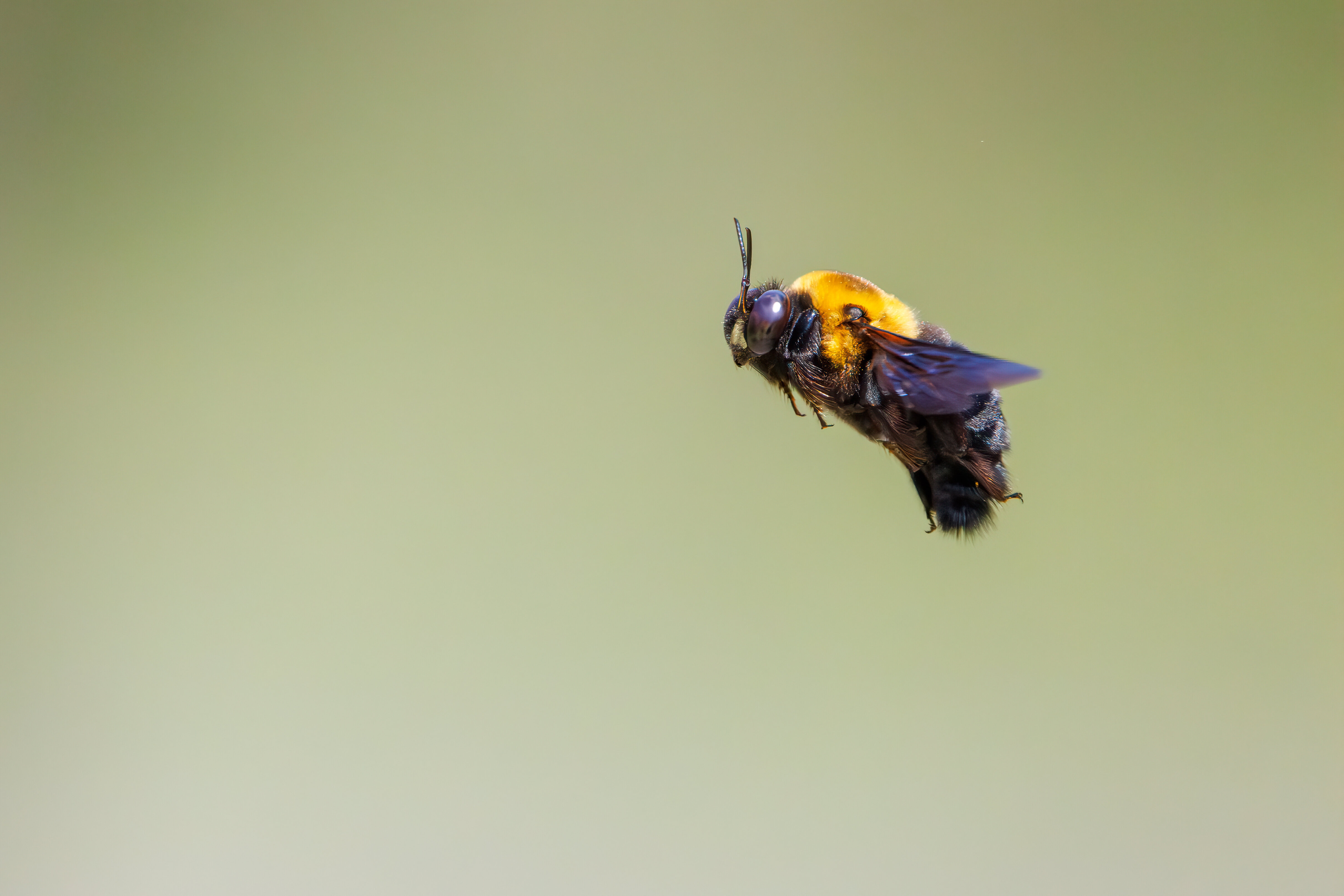
New research from Michigan State University has found that honey bees can detect biomarkers or chemical concentrations associated with lung cancer just by smelling human breath.

Not only that, but these clever little bugs can distinguish between different lung cancer cell types using the smell of the cultures.

Researchers hope that these findings will be used as a model for developing new tests for diagnosing lung cancer earlier.

Debajit Saha, an assistant professor in the Michigan State University College of Engineering and the Institute for Quantitative Health Science and Engineering said that the honey bees have an incredible sense of smell, meaning they can find just a small sample of the cancer.

Saha said: “The honey bees detected very small concentrations; it was a very strong result. Bees can differentiate between minute changes in the chemical concentrations of the breath mixture which is in the parts per 1 billion range.”

This research was done by attaching a 3D-printed harness to a live honey bee while a tiny electrode was attached to the bee’s brain to measure changes in the bee’s brain signals.

Incredible.

What this means for the future of cancer diagnoses

Researcher Autumn McLane-Svoboba said: “What’s amazing is the honey bees ability to not only detect cancer cells, but also distinguish between cell lines of various types of lung cancer.

“The future implications for this are huge as our sensor could allow for patients to receive specific cancer diagnoses quickly which is imperative for correct treatment routes.”

Saha and his team hope that this work will open the door for more scent-based disease detection technologies.

The team plan to develop a noninvasive test which will only require patients to breathe into a device and the sensor inside, based on honey bee brains, would analyse and report on the breath in real time.

How unbelievably exciting.

Share Button

Top doctor alarmed by weight-loss drug misuse

The drugs should not be used as “a quick fix” to get “beach-body ready” this summer, NHS England’s medical director said.

Share Button

The ‘Loud Budgeting’ Hack That’s Actually Helping People Save Money

If, like me, you struggle to stick to budgeting plans because you simply cannot turn down going out with friends, you might want to consider ‘loud budgeting’.

Yes, instead of quietly trying to stick to budgeting goals and making excuses for not socialising as much, loud budgeting is all about being honest about your financial plans and your need to stick to them.

HuffPost UK spoke with financial expert Adrian Murphy, CEO of Murphy Wealth to learn more about loud budgeting and how we can implement it in our everyday lives.

What loud budgeting is, and how to do it

Murphy explained: ” A big part of embarking on your savings journey is accountability. When you are thinking about your long term goals and objectives, it helps if there’s someone who keeps you accountable to your life plan – perhaps a partner or family member.

“If you don’t have that, there’s not someone to give you a nudge and you are relying on your own personal motivation – which is harder!”

This is where this budgeting trend comes in. Murphy said that if your intention is to save is out there, you’re more likely to stick to it.

However, Murphy admits that for some people, loud budgeting may be extreme and said for them: “A better way to look at it could be to find friends who will help you be accountable.

“You’ve already made a conscious choice not to spend or go out, so perhaps you should look at your reasons why? If you’re regularly defending your right to not spend in your social circles, it might be worth looking at your circle of friends. It might suggest you don’t have a supportive network.”

That being said, don’t feel that you need to stop socialising entirely.

Murphy urged: “With money there’s always a balance to be had. Money spent on socialising and experiences is important for mental health and wellness.

“We’re social animals, and not everything can be about tomorrow. Saving is important, but not if you’re watching the world go by to do so.”

How do you know if loud budgeting is right for you?

So, how do you know if it’s right for you?

Murphy answered: ”‘Loud budgeting’ highlights a cross generational issue. Money and relationships are, by far, the two most difficult topics to talk about. Everything in your life somehow tracks back to money and it can be such an emotive topic, one where tough decisions need to be made.

“We should encourage better conversations about money, especially if it can stop you making detrimental decisions. If saying ‘no, I’m not going for a coffee because my savings need to be prioritised’ helps you save and talk about money, I don’t see a problem.”

Share Button

Balding at 16 and unable to look in the mirror

Poppie Davies wore a wig and talked about how isolated she felt with the condition.

Share Button

Silent Men film asks why so many still struggle to open up

Scottish filmmaker Duncan Cowles set out to ask why men tend to bottle up their emotions.

Share Button

New fabric makes urban heat islands more bearable

This year has already seen massive heatwaves around the globe, with cities in Mexico, India, Pakistan and Oman hitting temperatures near or past 50 degrees Celsius (122 degrees Fahrenheit).

As global temperatures and urban populations rise, the world’s cities have become “urban heat islands,” with tight-packed conditions and thermal radiation emitting from pavement and skyscraper trapping and magnifying these temperatures. With 68 percent of all people predicted to live in cities by 2050, this is a growing, deadly problem.

In a paper published today in Science, researchers from the UChicago Pritzker School of Molecular Engineering (PME) detail a new wearable fabric that can help urban residents survive the worst impacts of massive heat caused by global climate change, with applications in clothing, building and car design, and food storage.

In tests under the Arizona sun, the material kept 2.3 degrees Celsius (4.1 degrees Fahrenheit) cooler than the broadband emitter fabric used for outdoor endurance sports and 8.9 degrees Celsius (16 degrees Fahrenheit) cooler than the commercialized silk commonly used for shirts, dresses and other summer clothing.

This, the team hopes, will help many avoid the heat-related hospitalizations and deaths seen in global population centers this year alone.

“We need to reduce carbon emission and make our cities carbon negative or carbon neutral,” PME Asst. Prof. Po-Chun Hsu said. “But meanwhile, people are feeling the impact of these high temperatures.”

‘You have to consider the environment’

Existing cooling fabric for outdoor sports works by reflecting the sun’s light in a diffuse pattern so it doesn’t blind onlookers. But in an urban heat island, the sun is only one source of heat. While the sun bakes from above, thermal radiation emitted from buildings and pavement blast city-dwellers with blistering heat from the sides and below.

This means many materials that perform well in lab tests won’t help city-dwellers in Arizona, Nevada, California, Southeast Asia and China when predicted massive heatwaves hit them over the next few weeks.

“People normally focus on the performance or the material design of cooling textiles,” said co-first author Ronghui Wu, a postdoctoral researcher at PME. “To make a textile that has the potential to apply to real life, you have to consider the environment.”

One simple example of considering the environment is that people stand. They are wearing materials designed to reflect direct sunlight, but only their hats, shoulder coverings and the tops of their shoes — about 3 percent of their clothing — face that direct light. The other 97 of their clothes are being heated by the thermal radiation coming at them from the sides and below, which broadband emitter fabric does not fight.

The sun and sidewalk cook with different heats. Creating one material capable of protecting wearers from both provided a major engineering challenge for the team.

“Solar is visible light, thermal radiation is infrared, so they have different wavelengths. That means you need to have a material that has two optical properties at the same time. That’s very challenging to do,” said co-first author Chenxi Sui, a PhD candidate at PME. “You need to play with material science to engineer and tune the material to give you different resonances at different wavelengths.”

The costs of comfort

Cooling a home too often means warming the planet, with the carbon impact of air conditioning and refrigeration systems contributing to climate change.

“Our civilization actually uses about 10 to 15 percent of the energy in total just to make ourselves feel comfortable wherever we go,” Hsu said.

The risk from heat is not distributed evenly, however. In the U.S. and Japan, more than 90 percent of households have an air conditioner, a number that drops to 5 percent in India and parts of Africa.

The PME team’s new textile, which has received a provisional patent, can help provide a passive cooling system that can supplement and reduce the need for energy- and cost-intensive systems.

The applications go far beyond clothing.

A thicker version of the fabric protected by an invisible layer of polyethylene could be used on the sides of buildings or cars, lowering internal temperatures and reducing the cost and carbon impact of air conditioning. Similarly, the material could be used to transport and store milk and other foods that would otherwise spoil in the heat, cutting refrigeration’s impact.

“You can save a lot of cooling, electricity and energy costs because this is a passive process,” Sui said.

Share Button

A conservation market could incentivize global ocean protection

The countries of the world agreed: Our planet needs more protection from human activity. And with the globe facing an assortment of environmental crises, they realized the plan needed to be ambitious. Thirty-by-thirty was their proposal: protect 30% of the planet by 2030. But while conservation is popular in principle, the costs of actually enacting it often stall even the most earnest efforts.

Three researchers at UC Santa Barbara have proposed a market-based approach to achieving the 30×30 targets in the ocean. They tested whether a system that allowed countries to trade conservation credits could reduce costs, incentivizing nations to actually meet their goals. Allowing voluntary trade always reduced the cost of conservation, sometimes by more than 90%. The study, published in Science, is the first to draft and analyze a conservation market for achieving 30×30 targets in the ocean.

The 30×30 initiative is one aspect of the Convention on Biological Diversity, a multilateral treaty developed in the early 1990s. In fact, it’s target No. 3 of the larger Global Biodiversity Framework (GBF) adopted by the 196 countries that convened for the UN Biodiversity Conference in 2022. It calls for the effective protection and management of 30% of the world’s terrestrial, freshwater, coastal and marine areas by the year 2030 — a goal that many scientists say humanity must achieve to secure our planet’s long-term health. And while the GBF requires countries to commit to conservation targets, it does not outline which areas should be protected, how to do so inclusively or how to pay for it.

“This project started just over four years ago,” said co-author Juan Carlos Villaseñor-Derbez, who completed his doctorate at UCSB’s Bren School of Environmental Science & Management. At this point, countries were falling short of the 10% protection benchmark as they drafted plans for 30% protection. “It seemed like most nations were genuinely committed to marine conservation, but that the costs of conserving were preventing some from engaging in it at all.

“At the same time,” he added, “a lot of research had already shown that if you could get nations to cooperate around conservation, you could substantially reduce the costs of conserving.” He and his co-authors realized the world needed an institution, policy or framework that could support this.

Uneven costs and benefits

The cost of protecting acres of ocean is not the only aspect that differs from place to place. The ecological benefits of conservation also vary based on location. Achieving 30×30 in the ocean will require coastal nations to consider potential trade-offs associated with these protections. Because high-value fisheries can coincide with important marine ecosystems — such as coral reefs, seagrass meadows and kelp forests — meeting the obligation could come at a high cost for some nations but not others. “Without an innovative policy solution, the cost of conservation for many nations could stall progress toward 30×30,” said Villasenor-Derbez.

This variability means that trade could incentivize additional gains. Instead of investing in areas with high conservation costs, or low benefits, nations could exchange their duties to double down on regions where protection yields higher returns.

Environmental economists and scientists at UC Santa Barbara’s Environmental Markets Lab (emLab) wondered if a conservation credit system could help meet 30×30 targets in the ocean. They devised a system whereby nations could trade their conservation obligation with other nations through a “transferable conservation market” policy built around ecological principles.

“Like existing mandates, this approach requires every country to protect a certain fraction (say 30%) of its marine habitat,” said Distinguished Professor Christopher Costello, emLab’s director. “But unlike other approaches, we allow those obligations to be traded across countries, within strict ecological constraints.” In this way, countries with higher conservation costs pay others to increase their conservation efforts. This study estimates the potential global cost savings under various trading constraints.

“For example, Norway, which has valuable fisheries, might pay Palau, a country that has already invested significantly in coastal conservation, to conserve additional areas on Norway’s behalf,” Costello said. This enables Norway to fulfill its conservation obligations in another part of the world.

Achieving 30×30 in the ocean

Costello, Villaseñor-Derbez and co-author Professor Andrew Plantinga developed a model to estimate the potential costs and benefits that could be achieved through a conservation market like this. They combined distribution data for 23,699 marine species with fisheries revenue data to build conservation supply curves for the world’s coastal nations.

They then defined “trade bubbles” based on biological and geographic factors. A country could trade conservation credits only with other nations within these predefined bubbles in order to ensure conservation was equitably spread across Earth’s different marine habitats. The authors examined five bubble policies that allow nations to trade within hemispheres, biogeographic realms, provinces, ecoregions, or globally, to determine potential costs.

Regardless of how they tweaked this setup, a market for marine conservation always reduced the costs of conservation. The model estimated savings could range from 37.4% all the way to 98% under the 30×30 target.

“It just highlighted how inefficient it is to require uniform conservation obligations from each nation,” Villaseñor-Derbez said. “After all, national boundaries don’t really overlap or line-up with the distribution patterns of marine biodiversity.”

Savings were highest in a global market, where every nation stands to gain from trade. But a global market could inadvertently focus conservation efforts on only a single type of habitat, neglecting others. That was precisely why the team introduced the trade bubble constraint.

“When nations facing large costs are allowed to trade, they can ask themselves ‘should I conserve in my waters at this high cost, or can I find someone in my bubble that has habitat just as good as mine but at a lower price?'” Villaseñor-Derbez said. The same would be true for a selling nation. They could decide whether to conserve more than they are required depending on the trading price.

Of course, a country could always go it alone, fulfilling their conservation obligations (and theirs alone) entirely within their own territory. Indeed, this is precisely how the 30×30 initiative currently looks. But the authors’ analysis suggests that very few countries will. Most find it far more economical to either buy or sell conservation obligations.

Conservation colonialism vs fair compensation

If a market system were established, some might wonder what would prevent wealthy nations from simply “paying off” their conservation obligations and offloading them onto poorer nations. For Costello, Villaseñor-Derbez and Plantinga, the market itself offers a solution. “All such exchanges are purely voluntary,” said Plantinga, who heads emLab’s Productive Landscapes Group. “The selling nation (the poor country in this example) only engages in trade if they find it advantageous.”

In fact, the market could be a boon for developing nations. The current 30×30 scheme requires even a cash-poor country with high conservation to conserve 30% of their territorial waters. The market approach offers a degree of flexibility: The country can weigh their finances against their conservation costs. They can then decide how much of their obligation to fulfill within their own waters, how much to buy from another nation, and how much to offer up for sale. This flexibility is not possible under the current approach to 30×30.

This system could also incentivize habitat restoration, target No. 2 of the GBF. Nations that tend to specialize in exploiting marine resources could compensate those who specialize in conserving marine biodiversity. “Our approach provides an explicit payment for conserving marine ecosystems,” Costello said. “Under the current system, there is rarely a payment to conserve.”

Lowering costs incentivizes action. This measurable effect is a central tenet of economics employed by governments, companies and industries across sectors and countries. So why not harness this principle for conservation? According to the authors, these savings could be redirected towards solving other pressing issues.

Share Button

Can engineered plants help make baby formula as nutritious as breast milk?

Worldwide, a majority of babies — approximately 75% — drink infant formula in their first six months of life, either as a sole source of nutrition or as a supplement to breastfeeding. But while formula provides essential food for growing babies, it currently does not replicate the full nutritional profile of breast milk.

That’s in part because human breast milk contains a unique blend of approximately 200 prebiotic sugar molecules that help prevent disease and support the growth of healthy gut bacteria. However, most of these sugars remain difficult, if not impossible, to manufacture.

New research led by scientists at the University of California, Berkeley, and the University of California, Davis, shows how genetically engineered plants may help close this gap.

In a new study published today in the journal Nature Food, the study team reprogrammed plants’ sugar-making machinery to produce a diverse array of these human milk sugars, also called human milk oligosaccharides. The findings could lead to healthier and more affordable formula for babies, or more nutritious non-dairy plant milk for adults.

“Plants are these phenomenal organisms that take sunlight and carbon dioxide from our atmosphere and use them to make sugars. And they don’t just make one sugar — they make a whole diversity of simple and complex sugars,” said study senior author Patrick Shih, an assistant professor of plant and microbial biology and an investigator at UC Berkeley’s Innovative Genomics Institute. “We thought, since plants already have this underlying sugar metabolism, why don’t we try rerouting it to make human milk oligosaccharides?”

All complex sugars — including human milk oligosaccharides — are made from building blocks of simple sugars, called monosaccharides, which can be linked together to form a vast array of chains and branched chains. What makes human milk oligosaccharides unique are the specific set of linkages, or rules, for connecting simple sugars together that are found in these molecules.

To convince plants to make human milk oligosaccharides, study first author Collin Barnum engineered the genes responsible for the enzymes that make these specific linkages. Working with Daniela Barile, David Mills and Carlito Lebrilla at UC Davis, he then introduced the genes into the Nicotiana benthamiana plant, a close relative of tobacco.

The genetically modified plants produced 11 known human milk oligosaccharides, along with a variety of other complex sugars with similar linkage patterns.

“We made all three major groups of human milk oligosaccharides,” Shih said. “To my knowledge, no one has ever demonstrated that you could make all three of these groups simultaneously in a single organism.“

Barnum then worked to create a stable line of N. benthamiana plants that were optimized to produce a single human milk oligosaccharide called LNFP1.

“LNFP1 is a five-monosaccharide-long human milk oligosaccharide that is supposed to be really beneficial, but so far cannot be made at scale using traditional methods of microbial fermentation,” said Barnum, who completed the work as a graduate student at UC Davis. “We thought that if we could start making these larger, more complex human milk oligosaccharides, we could solve a problem that that industry currently can’t solve.”

Currently, a small handful of human milk oligosaccharides can be manufactured using engineered E. coli bacteria. However, isolating the beneficial molecules from other toxic byproducts is a costly process, and only a limited number of baby formulas include these sugars in their mixtures.

As part of the study, Shih and Barnum worked with collaborator Minliang Yang at North Carolina State University to estimate the cost of producing human milk oligosaccharides from plants at an industrial scale and found that it would likely be cheaper than using microbial platforms.

“Imagine being able to make all the human milk oligosaccharides in a single plant. Then you could just grind up that plant, extract all the oligosaccharides simultaneously and add that directly into infant formula,” Shih said. “There would be a lot of challenges in implementation and commercialization, but this is the big goal that we’re trying to move toward.”

Additional authors include Bruna Paviani, Garret Couture, Chad Masarweh, Ye Chen, Yu-Ping Huang, David A. Mills, Carlito B. Lebrilla and Daniela Barile of UC Davis; Kasey Markel of UC Berkeley; and Minliang Yang of North Carolina State University.

This work was supported in part by the National Institutes of Health (NIGMS T32 Training Program), the U.S. Department of Energy and the National Center for Complementary and Integrative Health (R00AT009573)

Share Button

‘Do not cry for me’, says cancer campaigner in final post

Tributes are paid to Kate Rackham who helped set up the Fighting to be Heard charity after her diagnosis.

Share Button

UK Travellers Urged To Avoid Doing 1 Very Common Departure Lounge Habit

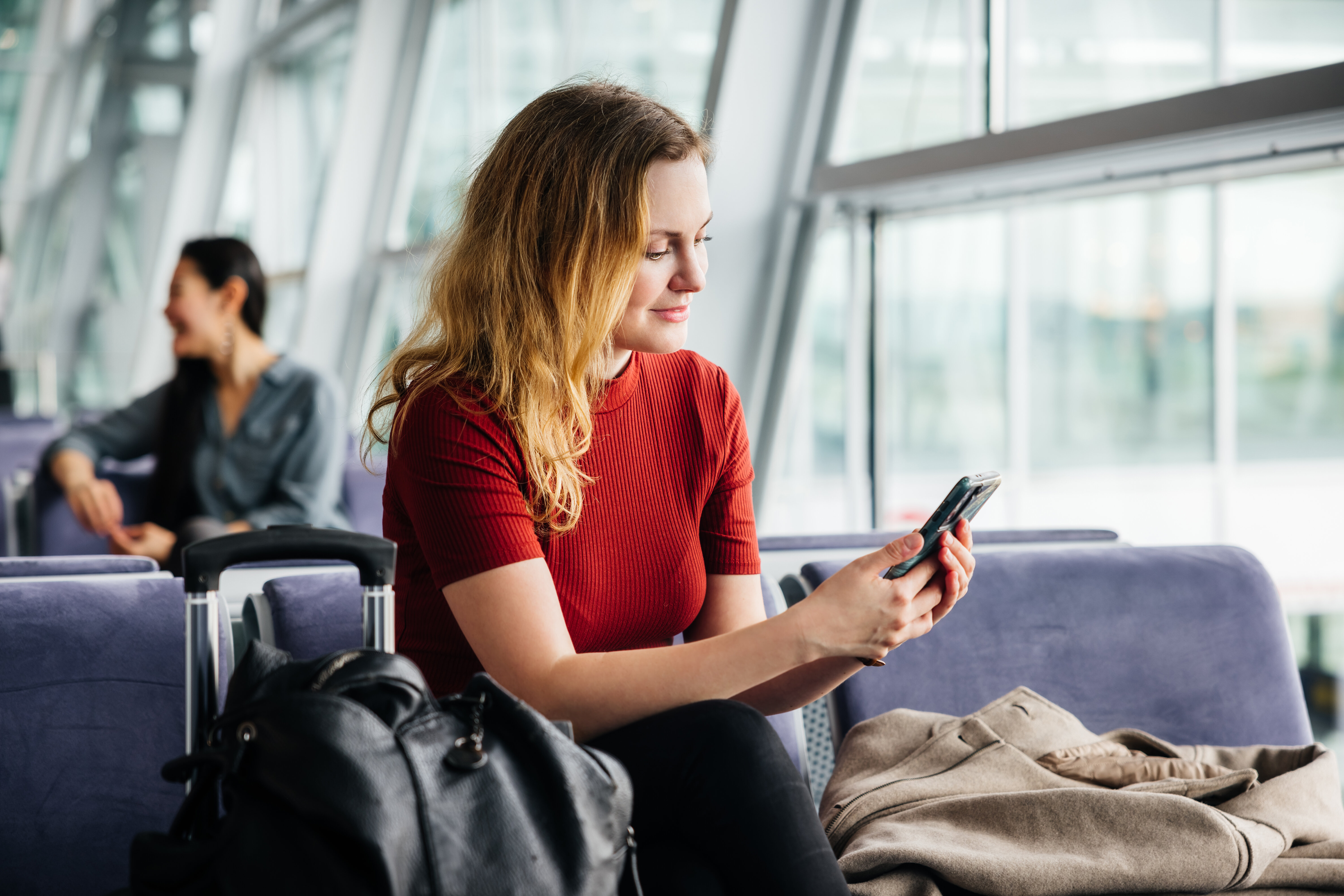
Departure lounges in airports are, at the best of times, incredibly dull and if your flight is delayed, you may find yourself cycling through apps on your phone, grasping at straws for entertainment and distraction.

Of course, this drains your battery and what is the first thing you do when you see that all-important battery running down? Look for an outlet to plug your phone into.

Now, personally, I never travel without at least two charged battery packs but less anxious people tend to find USB ports in airport lounges which may seem handy but according to multiple UK airlines, you shouldn’t be so readily using these outlets.

Why you should never charge your phone in the airport

Travel expert Megan who shares travel tips on advice on her YouTube channel Portable Professional said: “Using an airport USB to charge your devices can expose you to a scam called ‘juice jacking’. This happens when public USB ports are manipulated to steal data from your devices that are connected to them.”

Cool, cool, cool.

Instead, Megan advises using a travel adapter for your plugs.

She said: “Using an adapter allows you to safely connect to outlets. Unlike USB ports, AC outlets are purely for power and they don’t transfer data, ensuring there is no risk to your personal information while it’s charging.

“Navigating airport layovers with multiple devices can be tricky, and a big mistake that travellers make is not having a plan to keep all of their devices charged.”

<div class="js-react-hydrator" data-component-name="YouTube" data-component-id="5035" data-component-props="{"itemType":"video","index":12,"contentIndexByType":1,"contentListType":"embed","code":"

","type":"video","meta":{"author":"Portable Professional (Travel Tips with Megan)","author_url":"https://www.youtube.com/channel/UC5XIgzc2Qm7BhWl1vjyQoQQ","cache_age":86400,"description":"Use code Megan10 for 10% off Unbound Merino clothing: https://bit.ly/PP-Merino\nMy favorite pants for travel (I’m obsessed!): https://bit.ly/PP-MerinoPants\n\nThere are 8 common mistakes travelers make at the gate before boarding a flight. In today’s video we will break down each travel mistake and share some sneaky insider hacks that will make you feel like an airport expert the next time you fly. Pay special attention to #8 if you are checking a bag at the airport or taking an international flight. \n\nDon’t forget to SUBSCRIBE for weekly tips & hacks: https://bit.ly/subscribe-travel-hacks\n\nMy Recommended TSA-FRIENDLY Snacks for the Plane: https://bit.ly/AirportSnacks-PP\n\n✈️ TRAVEL RESOURCES\nBest Travel Insurance for Seniors: https://bit.ly/Travel-coverage\nTop rated VPN for Travel (only $3!): https://bit.ly/PP-nordvpn\nBest Value Luggage (discount code: Megan15): https://bit.ly/level8-1\nIncredible Tour Deals: https://bit.ly/3sok4mt\nMost Affordable Travel Insurance: http://bit.ly/PortableProfessional-Insurance\nTop-rated E-Sim to Use Phone Internationally: https://bit.ly/PP-holafly\nMy Go-To Travel Clothing: https://bit.ly/PP-Merino\nMy Most-Loved Travel Gear on Amazon: https://www.amazon.com/shop/megan.gougeon\nFree Travel Hack Newsletter: https://bit.ly/PP-travelnewsletter\nFree eBook with my Top Travel Hacks: https://bit.ly/PP-TravelHacks\n\n🌎 WATCH NEXT\nhttps://www.youtube.com/watch?v=6O5in_2Pz-A&t=233s&list=UULF5XIgzc2Qm7BhWl1vjyQoQQ\nhttps://www.youtube.com/watch?v=Ds-CWngjItU&list=UULF5XIgzc2Qm7BhWl1vjyQoQQ&feature=youtu.be\nhttps://www.youtube.com/watch?v=IBQIlgCTiew&list=UULF5XIgzc2Qm7BhWl1vjyQoQQ\nhttps://www.youtube.com/watch?v=VslV_lj9-SM&list=UULF5XIgzc2Qm7BhWl1vjyQoQQ\nhttps://www.youtube.com/watch?v=ud-2dsFd5zI&list=UULF5XIgzc2Qm7BhWl1vjyQoQQ&feature=youtu.be\n\nWelcome to Portable Professional, where I, Megan, use my experience from over 300 flights to offer you simple, practical and game-changing travel tips and hacks. Our mission is to help you reduce stress and make the most of every trip.\n\nDon’t forget to SUBSCRIBE for weekly tips & hacks: https://bit.ly/subscribe-travel-hacks\n\n🐶 Chapters\n00:00 Introduction\n00:13 Check this at the gate!\n00:45 Iphone travel hack\n01:47 Must-have for flight\n02:41 Wear THIS (not THAT!)\n03:51 Do before boarding (or regret it!)\n04:41 Food & drink rules\n05:07 Plane charger warning\n06:14 Luggage mistake\n06:39 Essential boarding documents\n07:25 Mobile ticket tip\n07:57 Gate checked luggage \n08:31 Gate check vs. checked bag\n08:53 Personal item packing tip\n09:27 Don’t rush this…\n\n\nAffiliate Disclosure: This content contains affiliate links. We may receive compensation at no additional cost to you if you click through and make a purchase. Thank you for your support!\n#UnboundMerino","options":{"_cc_load_policy":{"label":"Closed captions","value":false},"_end":{"label":"End on","placeholder":"ex.: 11, 1m10s","value":""},"_start":{"label":"Start from","placeholder":"ex.: 11, 1m10s","value":""},"click_to_play":{"label":"Hold load & play until clicked","value":false}},"provider_name":"YouTube","thumbnail_height":720,"thumbnail_url":"https://i.ytimg.com/vi/aXh5C-Ss4-k/maxresdefault.jpg","thumbnail_width":1280,"title":"8 Things to NEVER do at the Airport Before Boarding a Flight","type":"video","url":"https://www.youtube.com/watch?v=aXh5C-Ss4-k","version":"1.0"},"flags":[],"enhancements":{},"fullBleed":false,"options":{"theme":"life","device":"desktop","editionInfo":{"id":"uk","name":"U.K.","link":"https://www.huffingtonpost.co.uk","locale":"en_GB"},"originalEdition":"uk","slideshowAd":{"scriptTags":[],"otherHtml":""},"slideshowEndCard":{"scriptTags":[],"otherHtml":""},"isMapi":false,"isAmp":false,"isVideoEntry":false,"isEntry":true,"isMt":false,"entryId":"666ada04e4b0dabf8cf68fe9","entryPermalink":"https://www.huffingtonpost.co.uk/entry/uk-travellers-urged-to-avoid-doing-1-very-common-departure-lounge-habit_uk_666ada04e4b0dabf8cf68fe9","entryTagsList":"travel,safety","sectionSlug":"lifestyle","deptSlug":null,"sectionRedirectUrl":null,"subcategories":"","isWide":false,"headerOverride":null,"noVideoAds":false,"disableFloat":false,"isNative":false,"commercialVideo":{"provider":"custom","site_and_category":"uk.lifestyle","package":null},"isHighline":false,"vidibleConfigValues":{"cid":"60afc140cf94592c45d7390c","disabledWithMapiEntries":false,"overrides":{"all":"60b8e525cdd90620331baaf4"},"whitelisted":["56c5f12ee4b03a39c93c9439","56c6056ee4b01f2b7e1b5f35","59bfee7f9e451049f87f550b","5acccbaac269d609ef44c529","570278d2e4b070ff77b98217","57027b4be4b070ff77b98d5c","56fe95c4e4b0041c4242016b","570279cfe4b06d08e3629954","5ba9e8821c2e65639162ccf1","5bcd9904821576674bc55ced","5d076ca127f25f504327c72e","5b35266b158f855373e28256","5ebac2e8abddfb04f877dff2","60b8e525cdd90620331baaf4","60b64354b171b7444beaff4d","60d0d8e09340d7032ad0fb1a","60d0d90f9340d7032ad0fbeb","60d0d9949340d7032ad0fed3","60d0d9f99340d7032ad10113","60d0daa69340d7032ad104cf","60d0de02b627221e9d819408"],"playlists":{"default":"57bc306888d2ff1a7f6b5579","news":"56c6dbcee4b04edee8beb49c","politics":"56c6dbcee4b04edee8beb49c","entertainment":"56c6e7f2e4b0983aa64c60fc","tech":"56c6f70ae4b043c5bdcaebf9","parents":"56cc65c2e4b0239099455b42","lifestyle":"56cc66a9e4b01f81ef94e98c"},"playerUpdates":{"56c6056ee4b01f2b7e1b5f35":"60b8e525cdd90620331baaf4","56c5f12ee4b03a39c93c9439":"60d0d8e09340d7032ad0fb1a","59bfee7f9e451049f87f550b":"60d0d90f9340d7032ad0fbeb","5acccbaac269d609ef44c529":"60d0d9949340d7032ad0fed3","5bcd9904821576674bc55ced":"60d0d9f99340d7032ad10113","5d076ca127f25f504327c72e":"60d0daa69340d7032ad104cf","5ebac2e8abddfb04f877dff2":"60d0de02b627221e9d819408"}},"connatixConfigValues":{"defaultPlayer":"8b034f64-513c-4987-b16f-42d6008f7feb","clickToPlayPlayer":"5a777b9b-81fe-41a6-8302-59e9953ee8a2","videoPagePlayer":"19654b65-409c-4b38-90db-80cbdea02cf4"},"topConnatixThumnbailSrc":"data:image/png;base64,iVBORw0KGgoAAAANSUhEUgAAAAEAAAABCAQAAAC1HAwCAAAAC0lEQVR42mNkYAAAAAYAAjCB0C8AAAAASUVORK5CYII=","customAmpComponents":[],"ampAssetsUrl":"https://amp.assets.huffpost.com","videoTraits":null,"positionInUnitCounts":{"buzz_head":{"count":0},"buzz_body":{"count":0},"buzz_bottom":{"count":0}},"positionInSubUnitCounts":{"article_body":{"count":7},"blog_summary":{"count":0},"before_you_go_slideshow":{"count":0}},"connatixCountsHelper":{"count":0},"buzzfeedTracking":{"context_page_id":"666ada04e4b0dabf8cf68fe9","context_page_type":"buzz","destination":"huffpost","mode":"desktop","page_edition":"en-uk"},"tags":[{"name":"travel","slug":"travel","links":{"relativeLink":"news/travel","permalink":"https://www.huffingtonpost.co.uk/news/travel","mobileWebLink":"https://www.huffingtonpost.co.uk/news/travel"},"section":{"title":"Life","slug":"lifestyle"},"topic":{"title":"Travel","slug":"travel","overridesSectionLabel":false},"url":"https://www.huffingtonpost.co.uk/news/travel/"},{"name":"safety","slug":"safety","links":{"relativeLink":"news/safety","permalink":"https://www.huffingtonpost.co.uk/news/safety","mobileWebLink":"https://www.huffingtonpost.co.uk/news/safety"},"url":"https://www.huffingtonpost.co.uk/news/safety/"}],"isLiveblogLive":null,"cetUnit":"buzz_body","bodyAds":["

\r\n\r\n HPGam.cmd.push(function(){\r\n\t\treturn HPGam.render(\"inline-1\", \"entry_paragraph_1\", false, false);\r\n });\r\n\r\n","

\r\n\r\n HPGam.cmd.push(function(){\r\n\t\treturn HPGam.render(\"inline\", \"entry_paragraph_2\", false, false);\r\n });\r\n\r\n","

\r\n\r\n HPGam.cmd.push(function(){\r\n\t\treturn HPGam.render(\"inline-2\", \"entry_paragraph_3\", false, false);\r\n });\r\n\r\n","

\r\n\r\n HPGam.cmd.push(function(){\r\n\t\treturn HPGam.render(\"inline-infinite\", \"repeating_dynamic_display\", false, false);\r\n });\r\n\r\n"],"adCount":0},"isCollectionEmbed":false}”>

How to keep your information safe when travelling

According to the National Security Alliance, these are the steps we must take to keep our information safe while travelling: “Back up your data and make sure your software is updated.

“Use complex, unique, and long passwords for every account, along with multi-factor authentication (MFA). Use a password manager to generate, maintain, and store your strong passwords! Secure every device with a password and MFA.”

Stay safe out there!

Share Button