You’ve Probably Done These 6 Things At The Pool, But Doctors Say You Shouldn’t

There’s nothing quite like spending time by the pool. Cool water. Time with loved ones. A delicious snack. What could be better?

But before you grab your towel and jump in the water, pay attention to a few common poolside habits that doctors wish more swimmers and parents would think twice about.

We spoke to some clinicians about the behaviours they’d personally avoid in and around the pool this summer. Here’s what they had to say:

1. They’d never skip rinsing off before getting in the pool

It might feel pointless, especially if you’re planning to shower afterwards, but a pre-swim rinse matters more than you may realise.

Sweat, sunscreen, body lotions, hair products and natural skin oils all react with chlorine when they hit the water, which reduces chlorine’s ability to kill germs and creates irritating byproducts that can sting eyes and aggravate skin.

That’s why the Centers for Disease Control and Prevention recommends a quick pre-swim rinse, at least a minute under the shower, to wash off bacteria and other microbes you might unknowingly be carrying in.

This is especially key if “someone is dirty or has sand on them, as to not contaminate the water or clog up filtration systems,” said Dr Chris Bunick, a Yale Medicine dermatologist and associate professor at Yale School of Medicine.

2. They’d never bring glass anywhere near the pool

It’s easy for glass to end up around the pool in the summer, whether from an open bar, poolside cocktails or carrying bottled beverages near the water. However, it can be a risk for both swimmers and people on the deck.

“Broken glass is not a visible hazard. Whether on the pool deck or in the water, it can be nearly invisible,” said Dr Steven Valassis, chair of the emergency department at Hartford HealthCare St. Vincent’s Medical Center.

“When combined with the fact that people are typically barefoot, this can lead to significant lacerations. Nearly 5% of these lacerations are deep enough that they require hospital admission and surgical repair,” he added.

Additionally, glass that ends up in a pool can be especially problematic because even tiny pieces are difficult to detect and remove, sometimes necessitating a full drain as well as professional cleaning, Dr Valassis explained.

The good news is you don’t have to ditch your poolside drink, just the glassware. Try plastic cups or aluminum cans instead.

Leaving a child unattended by the pool — even for a short period of time — can be incredibly dangerous, doctors warn.

Maryna Terletska via Getty Images

Leaving a child unattended by the pool — even for a short period of time — can be incredibly dangerous, doctors warn.

3. They’d never leave a child unattended, not even for a minute

The biggest misconception parents get about drowning is that they think they’d hear if their child got into trouble in the water. But the reality is far scarier.

“Drowning is fast, often silent, and can happen to any child. A survey found that 48% of parents mistakenly believe they would hear splashing or crying if a child was in trouble. Sadly, this is often not the case,” Valassis said.

Although swim lessons can help improve water safety skills, the American Academy of Pediatrics emphasises that swim lessons alone do not eliminate a child’s risk of drowning.

Drowning can happen in seconds, according to the CDC, so constant, focused supervision is non-negotiable, no matter how well your child swims.

4. They’d never swim while sick

Even if you’ve been looking forward to a day at the pool, it’s best to sit this one out if you’re feeling under the weather – especially if you’re dealing with a stomach bug.

“Swimming in the pool while sick is generally not a good idea, because further swimming and activity may precipitate nausea, vomiting and add risk for dehydration, all which may make a person more ill,” Dr Bunick said.

There’s also the issue of getting others sick through close contact. “Illnesses can be transmitted through pool water because the chlorine or other chemicals do not necessarily work instantly to stop infectious agents, thus allowing a window of time for infectious agents to pass to other people,” Dr Bunick added.

Emergency room physicians have seen many traumatic injuries from diving into the shallow end of a pool.

Bob Thomas via Getty Images

Emergency room physicians have seen many traumatic injuries from diving into the shallow end of a pool.

5, They’d never swim with an open wound

If you have a fresh scrape, deep cut or surgical incision, it’s best to keep it dry.

“It is best to not swim in the pool with an open wound, especially with a deep scrape or gash,” Dr Bunick said.

“First, the chlorine or other chemicals used to treat the water can further damage tissue in the wound, adding to skin breakdown and inflammation. Second, there is risk of infection of the wound with continued exposure to water, and this risk is increased more if swimming in lake, river or ocean water.”

If you have a minor cut or paper cut, you likely don’t need to skip the pool altogether. Dr Bunick recommended covering the wound with a healing ointment and a waterproof bandage before swimming in chlorinated water.

Just keep an eye on the area afterward, as redness, swelling or drainage could signal an infection that needs further medical attention, he explained.

6. They’d never dive into shallow water

While it may seem unlikely, this scenario is more common than many people realise, especially for children, who can get into trouble without ever reaching the deep end of the water.

“If a child dives into a shallow pool and hits their head on the bottom, the initial impact can cause a head/brain injury. The force is then transmitted from the head to the neck and cervical spine, where the spinal cord can be injured. This can potentially lead to paralysis and, in severe cases, the inability to breathe independently,” Dr Valassis said.

Most of these injuries don’t happen at public pools with lifeguards; they happen at home, Dr Valassis explained. The American Red Cross recommends going feet first into unfamiliar water.

The good news, Dr Valassis emphasised, is that most pool injuries are preventable with basic precautions and awareness. So this summer, swim smart and enjoy the splash.

Share Button

Exclusive: Survey Finds All UK Women Under 25 Feel Unsafe Travelling Alone

Appetite for solo travel among women isn’t showing any signs of slowing – last year, tour operator Jules Verne said solo travellers accounted for 46% of bookings, with almost 70% of these bookings coming from women.

But while appetite is clearly there, that’s not to say women feel safe when they do travel alone. Far from it.

A new survey conducted by hospitality company The Social Hub, along with Opinion Matters, as part of their “Room For Her” campaign, has found that 100% of women aged 18-24 from the UK say they worry for their safety when travelling alone.

The study polled 2,000 women from eight countries in the UK and Europe.

What else did the survey find?

Their data also showed:

  • Only 12% of women aged 45-54 travelling for business said they felt “very safe”.
  • 40% of 18-24-year-old women say they “don’t feel safe at all” after it gets dark on their travels,
  • 29% of women surveyed reported being “followed or watched” while solo travelling (that figure rose to 41% for women age 18-24).
  • 16% of women surveyed said they’d experienced physical abuse or assault while solo travelling.
  • 57% of women said 24/7 hotel staff would make them feel safer.
  • 45% said better lighting would help.

These are “eye-opening” results

A 2024 National Police Chiefs’ Council report declared violence against women and girls a “national emergency” in England and Wales, with a possibly low estimate of about two million women and girls targeted a year.

Amber Westerborg, a director of sustainability and impact at The Social Hub, said she hopes the survey encourages the hospitality industry “to start talking and take action, ensuring safe travel for all”.

“The results are eye-opening and shine a light on a real problem across the industry,” she said.

“Women should not have to change their behaviour, limit their ambition or decline an opportunity because they don’t feel safe.”

Share Button

The Strange Reason Behind Why Pilots Are Almost Always Clean-Shaven


Have you ever wondered why pilots don’t tend to have beards? Well, me neither, but when you think about it, have you ever seen a pilot sporting a big bushy beard?

Weird, right?

It’ll differ from airline to airline but for the UK’s biggest airline, British Airways, this is the rule pertaining to hair: “Men’s hair must meet a conventional style which is appropriate for a professional environment; shaven or sculptured styles and long hair are not permitted.

“Dyed hair must be of a natural colour for both men and women.”

Of course, this is in part due to appearance, especially on an airline as prestigious as British Airways but according to experts, it’s also a crucial matter of safety.

Why pilots do not tend to have beards

According to Wayman Aviation Academy, the most crucial thing on airlines is passenger and staff safety, which isn’t all that surprising.

What is surprising, though, is that beards can actually compromise the safety of pilots in the instance of an emergency.

Wayman Aviation explained: “In emergency situations, pilots must don oxygen masks quickly and efficiently. Facial hair can disrupt the tight seal necessary between the mask and the face, potentially compromising the flow of oxygen.

“This is critical at high altitudes where oxygen levels are low. Ensuring a proper seal can be the difference between life and death, making the clean-shaven rule a non-negotiable aspect of airline safety protocols.”

Additionally, in a 1987 safety review of masks and facial hair found that facial hair really can impact the efficacy of masks.

The report read: “The data resulting from these tests indicated that decrement in performance does occur when facial hair is present along the sealing surface of crew oxygen masks.

“This decrement is proportional to the amount of facial hair present, the type mask worn, the suspension system associated with the mask, and the exercise level to which the individual is subjected.”

It’s probably not worth it, to be honest.

Share Button

UK Travellers Urged To Avoid Doing 1 Very Common Departure Lounge Habit

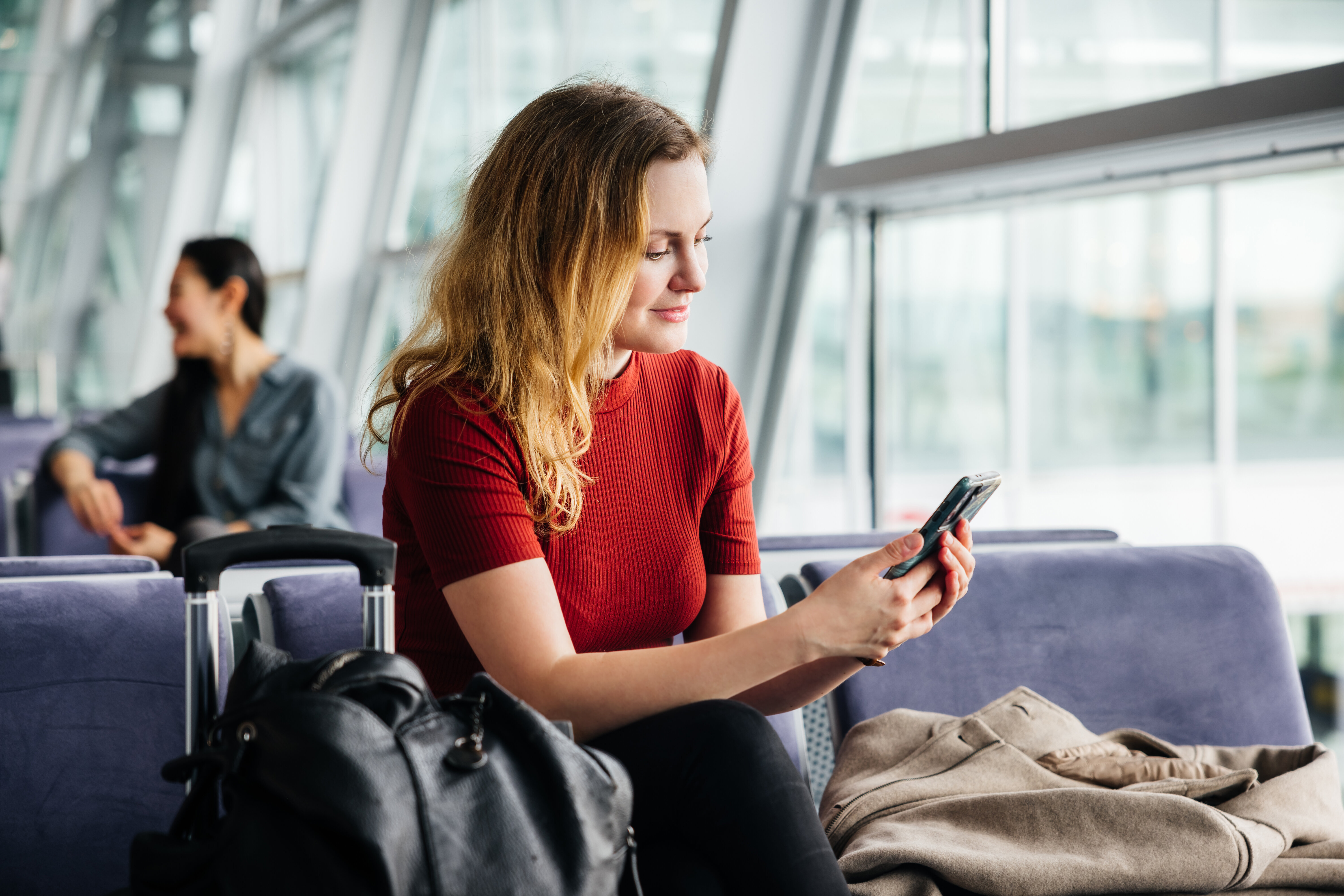
Departure lounges in airports are, at the best of times, incredibly dull and if your flight is delayed, you may find yourself cycling through apps on your phone, grasping at straws for entertainment and distraction.

Of course, this drains your battery and what is the first thing you do when you see that all-important battery running down? Look for an outlet to plug your phone into.

Now, personally, I never travel without at least two charged battery packs but less anxious people tend to find USB ports in airport lounges which may seem handy but according to multiple UK airlines, you shouldn’t be so readily using these outlets.

Why you should never charge your phone in the airport

Travel expert Megan who shares travel tips on advice on her YouTube channel Portable Professional said: “Using an airport USB to charge your devices can expose you to a scam called ‘juice jacking’. This happens when public USB ports are manipulated to steal data from your devices that are connected to them.”

Cool, cool, cool.

Instead, Megan advises using a travel adapter for your plugs.

She said: “Using an adapter allows you to safely connect to outlets. Unlike USB ports, AC outlets are purely for power and they don’t transfer data, ensuring there is no risk to your personal information while it’s charging.

“Navigating airport layovers with multiple devices can be tricky, and a big mistake that travellers make is not having a plan to keep all of their devices charged.”

<div class="js-react-hydrator" data-component-name="YouTube" data-component-id="5035" data-component-props="{"itemType":"video","index":12,"contentIndexByType":1,"contentListType":"embed","code":"

","type":"video","meta":{"author":"Portable Professional (Travel Tips with Megan)","author_url":"https://www.youtube.com/channel/UC5XIgzc2Qm7BhWl1vjyQoQQ","cache_age":86400,"description":"Use code Megan10 for 10% off Unbound Merino clothing: https://bit.ly/PP-Merino\nMy favorite pants for travel (I’m obsessed!): https://bit.ly/PP-MerinoPants\n\nThere are 8 common mistakes travelers make at the gate before boarding a flight. In today’s video we will break down each travel mistake and share some sneaky insider hacks that will make you feel like an airport expert the next time you fly. Pay special attention to #8 if you are checking a bag at the airport or taking an international flight. \n\nDon’t forget to SUBSCRIBE for weekly tips & hacks: https://bit.ly/subscribe-travel-hacks\n\nMy Recommended TSA-FRIENDLY Snacks for the Plane: https://bit.ly/AirportSnacks-PP\n\n✈️ TRAVEL RESOURCES\nBest Travel Insurance for Seniors: https://bit.ly/Travel-coverage\nTop rated VPN for Travel (only $3!): https://bit.ly/PP-nordvpn\nBest Value Luggage (discount code: Megan15): https://bit.ly/level8-1\nIncredible Tour Deals: https://bit.ly/3sok4mt\nMost Affordable Travel Insurance: http://bit.ly/PortableProfessional-Insurance\nTop-rated E-Sim to Use Phone Internationally: https://bit.ly/PP-holafly\nMy Go-To Travel Clothing: https://bit.ly/PP-Merino\nMy Most-Loved Travel Gear on Amazon: https://www.amazon.com/shop/megan.gougeon\nFree Travel Hack Newsletter: https://bit.ly/PP-travelnewsletter\nFree eBook with my Top Travel Hacks: https://bit.ly/PP-TravelHacks\n\n🌎 WATCH NEXT\nhttps://www.youtube.com/watch?v=6O5in_2Pz-A&t=233s&list=UULF5XIgzc2Qm7BhWl1vjyQoQQ\nhttps://www.youtube.com/watch?v=Ds-CWngjItU&list=UULF5XIgzc2Qm7BhWl1vjyQoQQ&feature=youtu.be\nhttps://www.youtube.com/watch?v=IBQIlgCTiew&list=UULF5XIgzc2Qm7BhWl1vjyQoQQ\nhttps://www.youtube.com/watch?v=VslV_lj9-SM&list=UULF5XIgzc2Qm7BhWl1vjyQoQQ\nhttps://www.youtube.com/watch?v=ud-2dsFd5zI&list=UULF5XIgzc2Qm7BhWl1vjyQoQQ&feature=youtu.be\n\nWelcome to Portable Professional, where I, Megan, use my experience from over 300 flights to offer you simple, practical and game-changing travel tips and hacks. Our mission is to help you reduce stress and make the most of every trip.\n\nDon’t forget to SUBSCRIBE for weekly tips & hacks: https://bit.ly/subscribe-travel-hacks\n\n🐶 Chapters\n00:00 Introduction\n00:13 Check this at the gate!\n00:45 Iphone travel hack\n01:47 Must-have for flight\n02:41 Wear THIS (not THAT!)\n03:51 Do before boarding (or regret it!)\n04:41 Food & drink rules\n05:07 Plane charger warning\n06:14 Luggage mistake\n06:39 Essential boarding documents\n07:25 Mobile ticket tip\n07:57 Gate checked luggage \n08:31 Gate check vs. checked bag\n08:53 Personal item packing tip\n09:27 Don’t rush this…\n\n\nAffiliate Disclosure: This content contains affiliate links. We may receive compensation at no additional cost to you if you click through and make a purchase. Thank you for your support!\n#UnboundMerino","options":{"_cc_load_policy":{"label":"Closed captions","value":false},"_end":{"label":"End on","placeholder":"ex.: 11, 1m10s","value":""},"_start":{"label":"Start from","placeholder":"ex.: 11, 1m10s","value":""},"click_to_play":{"label":"Hold load & play until clicked","value":false}},"provider_name":"YouTube","thumbnail_height":720,"thumbnail_url":"https://i.ytimg.com/vi/aXh5C-Ss4-k/maxresdefault.jpg","thumbnail_width":1280,"title":"8 Things to NEVER do at the Airport Before Boarding a Flight","type":"video","url":"https://www.youtube.com/watch?v=aXh5C-Ss4-k","version":"1.0"},"flags":[],"enhancements":{},"fullBleed":false,"options":{"theme":"life","device":"desktop","editionInfo":{"id":"uk","name":"U.K.","link":"https://www.huffingtonpost.co.uk","locale":"en_GB"},"originalEdition":"uk","slideshowAd":{"scriptTags":[],"otherHtml":""},"slideshowEndCard":{"scriptTags":[],"otherHtml":""},"isMapi":false,"isAmp":false,"isVideoEntry":false,"isEntry":true,"isMt":false,"entryId":"666ada04e4b0dabf8cf68fe9","entryPermalink":"https://www.huffingtonpost.co.uk/entry/uk-travellers-urged-to-avoid-doing-1-very-common-departure-lounge-habit_uk_666ada04e4b0dabf8cf68fe9","entryTagsList":"travel,safety","sectionSlug":"lifestyle","deptSlug":null,"sectionRedirectUrl":null,"subcategories":"","isWide":false,"headerOverride":null,"noVideoAds":false,"disableFloat":false,"isNative":false,"commercialVideo":{"provider":"custom","site_and_category":"uk.lifestyle","package":null},"isHighline":false,"vidibleConfigValues":{"cid":"60afc140cf94592c45d7390c","disabledWithMapiEntries":false,"overrides":{"all":"60b8e525cdd90620331baaf4"},"whitelisted":["56c5f12ee4b03a39c93c9439","56c6056ee4b01f2b7e1b5f35","59bfee7f9e451049f87f550b","5acccbaac269d609ef44c529","570278d2e4b070ff77b98217","57027b4be4b070ff77b98d5c","56fe95c4e4b0041c4242016b","570279cfe4b06d08e3629954","5ba9e8821c2e65639162ccf1","5bcd9904821576674bc55ced","5d076ca127f25f504327c72e","5b35266b158f855373e28256","5ebac2e8abddfb04f877dff2","60b8e525cdd90620331baaf4","60b64354b171b7444beaff4d","60d0d8e09340d7032ad0fb1a","60d0d90f9340d7032ad0fbeb","60d0d9949340d7032ad0fed3","60d0d9f99340d7032ad10113","60d0daa69340d7032ad104cf","60d0de02b627221e9d819408"],"playlists":{"default":"57bc306888d2ff1a7f6b5579","news":"56c6dbcee4b04edee8beb49c","politics":"56c6dbcee4b04edee8beb49c","entertainment":"56c6e7f2e4b0983aa64c60fc","tech":"56c6f70ae4b043c5bdcaebf9","parents":"56cc65c2e4b0239099455b42","lifestyle":"56cc66a9e4b01f81ef94e98c"},"playerUpdates":{"56c6056ee4b01f2b7e1b5f35":"60b8e525cdd90620331baaf4","56c5f12ee4b03a39c93c9439":"60d0d8e09340d7032ad0fb1a","59bfee7f9e451049f87f550b":"60d0d90f9340d7032ad0fbeb","5acccbaac269d609ef44c529":"60d0d9949340d7032ad0fed3","5bcd9904821576674bc55ced":"60d0d9f99340d7032ad10113","5d076ca127f25f504327c72e":"60d0daa69340d7032ad104cf","5ebac2e8abddfb04f877dff2":"60d0de02b627221e9d819408"}},"connatixConfigValues":{"defaultPlayer":"8b034f64-513c-4987-b16f-42d6008f7feb","clickToPlayPlayer":"5a777b9b-81fe-41a6-8302-59e9953ee8a2","videoPagePlayer":"19654b65-409c-4b38-90db-80cbdea02cf4"},"topConnatixThumnbailSrc":"data:image/png;base64,iVBORw0KGgoAAAANSUhEUgAAAAEAAAABCAQAAAC1HAwCAAAAC0lEQVR42mNkYAAAAAYAAjCB0C8AAAAASUVORK5CYII=","customAmpComponents":[],"ampAssetsUrl":"https://amp.assets.huffpost.com","videoTraits":null,"positionInUnitCounts":{"buzz_head":{"count":0},"buzz_body":{"count":0},"buzz_bottom":{"count":0}},"positionInSubUnitCounts":{"article_body":{"count":7},"blog_summary":{"count":0},"before_you_go_slideshow":{"count":0}},"connatixCountsHelper":{"count":0},"buzzfeedTracking":{"context_page_id":"666ada04e4b0dabf8cf68fe9","context_page_type":"buzz","destination":"huffpost","mode":"desktop","page_edition":"en-uk"},"tags":[{"name":"travel","slug":"travel","links":{"relativeLink":"news/travel","permalink":"https://www.huffingtonpost.co.uk/news/travel","mobileWebLink":"https://www.huffingtonpost.co.uk/news/travel"},"section":{"title":"Life","slug":"lifestyle"},"topic":{"title":"Travel","slug":"travel","overridesSectionLabel":false},"url":"https://www.huffingtonpost.co.uk/news/travel/"},{"name":"safety","slug":"safety","links":{"relativeLink":"news/safety","permalink":"https://www.huffingtonpost.co.uk/news/safety","mobileWebLink":"https://www.huffingtonpost.co.uk/news/safety"},"url":"https://www.huffingtonpost.co.uk/news/safety/"}],"isLiveblogLive":null,"cetUnit":"buzz_body","bodyAds":["

\r\n\r\n HPGam.cmd.push(function(){\r\n\t\treturn HPGam.render(\"inline-1\", \"entry_paragraph_1\", false, false);\r\n });\r\n\r\n","

\r\n\r\n HPGam.cmd.push(function(){\r\n\t\treturn HPGam.render(\"inline\", \"entry_paragraph_2\", false, false);\r\n });\r\n\r\n","

\r\n\r\n HPGam.cmd.push(function(){\r\n\t\treturn HPGam.render(\"inline-2\", \"entry_paragraph_3\", false, false);\r\n });\r\n\r\n","

\r\n\r\n HPGam.cmd.push(function(){\r\n\t\treturn HPGam.render(\"inline-infinite\", \"repeating_dynamic_display\", false, false);\r\n });\r\n\r\n"],"adCount":0},"isCollectionEmbed":false}”>

How to keep your information safe when travelling

According to the National Security Alliance, these are the steps we must take to keep our information safe while travelling: “Back up your data and make sure your software is updated.

“Use complex, unique, and long passwords for every account, along with multi-factor authentication (MFA). Use a password manager to generate, maintain, and store your strong passwords! Secure every device with a password and MFA.”

Stay safe out there!

Share Button