I Told My Mum I Wanted To Get My Tubes Tied At Age 20. Her Response Changed My Life

I love my little nephew. He has a kid-sized broom that he uses to dance around in his diapers to Freddie Mercury songs as if it’s his microphone.

And I love my little niece, to whom “uppy” means both “pick me up” and “put me down,” and to whom “no” is a magical word for exercising newfound willpower.

I’m always happy to see them, and I have a great time learning from and with them about the world. But when they go home, and the house is so nice and quiet, I breathe a deep sigh of thanks: I get to give them back!

Then I can decide with my husband, Tim, to suddenly go out for dinner (without a diaper bag or babysitter), to go camping, or to visit a casino. We can go see some raucous band and stay out till 1am, or we can fall asleep on the couch watching TV and drinking wine, and wake up whenever we want.

I’m in the phase of life when so many people I know ache to become parents, but meanwhile, I love being child-free. This is, believe it or not, all thanks to my own mum, who also loved her child-free life before she had kids, and made sure to let me know that was OK.

My mum is a badass. She was a nerd growing up, just like me. And just like me, she wanted to travel and go to college, but she had very few financial resources.

So, one day, she joined the army as an interpreter. She went to a language institute and passed a Russian-language program that only a tiny portion of her incoming class passed, and then flew to Germany to work on a mountaintop compound. She was one of three women in a company of 300 men listening to German and Russian soldiers on the radio, translating it all into English for Army intelligence.

That’s where she met my dad. They got married and travelled, came back stateside, and went to college. Roughly eight years later, they had me.

It’s no wonder, then, that when my mum asked me what I wanted from my life as I was having a teenage existential meltdown, I said: “I just want to have an extraordinary life.”

I wanted to travel, take risks, get into trouble, have adventures, go to college and, eventually, make what I hoped would be a positive difference in the world.

I was inspired by my mum’s own life. And at that time in my world, like her, I felt limited only by money, as I had all the other great propulsive forces of youth, like energy, recklessness and idealism. Plus, after my parents’ divorce, my mum, my brother and I lived in my grandmother’s attic, and space was a little tight.

I wanted to explode outward into newness. So when I did move out of the house with my first boyfriend, at about age 20, and my period was late one month, that potential pregnancy felt to me like a very bad thing – not a boon.

I hadn’t travelled.

I hadn’t gone to college, or had any adventures.

I hadn’t taken any big risks.

I sure hadn’t made a difference in the world.

Nick was a nice boyfriend, and he told me he’d get on board with whatever path I wanted to choose: get married and have the baby, have the baby and not get married, put the baby up for adoption, or get an abortion.

I thought about it for a few days and tried on all of these options in my mind. But after much mulling, the only way that felt right was to go on with my original plan of having a wild and free life. I didn’t want a baby. I didn’t want to be pregnant.

I felt like I was about to get stuck in my hometown for the next few decades, changing diapers and picking out public schools.

I decided I would get an abortion on the same day my period came back of its own volition, and I heaved a mental sigh of relief.

However, I was very aware that I had dodged a big baby-sized bullet, despite all of my birth control efforts from the age of 15 onward. And I decided, if I was not to become a mum, that I wanted to be able to have sex like a man, with fewer consequences in the reproductive department.
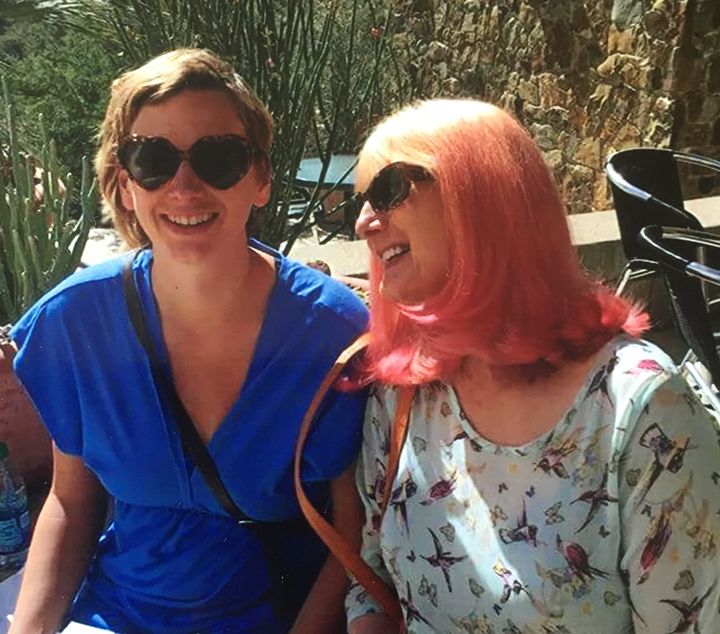
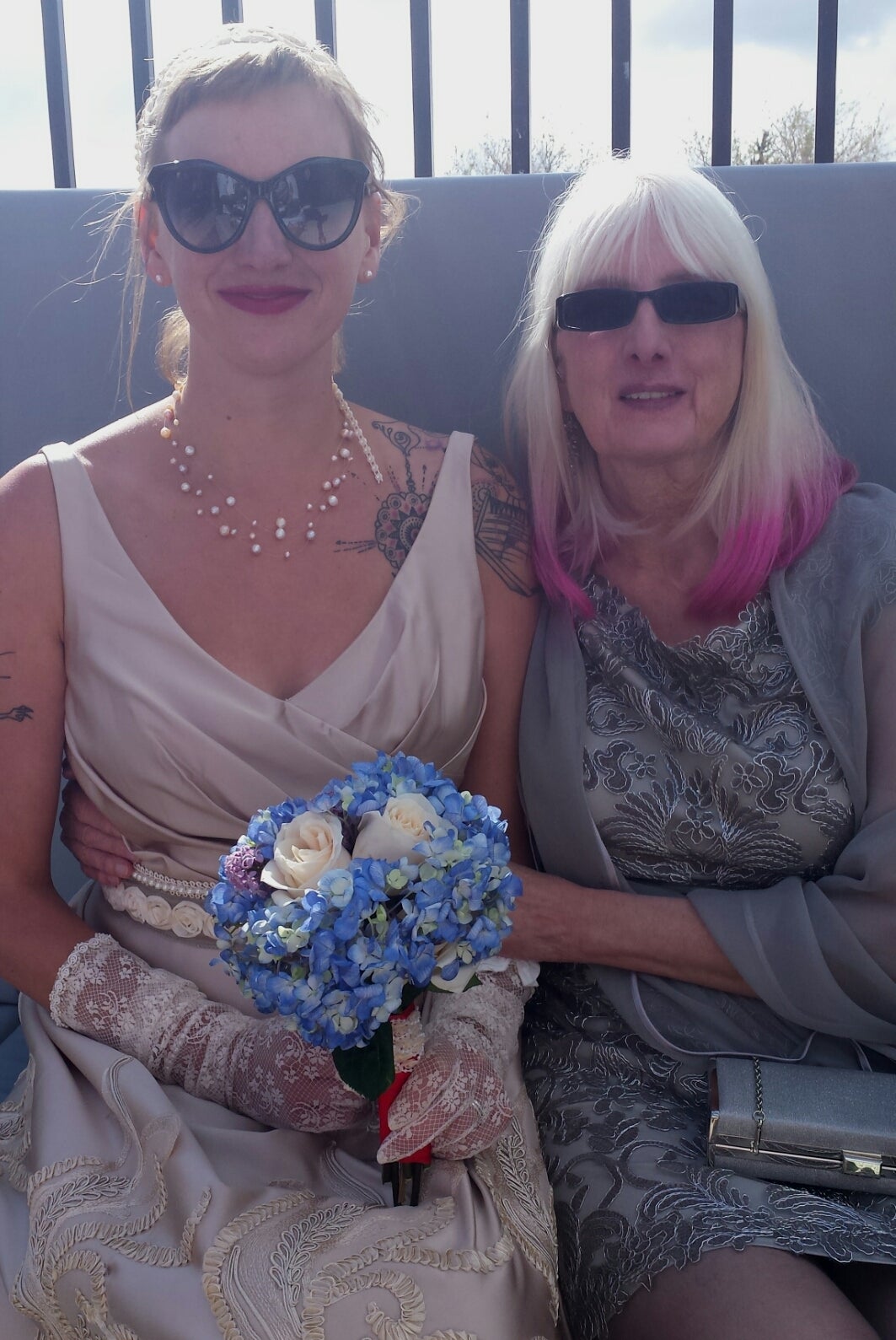
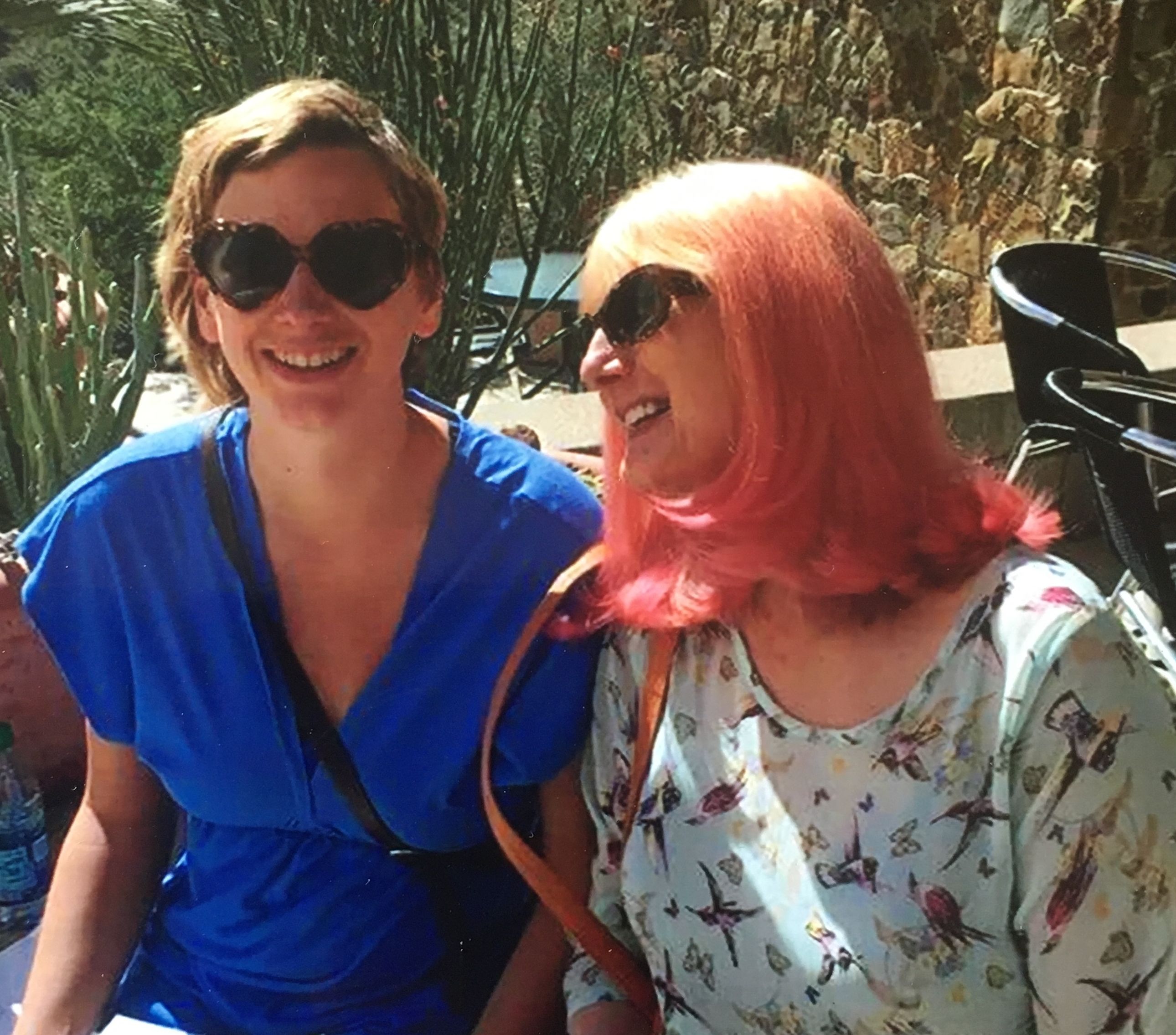
The author, in her early 30s, with her mom in Arizona.

Courtesy of Lydia Paar

The author, in her early 30s, with her mom in Arizona.

I was able to admit to myself for the first time that I knew I did not ever want to have kids – at least not in any traditional biological sense. If I ever changed my mind about mothering, well, there are millions of kids in the world needing homes.

So, I went and talked to the only person I felt might really understand my need to not mother: my mother.

My mum did something very important for me as I was growing up: she’d told me about some of her experiences in the sex realm, helped me to understand what I was feeling when these experiences started to arise for me, and answered all my questions about how this weird and impactful part of life worked.

Because of this open channel of communication, I knew that my grandmother had flown my mum to Japan in the ’60s for an abortion when she was 18, after American doctors they’d consulted said she “didn’t look sad enough” for a procedure here.

And just as I’d hoped she would, my mum helped me. She offered to take me to get an intrauterine device. I said I’d prefer to just have my tubes tied and be done with it, having already heard my fair share of IUD health horror stories (including hers).

And instead of telling me to “just wait and see” or that I would “probably change my mind” like so many other people have, she called around and got me into an abortion clinic, where I sat down with a counsellor and earnestly explained my desire never to have children. Within a week or two, I had an outpatient tubal ligation procedure.

Looking back now, I realise it must have taken my mum a lot of searching to find a doctor willing to perform this on such a young woman with no previous children; most doctors wouldn’t have, whether out of fear of being sued if I did “change my mind,” or because so many people still believe that all women inherently want or ought to have children.

I also know now, having had my own health care plans and understanding what “elective surgery” means, that when my mum said she had “wrangled things out with our health plan,” she meant she had in fact quietly paid for this surgery for me out of pocket.

So here I am, child-free at 40 and at the doorstep of menopause, remembering, with gratitude, this generous gift. I also remember those other voices:

“You might change your mind.”

“You’re just not ready yet.”

“Your biological clock will kick in someday.”

These are sentiments that have floated around me for years, before and after my tubal, not only from the popular media but from people I’ve loved and trusted. And these are mythologies that surround every woman on the planet, every day: the idea that we are born and built to breed.

“Womanhood is not synonymous with motherhood. For many of us, our truest selves are the selves without progeny.”

We are, as an American culture at least, very much in midprocess of correcting this idea. Womanhood is not synonymous with motherhood. For many of us, our truest selves are the selves without progeny.

And when people, often women, ask me how I feel about things now, I tell them wholeheartedly that I’ve never regretted my decision to amend my reproductive capacities – not once. (I’ve even recommended the procedure to interested parties.) But it’s also important to acknowledge that if I did have regret, it would have been my own choice to regret – not anyone else’s. And that kind of regret, born of agency, is still good; it would have been mine to own.

Needless to say, it’s since become important to me that other women know this “child-free by choice” option is viable from early on in our lives.

I would have been a bad mum at 20: resentful and risky and selfish. I’d still be a mostly bad mum – a little more risk-averse, but covetous of my time alone, my mobility, and my ability to have sex anytime I want without period planning, birth control side effects, and potentially life-changing consequences. I’ve gotten to move over 25 times in the past two decades, meet a ton of people, see and do crazy things, and go to college – a lot.

I’ve been able to reallocate my energy to get really good at other things besides mothering. Not that I buy into the “either-or” myth of motherhood; there are many amazing women who can manage an impressive amount of autonomy, professionalism and wildness while still doing right by their children. It’s just that I knew I couldn’t – and I didn’t want to anyway.

And it’s because people listened to me – my mum and the counsellors and doctors at Oregon’s Lovejoy Surgicenter – that I was able to live the life I wanted to live.

So my takeaway here, besides the closely related “vote pro-choice” sentiment, is that when someone, especially a woman, says, “I don’t think parenthood is for me,” we need to honour and respect them in the same way we would an aspiring parent. Both choices are equally natural, equally potent and equally rich with possibility.

Doctors, support women in permanent birth control when they ask for it. Friends and family, believe what women tell you about their bodies.

Then there remains just this little bonus takeaway: We should remember to enjoy, and to spoil, our nieces and nephews, at least a bit, before we give them back to their parents, who chose the hard work that parenthood entails.

Lydia Paar is an essayist and fiction writer. Her essay “Erasure” was of notable mention in the 2022 “Best American Essays” collection, and was the 2020 winner of North American Review’s Terry Tempest Williams Creative Nonfiction Prize. The New England Review nominated her as a finalist for its 2021 Award for Emerging Writers, and her works have been showcased in outlets such as Literary Hub, The Missouri Review, Essay Daily, Witness, Hayden’s Ferry Review and others. The recipient of an MFA from Washington University in St. Louis and a master’s from Northern Arizona University, Paar is also a former recipient of a Frederick & Frances Sommer Fellowship and of a Millay Arts residency. She currently co-edits for the NOMADartx Review and teaches writing at the University of Arizona. Her first full-length essay collection, “The Entrance Is the Exit: Essays on Escape,” is forthcoming from the University of Georgia Press. She can be reached there or at www.lydiapaar.com.

Do you have a compelling personal story you’d like to see published on HuffPost? Find out what we’re looking for here and send us a pitch.

Share Button

‘Failure to act’ on suicide website linked to 50 UK deaths

UK families angry at lack of action to shut down online suicide forum despite coroners’ warnings.

Share Button

Cathode active materials for lithium-ion batteries could be produced at low temperatures

Layered lithium cobalt oxide, a key component of lithium-ion batteries, has been synthesized at temperatures as low as 300°C and durations as short as 30 minutes.

Lithium ion batteries (LIB) are the most commonly used type of battery in consumer electronics and electric vehicles. Lithium cobalt oxide (LiCoO2) is the compound used for the cathode in LIB for handheld electronics. Traditionally, the synthesis of this compound requires temperatures over 800°C and takes 10 to 20 hours to complete.

A team of researchers at Hokkaido University and Kobe University, led by Professor Masaki Matsui at Hokkaido University’s Faculty of Science, have developed a new method to synthesize lithium cobalt oxide at temperatures as low as 300°C and durations as short as 30 minutes. Their findings were published in the journal Inorganic Chemistry.

“Lithium cobalt oxide can typically be synthesized in two forms,” Matsui explains. “One form is layered rocksalt structure, called the high-temperature phase, and the other form is spinel-framework structure, called the low-temperature phase. The layered LiCoO2 is used in Li-ion batteries.”

Using cobalt hydroxide and lithium hydroxide as starting materials, with sodium or potassium hydroxide as an additive, the team conducted a series of high-precision experiments under varying conditions to synthesize layered LiCoO2 crystals. The process was called the “hydroflux process.” They were also able to determine the reaction pathway that led to the formation of the layered crystals.

“By understanding the reaction pathway, we were able to identify the factors that promoted the crystal growth of layered LiCoO2,” Matsui said. “Specifically, the presence of water molecules in the starting materials significantly improved crystallinity of the end product.”

The team also measured the electrochemical properties of the layered LiCoO2, showing that they were only marginally inferior to that of commercially available LiCoO2 synthesized by the traditional high temperature method.

“This work is the first experimental demonstration of the thermochemical stability of layered LiCoO2 at low temperatures under ambient pressure,” concludes Matsui. “Our development of this hydroflux process will enable energy saving measures in various ceramic production processes. Our immediate next steps will be the improvement of the hydroflux process based on our understanding of the reaction pathway.”

Share Button

Longer rugby careers linked to higher risk of brain injury – study

Scientists found signs of degenerative disease in professional as well as club players’ brains.

Share Button

How to slow the spread of deadly ‘superbugs’

Harnessing new advances in genomic surveillance technology could help detect the rise of deadly ‘superbugs’ and slow their evolution and spread, improving global health outcomes, a new Australian study suggests.

Antimicrobial resistance occurs when bacteria, viruses, fungi and parasites change over time and no longer respond to the medicines and chemicals we use to kill them. These ‘superbugs’ make infections harder to treat and increase the risk of disease spread, severe illness and death.

Without significant intervention, global annual deaths involving antimicrobial resistance are estimated to reach 10 million by 2050, with low and middle-income countries bearing the highest burden.

The new study, Genomic surveillance for antimicrobial resistance — a One Health perspective, published in Nature Reviews Genetics, highlights the need for a multifaceted ‘One Health’ approach to the surveillance of antimicrobial resistance in the environment.

The research was led by Distinguished Professor Steven Djordjevic from the Australian Institute for Microbiology and Infection at the University of Technology Sydney, together with researchers from the University of Melbourne and the University of South Australia.

“Antimicrobial resistance is a complex and global threat requiring large-scale, co-ordinated and cross-disciplinary collaboration to tackle,” said Professor Djordjevic.

“Understanding the evolution, emergence and spread of antimicrobial resistance within and between humans, animals, plants and natural environments is critical in mitigating the colossal impacts associated with this phenomenon.”

The use of genomic tracing during the Covid-19 pandemic has provided insight into the potential of genomic technologies to monitor the development and spread of antimicrobial genes and mutations.

advertisement


“Antimicrobial resistance can occur when microorganisms acquire genetic information, either by mutation, recombination or transfer of antibiotic resistance genes from the bacterial gene pool,” said Professor Erica Donner from the University of South Australia.

“Genomic technologies, combined with AI and machine learning, are powerful platforms for determining resistance trends. They can identify instances where microbes and their genetic material move between different environments, evaluating the impact of intervention strategies.

“The evolution of antimicrobial resistance is a complex process that includes the overuse and misuse of antibiotics, metals and disinfectants in medicine and agriculture, and widely varying standards of water, sanitation and hygiene.”

The paper is a call to action for policymakers, highlighting the need to establish national genomic surveillance programs spanning human health, animal health, agriculture, food and environmental management sectors and to share data at both a national and international level.

“Utilising the technology of microbial genomics in the context of effective cross-sectoral data integration will enhance the understanding of antimicrobial resistance emergence and spread within and across these sectors and identify targeted interventions” said Professor Ben Howden from the University of Melbourne.

The researchers provide practical recommendations to implement genomics-enabled surveillance and mitigation strategies and underscore the need for equitable solutions that allow integration of partners from lower- and middle-income countries.

The recommendations include:

  • Establishing a national One Health antimicrobial resistance surveillance programme incorporating genomics
  • Increase antimicrobial resistance awareness and education and foster collaboration
  • Enhancing laboratory capacity in lower and middle-income countries
  • Encouraging research and innovation
  • Strengthening regulation and oversight in agriculture
  • Improving antibiotic stewardship

“The evolutionary nature of antimicrobial resistance makes it a constantly changing and evolving threat. There is no easy solution, but ongoing genomic surveillance can help us better understand and mitigate this global health challenge,” said Professor Djordjevic.

Share Button

Researchers capture first images of a radio ‘ring of fire’ solar eclipse

Researchers at New Jersey Institute of Technology’s Center for Solar-Terrestrial Research (NJIT-CSTR) have captured the Oct. 14 solar eclipse in a way never seen before — recording the first radio images of an annular eclipse’s famous “ring of fire” effect.

The eclipse was partially visible to much of the continental U.S. for several hours that Saturday, though the full “ring of fire” effect was only visible for less than five minutes, and only for those within its 125-mile-wide path of annularity.

However, the new observations of the radio Sun’s eclipse — much longer in duration than the partial eclipse recently experienced by millions on Earth due to the extended solar corona as seen at radio wavelengths — have yielded stunning images of the eclipse’s ring lasting for over an hour.

Researchers used the newly commissioned Owens Valley Radio Observatory Long Wavelength Array (OVRO-LWA) in the Owens Valley Radio Observatory, CA to make their breakthrough observation of radio waves emanating from the Sun’s extended corona, as the moon passed between Earth and its nearest star.

“To finally see a ‘ring of fire’ eclipse this way was spectacular … we haven’t seen this quality of radio imaging of the Sun before.” said Dale Gary, NJIT-CSTR distinguished professor of physics and co-investigator on the OVRO-LWA project, which is funded by the National Science Foundation.

“We normally cannot see the corona from the ground except during a total eclipse, but we can now see it all the time with OVRO-LWA. This eclipse makes it that much more dramatic.”

“From our observatory site in California we were not in the belt to see the annular eclipse, yet we’ve been able to ‘see’ it all clearly unfold in radio, which reveals a much larger solar disk than its visible counterpart thanks to its sensitivity to the extended solar corona,” said Bin Chen, NJIT-CSTR associate professor of physics who led the data reduction and processing together with NJIT researchers Surajit Mondal and Sijie Yu.

advertisement


“Science-wise, this is a unique opportunity to study the Sun’s extended corona with the highest resolution possible at these wavelengths, taking advantage of the moon’s limb as a moving ‘knife edge’ to increase the effective angular resolution,” said Chen.

OVRO-LWA, a multi-institutional project directed by Gregg Hallinan at California Institute of Technology, uses a set of 352 antennas to sample thousands of radio wavelengths between ~20-88 MHz.

For solar science, it offers the highest-quality images yet of the radio Sun in this wavelength regime, which is roughly two times larger than the visible solar disk.

“Documenting this spectacular event was a great opportunity to announce the successful operation of OVRO-LWA as a new radio facility to study the Sun and many other objects including exoplanets, cosmic-rays, the early universe, and more,” said Hallinan.

While the next annular solar eclipse is expected to be visible from South America in October 2024, those in the U.S. will need to wait until June 2039 to view the next ‘ring of fire’ eclipse on home soil. However, a total eclipse visible across the central U.S. will occur sooner, next April 8.

However, the team say the recent eclipse event is an outstanding example of the first observations of the Sun with the instrument. With the new capabilities OVRO-LWA offers, exciting science is expected in the near future — particularly as solar activity of the current 11-year solar cycle peaks in 2025 during the expected “solar maximum.”

“We are now working on an automated data processing pipeline that will soon produce near-real-time solar images and make them available to the public,” said Chen. “These eclipse images serve as a proof-of-concept for this effort. The unprecedented data products coming soon will open new opportunities for discovery in solar astronomy and space weather studies.”

Share Button

Thousands of men miss out on life-extending prostate cancer drug

There is a call for more men in England and Northern Ireland to have access to the treatment.

Share Button

Critics Bring The Receipts Over Trump’s New Claim About Sidney Powell

Donald Trump is suddenly claiming Sidney Powell was never his attorney, but reporters and social media users were quick to jog his memory.

The former president posted on Truth Social on Sunday morning that the election-denying lawyer “WAS NOT MY ATTORNEY, AND NEVER WAS.”

The post followed Thursday’s news that Powell had reached a deal with Fulton County prosecutors handling the Georgia racketeering case against Trump and 17 others over an alleged plot to change the state’s 2020 election results.

Powell pleaded guilty to six misdemeanours related to intentionally interfering with an election.

In exchange for her cooperation with prosecutors, Powell must serve six years of probation, pay a fine of $6,000 (£4,940) and write an apology to Georgia residents.

Over on X (formerly Twitter), people promptly pointed out someone who contradicts Trump’s latest version of events: Trump, in 2020.

Trump announced in a tweet on November 15, 2020, that Powell had joined his “truly great” legal team, weeks after losing the election to YS President Joe Biden, as the Washington Post’s Aaron Blake noted.

Trump’s former personal attorney Rudy Giuliani, who led the legal charge to overturn the 2020 results, also made comments explicitly to the contrary.

At a now-infamous press conference on November 19, 2020, Giuliani introduced himself, Powell and others as members of Trump’s legal team, saying, “We’re representing President Trump and we’re representing the Trump campaign.”

Powell testified under oath before the House January 6 committee that Trump had asked her to be “special counsel to address the election issues.”

Video of that moment from her deposition was shown at one of the panel’s congressional hearings last year.

Some people, including HuffPost’s SV Dáte, also noted that if Trump claims Powell was never his attorney, then that means he was never entitled to attorney-client privilege — a tidbit that prosecutors might find useful.

See some of the other posts about Trump’s claim below:

Share Button

EastEnders Fans Uncover Potential Return Of Soap Villain After On-Set Clue

Between Michelle Collins’ comeback as Cindy Beale, and Jaqueline Jossa’s forthcoming reappearance as Lauren Branning, the EastEnders returnees have been coming thick and fast lately.

And now fans are convinced that another big character is set to walk back into Walford in the very near future – the villainous Dean Wicks.

Dean Wicks in EastEnders

Played by actor Matt Di Angelo, Dean left the BBC soap back in 2016 after being acquitted of the attempted rape of Roxy Mitchell (played by Rita Simmons).

But now, eagle-eyed followers of the show seem to have spotted Matt in the background of a photo which was taken in the Queen Vic pub.

“This BTS pic of current filming for Xmas eps, I swear this is Dean in the background..,” one fan wrote on X/Twitter.

The potential news comes after show boss Chris Clenshaw teased that Linda Carter, played by Kellie Bright, will be getting a major shock this Halloween.

The Queen Vic landlady – who was raped by Dean back in 2014 – is facing her first year without husband Mick (Danny Dyer), who is presumed to be dead after drowning in a horrific car crash last Christmas.

“Poor Linda’s struggling this Halloween as it’s the first one without Mick,” Chris previously told Inside Soap. “Obviously she wasn’t with Mick this time last year, but Halloween was very much their thing, and something they did together in the Vic.

“So, she’s trying her best to make a go of things, but she gets one hell of a surprise that she doesn’t bargain for…”

Linda Carter will get "one hell of a surprise" on Halloween
Linda Carter will get “one hell of a surprise” on Halloween

BBC/Jack Barnes/Kieron McCarron

And fans will also know that a huge Christmas storyline is set to go down, which was hinted at in a dramatic flash-forward episode back in February, and showed Linda, Suki Panesar, Stacey Slater, Denise Fox, Sharon Watts and Kathy Beale standing over a male body in the Walford pub.

The identity of the victim and the killer are yet to be revealed – but with Dean’s potential return to the street, could this be the way he meets his grizzly end?

A source told The Sun: “Dean is the ultimate villain so to bring him back was a genius move especially with everything that’s coming up this autumn. There’s also the small matter of the big murder at Christmas, could it be Dean’s body under the tree?

“We know that Linda is one of the women involved, and this just throws another name in the mix. It’s a very exciting time.”

EastEnders airs Monday to Thursday at 7.30pm on BBC One.

Share Button

Michael Gove Delays Scrapping No-Fault Evictions In Face Of Major Tory Rebellion

Michael Gove has delayed plans to end no-fault evictions after dozens of Tory MPs threatened to vote against it.

The levelling up secretary said the changes – which were promised in the Conservatives’ election manifesto – would not go ahead until reforms were made to the way courts handle so-called “Section 21” cases.

But Labour accused him of striking a “grubby deal” with Tory MPs to avoid an embarrassing backbench rebellion.

Gove’s climbdown was revealed in a letter to MPs ahead of a Commons debate on the Renters Reform Bill.

In it, he said ministers will “reform the courts before we abolish section 21”.

Shadow levelling up secretary Angela Rayner said: “The government has betrayed renters with this grubby deal with the Tory backbenches.

“The Conservatives’ long-promised ban on no-fault evictions has majority and cross-party support across the House, but this flip-flop kicks it into the long grass.

“Having broken the justice system, they are now using their own failure to indefinitely delay keeping their promises to renters in the most underhand way.”

She added: “Tens of thousands more families who the government promised to protect, now face the prospect of being threatened with homelessness or kicked out of their homes by bailiffs.”

A spokesman for Rishi Sunak this morning insisted the government was still committed to ending no-fault evictions, but could not guarantee that it will happen before next year’s general election.

He said: “We think that this is an important commitment. Equally, it’s right that the right provisions are in place.”

One of the Tory rebels, Marco Longhi, told LBC: “The consequences of this well-meaning legislation is a reduction in supply as landlords continue to leave the market.

“Where will these tenants go at a time of huge demand? This is an inflationary measure that will make things worse for tenants.”

Share Button