Wearable devices show who may need more help managing diabetes

A new Dartmouth study in the journal Science Advances suggests that how well people with diabetes manage their blood sugar depends on their experience with the condition and their overall success in controlling their glucose levels, as well as on the season and time of day. The findings could help physicians identify those patients who could benefit from more guidance in regulating their blood sugar, particularly at certain times of year.

The researchers accessed data from wearable glucose monitors that showed how 137 people in the U.S. aged 2 to 76 living primarily with type 1, aka juvenile, diabetes managed their blood sugar on a daily basis. By analyzing more than 91,000 days of data, the study provides the most detailed look yet at how diabetes management can vary by month, day, age, and even how experienced a patient is with the condition.

Patients in the study tended to maintain healthier blood sugar levels from April to September, the researchers found. In these warmer months when activity levels tend to be higher, glucose levels stayed in the healthy range through a larger part of the day than average. In the colder months from October to February, however, the time spent within the normal range was lower than average.

This effect was amplified during the holidays for participants of all ages, with New Year’s Day and Christmas topping the list of days when sugar levels strayed outside the desired target range more often. Despite being a warm-weather holiday, Independence Day was third on the list of days when poor glucose control was recorded.

“We’re looking for specific patterns that could potentially inform clinical guidelines and set the stage for targeted interventions,” says Temiloluwa Prioleau, assistant professor of computer science, one of the study co-authors. The authors note that the majority of their study participants had type 1 diabetes, so it is not clear how these findings might generalize to people with type 2 diabetes.

Some researchers and providers have hypothesized that changes in activity levels, lifestyle, and food intake during different seasons impact blood-glucose management, says co-author Prajakta Belsare, an assistant professor at James Madison University who worked on the study while she was a postdoctoral fellow in the Department of Computer Science.

Given the granularity of their data, the researchers also were able to investigate daily and weekly variations. They found that patients’ glucose levels were more likely to stay normal from Monday to Friday, and more so in the working hours from 9 a.m. to 5 p.m., than on weekends, suggesting that workweek routines have a positive effect.

advertisement


For Belsare, one of the more interesting results was how effectively different age groups manage their blood sugar.

“We found that young adults in the 19-to-34 age range were less proficient at managing blood glucose,” she says. It’s likely that this reflects the struggle that newly independent adults face in taking care of their own health without the oversight of parents or caregivers, says Belsare.

The paper doesn’t examine the factors driving the patterns they see. “I think the answer for the ‘why’ would be different for different people,” Prioleau says. “Our goal is to highlight what we’re observing at a population level. Hopefully, this will encourage people to leverage their own past data to inform and shape their future care, through behavioral changes when feasible, or through other types of intervention.”

Andrew Crawford, an assistant professor of medicine at the Geisel School of Medicine and interim section chief of endocrinology at Dartmouth Hitchcock Medical Center who was not involved in the study, says that it could help increase awareness among physicians that certain patients need more focused guidance at specific times of year.

As a physician who treats people with diabetes, Crawford said that the seasonal fluctuations described in the Dartmouth study are indeed consistent with what doctors see. People are less active in colder months and tend to consume more calories and sugary foods around year-end holidays. In warmer months, people are more physically active, which sensitizes the body to the effects of insulin and improves glycemic control, he said.

“What was most surprising to me, however, was that the seasonal variation, particularly the changes around major holidays, were not universal and differed substantially depending on the age of the patient and their general degree of glycemic control during the year,” Crawford says. “This underscores the fact that diabetes is largely a self-managed disease and that individuals with less experience managing their disease require additional education and support around major holidays to avoid hyperglycemia.”

Given the wealth of insights potentially buried in data from wearable sensors, access to real patient information is vital for research and clinical care, says Prioleau. In a previous study, she worked with Abigail Bartolome, Guarini ’23, and collaborators at Geisel to curate an anonymized dataset that the research community can now download to use in future studies intended to demystify diabetes.

“There are a lot of questions around how to personalize (diabetes) management,” she says, “and learning from each individual’s unique data can set the course towards delivering the best possible outcome for them.”


Share Button

Light and sound waves reveal negative pressure

Negative pressure is a rare and challenging-to-detect phenomenon in physics. Using liquid-filled optical fibers and sound waves, researchers at the Max Planck Institute for the Science of Light (MPL) in Erlangen have now discovered a new method to measure it. In collaboration with the Leibniz Institute of Photonic Technologies in Jena (IPHT), the scientists in the Quantum Optoacoustics research group, led by Birgit Stiller, can gain important insights into thermodynamic states.

As a physical quantity pressure is encountered in various fields: atmospheric pressure in meteorology, blood pressure in medicine, or even in everyday life with pressure cookers and vacuum-sealed foods. Pressure is defined as a force per unit area acting perpendicular to a surface of a solid, liquid, or gas. Depending on the direction in which the force acts within a closed system, very high pressure can lead to explosive reactions in extrem cases, while very low pressure in a closed system can cause the implosion of the system itself. Overpressure always means that the gas or liquid pushes against the walls of its container from the inside, like a balloon expanding when more air is added. Regardless of whether it’s high or low pressure, the numerical value of pressure is always positive under normal circumstances.

However, liquids exhibit a peculiar characteristic. They can exist in a specific metastable state corresponding to a negative pressure value. In this metastable state, even a tiny external influence can cause the system to collapse into one state or another. One can imagine it as sitting at the top of a roller coaster: the slightest touch on one side or the other sends you hurtling down the tracks. In their current research, the scientists are examining the metastable state of liquids with negative pressure. To achieve this, the research team combined two unique techniques in a study published in Nature Physics to measure various thermodynamic states. Initially, tiny amounts — nanoliters — of a liquid were encapsulated in a fully closed optical fiber, allowing both highly positive and negative pressures. Subsequently, the specific interaction of optical and acoustic waves in the liquid enabled the sensitive measurement of the influence of pressure and temperature in different states of the liquid. Sound waves act as sensors for examining negative pressure values, exploring this unique state of matter with high precision and detailed spatial resolution.

The influence of negative pressure on a liquid can be envisioned as follows: According to the laws of thermodynamics, the volume of the liquid will decrease, but the liquid is retained in the glass fiber capillary by adhesive forces, much like a water droplet sticking to a finger. This results in a “stretching” of the liquid. It is pulled apart and behaves like a rubber band being stretched. Measuring this exotic state typically requires complex equipment with heightened safety precautions. High pressures can be hazardous endeavors, particularly with toxic liquids. Carbon disulfide, used by the researchers in this study, falls into this category. Due to this complication, previous measurement setups for generating and determining negative pressures have required significant laboratory space and even posed a disturbance to the system in the metastable state. With the method presented here, the researchers have instead developed a tiny, simple setup in which they can make very precise pressure measurements using light and sound waves. The fiber used for this purpose is only as thick as a human hair.

“Some phenomena which are difficult to explore with ordinary and established methods can become unexpectedly accessible when new measurement methods are combined with novel platforms. I find that exciting,” says Dr. Birgit Stiller, head of the Quantum Optoacoustics research group at MPL. The sound waves used by the group can detect temperature, pressure, and strain changes very sensitively along an optical fiber. Furthermore, spatially resolved measurements are possible, meaning that the sound waves can provide an image of the situation inside the optical fiber at centimeter-scale resolution along its length. “Our method allows us to gain a deeper understanding of the thermodynamic dependencies in this unique fiber-based system,” says Alexandra Popp, one of the two lead authors of the article. The other lead author, Andreas Geilen, adds: “The measurements revealed some surprising effects. The observation of the negative pressure regime becomes abundantly clear when looking at the frequency of the sound waves.”

The combination of optoacoustic measurements with tightly sealed capillary fibers enables new discoveries regarding the monitoring of chemical reactions in toxic liquids within otherwise difficult-to-investigate materials and microreactors. It can penetrate new, hard-to-access areas of thermodynamics. “This new platform of fully sealed liquid core fibers provides access to high pressures and other thermodynamic regimes,” says Prof. Markus Schmidt from IPHT in Jena, and Dr. Mario Chemnitz, also from IPHT in Jena, emphasizes: “It is of great interest to investigate and even tailor further nonlinear optical phenomena in this type of fiber.” These phenomena can unlock previously unexplored and potentially new properties in the unique thermodynamic state of materials. Birgit Stiller concludes: “The collaboration between our research groups in Erlangen and Jena, with their respective expertise, is unique in gaining new insights into thermodynamic processes and regimes on a tiny and easy-to-handle optical platform.”

Share Button

NHS strikes: More than a million appointments cancelled in England

There are calls for both sides to end the doctors’ pay row, ahead of joint strike action next week.

Share Button

Rhod Gilbert Announces Mammoth Comedy Tour After Undergoing Cancer Treatment

Comedian Rhod Gilbert has confirmed he’s embarking on an epic 100-date tour next year.

The Welsh comic disclosed last year that he had been diagnosed with stage-four cancer, and previously told The Guardian about how he was using “humour” to help him through his treatment.

It’s now been announced that Rhod will be hitting the road in January, for a tour that is due to span until November 2025, with more than 100 shows planned across the UK and Ireland.

“After the year I’ve had, it’s wonderful to be alive and going back on the road,” he enthused. “I can’t wait to get back on stage and I’m ready to get way too personal about life’s recent ups and downs.

“When life gives you lemons, you have to squeeze them ’til the comedy juice flows, so prepare for some dark but funny s***.”

Rhod’s new show will be titled Rhod Gilbert & The Giant Grapefruit, with a post on his website explaining: “In his last show, The Book of John, Rhod was dealing with some pretty pungent life citrus, and an idiot called John. Little did he know that things were about to turn even more sour…

“But Rhod’s not bitter; he’s bouncing back and feeling remarkably zesty. Hilariously dark, passionate and way too personal, this is classic Gilbert, squeezing every last drop out of life’s latest curveballs… with a little help from an old adversary.

“This new live show sees Rhod back on stage doing what he does best. Candid, hilarious and uplifting; it’s a show about navigating the dark bits and turning life’s giant grapefruits into something approaching lemonade.”

The stand-up told The Guardian in January of this year: “When I get through this, the next show will be in a similar vein. The cancer is on my mind 24/7, but, when I’m well enough to write, I’m jotting down a few things. And there is humour in there, definitely.”

Revealing he’s “mad keen” to create his next stand-up show, Rhod added: “I’ve got a 250-page document of stuff that’s on the go.

“All my work has gone. My social life has gone. Everything has gone. Everything. It’s just me and this bloody cancer, really.”

Rhod is known for his appearances on shows like Mock The Week, Live At The Apollo and Michael McIntyre’s Comedy Roadshow.

After impressing during a guest spot on the panel show Never Mind The Buzzcocks, he took over as permanent host for its final series on the BBC in 2014, and later fronted Rhod Gilbert’s Growing Pains on Comedy Central.

For more information about Rhod’s upcoming tour, visit his website here.

Share Button

Why Are Armed Metropolitan Police Officers Handing In Their Guns?

A row has erupted over the Metropolitan police after some officers turned in their firearm permits, meaning soldiers will now be drafted in to fill in the gaps.

The move – carried out by more than 100 of the 2,500 armed officers in the force – came after an officer was recently charged with the murder of Chris Kaba, an unarmed 24-year-old who died last September.

The debate has now escalated to include home secretary Suella Braverman, too.

Here’s what you need to know.

Why have officers handed in their firearm permits?

On September 5, 2022, Kaba was shot by a bullet – which went through the car windscreen – issued by a Met Police officer. Kaba died in hospital the next day.

Later reports revealed Kaba was driving an Audi which did not belong to him, and which had been connected to a gun incident the day before.

The police officer involved was suspended from duty, charged with murder and granted bail last week. Their details have been kept anonymous.

A plea and trial preparation hearing is listed for December 1, with a possible trial date to take place next September.

Some officers in the Met are now worried about how the charging of their colleague might impact them which is why they’ve decided to hand in their gun permits, according to the country’s largest police force.

The Met said: “A number of officers have taken the decision to step back from armed duties while they consider their position.”

In an update on Monday, it added that some officers returned to duties in the last 24 hours.

For context, the London Assembly said that in April, there were 2,595 authorised firearm officers in the Met, down from 2,841 in 2018.

Home Office stats say between March 2022 and March 2023, the Met Police took part in 18,257 firearm operations – that’s a third of all firearm operations recorded in the UK.

However, only 10 of these incidents included an officer opening fire at a person.

What has this got to do with the Army?

The Ministry of Defence received a Military Aid to the Civil Authorities request from the Home Office to send in Army personnel to fill in the gaps.

This is not unprecedented – soldiers stepped in to help with civil missions at the height of the Covid pandemic, and during paramedics’ strikes last year.

The Home Office asked the MoD to provide “routine counter-terrorism contingency support to the Metropolitan Police, should it be needed”.

The Met explained: “To ensure that we can continue to keep the public safe and respond to any eventualities, from Saturday evening Met firearms officers will be supported by a limited number of armed officers from other UK forces.”

What has Suella Braverman said?

Home Secretary Suella Braverman has spoken up in support of the police officers.

Lucy North – PA Images via Getty Images

Home secretary Suella Braverman spoke out about the case on Sunday, saying there would be a review into armed policing, and that the officers have her “full backing”.

“They mustn’t fear ending up in the dock for carrying out their duties,” she claimed. “Officers risking their lives to keep us safe have my full backing and I will do everything in my power to support them. I will do everything in my power to support them.”

However, this statement, issued on X (formerly Twitter) has been controversial, because this is a comment on an active murder trial.

Doughty Street Chambers’ barrister, Adam Wagner, reposted her comment and said: “I think this series of tweets is inappropriate in the context of a live criminal case where an officer has been charged.

“It gives the clear impression, given the image in the linked article, that the Home Secretary is expressing an opinion on the Chris Kaba case.”

The i’s Ian Dunt told Sky News that he was “startled” by Braverman’s intervention, too.

He said journalists are told to be really careful when there’s live court proceedings, never mind cabinet ministers.

He claimed: “That’s a completely unjustifiable intervention by the home secretary and something we should be a little more alarmed about.”

How has the Met responded?

Braverman’s review has been welcomed by Met chief commissioner Sir Mark Rowley.

He said while it was correct they were held to the “highest standards”, the current system undermines his officers, as they end up being investigated for “safely pursuing suspects” and they therefore needed more legal protection.

He said he would make “no comment” on any ongoing legal matter but said these issues “go back further” than the Kaba case.

He said: “Officers need sufficient legal protection to enable them to do their job and keep the public safe, and the confidence that it will be applied consistently and without fear or favour.”

However, he acknowledged that when officers act improperly, the system “needs to move swiftly” rather than “tying itself in knots pursuing good officers through multiple legal processes”.

Rowley has promised repeatedly to reform the force since getting into the role, and has vowed to robustly remove rogue officers in the Met.

It comes after years of scrutiny towards the force. A review released only in March this year called for immediate change or for the force to be broken up, claiming it was institutionally racist, misogynistic and homophobic.

Share Button

Can Somatic Shaking Help You Get Rid Of Your Anxiety?

“I swear to you, if you just did this one thing every day that takes less than five minutes, in three months from now, you’d be a completely different person.” “Okay,” I thought. “I’m listening.”

I was scrolling on TikTok one night when I came across a video by Emma Marschall, a holistic healing expert.

She was talking about the concept of somatic shaking: something that’s said to help release trauma, stress and anxiety.

“Each morning when you wake up, or whenever you feel like you need it you are going to do a somatic shaking practice,” she explains.

But what does somatic mean? Somatic therapy is a treatment that aims to treat mental and emotional conditions, like PTSD and anxiety, through the connections to mind and body, like grounding techniques.

“Put on one or two of your favourite songs that get you going, get you hype,” explains Marschall. “Plant your two feet on the ground (bonus points if you’re outside and get some negative electrons from the earth!) and keep them grounded the entire time.

Then all you have to do is… shake it out.

“Shake. Get that energy out,” she says.

But how can simply shaking your body help you feel less anxious?

When our bodies are stressed, we go into ‘fight or flight’ mode — when, back in the day, our cave people selves would have had to fight animals or tribes to survive, this mechanism would have come in very handy.

But now, our fight or flight mode can be triggered from a passive aggressive work meeting, or someone aggressively staring at us on the tube. When we’re stuck in one place and feel trapped, our bodies can store up this adrenaline and cortisol and cause us to experience anxiety, stress and mental overwhelm.

According to Dr Peter Levine, shaking can help release muscular tension, as well as burn this excess adrenaline which is triggered when we’re living in fight or flight mode when we’re constantly stressed, and calm the nervous system to its neutral state.

Animals have been known to shake to help regulate their systems. Think of a dog stretching and shaking after they get up, or when they’re scared. Some commented on Marschall’s video, saying they’ve noticed this themselves: “Dogs shake to rid themselves of anxiety so this actually makes sense,” commented one user.

And at the very least, a bedroom dance party can be a lot of fun. Try it tonight!

Share Button

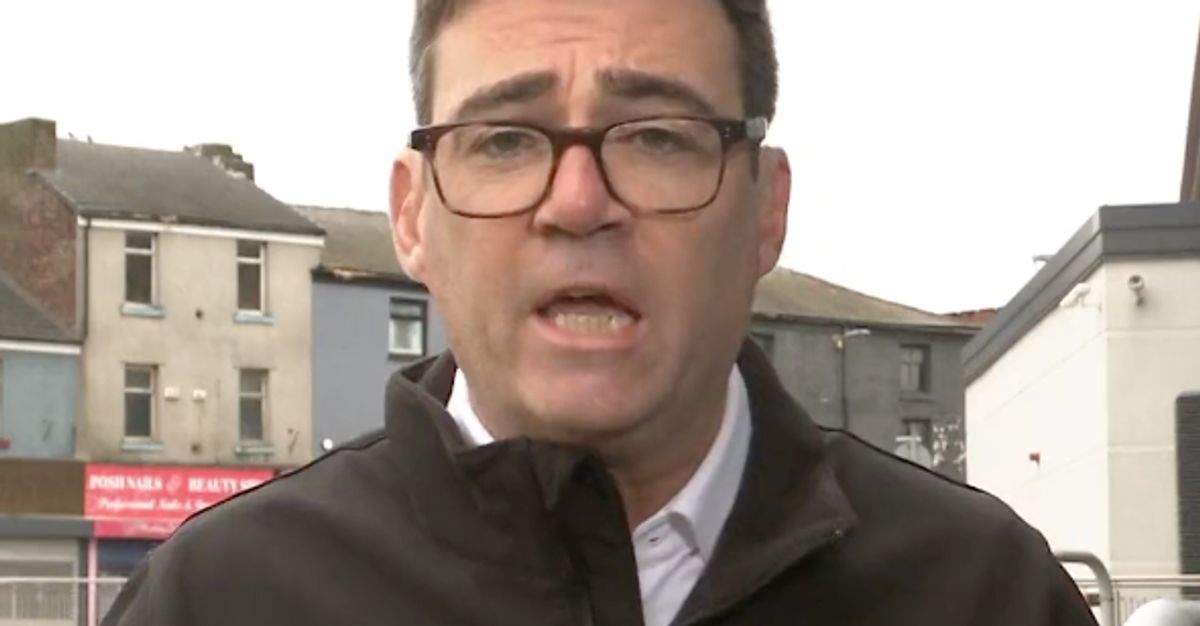
Andy Burnham Says Ministers Are Treating People In The North ‘Like Second Class Citizens’

Andy Burnham has accused ministers of treating people in the north of England “like second class citizens” amid mounting speculation that the next phase of HS2 will be scrapped.

The Manchester mayor launched a furious attack on the government as Rishi Sunak ponders whether to axe the Birmingham to Manchester leg of the rail project.

His comments came after former transport secretary Grant Shapps repeatedly refused to confirm that the high-speed line will be completed in full.

Speaking on Sky News, Burnham furiously said: “Why is it that people in the north are always forced to choose – you can have this or you can have that, but you can’t have everything?

“London never has to choose between a north-south line or an east-west line and good public transport within the city.

“Why are we always treated as second-class citizens when it comes to transport?

“This is the parliament who said they would level us up. If they leave a situation where the southern half of the country is connected by modern high speed lines and the north of England is left with Victorian infrastructure, that is a recipe for the north-south divide to become a north-south chasm.”

Burnham said the abandonment of the HS2 leg would be the “desperate act of a dying government”.

Around £20 billion of taxpayers money has already been spent on the project, which was meant to cost £33 billion in total.

However, repeated delays and soaring inflation mean there are fears the final bill could be more than £100 billion.

Chancellor Jeremy Hunt has warned that the cost of the project is at risk of getting “totally out of control”, fuelling speculation that plans to extend it to Manchester will be scrapped.

However, Boris Johnson has said that would leave a “mutilated” rail line and has urged the government to commit to the project.

Andy Street, the Tory mayor of the West Midlands, has also called on Sunak to complete the project, while business leaders have insisted scrapping it would be disastrous for the economy.

Share Button

‘You’re Answering A Different Question’: Grant Shapps Clashes With Trevor Phillips Over HS2

The defence secretary repeatedly failed to say whether the next phase of the multi-billion pound project will go ahead.

Speculation is mounting that the government will axe plans to extend the rail line from Manchester to Birmingham.

Appearing on Sky News this morning, Shapps was asked whether or not he had promised businesses HS2 would go ahead as planned while he was transport secretary.

Phillips said: “Did you personally encourage people to invest on the basis that it was to run from central London to Manchester?”

Shapps began to say: “We’ve invested…”

But Phillips told him: “You’re answering a different question.

“I’m asking you when you talked to businesses as transport secretary, did you say to them, ’look, it’s worth investing in the north in this way because there will be HS2. Did you?”

But Shapps failed to answer and instead repeated that “the government is committed to improving rail infrastructure, particularly in the north”.

He added: “Forgive me, Trevor. I think your viewers understand that I’m not here today to deliver the budget on your excellent programme.

“I’m here to talk about actually things that I can inform you about which is for example, in my role as defence secretary and our work in Ukraine.”

Share Button

Twitter Users Raise A Stink After Marjorie Taylor Greene Calls Biden An ‘Old Fart’

Republcian Representative Marjorie Taylor Greene called Joe Biden an “old fart”, but the insult whiffed with many social media users.

On Friday, the president announced the creation of the Office of Gun Violence Prevention within the White House and later tweeted that “it’s time to again ban assault weapons and high-capacity magazines.”

He added: “If members of Congress refuse to act, then we need to elect new members of Congress who will act.”

That post apparently had Greene seeing red and she responded by tweeting back, “Whatever you old fart. We are electing a new President. Turning 45 into 47.”

Greene may have thought the “old fart” comment was a truth bomb, but many users of X, formerly known as Twitter, raised a stink, especially since she’s been griping recently about the lack of “society’s standards that set etiquette and respect for our institutions.”

As a result, she was thoroughly mocked.

Greene has been harping on civility for everyone else but her for a while now.

On Monday, after she criticised Pennsylvania Senator John Fetterman for wearing a hoodie on the Senate floor, he pointed out that there are other forms of decorum. He reminded her of when she displayed nude images of Hunter Biden during a House hearing.

Back in May, Greene found out how much her Democratic colleagues respect her desire for decorum when they raucously laughed at her after she told them, “Members are reminded to abide by decorum of the House,” she said, only to spark raucous laughter.

Share Button

What you need to know about Covid as new variant rises

Hospitalisations have gone up since the summer and a new variant is spreading. Should we be concerned?

Share Button