Astronomers discover newborn galaxies with the James Webb Space Telescope

With the launch of the James Webb Space Telescope, astronomers are now able to peer so far back in time that we are approaching the epoch where we think that the first galaxies were created. Throughout most of the history of the Universe, galaxies seemingly tend to follow a tight relation between how many stars they have formed, and how many heavy elements they have formed. But for the first time we now see signs that this relation between the amount of stars and elements does not hold for the earliest galaxies. The reason is likely that these galaxies simply are in the process of being created, and have not yet had the time to create the heavy elements.

The Universe is teeming with galaxies — immense collections of stars and gas — and as we peer deep into the cosmos, we see them near and far. Because the light has spent more time reaching us, the farther away a galaxy is, we are essentially looking back through time, allowing us to construct a visual narrative of their evolution throughout the history of the Universe.

Observations have shown us that galaxies through the last 12 billion years — that is, 5/6 of the age of the Universe — have been living their life in a form of equilibrium: There appears to be a fundamental, tight relation between on one hand how many stars they have formed, and on the other hand how many heavy elements they have formed. In this context, “heavy elements,” means everything heavier than hydrogen and helium.

This relation makes sense, because the Universe consisted originally only of these two lightest elements. All heavier elements, such as carbon, oxygen, and iron, was created later by the stars.

James Webb peers deeper

The very first galaxies should therefore be “unpolluted” by heavy elements. But until recently we haven’t been able to look so far back in time. In addition to being far away, the reason is that the longer light travels through space, the redder it becomes. For the most distant galaxies you have to look all the way into the infrared part of the spectrum, and only with the launch of James Webb did we have a telescope big and sensitive enough to see so far.

And the space telescope did not disappoint: Several has James Webb broken its own record for the most distant galaxy, and now it finally seems that we are reaching the epoch where some of the very first galaxies were created.

advertisement


In a new study, published today in the scientific journal Nature Astronomy, af team of astronomers from the Danish research center Cosmic Dawn Center at the Niels Bohr Institute and DTU Space in Copenhagen, has discovered what seems indeed to be some of the very first galaxies which are still in the process of being formed.

“Until recently it has been near-impossible to study how the first galaxies are formed in the early Universe, since we simply haven’t had the adequate instrumentation. This has now changed completely with the launch of James Webb,” says Kasper Elm Heintz, leader of the study and assistant professor at the Cosmic Dawn Center.

Fundamental relation breaks down

The relationship between the total stellar mass of the galaxy and the amount of heavy elements is a bit more complex than that. How fast the galaxy produces new stars also has something to say. But if you correct for that, you get a beautiful, linear relationship: The more massive the galaxy, the more heavy elements.

But this relation is now being challenged by the latest observations.

“When we analyzed the light from 16 of these first galaxies, we saw that they had significantly less heavy elements, compared to what you’d expect from their stellar masses and the amount of new stars they produced,” says Kasper Elm Heintz.

advertisement


In fact the galaxies turned out to have, on average, four times less amounts of heavy elements that in the later Universe. These results are in stark contrast to the current model where galaxies evolve in a form of equilibrium throughout most of the history of the Universe.

Predicted by theories

The result is not entirely surprising though. Theoretical models of galaxy formation, based on detailed computer programs, do predict something similar. But now we’ve seen it!

The explanation, as proposed by the autors in the article, is simply that we are witnessing galaxies in the process of being created. Gravity has gathered the first clumps of gas, which have begun to form stars.

If the galaxies then lived their lives undisturbed, the stars would quickly enrich them with heavy elements. But in between the galaxies at that time were large amounts of fresh, unpolluted gas, streaming down to the galaxies faster than the stars can keep up.

“The result gives us the first insight into the earliest stages of galaxy formation which appear to be more intimately connected with the gas in between the galaxies than we thought.

This is one of the first James Webb observations on this topic, so we’re still waiting to see what the larger, more comprehensive observations that are currently being carried out can tell us.

There is no doubt that we will shortly have a much clearer understanding of how galaxies and the first structures began their formation during the first billion years after the Big Bang,” Kasper Elm Heintz concludes.

The study is published in Nature Astronomy.

Share Button

Migratory birds can be taught to adjust to climate change

One result of climate change is that spring is arriving earlier. However, migratory birds are not keeping up with these developments and arrive too late for the peak in food availability when it is time for breeding. By getting the birds to fly a little further north, researchers in Lund, Sweden, and the Netherlands have observed that these birds can give their chicks a better start in life.

Global warming is causing problems for birds in Sweden and elsewhere. Warmer springs mean that caterpillars hatch, grow and pupate earlier compared with just a few decades ago. This has consequences for birds that cannot eat caterpillars that have entered the pupal stage. Therefore, when the food supply runs out at an ever earlier time in the spring, more and more chicks starve during the breeding season. This is a big problem for migratory birds that spend winters in Africa, as they do not know how early spring arrives in Sweden. Could the problem be solved if the migratory birds simply came home and started breeding earlier?

“It seems that our non-migratory birds are doing this to a certain extent. But, of course, they are present and can feel how early spring will come. We thought that perhaps the migratory birds could fly further north until they find a place with suitable well-developed caterpillars,” says Jan-Åke Nilsson, biology researcher at Lund University in Sweden.

To test this in practice, the researchers decided to help some Pied Flycatchers along the way. The biologists caught Pied Flycatchers that had arrived prior to breeding in the Netherlands. The birds were then driven during the night to Vombs Fure, an area of pine forest outside Lund in Skåne, where they were released. The peak of caterpillar availability in Skåne is about two weeks later than in the Netherlands — a distance of around 600 kilometres that a Pied Flycatcher could cover in just two nights.

“The birds that were given a lift from the Netherlands to Skåne synchronised very well with the food peak! As they started to breed about 10 days earlier the “Swedish” Pied Flycatchers they had a dramatically better breeding success than the Swedish ones as well as a better success than the Pied Flycatchers that remained in the Netherlands,” says Jan-Åke Nilsson.

In addition, it was shown that the chicks of the Dutch Pied Flycatchers that had received migration assistance did not stop in the Netherlands when they returned after their first spring migration. Instead, they continued on to the area of pine forest outside Lund where they were born. Furthermore, they arrived earlier than the Swedish Pied Flycatchers and thereby had more well-fed chicks at Vombs Fure the year after the researchers gave the Pied Flycatchers a helping hand to find Skåne.

“The number of small birds, particularly migratory birds, has decreased drastically throughout Europe. By flying a little further north, these birds, at least in principle, could synchronise with their food resources and there is hope that robust populations of small birds can be maintained, even though springs are arriving ever earlier,” concludes Jan-Åke Nilsson.

Share Button

Astronomers find abundance of Milky Way-like Galaxies in early Universe, rewriting cosmic evolution theories

Galaxies from the early Universe are more like our own Milky Way than previously thought, flipping the entire narrative of how scientists think about structure formation in the Universe, according to new research published today.

Using the James Webb Space Telescope (JWST), an international team of researchers including those at The University of Manchester and University of Victoria in Canada discovered that galaxies like our own Milky Way dominate throughout the universe and are surprisingly common.

These galaxies go far back in the Universe’s history with many of these galaxies forming 10 billion years ago or longer.

The Milky Way is a typical ‘disk’ galaxy, which a shape similar to a pancake or compact disk, rotating about its centre and often containing spiral arms. These galaxies are thought to be the most common in the nearby Universe and might be the types of galaxies where life can develop given the nature of their formation history.

However, astronomers previously considered that these types of galaxies were too fragile to exist in the early Universe when galaxy mergers were more common, destroying what we thought was their delicate shapes.

The new discovery, published today in the Astrophysical Journal, finds that these ‘disk’ galaxies are ten times more common than what astronomers believed based on previous observations with the Hubble Space Telescope.

Christopher Conselice, Professor of Extragalactic Astronomy at The University of Manchester, said: “Using the Hubble Space Telescope we thought that disk galaxies were almost non-existent until the Universe was about six billion years old, these new JWST results push the time these Milky Way-like galaxies form to almost the beginning of the Universe.”

The research completely overturns the existing understanding of how scientists think our Universe evolves, and the scientists say new ideas need to be considered.

advertisement


Lead author, Leonardo Ferreira from the University of Victoria, said: “For over 30 years it was thought that these disk galaxies were rare in the early Universe due to the common violent encounters that galaxies undergo. The fact that JWST finds so many is another sign of the power of this instrument and that the structures of galaxies form earlier in the Universe, much earlier in fact, than anyone had anticipated. “

It was once thought that disk galaxies such as the Milky Way were relatively rare through cosmic history, and that they only formed after the Universe was already middle aged.

Previously, astronomers using the Hubble Space Telescope believed that galaxies had mostly irregular and peculiar structures that resemble mergers. However, the superior abilities of JWST now allows us to see the true structure of these galaxies for the first time.

The researchers say that this is yet another sign that ‘structure’ in the Universe forms much quicker than anyone had anticipated.

Professor Conselice continues: “These JWST results show that disk galaxies like our own Milky Way, are the most common type of galaxy in the Universe. This implies that most stars exist and form within these galaxies which is changing our complete understanding of how galaxy formation occurs. These results also suggest important questions about dark matter in the early Universe which we know very little about.”

“Based on our results astronomers must rethink our understanding of the formation of the first galaxies and how galaxy evolution occurred over the past 10 billion years.”

Share Button

Same genes behind heart muscle disorders in humans and Dobermanns

Researchers have made a significant finding in determining the genetic background of dilated cardiomyopathy in Dobermanns. This research helps us understand the genetic risk factors related to fatal diseases of the heart muscle and the mechanisms underlying the disease, and offers new tools for their prevention.

Researchers from the University of Helsinki and the Folkhälsan Research Center, together with their international partners, have identified the genetic background of dilated cardiomyopathy, a disease that enlarges the heart muscle, in dogs and humans.

Based on a dataset encompassing more than 500 Dobermanns, the disease was associated with two nearby genomic loci, where changes were identified in genes that affect the functioning, energy metabolism and structure of the heart muscle. The study revealed that these same risk genes cause heart muscle disease in human patients.

A variety of factors can cause cardiomyopathy, but genetics play a significant role. Although dozens of genes underlying cardiomyopathy in humans have been identified, the hereditary nature and genetic background of the disease in dogs have remained unclear.

“The situation with Dobermanns is serious in terms of both their health and breeding. The disease has been studied from various angles for decades without significant gene discoveries. Better diagnostic tools are needed, particularly in early diagnostics. Our new research might improve the situation,” says Professor Hannes Lohi, the principal investigator in the project.

The study has significant implications for veterinary medicine, providing a basis for developing a new genetic test for early diagnostics and breeding.

Two novel risk genes identified in an extensive European cohort

Various research data collected over decades on more than 500 Dobermanns from across Europe were combined for the research. The dogs in the study cohort were categorised into five different groups:

  • Dogs with only dilated cardiomyopathy
  • Dogs with only arrhythmia
  • Dogs with dilated cardiomyopathy and arrhythmia
  • Dogs with congestive heart failure
  • Healthy dogs aged at least six years as a control subcohort

advertisement


With the help of genetic mapping, two adjacent gene loci in chromosome 5 were associated with dilated cardiomyopathy. Among the numerous genes in the loci, two, namely RNF207 and PRKAA2, demonstrated structural variation, which could have a detrimental effect on the functioning of the genes and cause heart failure.

“The genetic mapping we conducted produced important observations. Until now, it has been unclear whether Dobermanns with differing symptoms have the same disease. The genes we identified are only associated with a dilated heart and affected cardiac function. Arrhythmia appears to be a genetically distinct disease. Our dataset was insufficient to identify genes causing arrhythmia only. We also observed that several genes affect cardiac function and identified a model of two genes that increase the disease risk,” explains Professor Lohi.

Gene discovery in dogs associated with cardiac muscle disorders in humans

The significance of the gene discovery in dogs was investigated in human patients diagnosed with dilated cardiomyopathy using Dutch, English (UK Biobank) and Finnish (FinnGen) cohorts. Fifteen potentially harmful and predisposing variants in the same RNF207 and PRKAA2 genes, which had been identified in dogs, were discovered in humans.

“The identical genetic background suggests that, to a degree, similar problems with the functioning of the heart muscle lead to dilated cardiomyopathy in both humans and dogs. A deeper understanding of the pathogenetic mechanisms is important, and Dobermanns represent a natural model organism for further research,” Lohi states.

A genetic test for breeding

The DNA markers associated with the disease found in the study may be a step toward a genetic test, but it is important to confirm its clinical significance before such tests are offered.

advertisement


“We discovered how the variants of the two genes together increase the disease risk. However, a pilot is needed to combine genetic and health data to monitor how frequently individuals who belong to the at-risk group develop the disease for varying genetic reasons. Then, we can obtain a more accurate estimate of how the gene discoveries should be ideally interpreted and utilised. In any case, this is a hope-inspiring finding because, in the past, we lacked such tools,” Lohi describes.

The new gene discoveries enable new research hypotheses

For the consistent synchronised pumping of the heart, the heart muscle cells must interact with each other. Unlike in skeletal muscles, in the cell membrane of the heart muscle are finger-like discs that conduct the undulation required for pumping.

“Our study revealed that the RNF207 gene is expressed exactly in these discs. Earlier research has shown that RNF207 plays an important role in heart muscle contraction. The absence of these discs has also earlier been linked with cardiomyopathy. The other gene identified, PKAA2, serves as an energy sensor in the heart muscle, and its malfunction can reduce cardiac efficiency. Further research is required to understand the pathogenic mechanism, but we are in a good position to continue. A while ago, the disease was a total mystery, but now we have opened a view to its cellular-level secrets,” Professor Lohi concludes.

The research was funded by, among others, the Finnish Foundation for Cardiovascular Research, the Jane and Aatos Erkko Foundation, the Sigrid Jusélius Foundation, and many other funders from different countries.

The study is part of Professor Hannes Lohi’s canine gene research project, and the related article was published in the journal Genome Medicine.

Share Button

Here Are All The New Cast Members In Sex Education Season 4

<div class="js-react-hydrator" data-component-name="YouTube" data-component-id="7082" data-component-props="{"itemType":"video","index":0,"contentListType":"embed","code":"

","type":"video","meta":{"author":"Netflix","author_url":"https://www.youtube.com/channel/UCWOA1ZGywLbqmigxE4Qlvuw","cache_age":86400,"description":"Entering our climax era. Sex Education S4 is now streaming.\n\nSUBSCRIBE: http://bit.ly/29qBUt7\n\nAbout Netflix:\nNetflix is one of the world’s leading entertainment services with over 238 million paid memberships in over 190 countries enjoying TV series, films and games across a wide variety of genres and languages. Members can play, pause and resume watching as much as they want, anytime, anywhere, and can change their plans at any time.\n\nSex Education: Season 4 | Final Trailer | Netflix\nhttps://www.youtube.com/@Netflix\n\nWith Maeve in America and Moordale closed, Otis must find his footing at free-spirited Cavendish College — but he’s not the only sex therapist on campus.","options":{"_cc_load_policy":{"label":"Closed captions","value":false},"_end":{"label":"End on","placeholder":"ex.: 11, 1m10s","value":""},"_start":{"label":"Start from","placeholder":"ex.: 11, 1m10s","value":""},"click_to_play":{"label":"Hold load & play until clicked","value":false}},"provider_name":"YouTube","thumbnail_height":720,"thumbnail_url":"https://i.ytimg.com/vi/TJjMJmYLMWs/maxresdefault.jpg","thumbnail_width":1280,"title":"Sex Education: Season 4 | Final Trailer | Netflix","type":"video","url":"https://www.youtube.com/watch?v=TJjMJmYLMWs","version":"1.0"},"flags":[],"enhancements":{},"fullBleed":false,"options":{"theme":"news","device":"desktop","editionInfo":{"id":"uk","name":"U.K.","link":"https://www.huffingtonpost.co.uk","locale":"en_GB"},"originalEdition":"uk","slideshowAd":{"scriptTags":[],"otherHtml":""},"slideshowEndCard":{"scriptTags":[],"otherHtml":""},"isMapi":false,"isAmp":false,"isVideoEntry":false,"isEntry":true,"isMt":false,"entryId":"650c66e4e4b0fb95353a8907","entryPermalink":"https://www.huffingtonpost.co.uk/entry/sex-education-season-4-cast-netflix_uk_650c66e4e4b0fb95353a8907","entryTagsList":"uktv,we-love-tv,netflix,sex-education,dan-levy,lisa-mcgrillis,jodie-turner-smith,thaddea-graham","sectionSlug":"entertainment","deptSlug":null,"sectionRedirectUrl":null,"subcategories":"","isWide":false,"headerOverride":null,"noVideoAds":false,"disableFloat":false,"isNative":false,"commercialVideo":{"provider":"custom","site_and_category":"uk.entertainment","package":null},"isHighline":false,"vidibleConfigValues":{"cid":"60afc140cf94592c45d7390c","disabledWithMapiEntries":false,"overrides":{"all":"60b8e525cdd90620331baaf4"},"whitelisted":["56c5f12ee4b03a39c93c9439","56c6056ee4b01f2b7e1b5f35","59bfee7f9e451049f87f550b","5acccbaac269d609ef44c529","570278d2e4b070ff77b98217","57027b4be4b070ff77b98d5c","56fe95c4e4b0041c4242016b","570279cfe4b06d08e3629954","5ba9e8821c2e65639162ccf1","5bcd9904821576674bc55ced","5d076ca127f25f504327c72e","5b35266b158f855373e28256","5ebac2e8abddfb04f877dff2","60b8e525cdd90620331baaf4","60b64354b171b7444beaff4d","60d0d8e09340d7032ad0fb1a","60d0d90f9340d7032ad0fbeb","60d0d9949340d7032ad0fed3","60d0d9f99340d7032ad10113","60d0daa69340d7032ad104cf","60d0de02b627221e9d819408"],"playlists":{"default":"57bc306888d2ff1a7f6b5579","news":"56c6dbcee4b04edee8beb49c","politics":"56c6dbcee4b04edee8beb49c","entertainment":"56c6e7f2e4b0983aa64c60fc","tech":"56c6f70ae4b043c5bdcaebf9","parents":"56cc65c2e4b0239099455b42","lifestyle":"56cc66a9e4b01f81ef94e98c"},"playerUpdates":{"56c6056ee4b01f2b7e1b5f35":"60b8e525cdd90620331baaf4","56c5f12ee4b03a39c93c9439":"60d0d8e09340d7032ad0fb1a","59bfee7f9e451049f87f550b":"60d0d90f9340d7032ad0fbeb","5acccbaac269d609ef44c529":"60d0d9949340d7032ad0fed3","5bcd9904821576674bc55ced":"60d0d9f99340d7032ad10113","5d076ca127f25f504327c72e":"60d0daa69340d7032ad104cf","5ebac2e8abddfb04f877dff2":"60d0de02b627221e9d819408"}},"connatixConfigValues":{"defaultPlayer":"8b034f64-513c-4987-b16f-42d6008f7feb","clickToPlayPlayer":"5a777b9b-81fe-41a6-8302-59e9953ee8a2","videoPagePlayer":"19654b65-409c-4b38-90db-80cbdea02cf4"},"customAmpComponents":[],"ampAssetsUrl":"https://amp.assets.huffpost.com","videoTraits":null,"positionInUnitCounts":{"buzz_head":{"count":0},"buzz_body":{"count":0},"buzz_bottom":{"count":0}},"positionInSubUnitCounts":{"article_body":{"count":16},"blog_summary":{"count":0},"before_you_go_slideshow":{"count":0}},"connatixCountsHelper":{"count":0},"buzzfeedTracking":{"context_page_id":"650c66e4e4b0fb95353a8907","context_page_type":"buzz","destination":"huffpost","mode":"desktop","page_edition":"en-uk"},"tags":[{"name":"uktv","slug":"uktv","links":{"relativeLink":"news/uktv","permalink":"https://www.huffingtonpost.co.uk/news/uktv","mobileWebLink":"https://www.huffingtonpost.co.uk/news/uktv"},"relegenceId":4255579,"section":{"title":"Entertainment","slug":"entertainment"},"topic":{"title":"UK TV","slug":"uktv","overridesSectionLabel":false},"url":"https://www.huffingtonpost.co.uk/news/uktv/"},{"name":"we love tv","slug":"we-love-tv","links":{"relativeLink":"news/we-love-tv","permalink":"https://www.huffingtonpost.co.uk/news/we-love-tv","mobileWebLink":"https://www.huffingtonpost.co.uk/news/we-love-tv"},"section":{"title":"Life","slug":"lifestyle"},"topic":{"title":"We Love TV","slug":"we-love-tv","overridesSectionLabel":false},"url":"https://www.huffingtonpost.co.uk/news/we-love-tv/"},{"name":"Netflix","slug":"netflix","links":{"relativeLink":"news/netflix","permalink":"https://www.huffingtonpost.co.uk/news/netflix","mobileWebLink":"https://www.huffingtonpost.co.uk/news/netflix"},"relegenceId":3173032,"url":"https://www.huffingtonpost.co.uk/news/netflix/"},{"name":"sex education","slug":"sex-education","links":{"relativeLink":"news/sex-education","permalink":"https://www.huffingtonpost.co.uk/news/sex-education","mobileWebLink":"https://www.huffingtonpost.co.uk/news/sex-education"},"url":"https://www.huffingtonpost.co.uk/news/sex-education/"},{"name":"Dan Levy","slug":"dan-levy","links":{"relativeLink":"news/dan-levy","permalink":"https://www.huffingtonpost.co.uk/news/dan-levy","mobileWebLink":"https://www.huffingtonpost.co.uk/news/dan-levy"},"url":"https://www.huffingtonpost.co.uk/news/dan-levy/"},{"name":"Lisa McGrillis","slug":"lisa-mcgrillis","links":{"relativeLink":"news/lisa-mcgrillis","permalink":"https://www.huffingtonpost.co.uk/news/lisa-mcgrillis","mobileWebLink":"https://www.huffingtonpost.co.uk/news/lisa-mcgrillis"},"url":"https://www.huffingtonpost.co.uk/news/lisa-mcgrillis/"},{"name":"Jodie Turner-smith","slug":"jodie-turner-smith","links":{"relativeLink":"news/jodie-turner-smith","permalink":"https://www.huffingtonpost.co.uk/news/jodie-turner-smith","mobileWebLink":"https://www.huffingtonpost.co.uk/news/jodie-turner-smith"},"url":"https://www.huffingtonpost.co.uk/news/jodie-turner-smith/"},{"name":"Thaddea Graham","slug":"thaddea-graham","links":{"relativeLink":"news/thaddea-graham","permalink":"https://www.huffingtonpost.co.uk/news/thaddea-graham","mobileWebLink":"https://www.huffingtonpost.co.uk/news/thaddea-graham"},"url":"https://www.huffingtonpost.co.uk/news/thaddea-graham/"}],"isLiveblogLive":null,"cetUnit":"buzz_body","bodyAds":["

\r\n\r\n HPGam.cmd.push(function(){\r\n\t\treturn HPGam.render(\"inline-1\", \"entry_paragraph_1\", false);\r\n });\r\n\r\n","

\r\n\r\n HPGam.cmd.push(function(){\r\n\t\treturn HPGam.render(\"inline\", \"entry_paragraph_2\", false);\r\n });\r\n\r\n","

\r\n\r\n HPGam.cmd.push(function(){\r\n\t\treturn HPGam.render(\"inline-2\", \"entry_paragraph_3\", false);\r\n });\r\n\r\n","

\r\n\r\n HPGam.cmd.push(function(){\r\n\t\treturn HPGam.render(\"inline-infinite\", \"repeating_dynamic_display\", false);\r\n });\r\n\r\n"],"adCount":0},"isCollectionEmbed":false}”>

The fourth and final season of Sex Education is finally here, where cast members Asa Butterfield, Emma Mackey, Gillian Anderson, Ncuti Gatwa, Aimee-Lou Wood and Connor Swindells have all returned for one last outing in the hit teen drama.

But the final season also welcomes a host of new characters to Moordale and beyond, including Dan Levy of Schitt’s Creek, Lisa McGrillis from Last Night In Soho and Doctor Who actor Thaddea Graham.

The new season is set to follow Otis and Eric’s start at Cavendish Sixth Form College, which takes a “student-led approach” where kids are “popular for being… kind”, according to Netflix, after the closure of Moordale Secondary.

Stars that will not be returning, however, include Simone Ashley, who played Olivia, Patricia Allison and Tanya Reynolds who starred as couple Ola and Lily, and Rakhee Thakrar, who played teacher Emily Sands.

Explore the new cast and where you might know them from below…

Dan Levy

Dan Levy in Sex Education

Thomas Wood/Netflix

Season four sees Maeve (Emma Mackey) hop across the pond to study at an Ivy League college in the US. It’s there, at the prestigious Wallace University, that she’s tutored by cult author Laurie Nunn, played by Schitt’s Creek actor Dan Levy.

Dan shared the “VERY serious news” on Twitter/X last month, where he posted a picture of his character alongside Meave.

Lisa McGrillis

Lisa McGrillis
Lisa McGrillis

Karwai Tang via Getty Images

The British actor plays Jean Mulburn’s (Gillian Anderson) sister Joanna in season four of Sex Education. Her previous acting credits include Last Night In Soho, and TV shows Best Interests, Maternal, Somewhere Boy and Avoidance.

It’s likely her storyline will weave into Jean’s journey of being a mum again, after a paternity test revealed her boyfriend Jakob wasn’t actually the father of her newborn daughter.

Thaddea Graham

Thaddea Graham
Thaddea Graham

Dave J Hogan via Getty Images

The Northern Irish actress joins Sex Education as O, a rival sex therapist to Jean.

She played Bel in several episodes of Doctor Who, and has other credits in the TV mini series Redemption, The Irregulars, Us and Letter For The King.

Jodie Turner-Smith

Jodie Turner-Smith
Jodie Turner-Smith

Amy Sussman via Getty Images

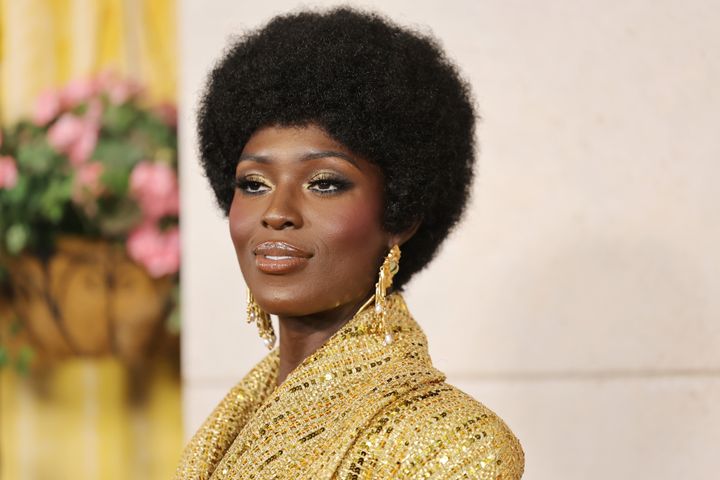
Queen & Slim and Anne Boleyn actor Jodie Turner-Smith was personally invited to join the show by Ncuti Gatwa.

“First of all all my scenes were with Ncuti Gatwa who – I DIE for him – and he’s my favourite character on the show,” she said on the red carpet at the BAFTA Film Awards earlier this year (published in Variety).

“So when he called me and asked me to do it I was like, I don’t care how much they’re paying I’m doing.”

We won’t spoil who Jodie’s character is, but she has a connection to Ncuti’s much-loved character, Eric.

Eshaan Akbar

Eshaan makes his on-screen TV debut in Sex Eduction as Principle Lakhani, having previously served as a voice actor on Spitting Image and featured in the 2021 short Sometime Else.

Marie Reuther

Marie Reuther
Marie Reuther

Andreas Rentz via Getty Images

Arriving in the role of Ellen for the new season of Sex Education, Danish actor Marie Reuther has previously starred in Dansegarderoben, The Kingdom and Kamikaze.

They posted to Instagram during filming that it had been a “pinch me moment” for them to be joining the hit show.

Felix Mufti, Anthony Lexa, Alexandra James, Reda Elazouar, Bella Maclean and Imani Yahshua

A trio of three newcomers will also join the Sex Education universe – Felix Mufti, Anthony Lexa and Alexandra James – who will play members of Eric’s new clique named The Coven, made up of fellow LGBTQ+ students.

Other new additions to the student cast include Reda Elazouar, Bella Maclean and Imani Yahshua.

You can recap on how season three ended and check out what to expect from the final season here.

Sex Education season four is streaming on Netflix now.

Share Button