You’re reading Move, the nudge we need to get active, however makes us happiest and healthiest.
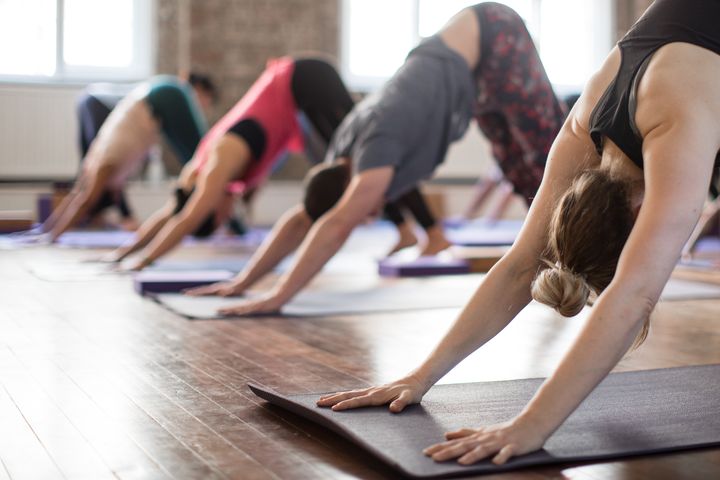
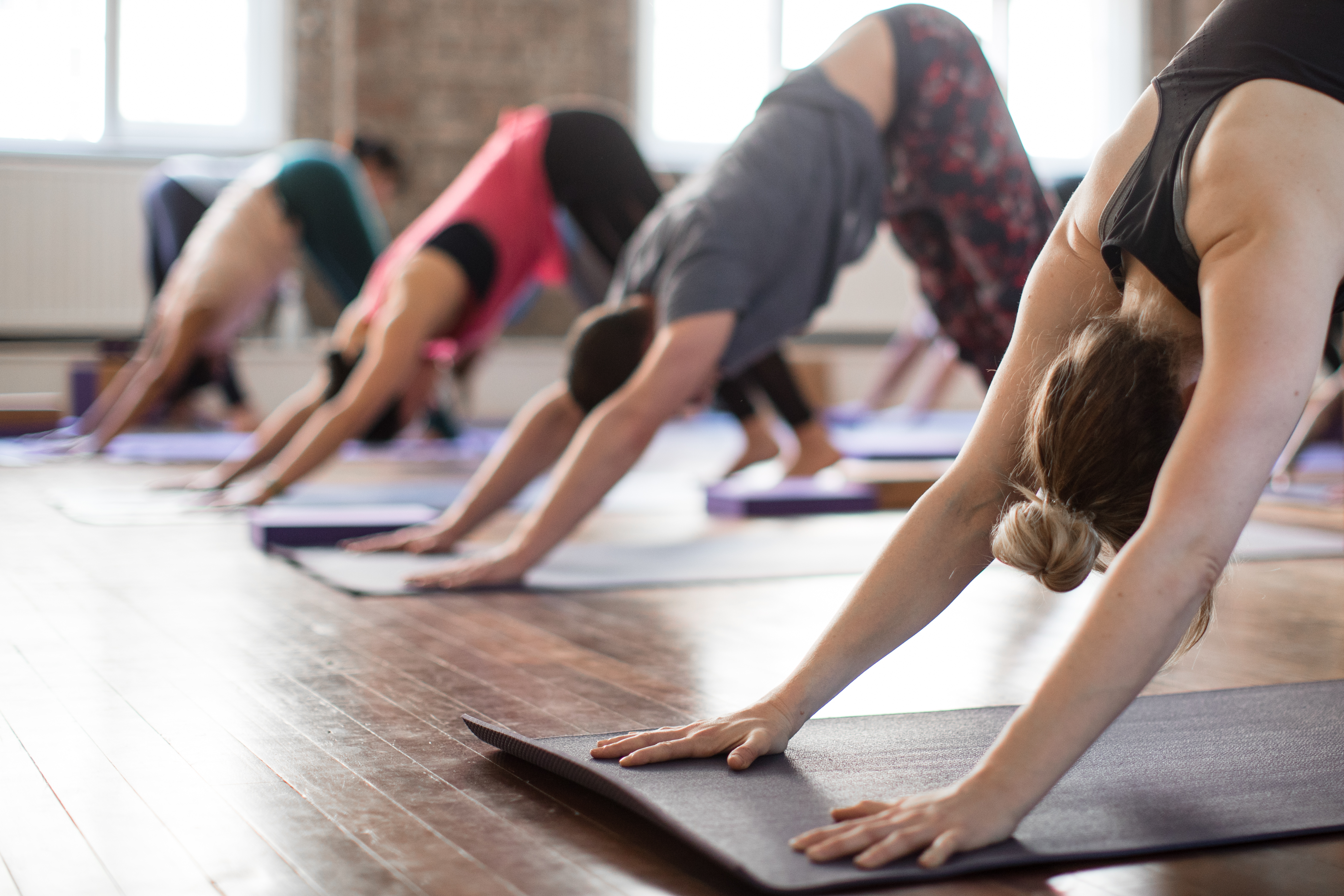
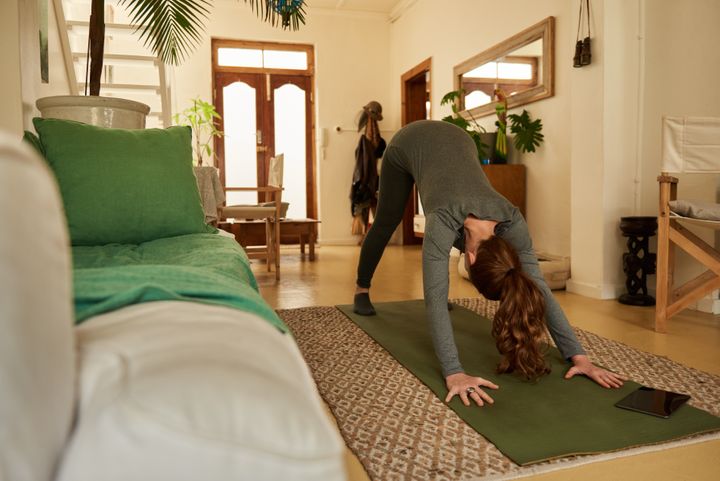
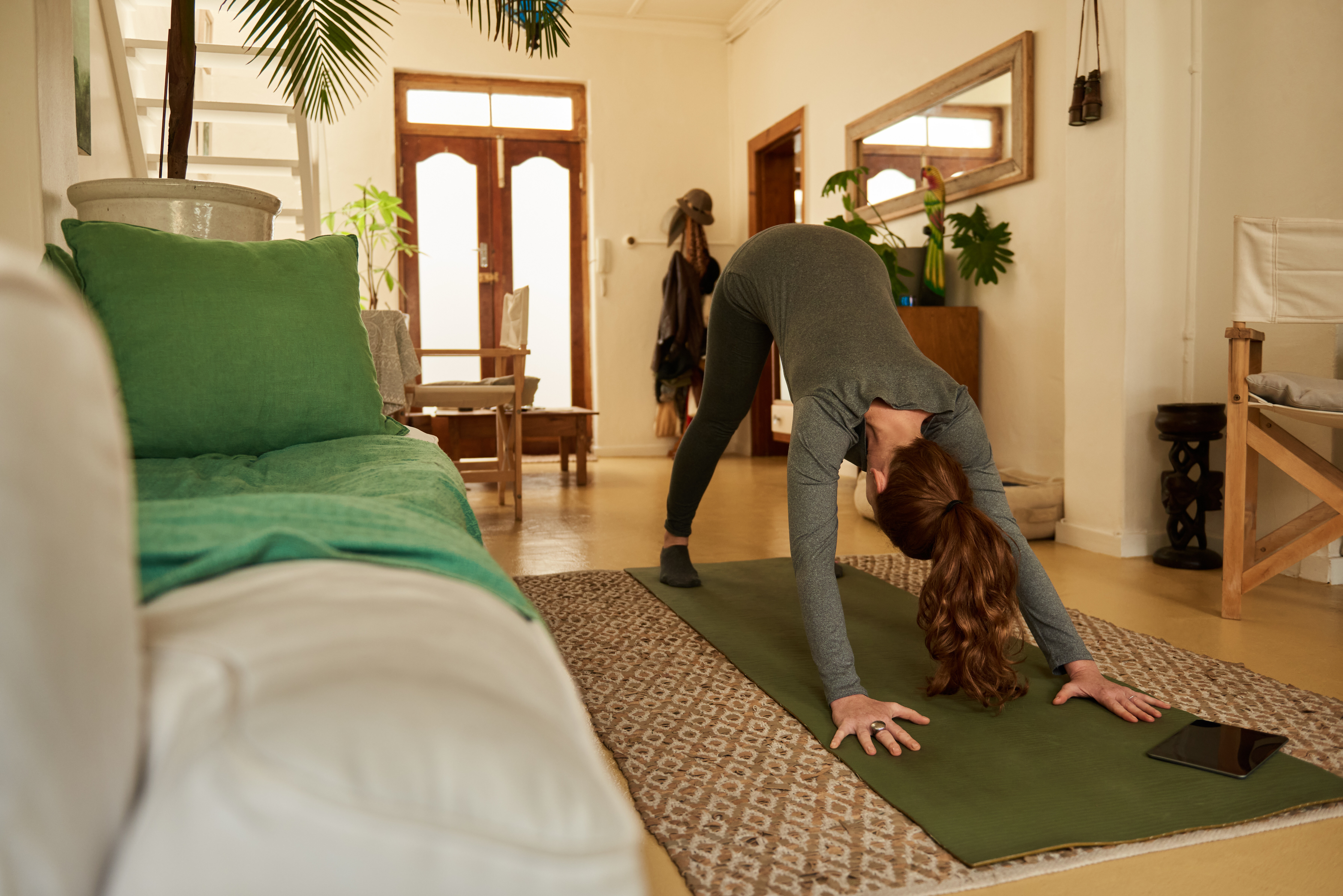
When you think of yoga, you probably immediately picture the downward facing dog pose – or Adho Mukha Svanasanaas, as it’s called in Sanskrit. It’s widely considered as the mother of all yoga poses. Even non-yogis tend to know it.
Advertisement
The downward dog is great for strengthening your body, as well as providing balance for mind and body. And it can easily be snuck in-between tea breaks if you’re still working from home (guilty).
“The pose enhances flexibility in the shoulders, hips and thoracic spine,” says Naomi Annand, author of Yoga: a Manual for Life and founder of east London yoga studio Yoga on the Lane. “It lengthens the hamstrings and calves and strengthens the long spinal muscles, quadriceps, rotator cuff, and triceps to name just the main muscle groups used.”
Advertisement
Think of it as a mind and body MOT. Bodies respond well to doing things little and often, so even if you don’t have 90-minutes, you can squeeze in a stretch here and there. “Every time you do yoga, you’re building resilience and creating new little imprints in your nervous system,” adds Annand.
However famous the pose may be, it’s quite an intense posture and there’s a lot to pay attention to. So, here’s how to make sure you’re doing it properly.
Advertisement
1. Align your body correctly
As one of the more well-known yoga poses, the downward facing dog gives off the impression that it’s a straightforward pose, says Triyoga teacher, Christian Di Giorgio. But many people slip into misalignments.
The focus should be on lengthening the trunk and visualising an inverted “V” shape with your body, he says, with the coccyx at the apex. “Beginners should keep the arms locked and use them to press the spine and hips up and back whilst straightening the legs to lift the tail bone higher.”
2. Keep enough space between your hands and feet
Advertisement
Di Giorgio says not keeping enough space between the hands and feet is a common mistake he sees in yoga classes. “This forces the spine to curve and compress instead of lengthening healthily as it should,” he says.
So, how much space should you keep? “You should aim to use much more of the mat when doing downward facing dog,” he tells HuffPost UK.
“Lie on your front with the toes tucked under and the finger tips level with the collar bones and lift up from there. An overly short stance can require too much stretch on the back and leg muscles, causing the spine to bulge outwards as it would when slumping in a chair. We are trying to correct the problems of long sitting not exacerbate them!”
3. Don’t fixate on putting your heels down
Many people have a fixation on getting their heels down, flat to the floor, when doing the pose, adds Di Giorgio. “Forget putting your heels on the floor,” he says, “this is advanced work!”
While placing the heels down firmly gives a good grounding in the pose, Di Giorgio says this is more like a “cherry on the cake”.
“Over months and years, as hamstrings and calves lengthen then students should strive to get the heels down but not at the expense of compromising the spine.”
Triyoga
Yoga class at Triyoga
4. Look after your wrists
It’s important to look after hands and wrists which, over time, can cause injury. “Some tend to lean heavily on the wrist bones which are not designed to bear weight, leading to potential repetitive strain injuries,” says Di Giorgio.
“They should try to spread the palms and fingers and press them strongly into the mat. This forces the forearm muscles to be more active and offloads the wrist bones.”
Advertisement
5. Adjust the pose to your level if needed
If you’re finding the pose difficult, keep in mind you can tailor it to your abilities. “You might not be as able-bodied or want to throw yourself into such a dramatic stretch, but there are alternatives like the puppy pose, which is the downward dog, but on the knees,” says Annand. “It’s a little more gentle.”
There are also options to make it more advanced. “Try more broadening of the shoulders and opening of the armpits and chest, so that the lungs can remain open and free whilst keeping the neck passive,” suggests Di Giorgio.
“The abdomen and pubic area should be more lifted and toned as the waist lengthens much more. Work the calves and ankles harder to ground the heels without compromising the extension of the spine.”
Move celebrates exercise in all its forms, with accessible features encouraging you to add movement into your day – because it’s not just good for the body, but the mind, too. We get it: workouts can be a bit of a slog, but there are ways you can move more without dreading it. Whether you love hikes, bike rides, YouTube workouts or hula hoop routines, exercise should be something to enjoy.
It doesn’t have to be cold outside for you to catch a cold.
Although it’s more common to get sick in the winter, viruses can circulate year-round. Close proximity to others, lax hygiene, stress, lack of sleep and more can contribute to your likelihood of contracting an illness – even in hotter weather.
Advertisement
Colds are usually rare in the summer, and are often caused by viruses that are different from those we see in the winter. Now that people are meeting up and seeing each other more, these viruses are starting to circulate again. That means we’re seeing many more “cold viruses” this summer than usual, according to Ellen F Foxman, assistant professor in Yale School of Medicine’s Department of Laboratory Medicine.
And as anyone who has had a summer cold knows, the symptoms can feel even worse during this time of year. (Shoutout to everyone who has caught a cold lately while living their post-Covid vaccine life).
Advertisement
Looking for ways to keep your sickness at bay? Here is some expert advice on how to take care of yourself and make that nasty summer cold suck a little less.
Wash your hands frequently
Advertisement
“When you have a cold and are in close proximity to others, it is very easy to spread. Therefore, you should be extra cautious around other people and practice good hygiene,” Robert L Gordon, an emergency medicine specialist based in Middletown, Rhode Island, told HuffPost.
This means washing your hands for at least 20 seconds with soap and water. If you do not have access to a sink and soap, you can use hand sanitiser instead, Gordon said.
Get more rest than you normally do
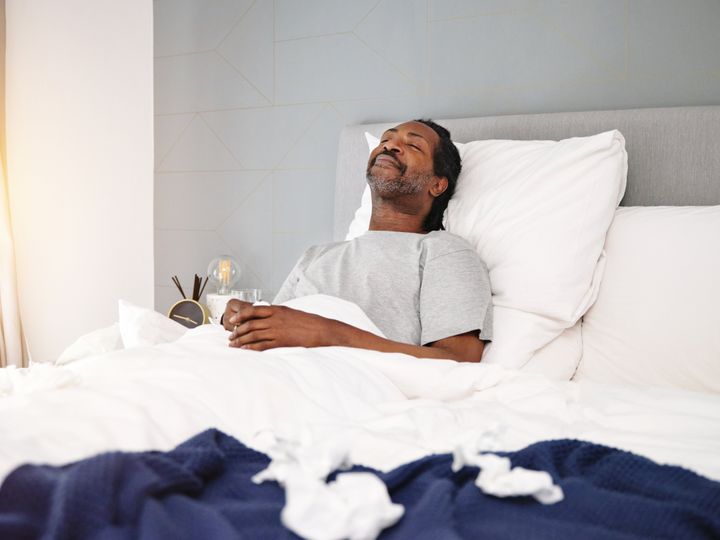
Make sure you are resting as much as possible. Take frequent naps and make sure you sleep for seven to nine hours each night.
Advertisement
“Sleep is essential for the immune system to function properly in order to help us fight off the viral bugs causing the cold. The body needs time to rest and recover,” Kristamarie Collman, a family medicine doctor at Prōse Medical, told HuffPost.
Cold symptoms such as coughing or a stuffy nose can make it difficult to sleep and get rest. Be careful about the medications you take in the evening or at bedtime. Some decongestants and cold medications have ingredients that may keep you awake, Collman said.
She recommended trying soothing remedies such as steam-filled showers or warm beverages like caffeine-free teas with honey before bedtime, which may make it easier for you to catch some Zs.
Dean Mitchell via Getty Images
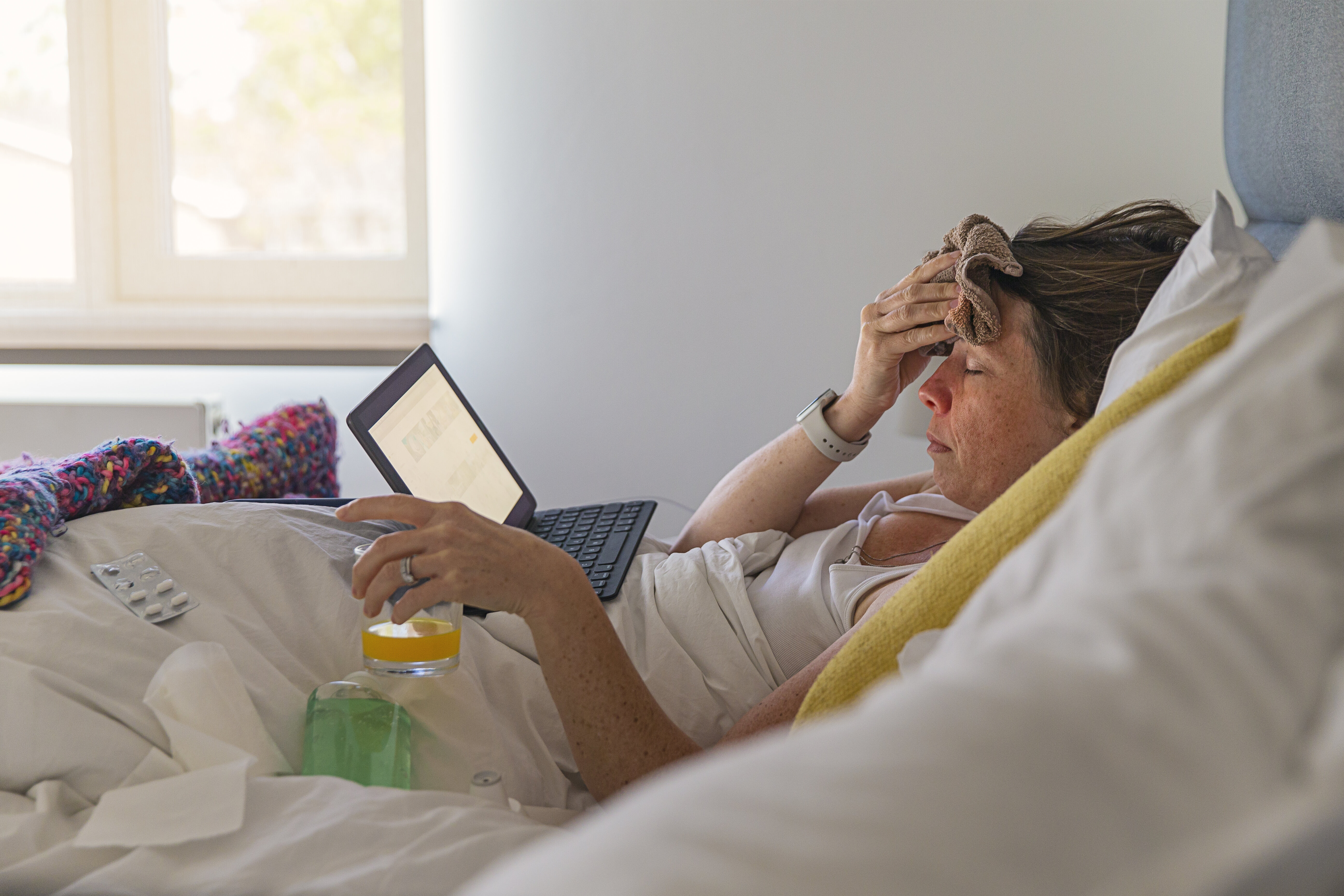
Rest and hydration are both crucial in helping to relieve any cold.
Stay hydrated
Your body gets dehydrated more quickly in the summer. Combine that with your illness, and you could be missing out on a ton of fluids your body desperately needs right now.
“Some symptoms of a cold, such as a fever, can increase your risk of dehydration and fluid loss,” Collman said. “Hydration can help replace fluids you may have lost and assist with clearing congestion and mucus.”
Drink plenty of water or other hydrating liquids such as decaffeinated tea and sports drinks. Avoid beverages that are sugary or caffeinated, including coffee and alcohol, she added.
Take over-the-counter medicine
Some over-the-counter medications may help you find temporary relief for symptoms such as a headache, sore throat, nasal congestion and cough.
Common over-the-counter medicines for a cold include acetaminophen or ibuprofen. Gordon said it’s important to speak to your physician or pharmacist about which over-the-counter medication you should use to feel better.
Advertisement
Consider using a humidifier
More humidity in the summer might sound like the last thing you want, but it can help alleviate your symptoms ― particularly if you’re experiencing a runny nose or dry cough. A humidifier adds moisture to the air, which can help decrease irritation in the nose and throat, Collman said.
This is especially important when you’re indoors in the cool AC, beating the summer heat.
“While there is no specific scientific evidence that air conditioners can directly cause colds, too much AC may dry out the inside lining of your nose,” Collman said. “If the mucus membranes are dry, this can worsen cold symptoms such as a stuffy nose and sore throat.”
Avoid too much time in the sun
While you may want to catch some rays outdoors – who hasn’t thought they could “bake” their cold away? – be careful. Being in summer heat for too long can aggravate your symptoms, so stick to 30 minutes or less.
“The summer temperatures outside can increase the risk for dehydration and often make symptoms feel worse. Therefore, it’s important to avoid extended periods of time in the sun,” Collman said.
Use a saltwater gargle
If you have a sore throat, gargling salt water may reduce irritation and discomfort.
“Saltwater gargles are effective for killing bacteria in the throat while loosening mucus and easing pain,” Bindiya Gandhi, an integrative family medicine physician at Revive Atlanta MD, told HuffPost. She recommended adding a teaspoon of salt to a cup of warm water and gargling the mixture.
Advertisement
Justin Paget via Getty Images
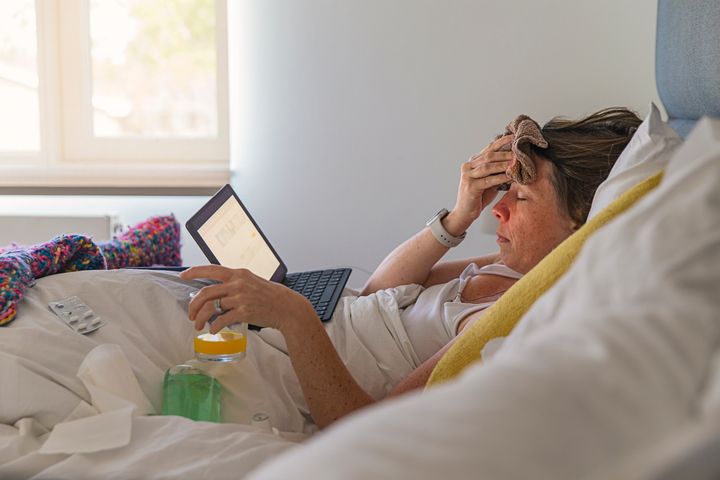
A cool compress can help reduce a fever.
Use a cold compress for a fever
Feeling warm? In addition to staying hydrated and resting, place a cold compress on your forehead to cool down and reduce your temperature, Gandhi said. To make your compress, dip a washcloth in cool water. You can also stick a cooling gel eye mask into the freezer before putting it on.
Most fevers go away on their own within one to three days. If your fever persists for more than three days, contact your physician, Gandhi said.
Refrain from excessive activity
Hold off on resuming your intense workout routine or lifting heavy objects for a few days. Even walks outdoors in the heat may get too strenuous.
“When you have a cold, your body is working harder, and therefore, you may feel fatigued,” Collman said. “Engaging in excessive activity could make you feel extremely drained, so it’s best to rest or, if necessary, engage in light activity.”
If your cold gets worse, see your doctor
Cold symptoms can last anywhere from a couple of days to two weeks. Summer colds can have similar symptoms to the flu, so it can be difficult to tell the difference between the two illnesses based on symptoms alone. Generally, the flu is worse than a cold, and symptoms are more intense, according to theCenters for Disease Control and Prevention.
If you start experiencing flu-like symptoms such as a fever, chills or difficulty breathing, then see a doctor as soon as you can. For the flu, there are effective medications that can make the disease milder if the diagnosis is made early, Foxman said.
“There is also a lot of overlap between cold symptoms and a mild Covid infection,” she said.
Advertisement
If you are unsure of whether you have Covid-19 or a cold, you can get tested at a health center near you.
“Make sure to take extra precautions about not exposing other people to an infection, even if the symptoms seem to be mild,” Foxman added.
Stay home from work and social gatherings for a little extra time even after your symptoms are gone, and continue to wear a mask and wash your hands.
It’s official: music helped us get through the pandemic. In a new survey of more than 2,000 people, almost a quarter (23%) said live streaming and music had been the biggest support to their mental health through lockdown.
The poll, conducted by global music discovery service DICE and Populous, asked people about their relationship to music during the pandemic.
Advertisement
Knowing thousands of other people were also tuning in to live streams made lockdown a less lonely experience, respondents said, though few of us were actually listening to new music to fill the long days. Almost three-quarters (73%) said their lockdown listening focused on artists in their prime decades ago.
Music has been scientifically proven to evoke feelings of comfort, relief, and enjoyment, particularly when a track harks back to happier times – though if you’re up for discovering newer tunes, here’s why that’s good for you, too .
Advertisement
For those in need of a wellbeing boost, HuffPost UK team members have shared the songs that got us through the past year-and-a-half. Add them to your playlists, or check out more HuffPost UK recommendations on Spotify.
My Shot, from Hamilton
Advertisement
[embedded content]
“I’m a huge musical theatre fan so it wasn’t a surprise that the songs that helped me get through lockdown were from musical show Hamilton. I was obsessed with the whole soundtrack but the one song I kept on repeat during lockdown was My Shot. It’s a song about triumph and strength, which motivated me, but musically it sounds amazing.
“It’s a great song to cook or clean to and the raps are my favourite part. The show (which is available on Disney Plus) is quite long, so listening to the soundtrack is a way for me to enjoy the story without needing to watch it again.” – Habiba Katsha, Life reporter
Rain On Me by Lady Gaga and Ariana Grande
[embedded content]
“Rain On Me came out in the early stages of lockdown, and I’ve had it on rotation pretty much ever since. This song was released at a time when the news cycle was especially bleak, with a sombre cloud hanging over everything, and it provided some escapism at a time we all really needed it with its anthemic chorus and empowering lyrics about overcoming difficult times. Plus, who doesn’t love a bit of camp provided by not one but two pop divas?
Advertisement
“I’ve been looking forward to hearing Rain On Me in a club ever since it was released, and even though I’m not quite ready for that yet, I know for certain it’s going to go off when I finally get there.” – Daniel Welsh, Entertainment editor
Motion by Khalid
[embedded content]
“For me, my go to feel-good, feel sad, feel pensive song is Motion by Khalid. It’s one of his lesser known songs but I am just so in love with his vocals, the lyrics, the beat, everything. I can’t decide if it’s a happy song or sad song. I listen to it during all sorts of emotions.
“One of the top lines of the song is ‘I’m in love with this moment’. I remember playing it on my earphones on a solo trip to Machu Pichu in Peru – I was just stood on top of the mountains and listened to it on repeat, I really was in love with the moment! My Spotify wrapped showed I was in his 0.5% of top listeners last year, and you can guess which song was on repeat! The song got me through the pandemic because it reminded me of happier moments.” – Faima Bakar, Life reporter
","type":"video","meta":{"url":"https://www.youtube.com/watch?v=kHMXNPkNTTQ","type":"video","version":"1.0","title":"Little Mix – Holiday (Official Video)","author":"littlemixVEVO","author_url":"https://www.youtube.com/channel/UCssD3_aDYhaG44mwP53CO0w","provider_name":"YouTube","description":"Little Mix – Holiday (Official Video)\n\nListen to our new single ‘Holiday’ Here: http://lttlmx.com/Holiday\n\nApple Music: http://lttlmx.com/Holiday/applemusic\nSpotify: http://lttlmx.com/Holiday/spotify \niTunes: http://lttlmx.com/Holiday/itunes\nYouTube Music: http://lttlmx.com/Holiday/youtubemusic\nAmazon Music: http://lttlmx.com/Holiday/amazonmusic\nDeezer: http://lttlmx.com/Holiday/deezer\n\nSign up to our newsletter: http://lttlmx.com/Newsletter \nFollow Us On Spotify – https://spoti.fi/2Qk4m4E\nListen On Apple Music -https://smarturl.it/LittleMix_AppleMusic\nListen On Amazon Music – https://smarturl.it/LittleMix_Amazon\nSubscribe on YouTube – http://lttlmx.com/SubscribeYT\n\nFollow Little Mix:\nInstagram – https://www.instagram.com/littlemix/\nFacebook – https://facebook.com/LittleMixOfficial/\nTwitter – https://twitter.com/LittleMix\nTikTok – https://smarturl.it/LMTikTok\n\nWATCH BREAK UP SONG VIDEO ►http://lttlmx.com/breakupsongvideo\nWATCH WASABI MUSIC VIDEO ► https://smarturl.it/LMWasabi\nWATCH ONE I’VE BEEN MISSING MUSIC VIDEO ► https://smarturl.it/LittleMixOIBM\nWATCH BOUNCE BACK MUSIC VIDEO ► http://smarturl.it/LMBounceBack/youtube\nWATCH THINK ABOUT US MUSIC VIDEO ► http://smarturl.it/ThinkAboutUs/youtube\nWATCH WOMAN LIKE ME MUSIC VIDEO ► https://smarturl.it/LittleMix-WLM\nWATCH THINK ABOUT US MUSIC VIDEO ► https://smarturl.it/ThinkAboutUs/youtube\nWATCH TOUCH MUSIC VIDEO ► https://smarturl.it/LittleMix-T\nWATCH BLACK MAGIC MUSIC VIDEO ► https://smarturl.it/LittleMix-BM\nWATCH POWER MUSIC VIDEO ► https://smarturl.it/LittleMix-P\nWATCH SECRET LOVE SONG MUSIC VIDEO ► https://smarturl.it/LittleMix-SLS\n\nLyrics: \n\nBoy have I told ya \nI swear you put the sun up in my sky \nWhen it’s cold you pull me closer \nSo hot it’s like the middle of July \n \nWanna have a little taste so let me lay you down \nNothing better than your skin on mine \nAnd I been looking for that feeling, looking all my life \nBoy you give it to me every time \n \nCan we make it all night \nWe don’t stop all up on my body babe, ooh \nTouch me like a summer night you feel like a holiday, ooh \nUp all night we don’t stop feel up on my body babe \nWe’re just dancing the night away \nBoy you feel like a holiday \n \nSo ima let go \nNo one else in the world could ever come close to you baby, close to you baby \nWe’re taking it slow \nWhenever, wherever, we’re lasting forever my baby \nAnd you’re turning me on \n \nBoy have I told ya \nYou give it to me like no other guy \nWe got that heat, yeah, like the summer \nAnd that’s why I’m so glad I made you mine \n \nWanna have a little taste so let me lay you down \nNothing better than your skin on mine \nAnd I been looking for that feeling, looking all my life \nBoy you give it to me every time \n \nCan we make it all night \nWe don’t stop feel up on my body babe, ooh \nTouch me like a summer night you feel like a holiday / holiday yeah\nUp all night we don’t stop feel up on my body babe \nWe’re just dancing the night away \nBoy you feel like a holiday \n \nSo ima let go \nNo one else in the world could ever come close to you baby, close to you baby, close to you baby , close to you baby\nWe’re taking it slow \nWhenever, wherever, we’re lasting forever my baby \nAnd you’re turning me on \n \nSo put your love on me, up on me \nOh boy I love it when you’re touching me, holding me \nNo way nobody put that thing on me, up on me, like you do \nFeel like a holiday, you know that I want it babe \n \nCan we make it all night \nWe don’t stop feel up on my body babe, ooh \nTouch me like a summer night you feel like a holiday / holiday yeah\nUp all night we don’t stop feel up on my body babe \nWe’re just dancing the night away \nBoy you feel like a holiday\n \nSo ima let go \nNo one else in the world could ever come close to you baby, close to you baby, close to you baby, close to you baby\nWe’re taking it slow / slow\nWhenever, wherever, we’re lasting forever my baby \nAnd you’re turning me on, turning me on \n \n \n\n#LittleMix #Holiday #LittleMixHoliday #LittleMixOfficial#LittleMixBreakUpSong#ShoutOutToMyEx #LittleMixShoutOutToMyEx #LittleMixTopTracks #LittleMixOfficialVideo #LittleMixEssentials #LittleMixLive #BestOfLittleMix #BlackMagic #WomanLikeMe #ShoutOutToMyEx #Touch #LittleMixLyrics #TikTok #Wasabi #EyesOnMe #WasabiChallenge","thumbnail_url":"https://i.ytimg.com/vi/kHMXNPkNTTQ/maxresdefault.jpg","thumbnail_width":1280,"thumbnail_height":720,"cache_age":86400,"options":{"_cc_load_policy":{"value":false,"label":"Closed captions"},"_end":{"placeholder":"ex.: 11, 1m10s","value":"","label":"End on"},"_start":{"placeholder":"ex.: 11, 1m10s","value":"","label":"Start from"},"click_to_play":{"label":"Hold load & play until clicked","value":false}}},"fullBleed":false,"flags":[],"enhancements":{},"options":{"theme":"life","device":"desktop","editionInfo":{"id":"uk","name":"U.K.","link":"https://www.huffingtonpost.co.uk","locale":"en_GB"},"slideshowAd":{"scriptTags":[],"otherHtml":""},"slideshowEndCard":{"scriptTags":[{"attribs":{},"scriptBody":"\r\n (function(){\r\n var c = document.getElementById(‘taboola-endslate-thumbnails’);\r\n c.id += ‘-‘ + Math.round(Math.random()*1e16);\r\n \r\n var taboolaParams = {\r\n loader: \"//cdn.taboola.com/libtrc/aol-huffingtonpost/loader.js\",\r\n mode: \"thumbnails-b\",\r\n container: c.id,\r\n placement: \"Endslate Thumbnails\",\r\n target_type: \"mix\"\r\n };\r\n \r\n if (typeof window.modulousQueue === \"function\") {\r\n \twindow.modulousQueue.add(function(){ doTaboola(taboolaParams); });\r\n } else {\r\n \tdoTaboola(taboolaParams);\r\n }\r\n }());\r\n"}],"otherHtml":"
“It’s so hard to pick one song that got me through 2020 when making playlist after playlist was the only way I found to mark the endless weeks of lockdown – and cope with not seeing my partner, who reciprocated with his own. As to my internal radio, Dua Lipa and TSwizz featured heavily, and like Habiba, the Hamilton soundtrack ear-wormed from the moment I watched it on Disney+.
“But my song of last summer was without doubt Little Mix’s Holiday – landing in August just when I needed one. Infectious and sexy, never taking itself too seriously, it lifted my spirits like a plane ticket for the soul. And that video, with Jesy, Leigh-Anne, Jade and Perrie as beautifully kitsch mermaids: ’We’re just dancing the night away / Boy, you feel like a holiday.′ In the staycation age, it’s a lesson in finding wanderlust closer to home.” – Nancy Groves, head of Life
Skankin’ Sweet by Chronixx
[embedded content]
“As a proud Jamaican who is overly obsessed with the culture, it wouldn’t be right if I didn’t pay homage to the song that helped me get through my loneliest times: Skankin’ Sweet by Chronixx. There is something about a reggae beat that really brings joy and tranquillity into my life, so I often played it in the mornings to give me that extra motivation to conquer the day.
“The song represents love, unity and having a moment to put your worries aside and just focus on being one with the universe, all true values that really helped me overcome my struggles through the pandemic.” – Maya Franklyn, Intern
Advertisement
Together Again by Janet Jackson
[embedded content]
“I was six years old when Janet Jackson released Together Again and I have an almost visceral reaction to that dreamy opening harp; I feel warm, gooey, a little-more care-free, and like an excited kid again, waiting for the upbeat disco drop. My love affair with this tune has already spanned decades, so it’s perhaps no wonder I listened to it on repeat during the first lockdown, when we were all craving old comforts.
“Ignorantly, I’ve always belted out the lyrics without considering their meaning – I guess that’s what happens when you learn a tune as a kid. In a moment of pandemic boredom, I googled the backstory and learned that Janet wrote the song in memory of a friend who died from AIDS. At a time when death and sadness was dominating headlines, it only made it feel more pertinent.” – Rachel Moss, Life editor
You’re reading Move, the nudge we need to get active, however makes us happiest and healthiest.
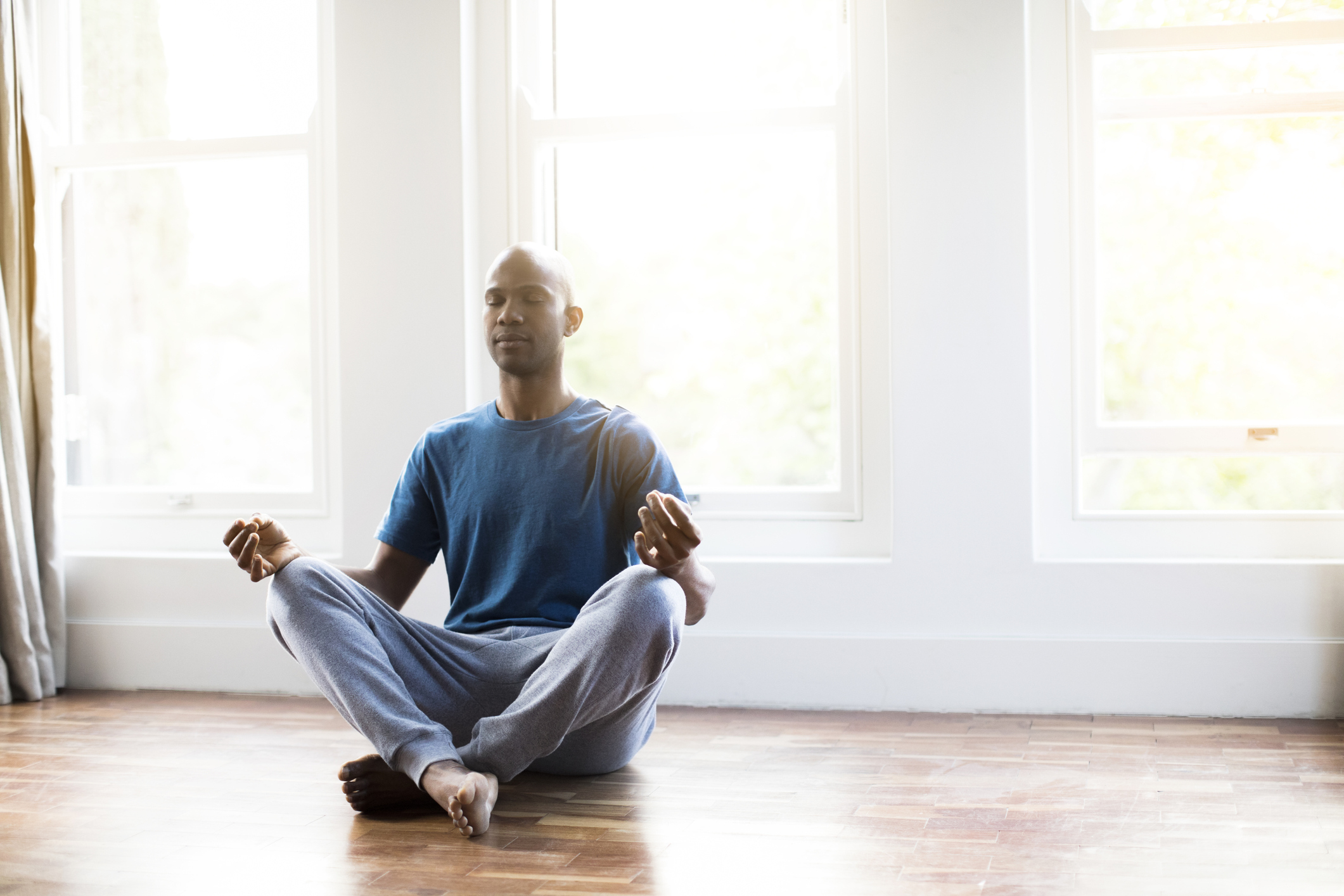
“We’re going to start today’s class in a nice, comfortable seat,” the yoga teacher says, as people around the room effortlessly adopt a cross-legged position.
Advertisement
You grunt and shuffle in an attempt to copy, while your knees threaten to touch your ears and a dull ache descends around your hips. It’s not exactly conducive to serenity.
Struggling to sit cross-legged can really put you off yoga – even if you can happily adopt most other postures. I say this from experience, because I’ve struggled to tuck one leg neatly under the other since childhood, and it’s only gotten worse as an adult.
Advertisement
But, I’m pleased to say, I do enjoy yoga now – and it’s all thanks to lockdown. Where I previously felt self-conscious at in-person classes, online classes have allowed me to experiment and adapt in private, experience the mental health benefits of yoga, and improve my hip flexibility a little in the process.
Sound appealing? If you also struggle to sit cross-legged, there are ways to adapt your practice and slowly make the position easier.
Advertisement
But first, let’s find out the basics.
StÃgur Már Karlsson via Getty Images
Why can’t I sit cross-legged?
The simple answer to this is we’re all built differently. Some people naturally start to sit cross-legged as toddlers, while others instinctively adopt ‘W-sitting’. The latter refers to the position where you plonk your bum down on the floor and splay your legs out backwards either side, creating a table top with your thighs and a ‘W’ position. Intermittent W-sitting isn’t a huge problem, but prolonged W-sitting has been linked to backache and problems with hip mobility in adults, so it’s recommended it’s corrected in kids.
But our natural physiology and early sitting habits are just part of the puzzle. Our sedentary lifestyle as adults can also impede our ability to sit cross-legged, explains yoga instructor Rachel Allen.
Advertisement
“Prolonged sitting in chairs (more than 30 minutes at a time) isn’t supportive to our physiological design and causes tightness by limiting the range of motion in the knee and hip joint,” she explains. “If you’re struggling to sit cross-legged, it is most likely caused by tightness in the hips and knees.”
The good thing is, if muscle tension is due to lifestyle, it can be reversed with stretching and increased movement.
Exercises to help you sit cross-legged
The most important thing is to reduce your time sitting in chairs, says Allen. Where possible, see if you can get up or at least change your seated position every 20-30 minutes.
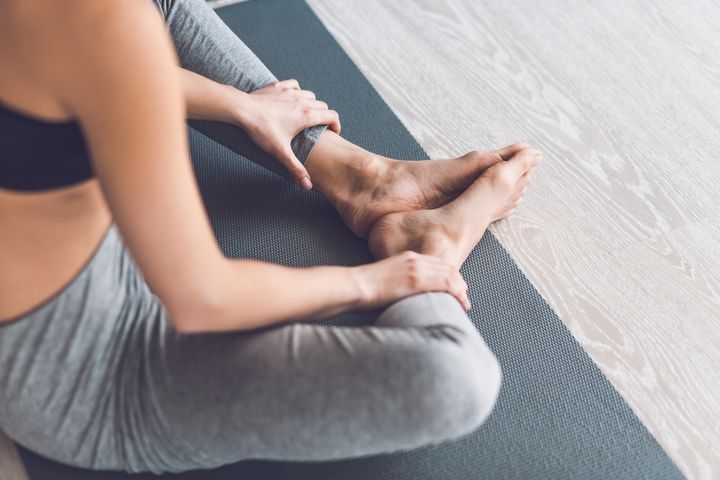
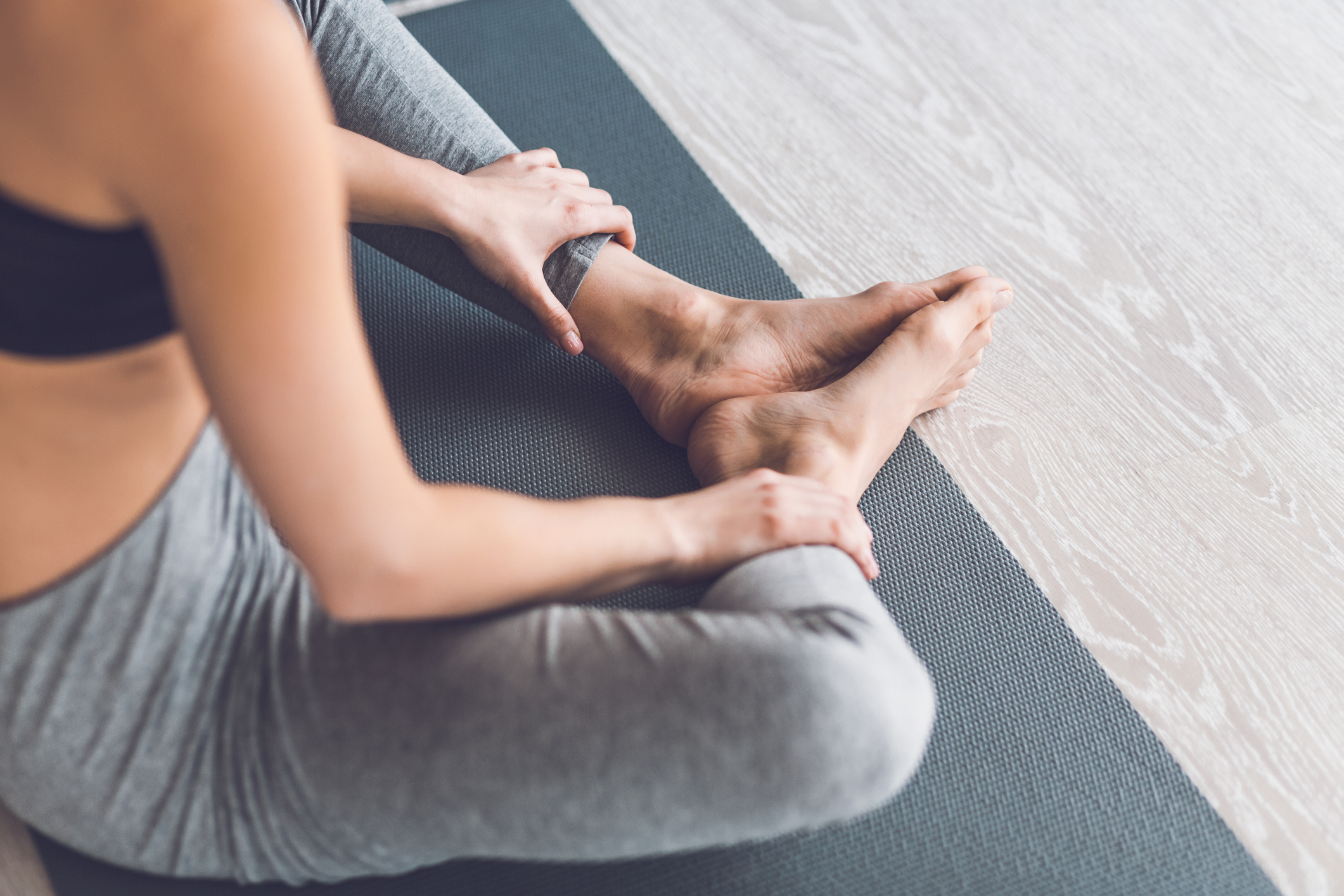
“For a juicy hip stretch, I love butterfly pose (Baddha Konasana),” she adds. “To do this, bring the soles of the feet together and your knees out wide like butterfly wings. You can do this seated or lying on your back. If seated, you can sit on a folded blanket to help elongate the spine and maybe take it into a forward fold to deepen the stretch.”
Prostock-Studio via Getty Images/iStockphoto
Butterfly pose
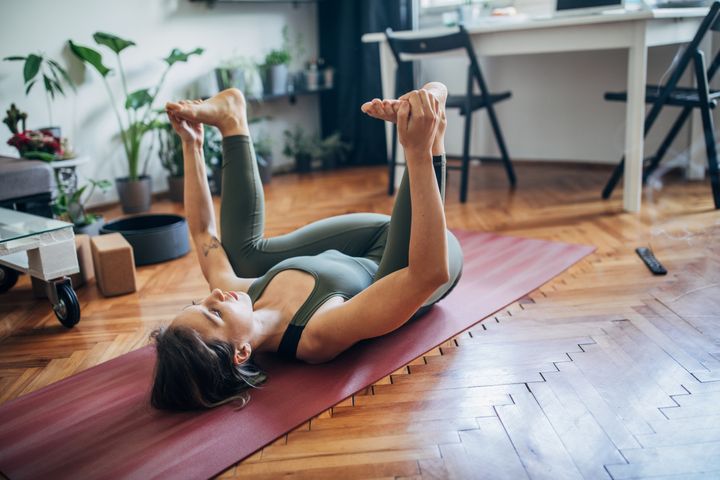
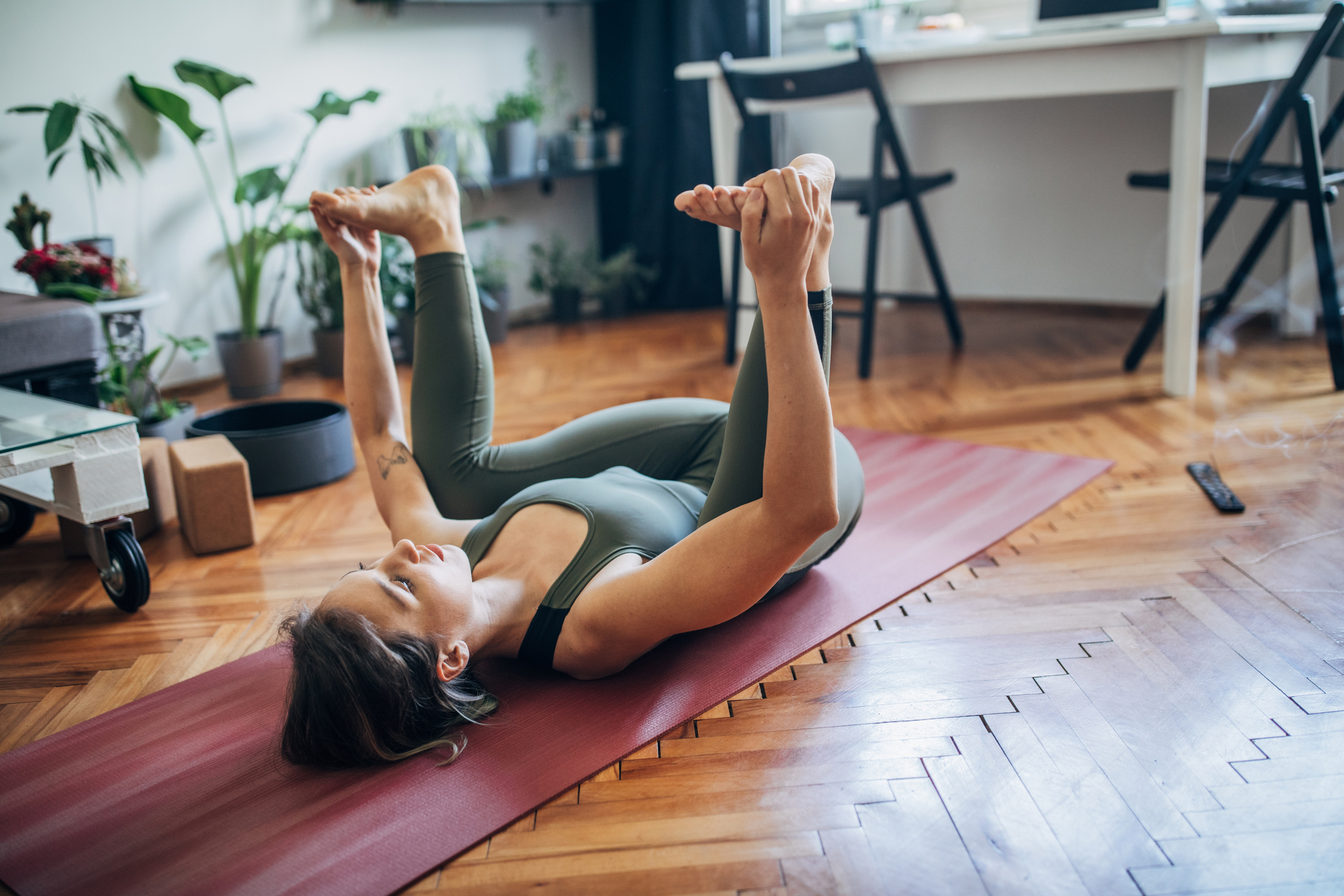
Another great way to open the hips and groin is happy baby pose (Ananda Balasana). “Lying down on your back, bring your knees into your chest and reach for the outside edges of the feet or ankles,” explains Allen.
“Draw the knees towards the armpits with the soles of the feet facing the sky. As well as a hip opener, it releases the hamstrings, lower back and sacrum and it’s a great way to tap into your inner child to boost your mood!”
South_agency via Getty Images
Happy baby pose
Adapt the position
When you sit cross-legged, the hips should be higher than your knees. Placing a block beneath your sit bones may make the position more comfortable.
“Propping up the hips helps to relax tight hip flexors by slightly tipping the pelvis forward and can prevent the tingly feeling in your feet and legs as it assists blood flow,” says Allen. “If you don’t have a block, you can prop yourself up on stacked blankets and/or cushions, you can also place blocks or rolled blankets underneath your knees and thighs to help the inner groins to relax.”
Advertisement
Ditch the position altogether
Although the above should help sitting cross-legged become easier in time, don’t push it: the position isn’t for everyone and yoga is meant to de-stress, not cause you another worry.
Instead, if a teacher instructs you to adopt a seated position, try something that feels good. “Another option is sitting between the heels in hero pose,” says Allen. “A block or a rolled blanket can be placed between the ankles to sit on, and a blanket can be placed under the knees and ankles for added cushioning.”
Doing your own thing in class can be a little intimidating – especially if everyone else is making a cross-legged seat look effortless – but Allen says you shouldn’t be embarrassed if the position doesn’t work for you. “Fun fact: easy pose (Sukhasana) is the name for any comfortable, cross-legged, seated position. However, easy doesn’t mean the opposite of difficult. It means “with ease”. So, sitting in Sukhasana is actually sitting any way you can with ease,” she says.
“It’s important to remember that yoga is for everyone – regardless of age or body type. Don’t be afraid to use the props available to feel as comfortable and as supported as possible.”
Even yoga instructors can feel self-conscious at times and when the feeling hits, Allen says she finds mindfulness techniques to be really powerful.
“Start by becoming aware of the feelings arising. Try to observe them with curiosity and acceptance. When you’re ready, gently redirect your focus back to your breath or to the exercise,” she says. “You can remember this as the three As – Awareness, Acceptance and Action. Practicing yoga in this way is what makes it such a powerful tool for the mind as well as body.”
Move celebrates exercise in all its forms, with accessible features encouraging you to add movement into your day – because it’s not just good for the body, but the mind, too. We get it: workouts can be a bit of a slog, but there are ways you can move more without dreading it. Whether you love hikes, bike rides, YouTube workouts or hula hoop routines, exercise should be something to enjoy.
You’re reading Move, the nudge we need to get active, however makes us happiest and healthiest.
A funny thing happens after a big sporting event takes over our televisions: fitness centres, gyms and sports clubs see a spike in new members.
Advertisement
It happened after the 2019 FIFA Women’s World Cup, when 850,000 more women signed up to play footie. Then again during and immediately after Wimbledon the same year, when the Lawn Tennis Association saw casual player court bookings jump by around 49%.
So imagine the impact of Team GB equalling the glory of London 2012 to record their joint highest ever Olympic medal tally in Tokyo this past fortnight with an amazing 22 golds, 21 silvers and 22 bronzes – adding up to 65 medals in all.
Advertisement
After the pandemic forced the cancellation of so many sporting fixtures and events in 2020, the bonanza of summer 2021 has been all the more inspiring. From multi-screening the Euros and Wimbledon, enjoying a whole new cricket tournament in The Hundred, and getting glued to the Olympics and the Paralympics yet to come, we’ve never been more ready to tune in, then train up.
Participation data has yet to be released for the year, but we’d put money on it being big. So, why does watching sport make us want to get sporty ourselves?
Advertisement
Fred Lee via Getty Images
Team GB’s athletes celebrate their triumphs on the track in Tokyo
“Watching sport makes us realise the power of community and triggers the sense of belonging that we all crave,” says sports psychologist Dr Josie Perry , whose audiobook, The 10 Pillars of Success, is out on August 15. “We watch people trying their absolute hardest, achieving great things and looking amazing and we want a piece of that too. We want to feel part of that world.”
The pull we feel watching elite athletes is so strong, it’s even felt by other sporting pros. Five-time Olympian Jo Pavey tells HuffPost UK she gets inspired to try other sports when she watches them on TV – even if they’re out of her own comfort zone of long-distance running. And what’s true for adults also applies to kids, says Pavey, who narrowly missed out on a spot in Tokyo.
“When England were playing football in the Euros it inspired us all to keep playing football matches in the garden. When Wimbledon is on, we’re more likely to have a go at tennis,” says the mother-of-two.
“I think it’s great for kids to see role models on the TV as it inspires them to have a go at different things. I also find it motivating to watch the determination of sports people competing in different events.”
Not only does a high profile tournament inspire many of us to try something new, it can also remind us of past sporting fun, adds Dr Perry. Watching a sport we’ve dabbled in ourselves, “helps us remember the pleasure we got from both doing it and from the feeling we had mastered aspects of it,” she says.
The summer Olympics, with 339 events and 33 different sports, offers the ultimate opportunity to reminisce – even if we’re simply laughing about how terrible we were at javelin in school and wondering if we’d do better now.
The Olympians understand this knock-on-effect. “That’s why we are all here, because sport has an amazing power to inspire people and hopefully this is going to be an amazing motivation for people,” said swimmer Adam Peaty after winning Team GB’s very first gold medal of the game.
This is why HuffPost UK has chosen this moment to relaunch our fitness section as Move – a renewed commitment to celebrating exercise in all its forms, putting accessibility front and centre. We aim to provide bags of ideas for getting active, however makes you happiest and healthiest – but we’ll also get real about motivation, addressing the barriers that stop so many of us from moving more.
Advertisement
HuffPost UK / Rebecca Zisser
Take participation after a major sporting event. We know people sign up in their thousands after watching sport on TV, but we also know that many people drop out soon afterwards.
A quarter of people have given up on certain sports because they didn’t think they would be good enough, according to research from Procter & Gamble. A further 16% of people have been put off a sport, because they didn’t believe they fit the stereotype of what people playing that sport are “supposed” to look like. For many, the pandemic and long stints indoors has only exacerbated such worries, particularly among those who’ve historically felt excluded from the fitness community, and not catered for in gyms and sports centres.
Research from the disability charity Scope for its new Make It Count drive – dubbed “a movement of movers” – found that nearly half (48%) of disabled people have become less active since the pandemic began. Four in 10 (40%) said they never do sport or physical activity, but 91% want to be more active.
So, how do we take inspiration and energy from a summer of sport such as this one and harness it once the media hubbub has died down? And how can we shake off the inner critic that tells us we’ll never be as good as the pros?
Bryn Lennon via Getty Images
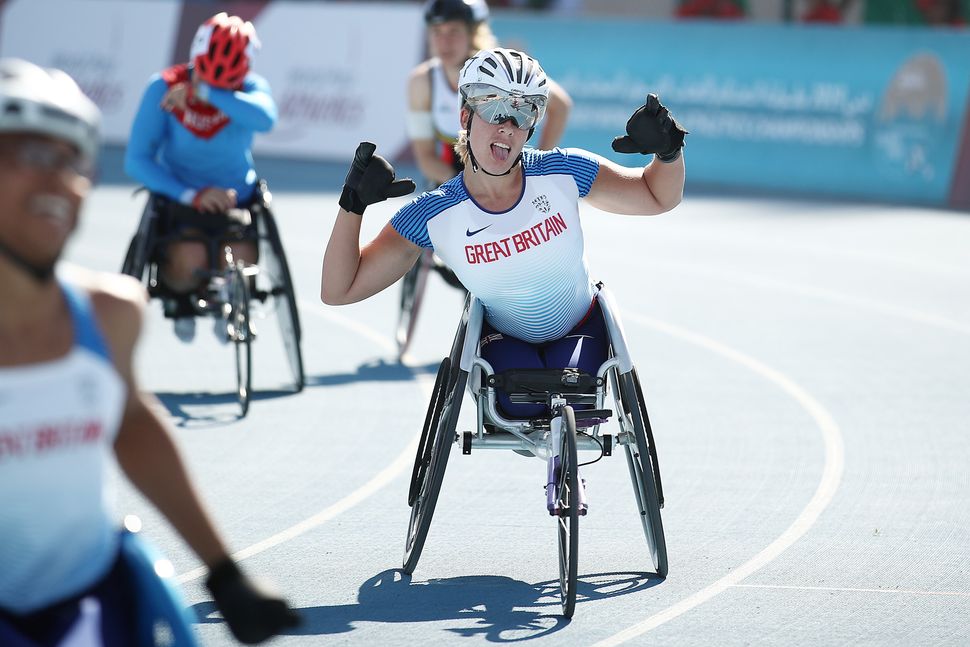
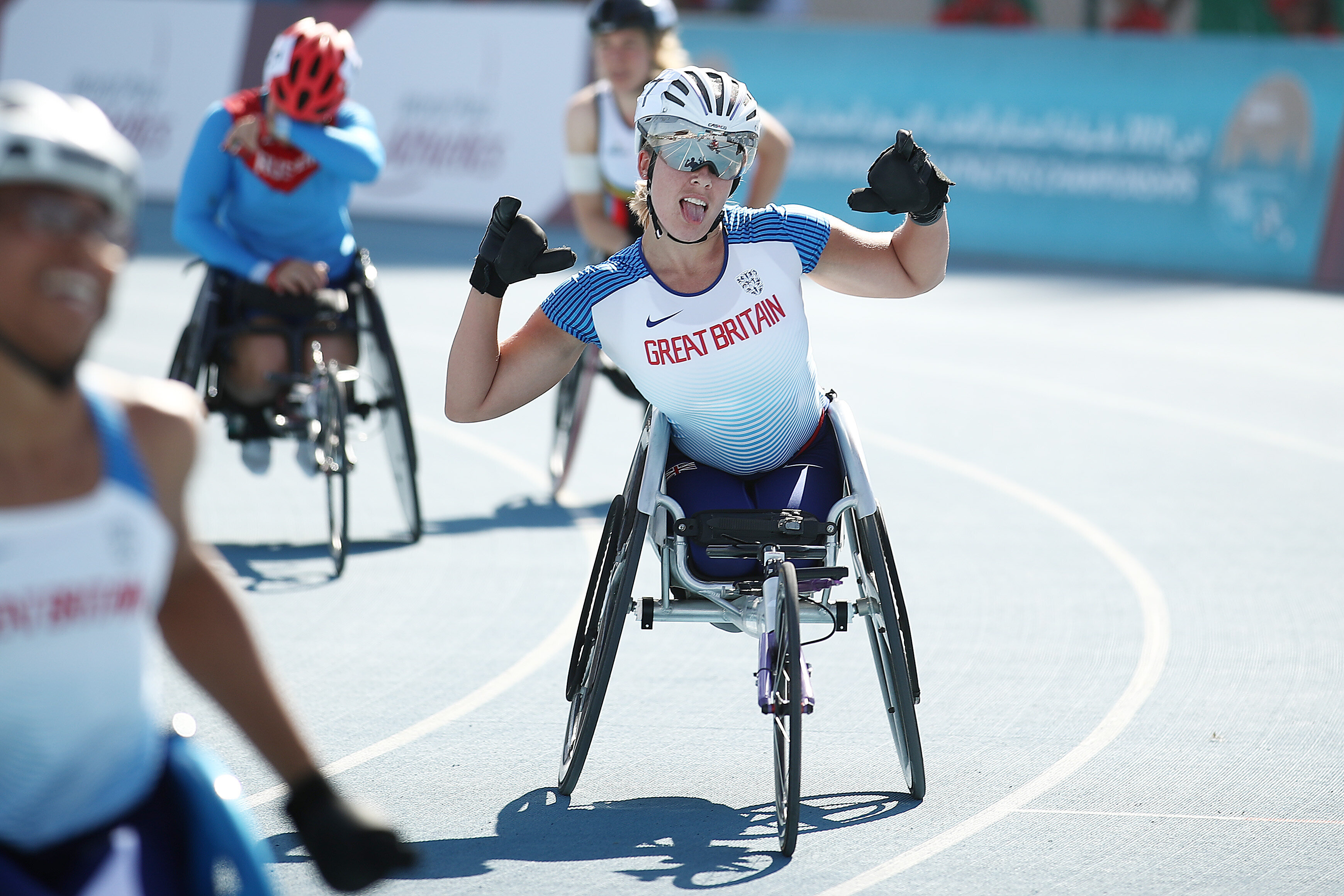
Hannah Cockroft is one of Team GB’s great hopes at the Paralympics in Tokyo.
Well, we can start by stealing some motivation tactics from elite athletes, says Jeremy Snape, a former England cricketer-turned-sports psychologist, who hosts the podcast Inside the Mind of Champions.
“We have this myth that elite performers are going to wake up every morning with a zest for their painful training and are going to do that for eight or 10 years without a break, but that’s not true,” he tells HuffPost.
“A professional athlete, that’s their job, so while their motivation may ebb and flow through the various training cycles, their commitment remains the same.”
A professional athlete’s commitment – or end goal – may be winning a certain tournament or hitting a new world record. They’ll use a number of tactics to visualise not only what this might look like, but how this might feel, says Snape. They may imagine a social gathering where they’ll show family that trophy, or put an inspirational image as their phone screen saver that makes them feel good about their ambition.
Leon Neal via Getty Images
Team GB’s Mixed Relay Triathlon team show off their gold medals
For you, the commitment may be getting fitter so you don’t get so tired out during your work week or so you can play with your kids without getting out of breath. Snape recommends thinking about how great this will feel, rather than focusing on something static – such as weight loss – as the goal.
When your motivation is high, such as after watching sport on TV, he suggests putting “architecture” in place for when it inevitably dips. This might be signing up to a class, or laying out your gym kit with your phone alarm in the shoe.
“The chances are, when we wake up, we’ll think the duvet is going to beat us, but if your alarm is going to ring in your gym shoes and it’s all laid out, you’ve 90% more chance that you’re going to follow through,” he says. “The hardest part of a run is getting out of the front door.”
Pavey recommends listening to music before and and during a workout to help “get you in the groove,” exercising with friends, and planning what you’ll do after a workout. “But the main thing is to enjoy it,” she says. “If you’re experiencing a lack of motivation try varying your workouts or maybe take the time to exercise where there is beautiful scenery as this can be so uplifting.”
And if self-doubt starts to creep in, remember that any movement is positive movement – and you don’t need to look like an elite athlete to take part.
“What we’ve got to do when we look at Olympians is look at the characteristics we aspire to. Things like their personal discipline, the selflessness in teams, [their] wellbeing.”
“You’ve got to bear in mind that it’s those people’s professions and they’ve studied and sacrificed for 15 years to look like that, some of them started their training when they were five years old,” says Snape.
“In the same way you’d look at a doctor and say ‘wow that’s amazing,’ you’re not just going to turn up and be a doctor within two weeks of good intentions, because there’s a whole raft of training and skills that go behind it. I think what we’ve got to do when we look at Olympians is look at the characteristics that we aspire to – things like their personal discipline, the selflessness in teams, things like [their] wellbeing.”
Advertisement
Seeking inspiration closer to home can also help, says Dr Perry. “It might be the person at Parkrun who is like you but a bit faster or the guy at your football club who has worked incredibly hard on their fitness who inspires you,” she says.
“They give us what is known as ‘vicarious confidence,’ knowing they can do it helps us believe we can too. So look at friends and acquaintances – who is doing well and what element of that would you like to emulate?”
Above all, give yourself to permission to take things slowly and celebrate each win, whether that’s swimming a length for the first time, or feeling less out of breath as you walk to the end of the road.
“I think the pandemic has taught us that being outside and being active is incredibly liberating from a mental health perspective,” says Snape. “For both elite athletes and the average person, we should be not be judging ourselves on the outcome, but about our progress.”
Move celebrates exercise in all its forms, with accessible features encouraging you to add movement into your day – because it’s not just good for the body, but the mind, too. We get it: workouts can be a bit of a slog, but there are ways you can move more without dreading it. Whether you love hikes, bike rides, YouTube workouts or hula hoop routines, exercise should be something to enjoy.
In July, Denise Delamore finally returned to working in her Colorado office after more than a year of working remotely due to the coronavirus pandemic. But her space was different. Delamore, who works as an assistant supervisor for a bank’s loan servicing department, no longer had her own personal desk.
Currently, Delamore goes into the office one day a week, with an expectation that this will increase over time. “My day is Mondays, and I’m sharing a desk with two other loan servicing departments who are in office Tuesdays and Wednesdays, respectively,” she said. “We have to reserve a desk ahead of time, and there’s no guarantee that we’ll have the same desk every time.”
Advertisement
Because other people use the desks, too, Delamore was given a small bin to store her keyboard, mouse and any other items she needs while working. But it doesn’t fit everything. She said she finds herself carrying more into work each day, as she still needs to bring home her planner and notes for the days she works remotely.
The personal touch is missing, too. Delamore used to be able to store granola bars, oatmeal, crackers and nuts in her desk for snacks, but now she carries a bag of any food she wants to eat that day.
Advertisement
“I definitely felt a connection to my workspace when I was able to leave personal items on it. It was my area. I felt grounded,” Delamore said. “Now I find it hard to focus. It could be me just getting used to working in the office again, but not having a dedicated, personal workspace makes it difficult.”
Why ‘hot desks’ are here to stay at work
Advertisement
Delamore is part of a growing office population using “hot desks” that aren’t assigned to any particular person. A hot desk is generally first reserved, first served. It’s not a new concept in the world of work, but the practice is gaining popularity now it’s less likely for employees to be in an office five days a week because of Covid. Many companies are moving to schedules with employees rotating in and out of the office part-time, much like the system instituted by Delamore’s employer.
Meena Krenek, an interior design director at Perkins&Will, an architecture firm that is redesigning offices in industries including accounting, tech and media, sees personal desks becoming more and more obsolete.
“Some of our clients are saying, ‘Areas where we had workstations, we want more meeting and collaborative spaces.’ We’re going in there and adjusting the furniture to… create more spaces so that our office becomes a space for collaboration, for socialising, and the individual time, what we call ‘me time,’ can get done in those home environments,” she said.
“They’re still keeping a lot of workstations, but they’re saying they’re not assigned. You go on a corporate app and you select where you sit, near a window or near the coffee machine,” she explained.
Advertisement
The mileage an employee gets from not being tied down to a single desk may ultimately depend on their preferred working arrangement. Citing research by Perkins&Will, Krenek described a set of co-workers who prefer to get their social and collaboration high at the office and “jump from meeting room to meeting room, and then they’ll leave the facility, whereas there are other people that need the time in between the meetings to collect their thoughts. They definitely need a focused area or a work station,” she said.
This can explain why one colleague may genuinely miss having a personal desk as their office home, while another might sound thrilled at never working in a dedicated desk pod again.
Daniel Space, a human resources consultant with business partners in strategic staffing, said that when a company uses hot desks, it’s ideal to tie the day a person comes into the office to a work reason and not a random scheduling system, such as assigning days by last name. He said he’s seen tensions eased when people are given a heads up about who is sharing their desk and the expectations for desk etiquette.
In one job, his co-workers would get copied on emails that read, “So-and-so is happy to share their desk with you. Please be respectful of their space, their stuff, treat it as though it would be your own,” he said.
Pro tip: If you do find yourself sharing a desk, remember to clean up after yourself. People who have used shared desks told HuffPost that the best etiquette is to leave a desk the way you found it, and not to take computer chargers or chairs off of unused desks without asking first.
“My desk became kind of a dumping ground while I was out of the office,” Delamore said. “Random keyboards, office supplies, etc were just piled on it. I spent two hours my first day in the office just cleaning.”
There are Covid-19 considerations, too
Of course, this is not a normal time for sharing desks. A hot desk may be a pragmatic solution when there are fewer employees entering an office everyday, but it can also be one more deterrent for those employees who are already unenthused about going into the office during a pandemic.
Space said he consulted with a company that gave employees the option of sharing socially distant desks, as long as employees were responsible for cleaning the desk and signing in and signing out for contact tracing purposes.
“Two people used it,” he said. Especially now, with the rise of the Delta variant of Covid-19, “The idea of not only bringing employees back to work, but mandating that they share a space with another employee on alternating days, it a little bit sends a signal that they are prioritising the idea of a budget and saving on real estate costs at the risk of their employees,” Space said.
Advertisement
Covid has already delayed some organisations’ plans for co-working. Twitter, which was asking employees to reserve a desk before they chose to come into an office, told HuffPost that it recently made the decision to close its opened offices in New York and San Francisco, and pause future office re-openings, in light of the CDC’s updated guidelines.
Is the loss of a personal desk always a loss of connection?
One potential advantage to a shared desk is that it may help to create some healthy professional distance between employees and employer.
“I always hated doing a termination with someone who had a bunch of stuff at their desk, because in many cases we would not allow them to return to the office,” Space said. “Having people pack up all of your boxes after you put in 10 years at a company, all of that feels gross. By removing all of that… it helps continuously reinforce that at the end of the day, it’s a business relationship.”
Even when you don’t have a desk to claim as your own small bit of office real estate, there can still be ways to connect with co-workers and make a space your own. Bk Kwakye, an operations manager for a D.C.-based nonprofit that has been using hot desks since before the pandemic, said their office uses cork boards on walls and communal fridges as spaces for people to share holiday cards and photos.
“For me, it feels like an opportunity to share a little bit of your family,” Kwakye said. Space knew of co-workers who left a crossword puzzle for their deskmate to complete, one word a day.
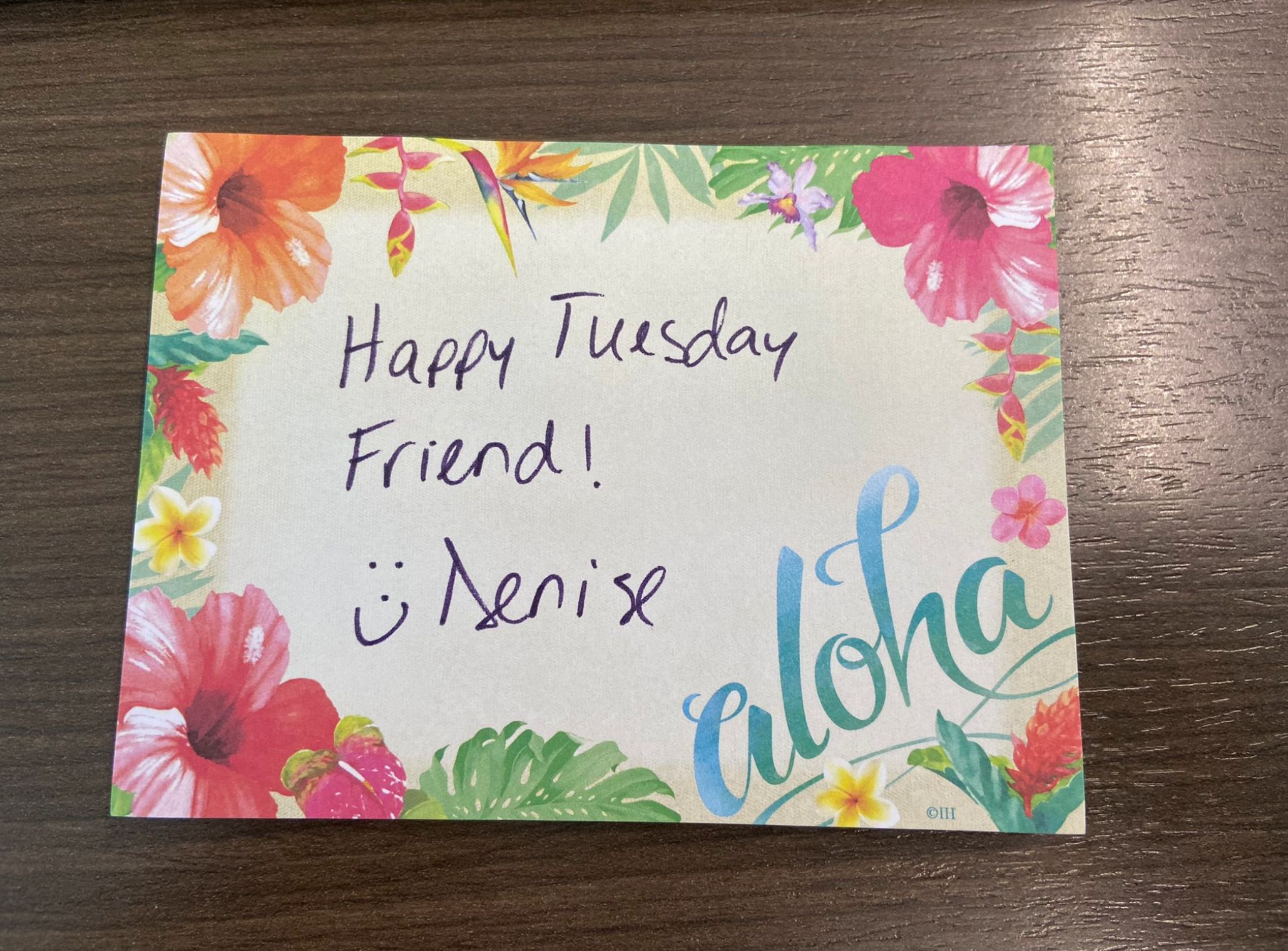
And even when you don’t have an assigned desk, you can still personalize it. Delamore said that one upside to sharing a desk is that she knows who her office deskmate is and she can leave notes behind for her.
A recent one she left: “Happy Tuesday Friend! 🙂 Denise.”
Denise Delamore
Even with a shared desk, there can be creative ways to make connections with co-workers you don’t see in person.
The Olympics is way more than just a competition anyway. Whether you’re a sports obsessive or a fan for just the summer, we can agree that our athletes have served us a true lesson in determination, strength and perseverance.
Advertisement
It’s kind of awe-inspiring to watch people who’ve spent a large majority of their life training for an event that lasts just a few hours, minutes… or even seconds.
That takes mental strength, as much as physical power. Most of us might not be athletes – but here are the lessons we’ve learned from our sporting heroes.
Advertisement
Perseverance pays off
Fred Lee via Getty Images
Tom Daley and Matthew Lee of Team Great Britain pose for photographers with their gold medals after winning the Men’s Synchronised 10m Platform Final
A Team GB favourite, we’ve been watching Tom Daley compete since he was just 14 years old in Beijing. Three Olympic Games later, after clinching bronze in front of a home crowd at London 2012, then failing to qualify for the finals in Rio, he finally achieved his goal at Tokyo, winning gold for Team GB. Daley is an example of true perseverance, never giving up on his dream, despite all the challenges he’s faced, including losing his dad to cancer. And he’sf done it all with a positive attitude, a smile on his face, and his knitting never far away.
Advertisement
Be true to yourself
It was 2013 when Tom Daley came out as gay, on his own terms, in his YouTube video, “Something I want to say.” Since then he’s got married to partner Dustin Lance Black and become a father himself. When Daley faced the press after winning gold in Tokyo, his statement was brilliant and simple: “I am incredibly proud to say that I am a gay man and also an Olympic champion. I feel very empowered by that.” What a message to send to LGBTQ people everywhere.
It’s aways worth trying
Naomi Baker via Getty Images
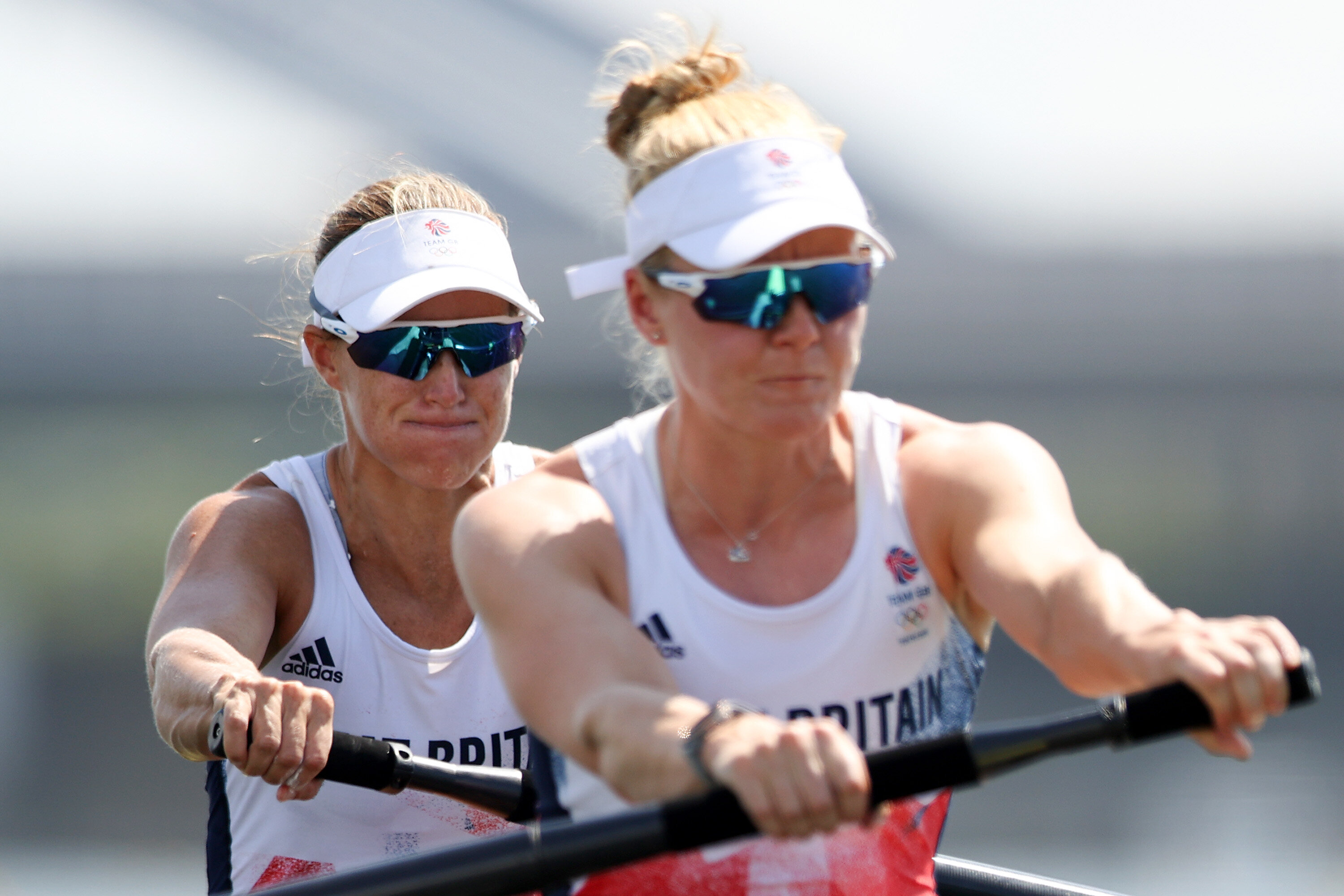
Helen Glover and Polly Swann compete during the Women’s Pair heats on the first day of the games.
Helen Glover is a two-time Olympic gold champion and mother-of-three. This Olympics, Glover narrowly missed out on a medal, coming fourth but she wasn’t at all in low spirits. She told the BBC that: “You can do anything you want to do. Trying and failing is no problem as long as you try.” After giving birth to twins in lockdown, it’s remarkable to see her compete. She’s not a winner this year, but she’s our example of why it’s important to always try.
Advertisement
Use your voice
Anadolu Agency via Getty Images
Dina Asher-Smith with her team-mates Asha Philip, Imani Lansiquot and Daryll after winning bronze in the Women’s 4 x 100m Relay
Dina Asher-Smith has been one of the most recognisable faces of Team GB. And though all eyes are set on the 26-year-old sprinter, she isn’t shy to use her voice to speak out against injustices. She supported the relaxation of rules around athlete protests at the Tokyo Olympics, telling the BBC: “I see protesting and expressing yourself as a fundamental human right.” Oh, and while injury blighted her chances in the 100m and 200m, she came back in the 4 x 100m relay, and was part of a British record-setting, Bronze medal-winning team.
Look at things differently
Karl Bridgeman via Getty Images
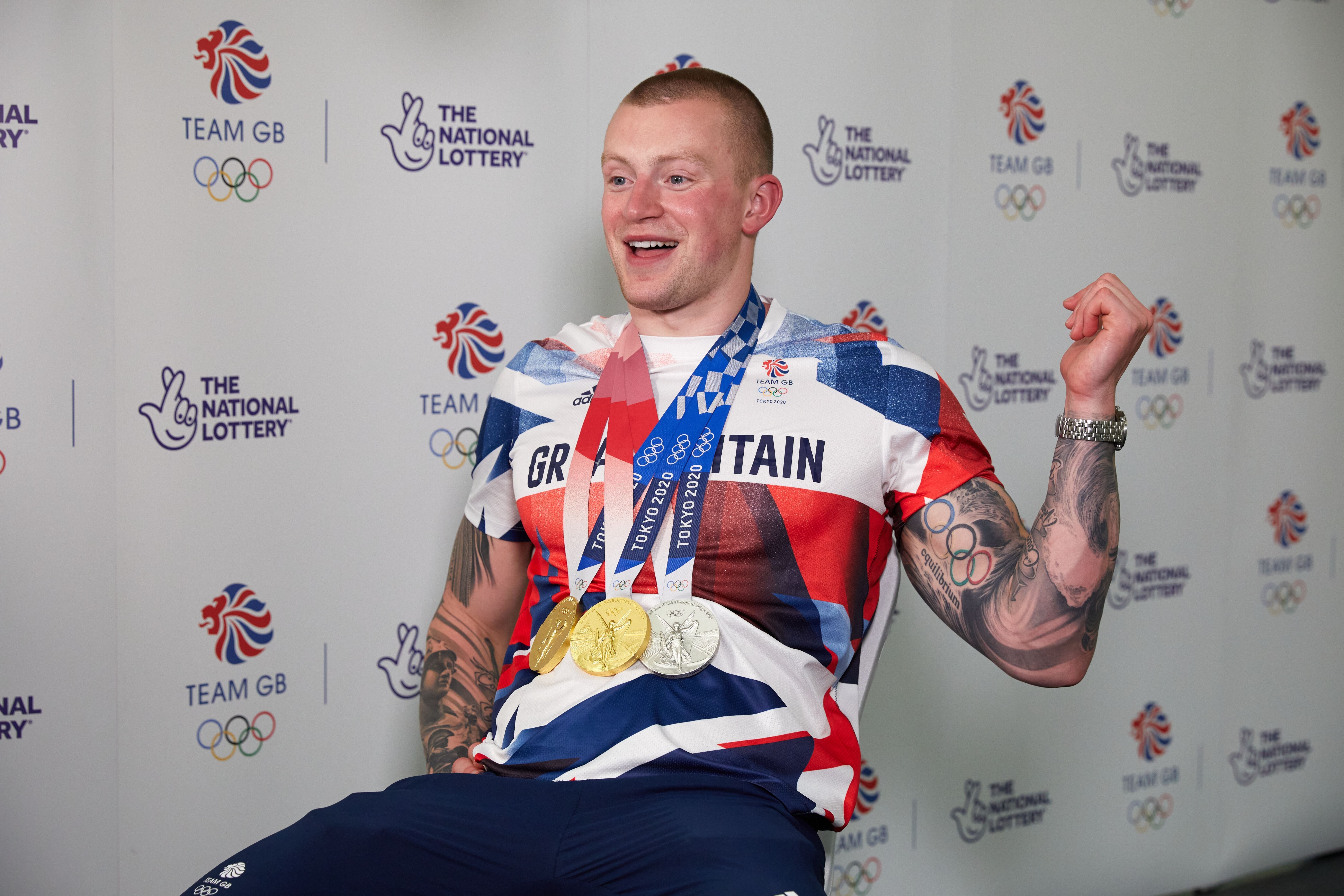
Adam Peaty being interviewed back in London with his three Tokyo medals.
Having won a gold and silver medal at previous Olympic Games, swimmer Adam Peaty knows the importance of a positive mindset. Optimism feels like a tall order after all that we’ve been through during the pandemic – and Peaty gets that. “Covid has taken a lot of fun out of things.” But with some perspective, it’s possible to shift your head.
“That’s why we are all here, because sport has an amazing power to inspire people,” he said after winning Team GB’s first gold of the games (and his first of three). Let Team GB’s triumphs be a catalyst for everyone at home, he added. “We’ve been through a tough time, there’s been a lot of complaining, a lot of excuses, a lot of negative things, but now we’ve got to switch our mindset.”
Pick yourself up after a fall
picture alliance via Getty Images
Charlotte Worthington in action in the Cycling/BMX Freestyle Women’s Final
Part of Team GB’s awe-inspiring BMX team, who picked up three medals in their debut Olympics, Charlotte Worthington came out fighting in her first of two rides in the freestyle final, attempting a 360 degree backflip, only to crash-land. Some might have played it safer for second place, but Worthington picked herself up and with a smile to camera that said she knew what she was capable of, attempted the exact same trick, and this time she landed it for the gold medal. “It was either go big or go home,” Worthington told the press. She went big.
Never limit yourself
Mike Egerton – PA Images via Getty Images
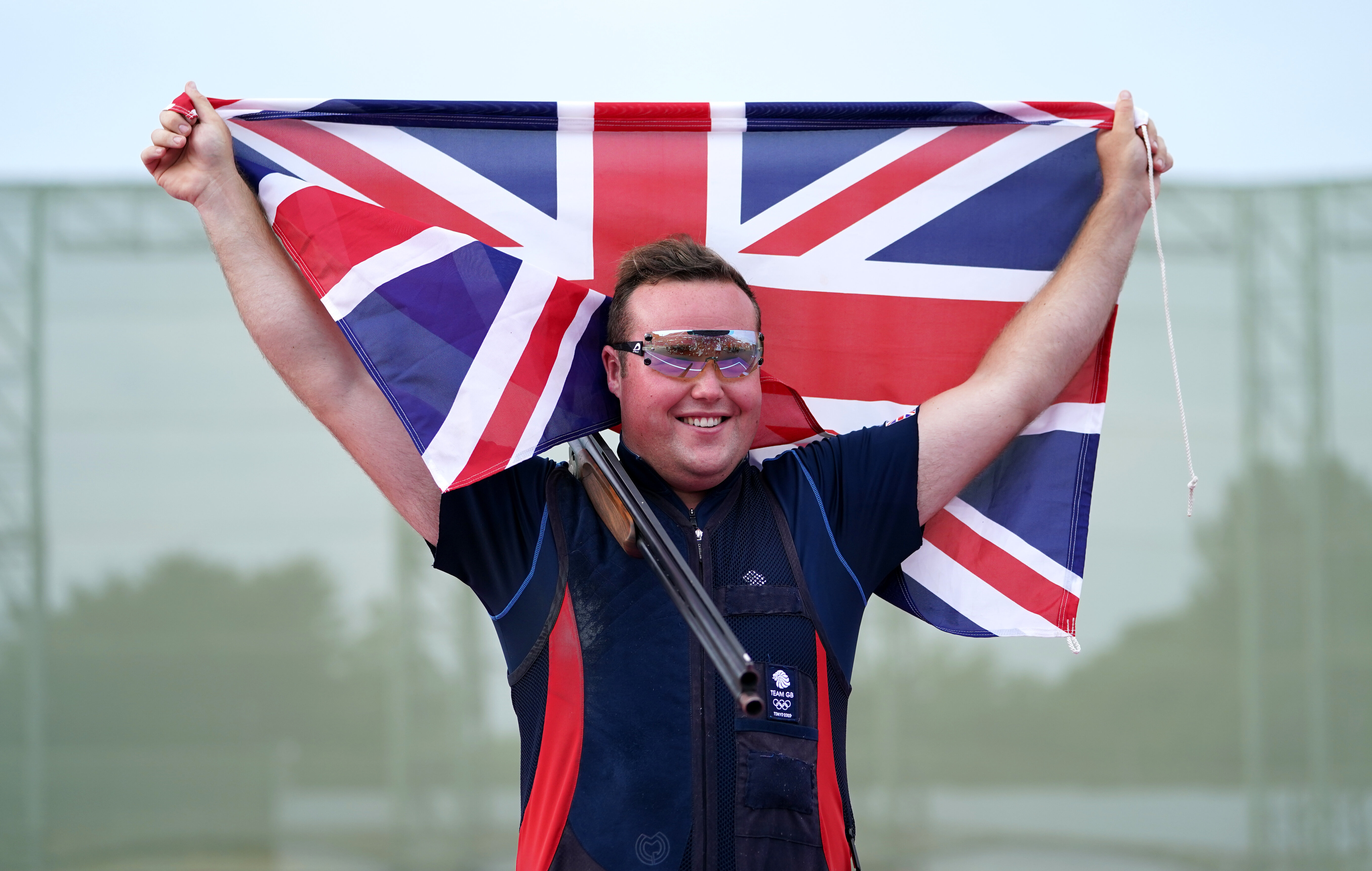
Matthew Coward-Holley celebrates after his bronze in the Trap Men’s final
At the age of 16, Matthew Coward-Holley was told his rugby dreams were over after breaking his back twice. A decade later, he is now an Olympic bronze medalist. After being advised to stop playing rugby he turned to shooting. Something that was once a hobby became his gateway into sporting success. Our takeaway from this is to try different things, because you might surprise yourself.
By the time the weekend rolls around, most of us are exhausted. Burnout is at an all-time high and people, understandably, want to use their weekends (or whatever days they get off during the week) to relax, socialise and sleep in.
But creating and maintaining a weekend morning routine can really help set the tone for the rest of the week. With that in mind, here are five common mistakes people tend to make on their days off — and how to create a healthy morning routine that won’t mess with how you’re feeling on other days.
Advertisement
Mistake #1: Sleeping too late
No one wants to be scolded for sleeping in on the weekends. But many experts agree that blowing past your usual wake time can hamper overall well-being. Research shows that significant variability in sleep and wake times leads to less healthy behaviours overall. Studies have also linked “social jet lag” — the shift in sleep habits from weekdays to weekends — to greater overall fatigue and sleepiness.
“Sleeping in on the weekends makes it harder to fall and stay asleep the following night simply because you’re not awake for enough hours to be hungry enough for sleep that next night,” she added, noting that she makes an effort to practice what she preaches and gets up consistently at 6 a.m.
Advertisement
However, not all research knocks catching up on ZZZs on the weekend. One study found that people who were sleep-deprived during the week but caught up on the weekend lived just as long as people who got sufficient sleep overall. (As opposed to people who were sleep-deprived, who were more likely to die early.)
Ultimately, balance is key.
“Sleeping in a little bit is one thing; sleeping in for hours and hours so that you then can’t get to bed on Sunday night is another,” said Debra Swan, a Chicago-based health coach who works with clients around the US. She stressed that you should try to keep your sleeping in to an extra hour or two.
Mistake #2: Not hydrating first thing
Advertisement
Hydrating is really important first thing in the morning, Swan said, particularly after a night of drinking. And she really thinks it’s best if coffee isn’t the first liquid you have in a day.
Sipping H2O ― even if you’re not thirsty ― helps you stay adequately hydrated throughout the day. There are plenty of ways to sip it if the idea of starting off your Saturday or Sunday with a tepid glass of tap water sounds meh. Have a seltzer on hand if that’s your preference, or try herb- or fruit-infused water. Your goal should be to try to find something you actually like, so you’re more likely to make a.m. hydration a long-term routine.
PixelsEffect via Getty Images
Hydrating when you first wake up is important.
Mistake #3: Not making yourself accountable to someone or something
It’s easy to stick to routines on weekdays because we all have someone or something we’re accountable to, whether it’s waking up to take kids to school or to get to work on time. Try to build that same sense of accountability into your weekend mornings, Harris suggested.
“Kids are frequently a helpful routine alarm, but if that’s not in the mix, consider signing up for a workout class in the morning or meeting a friend for coffee, or even doing your laundry in the building on Saturday morning because it is quiet,” she said. “Accountability is very helpful in beginning a routine.”
Or maybe you want to find an accountability partner, like a friend or family member who can help you if you’re, say, really struggling not to sleep until noon.
Mistake #4: Not prepping for the week ahead
“You should absolutely relax on the weekend,” said Swan, who took pains to point out that morning routines should be really manageable and not feel like a chore.
She knows people need a chance to unwind. Still, she thinks it can be a missed opportunity when people don’t use their time off prepare for the days ahead, and said the mornings can be a really nice time to do a bit of that work.
“The weekdays are so busy, and people have high hopes of meals and eating healthy – but preparation is key,” she said.
Advertisement
Swan often recommends that clients she work with use the weekends to think about any recipes they want to try out, then make sure they have the ingredients they need on hand and do any possible prep work, like chopping vegetables, ahead of time.
That way, you’ve made your life easier for hectic weekdays – and you’ve also helped set the tone for the rest of the week.
Mistake #5: Not getting outside
“Get some fresh air and sunshine,” Swan said, adding that it’s good to get outside shortly after you get out of bed. “Bright light lets your brain know it’s time to wake up.”
Spending time outdoors has all kinds of health benefits, including how people say they feel overall, and research shows that morning light exposure can lead to better rest at night.
Going outside in the morning isn’t the kind of change that’s particularly difficult or burdensome, but it’s powerful.
“How you behave one day influences how you behave the next,” Swan said. “Yes, the weekend is less structured. Yes, it’s a time to relax. But you still want to have a good start to the day.”
Small talk is something many of us avoided even before the pandemic, and neither months of social distancing or the awkward return of socialising has made it easier – but it’s something that can still save lives.
That is the message from Samaritans, as the mental health charity and helpline relaunches its campaign to raise awareness about the role small talk can play in preventing suicide on the railways and in other public settings.
Advertisement
The ‘Small Talk Saves Lives’ campaign has run in partnership with Network Rail, British Transport Police and the rail industry since 2017. But as the UK steps out of lockdown, it is focusing on rebuilding public confidence to trust our gut and start conversations with anyone who looks as though they may need help.
Brits are known for being quite reserved, especially in public. We rarely go out of our way to speak to strangers and keep ourselves to ourselves. But engaging in the smallest of conversations – it could be as simple as asking “hello, what’s the time?” – may help interrupt someone’s suicidal thoughts, Samaritans says.
Advertisement
luza studios via Getty Images

Handsome confident businessman on his way home from work. He is standing on the train station platform at sunset, waiting for his train.
The pandemic has had a huge impact on mental health – and while it may have made the idea of small talk more daunting, it has also made us value a sense of community.
Dom, who prefers not to give his surname, knows how important small talk can be. As a teenager, he was experiencing suicidal thoughts but was interrupted at a crucial moment by someone who used small talk to ask if he was ok.
Advertisement
“When I was 19 years old, I was struggling to cope and didn’t know where to turn,” he tells HuffPost UK. “I was on my way to university one day and found myself thinking about ending my life. A lady came over and started a conversation with me and when I heard her ask, “are you ok?” it instantly snapped me out of thinking about harming myself.”
Dom, who now works for Network Rail himself, says he’s supporting the ‘Small Talk Saves Lives’ campaign because it saved his.
“From my own experience, I know suicidal thoughts can be interrupted and it was the kindness behind the small talk that also made a difference to me,” he says. “That human connection made me feel seen.
Working in the railway sector for almost a decade, Dom has used small talk on several occasions when someone’s behaviour has concerned him.
Advertisement
There aren’t “typical” signs someone might need help, Dom says. “When I’ve approached people, sometimes it’s because they’ve looked withdrawn, distant, or upset. Other times, they seem completely calm, but I’ll notice that they’re in an unusual location in relation to the environment. I would say, if you get a sense that something might be wrong, trust your instincts and start a conversation – as I’ve experienced, you could save a life.”
The public is better prepared for these interventions that you might expect.
A YouGov survey for Samaritans found over three quarters (78%) of UK adults have engaged in small talk during the pandemic – 37% of those surveyed said they had chatted with neighbours they hadn’t spoken to before and 37% with strangers at the supermarket.
Almost one in five said they are also more likely to want to make small talk with a stranger face-to-face not that restrictions are lifted. Given that small talk makes 57% of respondents feel less lonely and boosts the mental health and wellbeing of a further 45%, there’s potential to make a real difference here.
Of course, starting a conversation with a stranger can be difficult and it’s natural to feel nervous.
“If you spot someone you’re worried about and aren’t comfortable approaching them, then that’s completely fine as well,” Dom says. “You can still act by trying to find someone else who might be able to help, for example, a member of staff or police officer, or you can call 999 in an emergency.”
But with everything that’s happened in the past 18 months, Dom is optimistic that people can make a difference. “One thing I’ve noticed is the pandemic seems to have brought out a greater sense of community,” he says.
“I think we all recognise how important human connection is and that checking in on each other – whether it’s a friend or family member, a neighbour or key worker you’ve never spoken to before – can make a huge, positive difference to someone else’s day, as well as your own.”
Useful websites and helplines
Samaritans offers a listening service which is open 24 hours a day, on 116 123 (UK and ROI – this number is FREE to call and will not appear on your phone bill).
Advertisement
Mind, open Monday to Friday, 9am-6pm on 0300 123 3393.
CALM (the Campaign Against Living Miserably) offer a helpline open 5pm-midnight, 365 days a year, on 0800 58 58 58, and a webchat service.
The Mix is a free support service for people under 25. Call 0808 808 4994 or email help@themix.org.uk
Rethink Mental Illness offers practical help through its advice line which can be reached on 0808 801 0525 (Monday to Friday 10am-4pm). More info can be found on rethink.org.
You’re reading First Thing, a weekly series on HuffPost UK helping to make your mornings happier and healthier.
Does your morning exercise routine consist of working your arms by smacking the snooze button for the third time? (No shame ― sometimes you gotta do what you gotta do!)
Advertisement
It may feel like exercising at the start of the day is an impossible feat when you’re so exhausted. However, you don’t have to spring out of bed and start running a 5K to feel energised. Even a little bit of movement will go a long way when it comes to revving you up for the day.
“Moving your body when you first wake up helps your circulation and stimulates your lymphatic system,” said Jennifer Jacobs, a certified personal trainer and founder of The J Method, adding that exercise helps fluid move through your body and reduce inflammation. “As a result, you feel more energised.”
Advertisement
We asked experts to share the best energy-boosting moves that’ll help you kickstart your morning feeling loose and alert. Here are their favourites:
1. Downward dog
Advertisement
Mavocado via Getty Images
Start your a.m. with a downward dog to get your blood flowing and increase alertness.
One of the reasons you may not want to drag yourself out of bed is because your body is stiff from sleeping all night. This yoga pose is a great way to kickstart blood flow and wake up, said Megan Roup, founder of The Sculpt Society.
Starting on your hands and knees, stack your shoulders over your wrists and spread your palms out wide. Pressing through your palms, tuck your toes and lift your knees, pointing your hips toward the ceiling as you press down through the heels.
“To make this stretch more active, you can pedal out the feet while you actively press into the floor or bend and straighten both legs,” Roup said. Hold the pose for 15 seconds and repeat for three to four rounds.
2. Hamstring flossing
Advertisement
“This dynamic stretch helps to loosen up your hamstrings and your lower back more effectively than doing a static stretch, which may cause muscle spasms if your body isn’t properly warmed up,” said Theresa Marko, a board-certified orthopaedic clinical specialist in physical therapy and owner of Marko Physical Therapy.
To do this move, start by lying on the floor with knees bent and feet flat. Gently grab behind one of your thighs and straighten and bend the knee repeatedly (just make sure not to overextend your knee). This back-and-forth flossing motion will give your hamstring a stretch-and-release sensation. Do 10 repetitions on each side for two to three rounds.
3. Wake-up bounce
svetikd via Getty Images
Don’t underestimate the cardio and energy power of a little dancing.
“This is my go-to morning move that really wakes me up,” Jacobs said. “Choose a song that’s roughly three to five minutes and spend the duration of the song bouncing through the balls of your feet. You’ll start to increase blood flow – not to mention sneak in a quick calf workout – and may find that after the song ends your mood has improved, too.”
4. Child’s pose to side bend
It may seem counterproductive that one of the stretches to wake you up resembles a move that looks like you’re sleeping, but Khalil Jones, a certified personal trainer who also trains at Rumble Boxing in Philadelphia, said this move is great for stomach sleepers. This is because it can reset the spine after having the lower back rounded forward all night. (And reducing stiffness in your back allows you to move more freely and feel more energised.)
Kneeling on the floor, spread your knees hip-width apart and bend forward to place your torso between your thighs. Lengthen your tailbone and place your hands out to the side. Hold for 15 seconds for three to four rounds. As you come out of child’s pose, do a side bend: Grab one elbow with the opposite hand over your head and lean away from the elbow. This will stretch your back and triceps and improve mobility in your upper body.
5. Hip flexor stretch
Eugenio Marongiu via Getty Images
A hip flexor stretch can alleviate tightness in multiple parts of your body.
“Hip flexors are such an important muscle,” Marko said. “Tight hamstrings can tug on your lumbar spine, and this can cause pain.”
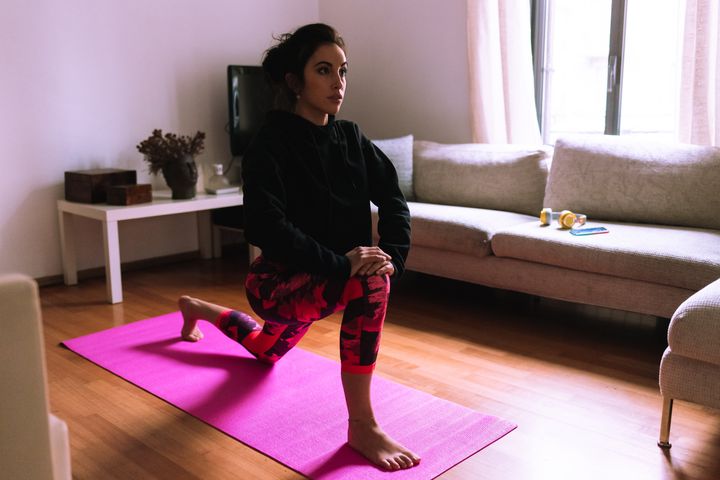
Dropping down into a half kneeling position, do a slight pelvic tilt, lunging yourself forward to stretch your hip flexors. Hold for 15 seconds, repeating for three to four rounds.
Advertisement
If you feel too tight to try this, start by lying on the floor first, knees bent and feet flat. Keep your knees together and rock your legs side to side. Next, let your knees fall all the way down to one side to get a more intense stretch on your lower back. Switch sides, holding for 15 seconds each time, and then try the hip flexor stretch again.
6. Lateral breathing
If you just can’t get yourself out of bed to stretch and move before you need to be productive, don’t sweat it. NikkiChrysostomou, a licensed movement therapist and founder of Movement Integration, said you can practice this stimulating stretch anywhere ― in the car, at your desk or even on your bed.
All you need to do is inhale and exhale deeply and focus your mind on getting the breath into your sides. If it’s helpful, you can place your hands on your ribcage to help you monitor where your breath is going.
“Lateral breathing helps to stimulate the mind,” Chrysostomou said. “To do this, work on taking breath away from the stomach. Think of breathing into the back of your ribcage, into the sides of the ribs and into your armpits. This creates a bucket-handle effect, with the ribs expanding out, and can perk you up.”
First Thing is a weekly series on HuffPost UK Life giving you tips and advice on how to enjoy your mornings. Whether you’re an early bird or night owl, starting your day off right will make for a happier and healthier day. We’ll be sharing exercise advice, nutrition guidance, as well as ideas on forming new habits. (And no, the answer to a productive morning isn’t just setting an alarm for 5am!)