Now that we have some cooler months ahead, you may think it’s time to leave the beach behind until next summer but here in Scotland, our weather is often quite ‘dreich’; dull, gloomy, wet, and overcast, that we can’t really afford to put things off until sunnier days. Plus, the dramatic seascapes you see on dark, gloomy days are not to be missed.
Of course, beachy days in December are not quite the same as beachy days in July. Wrapping up is essential, as is lip balm and a hot drink to keep you going. If you’re brave, though, taking dips in the water can be a year-round joy.
Advertisement
Then, once you’ve returned to land, you can treat yourself to something called a ‘shivery bite’ to nourish yourself.
Why we all need to start enjoying ‘shivery bites’
According to research by Walker’s Shortbread, over a third of Brits love going for a 20-30 minute paddle at the beach but hardly anybody has heard of this centuries-old Scottish tradition.
They say: “For centuries, Scots have perfected the answer to a post-swim ritual: the ‘Shivery Bite’ – a warm, sweet snack enjoyed immediately after a cold swim. Yet new research uncovers that more than two thirds (68%) of UK beachgoers have never encountered the cherished custom.”
Advertisement
Over the past five years, people are increasingly interested in wild swimming and the health benefits it can offer but people seem mostly interested during warmer months, perhaps understandably. What if you felt those benefits year-round?!
Bryony Walker, Commercial Director at Walker’s Shortbread, said: “As a 128 year old family business based in the Scottish Highlands, we have plenty of customs that have been passed down through generations.
“The ‘Shivery Bite’ is one of those – the playful expression describes a tradition for families across many seaside locations.”
Walking on grass and sand helps you connect with nature, but it also has one unexpected benefit you might not know about.
Turns out, walking on uneven surfaces will activate your body’s alert system known as proprioception, an overlooked but critical sense that subconsciously tells you where your limbs and body are at all times.
Advertisement
If a surface is suddenly slanted, proprioception tells your body that “the position of your joint is different and so it would activate muscles in a different way so that you don’t fall over to the right,” said Claire Morrow, a physical therapist with Hinge Health.
When proprioception is working well, it’s automatic. Your feet will know where to land on the slope of a hill to keep your ankles stable without you looking.
But proprioception declines as you get older or after an injury, which is why you don’t want to ignore training this internal awareness system. You might just lose it if you stop using it.
Advertisement
For example, if you sprain your ankle, you can lose ligament stability and the proprioception “feedback loop” that prevents you from re-rolling your ankle and injuring yourself again, Morrow said. The good news is that with a few simple adjustments, you can hone this sense and train it to get better.
Training this sense doesn’t have to be intimidating
You don’t need to hike up a mountain to train your proprioception. Simply look for uneven surfaces that nature provides with grass, dirt or sand to give your body small challenges on your walk.
recep-bg via Getty Images
If you’re used to only waking on sidewalks, try walking on grass to test your body’s proprioception.
Advertisement
Walking on beach sand or soft grass in a park instead of predictably flat pavement can “give your body a challenge to react to something that was a little unexpected,” Morrow said, which is what’s needed to train your lower body’s proprioception.
She suggests starting on pressed dirt and then graduating to grass and sand. “If you don’t mind getting your feet dirty, then doing it barefoot is sometimes a fun way” to practice proprioception too, Morrow added.
If you’re nervous about your balance, you can use hiking poles on unstable surfaces to have the benefit of your foot testing different positions while still having support, Morrow said.
Advertisement
Since proprioception can decline with age, older adults at risk of falling should focus on honing this ability. One 2017 study of adults over 70 found that the loss of reliable proprioception was a key factor in why those adults were more likely to sway on their feet while standing.
Proprioception “can improve your balance, and with increased balance, you decrease the fall potential, especially in elderly people,” said Patrick Maloney, the lead athletic trainer at Tulane Institute of Sports Medicine in New Orleans.
“The danger of that impaired proprioception is you get into a position where you need to catch yourself, but you don’t have the quickness to catch yourself,” Morrow said.
Advertisement
Here is a quick proprioception test for yourself: Can you balance on one leg for 10 seconds? If you can’t, Morrow suggests working with a physical therapist who can give you exercises to improve this skill.
She also suggests consulting with a therapist if your walking pace has significantly declined or if you need to touch a wall or a railing while walking to stay balanced.
So the next time you go for a walk, try walking next to the sidewalk on some soft grass or dirt. It will give you a break from your usual routine and will also help train your body’s awareness to protect your health in the future.
Walking 10,000 steps per day has become a popular goal in the modern age, but it turns out this benchmark might not be the fitness gold standard after all.
According to a study published in The Lancet last week, getting 7,000 daily steps is enough to see meaningful health benefits. Researchers conducted a meta-analysis and systemic review of data from previous studies and found diminishing returns above that number.
Advertisement
Compared to walking 2,000 steps per day, reaching 7,000 steps was associated with a 47% lower risk of death, 25% lower risk of cardiovascular disease, 38% lower risk of dementia, 28% lower risk of falls, 22% lower risk of depressive symptoms, 14% lower risk of type 2 diabetes and 6% lower risk of cancer. The improvements in health outcomes beyond 7,000 steps were more modest by comparison.
“The 10,000-step target, which originated in marketing campaigns, has often been seen as too high for many,” Dr. Asim Cheema, a specialist in internal medicine and cardiology at the telehealth platform Your Doctors Online, told HuffPost.
“Even a moderate amount of daily physical activity, such as walking 7,000 steps, can have significant health benefits,” he added. “This study indicates that a lower target can still yield substantial benefits for cardiovascular health, mental well-being and overall longevity. It suggests that you don’t need to aim for the highest threshold to make meaningful changes to your health.”
Advertisement
Indeed, many have traced the 10,000 steps a day rule back to a 1960s Japanese marketing campaign. This kind of research offers a helpful perspective shift away from the widespread cultural fixation on getting 10K steps every single day.
“These findings are refreshing, because they challenge the ‘all-or-nothing’ mindset that often surrounds fitness,” said Anjan Pathak, co-founder of wellness platform Vantage Fit. “For years, 10,000 steps per day was treated as a universal rule, even though its roots were more commercial than scientific. This study offers a more compassionate approach.”
The Real Takeaways For Step Counts
The conclusions of the study don’t necessarily mean you should treat 7,000 steps as some new gold standard, however. These findings don’t make 10,000 steps a bad goal, either.
Advertisement
“For those who already walk 4,000 steps, increasing to 5,000 or more will show benefit,” said Hannah Arem, scientific director of implementation science for the health care system MedStar Health. “For those who can, reaching this goal of 7,000 is likely to increase benefits. Beyond 7,000 steps, this study suggests that the health benefits for the outcomes examined are only incremental. That said, there may be health benefits other than those assessed in this study that come from increasing step counts.”
Dr. Matthew Badgett, an internal medicine physician at Cleveland Clinic, emphasised that it’s hardly news that there are diminishing returns above a certain amount of activity. And even if certain risk reductions start to plateau above 7,000 steps, you’re still experiencing benefits when you go beyond that number.
“The study still finds that 10,000 is better than 7,000 ― it’s just not as beneficial as going from 2,000 to 7,000 steps,” he said. “I think the real takeaway is that any amount of activity is going to be beneficial, and you continue to benefit from doing more on top of that, even if the added activity doesn’t lead to as much benefit. Whether your goal is to hit 7,000 or 10,000 doesn’t really matter, but I don’t want people to see this news and decide to cut their usual 10,000 to 7,000.”
Advertisement
Of course, there are extreme examples of individuals who do so much physical activity that it ultimately causes harm to their bodies. But that concern does not apply to the vast majority of people.
“If the average person can go from 2,000 to 7,000 steps per day, they will benefit. And if they can go from 7,000 to 10,000, they will also benefit,” Badgett added.
“I think the real takeaway is that any amount of activity is going to be beneficial, and you continue to benefit from doing more on top of that, even if the added activity doesn’t lead to as much benefit.”
– Dr. Matthew Badgett, internal medicine physician at Cleveland Clinic
Advertisement
Badgett also stressed that analysis of step counts doesn’t offer the full picture of health and fitness.
“Step counters aren’t measuring exercise per se,” he said. “What if you’re a cyclist or you swim a lot or lift weights? These are forms of exercise that [don’t] show up on a step counter, but they’re still hugely beneficial for health. Even running, which is better exercise than walking, gets you fewer steps per mile, because each step moves you further.”
Badgett pointed to two important aspects of fitness: regular exercise and just generally not being sedentary.
Advertisement
“I think 7,000 steps a day is generally a marker of non-sedentary nature,” he said. “Someone who’s getting 2,000 steps per day is probably sitting down at their desk to work from home in the morning, and then they barely leave the desk all day, other than to go one room over for the bathroom or kitchen. And then after work, they just sit and watch TV. Someone who gets closer to 7,000 steps probably does chores around the house, might do some yard work after work, or even drives to work, which brings, inevitably, a little bit of walking.”
Indeed, getting small bursts of steps throughout the day is much healthier than sitting the whole time. If you know you aren’t being so sedentary and are also getting regular exercise, you don’t need to fixate on exact step counts.
“I talk to my patients more about moving around throughout the day and also setting aside time to do a specific exercise, whether it’s weightlifting, running or swimming,” Badgett noted. “I might explore how many steps they’re getting as a baseline to establish a goal, but for someone who is older and has physical limitations, I prefer time goals ― like 20 minutes, rather than a specific number of miles or steps. It’s all really patient-dependent.”
Advertisement
How To Get Your Steps In
As the Lancet study shows, even small increases in your steps can bring substantial benefits, particularly in reducing the risk of mortality and a number of health conditions.
“Move more throughout the day,” Arem advised. “That doesn’t mean you have to go to the gym if that doesn’t fit in your lifestyle. Get off the bus or subway a stop earlier. Take the stairs instead of the elevator for a floor or two. Park farther away from the door in the parking lot.”
These little changes are attainable and thus a good way to kick off your fitness journey.
“Fitness in any form is a long game, and the first priority doesn’t have to be a step count ― it should be creating the habit,” said Dave Paul, host of the “Walking Is Fitness” podcast. “Start small and pick a time of day that you can do it consistently. I mean no more than five or ten minutes. You can always add more later, but if you try and do too much to start, it can feel overwhelming, which can lead to giving up.”
Advertisement
Personal context matters, so you have to determine what is right for you ― whether it’s short strolls or upping your walking game with rucking.
“Walk while taking calls, park a bit farther, or take short strolls during breaks. Health isn’t about chasing perfection. It’s about showing up for yourself every day, in small, meaningful ways.”
– Anjan Pathak, co-founder of wellness platform Vantage Fit
“Begin by setting a realistic goal that you can comfortably achieve and gradually increase your steps over time,” Cheema suggested. “For example, aim to walk 2,000 steps a day and increase by 500 steps each week. It can also be helpful to break up your walking into smaller sessions throughout the day, such as walking after meals. Consistency is key to building a sustainable habit.”
Advertisement
He also emphasised the importance of overall lifestyle factors like nutrition, sleep and stress management. And if you have physical limitations like joint problems, turn your walks into swims or stints on the elliptical.
“I also recommend the ‘Japanese walking’ method for patients who can tolerate more intensity in their walking routines, as this has shown health benefits with a lesser overall number of steps,” said family and emergency physician Dr. Ali Shehata.
During the hot summer months, you might also move your treks to an indoor venue like the mall or treadmill section at the gym ― or even invest in your own walking pad.
Advertisement
“Make movement part of your routine rather than an added burden,” Pathak advised. “Walk while taking calls, park a bit farther, or take short strolls during breaks. Health isn’t about chasing perfection. It’s about showing up for yourself every day, in small, meaningful ways. If 7,000 steps a day is what gets someone moving without fear or shame, then that’s a wonderful place to start.”
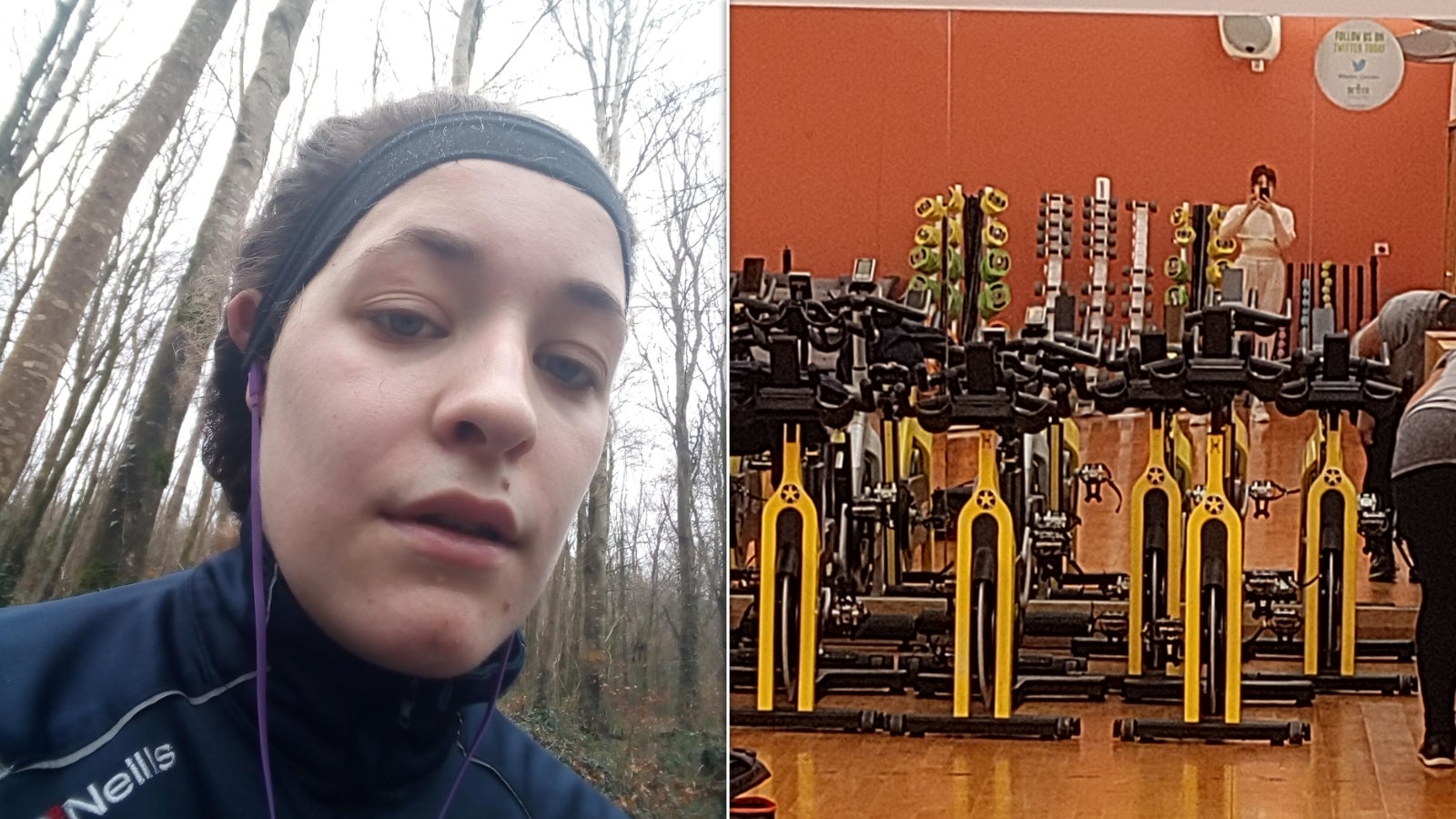
If you know me, you’re probably tired of hearing me rattle on about my running, walking, and strength training adventures (sorry, loved ones).
That’s partly because I’m insufferable. But it’s also because I never imagined I’d get into sports – before the age of 23, I hated the idea.
Advertisement
Now, though, I worry I’ve become a victim of the same conscientiousness some research suggests might have put me off physical activity for years. Until about two months ago, I found myself skipping as many as three workouts a week – if I wasn’t giving it 100%, I reasoned, I’d better not go at all (this, despite knowing that any exercise is better for you than none).
But recently I’ve been enjoying the delights of the “crappy,” half-assed workout, and my exercise routine has never been more consistent.
I spoke to Anna Mathur, psychotherapist and author of the upcoming book The Good Decision Diary, about the joys of doing something badly instead of skipping it altogether.
Advertisement
Unrealistic goals can lead to burnout
The author told me that ambition isn’t a bad thing, but goals rooted in shame or unrealistic expectations can set you on a fast path to disappointment.
“This leads to feelings of stress, pressure, unease, burnout, etc.,” she shared.
“Lofty goals often fail because they ignore the gritty reality of life, our fluctuating energy, ever-changing resources, the unexpected curveballs, responsibilities in other areas of our lives, and our nervous system state.
“We might set out with ‘I’ll wake up at 5am and run every day’ and when we inevitably miss a day because we’re sick, exhausted or had a late night at work, we feel like we’ve failed.”
Advertisement
As someone who used to bail from my beloved jogs unless I felt I could finish a record-beating 10k, I found myself nodding at her advice.
To combat unfair and inflexible goals, be they for a new squat PR or a crochet project, the therapist sticks to what she calls “the 70% rule… if a choice feels 70% good enough, it’s probably time to act.
“Waiting for the perfect moment or plan can keep us in a state of paralysis and stop us from starting. Half-doing something (going for a 10-minute walk instead of a 45-minute workout, writing a messy journal entry instead of none at all) is often how momentum builds and we take the pressure off.”
Advertisement
I have at least 70% conviction to work out most days, and if that only leads to a 45% effort, well, so be it.
In fact, even my 10-minute walk to the gym is so much better than nothing than I realise in the moment – even if I turn around and leave once there.
How can I tell that a goal is backfiring?
A few weeks ago, I spent three days pretty much solely in bed, dreading the prospect of my newly adopted gym routine.
Advertisement
This, despite the fact that my running PR was the best it had ever been, and my squats were the heaviest I’d tried.
That’s because, Mathur cautioned, “Good decisions aren’t just about the outcome (although that’s where we’re culturally taught to focus: on the external, the deliverables, the achievements) – they’re about how they make you feel on the way there too, how you grow as you go, whether you resent the aim, burn out trying to get there.
“One sign that a goal is backfiring is when it starts creating more anxiety than momentum,” she added.
Advertisement
“Maybe it’s affecting your sleep, mood, or relationships. Maybe it’s fuelling rumination, shame, or a harsh inner critic, or you keep falling short or ‘failing.’”
Though a backfiring goal might look impressive from the outside, she continues, it might be time to reconsider or reconfigure it once it leaves you feeling disconnected from yourself.
“A good decision feels like something you can return to, that doesn’t carry that all-or-nothing, walking-on-a-tightrope quality, and is not something you’re constantly bracing against,” she ended.
Advertisement
My new, more flexible routine (if I miss my previous early-or-nothing morning slot, fine; I’ll do something a little less machine-heavy in my crammed 6pm gym) is one example, but the approach works for a far wider range of goals too.
We hope you love the products we recommend! All of them were independently selected by our editors. Just so you know, HuffPost UK may collect a share of sales or other compensation from the links on this page if you decide to shop from them. Oh, and FYI — prices are accurate and items in stock as of time of publication.
When I was asked to review hiking shoes from Merrell – a Gorpcore outdoor brand loved by the likes of Meghan Markle, Central Cee, Bradley Cooper, and Julia Fox – I knew I had to really put them through their paces.
Advertisement
Living in Scotland, I fortunately have plenty of trails to put hiking shoes to the test on, but with Merrell claiming the Moab Speed 2 GORE-TEX® is the ‘latest innovation in hiking’, a hike up a Munro wasn’t going to cut the mustard.
Enter the rugged, snowy and wet landscape of Iceland.
During my CityHubs excursion to Reykjavik (more on that to come), I’d be hiking up mountains, trekking through valleys to hunt the Northern Lights and stomping through ice fields. Game on, Merrell.
I boldly didn’t even break my pair of Moab Speed 2 GORE-TEX® in before starting a weekend of outdoor activities and was incredibly surprised that the shoes (which come in a both men’s and women’s version) didn’t rub or pinch at all. This makes sense, considering their FloatPro™ Foam midsole are designed for lightweight comfort that lasts – a feature that Merrell are famous for.
According to Merrell, in some very techy terms: “Lightweight FlexPlate™ technology provides torsional rigidity, lateral stability, and forefoot flexibility.”
Advertisement
In layman’s terms – my feet felt super secured, my ankles stable and no matter the terrain I marched through or over, at no point did I feel like a stumble was on the cards. I’ve had major reconstructive knee surgery in the past year, so I needed to feel safe. Even walking over ice I had zero worries – these shoes had serious grip.
And thank god for GORE-TEX®. We got stuck in a pretty impressive snow storm and while I was completely soaked through (yes, I maybe didn’t prepare quite well enough), my feet were bone dry. A few of our hikes saw some muddy trails and my Merrells withstood it no problem, nothing a rinse didn’t solve.
Outside of their tech specs, the Moab Speed 2 GORE-TEX® also come in a whopping 12 different colour ways and while I opted for black with white detailing, you can go for electric blue, orange hues or mustard.
Advertisement
There’s no arguing that Merrell’s Moab Speed 2 GORE-TEX® look pretty damn good too – you only have to look at some of the styling pictures on the site.
Merrell UK
Okay fine, we’ll take both.
And on a personal note, one of my favourite things about the Moab Speed 2 GORE-TEX® – outside of just how damn indestructible they were – is their eco-credentials:
Advertisement
100% recycled laces and webbing
100% recycled breathable mesh lining
100% recycled mesh footbed cover
50% recycled removable EVA foam footbed
Shoes that are good for the environment I’m hiking through? Count me in.
If you’re into podcasts, you’ve probably heard of the hugely popular Mel Robbins Podcast, which is currently the No. 1 podcast on Apple podcasts and is in the Top 10 podcasts on Spotify.
If you aren’t familiar, Robbins is a motivational author, speaker and podcast host who regularly talks about mental health topics such as anxiety, stress and confidence, as well as physical health topics such as disease prevention and women’s fitness.
Advertisement
Her podcast episodes often inspire lots of conversations and even lifestyle changes, and a March episode of the podcast was no different.
On the episode, podcast guest Dr. Vonda Wright, who is an orthopedic surgeon and longevity expert, shared with Robbins the weekly exercise regimen that all women should follow: It included walking a total of three hours each week (broken up over at least four days), lifting heavy weights at least twice a week, and learning “to lift your own bodyweight” — which according to Wright means all women should be able to do 11 push-ups. Robbins asked if those push-ups can be on your knees, and Wright replied “no.”
The 11 push-up idea quickly caught the attention of women across the country who took to social media to try the challenge. But do all women really need to be able to do 11 push-ups? Or are there better measures of fitness?
Advertisement
Below, trainers share their honest thoughts on this 11 push-up challenge:
No, all women should not be able to do 11 push-ups
According to Katie Gould, thefounder of KG Strong, a strength-training gym in Philadelphia, the idea that all women should be able to do 11 push-ups likely comes from a 2019 study of 1,100 male firefighters that found that men who could do more than 40 push-ups had a lower risk of cardiovascular disease compared to men who could do fewer than 10 push-ups.
“So, these findings aren’t really directly … applicable to women,” Gould noted.
Danielle Repetti, the founder and head coach at Iron and Mettle, a women’s strength training gym in San Francisco, agreed and said the 11 push-up number feels arbitrary.
Gould also questioned how fast people were doing the push-ups, which can make them easier to do, or if they were doing them with resistance, which can make them tougher, and if they even had proper form.
Advertisement
“If you’re doing three super slow push-ups, to me, I would say that that’s an even greater indicator of strength than doing 11 improper form fast push-ups,” Gould said.
“I’ve had clients that can bench press 100, 125 pounds, and they aren’t able to do 11 push-ups on their toes, and that doesn’t mean that they’re not strong, and it doesn’t really mean anything about them as people in a body,” Repetti said.
Both Repetti and Gould said there are many reasons why a fit, strong person can’t do a chest-to-floor push-up. Maybe they just had a baby, have wrist issues, have larger bodies or are older, Repetti said.
Advertisement
“I’m not going to ask them to do a full-range push-up. It doesn’t feel good, it hurts. So that’s not how we’re necessarily going to strengthen their upper body,” said Gould.
“We’re going to do single-arm floor press, or we’re going to do a plank and hold that. There’s so many other exercises that can build your upper body if a full-range hands-on-floor push-up isn’t accessible to you,” Gould noted.
Your strength goals should be personal and should make you feel good
While it’s important to have benchmarks when it comes to bettering your health and fitness, it doesn’t mean one across-the-board benchmark is right for everyone, noted Gould.
Advertisement
“Your personal goals are really going to be the determining factor for what your benchmark should be. Not everybody’s goal is going to be to do 11 push-ups,” Gould said.
“Strength goals should be personalised, and while push-ups are a really valuable measure of upper body and core strength, they’re not the only indicator of fitness, and they’re not a sole indicator of health conditions,” Gould added.
Plus, your strength goal shouldn’t make you feel bad. That will only discourage you from returning to a workout class or personal training session in the future.
Advertisement
“Any time we embark on a strength journey, I think it’s really important to feel good about your body while you’re doing it, and not look at it from the lens of ‘Oh, I failed and that means something about me and my body,’” Repetti added.
An 11 push-up challenge is a fast-track way to feel discouraged if you can’t hit the number.
Everyone expresses strength in different ways, and everyone has different places where they excel and where they struggle, Repetti said.
“If you go and do the push-ups and you can’t do it … I just really want women to know that doesn’t mean anything about you and your own strength,” Repetti noted.
Advertisement
In strength training, you’ll find the movements that you’re great at and not so great at. “It’s important that women don’t think of the push-up as being the end all be all,” Repetti added.
Hiraman via Getty Images
The most important strength training regimen is one you’ll stick to.
But push-ups do have benefits when it comes to healthy aging and building strength
“So, push-ups work pretty much all the muscles in the upper body — chest shoulders, triceps, those are all parts of the horizontal pressing motion, and then push-ups also challenge our core,” Repetti said.
Advertisement
Push-ups benefit your posture, your functional strength, and can help with daily activities like lifting things, pushing things away, pulling yourself up and even boosts your bone density (which is crucial for women as they age and bone density drops), said Gould.
Push-ups can also help you have the strength to push yourself off the ground, whether you’re playing with your grandkids, your pets, or if you fall down, both experts said.
Like all strength training, push-ups can help you continue to do the things you want to do as you get older, such as move around your home, go up and down stairs, even dance.
Advertisement
“How you feel in 50 years is kind of dependent on some of the things you’re doing now,” Repetti said. “We really want to build as much strength as we can so that … we don’t have to be one of those people who are like, ‘Oh, I used to do that, and now I don’t anymore because my body doesn’t feel good when I do that.’”
If you do want to be able to do push-ups, there are steps you can take to get there
So, not being able to do a push-up (let alone 11) on your toes doesn’t mean anything about you or your fitness, but if you do have a goal to be able to do some push-ups, the trainers who spoke with HuffPost have some tips.
For this type of push-up, you’ll want to put your hands on an elevated surface like a bench or box, said Repetti. Or, you can even do it with your hands on your couch.
This way, you’re moving less of your body weight while still maintaining a push-up position. You can also see your progress as you move to lower and lower surfaces, said Gould, “and that is a big thing for me with my clients.”
These modifications allow you to “train the full range of motion and get the most out of learning that movement,” noted Repetti.
Advertisement
“So, once you strengthen some of those muscles, then the push-ups in and of themselves get easier,” Repetti said. “We want to essentially make the movement easier at first, so that our body can learn how to do it, and then slowly and gradually over time, make that movement more and more challenging.”
“I would consider a push-up on your toes one of the more challenging variations of the push-up,” Repetti said ― and noted that you can make a push-up even harder by adding weight.
“But, for most people, I think learning some of the easier variations and then slowly building up to push-ups on your toes is the best way to get better at push-ups,” she said.
Advertisement
And, if you find that you can’t hit 11 push-ups even with some additional training, that’s OK. There are other ways to get strong and stay strong – what matters most is that you find a sustainable strength regimen that makes you feel good and keeps you moving.
We all know that healthier lifestyles will benefit our physical and mental health in many ways, but between our busy lives and understanding that rest is equally important, it can be hard to identify how exactly to start living a little healthier.
However, the stats are hard to ignore, and a recent study published by the BMJ Evidence-Based Journal a healthy diet can add up to 5 years onto your lifespan and even offset the impact of harmful genetic conditions by 62%.
Advertisement
HuffPost UK spoke exclusively with Joanna Dase, a global fitness coach at thwomen’s health and fitness organisation Curves, to learn more about how we can take small steps to make a big difference to our wellbeing, and live a little longer.
How to improve your lifespan in eight easy steps
Take the hilly route
Listen, it doesn’t appeal to us either, but by choosing a hillier route instead of a flatter path, you’re doing wonders for your body.
Dase said: “Whether its during your commute or a casual walk, climbing at an incline helps to challenge your cardiovascular system and helps you burn more calories.
“As lung health improves over time, the risk of chronic lung and heart disease decreases due to better oxygen delivery throughout the body. Oxygen is vital for energy production, so this will help combat symptoms of fatigue too.”
Advertisement
Plus, walking downhill also has health benefits.
“Downhill walking trains your body in deceleration and makes use of different muscles and joints. As people age, downhill walking is important as it can help prevent injury.”
Develop a consistent sleep routine
Many of us are guilty of letting our sleep habits fall by the wayside, but according to Dase, resting is a key to staying healthy.
She explained: “During deep sleep, the body produces cytokines, proteins that fight infection and inflammation. By getting eight to nine hours of sleep each night, the immune system can be strengthened.
“Chronic sleep deprivation has been linked to an increased risk of cardiovascular diseases, including heart attacks and stroke. To ensure your body properly recharges and gets enough rest, create a calming pre-sleep ritual consisting of mindfulness, reading and self-care rituals.”
Unfortunately you should also avoid technology in the evening to signal to your body that it’s time to wind down.
Advertisement
Goodbye, late-night Wikipedia scrolls.
Swap pudding for a starter
Dase said: “Instead of finishing your meal with a sugary dessert, opt for a healthy starter.
“This could be a small salad, a bowl of soup, or a serving of vegetables. When overconsumed, processed desserts such as ice-cream, cake and cookies have been linked to a variety of health issues including obesity, heart disease and diabetes.”
By starting your meal with a nutritious starter, you’ll help to control your appetite and make overeating during the main course less likely.
Dase also pointed out that dessert can still be enjoyed as part of a balanced diet – but focusing on nutrient-rich foods throughout the day is essential for your wellbeing.
Limit screen time
Dase says that even taking 15 minutes away from your phone as a “digital detox” can be very beneficial and allow for a mental reset.
She explained: “Excessive screen time can lead to a cognitive overload, decreasing attention span and affecting sleep quality due to blue light exposure. This can also increase stress levels, contributing to health conditions such as depression and anxiety.”
Advertisement
She recommended setting boundaries with your phone which could include no phone during mealtimes and before bed.
“During these time periods, engage in activities that stimulate the mind such as reading or problem-solving with puzzles, wordsearches or sudoku,” she advised. “This will help maintain cognitive health and reduce the risk of cognitive decline as you age.”
Try a bodyweight circuit
Dase said: “Bodyweight circuits are a great way to workout and improve overall fitness when you don’t have time to travel to the gym.
“A 30-minute full body workout can be done with no equipment at home, consisting of exercises such as push-ups, glute bridges, plank and squats in your routine. This will help improve your balance and co-ordination as you age, and help with healthy weight management.”
She recommends following quick workouts online with a certified coach to guide your training. Start with two to three times a week, and gradually increase up to five times a week as you get stronger.
Advertisement
Pack in protein
According to Dase, protein has a higher thermic effect compared to fats and carbohydrates, meaning your body uses more energy to digest it. This increased energy expenditure can help boost your metabolism which means your body can burn more calories while at rest.
She added: “As well as this, as you age, maintaining muscle mass becomes increasingly important for mobility. Protein helps preserve muscle mass, decreasing your risk of falls and fractures as you get older. Also, adequate protein intake aids the immune system in producing more antibodies to fight off infections.
“As a general rule, most adults need around 0.8grams of protein per kilogram of bodyweight. Foods rich in lean protein include grilled chicken, fish, eggs, tofu, chickpeas and lentils.”
Dase recommended eating more protein in the morning to help regulate blood sugar levels and set you up for a day of steadier energy.
Join a local club
Dase said: “Joining a local club might seem like a daunting, large task to undertake at first but it’s often as simple as signing up and attending a meet-up in your area. Social connections are essential for our mental and emotional wellbeing.”
Advertisement
This is true. Social isolation has been linked to increased risk for heart disease, stroke, type 2 diabetes, depression, and anxiety. Therefore, chronic loneliness can be crippling and extremely harmful.
“Whether it’s joining your local fitness club, a book club, or a volunteer group, socialising with others fosters a sense of belonging and reduces feelings of loneliness.”
Make sure you get regular check ups
Dase advised: “Routine screenings and tests can identify risk factors for chronic diseases like hypertension, diabetes, and cancer before they become more serious, so it’s important to prioritise checkups in your calendar.
“Regular discussions with a healthcare professional about your lifestyle habits can provide tailored guidance to help you live a longer, happier and healthier life.”
Spend five minutes on FitTok (the fitness side of TikTok), and you’ll see dozens of different diets, workouts and supplements claiming to help you get fit and be healthier. Millions of accounts credit programs like 75 Hard or intermittent fasting for transforming their health, but these can be unsustainable and taxing on your body and brain.
Enter the “30-30-30 rule,” one of the internet’s latest obsessions. This now-viral wellness plan is brilliant in both its simplicity and its adaptability, but will it actually make you healthier? We spoke with experts to find out.
Advertisement
What exactly is the ‘30-30-30 rule’?
Popularised recently by Gary Brecka, an online health personality and biologist, the 30-30-30 rule involves eating 30 grams of protein within 30 minutes of waking up in the morning, then doing 30 minutes of low-intensity exercise.
It’s popular because it’s easy to remember, doesn’t require you to make any other fitness or diet changes throughout the rest of the day and, in theory, is easy enough for everyone to do.
“A growing body of researchsuggests that combining a high-protein diet with exercise helps improve fat mass, blood glucose control, inflammation, physical performance and markers of heart health such as triglycerides and total cholesterol, especially among those who classify as obese,” Edwina Clark, a registered dietitian and wellness expert, told HuffPost.
She explained that protein in particular “requires more energy to metabolise than fat and carbohydrates,” which means eating more can help “stabilise blood sugar and promote satiety.”
Advertisement
“Protein is also needed for muscle building and maintenance — an important component of any weight loss program,” Clark said. “Some evidence suggests that eating a protein-rich breakfast in the morning can assist with hunger and appetite control throughout the day, although research is mixed.”
According to Elizabeth Huggins, a registered dietitian and nutritionist at Hilton Head Health, adding protein and physical activity to your morning routine “sounds good,” but the only way to know how beneficial it truly is would be to compare it to your current morning habits.
“It could be seen as an improvement for someone who either routinely skips breakfast and later craves and eats junk food or who starts their day consuming highly processed foods, such as sugary beverages and cereals,” Huggins said. “Eating a source of protein first thing in the morning can promote satiety and curb cravings for less healthy foods.”
It could also help those with insulin resistance and/or diabetes.
“Following this rule could help minimise a rise in blood glucose compared to a high-carb breakfast,” Huggins said.
The type of protein you eat matters.
Not all proteins are created equal when it comes to your health. Think of it this way: sausage compared to two eggs with reduced-fat Greek yogurt will both get you 30 grams of protein, but the latter is much better for you overall.
Advertisement
“If you’re routinely eating steak and sausage at breakfast, you might see an increase in cholesterol and other markers of heart health and inflammation over time,” Clark said.
She recommended eating high-quality protein in the morning, such as Greek yogurt, eggs and nut butter, which “can help keep you full and fuel your brain and body for the day ahead, especially when combined with high-fibre carbohydrates.”
The timing seems to be less important. While there’s little evidence to suggest that eating within the first 30 minutes of your day will help significantly, experts say it isn’t harmful either.
milorad kravic via Getty Images
The type of protein you consume in the morning can make a huge difference in your health and wellness.
The 30-30-30 rule is an achievable way to help you meet exercise recommendations.
Adding in 30 minutes of exercise to your morning routine has health benefits that can’t be ignored. The Centres for Disease Control and Prevention recommend getting 150 minutes of exercise a week, and the 30-30-30 rule can definitely help you reach that if you aren’t already.
Advertisement
“Having a specific plan regarding food and activity first thing in the morning may set a positive tone for the day,” Huggins said, adding that “participating in activity first thing in the morning prevents distractions from derailing one’s efforts later in the day.”
Basically, it can be effective because it’s easier to commit to than other diet and exercise routines, and you can knock it out at the beginning of every day.
“Starting your day off with a plan for fuelling your body and movement seems like a good place to start, as long as a person understands rules can be modified,” Huggins said. “We know that physical activity is a critical component to preventing chronic diseases and can promote a variety of positive health benefits. Many Americans do not get enough physical activity, so adding 30 minutes of lower-intensity exercise first thing in the morning could be seen as a great start.”
Low-intensity exercise, which includes walking, hiking, swimming or gentle yoga, can make your mornings more enjoyable. Also, there’s a bonus to doing it. Low-intensity exercise can help build aerobic capacity, according to Clark.
There are some setbacks with the 30-30-30 rule.
No wellness trend is perfect, and 30-30-30 comes with its own set of downsides. Huggins pointed out that “it does not take into consideration a person’s unique needs or goals” and added that “if someone already has a solid plan with balanced nutrition, it may just serve as a strange distraction.”
Advertisement
If you already have a dedicated morning fitness routine, it’s probably best to skip this method.
“For those that like to crank up the intensity of their exercise first thing in the morning, this rule wouldn’t make sense to have to dial back intensity or to restrict carbohydrates that may be needed to fuel their activity,” Huggins explained.
Another thing to keep in mind: 30-30-30 won’t work for everybody.
“This specific rule may not mesh well with a person’s schedule or cultural preferences,” Huggins said.
At the end of the day, those who have a poor relationship with food and exercise may also see this as another diet to follow strictly, which can worsen mental health. Plus, those with certain health conditions may not be able to follow this plan.
“It is worth noting that Gary Brecka’s website includes a disclaimer that states he is not a licensed medical provider and advises people to seek medical advice, diagnosis and treatment from a qualified physician or other healthcare provider,” Huggins said.
So, does the 30-30-30 rule make you healthier?
“Health is the accumulation of many tiny habits practiced consistently over time,” Clark said.
Whether or not following the 30-30-30 rule makes you healthier depends a lot on the individual person, their starting health and fitness habits, and how effectively they can stick with it.
Advertisement
Not to mention all the other tiny things we do throughout the day that affect our health and wellness.
“The quality of what you eat matters for weight loss, as does sleep, stress and movement throughout the day,” Clark said.
Your best bet is sticking to the timeless advice: move more, eat healthier and sleep well. And be sure to talk to your doctor before starting a new diet and/or fitness regimen.
Exercise seems so simple, but it can feel like there’s a lot of prep behind-the-scenes to hit those fitness goals. Whether it’s sourcing the right equipment, finding the right time to do it or even whether the exercise you’re doing is actually beneficial for you, it feels like half the work is simply… getting ready to exercise.
Thankfully, it turns out choosing what to eat before you get started and what to refuel with is a lot less complicated.
Advertisement
What you shouldn’t eat before a workout
According to Kerry Beeson, a nutritional therapist at Prep Kitchen, the focus of eating before a workout is to provide you with heightened energy, prevent fatigue, and support muscle maintenance and growth.
“As a general rule, you should aim to eat between one and three hours before your session,” she says.
Beeson adds that if you’re eating between one and two hours before your workout, you should keep the quantity small to avoid indigestion.
As for what not to eat, the nutritional therapist recommends steering away from nuts. This is because they are too slow to digest which could lead to discomfort and bloating. She also advises against tucking into cheese and fatty meats.
Advertisement
Instead, it’s recommended that people eat complex carbohydrates which release energy gradually such as sweet potato and brown rice.
Surprisingly, Beeson also advises against high-fibre foods saying: ”Foods which are too high in fibre can cause gas and bloating which isn’t ideal before a high intensity workout. Interestingly, we don’t actually digest fibre, it’s indigestible which can lead to bloating and stomach discomfort if you exercise too soon after.”
What to eat after a workout
While it may be tempting to reach for a sugary snack after a workout (guilty), your body will refuel more effectively with nutritious foods. Beeson recommends tucking into spinach, eggs, lean meats or wholegrain pasta.
Sadly, after a workout still isn’t the greatest time to tuck into nuts and cheese – so it might be worth giving those a miss for now.
As Beeson says: “Try to avoid high fat foods for the first couple of hours following a workout as this can put unnecessary strain on your digestion while your body recovers.”
You’re reading Move, the nudge we need to get active, however makes us happiest and healthiest.
Music is a lot of things: it’s restorative, motivational, moving and educational. There are endless ways we use music to get through our days, whether listening to a sad song on repeat or hitting play on an upbeat tune.
According to Ronna Kaplan, a clinical supervisor and adjunct music therapy faculty at Cleveland State University, “music is positive in many ways for mental health, it can be used across the lifespan” for many different situations.
Advertisement
One of those ways is during exercise. It can be a crucial element in enhancing your workout. Here’s how.
Your body’s movement naturally matches a song’s rhythm, which can help you stick to a specific pace.
There’s a reason your foot starts tapping or your shoulders start moving as soon as a song comes on. According to Joy Allen, the chair of music therapy and director of the music and health institute at Berklee College of Music in Boston, this is because of rhythmic entrainment, which is an “unconscious reaction — that’s what we call the entrainment.”
“Our body’s going to [move] in time with that sound or that rhythm,” she says.
So, when it comes to exercise, your body automatically falls in line with the tempo of the music “because of the way that our brains are connected with rhythm,” Allen says.
Advertisement
When picking music for a workout, like when going for a walk or run, for example, you’ll want to choose a tempo that is close to your natural stride. “Go [with] what seems comfortable for you and play around with different songs,” she says.
You can use music to increase your pace, too.
If you’re looking for an added challenge, pick a song with a pace that is a little quicker than your average running or walking stride, this should help you move faster throughout your workout.
You can start with a song with a slower tempo and gradually increase your speed by picking songs with faster beats, which is ideal if you’re looking to improve your walking or running pace, according to Kaplan.
“It primes the person to an outside cue,” she says. It “helps your muscles activate in their walking pattern.”
Tempura via Getty Images
Music can help distract you from boredom during a workout.
Advertisement
It’s motivating.
How often has someone walked into the gym, realised they forgot their headphones, and then had a not-so-great workout — or even left the gym altogether? Allen pointed out this is a common occurrence: There is a major reason why music is integral to so many people’s workouts.
The music you listen to during a workout helps with motivation, and there are several things behind that motivation.
First, you probably want to hear your favorite song on your exercise playlist, which may keep you going for longer. Second, if you put on music that’s unexpected (like if you put on reggaeton instead of your regular pop soundtrack), you will be interested in hearing what comes next in the song, which may also keep you moving longer than usual.
“If you’re always listening to the same stuff, sometimes that’s great [but] sometimes we have fatigue from it — we know what to expect and what’s coming, so it can be a little less motivating,” Allen says.
And music is distracting.
No one wants to focus on their tough workout as they’re in it. If anything, they want to not think about it. As you sing along to lyrics or are reminded of music-induced memories, songs let your mind wander throughout an exercise regimen, so you don’t have to stand (or sit) there and think about how hard your workout is.
Advertisement
Music keeps you from getting bored during a workout, too, which can happen when you’re doing something kind of mundane like walking on a treadmill, Allen noted. Music activates the brain by giving your mind something else to think about.
“It captures your attention… ‘oh, here’s something I’m listening to,’ so I’m not attending to what could be an uncomfortable experience with the exercise, it gives me something else to focus on,” Allen says.
You’ll reap even more benefits when you pick your music.
According to Kaplan, when someone chooses the music they’re listening to, they’ll have better results, whether working out or doing something like meditation.
A recent study led by the Department of Kinesiology at Samford University in Alabama stated, “if the music played over the speakers is not preferred by the individual giving effort, performance may suffer. Thus, coaches and athletes should consider individual music preferences when attempting to optimise performance and training.”
This further speaks to the motivation you feel when working out to music you enjoy.
Additionally, Kaplan says you might notice you’re in a better mood when working out to music you select, which may make you feel like you enjoyed your workout more. And that’s a win-win.
Advertisement
This may mean you’ll be more likely to work out again that week, which is a great way to hit your fitness goals.
Move celebrates exercise in all its forms, with accessible features encouraging you to add movement into your day – because it’s not just good for the body, but the mind, too. We get it: workouts can be a bit of a slog, but there are ways you can move more without dreading it. Whether you love hikes, bike rides, YouTube workouts or hula hoop routines, exercise should be something to enjoy.