These Parents Let Their Kids Determine Their Own Gender Identity

It’s often the first question you’re asked about your baby, posed before they’re even born: “Boy or girl?”

But a growing number of parents, many of them – though not all – queer or transgender, are choosing to leave the answer up to their child.

This means waiting until the child is old enough to declare their own gender identity, and often (but not always) using they/them pronouns until the child voices their own preference.

The concept of gender self-determination isn’t complicated, but navigating a gender-obsessed society rife with stereotypes isn’t easy.

Still, parents who have chosen this path believe it’s worth weathering some discomfort to give their child access to the full spectrum of gender experience.

This practice, sometimes known as “gender-creative parenting,” isn’t about getting rid of pink and blue, or restricting kids’ options to shades of beige and grey that our culture hasn’t coded male or female.

It’s about giving kids access to every colour in the rainbow.

Gender-creative parenting goes beyond pronouns

When Arlo Dennis gave birth to their second child, Sparrow, six years ago, they and their partners (Dennis is in a polyamorous relationship) decided not to announce the baby’s sex and to use they/them pronouns for Sparrow. It was a choice they arrived at before Sparrow was even conceived.
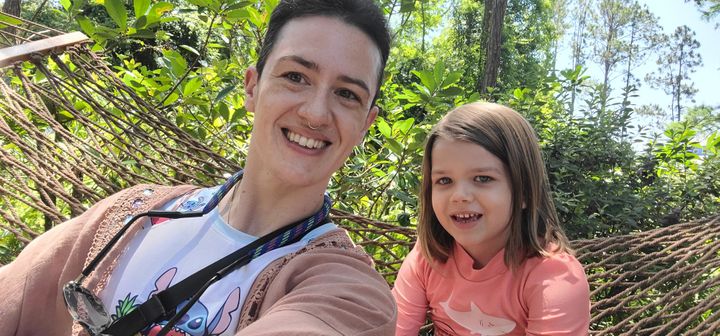
Arlo Dennis and their child Sparrow.

Arlo Dennis

Arlo Dennis and their child Sparrow.

“Very early on, it just kind of was an obvious conclusion for us,” Dennis, a Florida resident, told HuffPost.

Dennis and their partners also have an older child, 12-year-old Hazel, who was identified as female at birth and addressed with she/her pronouns. But around age four, Hazel began to explore their own gender identity and decided to change their pronouns. This prompted their parents to pursue a different path when handling the question of Sparrow’s gender.

Critics say that gender-creative parents are imposing their own agenda onto children. But Dennis and members of other families told HuffPost that what they are actually doing is freeing their kids from people’s gendered expectations.

“It’s the rest of the world – kids on the playground, parents at school, teachers, a stranger at the grocery store,” Dennis said. “They all are going to have different interactions with the child based on an assumption of the gender.”

This assumption can lead to differences in the way that people talk to children, such as calling a baby with a bow on its head “pretty” instead of “handsome”. There is even research showing that mothers interact physically in different ways with boy and girl babies, being more active physically with boys.

If you use they/them pronouns for your child, or let them wear clothing and play with toys that don’t “match” their assigned sex, some adults may assume a gender for your child and then act accordingly.

Others may be flummoxed (or delighted) to encounter a child who isn’t adhering to all of the usual gender stereotypes.

As a result, Dennis said that Sparrow “is able to get a variety of experiences” with other people and their gendered assumptions. This allows them to identify which kinds of interactions feel right for them, so they can make decisions about their own gender identity.

“The goal is not to isolate them and have a gender-free experience. It’s to let them explore it all,” Dennis said, adding that using they/them pronouns “facilitates that” for Sparrow. Dennis coined the term “antegender” to talk about the period before a child understands the concept of gender and can claim an identity, which usually happens around age three.

Now six, Sparrow uses she/they pronouns, and their gendered experiences out in the world are a topic of conversation at home. For example, when Sparrow commented that a child on the playground identified them as a girl and Dennis asked how it felt, Sparrow responded that they went along with this gendering to get back to playing.

“They’re so astute, they’re so mature in their understanding of things,” Dennis observed.

Sparrow’s gender-expansive views, however, aren’t shared by others in their home state. To escape an increasingly hostile political environment and a slate of anti-trans bills signed by Florida Gov. Ron DeSantis (R), the family plans to relocate to Maryland, where Sparrow will have the option to talk at kindergarten about being non-binary or having trans parents.

Parenting outside the gender binary can provide options for kids and be freeing for parents, too

Iris and Tori Saunders are a couple raising their one-year-old child in a gender-creative way in Washington, DC.

One of their posts on Instagram, where they are documenting their story, lists several responses they give when people ask about their child’s gender. One they like to use with kids, they write, is: “We don’t know! They’ll tell us who they are one day.”

Iris and Tori Saunders with their baby.

Raye of Sun Photography @rayeofsunphoto

Iris and Tori Saunders with their baby.

The Saunders told HuffPost in an email that they parent this way to give their child “the autonomy that we didn’t have as kids. Giving them the whole world instead of half of it. Encouraging them to express themselves in ways that are not limited by the traditional social construct of gender. It is not getting rid of gender – it’s giving them all of it.”

New York-based Rebecca and her partner, Alana, who run the Be Yourself Bookshop, are another couple who identify as gender-creative parents. To them, this means “educating young kids about gender diversity so they can grow up to be their most authentic self,” said Rebecca, who asked for her full name to be withheld for privacy reasons.

Their goal is “to create a welcoming and affirming home environment so they would know there is no one way to be, and who you are changes over time and that’s OK,” she added. Parenting in this way has helped her realise “how much gender expression is forced on kids at young ages.”

Dennis said this is a load that they personally don’t have to bear. “I see a lot of people who haven’t taken on this kind of philosophy carry a great burden of gender education,” Dennis said. In contrast, they added, “I’m able to just hand my kid any toy off the shelf that they think is cool.”

For parents who identify as trans, queer or gender-nonconforming, there can be a healing aspect to providing your own child something that you needed but didn’t have.

“In both of our childhoods we were told that we were, and had to be, ‘one thing,’” the Saunders wrote to HuffPost. “We did not want to make that decision for our child. We wanted to allow them the space to explore and tell us who they are instead of the other way around.”

Gender-creative parenting is in line with other child-centred parenting philosophies

Dennis sees gender-creative parenting as dovetailing with other “parenting philosophies that really honour the autonomy and the personhood of children,” which these days are often referred to as “gentle parenting”.

Like with giving children control over what and how much they are going to eat, gender-creative parenting teaches kids to respect their own instincts and what feels true for them.

With millennial parents and others, Dennis said, they see “a lot of unpacking of trauma,” and a movement toward “this idea that we all know ourselves best.”

“It’s so simple a principle, but I think it’s really a valuable one,” they continued.

Free from the baggage of others’ expectations, kids can pursue their own gender identity and a wide range of possible interests. Gender-creative parenting gives trans kids space to come out, and can allow a boy to pursue ballet or cry when he is sad, and a girl to excel in math, science or sports.

“Hand the reins over to your child and let them take the lead,” wrote the Saunders. “You will be so in awe of what you’ll discover about them when gendered boundaries are taken down.”

Parenting in this way doesn’t look the same in every household – it’s flexible

If the idea of explaining your baby’s pronouns to everyone you meet sounds exhausting or even unsafe, there are other ways to keep the spectrum of gender possibilities open for your child.

“It doesn’t have to be all or nothing,” Dennis said. If, for example, your mother-in-law insists on using a binary pronoun, or you decide to use they/them at home but not at day care, all is not lost.

“The goal is not militant perfection on pronouns,” Dennis said. “The goal is to let the kid be who they want to be.”

The Saunders concurred. “There are plenty of folks out there who follow a gender open concept while using gendered pronouns for their child(ren),” they wrote.

Maybe you use they/them pronouns in one safe space, or you work on not automatically gendering new people you meet so that they know you understand gender is not always a given.

New York resident Rebecca has chosen to parent in a gender-creative way.

“It’s never too late to start,” Rebecca said. “Allowing kids a multitude of choices for their own gender expression has a huge impact.”

She added, “Teach safety and boundaries first, especially if you live in an unsafe area, but always have a place for them to be themselves.”

Exposure to people who challenge stereotypes or exist outside the gender binary is another important way to embrace this philosophy, according to Caroline Carter, a psychologist who works with trans and gender-nonconforming kids and the author of the children’s book Every Body Is a Rainbow.

This can happen via “experiences within gender-diverse communities where children can see and experience the many embodiments possible for gender,” she said.

Carter referred to images as “a child’s first language” and underscored the importance of picture books for toddlers and preschoolers. She recommended the We Are Little Feminists series of board books about families and other topics as a good source of diverse images.

Another potential place to begin is allowing and encouraging your child to follow their preferences, even when they fall outside of the gender binary.

“Start allowing your kids to pick out their own clothes, hairstyle, toys, activities, and sports,” wrote the Saunders. “Introduce them to books and media with gender diverse representation. Model exploration and breaking gender roles in your own home and family.”

Dennis sees this last point as critical. In addition to providing all options for toys and clothes, they said, “parents should explore gender and they should model exploring gender. If you are cisgender, that’s great. Still, play with gender, play with identity, explore, ask questions.”

Queer parents aren’t off the hook, either. “You still have to do intentional work to deconstruct, and you still have to do the work to make community,” said Dennis.

Rebecca explained that she sees her own discomfort as a sign that she’s on the right track: “Dismantling my millennial foundations of gender shouldn’t feel comfortable. This is how we know we’re creating change.”

It’s important to find a community that can support you in this journey

Gender-creative parents will often be met with confusion and resistance — in addition to a volatile political climate.

“Gender-creative parenting is one of the most culturally counter manoeuvres a parent can make during one of the most ‘gendered’ times in a child’s life,” Carter said.

She suggested that parents seek out community that offers them the support they need to withstand these challenges. “You need spaces where you feel a part of a majority (even if a small space), where your values are the dominant ones,” she said.

If you choose to parent in this way, it’s not uncommon to have your own moments of doubt around whether you’re doing the right thing. In her experience, Carter said, families often experience this when they’re in a place of fear — which, she added, “completely makes sense … given that this feeling inevitably would come up when going against one of the strongest systems of cultural meaning-making in Western culture.”

This is where community plays a vital role, she explained. “Understanding and empathy are the antidote for fear. They literally help regulate our nervous systems,” she said. “We need to be with others who have been in our shoes.”

Whether you’re confronted at the playground by a parent who thinks you shouldn’t let your son wear a dress, or you’re trying to draw boundaries with extended family about who is allowed to change the baby’s diaper (to limit who knows what their genitals look like), families facing similar challenges are best equipped to offer the support you need.

Carter also recommended establishing a mindfulness practice to help you cope with these moments of stress. “When parents experience interpersonal judgment or self-doubt, I encourage them to simply be mindful or aware of the feeling they are experiencing and not judge it,” she said. “Pausing and noticing the feeling creates a little space and takes away some of its power.”

Cultivating compassion is another way to deal with both your own discomfort and criticism from others. It “reframes the other person’s judgment as coming from a place of fear and misunderstanding,” Carter said. “It can additionally be seen as their own inner judgment projected out — i.e., ‘hurt people hurt people.’”

While you are allowed to draw boundaries for your own family, and under no obligation to educate everyone who questions your parenting, “a compassion practice can prime us for the times where there may be opportunities to lovingly build awareness in others,” Carter said.

Share Button

Do warmer temperatures make turtles better mothers?

Warmer temperatures are known to make more turtle eggs become female hatchlings, but new research out of Duke University shows that those females also have a higher capacity for egg production, even before their sex is set.

This finding may explain why many animals besides turtles have temperature-dependent sex determination and why the system persists, despite seeming like a risky strategy. It may also provide a troubling glimpse of what could lie ahead in a warming world.

What the researchers found, as published June 23 the journal Current Biology, is that the number of “germ cells” — pre-eggs — that an embryo carries is increased by higher incubation temperatures. In fact, they found that those germ cells themselves play a role in the embryo becoming female.

“Sex determination by temperature isn’t just one mechanism,” said senior author Blanche Capel, the James B. Duke Distinguished Professor of Cell Biology in the Duke School of Medicine. “Higher temperatures seem to affect sex determination in incremental ways through multiple cell types in the embryo.”

The more abundant germ cells themselves seem to drive feminization, said Boris Tezak, a postdoctoral researcher in the Capel lab who led this project. “The temperatures that produce females are also the temperatures that increase germ cell number,” he said.

Higher numbers of germ cells are known to control female development in fish as well, Capel said. But to prove the point that more germ cells lead to female turtles, they removed some germ cells from red-eared slider embryos raised at an intermediate temperature that should have yielded 50-50 proportions, and saw more males than expected.

Scientists have known about temperature-dependent sex development for decades and have found it in many different parts of the tree of life, apparently because it evolved multiple times in multiple ways.

“It popped up everywhere,” Tezak said. “It seems like a really risky strategy, especially in the context of weather variations and climate change, so why would this system persist?”

They think it’s because temperature-dependent sex development creates a reproductive advantage.

“A female that hatches with more germ cells is presumably more reproductively fit — it increases her reproductive potential to carry more eggs,” Tezak said. “We’ve linked the female pathway to the increased number of germ cells, and if that does make her more reproductively fit, that would go a long way toward explaining why temperature-dependent sex development persists.”

As global temperatures continue to rise, the question becomes: what will happen to the turtles and other temperature-sensitive breeders? “We’ll be looking at how further increases in temperature will affect the pool of germ cells,” Tezak said. “Will it produce less-fit females?”

To answer these questions, Tezak carefully nurtures clutches of red-eared slider eggs obtained from a Louisiana breeder in plastic boxes filled with moist medium and kept at a constant temperature in the lab. One incubator runs at 26 degrees Celsius, producing more males. Another is at 31 degrees, the optimum temperature for producing more females.

When he takes out one of each to check on their progress with a very bright light, the embryo that was incubated warmer is markedly larger and more active inside the egg.

“We are hypothesizing that there’s a temperature ‘sweet-spot,'” Capel said. “There is a short range where you get a large number of germ cells, and beyond that you start to see declines,” Capel said.

“We have incubated some eggs at 33.5 degrees, only two and a half degrees higher than the optimal temperature for females,” Tezak said. “It created some really wonky embryos — there were cyclops and two-headed embryos. We haven’t counted their germ cells yet.”

The lab is also about to take delivery on some alligator eggs to continue the temperature experiments. Alligators are known to produce females at low temperatures and males at high temperatures, the opposite pattern from the red-eared slider turtle. However, the low temperature in alligators is the same as the high temperature in turtles, so both species produce females at 31 degrees Celsius. “The interesting question is whether we see more germ cells in both species at this temperature,” Tezak said.

Funding for this study was provided by the U.S. National Science Foundation (1854642) and the Czech Science Foundation (23-07658S).

Share Button

Indiana Jones Director Has Something To Say About Negative Reviews For Latest Film

Indiana Jones director James Mangold has had his say on the less favourable reviews of the latest instalment in the movie franchise.

Outlets including the BBC, The Times and The Telegraph gave the franchise’s last hurrah just two stars in reviews published after its premiere at the Cannes Film Festival.

Although it currently has a 61% rating on Rotten Tomatoes, it also marks the lowest score of all five films.

Speaking to Variety about the film’s critical reception, James appeared unsurprised.

He said: “When you’re in franchise land, it’s very hard for critical thinkers to overlook what I’m sure their editors want, which is this business prism of how does it rate to the other ones?

“I always thought if I were second or third best to one of the greatest films of all time, I’d be good. I mean, it all vaporises later. Either the movie will live or it won’t.”

Indiana Jones And The Dial Of Destiny is the first film in the series not to have been directed by Steven Spielberg, and follows 2008′s Indiana Jones And The Kingdom of the Crystal Skull.

There’s also a star turn from Fleabag’s Phoebe Waller-Bridge, who plays Indiana Jones’s goddaughter Helena Shaw.

Indiana Jones And The Dial Of Destiny hits cinemas on 28 June.

Share Button

Jon Hamm And John Slattery Speaking About Their Friendship Could Not Be Any Cuter

Jon Hamm and John Slattery have dished on their bromance, with some especially heartwarming comments.

The pair shared the screen together on the hit US drama Mad Men between 2007 to 2015 and have stayed close friends ever since.

Last year, they appeared together in the crime comedy Confess, Fletch, while Slattery has also directed the new comedy Maggie Moore(s), starring Hamm and Tina Fey.

In a new interview with People, Hamm said their working relationship meant they could “grow to hate each other or grow to love one another”.

“We became great friends,” he said.

Detailing their friendship, he continued: “When we’re hanging out together—on the beach, in the city, out in L—it’s truly a gift,”

“When we also get to extend that into working together, that’s icing on the cake.”

Slattery added: “The older I get, the more I’m aware of the passage of time.

“Knowing this whole thing is finite and there’s a winnowing list of people with whom you want to spend your life. I just enjoy Jon’s company. I value it.”

The pair value their close friendship with one another

Bravo via Getty Images

Earlier this month, Slattery said he couldn’t be happier for Hamm, who announced his engagement to longtime girlfriend Anna Osceola in February.

“I mean, they’re lovely. Together, they’re great people,” he said. “I’m extremely happy for them.”

Noting that he “couldn’t be luckier” in his own 25-year marriage to actor Talia Balsam, Slattery added: “I hope he has the same luck as I did.”

Share Button

Kelly Clarkson Spills On Her Taylor Swift Tweet That Ruffled Music Mogul’s Feathers

Kelly Clarkson has opened up about her viral 2019 tweet that showed love for Taylor Swift after music industry titan Scooter Braun acquired the masters of the singer-songwriter’s first six albums.

“We ran into each other, and [Braun] reached out at the time to my manager,” Clarkson told host Andy Cohen.

“I was like ‘It wasn’t anything against him.’ When she came out and said that and I heard about it, I was like ‘Whatever, rerecord them. Your fans will support you.’ Uh, they did — she has like every top record right now in the charts.”

The Because of You singer added that Braun, who sold Swift’s masters in 2020, believed she was “attacking him.”

Clarkson later described Swift as a “genius.”

“This woman is brilliant … she would’ve come up with that on her own and she maybe already had before I even tweeted it,” Clarkson said.

Swift, has so far dropped two rerecorded albums, including Fearless (Taylor’s Version) and Red (Taylor’s Version). She’s set to release her third rerecorded album, Speak Now (Taylor’s Version), on July 7.

Share Button

Extinct warbler’s genome sequenced from museum specimens

The Bachman’s warbler, a songbird that was last seen in North America nearly 40 years ago, was a distinct species and not a hybrid of its two living sister species, according a new study in which the full genomes of seven museum specimens of the bird were sequenced. Genome comparisons of Bachman’s warbler with the golden-winged and blue-winged warblers also helped researchers identify a new candidate gene involved in feather pigmentation in the group. A paper describing the study, led by Penn State researchers, highlights the crucial role that museum collections can play in science and appears June 16, 2023 in the journal Current Biology.

“The Bachman’s warbler is the only songbird known to have recently gone extinct in North America,” said David Toews, assistant professor of biology in the Penn State Eberly College of Science and the leader of the research team. “It is one of three species in the genus Vermivora. Our lab studies the two living species of this genus, which are known to mate with each other producing hybrid offspring.”

Golden-winged and blue-winged warblers produce a spectrum of hybrids, but two distinct types of hybrid offspring, each with a unique combination of the parent species’ coloration, have been the focus of bird watchers and ornithologists. This is because these two hybrids were thought to be distinct species themselves, known as Brewster’s warbler and Lawrence’s warbler, until careful study of wild hybrids and, now, modern genetic analysis has confirmed their hybrid origins. The extinct Bachman’s warbler resembles one of these hybrid offspring in coloration, so there was some question as to whether the Bachman’s warbler was itself a distinct species or if it might also have been a hybrid.

The research team collected seven specimens of the Bachman’s warbler from museum collections and extracted DNA from the birds’ toepads. They then performed whole-genome sequencing to compare the Bachman’s warbler genome to existing genomes for the two living species in the genus.

“It’s never easy to get DNA for sequencing from museum specimens,” said Andrew Wood, the first author of the paper, who was a research technologist in Toews’ lab at the time of the research and is now a postdoctoral researcher at the University of Minnesota. “These birds were collected over a hundred years ago and were not preserved in any special way, but we were able to extract enough DNA to get genome sequences that are comparable to those from the living species.”

The genomes of the golden-winged and blue-winged warblers are very similar to each other, except for a few regions that are involved in determining the coloration patterns of the bird’s feathers. In comparison, the Bachman’s warbler genome was very different, which indicated to the researchers that it was, in fact, a distinct species.

“We only have a small sample size for the Bachman’s warbler genome, but one of the interesting findings we saw by comparing the seven specimens was that there were long ‘runs of homozygosity,'” said Toews. “These are regions of the genome where the two copies of the genome — one inherited from each parent — are identical to each other and is an indication that the population may have been small and there was a lot of inbreeding. We see similar patterns in the living species, so understanding if this might have contributed to the extinction of Bachman’s warbler could help us to better understand the health and conservation of the living population.”

The researchers also compared the genomes of the three species to look for regions of the genome that may have evolved differently in each lineage. These differences can be indicators that a particular region of the genome evolved via natural selection for a particular trait or because of another evolutionary process. Having a third species’ genome to compare allowed the researchers to identify a region that contained a new candidate gene involved in warbler pigmentation.

“We began this study because we were interested in learning about the history and biology of Bachman’s warbler,” said Woods. “But our results also highlighted how we can use extinct species to learn about their living relatives. We lose a lot of biological and evolutionary context through the process of extinction and being able to compare Bachman’s warbler to the two living species allowed us to identify a gene that we might not have otherwise found. Context is crucial to understanding biology. Natural history collections allow us to place new observations into contexts that may have disappeared from the natural world. This fuels discovery, and makes museums powerful, and underappreciated, tools.”

In addition to Toews and Wood, the research team includes Zachary A. Szpiech, assistant professor of biology at Penn State; Irby J. Lovette at the Cornell Lab of Ornithology; and Brian Tilston Smith at the American Museum of Natural History in New York. The research was funded by the U.S. National Science Foundation, the Huck Institutes of the Life Sciences at Penn State, and the Penn State Eberly College of Science. Computations were performed using the Penn State’s Institute for Computational Data Sciences’ Roar supercomputer.

Share Button

A subtype of depression identified

Scientists at Stanford Medicine conducted a study describing a new category of depression — labeled the cognitive biotype — which accounts for 27% of depressed patients and is not effectively treated by commonly prescribed antidepressants.

Cognitive tasks showed that these patients have difficulty with the ability to plan ahead, display self-control, sustain focus despite distractions and suppress inappropriate behavior; imaging showed decreased activity in two brain regions responsible for those tasks.

Because depression has traditionally been defined as a mood disorder, doctors commonly prescribe antidepressants that target serotonin (known as selective serotonin reuptake inhibitors or SSRIs), but these are less effective for patients with cognitive dysfunction. Researchers said that targeting these cognitive dysfunctions with less commonly used antidepressants or other treatments may alleviate symptoms and help restore social and occupational abilities.

The study, published June 15 in JAMA Network Open, is part of a broader effort by neuroscientists to find treatments that target depression biotypes, according to the study’s senior author, Leanne Williams, PhD, the Vincent V.C. Woo Professor and professor of psychiatry and behavioral sciences.

“One of the big challenges is to find a new way to address what is currently a trial-and-error process so that more people can get better sooner,” Williams said. “Bringing in these objective cognitive measures like imaging will make sure we’re not using the same treatment on every patient.”

Finding the biotype

In the study, 1,008 adults with previously unmedicated major depressive disorder were randomly given one of three widely prescribed typical antidepressants: escitalopram (brand name Lexapro) or sertraline (Zoloft), which act on serotonin, or venlafaxine-XR (Effexor), which acts on both serotonin and norepinephrine. Seven hundred and twelve of the participants completed the eight-week regimen.

Before and after treatment with the antidepressants, the participants’ depressive symptoms were measured using two surveys — one, clinician-administered, and the other, a self-assessment, which included questions related to changes in sleep and eating. Measures on social and occupational functioning, as well as quality of life, were tracked as well.

The participants also completed a series of cognitive tests, before and after treatment, measuring verbal memory, working memory, decision speed and sustained attention, among other tasks.

Before treatment, scientists scanned 96 of the participants using functional magnetic resonance imaging as they engaged in a task called the “GoNoGo” that requires participants to press a button as quickly as possible when they see “Go” in green and to not press when they see “NoGo” in red. The fMRI tracked neuronal activity by measuring changes in blood oxygen levels, which showed levels of activity in different brain regions corresponding to Go or NoGo responses. Researchers then compared the participants’ images with those of individuals without depression.

The researchers found that 27% of the participants had more prominent symptoms of cognitive slowing and insomnia, impaired cognitive function on behavioral tests, as well as reduced activity in certain frontal brain regions — a profile they labeled the cognitive biotype.

“This study is crucial because psychiatrists have few measurement tools for depression to help make treatment decisions,” said Laura Hack, MD, PhD, the lead author of the study and an assistant professor of psychiatry and behavioral sciences. “It’s mostly making observations and self-report measures. Imaging while performing cognitive tasks is rather novel in depression treatment studies.”

Pre-treatment fMRI showed those with the cognitive biotype had significantly reduced activity in the dorsolateral prefrontal cortex and dorsal anterior cingulate regions during the GoNoGo task compared with the activity levels in participants who did not have the cognitive biotype. Together, the two regions form the cognitive control circuit, which is responsible for limiting unwanted or irrelevant thoughts and responses and improving goal selection, among other tasks.

After treatment, the researchers found that for the three antidepressants administered, the overall remission rates — the absence of overall depression symptoms — were 38.8% for participants with the newly discovered biotype and 47.7% for those without it. This difference was most prominent for sertraline, for which the remission rates were 35.9% and 50% for those with the biotype and those without, respectively.

“Depression presents in different ways in different people, but finding commonalities — like similar profiles of brain function — helps medical professionals effectively treat participants by individualizing care,” Williams said.

Depression isn’t one size fits all

Williams and Hack propose that behavior measurement and imaging could help diagnose depression biotypes and lead to better treatment. A patient could complete a survey on their own computer or in the doctor’s office, and if they are found to display a certain biotype, they might be referred to imaging for confirmation before undergoing treatment.

Researchers at the Stanford Center for Precision Mental Health and Wellness, which Williams directs, in partnership with the Stanford Translational Precision Mental Health Clinic, which Hack directs, are studying another medication — guanfacine — that specifically targets the dorsolateral prefrontal cortex region with support from Stanford University Innovative Medicines Accelerator. They believe this treatment could be more effective for patients with the cognitive subtype.

Williams and Hack hope to conduct studies with participants who have the cognitive biotype, comparing different types of medication with treatments such as transcranial magnetic stimulation and cognitive behavioral therapy. In transcranial magnetic stimulation, commonly referred to as TMS, magnetic fields stimulate nerve cells; in cognitive behavioral therapy, patients are taught to use problem-solving strategies to counter negative thoughts that contribute to both emotional dysregulation and loss of social and occupational abilities.

“I regularly witness the suffering, the loss of hope and the increase in suicidality that occurs when people are going through our trial-and-error process,” Hack said. “And it’s because we start with medications that have the same mechanism of action for everyone with depression, even though depression is quite heterogeneous. I think this study could help change that.”

Researchers from the Sierra-Pacific Mental Illness Research, Education and Clinical Center; the Veterans Affairs Palo Alto Health Care System; Brain Dynamic Centre, Westmead Institute for Medical Research; and the University of Sydney, Westmead, contributed to the work.

The study was funded through Brain Resource Company Operations Pty Ltd. and Stanford University’s Clinical and Translation Science Award Program overseen by the National Center for Advancing Translational Sciences at the National Institutes of Health (grant UL1TR003142-01).

Share Button

21st century economic growth will be slower than we thought

The global economy will grow slower in the 21st century than economists have expected, a finding that has implications for our ability to adapt to climate change in the coming decades, according to new research.

A new study projecting the economic futures of four income groups of countries over the next century finds growth will be slower than predicted, with developing countries taking longer to close the wealth gap and approach the income of wealthier nations. What economists have thought of as a worst-case scenario for global economic growth may, in fact, be a best-case scenario, according to the new study published today in Communications Earth & Environment.

The findings suggest governments need to start planning for slower growth and wealthier countries may need to help lower-income nations finance climate change adaptations in the coming decades, according to the study authors.

“We’re at a point where we maybe need to significantly increase financing for [climate] adaptation in developing countries, and we’re also at a point where we might be overestimating our future ability to provide that financing under the current fiscal paradigm,” said Matt Burgess, a CIRES fellow, director of the Center for Social and Environmental Futures, and assistant professor of environmental studies at CU Boulder who led the new study.

“We can now start to winnow down the range of possibilities and move forward in more tangible ways,” said Ryan Langendorf, a postdoctoral scholar at CU Boulder and co-author of the new study.

In the new study, Burgess and his colleagues used two economic models to project how much the global economy will grow over the next century and how quickly developing countries will approach the income levels of wealthier nations.

Both models found the global economy will continue to grow, but that growth will be slower than most economists expected and there will be a larger income gap between wealthier and poorer nations. This means richer countries may need to help finance climate adaptations for poorer countries, and debt-ceiling crises, like what the United States experienced this spring, may become more common.

“Slower growth than we think means higher deficits than we expect, all else equal,” Burgess said. “That means debt would likely become more contentious and important over time, and could mean more frequent debt-ceiling fights.”

Similar to a flight emergency, where individuals should put their own oxygen masks on first, wealthier nations should focus on getting their own financial houses in order so they can be in a position to support lower-income nations in financing climate adaptations, according to the researchers.

“We’re talking about relatively less growth, relatively more inequality, but we’re still talking about a world that is richer than today and more equal across countries than today’s world,” Burgess said.

Still, many wealthy nations are accustomed to growing their way out of debt, but that may not be possible under the new scenario, according to Ashley Dancer, a graduate student at CU Boulder and co-author of the study.

“The next question is: what are some ways that we should be or could be helping [lower-income countries] adapt, if the expectation is that they’re not going to meet the level of wealth that would allow them to do that quickly and aggressively?” Dancer said.

Share Button

All the immunity, none of the symptoms

Worldwide, more than a million deaths occur each year due to diarrheal diseases that lead to dehydration and malnutrition. Yet, no vaccine exists to fight or prevent these diseases, which are caused by bacteria like certain strains of E. coli. Instead, people withbacterial infections must rely on the body taking one of two defense strategies: kill the intruders or impair the intruders but keep them around. If the body chooses to impair the bacteria, then the disease can occur without the diarrhea, but the infection can still be transmitted — a process called asymptomatic carriage.

Now, Salk scientists have found that pairing specific diets with disease-causing bacteria can create lasting immunity in mice without the costs of developing sickness, revealing a new potential vaccination strategy. Their findings, published in Science Advances on June 23, 2023, pave the way for the development of new vaccines that could promote immunity for those with diarrheal diseases and possibly other infections.

“We discovered that immunization against diarrheal infections is possible if we allow the bacteria to retain some of its disease-causing behavior,” says senior author Professor Janelle Ayres, Salk Institute Legacy Chair and head of the Molecular and Systems Physiology Laboratory. “This insight could lead to the development of vaccines that could reduce symptoms and mortality, as well as protect against future infections.”

In 2018, Ayres’ lab looked at how dietary interventions can create an asymptomatic infection, which Ayres calls a cooperative relationship between bacteria and host (the person or animal that the bacteria have infected) where the host does not experience any symptoms. They discovered that an iron-rich diet enabled mice to survive a normally lethal bacterial infection without ever developing signs of sickness or disease. The high-iron diet increased unabsorbed sugar (glucose) in the mice’s intestines, which the bacteriacould feast on. The excess sugar served as a “bribe” for the bacteria, keeping them full and incentivized to not attack the host.

This process produced long-term asymptomatic infection with the bacteria, leading the researchers to believe that the adaptive immune system (cells and proteins that “remember” infections) may be involved.

“Being able to generate lasting immunity against bacteria like C. rodentium or E. coli has not been possible using established vaccination strategies. We wanted to figure out what mechanism was sustaining this lasting immunity, so we could use that mechanism to create an impactful solution to these diarrheal diseases,” says first author Grischa Chen, a former postdoctoral researcher in Ayres’ lab.

The researchers moved to figure out how the body suppresses infection symptoms, whether infection without symptoms can create long-term immunity, and whether that immunity is reproducible as a vaccination strategy.

The team compared mice with iron-rich and normal diets after C. rodentium infection to find whether the diet impacted symptomless infection. Immediately after infection, mice fed an iron-rich diet had no symptoms whereas mice fed a normal diet did have symptoms. All mice were then put on a normal diet to see whether the asymptomatic infection would last.

Mice with nonfunctional adaptive immune systems (the immune system that “remembers” previous infections), regardless of whether they had ever been on an iron-rich diet, could not continue to maintain a cooperative relationship with the bacteria. Although the iron-rich diet suppressed symptoms immediately after infection, the adaptive immune system was required for lasting cooperation. Importantly, the mice with functional adaptive immune systems had the disease without any symptoms, with lastingimmunity, as demonstrated by survival upon reinfection after a month.

Ayres and team concluded that an iron-rich diet alone can prevent bacteria from creating deadly symptoms in mice during active infection. But a functional adaptive immune system is required for immunity against future infection in the absence of dietary supplementation.

Some bacterial strains, if mutated enough, don’t cause symptoms. To test whether such bacteria could produce lasting immunity, the team repeated their iron-diet versus normal-diet experiment in mice, but this time using bacteria that could cause disease and bacteria that could not cause disease. They found that only mice that received disease-causing, unmutated bacteria were able to support immunity upon reinfection.

The scientists note that people shouldn’t consume large amounts of iron after reading this study. Their findings are preliminary and will need to be confirmed in human subjects.

The researchers hope their insights will provide a basis for future research in humans and the creation of a vaccination regiment that protects and prevents against diarrheal illness.

Other authors include Natalia R. Thorup, Abigail J. Miller, and Yao-Cheng Li of Salk.

The work was supported by the National Institutes of Health (DPI AI144249, R01AI4929), the NOMIS Foundation, a DARPA Yong Faculty Award (YFA15 D15AP00097), a Hillblom Foundation Fellowship Grant, the Chapman Foundation, the Helmsley Charitable Trust,

Share Button

Drug decelerates bacterial race to antibiotic resistance

A team of researchers at Baylor College of Medicine is gaining ground in their search for solutions to the global problem of bacterial antibiotic resistance, which was responsible for nearly 1.3 million deaths in 2019.

The team reports in the journal Science Advances a drug that, in laboratory cultures and animal models, significantly reduces the ability of bacteria to develop antibiotic resistance, which might prolong antibiotic effectiveness. The drug, called dequalinium chloride (DEQ), is a proof-of-concept for evolution-slowing drugs.

“Most people with bacterial infections get better after completing antibiotic treatment, but there are also many cases in which people decline because the bacteria develop resistance to the antibiotic, which then can no longer kill the bacteria,” said corresponding author Dr. Susan M. Rosenberg, Ben F. Love Chair in Cancer Research and professor of molecular and human genetics, biochemistry and molecular biology and molecular virology and microbiology at Baylor. She also is a program leader in Baylor’s Dan L Duncan Comprehensive Cancer Center (DLDCCC).

In this study, Rosenberg and her colleagues looked for drugs that could prevent or slow down E. coli bacteria from developing resistance to two antibiotics when exposed to a third antibiotic, ciprofloxacin (cipro), the second most prescribed antibiotic in the U.S. and one associated with high bacterial resistance rates.

The resistance is caused by new gene mutations that occur in the bacteria during infection. The drug DEQ reduces the speed at which new mutations are formed in bacteria, the team finds.

Previous work from the Rosenberg lab had shown that bacterial cultures in the lab exposed to cipro turn up mutation rate. They found a mutational “program” that is switched on by bacterial stress responses. Stress responses are genetic programs that instruct cells to increase production of protective molecules during stress, including stress from low concentrations of cipro. Low concentrations occur at the beginning and end of antibiotic therapies and if doses are missed.

The same stress responses also increase the ability to make genetic mutations, the Rosenberg group, then many other labs, have shown. Some of the mutations can confer resistance to cipro, while other mutations can allow resistance to antibiotics not yet encountered. Mutation-generating processes that are turned on by stress responses are called stress-induced mutation mechanisms.

Bacteria with antibiotic resistance mutations can then sustain an infection in the presence of cipro. This study is the first to show that in animal infections treated with cipro, the bacteria activate a known stress-induced genetic mutational process. Cipro resistance occurs mostly by the bacteria developing new mutations, both clinically and in the laboratory, rather than by acquiring genes that confer antibiotic resistance from other bacteria.

Looking to prevent the development of antibiotic resistance, the researchers screened 1,120 drugs approved for human use for their ability to dial down the master bacterial stress response, which they showed counters the emergence of resistance mutations. In addition, and counterintuitively, they wanted “stealth” drugs that would not slow bacterial proliferation, which would confer a growth advantage to any bacterial mutants that resist the mutation-slowing drug itself. That is, drugs that are not antibiotics themselves.

“We found that DEQ fulfilled both requirements. Given together with cipro, DEQ reduced the development of mutations that confer antibiotic resistance, both in laboratory cultures and in animal models of infection, and bacteria did not develop resistance to DEQ,” said first author Yin Zhai, a postdoctoral associate in the Rosenberg lab. “In addition, we achieved this mutation-slowing effect at low DEQ concentrations, which is promising for patients. Future clinical trials are needed to evaluate the ability of DEQ to decelerate bacterial antibiotic resistance in patients.”

Other contributors to this work include John P. Pribis, Sean W. Dooling, Libertad Garcia-Villada, P.J. Minnick, Jun Xia, Jingjing Liu, Qian Mei, Devon M. Fitzgerald, Christophe Herman, P.J. Hastings and Mauro Costa-Mattioli. The authors are affiliated with one or more of the following institutions: Baylor College of Medicine, the Dan L Duncan Comprehensive Cancer Center and Rice University.

This work was supported by NIH Directors Pioneer Awards DP1-AI52073 and DP1-AG072751, and NIH grants R35-GM122598 and R01-CA250905, P30-AI036211, P30-CA125123 and S10-RR024574, the Dan L Duncan Comprehensive Cancer Center and the John S. Dunn Gulf Coast Consortium for Chemical Genomics. Further support was provided by the State of Nebraska LB595 and LB692 and NIH/NIEHS R00ES033259 awards.

Share Button