Three nurses from Nigeria speak out about their experiences moving to the UK to work in the NHS.


Three nurses from Nigeria speak out about their experiences moving to the UK to work in the NHS.
The Countess of Chester trust chief executive also accuses the chairman of putting finance over safety.

Austria has qualified for the grand final of the Eurovision Song Contest 2023 thanks to its ode to 19th century horror author Edgar Allan Poe.
Female duo Teya And Salena’s song has already gone viral on TikTok – but a new audience embraced the bonkers banger during the Eurovision semi-finals staged in Liverpool. The UK city is hosting the contest in Ukraine’s stead.
Advertisement
While the song, Who The Hell Is Edgar?, on its surface essays the American writer, in reality it is much more layered.
The official Eurovision website says it is about the “experiences as female songwriters in an industry that all too often doesn’t give women enough credit for their hard work and expertise”.
The chorus goes something like this:
Poe, Poe, Poe, Poe, Poe
Poe, Poe, Poe, Poe, Poe
Poe, Poe, Poe, Poe, Poe
Edgar Allan, Edgar Allan
Advertisement
The song also has dig at streaming royalties – referencing Spotify’s paltry $0.003 rate. Whatever you got from the tune, people were loving it …
Advertisement
Albania, Cyprus, Estonia and Belgium also qualified for the final in the second semi.
The other five countries which qualified for Saturday’s Eurovision grand final were Lithuania, Poland, Australia, Armenia and Slovenia.
Greece, Denmark, San Marino, Georgia and Iceland failed to make it through.
For the second time this week, the M&S Bank Arena was filled with Ukrainian flags flying alongside those from other countries competing for the prize.
Hosts Alesha Dixon, Hannah Waddingham and Ukrainian singer Julia Sanina were also back on stage after making their debut as a presenting trio on Tuesday night.
Advertisement


A University of Queensland study has found humpback whales sing louder when the wind is noisy, but don’t have the same reaction to boat engines.
Research lead Dr Elisa Girola from UQ’s Faculty of Science said this quirk of whale evolution could have consequences for breeding and behaviour.
“Humpback whales evolved over millions of years with noise from natural sources but noise from human-made vessels is foreign to their instincts,” Dr Girola said.
“It’s a surprising finding given engine noise has a similar frequency range to the wind.
“It’s possible the whales are picking out other differences such as wind noise being broadband and the same over large areas, while vessel noise is generated by a single-point source with specific peaks in frequency.
“We don’t know yet if this lack of response to boat noise is making whales communicate less effectively or making breeding practices more difficult.
“Male humpback whale singing is probably used to mediate reproductive interactions, but we can’t say if vessel noise is interfering.”
The audio data for the study was collected in late 2010 off Peregian Beach in Queensland, during the whales’ southward migration from breeding grounds in the lagoon of the Great Barrier Reef to feeding grounds in Antarctica.
Whale songs were recorded using an acoustic array of five hydrophone buoys, which sent signals back to the beach.
A 19-metre fishing boat was introduced to produce vessel noise.
The researchers say it is possible that humpback whales are using other strategies to compensate for vessel noise.
“Even with a 19-metre boat making a racket, the whales just didn’t sing any louder,” Dr Girola said.
“There are a few things going on — they might be using ‘spatial release from masking’, which is the ability to discriminate between audio signals coming from different directions.
“Or there’s ‘comodulation release from masking’ which is the ability to discriminate between signal and noise when the noise has distinctive frequency components and at least some of these components are not overlapping with the signal.
“There’s still so much more research to be done.
“Understanding humpback whales’ response to noise is important for developing mitigation policies for human activities at sea.
“I’m sure these beautiful, mysterious creatures will continue to surprise and amaze us.”

It often was thought that the speed of information transmitted among regions of the brain stabilized during early adolescence. A study in Nature Neuroscience by Mayo Clinic researchers and colleagues from the Netherlands found transmission speeds continue to increase into early adulthood.
Because problems such asanxiety, depression and bipolar disorders can emerge in late adolescence and early adulthood, a better understanding of brain development may help clinicians offer therapies to treat these disorders.
“A fundamental understanding of the developmental trajectory of brain circuitry may help identify sensitive periods of development when doctors could offer therapies to their patients,” says Dora Hermes, Ph.D., a Mayo Clinic biomedical engineer and senior author of the study.
Called the human connectome, the structural system of neural pathways in the brain or nervous system develops as people age. But how structural changes affect the speed of neuronal signaling has not been well described.
“Just as transit time for a truck would depend on the structure of the road, so does the transmission speed of signals among brain areas depend on the structure of neural pathways,” Dr. Hermes explains. “The human connectome matures during development and aging, and can be affected by disease. All these processes may affect the speed of information flow in the brain. “In the study, Dr. Hermes and colleagues stimulated pairs of electrodes with a brief electrical pulse to measure the time it took signals to travel among brain regions in 74 research participants between the ages of 4 and 51. The intracranial measurements were done in a small population of patients who had electrodes implanted for epilepsy monitoring at University Medical Center Utrecht, Netherlands.
The response delays in connected brain regions showed that transmission speeds in the human brain increase throughout childhood and even into early adulthood. They plateau around 30 to 40 years of age.
The team’s data indicate that adult transmission speeds were about two times faster compared to those typically found in children. Transmission speeds also were typically faster in 30- or 40-year-old subjects compared to teenagers.
Brain transmission speed is measured in milliseconds, a unit of time equal to one-thousandth of a second. For example, the researchers measured the neuronal speed of a 4-year-old patient at 45 milliseconds for a signal to travel from the frontal to parietal regions of the brain. In a 38-year-old patient, the same pathway was measured at 20 milliseconds. For comparison, the blink of an eye takes about 100 to 400 milliseconds.
The researchers are working to characterize electrical stimulation-driven connectivity in the human brain. One of the next steps is to better understand how transmission speeds change with neurological diseases. They are collaborating with pediatric neurosurgeons and neurologists to understand how diseases change transmission speeds compared to what would be considered within the normal range for a certain age group.
The research is supported by the National Institute of Mental Health of the National Institutes of Health (R01MH122258).

Researchers have discovered a new generic production mechanism of gravitational waves generated by a phenomenon known as oscillons, which can originate in many cosmological theories from the fragmentation into solitonic “lumps” of the inflaton field that drove the early Universe’s rapid expansion, reports a new study published in Physical Review Letters.
The results have set the stage for revealing exciting novel insights about the Universe’s earliest moments.
The inflationary period, which occurred just after the Big Bang, is believed to have caused the Universe to expand exponentially. In many cosmological theories, the rapid expansion period is followed by the formation of oscillons. Oscillons are a type of localized non-linear massive structure that can form from fields, such as the inflaton field, which are oscillating at high frequencies. These structures can persist for long periods, and as the researchers found, their eventual decay can generate a significant amount of gravitational waves, which are ripples in space-time.
In their study, Kavli Institute for the Physics and Mathematics of the Universe (Kavli IPMU) Project Researcher Kaloian D. Lozanov, and Kavli IPMU Visiting Associate Scientist, International Center for Quantum-field Measurement Systems for Studies of the Universe and Particles (QUP) Senior Scientist, and High Energy Accelerator Research Organization (KEK) Theory Center Assistant Professor Volodymyr Takhistov, simulated the evolution of the inflaton field during the early Universe and found that oscillons were indeed present. They then found that oscillon decay was able to generate gravitational waves that would be detectable by upcoming gravitational wave observatories.
The findings provide a novel test of the early Universe dynamics independent of the conventionally studied cosmic microwave background radiation. The discovery of these gravitational waves would establish a new window into the Universe’s earliest moments, and could help shed light on some of the pressing fundamental questions in cosmology.
With the ongoing development of gravitational wave detectors and supercomputing resources, we can expect to gain even more insights into the Universe’s early moments in the coming years. Overall, the new study demonstrates the power of combining theoretical models with advanced computational techniques and observations to uncover new insights into the Universe’s evolution.
Details of their study were published in Physical Review Letters on May 2.

Astronomers have found that supermassive black holes obscured by dust are more likely to grow and release tremendous amounts of energy when they are inside galaxies that are expected to collide with a neighbouring galaxy. The new work, led by researchers from Newcastle University, is published in Monthly Notices of the Royal Astronomical Society.
Galaxies, including our own Milky Way, contain supermassive black holes at their centres. They have masses equivalent to millions, or even billions, times that of our Sun. These black holes grow by ‘eating’ gas that falls on to them. However, what drives the gas close enough to the black holes for this to happen is an ongoing mystery.
One possibility is that when galaxies are close enough together, they are likely to be gravitationally pulled towards each other and ‘merge’ into one larger galaxy.
In the final stages of its journey into a black hole, gas lights up and produces a huge amount of energy. This energy is typically detected using visible light or X-rays. However, the astronomers conducting this study were only able to detect the growing black holes using infrared light. The team made use of data from many different telescopes, including the Hubble Space Telescope and infrared Spitzer Space Telescope.
The researchers developed a new technique to determine how likely it is that two galaxies are very close together and are expected to collide in the future. They applied this new method to hundreds of thousands of galaxies in the distant universe (looking at galaxies formed 2 to 6 billion years after the Big Bang) in an attempt to better understand the so-called ‘cosmic noon’, a time when most of the Universe’s galaxy and black hole growth is expected to have taken place.
Understanding how black holes grew during this time is fundamental in modern day galactic research, especially as it may give us an insight into the supermassive black hole situated inside the Milky Way, and how our galaxy evolved over time.
As they are so far away, only a small number of cosmic noon galaxies meet the required criteria to get precise measurements of their distances. This makes it very difficult to know with high precision if any two galaxies are very close to each other.
This study presents a new statistical method to overcome the previous limitations of measuring accurate distances of galaxies and supermassive black holes at cosmic noon. It applies a statistical approach to determine galaxy distances using images at different wavelengths and removes the need for spectroscopic distance measurements for individual galaxies.
Data arriving from the James Webb Space Telescope over the coming years is expected to revolutionise studies in the infrared and reveal even more secrets about how these dusty black holes grow.
Sean Dougherty, postgraduate student at Newcastle University and lead author of the paper, says, “Our novel approach looks at hundreds of thousands of distant galaxies with a statistical approach and asks how likely any two galaxies are to be close together and so likely to be on a collision course.”
Dr Chris Harrison, co-author of the study, “These supermassive black holes are very challenging to find because the X-ray light, which astronomers have typically used to find these growing black holes, is blocked, and not detected by our telescopes. But these same black holes can be found using infrared light, which is produced by the hot dust surrounding them.”
He adds, “The difficulty in finding these black holes and in establishing precise distance measurements explains why this result has previously been challenging to pin down these distant ‘cosmic noon’ galaxies. With JWST we are expecting to find many more of these hidden growing black holes. JWST will be far better at finding them, therefore we will have many more to study, including ones that are the most difficult to find. From there, we can do more to understand the dust that surrounds them, and find out how many are hidden in distant galaxies.”

Journalist Ash Sarkar has confronted Tory minister Helen Whately over the government’s controversial migration crackdown – accusing the administration of indulging in a “nastiness Olympics” to please the Daily Mail.
The accusation came on BBC’s Question Time, which this week came from Bexhill-on-Sea, and was prompted by the Archbishop of Canterbury condemning the government’s plans to tackle the small boats crisis as “morally unacceptable and politically impractical”.
Advertisement
The intervention by Justin Welby sparked criticism of the church leader at Westminster, who was told neither “handwringing or bell ringing” will solve the misery of the channel crossings.
Th immigration reforms aim to ensure those who arrive in the UK without permission will be detained and promptly removed, either to their home country or a third country such as Rwanda. Meanwhile, asylum seekers are being housed in barracks and barges.
On the show, Sarkar said proposed new laws were treating “people who have been raped, people who have been tortured, people who are fleeing persecution” as “criminals”.
Advertisement
The writer went on: “I object so strongly when you use these words like ‘generosity’, to talk about things like having a glorified prison ship or refurbishing a prison just around the corner from here in order to detain people who are fleeing some of the most unimaginable circumstances possible.
“No government does that because they think it’s morally good. No government does that because they think it’s particularly efficient or effective.
“You’re doing it because you’ve committed yourself to this nastiness Olympics because you want a pat on the back from the Daily Mail and the human cost of that is obscene.”
Whately had argued 500,000 migrants coming to the UK since 2015, and people opening their homes to Ukrainians, showed the UK is a “generous country on offering asylum” – but it was “morally wrong” not to crackdown on people smugglers fuelling the problem.
On the same question, broadcaster and clergyman Rev Richard Coles called the illegal migration bill “politically unworkable, legally doubtful and morally indefensible”, adding he supported Welby’s position.
Advertisement

We all have those mundane tasks that we can’t seem to shake off our to-do lists – the ones that make us sigh just thinking about them. But let’s challenge this mindset: Is the task boring or are we approaching it with a boring mindset? What if the task isn’t inherently dreadful, but we’re simply being uninteresting in how we approach it? What would happen if we were to bring a fun, engaging, and playful mindset to these tasks?
Consider the simple act of doing household chores. They can often feel tedious, right? But let’s reframe. Instead of approaching them with a sense of dread, I often pair them with something I find enjoyable. Listening to an audiobook or some energetic trance music transforms the experience, turning a mundane task into an opportunity for enjoyment or learning.
Another aspect that can drastically change how we experience these tasks is the level of quality we bring to them. Doing tasks at a higher than normal level of quality can make them feel more engaging. For instance, when cleaning the house, don’t just aim to get it done. Aim to get it done exceptionally well. Take pride in the cleanliness of your home. This mindset shift not only improves the result but also makes the process more fulfilling. Challenge yourself to raise your standard above the baseline minimum.
Shopping is another chore that often lands on the “tedious tasks” list. But who says it has to be that way? When I go grocery shopping with my wife Rachelle, it becomes an enjoyable shared experience. And when I go alone, I opt for off-peak hours, making the experience quick and stress-free. Better yet, I’ll hold off until I’m in the mood for a bit of physical activity. The key is flexibility – aligning the task with your emotional state can make a world of difference.
Some tasks can wait until the right motivation or timing aligns. When Rachelle borrowed the car to run errands last week, it was the perfect time to oil the garage door – a task easier done with the car out of the way. Embrace these moments of serendipity when they come.
Staying organized also plays a big part in making tasks more manageable. I use the Things app to set reminders for recurring tasks like changing the air conditioning filters or adjusting the sprinkler timers for different seasons. This way, nothing slips through the cracks, and it’s one less thing to remember. This also helps to spread maintenance tasks throughout the year, so they don’t pile up too much.
Physical tasks can provide a welcome break from the mental exertion that much of our work entails. There’s something satisfying about engaging with the physical world and seeing the tangible results of our efforts. After I’ve done a lot of mental work, I often enjoy chipping away at something physical for a welcome change of pace.
Don’t underestimate the power of social connection. I discovered years ago that finding a dentist with a great team made my regular check-ups something to look forward to. Sharing stories about our recent travels or workout routines with the hygienist while getting a cleaning made the experience more personal and enjoyable. When I needed to get some plumbing work done last year, I held out till I found a fabulous local plumber with many years of experience. He was a joy to work with all throughout the project. Then I gave him a glowing 5-star review on Yelp.
The angle you approach a task from can drastically change how you perceive it. Look for ways to make tasks more appealing and engaging, and you’ll find they’re not so bad after all. It’s mainly a matter of being creative and thinking divergently. If the standard approach is boring, reject the standard approach; otherwise you’re being boring!
Above all, the universal motivator for me has been regular exercise. The physiological benefits, such as rebalanced neurotransmitters and hormones, permeate every aspect of life. Exercise enhances overall motivation, making even the smallest tasks feel easier. If you have a dreadful relationship with certain tasks, look at upgrading your exercise routine first. If it’s weak or nonexistent, that’s the #1 issue I’d recommend fixing first, not with a temporary quick fix but with a permanent solution and a permanent mindset upgrade. Exercise is a great way to explore how you’re going to fall in love with daily action. It’s the perfect reference experience for discovering how to strengthen your relationships with all kinds of tasks.
Finally, consider the impact of what you consume. For instance, I’ve noticed that being caffeine-free (and chocolate-free) makes many tasks easier to complete. It leaves me feeling more relaxed and at ease during the process. It’s certainly worth exploring how what you consume affects your motivation and productivity. I often change up my diet (always vegan of course) to align with the projects I’ll be doing. When I need more motivation, mental capacity, and energy, I lean towards high raw or fully raw.
The next time you find yourself faced with a mundane task, take a moment to consider how you might refactor it. Is there an angle you can approach it from that would make it more engaging? Could you combine it with something enjoyable or meaningful? Could you bring a playful mindset to it? How can you elevate its quality? Remember, the task is only as mundane as you allow it to be. Bring a sense of wonder to it, and you’ll make it wonderful.
Don’t blame the task. Look inward and ask: How can I bring more fun and engagement to this experience? In the end, it’s not just about getting things done, but enjoying the journey.
You have the power to redefine your experience with everyday tasks. It’s not about the task itself, but the mindset you bring to it. You might be surprised at how much more enjoyable life becomes when you make the mundane magnificent.
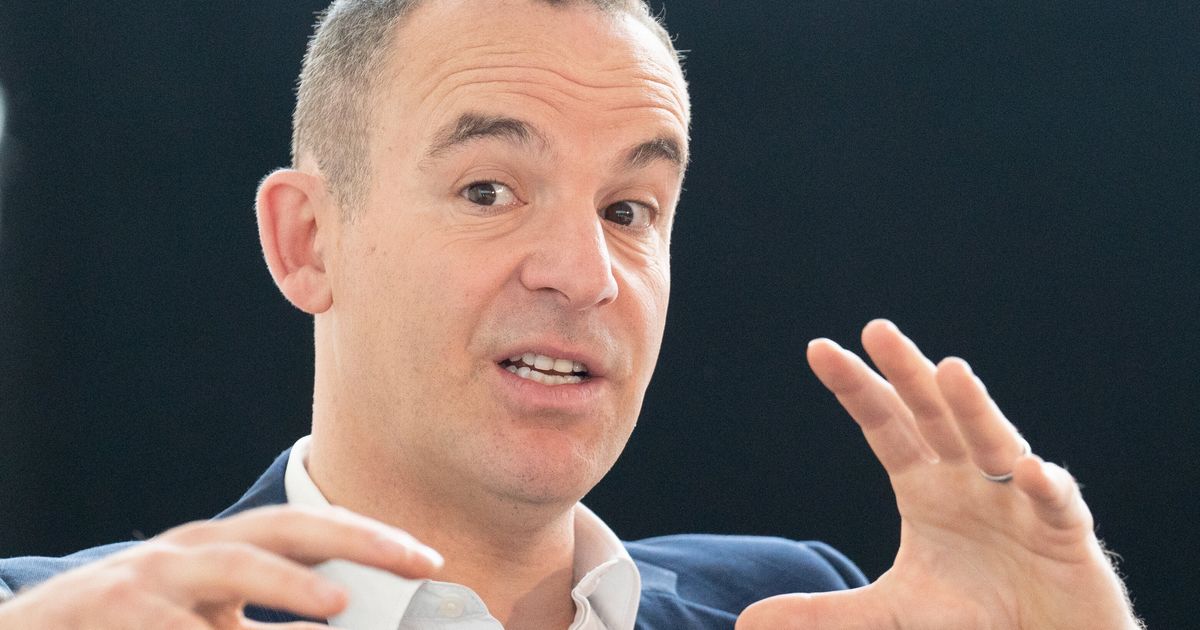
The Bank of England raised UK interest rates again – lifting the “base rate” to 4.5% from 4.25%.
It’s the 12th increase in a row since rates started going up in December 2021, pushing borrowing costs up further, particularly impacting homeowners with a mortgage.
Soaring food prices – and the fact they remain stubbornly high – appears to be the key factor behind the decision.
Advertisement
Some economists think the Bank could has gone too far since the impact of the repeated rises has yet to pass through to households and businesses.
Take homeowners. Around 85% of all borrowers are tied to fixed-rate mortgages – but the majority are yet to switch to a higher-rate home loan, and could be in for a shock when they do.
One prominent commentator predicted “screeching U-turns are coming” – and the Bank will soon have to cut rates to avoid tipping the UK economy into recession.
Hiking the base rate increases the cost of borrowing, making both credit and investment more expensive. The idea is to put the brakes on the economy and curb the soaring cost of goods and services – known as inflation.
Advertisement
Bringing rates down is an attempt to have the opposite effect – stimulate growth by making borrowing cheaper, and in turn, encourage investment.
The Bank is tasked with keeping inflation under control, targeting 2% a year. Inflation hit 10.1% in March, and raising rates is the blunt instrument it has to bring it down.
This is the bind the Bank is in: raise interest rates to combat inflation, but then stall the economy and make people’s lives miserable and make any downturn potentially deeper and longer.
Put simply, some economists argue that pushing up rates is having little to no effect on inflation – mainly because the war in Ukraine has been the driving force, chiefly through higher energy costs that are now easing. The same applies to two other factors, namely higher oil prices and economies emerging from a pandemic.
Consumer champion Martin Lewis suggested on Twitter that the Bank was sending signals more than anything else. Lewis wrote: “I’m no economist, but I struggle with the logic behind base rate rises currently. Inflation seems supply-side driven – but rate rises dampen demand. Then again the BoE is charged with bringing down inflation and this is it’s only tool. So it has to do it. Co-ordinated effort with govt would help.”
Advertisement
An actual economist went much further.
David “Danny” Blanchflower, who sat on the Bank’s monetary policy committee for three years, accused the central bank of “terrible incompetence”.
He told Sky News in a lengthy diatribe:
“This is utter incompetence. The market doesn’t believe them. I don’t believe them.
“I don’t believe a word that they say and it’s going to make things much worse for your listeners.
“Housing market’s going be in trouble. Mortgages are going to go up, housing quantities are going to decline.
“It’s the same utter group-think incompetence in 2008, and the same bank missed the greatest financial crisis since 1929.
“And here they go again. The market doesn’t believe them. I don’t believe them.
“Your listeners shouldn’t believe them. Screeching u-turns are coming and bad economic data is coming.
“This is terrible incompetence and this lot should just quit.”
Others were of a similar mind.
Suren Thiru, economics director at the Institute of Chartered Accountants in England and Wales, said the Bank risked “overdoing” rate rises, which could compound the cost crisis for many.
Advertisement
He said: “With most of the interest rate rises yet to pass through to households and businesses, the Bank of England risks overdoing the rate hikes, adding to the squeeze on our growth prospects and aggravating the cost-of-living crisis.”
The IPPR think tank argued the Bank should have held off raising interest rates again, warning of a “continued increase in inequality”.
Carsten Jung, senior economist at IPPR, said: “The Bank of England should have held off raising rates.
“The current approach risks creating big economic costs, in the form of lower future growth and fewer jobs, while not actually being effective enough at bringing down inflation.”
The Bank had previously been more optimistic that inflation could fall as low as 1% by the middle of 2024, but it is now predicted to reach about 3.4%, meaning it will fall at a significantly slower rate.
Advertisement
Andrew Bailey, the Bank’s governor, said there had been a “very big underlying shock” to food prices.
He added: “It appears to be taking longer for food price pressures to work their way through the system this time than we had expected.”
“But, as we said before, we are in very unusual times.”