Ash Sarkar: Tory Migration Crackdown Is A ‘Nastiness Olympics’

Journalist Ash Sarkar has confronted Tory minister Helen Whately over the government’s controversial migration crackdown – accusing the administration of indulging in a “nastiness Olympics” to please the Daily Mail.

The accusation came on BBC’s Question Time, which this week came from Bexhill-on-Sea, and was prompted by the Archbishop of Canterbury condemning the government’s plans to tackle the small boats crisis as “morally unacceptable and politically impractical”.

The intervention by Justin Welby sparked criticism of the church leader at Westminster, who was told neither “handwringing or bell ringing” will solve the misery of the channel crossings.

Th immigration reforms aim to ensure those who arrive in the UK without permission will be detained and promptly removed, either to their home country or a third country such as Rwanda. Meanwhile, asylum seekers are being housed in barracks and barges.

On the show, Sarkar said proposed new laws were treating “people who have been raped, people who have been tortured, people who are fleeing persecution” as “criminals”.

The writer went on: “I object so strongly when you use these words like ‘generosity’, to talk about things like having a glorified prison ship or refurbishing a prison just around the corner from here in order to detain people who are fleeing some of the most unimaginable circumstances possible.

“No government does that because they think it’s morally good. No government does that because they think it’s particularly efficient or effective.

“You’re doing it because you’ve committed yourself to this nastiness Olympics because you want a pat on the back from the Daily Mail and the human cost of that is obscene.”

Whately had argued 500,000 migrants coming to the UK since 2015, and people opening their homes to Ukrainians, showed the UK is a “generous country on offering asylum” – but it was “morally wrong” not to crackdown on people smugglers fuelling the problem.

On the same question, broadcaster and clergyman Rev Richard Coles called the illegal migration bill “politically unworkable, legally doubtful and morally indefensible”, adding he supported Welby’s position.

Share Button

Making the Mundane Magnificent: A Fresh Approach to Everyday Tasks

We all have those mundane tasks that we can’t seem to shake off our to-do lists – the ones that make us sigh just thinking about them. But let’s challenge this mindset: Is the task boring or are we approaching it with a boring mindset? What if the task isn’t inherently dreadful, but we’re simply being uninteresting in how we approach it? What would happen if we were to bring a fun, engaging, and playful mindset to these tasks?

Consider the simple act of doing household chores. They can often feel tedious, right? But let’s reframe. Instead of approaching them with a sense of dread, I often pair them with something I find enjoyable. Listening to an audiobook or some energetic trance music transforms the experience, turning a mundane task into an opportunity for enjoyment or learning.

Another aspect that can drastically change how we experience these tasks is the level of quality we bring to them. Doing tasks at a higher than normal level of quality can make them feel more engaging. For instance, when cleaning the house, don’t just aim to get it done. Aim to get it done exceptionally well. Take pride in the cleanliness of your home. This mindset shift not only improves the result but also makes the process more fulfilling. Challenge yourself to raise your standard above the baseline minimum.

Shopping is another chore that often lands on the “tedious tasks” list. But who says it has to be that way? When I go grocery shopping with my wife Rachelle, it becomes an enjoyable shared experience. And when I go alone, I opt for off-peak hours, making the experience quick and stress-free. Better yet, I’ll hold off until I’m in the mood for a bit of physical activity. The key is flexibility – aligning the task with your emotional state can make a world of difference.

Some tasks can wait until the right motivation or timing aligns. When Rachelle borrowed the car to run errands last week, it was the perfect time to oil the garage door – a task easier done with the car out of the way. Embrace these moments of serendipity when they come.

Staying organized also plays a big part in making tasks more manageable. I use the Things app to set reminders for recurring tasks like changing the air conditioning filters or adjusting the sprinkler timers for different seasons. This way, nothing slips through the cracks, and it’s one less thing to remember. This also helps to spread maintenance tasks throughout the year, so they don’t pile up too much.

Physical tasks can provide a welcome break from the mental exertion that much of our work entails. There’s something satisfying about engaging with the physical world and seeing the tangible results of our efforts. After I’ve done a lot of mental work, I often enjoy chipping away at something physical for a welcome change of pace.

Don’t underestimate the power of social connection. I discovered years ago that finding a dentist with a great team made my regular check-ups something to look forward to. Sharing stories about our recent travels or workout routines with the hygienist while getting a cleaning made the experience more personal and enjoyable. When I needed to get some plumbing work done last year, I held out till I found a fabulous local plumber with many years of experience. He was a joy to work with all throughout the project. Then I gave him a glowing 5-star review on Yelp.

The angle you approach a task from can drastically change how you perceive it. Look for ways to make tasks more appealing and engaging, and you’ll find they’re not so bad after all. It’s mainly a matter of being creative and thinking divergently. If the standard approach is boring, reject the standard approach; otherwise you’re being boring!

Above all, the universal motivator for me has been regular exercise. The physiological benefits, such as rebalanced neurotransmitters and hormones, permeate every aspect of life. Exercise enhances overall motivation, making even the smallest tasks feel easier. If you have a dreadful relationship with certain tasks, look at upgrading your exercise routine first. If it’s weak or nonexistent, that’s the #1 issue I’d recommend fixing first, not with a temporary quick fix but with a permanent solution and a permanent mindset upgrade. Exercise is a great way to explore how you’re going to fall in love with daily action. It’s the perfect reference experience for discovering how to strengthen your relationships with all kinds of tasks.

Finally, consider the impact of what you consume. For instance, I’ve noticed that being caffeine-free (and chocolate-free) makes many tasks easier to complete. It leaves me feeling more relaxed and at ease during the process. It’s certainly worth exploring how what you consume affects your motivation and productivity. I often change up my diet (always vegan of course) to align with the projects I’ll be doing. When I need more motivation, mental capacity, and energy, I lean towards high raw or fully raw.

The next time you find yourself faced with a mundane task, take a moment to consider how you might refactor it. Is there an angle you can approach it from that would make it more engaging? Could you combine it with something enjoyable or meaningful? Could you bring a playful mindset to it? How can you elevate its quality? Remember, the task is only as mundane as you allow it to be. Bring a sense of wonder to it, and you’ll make it wonderful.

Don’t blame the task. Look inward and ask: How can I bring more fun and engagement to this experience? In the end, it’s not just about getting things done, but enjoying the journey.

You have the power to redefine your experience with everyday tasks. It’s not about the task itself, but the mindset you bring to it. You might be surprised at how much more enjoyable life becomes when you make the mundane magnificent.

Share Button

Why Martin Lewis And Economists Think Raising Interest Rates Is A Bad Idea

The Bank of England raised UK interest rates again – lifting the “base rate” to 4.5% from 4.25%.

It’s the 12th increase in a row since rates started going up in December 2021, pushing borrowing costs up further, particularly impacting homeowners with a mortgage.

Soaring food prices – and the fact they remain stubbornly high – appears to be the key factor behind the decision.

But experts are not sure it’s the right policy

Some economists think the Bank could has gone too far since the impact of the repeated rises has yet to pass through to households and businesses.

Take homeowners. Around 85% of all borrowers are tied to fixed-rate mortgages – but the majority are yet to switch to a higher-rate home loan, and could be in for a shock when they do.

One prominent commentator predicted “screeching U-turns are coming” – and the Bank will soon have to cut rates to avoid tipping the UK economy into recession.

So how do interest rates work?

Hiking the base rate increases the cost of borrowing, making both credit and investment more expensive. The idea is to put the brakes on the economy and curb the soaring cost of goods and services – known as inflation.

Bringing rates down is an attempt to have the opposite effect – stimulate growth by making borrowing cheaper, and in turn, encourage investment.

The Bank is tasked with keeping inflation under control, targeting 2% a year. Inflation hit 10.1% in March, and raising rates is the blunt instrument it has to bring it down.

This is the bind the Bank is in: raise interest rates to combat inflation, but then stall the economy and make people’s lives miserable and make any downturn potentially deeper and longer.

Why are experts calling it out?

Put simply, some economists argue that pushing up rates is having little to no effect on inflation – mainly because the war in Ukraine has been the driving force, chiefly through higher energy costs that are now easing. The same applies to two other factors, namely higher oil prices and economies emerging from a pandemic.

Consumer champion Martin Lewis suggested on Twitter that the Bank was sending signals more than anything else. Lewis wrote: “I’m no economist, but I struggle with the logic behind base rate rises currently. Inflation seems supply-side driven – but rate rises dampen demand. Then again the BoE is charged with bringing down inflation and this is it’s only tool. So it has to do it. Co-ordinated effort with govt would help.”

An actual economist went much further.

David “Danny” Blanchflower, who sat on the Bank’s monetary policy committee for three years, accused the central bank of “terrible incompetence”.

He told Sky News in a lengthy diatribe:

“This is utter incompetence. The market doesn’t believe them. I don’t believe them.

“I don’t believe a word that they say and it’s going to make things much worse for your listeners.

“Housing market’s going be in trouble. Mortgages are going to go up, housing quantities are going to decline.

“It’s the same utter group-think incompetence in 2008, and the same bank missed the greatest financial crisis since 1929.

“And here they go again. The market doesn’t believe them. I don’t believe them.

“Your listeners shouldn’t believe them. Screeching u-turns are coming and bad economic data is coming.

“This is terrible incompetence and this lot should just quit.”

Others were of a similar mind.

Suren Thiru, economics director at the Institute of Chartered Accountants in England and Wales, said the Bank risked “overdoing” rate rises, which could compound the cost crisis for many.

He said: “With most of the interest rate rises yet to pass through to households and businesses, the Bank of England risks overdoing the rate hikes, adding to the squeeze on our growth prospects and aggravating the cost-of-living crisis.”

The IPPR think tank argued the Bank should have held off raising interest rates again, warning of a “continued increase in inequality”.

Carsten Jung, senior economist at IPPR, said: “The Bank of England should have held off raising rates.

“The current approach risks creating big economic costs, in the form of lower future growth and fewer jobs, while not actually being effective enough at bringing down inflation.”

What does the Bank say?

The Bank had previously been more optimistic that inflation could fall as low as 1% by the middle of 2024, but it is now predicted to reach about 3.4%, meaning it will fall at a significantly slower rate.

Andrew Bailey, the Bank’s governor, said there had been a “very big underlying shock” to food prices.

He added: “It appears to be taking longer for food price pressures to work their way through the system this time than we had expected.”

“But, as we said before, we are in very unusual times.”

Share Button

Brazilian butt lifts barred at Wolverhampton beauty clinic

A council says it is the first to issue the prohibition notice under the Health and Safety at Work Act.

Share Button

Monkeypox: WHO declares global emergency over

The World Health Organization says future outbreaks remain possible, as it ends the highest level of alert.

Share Button

NHS misses targets in England to tackle care backlogs

Too many people face long waits for cancer and planned care, but the NHS says huge progress has been made.

Share Button

Monkey dust drug clampdown could be coming in UK

Tougher penalties may be introduced for the street drug that has led to people jumping off buildings.

Share Button

Why tall, leggy people run faster in the heat

Some physiques perform better in different climates – just like animals, a study of athletes suggests.

Share Button

Coronation Guest Proves He’s Not Secretly Meghan Markle: ‘I Look This Way All The Time’

Sir Karl Jenkins wants everyone to know he’s no impostor.

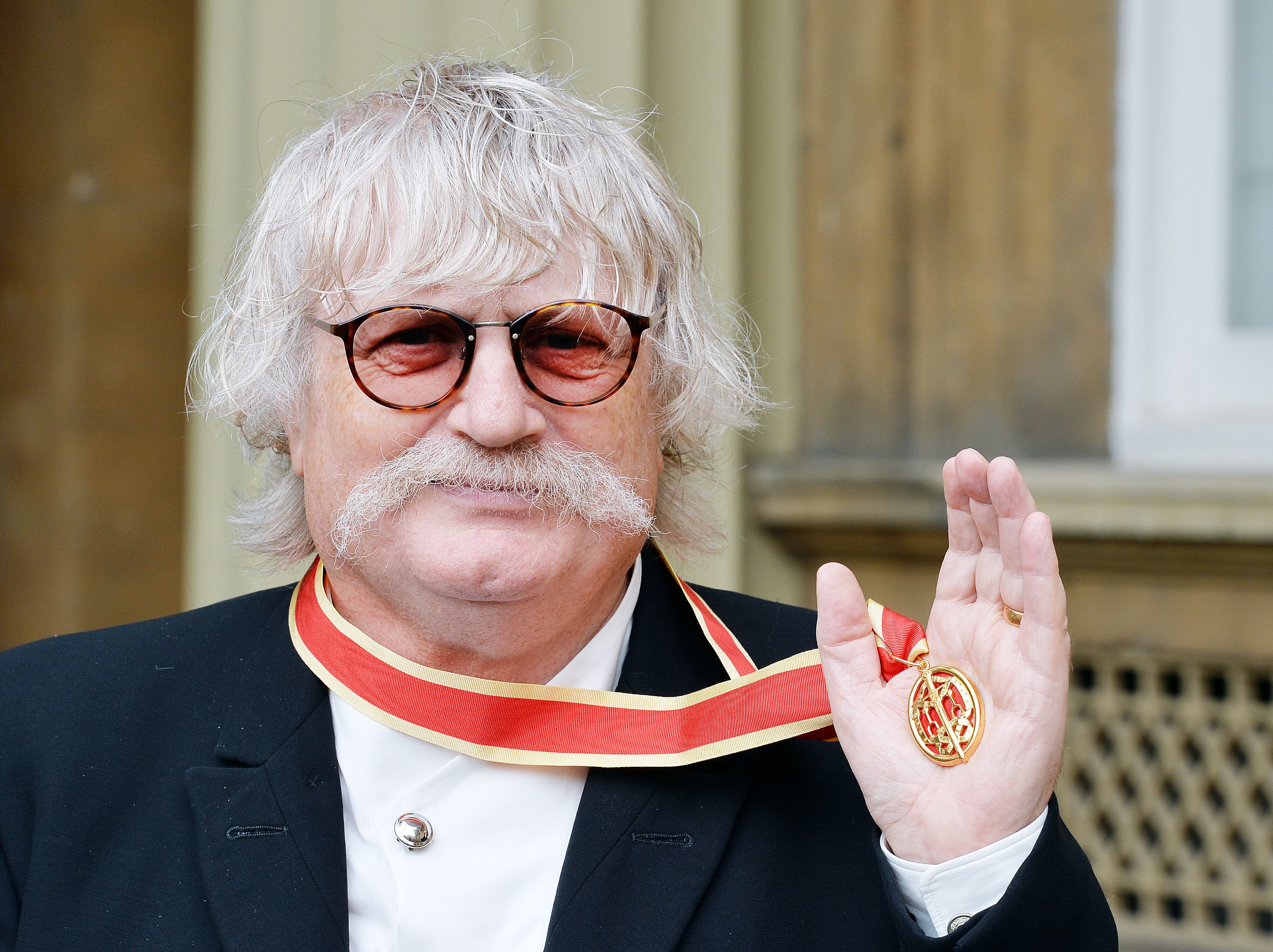
The Welsh composer good-naturedly addressed the array of unhinged theories about his appearance at King Charles’ coronation on Saturday ― namely, the allegations that he was actually Meghan Markle in a wild disguise.

“I look this way all the time,” Jenkins said of his prodigious mustache, retro mop and ’70s-chic glasses in a TikTok video on Tuesday.

“I understand there’s been a lot of interest in me since I appeared at the coronation,” Jenkins said, noting that some of his music was used in the ceremony.

He told viewers he was not there “to steal the Crown Jewels”, as some people online have joked. (Though isn’t that what you’d say if you were there to steal them?)

Jenkins assured viewers there was “nothing sinister” about his style choices or his presence at the coronation. “I’ve had the mustache since I was 18 years old,” he said. “It was very trendy then.”

Sir Karl Jenkins holds his Insignia of Knighthood award after it was presented at Buckingham Palace on Oct. 6, 2015.

John Stillwell – WPA Pool via Getty Images

You’ve heard Jenkins’ composition Adiemus, at least if you ever saw those commercials for the Pure Moods CDs in the ’90s. (A piano arrangement of the song can be heard in the background of the TikTok video above.)

At this weekend’s coronation, Jenkins sat beside Cats composer Andrew Lloyd Webber, who later seemed tickled by all the conspiracy theories.

“I can confirm it probably wasn’t MM and had no jewels on his person as far as I could see,” Lloyd Webber tweeted Tuesday.

Markle opted against attending the coronation to stay in California to celebrate the fourth birthday of her and Prince Harry’s son, Archie.

Share Button

Robert Jenrick Called Out For False ‘Asylum Shoppers’ Claim

Robert Jenrick has been called out by Krishnan Guru-Murthy for falsely claiming the United Nations refugee convention dictates that migrants have to seek sanctuary in the first ‘safe’ country they arrive in.

The immigration minister quickly backpedaled and said it was a “key principle” the government supported as the journalist refused to let the politician off the hook.

It came as Jenrick was grilled over the Archbishop of Canterbury’s stinging criticism of the government’s crackdown on asylum seekers under the illegal migration bill.

Jenrick was pulled up on Channel 4 News as he said that those crossing the Channel from France were “essentially asylum shoppers”.

Here’s the exchange (plus clip below):

Robert Jenrick: “If somebody originated from a place of danger, like Afghanistan, the vast majority of those people coming across on small boats are coming from France, and they are choosing to come to the UK for whatever reason.”

Krishnan Guru-Murthy: “As is their right.”

RJ: “They are essentially asylum shoppers.”

KGM: “It is their right to apply for asylum anywhere, they are asylum seekers, not asylum shoppers.”

RJ: “The convention says people should seek asylum in the first safe country.”

KGM: “No, it doesn’t. Where does it say that?”

RJ: “We are prioritising people in a place of danger rather than people who are in a place of safety like France.”

KGM: “That is not true. That is not true. The refugee convention does not say that you must seek sanctuary in the first safe country.”

RJ: “The refugee convention does encourage people to do that.”

KGM: “It does not say you must seek sanctuary in the first safe country, which you just said. That is not true.”

RJ: “That’s a key principle that we support as a government.”

KGM: “OK, but it’s not in the refugee convention.”

RJ: “We don’t think it’s right that if you’re in a safe country like France, that you should be coming to the UK. That’s creating a fundamental unfairness.”

KGM: “That’s the government’s position, it’s not in the refugee convention.”

The claim has been repeatedly rejected.

Amnesty International has said: “There is no rule requiring refugees to claim in the first safe country in which they arrive.”

The Full Fact site has also said: “The UN refugee convention does not make this requirement of refugees, and UK case law supports this interpretation. Refugees can legitimately make a claim for asylum in the UK after passing through other ‘safe’ countries.”

And a House of Commons briefing paper from February this year states: “The UK government’s position is that refugees should claim asylum in the first safe country they reach. The UN Refugee Agency says this is not required by the refugee convention or international law.”

In 2021, Tory MP Jonathan Gullis was schooled by an immigration expert after asking why asylum seekers choose to come to the UK in a clip that has gone viral many times since.

The former minister quizzed Zoe Gardner over the number of refugees seeking to settle in Britain after fleeing their homeland.

But he was told the international asylum system would “crumble” if countries refused to accept immigrants and expected other countries to take them instead.

The pair clashed in 2021 as Gardner appeared before parliament’s nationality and borders bill committee.

In the clip, Gullis, the MP for Stoke-on-Trent North, asks Gardner: “If these people out in Calais are legitimate refugees, why are they not claiming asylum in France, Italy, Spain or Greece? Why do they need to come to the United Kingdom?

Gardner replies: “As I’m sure you’ll be aware … the vast majority of people who seek asylum worldwide, firstly, 86% of refugees and displaced people worldwide, remain in the country neighbouring the one they have fled.

“So, 86% of people remain in developing countries.

“France received three times as many asylum applications as we did last year. People stop as soon as they feel safe.

″But the people who are making their way to England and who specifically wish to the UK, do so because they have ties to this country either because they have served with out military in the case of people from Afghanistan, or have family members, or speak the language because of our colonial history and have other ties of kinship and history here.

″So there are people who have legitimate ties to the UK and there is no good reason why they should particularly have their claims assessed in France if they do not wish to.

“It doesn’t really work for us to say to the French, ‘given that we’re geographically located slightly to the west of you, none of these refugees are our responsibility and they’re all on you’ because France can say the same thing and then Italy can say the same thing, and then the entire international refugee protection system will crumble.”

Share Button