Indiana University School of Medicine researchers have identified a new therapeutic target that could lead to more effective treatment of glaucoma.
Glaucoma is a neurodegenerative disease that causes vision loss and blindness due to a damaged optic nerve. More than 200,000 people are affected by glaucoma in the United States each year. Unfortunately, there is currently no treatment. In a newly published paper in Communications Biology, researchers found neurons use mitochondria for a steady source of energy, and restoring mitochondrial homeostasis in the diseased neurons can protect the optic nerve cells from being damaged.
“Age-related neurodegenerative disease, which includes glaucoma, Parkinson’s disease, and amyotrophic lateral sclerosis (ALS), is the biggest global health problem,” said Arupratan Das, PhD, assistant professor of ophthalmology and principal investigator of the study. “The fundamental mechanisms that we discovered can be used to protect neurons in glaucoma and be tested for the other diseases. We have identified a critical step of complex mitochondrial homeostasis process, which rejuvenates the dying neuron, similar to giving a lifeline to a dying person.”
The research team, led by Michelle Surma and Kavitha Anbarasu from the Department of Ophthalmology, used induced pluripotent stem cells (iPSCs) from patients with and without glaucoma as well as clustered regularly interspaced short palindromic repeats (CRISPR) engineered human embryonic stem cells with glaucoma mutation. Using stem cell differentiated retinal ganglion cells (hRGCs) of the optic nerve, electron microscopy and metabolic analysis, researchers identified glaucomatous retinal ganglion cells suffer mitochondrial deficiency with more metabolic burden on each mitochondrion. This leads to mitochondrial damage and degeneration. Mitochondria are the tube like structures in cells which produce adenosine triphosphate, cell’s energy source.
However, the process could be reversed by enhancing mitochondrial biogenesis by a pharmacological agent. The team showed retinal ganglion cells are highly efficient in degrading bad mitochondria, but at the same time producing more to maintain homeostasis.
“Finding that retinal ganglion cells with glaucoma produce more adenosine triphosphate even with less mitochondria was astonishing,” Das said. “However, when triggered to produce more mitochondria, the adenosine triphosphate production load was distributed among more mitochondrion which restored the organelle physiology. It is similar to a situation where a heavy stone is carried by fewer people versus a greater number of people — each person will have less pain and injury, just like each mitochondrion will have less difficulty and damage.”
In the future, Das would like to test if these mechanisms protect the optic nerve in animal models under injury before testing in humans to hopefully lead to new clinical interventions.
From steering a car to swinging a tennis racket, we learn to execute all kinds of skilled movements during our lives. You might think this learning is only implemented by neurons, but a new study by researchers at The Picower Institute for Learning and Memory at MIT shows the essential role of another brain cell type: astrocytes.
Just as teams of elite athletes train alongside staffs of coaches, ensembles of neurons in the brain’s motor cortex depend on nearby astrocytes to help them learn to encode when and how to move, and the optimal timing and trajectory of a motion, the study shows. Describing a series of experiments in mice, the new paper in the Journal of Neuroscience reveals two specific ways that astrocytes directly impact motor learning, maintaining an optimal molecular balance in which the neuronal ensembles can properly refine movement performance.
“This finding is part of a body of work from our lab and other labs that elevate the importance of astrocytes to neuronal encoding and hence to behavior,” said senior author Mriganka Sur, Newton Professor of Neuroscience in The Picower Institute and MIT’s Department of Brain and Cognitive Sciences. “This shows that while the population coding of behaviors is a neuronal function, we need to include astrocytes as partners with them.”
Picower Institute Postdoc Jennifer Shih and former Sur Lab postdocs Chloe Delepine and Keji Li are the paper’s co-lead authors.
“This research highlights the complexity of astrocytes and the importance of astrocyte-neuron interactions in fine-tuning brain function by providing concrete evidence of these mechanisms in the motor cortex,” Delepine said.
Messing with motor mastery
The team gave their mice a simple motor task to master. When cued with a tone, the mice had to reach for and push down a lever within five seconds. The rodents showed they could learn the task over a few days and master it within a couple of weeks. They not only performed the task more accurately, but also their reactions quickened and the trajectory of their reaching and pushing became smoother and more uniform.
In some of the mice, however, the team employed precision molecular interventions to disrupt two specific functions of astrocytes in the motor cortex. In some mice, they disrupted the astrocytes’ ability to soak up the neurotransmitter glutamate, a chemical that excites neural activity when it is received at connections called synapses. In other mice they hyperactivated the astrocytes’ calcium signals, which affected how they function. In both ways, the interventions disrupted the normal process by which neurons would form or change their connections with each other, a process called “plasticity” that enables learning.
The interventions each affected the performance of the mice. The first one (a knockdown of the glutamate transporter GLT1) didn’t affect whether the mice pushed the lever or how quickly they did so. Instead it disrupted the smoothness of the motion. Mice with GLT1 disrupted remained erratic and shaky, as if unable to refine their technique. Mice subjected to the second intervention (activation of Gq signaling) showed deficits not only in the smoothness of their motion trajectory but also in their understanding of when to push the lever and their quickness in doing so.
The team dug deeper into how these deficits emerged. Using a two-photon microscope they tracked neural activity in the motor cortex in unaltered mice and mice treated with each intervention. Compared to what they saw in normal mice, the mice with GLT1 disrupted showed less correlated activity among neurons. Mice with Gq activation showed excessive correlated activity compared to the normal mice.
“The data suggest that an optimal level of neuronal correlation is required for the emergence of functional neuronal ensembles that drive task performance,” the authors wrote. “Meaningful correlations that carry information are what drive motor learning rather than the absolute magnitude of potentially non-specific correlations.”
The team dug even deeper still. They carefully isolated astrocytes from the motor cortex of mice, including some who were untrained in the motor task as well as ones who were trained, including mice who were unaltered and mice who underwent each intervention. In all these samples of purified astrocytes, they then sequenced RNA to assess how they differed in their expression of genes. They found that in trained vs. untrained mice, astrocytes exhibited greater expression of genes related to GLT1. In mice where they intervened they saw lowered expression. That evidence further suggested that the glutamate transporter process is indeed fundamental to training in motor tasks.
“Here we show that astrocytes have an important role in enabling neurons to encode information properly, both the learning and the execution of a movement for example,” Sur said.
Pierre Gaudeaux is a co-author of the paper. The research was funded by The National Institutes of Health, the Simons Foundation, and The JPB Foundation.
People with a third copy of chromosome 21, known as trisomy 21, are at high risk of developing Acute Myeloid Leukaemia (AML), an aggressive form of blood cancer. Scientists led by the Department of Paediatrics at University Hospital Frankfurt have now identified the cause: although the additional chromosome 21 leads to increased gene dosage of many genes, it is above all the perturbation of the RUNX1 gene — a gene that regulates many other genes — that seems to be responsible for AML pathogenesis. Targeting the perturbed regulator could pave the way for new therapies.
Leukaemia (blood cancer) is a group of malignant and aggressive diseases of the blood-forming cells in the bone marrow. Very intensive chemotherapy and in some cases a bone marrow transplant are the only cure. Like all cancers, leukaemia is caused by changes in the DNA, the heredity material present in human cells in the form of 46 chromosomes. In many forms of leukaemia, large parts of these chromosomes are altered. People with Down syndrome, who have three copies of chromosome 21 (trisomy 21) are highly vulnerable: the risk of developing aggressive Acute Myeloid Leukaemia (AML) in the first four years of their life is more than 100 times greater for children with Down syndrome. Down syndrome is the most common congenital genetic disorder, affecting about one in 700 newborn babies.
RUNX1 transcription factor is responsible
The research group led by Professor Jan-Henning Klusmann, Director of the Department of Paediatric and Adolescent Medicine at University Hospital Frankfurt, has now discovered how the additional chromosome 21 can promote AML. With the help of genetic scissors (CRISPR-Cas9), they examined each of the 218 genes on chromosome 21 for its carcinogenic effect. It emerged that the RUNX1 gene is responsible for the chromosome’s specific carcinogenic properties. In further analyses, the researchers were able to corroborate that only one particular variant — or isoform — of the gene promotes the development of leukaemia. Klusmann explains: “Other RUNX1 isoforms were even able to prevent the cells from degenerating. This explains why RUNX1 has so far not stood out — in several decades of extensive cancer research.”
The RUNX1 gene encodes a “transcription factor” — a protein responsible for regulating the activity of other genes. RUNX1 regulates many processes, including embryonic development and early and late haematopoiesis, or blood formation. Disruption of this important regulator is therefore a key event in the development of AML. “Thanks to our research results, we now have a better understanding of what happens in leukemogenesis,” explains Klusmann, an expert in paediatric cancer. “The study underlines how important it is to examine all gene variants in carcinogenesis. In many cases, certain mutations in cancer cells alter how these variants form,” he says.
Development of more sophisticated therapeutic approaches
These insights are important for a better understanding of the complex mechanisms of carcinogenesis, as Klusmann explains: “In this way, we have laid the groundwork for developing more sophisticated therapeutic approaches. Through our biochemical analyses, we now know exactly how the gene variant alters the blood cells. From there, we were able to use specific substances that block the disease mechanism.” The intention now is to further explore the effect of these substances for use in medical care. Klusmann: “On the basis of our expertise, we now want to develop therapies to correct this malfunction. Applying them in clinical practice will certainly take a few more years, but hopefully they will lead in the future to sparing our young patients from intensive chemotherapy.”
There are 2.2 million domestic workers in the U.S., and a lot of them are nannies.
Nannies have busy, demanding jobs with tasks that can completely vary from family to family. They may be responsible for driving children to school, making meals or live-in caregiving.
Nannies work in private homes, often putting them outside of public view, so their critical roles in families and society can be undervalued and exploited. Misunderstandings can happen between what parents think they want in a nanny and the reality of what it’s actually like to employ or be one.
Advertisement
That’s why HuffPost reached out to nannies for what they think about working for families and the biggest “won’ts” they have learned. These are their hard-earned lessons.
Responses have been edited for clarity and length.
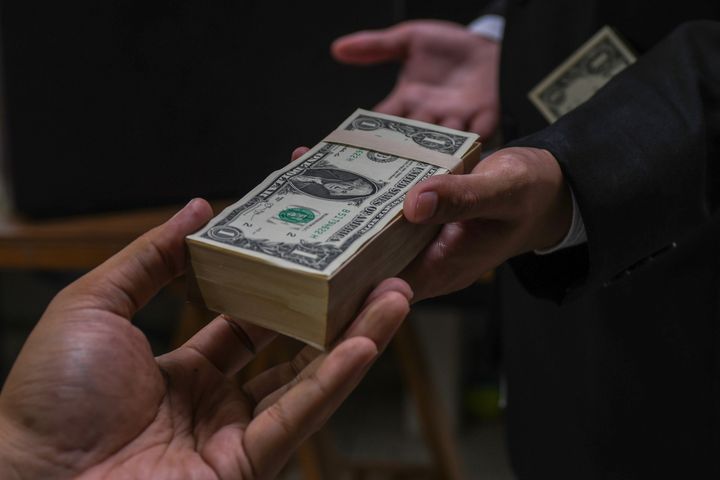
1. I won’t accept money under the table
boonchai wedmakawand via Getty Images
“I’ve been in the industry for over 25 years now. And I remember when I first started, that was the big thing: People paying you under the table and not paying their taxes.
“I remember even working for a family and they were lawyers, so they figured out how to get around it. I was like, ‘I can’t buy a car because I don’t have any proof of income,’ because I got paid in cash. … It was really weird. At the time, I was young and I did not understand the whole business of it. It definitely was done and it’s still done even though it’s illegal. People still try to pay you under the table.
Advertisement
“On a bigger scale, when COVID happened, so many nannies who were getting paid under the table couldn’t file for unemployment. It’s a big ‘no’ for me.” — Kimberly C. Brown, the CEO of the Nanny Kim on the Go consulting agency in Jersey City, New Jersey.
2. I won’t be paid less than a liveable wage
“About 10 years ago, I took a nanny job that paid $200 a week, so a lot of the stuff that I post [on TikTok] is based on real experiences that I have gone through within the last 10 years.
“A lot of people undermine our education and our professionalism because they assume it’s a little girls job. I am a professional and I have tons of education, and it is not comparable to being a teenager [babysitting].” — Coco in Scottsdale, Arizona. (Coco’s last name has been withheld for privacy reasons.)
3. I won’t forbid a nanny from answering a phone or leaving the house
puttapon via Getty Images
Advertisement
“I would never tell the nanny they can’t take the child outside or can’t answer their phones at work. People have to realise that nannies work during the day when most calls come in.
“A lot of people, they feel like nannies need to be ‘on’ all the time. That could be exhausting and wear your nanny out really quick. [I would never] assume that they don’t have emergency calls that may come in.
“I’ve definitely had that at work or at a job where they’re just like ‘Oh, I don’t want you to answer the phone for anybody but us’ or ‘I don’t want you to have your phone on at all.’
“I’ve worked with families where they won’t give me a key to the house, because they don’t want me to go in and out. They don’t want me to take the kid to the park. I just sit in the house all day with them until they come back. And that’s just not normal.” — Brown.
4. I won’t assume a nanny is a housekeeper
“I am more than happy to help out and I understand that managing their home is part of my position, but it’s not my job to scrub your baseboards. It’s not my job to wash your windows. It’s not my job to clean out your pantry and your fridge. I’ve even been asked to take the dog to the vet or come over if I have a day off, let’s say, and they say something along the lines of ‘We don’t need you today, but we just need you to stop by and water the plants.’ Something like that, to me, is inappropriate. I live an hour away, and I’m not going to drive an hour to water your plants.
Advertisement
“This job is very weird because you can be family with your bosses. It’s strange. You don’t want to be treated like any ‘regular-degular’ employee, because if I wanted to do that I would work at a day care.” — Coco.
5. I won’t contradict a family’s decisions
“As a nanny, I won’t contradict my employers, even in the smallest ways. Parents deserve to be respected in their absence, and my role is to be a supportive team member.
“I may offer advice or information, but ultimately will defer to the parents’ judgment. As long as the children are safe, I follow the guidance and preferences of my bosses when making decisions in their household.” — Amber Sembly in Atlanta.
6. I will not work without guaranteed hours in my contract
“An issue that I’ve seen happen to other nannies and even to myself as well a couple times is a family will hire you, they’ll say whatever hours they need, say it’s Monday through Friday, 8 to 5. Those are the set hours you’re going to base your life around, you’re going to keep your schedule open. But then every once in a while, the parent might get home early. But that affects your pay at the end of the day. So those guaranteed hours just keep you safe in case they do send you home early.
Advertisement
“Vacations — that’s a big one as well, especially with spring break coming up right now. [The family I work for is] going out of town with the kids for spring break, but I’m still getting paid for that week because of my guaranteed hours in my contract.” — Maiya Mosley in St. Louis.
7. I will not hire a nanny without meeting them
“If I were to hire child care, whether it’s short-term or long-term, I would definitely make sure my kids are comfortable with them and do a trial, even a few hours or so. Luckily for me, I’ve never had any issues. But I always think it’s crazy when people are like ‘OK, come over tomorrow night and watch them.’ And I’m like: ‘OK, you haven’t even met me yet. Are you sure?’
“Calling references, too — you want to do your due diligence. Luckily I have very good references and kids really like me, but I would never message someone on an app and be like, ‘You sound great, come over tomorrow.’” — Teniya Renee in Boston.
8. I will not arrive home late
Westend61 via Getty Images
“I wouldn’t come home late. Obviously, it happens, but I would definitely let the nanny know ‘Hey, I’m running behind,’ because nannies also have things to do after work. Being a nanny can often seem like, to a family, that you’re beholden to them. That’s a big one that comes up for nannies.” — Danny Rosenthal, the owner of United Nanny Agency in Chicago.
Advertisement
9. I will not assume a nanny knows what I need
cako74 via Getty Images
“Most families don’t realise that hiring a nanny means opening a small business in their home. Families have a huge learning curve … [and] hardly ever set expectations or explain how to accomplish the tasks they have set out for them to do. Families have no idea that they prefer their clothes folded a certain way or that they prefer one brand of paper towel over another — that’s real — but every family is particular. Very particular.
“If you want a nanny to do something, you need to show them. If you want a nanny to buy something, you need to tell them what brand, what store and which aisle. Years of experience means a nanny is capable of learning how to work with a family, but it doesn’t mean they know how to do everything the way you like it.” — Rosenthal.
I was scrolling my Facebook feed one sleepless night when a post by a fellow member of a women’s business group caught my eye. She was sharing her new headshots, and they were, well, gorgeous.
She looked healthy and radiant ― the soft natural light perfectly illuminating her glowing skin ― and she seemed both professional and approachable at the same time.
Advertisement
I’d recently been comparing headshot packages from photographers in my area, and this woman’s photos were exactly what I was looking for: polished, elegant, well-composed. I decided to pin a few of her pics to my headshots board on Pinterest so I could show them as inspiration to my own photographer when I finally selected one.
But when I looked at her caption again, something else about it grabbed my attention: the price tag. Her beautiful headshots ― a gallery of 35 unique images in total ― had set her back just $25.
I definitely needed to know more.
I clicked to expand the full text of her post and took a minute to actually read what she wrote. It turned out her photo shoot wasn’t a “shoot” at all. Instead, these images were produced by artificial intelligence (AI). She explained that she uploaded 20 pictures of herself to a website and two days later received a link to a gallery of images of herself ― but not herself ― in various settings and styles of attire.
Her photos had been generated by a process in which real images of a subject are used to create a data set from which new images can be derived. Once this data has been collected and a “model” has been generated, which includes an infinite number of details about a person’s physical appearance, an endless array of artificial images can be created in that person’s likeness. The “person” spawned from this accumulation of data can then be dressed in different clothing, styled in different ways and placed in different locations. They can also have different makeup, hair colours, jewellery and other accessories… all while retaining the features of the original subject. At least in theory.
Advertisement
Curious, I clicked on my Facebook contact’s profile photo to see what she typically looks like. It was kind of amazing. The AI photos did in fact look like her ― made up, well lit, well dressed and maybe retouched a little. Basically they looked like her on a good day, in a great space and with a bit of post-production magic applied.
Now I was genuinely intrigued. The $25 price was a tiny fraction of the quotes I’d received from local photographers I’d reached out to, and while I am a big advocate of shopping locally and supporting other creatives, I was launching a new venture and it wasn’t yet producing revenue. I needed stopgap photos to use on my website and social feeds until I was actually earning money and could to hire a real photographer. I decided I was willing to risk $25, and I clicked through my FB buddy’s original post to the website of the company that had created her photos.
Like her, and likely thousands of other people, I uploaded my own images to the site, carefully following the instructions to select pictures that show my face in good light and from a number of angles so that the AI could create a model that was as detailed and realistic as possible. Once I was happy that I’d given the AI all the tools it needed to re-create me, I hit the submit button. Then I waited.
The company promises delivery within 48 hours. Starting at around the 40-hour mark, I started refreshing my email compulsively, every 10 minutes or so, to see if the gallery link had arrived when I wasn’t looking. I was so anxious to see what the new and improved me would look like! Would she be wearing my style of clothing, and how do they decide what clothes to put the “model” in anyway? Would she have my laugh lines, or does the AI edit out what it sees as “imperfections”? Would she really look like me ― like, “fool-my-dad look like me”? ― or would I be disappointed and have to chalk up a $25 loss to the cost of starting a new business? So many questions!
I had momentarily forgotten that I was waiting to meet the new me when I was half-awake and clicked on my email in the middle of the night. There it was: a link to a downloadable zip file labeled “Your Gallery.” My heart sped up. I couldn’t unzip the file on my phone, so I hauled myself out of bed, into my robe and downstairs to my office to open it on my computer. There was no way I was waiting until morning.
Advertisement
There, sitting at my desk at 3am, I opened up the gallery and clicked on the first thumbnail.
Courtesy of Natasha Dworkin
An AI-generated photo of the author.
It was me, sort of. I was wearing a crisp white linen blazer and tasteful jewellery. My hair was swept into a sophisticated updo. My ears were adorned with a pair of modern, geometric earrings. My smile said “Hello there. I’m kind. And professional. And also very stylish.” It was like the person who I might have become had I followed my 19-year-old self’s dream of being an interior designer.
I clicked on the second photo. In this one, I was outdoors, glancing toward the horizon with a wise, knowing look. I wore a lush floral halter dress, and my tousled hair was subtly tinted in burgundy. I was lithe and tanned. This was the me who traveled the world with only a backpack before settling in Bali as a yoga teacher.
In the third and fourth images I am a confident, driven lady boss. I appear smart and strong, yet emotionally intelligent, the CEO of a major international conglomerate that also has a social conscience ― known for its fair labor practices, sustainable product lines and generous parental leave.
It went on like this as I continued to peruse my gallery of doppelgänger Natashas, each one decidedly me but also decidedly not me. It was a me I didn’t recognise, wearing clothes I hadn’t seen before, in places I’d never been.
Advertisement
In a way, she was intoxicating ― 35 little windows into alternate versions of my life, reflecting different choices, different turns taken, different worlds inhabited. She was also just a little bit better than me. I mean that in the way that we always look better in our headshots or any studio photos thanks to optimal conditions and a skilled photographer, but this person was also better better.
She didn’t just look better. She wasn’t just dressed better. She had done better in life. She’d done better keeping her waistline trim after the baby. She’d taken up a real skincare routine earlier than I had. She’d secured the book deal and been offered the promotion and she’d gotten the guy. She’d done the right things at the right times, and everything had worked out for her. She was golden. Golden Me.
Courtesy of Natasha Dworkin
An AI-generated photo of the author.
I somewhat sheepishly posted one of the photos of Golden Me — the one that, from my point of view at least, looked the most realistic, the most believable, on Facebook. I didn’t say anything about it ― I just benignly swapped out my profile pic. I wanted to see what would happen.
Within minutes my feed was blowing up. “Gorgeous!” said one friend. “Look at you!” said another. “Absolutely stunning.” “You look amazing.” “Beautiful woman!” declared friends who’d known me since childhood. My dad loved the image. They all believed Golden Me was actually me. Mission accomplished. Right?
Advertisement
Not so much. I started to feel weird about this other me. On the one hand, I wanted people to think the photo was real, and it felt kind of good when they did. On the other hand, it felt dishonest.
Every one of us must wonder from time to time ― especially those of us who have arrived in life’s middle years ― what our experience might have been like, what we might have been like, if we’d taken a different road, stayed in a particular relationship, left another, taken up a certain hobby or followed another career path. We’ve all surely questioned our choices from time to time, had regrets, thought wistfully about the what-ifs and the could-have-beens.
Meeting Golden Me was like looking at the digital embodiment of the answers to all those questions. All the mes that could have been, maybe even should have been, and that certainly are not.
And putting one of those pictures out into the world where my friends and family could marvel at it felt like presenting a facade to people who already love me as I am. Why would I trade that love and acceptance for social media points and a couple of minutes of feeling like I’d somehow won the best-self lottery?
Courtesy of Natasha Dworkin
An AI-generated photo of the author.
Advertisement
The fact is that all the choices I’ve made and all the roads I’ve taken may not have led me to the executive suite of a multinational company or to a tropical Balinese yoga studio, but they’ve led me to the version of myself that I am today: mama to the sweetest little boy ever, user of my gifts to help others, community builder, loving friend, loyal daughter, budding gardener, deep thinker.
And that me, with her laugh lines and her amateurish makeup and her postpartum body, is pretty darn golden, too. In our own photos ― our real photos of our real selves ― lie our stories: moments in time captured, life’s details memorialised to be looked at later and remembered.
What would I say when my son looks at an image of Golden Me and asks where I was when that photo was taken, who I was looking at or what I was smiling about? What are we left with if the pictures, the moments, the memories and the stories aren’t real?
We’re left with pixels.
I quietly changed my profile picture back to a real one, a selfie taken just weeks ago on the land where I grew up, wearing my favourite cozy poncho. When my son looks at that photo years from now, he will know without even thinking about it that it was taken in the place I love most in the world. He’ll see my smile and the cool forest breeze blowing my hair, and he’ll recognise it all. He’ll recognise me.
I resolved to chalk this experience up not as a loss but, like so many other things in life, as a lesson. And $25 to discover that I like the real me, my real life, my real story ― even with all its tarnished bits ― more than I do some gilded fantasy version of it is, in my opinion, money well spent.
Advertisement
Courtesy of Natasha Dworkin
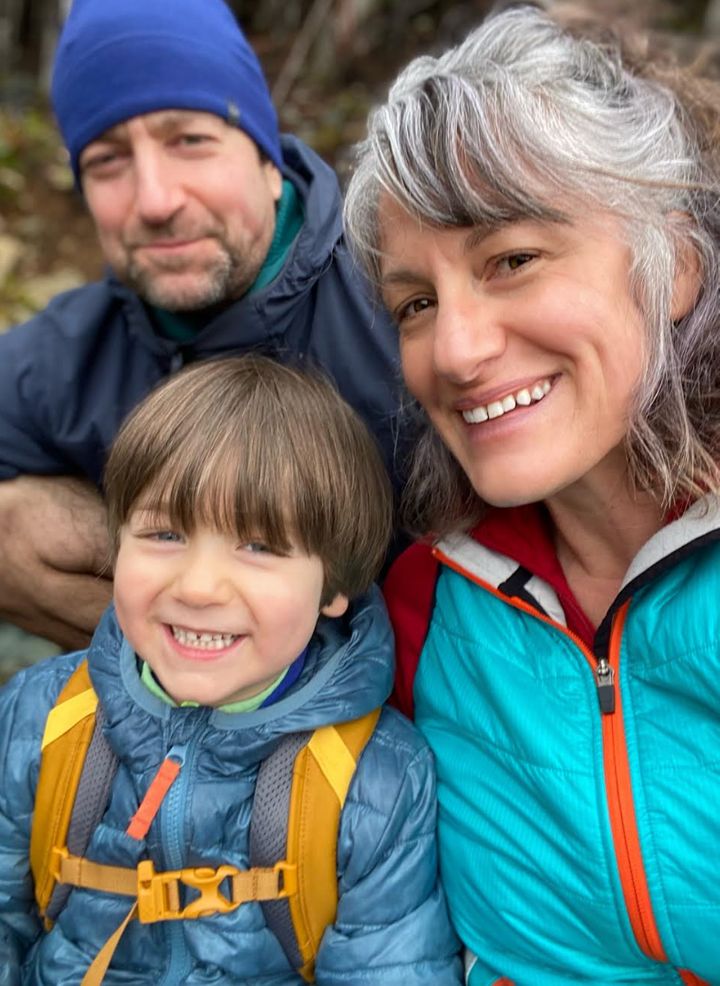
The author, naturally, with her family.
Natasha Dworkin is an agency founder and strategic storyteller. For more than 20 years she has helped her purpose-driven clients tell their stories, amplify their impact and change the world. She now leverages her professional expertise with her personal experience, becoming a first-time mom at the age of 46, to help other midlife women make transformative change in their own lives. Connect with her at midlife.mom and on Instagram at @midlife.mama.
It was recently reported that the American actor – known for playing Dillon in the hit HBO series, as well as his roles in Euphoria, Love Victor and You – was in a relationship with Chris, who is known for his work with stars like Kim Kardashian and Jennifer Lopez.
The pair have also shared pictures on social media on holiday together in Mexico, and walked the red carpet at the Vanity Fair and TikTok’s Vanities: A Night for Young Hollywood event in Los Angeles earlier this week.
Lukas was asked about their photos in Mexico in an interview with The New York Times, who suggested people believed the snaps to be a “relationship announcement”.
He did not confirm the reports, and said he was still working out the “weird line” of what to keep private.
“If they want to think that, they can,” he said. “I’m a pretty open book about most things in my life, but I have a problem with the culture of everyone needing to know everybody’s business and nothing can be sacred.
“It’s a weird line that I’m still trying to figure out.”
Following the publication of the interview, Chris shared a screenshot of it on his Instagram Story and wrote: “Hot & talented @lukasgage.(sic)”
He also commented on a post of Lukas’ promoting the interview, saying he was “proud” alongside a heart emoji.
In the latest advance in nano- and micro-architected materials, engineers at Caltech have developed a new material made from numerous interconnected microscale knots.
The knots make the material far tougher than identically structured but unknotted materials: they absorb more energy and are able to deform more while still being able to return to their original shape undamaged. These new knotted materials may find applications in biomedicine as well as in aerospace applications due to their durability, possible biocompatibility, and extreme deformability.
“The capability to overcome the general trade-off between material deformability and tensile toughness [the ability to be stretched without breaking] offers new ways to design devices that are extremely flexible, durable, and can operate in extreme conditions,” says former Caltech graduate student Widianto P. Moestopo (MS ‘ 19, PhD ’22), now at Lawrence Livermore National Laboratory. Moestopo is the lead author of a paper on the nanoscale knots that was published on March 8 in Science Advances.
Moestopo helped develop the material in the lab of Julia R. Greer, the Ruben F. and Donna Mettler Professor of Materials Science, Mechanics and Medical Engineering; Fletcher Jones Foundation director of the Kavli Nanoscience Institute; and senior author of the Science Advances paper. Greer is at the forefront of the creation of such nano-architected materials, or materials whose structure is designed and organized at a nanometer scale and that consequently exhibit unusual, often surprising properties.
“Embarking on understanding how the knots would affect the mechanical response of micro-architected materials was a new out-of-the-box idea,” Greer says. “We had done extensive research on studying the mechanical deformation of many other types of micro-textiles, for example, lattices and woven materials. Venturing into the world of knots allowed us to gain deeper insights into the role of friction and energy dissipation, and proved to be meaningful.”
Each knot is around 70 micrometers in height and width, and each fiber has a radius of around 1.7 micrometers (around one-hundredth the radius of a human hair). While these are not the smallest knots ever made — in 2017 chemists tied a knot made from an individual strand of atoms — this does represent the first time that a material composed of numerous knots at this scale has ever been created. Further, it demonstrates the potential value of including these nanoscale knots in a material — for example, for suturing or tethering in biomedicine.
The knotted materials, which were created out of polymers, exhibit a tensile toughness that far surpasses materials that are unknotted but otherwise structurally identical, including ones where individual strands are interwoven instead of knotted. When compared to their unknotted counterparts, the knotted materials absorb 92 percent more energy and require more than twice the amount of strain to snap when pulled.
The knots were not tied but rather manufactured in a knotted state by using advanced high-resolution 3D lithography capable of producing structures in the nanoscale. The samples detailed in the Science Advancespaper contain simple knots — an overhand knot with an extra twist that provides additional friction to absorb additional energy while the material is stretched. In the future, the team plans to explore materials constructed from more complex knots.
Moestopo’s interest in knots grew out of research he was conducting in 2020 during the COVID-19 lockdowns. “I came across some works from researchers who are studying the mechanics of physical knots as opposed to knots in a purely mathematical sense. I do not consider myself a climber, a sailor, or a mathematician, but I have tied knots throughout my life, so I thought it was worth trying to insert knots into my designs,” he says.