Golden Globes Host Shares Surprising Gift From Leonardo DiCaprio After Roasting Him

Appearing on Jimmy Fallon’s talk show on Wednesday night, the stand-up explained: “After I [host an awards show], I always send flowers to everyone that I made fun of that was a good sport about it, which was everyone.”

She then revealed that Leo is “the only person who sent something back to me”.

“Is your favorite food still ‘Pasta, pasta and more pasta?’” she quipped from the stage, to which Leonardo responded by giving an amused thumbs-up.

So, guess what his gift to Nikki was?

“He sent me three baskets of pasta as a ‘thank you,’” she revealed. “So funny. So good. And part of me was like, ‘Does Leo want to smash?’”

You can watch Nikki Glaser’s complete interview with Jimmy Fallon below:

During her opening monologue at the Golden Globes in January, Nikki said: “What a career [Leonardo DiCaprio has] had. Countless iconic performances, you’ve worked with every great director, you’ve won three Golden Globes and an Oscar.

“The most impressive thing is you were able to accomplish all that before your girlfriend turned 30… I’m sorry I made that joke, it’s cheap, I tried not to, but we don’t know anything else about you, man. There’s, like, nothing else.”

Share Button

Half Man Reviews: Baby Reindeer Creator Richard Gadd’s New Show Splits Critics

However, critics are far more divided over his follow-up series, Half Man. with some saying it is too violent and dark.

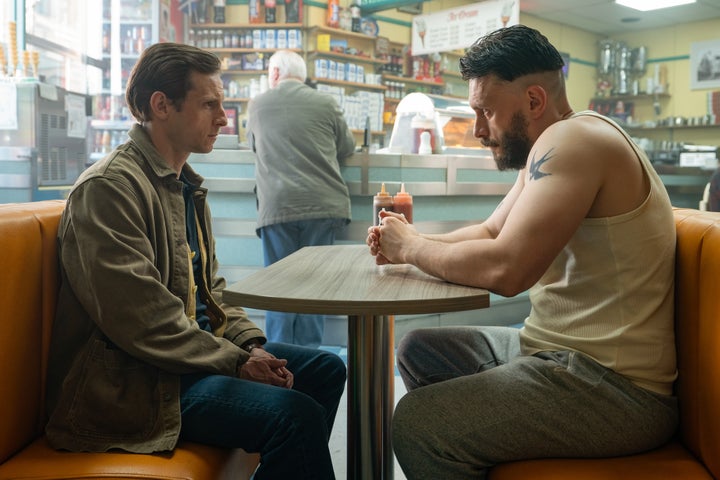
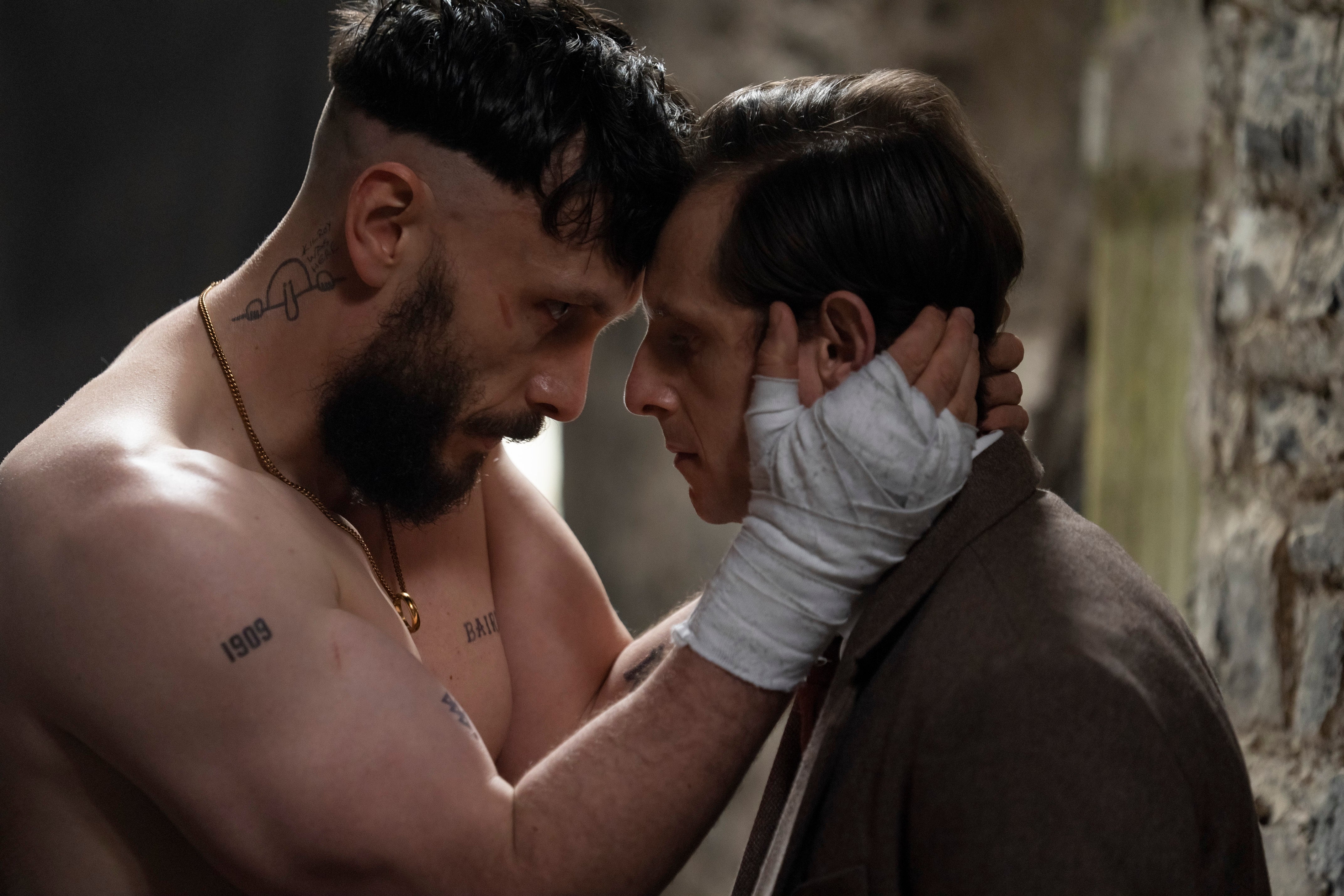
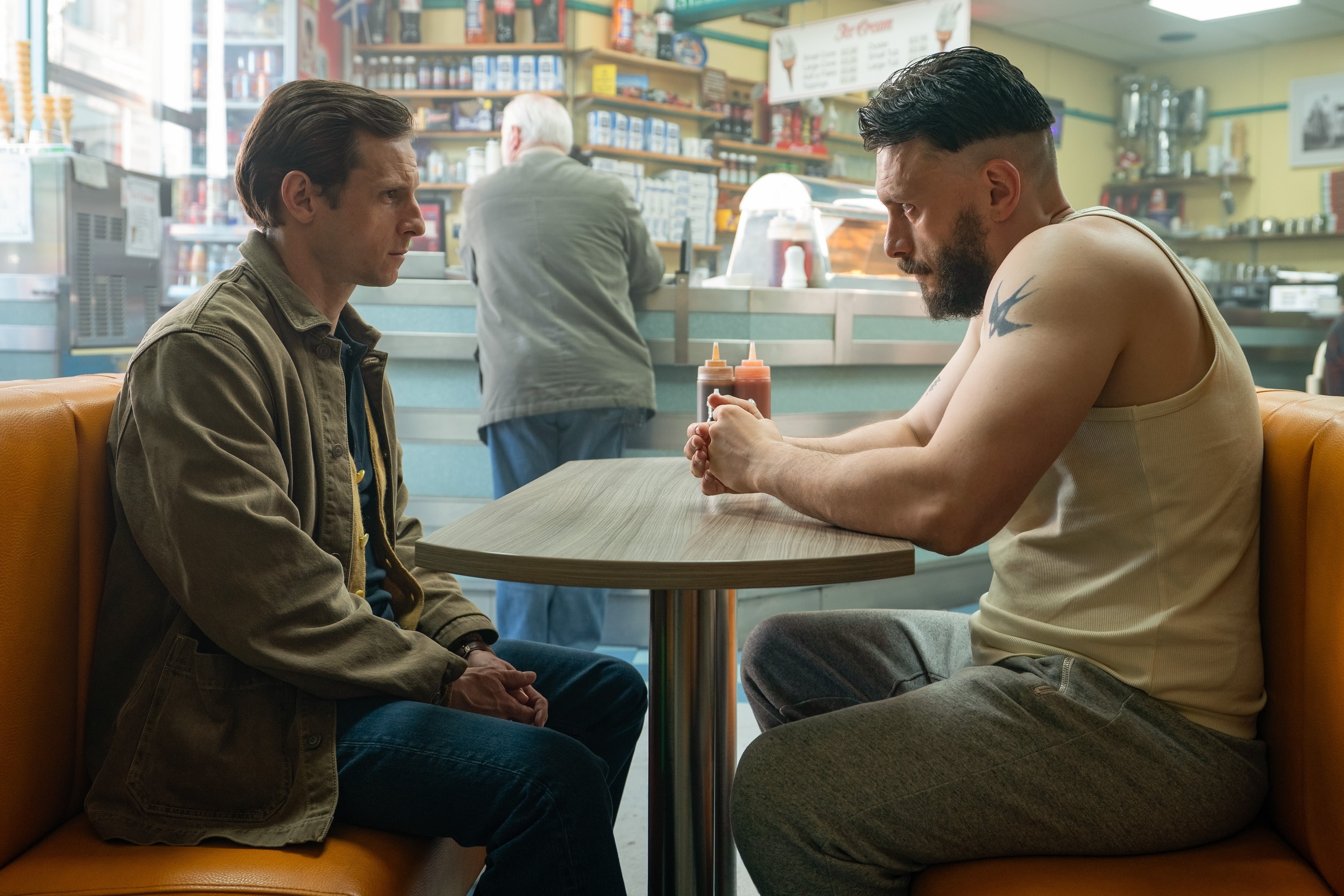
Starring Richard and Jamie Bell as two half-brothers with an explosive, toxic relationship and follows them from childhood, through their awkward teens and into adulthood, Half Man is a dark exploration of toxic masculinity, repression and male rage.

Ahead of its release on Thursday, reviews were split over whether the project was a vital piece of television that’s among the year’s best or slightly too much to stomach.

Here’s a selection of what the critics are saying about Half Man so far…

“It leaves you with that rare and precious feeling that everyone involved – Gadd, of course, who has once again pulled out his viscera, spread them over the page and taken a scalpel to every bloody organ, but every actor too (Bell is on career-best form and then some here) – has given us the very best of themselves.”

“The best show of 2026 […] Half Man will be a lot of things to a lot of people, and that’s where its brilliance lies. Many will instantly draw parallels with ongoing conversations about toxic masculinity, and that’s important. But this drama actually speaks to so much more than that, and what you will get out of it as a viewer will be dependent on what theme resonates or speaks to you most.”

The hard-hitting series centres around two half-brothers with a toxic relationship

BBC/Mam Tor Productions/Anne Binckebanck

“Half Man is an excellent but difficult watch. A viciousness runs through the narrative, and countless acts of violence depicted. For those who stick it out, the final episode features one of the most emotionally shattering scenes on television.”

“Half Man is so potent because it’s not sanitised. It is a deeply uncomfortable watch about deeply messed-up characters whose lives are in constant turmoil, anchored by some unreal performances – certainly by the younger cast, but definitely from Bell in particular, who I’ve determined deserves an Emmy win for embodying how tortured Niall is in his 20s and 30s.”

“Half Man is gripping, emotional, complex, and upsetting, telling a story of masculinity and brotherhood that feels rooted in reality even though the story is fictional. It stumbles at times but never falls, and the strengths massively outweigh any negatives.”

“The series isn’t flawless. There are dips in pacing here and there, and a few of the women characters could be better written. Often, the monologues feel better suited to a play than they do to television. But the density and layered nature of the writing win the day.

“Half Man makes one thing abundantly clear: Everyone else churning out scripts for TV is a writer. Richard Gadd is a bloody artist.”

“I needed an entire evening to decompress after binging Richard Gadd’s Half Man, and I don’t think I can ever watch it again. Foundational issues aside, Gadd has proved why his disturbing style makes him the storyteller of a generation”

Half Man is Richard Gadd's first major project since the global success of Baby Reindeer
Half Man is Richard Gadd’s first major project since the global success of Baby Reindeer

BBC/Mam Tor Productions/Anne Binckebanck

“Family, for good or for ill, is an undeniable bond. It’s something that can frequently bring out the best and worst in a person. It’s hard to know how to navigate these situations, where it can be easy to feel like you’re living in their shadow or are constantly pulled, unwillingly, back into their orbit.

“The ways in which Half Man acutely understands that dynamic make it a must-see series even in spite of a few misgivings along the way, ultimately presenting itself as a singular experience that sticks with you. After all, family is hard to shake.”

“Life certainly can seem like a constant test of a man’s virility, but Gadd’s dramatisation of that notion doesn’t have enough resonance – as drama it’s fussy and overwrought and as dark comedy it’s lightweight and inconsequential.

“The occasional jolts of sex and violence only emphasise the overall superficiality. It’s probably not a good sign when the only people you care about in a show are the ones your hero mistreats.”

“I don’t doubt that its ugliest scenes are sincere efforts to blast away narrative euphemisms, leaving only scorched kernels of truth. But for me, it doesn’t expand upon the revelations of Reindeer enough to merit the misery.

“Someone more invested in dissecting the nuances of masculinity might disagree. If Gadd has taught us anything, it’s that we are all shaped by an infinite accumulation of experiences, and thus all tragically unique.”

“Six episodes may not seem like enough time to uncover 30 years in the lives of these men, but this limited series packs some serious punch. Niall and Ruben’s journey together is worth sticking around for.”

“Much of what’s explored is hard-hitting and very much real, but the story devolves into a bit of a bleak-fest that makes it hard to really engage with it.”

“Not only does Half Man end without attaining the same level of lived complexity as Gadd’s past work, but its conclusion also ensures the only way to read their story is as an allegory. They’re half-men who add up to even less.”

“Bell and Gadd’s commitment to their roles is never in question. At a certain point, though, the series’ schematism becomes so pronounced that it renders them mere pawns in a contraption designed to underscore, at every turn, the corrosiveness of homophobia and, also, the resultant act of hiding and hating your true self.”

“It’s a show with much to recommend it, but it’s an emotionally draining show that, in its ultimate revelations, left me with little enthusiasm for recommendation.”

“Cartoonishly exaggerated characters knock chunks out of each other, speaking in overwritten soundbites in service of a plot that rambles over the course of multiple decades. It has the feeling of a dark, misanthropic novel – the sort of thing Martin Amis would’ve written, to great acclaim, in the Eighties – but struggles as a six-hour entertainment piece.”

“Gadd was garlanded with awards for Baby Reindeer but the show was mired in accusations of mixing fact with fiction. It was bracingly original and morally dubious. Half Man is a weaker piece of work but, once again, it leaves a nasty taste.”

The first episode of Half Man is now streaming on BBC iPlayer, with new instalments following every Friday. The show is also available to watch weekly on BBC One on Tuesday nights.

Share Button

What Does Larp Mean? The Gen Z Gaming-Inspired Term Explained

If there’s not a day that goes by where you aren’t scratching your head over something your teen’s said, you’ve come to the right place.

Today we’re talking about the Gen Z term ‘larp’, which tweens and teens might call each other, or mention in comments online. The clue is absolutely not in the name. So, what on earth does it mean?

“People are calling each other larps which Google says is ‘live action role play’ but that sentence literally makes no sense, so what are they saying?” asked one Redditor who was equally baffled by it.

What is a larp or larper?

The Redditor is correct that larp comes from the gaming term ‘live action role-playing’, which is where people physically act out characters. For example, wearing costumes and acting out scenes from their favourite computer games.

But over time, the term has also evolved to mean someone pretending to be something they’re not. You can be a larper or larping, too.

One Redditor explained: “LARPing usually involves some form of acting.

“So if you’re calling someone a larper you’re saying they are acting a part, calling them fake basically, that they are pretending to be something they aren’t, and/or their behaviour is performative.”

In short, it’s become an insult and a way to call someone out. As another Redditor noted, larper has become “a common insult online used to imply the person is making shit up”.

What else are kids saying?

Call your Uber

Some teachers report kids are saying “call your Uber” or “call yo Uber” in class. Uber is a popular ride-hailing company so it’s kind of like saying, “call yourself a taxi”. In short: you need to leave.

Mid

When Gen Alpha uses it, “mid” means mediocre or of disappointing quality. If you’re described as “mid” by a teenager then they’re basically saying you are… average.

According to Merriam-Webster, “mid” serves to express that something falls short of expectations, or isn’t impressive.

The dictionary notes that this slang term is thought to have come from a shortening of the term mid-grade, “a designation in cannabis culture of medium quality”.

City boy

“City boy, city boy” is the call of Gen Alpha currently, with TikTok creator and teacher Philip Lindsay noting kids in his class have been saying it.

“It’s a meme from an old video clip that they’re just repeating,” explained the teacher, who is based in the US. The memes actually first did the rounds in 2022 and appear to be popular again.

From a Gen Alpha perspective, Mr Lindsay suggested the phrase doesn’t really mean anything and kids are just shouting it out at all opportunities – a bit like six-seven.

Unc

This is short for “uncle”. And, per Merriam-Webster’s dictionary, it’s “often used humorously to indicate old age” and may imply “someone is old, getting old, or acting older than their age”.

Unc status may also be awarded to someone who “exhibit[s] behaviours that are considered outdated or out of touch”.

Share Button

Hidden voids found in Menkaure pyramid hint at secret entrance

Researchers from Cairo University and the Technical University of Munich (TUM), working within the ScanPyramids research project, have uncovered two concealed air-filled anomalies inside the third-largest pyramid at Giza. For years, scientists have suspected there might be an undiscovered entrance along the eastern side of the Menkaure pyramid. New investigations using radar, ultrasound, and electrical resistivity tomography (ERT) now confirm the presence of two hidden voids beneath the eastern facade, offering the first solid evidence supporting that idea.

The eastern face of the more than 60-meter-tall Menkaure pyramid has long puzzled researchers. A section of granite blocks, measuring roughly four meters high and six meters wide, appears unusually smooth and polished. Similar finishes are otherwise only seen at the pyramid’s known entrance on the north side. This unusual feature led researcher Stijn van den Hoven to propose in 2019 that a second entrance might exist at this location.

Advanced Scanning Reveals Hidden Cavities

As part of the ScanPyramids project, the research team closely examined the eastern facade and detected two anomalies behind the polished surface. By combining non-invasive techniques such as ground-penetrating radar, ultrasound, and electrical resistivity tomography, they were able to clearly identify two air-filled cavities. This marks the first time that structural irregularities have been confirmed behind this distinctive section of the pyramid.

The two voids were located at depths of 1.4 meters and 1.13 meters behind the outer wall. One measures approximately 1 meter high and 1.5 meters wide, while the other is about 0.9 meters by 0.7 meters. Achieving this level of accuracy required integrating data from multiple scanning methods. The use of Image Fusion, which combines all collected measurements, played a key role in confirming the existence and dimensions of these hidden spaces.

Findings Strengthen Entrance Hypothesis

“Following the significant validation of a hidden corridor in the Pyramid of Cheops in 2023, ScanPyramids has once again succeeded in making an important finding in Giza. The testing methodology we developed allows very precise conclusions to be drawn about the nature of the pyramid’s interior without damaging the valuable structure. The hypothesis of another entrance is very plausible, and our results take us a big step closer to confirming it,” says Christian Grosse, Professor of Non-destructive Testing at TUM.

Project Collaboration and Support

  • Work at the pyramid was conducted in collaboration with and under the supervision of the Egyptian Supreme Council of Antiquities and the Egyptian Ministry of Tourism and Antiquities.
  • These ScanPyramids project results were achieved through the collaboration of mainly researchers from Cairo University, the Technical University of Munich (TUM), Portland State University, Dassault Systèmes, and the Heritage Innovation Preservation Institute.
  • Additional partners and financial supporters were: the Science, Technology & Innovation Funding Authority (STDF), la Fondation Dassault Systèmes, NHK, TNG Technology Consulting, Mondaic AG. TUM was directly supported by TUM IGSSE and the DAAD (German Academic Exchange Service).
  • Christan Große is Professor of Non-desctructive testing at the TUM School of Engineering and Design.
Share Button

Ancient mass grave reveals how a pandemic wiped out a city 1,500 years ago

“A plague is upon us” may have been a familiar cry in ancient Jordan, where a mysterious disease killed large numbers of people and left a lasting mark on society and history.

Today, researchers are uncovering new details about that crisis. An interdisciplinary team from the University of South Florida is studying the Plague of Justinian and its far-reaching effects. The group, led by Rays H. Y. Jiang, an associate professor in the College of Public Health, has published a third paper in an ongoing series examining what is believed to be the first recorded outbreak of bubonic plague in the Mediterranean.

Their latest study, “Bioarchaeological signatures during the Plague of Justinian (541-750 CE) in Jerash, Jordan,” appears in the Journal of Archaeological Science. It expands scientific understanding of the outbreak that killed millions across the Byzantine Empire.

“We wanted to move beyond identifying the pathogen and focus on the people it affected, who they were, how they lived and what pandemic death looked like inside a real city,” Jiang said.

A Mass Grave Reveals the Scale of Death

At the height of the Plague of Justinian, affected individuals came from a wide range of communities that were often disconnected from one another. In death, however, they were brought together. Large numbers of bodies were placed quickly on top of pottery debris in an abandoned public area, which became the central focus of this study.

Jiang served as principal investigator, working with colleagues from USF’s Genomics, Global Health Infectious Disease Research Center and departments including anthropology, molecular medicine and history. Additional contributions came from archaeologist Karen Hendrix at Sydney University Australia and a DNA laboratory at Florida Atlantic University. Earlier research in the series focused mainly on Yersinia pestis, the bacterium responsible for plague. This new work explores how the disease affected society in both the short and long term, and what lessons it may hold today.

“The earlier stories identified the plague organism,” Jiang said. “The Jerash site turns that genetic signal into a human story about who died and how a city experienced crisis.”

First Confirmed Plague Mass Grave

Historical accounts describe widespread disease during the Byzantine era, but many suspected plague burial sites have lacked firm proof. Jerash now stands as the first location where a plague-related mass grave has been confirmed through both archaeological evidence and genetic testing.

Researchers determined that the burial represents a single event, unlike traditional cemeteries that develop gradually. In Jerash, hundreds of individuals were buried within a matter of days. This discovery reshapes understanding of the First Pandemic by providing clear evidence of large-scale mortality and offering insight into how people lived, moved and became vulnerable within ancient urban environments.

Mobility and Hidden Connections

The findings also help resolve a long-standing question. Historical and genetic data indicate that people traveled and mixed across regions, yet burial evidence often suggests communities remained local.

The Jerash site shows that both patterns can coexist. Migration typically unfolded slowly over generations and blended into everyday life, making it difficult to detect in standard burial grounds. During a crisis, however, individuals from more mobile backgrounds were brought together in one place, making those hidden connections visible.

Evidence suggests the individuals buried in Jerash belonged to a mobile population that was part of the wider urban community. Normally spread across the region, they were united in a single burial during a moment of crisis.

Understanding the Human Impact of Pandemics

“By linking biological evidence from the bodies to the archaeological setting, we can see how disease affected real people within their social and environmental context,” Jiang said. “This helps us understand pandemics in history as lived human health events, not just outbreaks recorded in text.”

The research is helping shift how scientists view pandemics, emphasizing not only how they begin and spread but also how they affect daily life and social structures. Dense cities, travel and environmental changes played a role then, much as they do today.

“Pandemics aren’t just biological events, they’re social events, and this study shows how disease intersects with daily life, movement and vulnerability,” Jiang said. “Because pandemics reveal who is vulnerable and why, those patterns still shape how disease affects societies today.”

Research Team

In addition to Jiang, the USF team on the three papers included:

  • Swamy R. Adapa, research and development scientist, Department of Global Environmental and Genomic Health Sciences, COPH
  • Andrea Vianello, PhD, visiting research fellow, Department of Anthropology, College of Arts and Sciences

  • Elizabeth Remily-Wood, proteomics core director, Department of Molecular Medicine, Morsani College of Medicine
  • Gloria C. Ferreira, PhD, professor, Department of Molecular Medicine, Morsani College of Medicine and College of Arts and Sciences
  • Michael Decker, PhD, Maroulis Professor of Byzantine History and Orthodox Religion, Department of History, College of Arts and Sciences
  • Robert H. Tykot, PhD, professor, Department of Anthropology, College of Arts and Sciences

Share Button

Trump administration reclassifies cannabis as less dangerous

Medical marijuana was moved into a lower category of drugs in order to increase research and access.

Share Button

I’m on six different NHS waiting lists – it’s taking over my life

Amy-Jane Davies is one of 687,958 waiting for any type of NHS treatment in Wales.

Share Button

UK Biobank health data listed for sale in China, government confirms

The government said medical data of 500,000 people was affected but no personally identifiable information had been made available.

Share Button

Senior Lucy Letby hospital boss arrested

The arrest was made as part of a wider investigation into leadership at the Countess of Chester Hospital.

Share Button

Girl, 6, has sight restored through gene therapy

Saffie’s mum says Luxturna therapy at Great Ormond Street has been like “someone waved a magic wand”.

Share Button