Boris Johnson Is Doing A Good Job As Prime Minister, Says Michael Gove

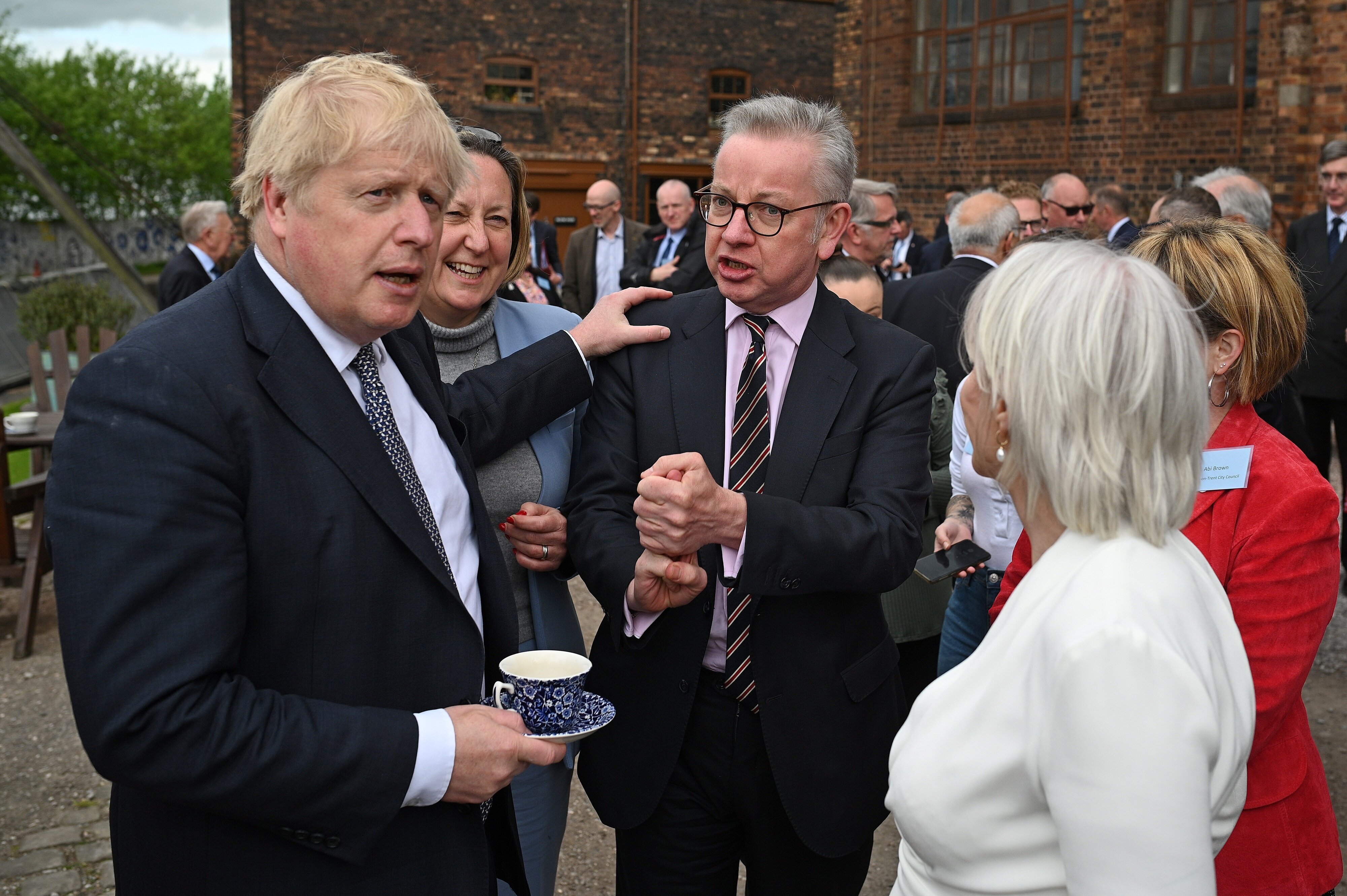
Boris Johnson is doing “a good job” as prime minister, according to Michael Gove – despite nearly 150 of his own MPs voting to get rid of him.

The levelling up secretary said he had “enthusiastically” voted for the prime minister in Monday night’s vote of confidence.

And he insisted he had “made a mistake” during the 2016 Tory leadership contest when he claimed Johnson did not have the necessary skills to lead the country.

Gove had initially been part of Johnson’s campaign team, but pulled out in order to run for the leadership himself.

He said at the time: “I came in the last few days, reluctantly and firmly, to the conclusion that while Boris has great attributes he was not capable of uniting that team and leading the party and the country in the way that I would have hoped.”

The PM survived an attempt to kick him out of Number 10 by his own parliamentary colleagues when he won Monday’s confidence vote by 211 to 148.

But the scale of the rebellion means he remains under huge pressure to turn around the Conservatives’ fortunes.

Asked on Sky News whether he had voted for the PM, Gove said: “Enthusiastically, yes.

“I made a mistake in 2016, a misjudgment. If you’ve been in politics for a little while, as I have been, then there are always mistakes that you can look back on.

“But, no, I think the prime minister is doing a good job.”

When asked whether he would run against Johnson again in a future leadership contest, Gove said: “Oh God, no.”

He added: “I can understand why some of my MP colleagues have concerns and I think it’s important that over the course of the next two years that we demonstrate that the Government is focused on delivering for the people across the United Kingdom.”
Share Button

Strictly Professional Karen Hauer Marries Partner Jordan Wyn-Jones In Intimate ‘Fairytale’ Wedding

Karen and Jordan tied the knot on Tuesday in an intimate “fairytale” ceremony attended by many of her fellow Strictly co-stars, including Janette Manrara and Luba Mushtuk.

Speaking to Hello! magazine about their big day, the Venezuelan-American dancer said: “It feels like a fairytale day. It felt so special to bring our families and friends together.

“I haven’t seen my family for the last two years so it’s really touching to bring them here and be able to share this amazing moment with them.”

The couple held their wedding at Chewton Glen in Hampshire.

Karen went public with her relationship with the Australian fitness expert in the summer of 2021.

She was previously married to fellow performer and her former dance partner Matthew Hauer, as well as Strictly Come Dancing champion Kevin Clifton.

Following her split from Kevin in 2018, Karen began dating opera singer David Webb, though they went their separate ways in 2020.

Karen is now Strictly’s longest-serving female professional, after joining the show in 2012.

In that time, she’s been partnered with celebrities including Westlife singer Nicky Byrne, reality stars Mark Wright and Jamie Laing, comedian Chris Ramsey and The Crown actor Greg Wise.

She was also paired with pop star Will Young, who stepped down from the show in 2016 as the BBC series was taking its toll on his mental health.

Earlier this year it was confirmed that Karen would be back on Strictly for her 11th series when the show returns to our screens in the autumn.

Share Button

Cost of living: Soaring bills damaging people’s health, say medics

Experts warn health inequalities will be widened by the surge in the cost of living.

Share Button

Smoking age should rise, government report to say

A review is expected to suggest a gradual increase as part of the drive to eradicate smoking by 2030.

Share Button

Study identifies receptor that could alleviate need for chemo, radiation pre-T cell therapy

Before a patient can undergo T cell therapy designed to target cancerous tumors, the patient’s entire immune system must be destroyed with chemotherapy or radiation. The toxic side effects are well known, including nausea, extreme fatigue and hair loss.

Now a research team, led by UCLA’s Anusha Kalbasi, MD, in collaboration with scientists from Stanford and the University of Pennsylvania, has shown that a synthetic IL-9 receptor allows those cancer-fighting T cells to do their work without the need for chemo or radiation. T cells engineered with the synthetic IL-9 receptor, designed in the laboratory of Christopher Garcia, PhD, at Stanford, were potent against tumors in mice, as published Wednesday in Nature.

“When T cells are signaling through the synthetic IL-9 receptor, they gain new functions that help them not only outcompete the existing immune system but also kill cancer cells more efficiently,” Kalbasi said. “I have a patient right now struggling through toxic chemotherapy just to wipe out his existing immune system so T cell therapy can have a fighting chance. But with this technology you might give T cell therapy without having to wipe out the immune system beforehand.”

Kalbasi, a researcher at the UCLA Jonsson Comprehensive Cancer Center and an assistant professor of radiation oncology at the David Geffen School of Medicine at UCLA, began the work while under the mentorship of Antoni Ribas, MD, PhD, a senior investigator on the study. The study was also led by Mikko Siurala, PhD, from the laboratory of Carl June, MD, at Penn, and Leon L. Su, PhD, of the Garcia Lab at Stanford.

“This finding opens a door for us to be able to give T cells a lot like we give a blood transfusion,” Ribas said.

Ribas and Garcia collaborated on a paper published in 2018 that focused on the concept that a synthetic version of interleukin-2 (IL-2), a critical T cell growth cytokine, could be used to stimulate T cells engineered with a matching synthetic receptor for the synthetic IL-2. With this system, T cells can be manipulated even after they have been given to a patient, by treating the patient with the synthetic cytokine (which has no effect on other cells in the body). Intrigued by that work, Kalbasi and colleagues were interested in testing modified versions of the synthetic receptor that transmit other cytokine signals from the common-gamma chain family: IL-4, -7, -9 and -21.

“It was clear early on that, among the synthetic common-gamma chain signals, the IL-9 signal was worth investigating,” Kalbasi said, adding that unlike other common-gamma chain cytokines, IL-9 signaling is not typically active in naturally occurring T cells. The synthetic IL-9 signal made T cells take on a unique mix of both stem-cell and killer-like qualities that made them more robust in fighting tumors. “In one of our cancer models, we cured over half the mice that were treated with the synthetic IL-9 receptor T cells.”

Kalbasi said the therapy proved to be effective in multiple systems. They targeted two types of hard-to-treat cancer models in mice — pancreatic cancer and melanoma — and used T cells targeted to cancer cells through the natural T cell receptor or a chimeric antigen receptor (CAR). “The therapy also worked whether we gave the cytokine to the whole mouse or directly to the tumor. In all cases, T cells engineered with synthetic IL-9 receptor signaling were superior and helped us cure some tumors in mice when we couldn’t do it otherwise.”

Share Button

Social isolation is directly associated with later dementia

Social isolation is directly linked with changes in the brain structures associated with memory, making it a clear risk factor for dementia, scientists have found.

Setting out to investigate how social isolation and loneliness were related to later dementia, researchers at the University of Warwick, University of Cambridge and Fudan University used neuroimaging data from more than 30,000 participants in the UK Biobank data set. Socially isolated individuals were found to have lower gray matter volumes of brain regions involved in memory and learning.

The results of the study are published online today (June 8, 2022) in Neurology, the medical journal of the American Academy of Neurology, in a paper entitled “Associations of social isolation and loneliness with later dementia” by Shen, Rolls, Cheng, Kang, Dong, Xie, Zhao, Sahakian and Feng.

Based on data from the UK Biobank, an extremely large longitudinal cohort, the researchers used modelling techniques to investigate the relative associations of social isolation and loneliness with incident all-cause dementia. After adjusting for various risk factors (including socio-economic factors, chronic illness, lifestyle, depression and APOE genotype), socially isolated individuals were shown to have a 26% increased likelihood of developing dementia.

Loneliness was also associated with later dementia, but that association was not significant after adjusting for depression, which explained 75% of the relationship between loneliness and dementia. Therefore, relative to the subjective feeling of loneliness, objective social isolation is an independent risk factor for later dementia. Further subgroup analysis showed that the effect was prominent in those over 60 years old.

Professor Edmund Rolls, neuroscientist from the University of Warwick Department of Computer Science, said: “There is a difference between social isolation, which is an objective state of low social connections, and loneliness, which is subjectively perceived social isolation.

“Both have risks to health but, using the extensive multi-modal data set from the UK Biobank, and working in a multidisciplinary way linking computational sciences and neuroscience, we have been able to show that it is social isolation, rather than the feeling of loneliness, which is an independent risk factor for later dementia. This means it can be used as a predictor or biomarker for dementia in the UK.

“With the growing prevalence of social isolation and loneliness over the past decades, this has been a serious yet underappreciated public health problem. Now, in the shadow of the COVID-19 pandemic there are implications for social relationship interventions and care — particularly in the older population.”

Professor Jianfeng Feng, from the University of Warwick Department of Computer Science, said: “We highlight the importance of an environmental method of reducing risk of dementia in older adults through ensuring that they are not socially isolated. During any future pandemic lockdowns, it is important that individuals, especially older adults, do not experience social isolation.”

Professor Barbara J Sahakian, of the University of Cambridge Department of Psychiatry, said: “Now that we know the risk to brain health and dementia of social isolation, it is important that the government and communities take action to ensure that older individuals have communication and interactions with others on a regular basis.”

Share Button

High optimism linked with longer life and living past 90 in women across racial, ethnic groups

Higher levels of optimism were associated with longer lifespan and living beyond age 90 in women across racial and ethnic groups in a study led by researchers at Harvard T.H. Chan School of Public Health.

“Although optimism itself may be affected by social structural factors, such as race and ethnicity, our research suggests that the benefits of optimism may hold across diverse groups,” said Hayami Koga, a PhD candidate in the Department of Social and Behavioral Sciences at Harvard Chan School and lead author of the study. “A lot of previous work has focused on deficits or risk factors that increase the risks for diseases and premature death. Our findings suggest that there’s value to focusing on positive psychological factors, like optimism, as possible new ways of promoting longevity and healthy aging across diverse groups.”

The study will be published online on June 8, 2022, in the Journal of the American Geriatrics Society.

In a previous study, the research group determined that optimism was linked to a longer lifespan and exceptional longevity, which was defined as living beyond 85 years of age. Because they had looked at mostly white populations in that previous study, Koga and her colleagues broadened the participant pool in the current study to include women from across racial and ethnic groups. According to Koga, including diverse populations in research is important to public health because these groups have higher mortality rates than white populations, and there is limited research about them to help inform health policy decisions.

For this study, the researchers analyzed data and survey responses from 159,255 participants in the Women’s Health Initiative, which included postmenopausal women in the U.S. The women enrolled at ages 50-79 from 1993 to 1998 and were followed for up to 26 years.

Of the participants, the 25% who were the most optimistic were likely to have a 5.4% longer lifespan and a 10% greater likelihood of living beyond 90 years than the 25% who were the least optimistic. The researchers also found no interaction between optimism and any categories of race and ethnicity, and these trends held true after taking into account demographics, chronic conditions, and depression. Lifestyle factors, such as regular exercise and healthy eating, accounted for less than a quarter of the optimism-lifespan association, indicating that other factors may be at play.

Koga said that the study’s results could reframe how people view the decisions that affect their health.

“We tend to focus on the negative risk factors that affect our health,” said Koga. “It is also important to think about the positive resources such as optimism that may be beneficial to our health, especially if we see that these benefits are seen across racial and ethnic groups.”

This research was supported by the National Institutes of Health (R01AG053273, K08048221). The Women’s Health Initiative is funded by the National Heart, Lung, and Blood Institute of the National Institutes of Health, and the Department of Health and Human Services.

Story Source:

Materials provided by Harvard T.H. Chan School of Public Health. Note: Content may be edited for style and length.

Share Button

Mum, 29, with inoperable brain tumour in plea for research

Laura Mahon, 29, gave birth at 30 weeks after being told she had an inoperable brain tumour.

Share Button

Princess Alexandra Hospital A&E patients warned of 13-hour wait

The health secretary says a video of a nurse warning of delays is “not what anyone wants to see”.

Share Button

Michael Owen Cringes As Fellow Football Pundits Bring Up Love Island During Match Coverage

Michael Owen was left a little red-faced on Tuesday night when his fellow pundits couldn’t resist mentioning a certain reality show during their coverage of the England match.

The footballer’s 19-year-old daughter Gemma is currently appearing on Love Island, which Channel 4 football presenter Jules Breach referenced at the beginning of the show.

She told viewers: “Joining me hoping to see another famous England victory in Munich are England and Arsenal midfielder Jordan Nobbs, former England, West Ham and Chelsea midfielder Joe Cole and the father of Love Island’s Gemma Owen, Michael Owen, here with us.”

As Michael hid his head in his hands, she continued: “A big night for the Owens last night, Michael. How are you feeling?”

He joked: “I came all the way to Germany to try to avoid all that back at home, and you brought it up straight away. I’m feeling alright, thank you.”

Gemma Owen is currently at the centre of the action on Love Island

ITV/Shutterstock

Michael quickly added: “This has taken my mind off it, so don’t bring it back up. ”

Tuesday night’s instalment of Love Island saw Gemma coupling up with newbie Davide, after the public previously paired her with student Liam.

Prior to entering the villa, the horse-lover admitted her dad wasn’t exactly “buzzing” at the prospect of her signing up for Love Island, but he did give her his blessing.

Gemma in the villa
Gemma in the villa

ITV/Shutterstock

Gemma said: “He is very supportive in whatever I decide to do so he didn’t have a massive tantrum or anything like that. He was pretty chilled.

“He said, ‘You know how to behave. You just go and do it’. My mum’s bit of advice was, ‘Gem, remember to keep it classy’.”

Love Island continues at 9pm on ITV2.

Share Button