Love Island Introduces First Two Bombshells Ekin-Su And Afia

We might only be two days into this year’s series of Love Island, but producers are already getting ready to shake things up.

At the end of Tuesday night’s instalment, during which Liam was left standing alone when newcomer Davide coupled up with Gemma, the show teased the first of this year’s Bombshell arrivals.

The first of these is 25-year-old Afia Tonkmor, a lounge host at a private members club from London.

Admitting she’s fallen in love “too quickly” in the past, Afia has said Love Island “seems like a once in a lifetime opportunity to meet someone… and have an amazing summer”

“[I want to] just have so much fun and have a bit of a summer romance as well,” she added.

Afia is one of two new arrivals in the villa

Elisabeth Hoff/ITV

Joining her in the villa will be fellow newbie Ekin-Su Cülcüloğlu, a 27-year-old actor from Essex.

Ekin-Su has admitted she’s “quite picky”, insisting she’s “not just looking for looks – I’m looking for brains!”.

“I’m looking for someone with intelligence, someone who can have good chats,” she said prior to her arrival in the “Nothing like cockiness! I’m looking for a serious man and a serious relationship.”

She added: “I’m looking for that real genuine spark and they just see me as me. I think the concept of the show brings back true and raw feelings.”

Ekin-Su

The first 11 Islanders were introduced to fans in Monday night’s launch show, which was watched by an average of 2.4 million viewers, holding steady on the previous series’ viewing figures.

Love Island continues on Wednesday night at 9pm on ITV2.

Share Button

Kylie Minogue Reflects On Infamous Kylie Jenner Lawsuit: ‘It Just Had To Be Done’

Kylie Minogue has reflected on the infamous lawsuit she became embroiled in when Kylie Jenner attempted to trademark their shared first name.

It was reported back in 2016 that the singer had taken issue with the reality star’s plans to trademark the name “Kylie” and become a mononym in the style of Madonna, Cher and Prince on the make-up kits she had become popular for around that time.

The Australian star eventually emerged triumphant in the legal battle, during which the other Kylie was notoriously referred to in court papers as a “secondary reality TV personality”, compared to Ms Minogue, the “internationally-renowned performing artist, humanitarian and breast cancer activist”.

During an appearance on Watch What Happens Live on Tuesday night, the 54-year-old was asked about the lawsuit by a caller.

“When I was named Kylie, I think I met one person older than me called Kylie,” she explained, saying the name was “kind of unusual”.

Kylie Jenner
Kylie Jenner

Mindy Small via Getty Images

Kylie added: “I’ve spent a lifetime protecting my brand and building my brand so it was just something that had to be done.”

“Yes it was,” agreed Andy Cohen, with Kylie adding: “But let me also say we came to an agreement.”

The host then questioned whether Kylie had been forced to have any contact with Kris Jenner (the other Kylie’s “momager”) over the matter, to which she insisted: “No, but I’d love to meet them.”

Kylie at the launch of ABBA Voyage last month

Dave J Hogan via Getty Images

In 2018, Kylie admitted she was “upset” that the “secondary reality TV personality” quote had been falsely attributed to her in the press.

“Can you imagine me saying that?” she said at the time. “That was just unfortunate that that is how those lawyers speak.

“So I genuinely hope that it’s understood: That certainly did not come from me.”

Share Button

Sajid Javid pledges NHS leadership changes after review finds bullying

Health Secretary Sajid Javid says the findings are “stark” ahead of the report’s publication later.

Share Button

Community pharmacists speak out against rise in abuse and attacks

Staff say physical and verbal abuse is unacceptably common, and many now feel unsafe at work.

Share Button

Immune protein may drive alcoholism relapse

The anxiety that occurs during withdrawal from excessive alcohol use, and contributes to relapse, may be driven in part by the release of an immune protein in the brain, according to a new study from scientists at Scripps Research.

The discovery, reported online June 6, 2022, in Molecular Psychiatry, illuminates the molecular details of the brain’s response to alcohol withdrawal, and suggests that the immune protein, colony stimulating factor 1 (CSF1), could be a target of future treatments for alcohol use disorder (AUD).

“Alcohol withdrawal activates the stress system in the brain, which contributes to relapse, and in this study, we linked this stress response to CSF1, a neuroimmune mediator, opening up new opportunities for therapeutic intervention,” says study senior author Marisa Roberto, PhD, professor and Schimmel Family Chair in the Department of Molecular Medicine at Scripps Research.

The study’s first author, who performed many of the experiments, is Reesha R. Patel, PhD, a former postdoctoral researcher in the Roberto lab.

Alcohol is by far the most used and abused recreational drug. According to the 2019 National Survey on Drug Use and Health, nine million men and more than five million women in the United States have an alcohol use disorder (AUD), which is defined as an inability to control alcohol use despite its negative impact on the user’s health, social life and/or employment. Drug treatments, talk-therapy and support group-based treatments are available, but relapse is common, mainly due to the limited understanding of the brain-circuit dysfunctions underlying AUD.

Scientists know that relapse-promoting alcohol withdrawal symptoms include rising feelings of anxiety, caused at least in part by the release of stress molecules such as corticotropin-releasing factor (CRF) within the brain. CRF stimulates receptors on neurons in the prefrontal cortex, and in the limbic system, a set of more primitive brain structures that process emotions. If scientists could fully identify and characterize these CRF-sensitive neuronal populations, they could understand better how anxiety occurs during withdrawal and potentially devise effective treatments to block it.

Toward that end, Roberto and her team, in the new study, identified a population of neurons in the medial prefrontal cortex (mPFC) of mice that are sensitive to CRF because they express a CRF receptor called CRF1. The scientists showed that these neurons are involved in altering mood and behavior during alcohol exposure and withdrawal.

The team’s initial experiments revealed that deletion of these CRF-sensitive neurons makes the mice less anxious, suggesting that the neurons normally mediate anxiety-like behaviors.

The researchers subsequently found that these CRF-sensitive mPFC neurons become less excitable — less likely to fire signals to other neurons when stimulated — in alcohol-dependent mice that experience alcohol withdrawal. In contrast, nearby mPFC neurons lacking CRF receptors become more excitable.

“These CRF-sensitive mPFC neurons appear to constitute a unique neuronal population that undergoes profound neuroadaptations with chronic alcohol exposure,” says study co-author Pauravi Gandhi, PhD, a postdoctoral research associate in the Roberto lab.

Intriguingly, the researchers found that alcohol withdrawal, even as it dialed down the excitability of the CRF-sensitive neurons, also induced large increases in CSF1 gene expression within these neurons. CSF1 is an immune protein best known for its role in stimulating stem cells to mature into large white blood cells called macrophages. In the brain, CSF1 is thought to have a similar role in sustaining brain-resident immune cells called microglia. Moreover, prior research in mice has suggested that under conditions of chronic stress, CSF1 production rises in the mPFC, driving microglia to prune connections between neurons, which in turn causes signs of anxiety and depression.

Looking more closely at CSF1’s role in alcohol withdrawal, Roberto and colleagues artificially increased CSF1 production in CRF-sensitive mPFC neurons in mice, and observed that the animals exhibited many of the same neuronal and behavioral changes seen in alcohol withdrawal — suggesting that elevated CSF1 levels in mPFC may be a key driver of alcohol-withdrawal signs and symptoms.

“Targeting CSF1 therefore may be a good strategy for treating AUD, and we’re now eager to test that in our preclinical models,” Patel says.

Share Button

Sponge-like solar cells could be basis for better pacemakers

Holes help make sponges and English muffins useful (and, in the case of the latter, delicious). Without holes, they wouldn’t be flexible enough to bend into small crevices, or to sop up the perfect amount of jam and butter.

In a new study, University of Chicago scientists find that holes can also improve technology, including medical devices. Published in Nature Materials, the paper describes an entirely new way to make a solar cell: by etching holes in the top layer to make it porous. The innovation could form the basis for a less-invasive pacemaker, or similar medical devices. It could be paired with a small light source to reduce the size of the bulky batteries that are currently implanted along with today’s pacemakers.

“We hope this opens many possibilities for further improvements in this field,” said Aleksander Prominski, the first author on the paper.

Light work

Prominski is a member of the lab of University of Chicago chemist Bozhi Tian, which specializes in creating ways to connect biological tissue and artificial materials — such as wires to modulate brain signals and surfaces for medical implants.

One of the areas they’re interested in is making devices that can be powered by light. We’re most familiar with this technology in the form of solar cells, but they can also use any light source, including artificial ones. When operating in the body, such devices are known as photoelectrochemical cells and can be powered from a tiny optical fiber implanted in the body.

Normally, solar cells require two layers, which can be achieved either by combining the silicon with another material such as gold, or by mixing different kinds of atoms into each silicon layer.

But UChicago scientists in the Tian lab found they could create a solar cell out of pure silicon if they made one layer porous, like a sponge.

The resulting soft, flexible cell can be less than five microns across, which is about the size of a single red blood cell. It can then be paired with an optical fiber, which can be made as thin as a strand of human hair — significantly reducing the overall size of an implant, making it more body-friendly and less likely to cause side effects.

The porous cell has multiple advantages over the ways to manufacture traditional solar cells, streamlining the production process while maintaining the efficacy of the final product.

“You can make them in a matter of minutes, and the process doesn’t require high temperatures or toxic gases,” said Prominski.

Added study co-author Jiuyun Shi: “When we measured them, we saw the photocurrent was really high — two orders of magnitude higher than our previous designs.”

Then, to boost the material’s ability to stimulate heart or nerve cells, they treat it with oxygen plasma to oxidize the surface layer. This step is counterintuitive for chemists, because silicon oxide most often works as an insulator, and “you don’t want the photoelectrochemical effect to be impeded by any insulating materials,” said Tian. In this case, however, oxidization actually helps by making the silicon material hydrophilic — attracted to water — which boosts the signal to biological tissues. “Finally, by adding a few-atoms-thick layer of metal oxide, you can further enhance the device properties,” said Pengju Li, another study co-author.

Because all of the components can be made to be biodegradable, the scientists can imagine the technology being used for short-term cardiac procedures. Instead of a second surgery for removal, the parts would degrade naturally after a few months. The innovative approach might also be particularly useful for a procedure called cardiac resynchronization therapy which seeks to correct arrhythmias where the right and left chambers of the heart do not beat in time, because the devices could be placed in multiple areas of the heart to improve coverage.

Prominski is also excited about possible applications for nerve stimulation. “You could imagine implanting such devices in people who have chronic nerve degeneration in the wrists or hands, for example, in order to provide pain relief,” he said.

This novel way of making solar cells could also be of interest for sustainable energy or other non-medical applications. Because these solar cells are designed to work best in a liquid environment, UChicago scientists think they could be used in applications such as artificial leaves and solar fuels.

Tian’s team is working with cardiac researchers at the University of Chicago Medicine to further develop the technology for eventual use in humans. They are also collaborating with the UChicago Polsky Center for Entrepreneurship and Innovation to commercialize the discovery.

Jiping Yue, Yiliang Lin, Jihun Park, and Menahem Rotenberg were also co-authors on the study.

The research used the resources of the Pritzker Nanofabrication Facility at the Pritzker School of Molecular Engineering; the Illinois Innovation Network; the Northwestern University Atomic and Nanoscale Characterization Experimental Center and Northwestern Materials Research Science and Engineering Center; and the University of Chicago Materials Research Science and Engineering Center.

Share Button

Lab earthquakes show how grains at fault boundaries lead to major quakes

By simulating earthquakes in a lab, Caltech engineers have provided strong experimental support for a form of earthquake propagation now thought responsible for the magnitude-9.0 earthquake that devastated the coast of Japan in 2011.

Along some fault lines, which are the boundaries of tectonic plates, a fine-grained gravel is formed as the plates grind against one another. The influence of this gravel on earthquakes has long been the subject of scientific speculation. In a new paper appearing in the journal Nature on June 1, the Caltech researchers show that the fine gravel, known as rock gouge, first halts earthquake propagation, but then triggers the rebirth of earthquakes to generate powerful ruptures.

“Our novel experimental approach has enabled us to look into the earthquake process up close, and to uncover key features of rupture propagation and friction evolution in rock gouge,” says Vito Rubino, research scientist and lead author of the Nature paper. “One of the main findings of our study is that fault sections previously thought to act as barriers against dynamic rupture may in fact host earthquakes, as a result of the activation of co-seismic friction weakening mechanisms.”

In the paper, Rubino and his co-authors Nadia Lapusta, the Lawrence A. Hanson, Jr., Professor of Mechanical Engineering and Geophysics, and Ares Rosakis, Theodore von Kármán Professor of Aeronautics and Mechanical Engineering, show that so-called “stable” or “creeping” faults are not actually immune to major ruptures after all, as previously suspected. Such faults occur when tectonic plates slide past one another slowly, without generating big quakes (for example, the currently creeping section of the San Andreas Fault in central California).

Instead, rock gouge has a complex behavior. It first acts as a barrier to the rupture, absorbing energy and blocking its progress. But, when the plates slide past each other with high enough velocity, the rock gouge interface weakens and dramatically reduces friction between the two plates, causing the re-emergence of the quake. This process is known as “renucleation.”

“Based on the previous rich body of rock-friction experiments, we know that rock gouge can either strengthen with fault slip and act as a barrier, or weaken and promote earthquake rupture,” Lapusta says. “However, these behaviors are typically considered to be separated in space, with weakening and strengthening occurring on different fault locations. Our experiments show how these behaviors can combine on the same fault locations during the same slip event, over the timescales of dynamic rupture, leading to intermittent slip and potentially turning a fault barrier into an earthquake-prone region.”

The Nature study explores the role and reaction of rock gouge, a micrometer-sized granular material, to seismic activity. To simulate the effect of rock gouge on an earthquake’s propagation, the team used Caltech’s so-called seismological wind tunnel, founded by Rosakis and former Caltech Seismological Laboratory director Hiroo Kanamori, John E. and Hazel S. Smits Professor of Geophysics, Emeritus. The facility, in existence since 1999, allows engineers and scientists to study major earthquakes on a miniature scale.

To simulate an earthquake, the team first cut in half a transparent meter-sized block of a type of plastic known as Homalite. The bulk properties of Homalite enable dynamic rupture nucleation within samples as small as tens of centimeters in diameter; studying these effects in rock would require samples that are tens of meters in size.

The researchers then placed the two halves of the Homalite together under high pressure and shear (a situation in which the two halves want to slide against one another in opposite directions), simulating tectonic pressure that slowly builds up along a fault line. Between the pieces, fine-grained quartz powder was embedded as a stand-in for fault gouge. Next, the team put a small wire fuse between the two halves; its location was the “epicenter” of the earthquake they planned to simulate. As the simulated quake progressed, high-speed imaging technology was used to record its evolution, one millionth of a second at a time.

“Back in the late 1990s, when we were designing the ‘seismological wind tunnel,’ we could never have imagined its success in discovering such a rich spectrum of physical phenomena relating to frictional earthquake source processes and that such phenomena could rigorously be scaled to explain natural earthquake behavior occurring at massively different length scale around the globe,” Rosakis says. “This is a testament of the tremendous power of the discipline of mechanics.”

Next, the team plans to study the effects of fluids, which are naturally present in Earth’s crust, on the frictional behavior of rock gouge.

The Nature paper is titled “Intermittent lab earthquakes in dynamically weakening fault gouge.” This research was funded by the National Science Foundation (NSF), the U.S. Geological Survey, the NSF-IUCRC program at Caltech’s Center for Geomechanics and Mitigation of Geohazards (GMG), and the Southern California Earthquake Center (SCEC).

Share Button

Law makes monkeypox a notifiable disease in England

Doctors will be required to notify their local council or health protection team about suspected cases.

Share Button

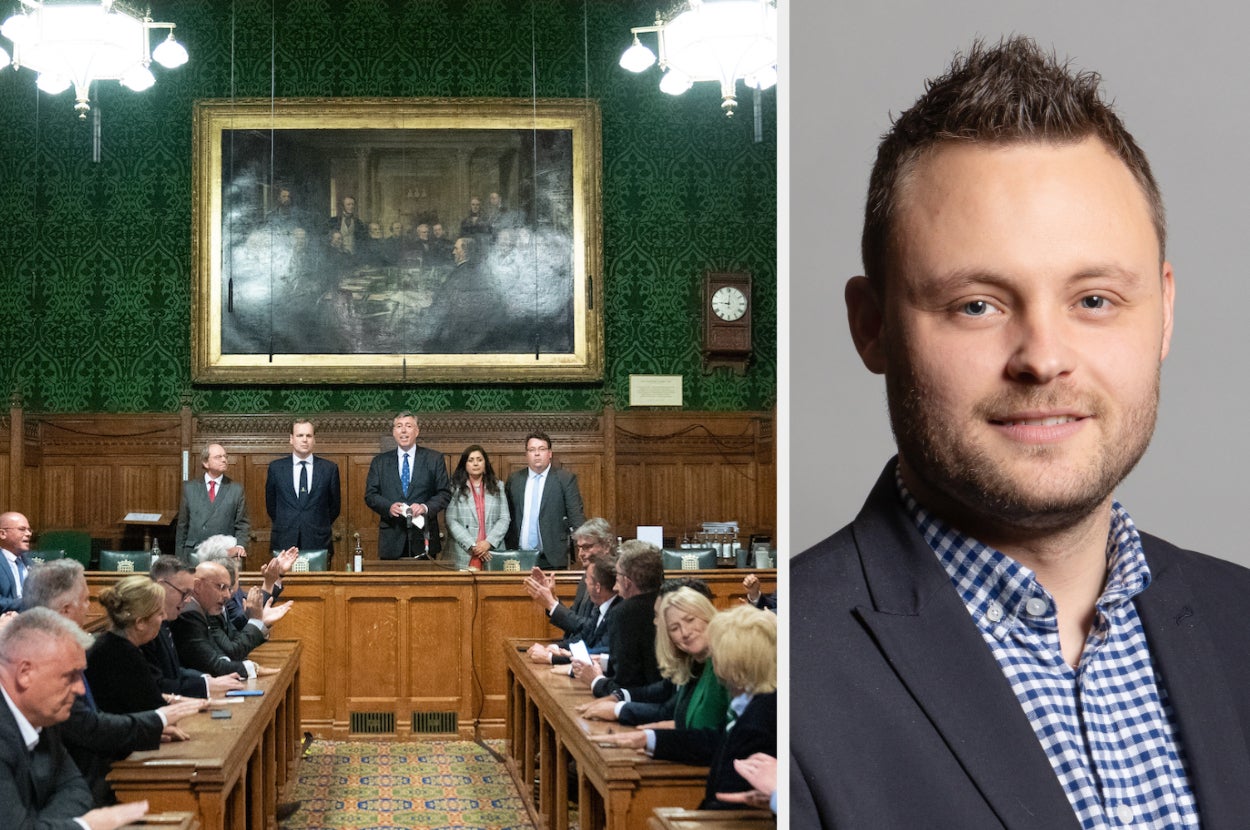
It’s Inevitable Some Ministers Secretly Voted Against Boris Johnson, Tory MP Says

A Tory MP today admitted it was “inevitable” that some ministers voted against Boris Johnson in last night’s confidence vote.

Ben Bradley, Conservative MP for Mansfield, said the result suggested some MPs on the government payroll voted to oust the prime minister.

The PM won a confidence vote in his leadership by 211 to 148 but it means more than 40 per cent of his MPs want him gone.

Bradley, who backs the PM, said Johnson knew he never had the “unanimous support” of Tory MPs because that is the nature of broad church political parties.

When it was put to him that 75 per cent of Tory backbenchers did not vote for the PM, Bradley told Sky News: “That’s guesswork really, it’s impossible to know who – payroll or non-payroll – voted in which particular way.”

Asked if he thought some ministers or cabinet members would have voted to get rid of the prime minister, he replied: “I think when you look at the numbers, that’s inevitable, in reality.

“But obviously it’s a secret ballot and we’ll probably never know the exact kind of divide there.”

Badly wounded, Johnson used a cabinet meeting on Tuesday morning to insist the government was getting “on with the job”.

Allies have rallied round him, but former Tory leader Lord Hague said “the damage done to his premiership is severe” and he should quit rather than prolong the agony.

The scale of the opposition was greater than that seen in 2018 when Theresa May faced a confidence vote. She was ultimately forced out within months.

Johnson faces further tests with tricky by-elections on June 23 in Wakefield, West Yorkshire, and Tiverton and Honiton in Devon.

Labour will try to heap further pressure on Johnson by asking MPs to vote on Tuesday to adopt a package of recommendations put forward by a sleaze watchdog aimed at improving standards in Westminster.

Meanwhile, the Lib Dems are pushing for a Commons confidence vote in the PM as a whole after Johnson survived the Tory process, although there is no date fixed for the move and it is unlikely to be successful.

Share Button

Boris Johnson Survives Vote Of No Confidence. What Next?

Boris Johnson’s authority appears to be hugely damaged after 41% of Conservative MPs voted against continuing his leadership on Monday night.

While this means the prime minister did secure just enough votes to stay on in No.10, as 211 Tories claimed they still had confidence in him compared to 148 who did not, the blow to his reputation could be unrecoverable at this stage.

So what next for Johnson? Having repeatedly defied the odds in the past, pundits believe he’s unlikely to step down now.

Despite the exceptionally narrow win, he hailed the result as “decisive” and said it allowed the government to “move on” – although that is improbable, too.

Here’s a breakdown of what could follow as the Tory turmoil rumbles on.

Another vote

The current party rules don’t allow for more than one effort to oust a leader in the space of 12 months.

When Tory MPs botched an attempt to get rid of Theresa May in December 2018, they ultimately had to wait until she quit June 2019.

However, the rules can be changed at the stroke of a pen by the 1922 committee – and there have been two recent, if unsuccessful, attempts to give Tory MPs another shot sooner.

In April 2019, MPs demanded the party cuts the one-year rule to six months, and a similar attempt in January – as confidence in Johnson was draining – was also thwarted. Under the plans the threshold for triggering a second ballot would have doubled.

Speaking to reporters on Monday, leader of the 1922 committee Sir Graham Brady did admit that it was “technically” possible for the one-year grace period rule to be altered.

Government reshuffle

Johnson could attempt to reassert himself by rewarding his loyal allies with new jobs and punishing those suspected of voting against him.

A No.10 source hinted that this could be an option when speaking to POLITICO’s Playbook, but admitted: “We haven’t had that conversation yet.”

Further reports even suggest MPs who were on the fence were promised roles in government to seal the deal, and that a rejig could come within a matter of days with the less enthusiastic ministers being cut out.

Alternatively, ministers who no longer back Johnson could choose to get out of the job themselves by resigning, especially as the chorus of top Tories – such as former Conservative leader William Hague – wanting the PM out is only getting louder.

Leader of the Lib Dems Sir Ed Davey even called for Tory MPs who “care about integrity and decency” to resign the whip and sit as an independent, although no-one in the Tory ranks has hinted at doing such just yet.

By-elections

The next date for the diary is June 23, which will see two by-elections on the same day. Wakefield in Yorkshire and Tiverton and Honiton in Devon. Both are currently held by the Conservatives, but the party risks losing Tiverton to the Lib Dems and Wakefield to Labour.

A loss in Wakefield would not be ideal given its position in the red wall, but it is probably expected. However, losing Tiverton, which has a Tory majority of 24,239, to the Lib Dems, could scare a critical mass of Conservative MPs into acting against the PM.

Double trouble on June 23 – and a sense from the electorate that the next general would be disastrous for the Tories – could be the trigger for Cabinet ministers to move. This is what did for Thatcher when “big beast” Michael Heseltine launched another leadership challenge in November 1990.

It’s worth remembering that the disastrous May local elections were not enough to shake Johnson from his post, even though the Tories lost around 500 council seats in total.

Parliamentary inquiry

Let’s not forget partygate is not “over”.

MPs on the Commons privileges committee are still investigating whether Johnson misled parliament during his explanations of rule-breaking parties during lockdown.

Despite defying calls to quit after the Sue Gray report and denying that he misled the Commons, if the committee finds him in contempt of parliament, it could recommend he is forced to apologise, suspended from the Commons, or even expelled. Any sanction would need to be approved in a vote by all MPs.

But Johnson has changed the rules so ministers will not automatically lose their jobs if they breach the ministerial code, including himself.

A refreshed government policy statement – published just two days after the Gray report – said it was “disproportionate” to expect ministers to resign or face the sack for “minor” violations of the code’s provisions.

An early general election

A snap vote is unlikely, but still an option if Johnson feels he can get a fresh mandate from the country. It may his last roll of the dice if Tory pressure builds and senior ministers start to call for him to go.

The next general election does not have to happen until January 2025.

Johnson insisted in the immediate aftermath of the vote that he is “certainly not interested in snap elections”, and pushed instead for the government to “move on”.

But bizarrely, the prime minister also claimed that he now had “a far bigger mandate from my own parliamentary colleagues than I had in 2019”.

The snap general election he called two and a half years ago to consolidate his new position in No.10 saw 365 Tories elected.

This was a landslide majority – and a far cry from the 211 MPs (59% of the total parliamentary party) who voted in favour of keeping him in Downing Street on Monday.

Share Button