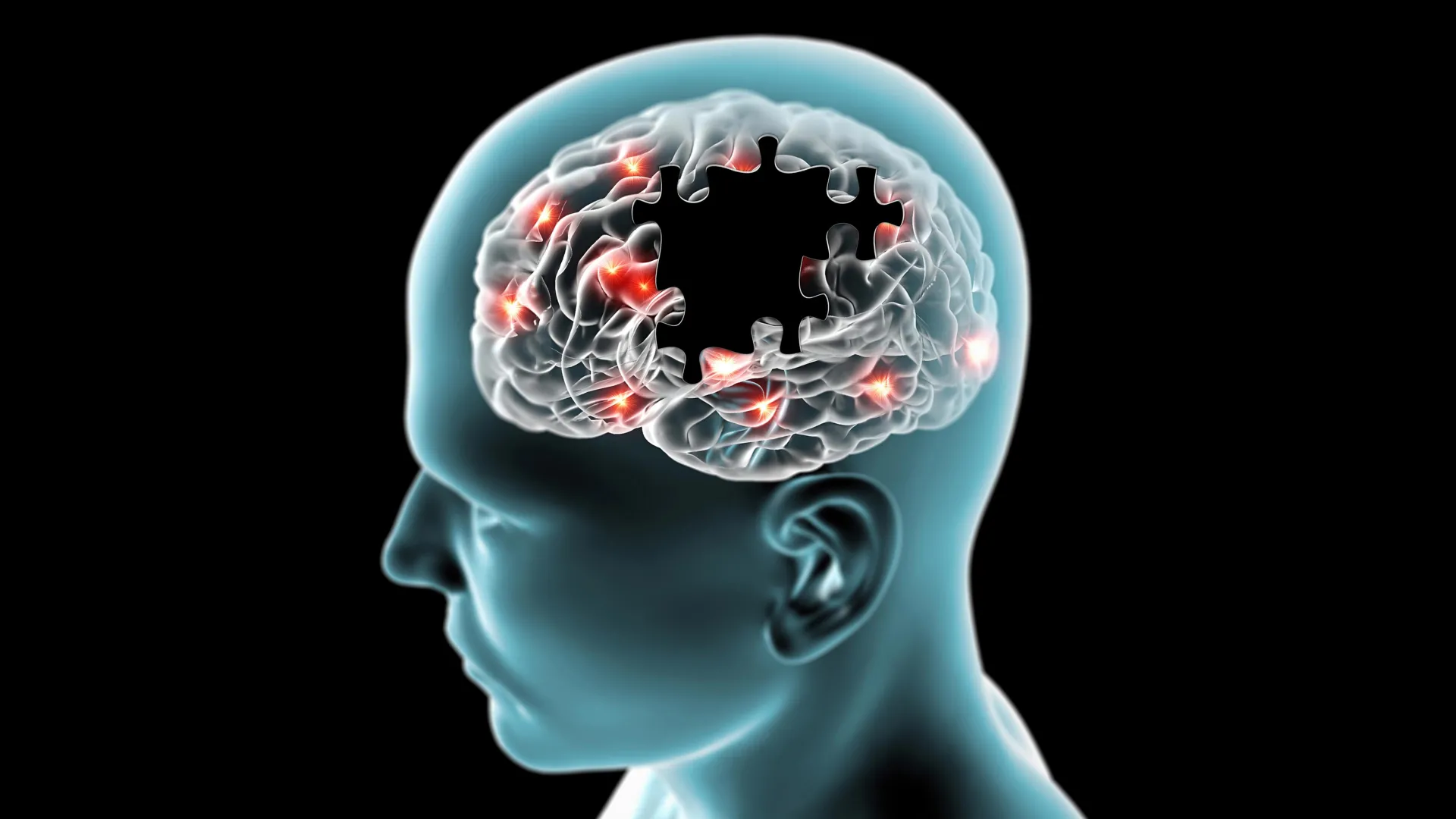
Scientists identify hidden protein interaction driving Parkinson’s disease

About 1 million people in the United States are living with Parkinson’s disease, and nearly 90,000 new cases are diagnosed each year, according to the Parkinson’s Foundation. The condition is a long-term, progressive brain disorder that gradually destroys dopamine-producing nerve cells, which are critical for controlled, fluid movement.

Most available treatments focus on easing symptoms, but their benefits often fade over time. Now, researchers at Case Western Reserve University have identified a specific biological pathway that contributes to the underlying damage caused by the disease.

A Harmful Protein Chain Reaction

The study, recently published in Molecular Neurodegeneration, explains how the buildup of toxic proteins inside brain cells leads to the death of neurons responsible for movement, a hallmark of Parkinson’s disease.

“We’ve uncovered a harmful interaction between proteins that damages the brain’s cellular powerhouses, called mitochondria,” said Xin Qi, the study’s senior author and Jeanette M. and Joseph S. Silber Professor of Brain Sciences at the Case Western Reserve School of Medicine. “More importantly, we’ve developed a targeted approach that can block this interaction and restore healthy brain cell function.”

After three years of investigation, the team discovered that alpha-synuclein, a protein known to accumulate in Parkinson’s disease, abnormally binds to an enzyme called ClpP. This enzyme normally helps maintain cellular health, but the interaction disrupts its function.

Damage to the Brain’s Energy Supply

When alpha-synuclein interferes with ClpP, mitochondria begin to fail. These structures act as the cell’s energy generators, and their impairment triggers widespread neurodegeneration and brain cell loss. Experiments across several research models also showed that this molecular interaction speeds up the progression of Parkinson’s disease.

To counter this process, the researchers developed a treatment known as CS2. The compound is designed to block the damaging protein interaction and help mitochondria recover their normal function. CS2 acts as a decoy, drawing alpha-synuclein away from ClpP and preventing it from harming the cell’s energy systems.

In multiple study models, including human brain tissue, patient-derived neurons and mice models, CS2 reduced brain inflammation and led to improvements in movement and cognitive performance.

Targeting the Disease, Not Just Symptoms

“This represents a fundamentally new approach to treating Parkinson’s disease,” said Di Hu, a research scientist in the School of Medicine’s Department of Physiology and Biophysics. “Instead of just treating the symptoms, we’re targeting one of the root causes of the disease itself.”

The breakthrough builds on Case Western Reserve’s strengths in mitochondrial biology and neurodegenerative disease research, along with its collaborative environment and advanced experimental models. These resources helped translate basic biological insights into a potential therapeutic strategy.

Next Steps Toward Clinical Use

Over the next five years, the team aims to move the discovery closer to human clinical trials. Planned efforts include refining the drug for use in people, expanding safety and effectiveness testing, identifying key molecular biomarkers tied to disease progression, and advancing toward patient-focused treatments.

“One day,” Qi said, “we hope to develop mitochondria-targeted therapies that will enable people to regain normal function and quality of life, transforming Parkinson’s from a crippling, progressive condition into a manageable or resolved one.”

Share Button

Doctor accused of sex assaults on 38 patients

The charges relate to alleged offences against patients, including children, in the West Midlands.

Share Button

Scientists solve a major roadblock holding back cancer cell therapy

For the first time, researchers at the University of British Columbia have shown how to consistently produce a crucial type of human immune cell, known as helper T cells, from stem cells in a controlled lab setting.

The research, published on January 7 in Cell Stem Cell, removes a major barrier that has slowed the development, affordability, and large-scale production of cell therapies. By solving this problem, the work could help make off-the-shelf treatments more accessible and effective for conditions such as cancer, infectious diseases, autoimmune disorders, and more.

“Engineered cell therapies are transforming modern medicine,” said co-senior author Dr. Peter Zandstra, professor and director of the UBC School of Biomedical Engineering. “This study addresses one of the biggest challenges in making these lifesaving treatments accessible to more people, showing for the first time a reliable and scalable way to grow multiple immune cell types.”

The Promise and Limits of Living Drugs

Over the past several years, engineered cell therapies such as CAR-T treatments have produced dramatic, sometimes lifesaving results for people with cancers that were once considered untreatable. These therapies work by reprogramming a patient’s immune cells to recognize and destroy disease, effectively turning those cells into ‘living drugs’.

Even with their success, cell therapies remain costly, complex to manufacture, and out of reach for many patients around the world. One key reason is that most existing treatments rely on a patient’s own immune cells, which must be collected and specially prepared over several weeks for each individual.

“The long-term goal is to have off-the-shelf cell therapies that are manufactured ahead of time and on a larger scale from a renewable source like stem cells,” said co-senior author Dr. Megan Levings, a professor of surgery and biomedical engineering at UBC. “This would make treatments much more cost-effective and ready when patients need them.”

Cancer cell therapies are most effective when two types of immune cells work together. Killer T cells directly attack infected or cancerous cells. Helper T cells, which act as the immune system’s conductors — detecting health threats, activating other immune cells and sustaining the immune responses over time — play a central coordinating role.

While scientists have made progress using stem cells to create killer T cells in the lab, they have not been able to reliably generate helper T cells until now.

“Helper T cells are essential for a strong and lasting immune response,” said Dr. Levings. “It’s critical that we have both to maximize the efficacy and flexibility of off-the-shelf therapies.”

A Key Advance Toward Stem Cell Based Immune Therapies

In the new study, the UBC research team addressed this long-standing challenge by carefully adjusting biological signals that guide how stem cells develop. This approach allowed them to precisely control whether stem cells became helper T cells or killer T cells.

The scientists found that a developmental signal known as Notch plays an important but time-sensitive role in immune cell formation. Notch is necessary early in development, but if the signal stays active for too long, it blocks the formation of helper T cells.

“By precisely tuning when and how much this signal is reduced, we were able to direct stem cells to become either helper or killer T cells,” said co-first author Dr. Ross Jones, a research associate in the Zandstra Lab. “We were able to do this in controlled laboratory conditions that are directly applicable in real-world biomanufacturing, which is an essential step toward turning this discovery into a viable therapy.”

The team also confirmed that the lab-grown helper T cells functioned like real immune cells, not just in appearance but in behavior. The cells showed signs of full maturity, carried a wide variety of immune receptors, and were able to develop into specialized subtypes with distinct immune roles.

“These cells look and act like genuine human helper T cells,” said co-first author Kevin Salim, a UBC PhD student in the Levings Lab. “That’s critical for future therapeutic potential.”

Researchers say the ability to generate both helper and killer T cells, and to carefully control their balance, could greatly improve the effectiveness of stem cell-derived immune therapies.

“This is a major step forward in our ability to develop scalable and affordable immune cell therapies,” said Dr. Zandstra. “This technology now forms the foundation for testing the role of helper T cells in supporting the elimination of cancer cells and generating new types of helper T cell-derived cells, such as regulatory T cells, for clinical applications.”

Share Button

‘Just bad luck’: The teenage cousins living with inoperable brain tumours

Lachlan Lindsay and Hazel Dempster were both diagnosed with brain tumours as children.

Share Button

The hospitals where waiting times are getting worse. Is yours one of them?

Nearly a quarter of hospital trusts in England have seen waiting times deteriorate in the past year.

Share Button

Why ‘Write A List’ Is An Insulting Response To Housework Inequality

91% of women with children spend at least one hour a day on housework, compared with 30% of men with kids, the European Institute for Gender Equality shared in 2021.

According to the same data, working women spend 2.3 hours a day on housework, whereas working men spend 1.6 hours on it daily.

These are, of course, only averages; some men will do as much as women, and some more. Additionally, not all domestic labour imbalances will fall along gendered lines (though in most mixed-gender relationships, it’s likely to).

But no matter what, or who, the cause of chore inequality, chances are anyone who brings up being on the more labour-intensive side of it will have heard “write them/me a list!” at least once.

I have grown to despise that advice in relationships where one person is already doing the bulk of the domestic work. Here, we spoke to relationship therapist and author at Passionerad, Sofie Roos, about why I might not be alone.

“Write a list” profoundly misunderstands the nature of domestic inequality

Roos said that, while she understands that the idea aims to “create a fairer share of the home labour, I think this advice in reality fails to address the core problem”.

It creates more work for someone who, by nature of being given the task, likely already does the lion’s share of domestic labour, she said.

“When one of the partners is expected to write a list and manage things, they also get all of the responsibility for the situation in their lap as they then must see what needs to be done, to prioritise and organise, and plan and follow through… [which is a] big workload.

“This tip also tends to add to the myth that (usually) women should just ‘know how to run a home and a relationship’, as if it were a skill you’re born with rather than something you learn and build up together with your partner,” she added.

Plus, Roos said, it adds to the feeling that one partner is “helping” another, implying that household work is inherently one partner’s domain.

And a single list assumes that housework is static, that noticing, judging, pre-empting, remembering, and reacting to changes and unexpected shifts in your household’s needs isn’t a huge part of the mental load.

“That said,” Roos told me, “I think it’s [a] pretty stupid piece of advice that in reality tends to make things worse rather than solving anything between you”.

What should couples do instead?

OK, so Roos agrees that the dreaded list should be off the table. But given that domestic labour inequality is so pronounced, and that at least some of the parties involved probably want to improve that, what should we do instead?

“I think the focus should be shifted… to share[d] responsibility,” the therapist told us.

Instead of assigning a “project manager” role to one partner, she added, “Ask yourselves what’s your shared responsibility, where the two of you can take more initiative and where you can lead, and communicate around what tasks you feel more keen on doing and try to split it between you in a fair way”.

It’s important to find a way to follow up on that, too, she continued, “for example, by sitting down and having a check-in every second week where both of you take a shared responsibility of communicating how it goes, what you can do better or change and what you should keep on doing the same.”

The partner who has historically done less in the home needs to understand why this is important, however, she added.

“To make them understand that, you might need to sit down and have a talk where you honestly explain how it feels to you when they say [things like], ‘Just tell me what to do and I do it’… you’re not their parent, and this dynamic easily makes it feel that way, which isn’t sustainable in the long run.

“And lastly, don’t forget that this is something you’ll need to tweak and adjust with time as life changes… household labour needs to stay up to date with your situation,” she ended.

“Finding the balance is therefore nothing you do through one set solution, but by having an ongoing process around the labour work at home!”

Share Button

Trump Doubles Down On Threat To Slap Tariffs On Europe Over Greenland

Donald Trump has doubled down on his threats to slap tariffs on Europe over Greenland – while also telling the continent to focus on the Ukraine war instead.

The US president announced on Saturday that he would charge a 10% import tax from February 1 on eight European countries – including the UK – because of their opposition to his plans to take control of the Arctic island.

They will be hiked to 25% from June 1 unless America has “control” of Greenland by then, he said.

Greenland is semi-autonomous and part of the kingdom of Denmark. Its government has repeatedly signalled that it does not want to become American.

Trump’s trade escalation has drawn criticism from European allies, with British prime minister Keir Starmer describing the threat as “wrong” and French president Emmanuel Macron urging the EU to use its strongest trade weapon in response.

At a Downing Street press conference on Monday, Keir Starmer said Trump’s tariff threat was “completely wrong”, but ruled out imposing retaliatory UK tariffs on American goods.

Speaking to NBC News over the phone on Monday, the US president insisted he was “100%” committed to his tariff plan.

In his first public comments since plunging the trans-Atlantic relationship into crisis, Trump said: “Europe ought to focus on the war with Russia and Ukraine, because frankly, you see what that’s gotten them.

“That’s what Europe should focus on – not Greenland.”

Trump’s Treasury secretary Scott Bessent also told reporters at the World Economic Forum in Davos that it would be “very unwise” for Europe to retaliate over the president’s threats.

He said: “I’ve been travelling so I haven’t been in touch [with European officials] but I spoke with president Trump and evidently there are a lot of inbounds, and I think everyone should take the president at his word.”

He said it was a “complete canard” – an unfounded rumour – to think Trump’s actions over Greenland are down to his failure to clinch the Nobel Peace Prize, even though the president said exactly that over the weekend.

In a message to the Norwegian prime minister Jonas GahrStøre on Sunday, Trump said: “Considering your Country decided not to give me the Nobel Peace Prize for having stopped 8 Wars PLUS, I no longer feel an obligation to think purely of Peace.”

“The World is not secure unless we have complete and total control of Greenland,” he added. “Denmark cannot protect that land from Russia or China, and why do they have a ‘right of ownership’ anyway?”

Støre later replied by reminding the US president that it is not the Norwegian government who chooses the recipient of the Nobel Peace Prize, but an independent committee.

But Trump told NBC News: “Norway totally controls it, despite what they say. They like to say they have nothing to do with it, but they have everything to do with it.”

Share Button

Norway’s PM Says He Had To Explain To Trump How The Nobel Peace Prize Works After Greenland Rant

Norway’s prime minister says he had to explain to Donald Trump how the Nobel Peace Prize is awarded after the US president wrongly blamed the government for not being given it.

Trump has held a grudge ever since Venezuelan opposition leader María Corina Machado received the accolade last October.

In an extraordinary text message to Norwegian PM Jonas Gahr Støre, Trump said the snub was what pushed him to try and seize Greenland.

He said: “Considering your Country decided not to give me the Nobel Peace Prize for having stopped 8 Wars PLUS, I no longer feel an obligation to think purely of Peace.”

Norway is one of the eight European countries – including the UK – which Trump has threatened with tariffs for opposing his plan to take over Greenland, which has been part of the kingdom of Denmark for more than 300 years.

Responding to the president’s rant, Støre said: “Norway’s position on Greenland is clear. Greenland is a part of the Kingdom of Denmark, and Norway fully supports the Kingdom of Denmark on this matter.”

He also said he had made it clear that it is an independent committee, rather than the Norwegian government, which decides who wins the Nobel Peace Prize.

“As regards the Nobel Peace Prize, I have clearly explained, including to president Trump what is well known, the prize is awarded by an independent Nobel Committee and not the Norwegian Government,” he said.

Nevertheless, Trump has doubled down on his comments in an interview with NBC News on Monday.

He said: “Norway totally controls it despite what they say. They like to say they have nothing to do with it, but they have everything to do with it.”

Share Button

A “dormant” brain protein turns out to be a powerful switch

Researchers at Johns Hopkins Medicine report that they have uncovered a promising drug target that could allow scientists to increase or decrease the activity of specific brain proteins. The discovery may lead to new treatments for psychiatric conditions such as anxiety and schizophrenia, as well as a neurological disorder that affects movement and balance. The work was supported by funding from the National Institutes of Health.

The proteins at the center of the research are known as delta-type ionotropic glutamate receptors, or GluDs. These proteins are known to play an important role in how neurons communicate with each other. According to the researchers, mutations in GluDs have been linked to psychiatric disorders, including anxiety and schizophrenia. Despite this connection, scientists have struggled for years to understand exactly how these proteins work, making it difficult to design treatments that could regulate their activity.

“This class of protein has long been thought to be sitting dormant in the brain,” says Edward Twomey, Ph.D., assistant professor of biophysics and biophysical chemistry at the Johns Hopkins University School of Medicine. “Our findings indicate they are very much active and offer a potential channel to develop new therapies.”

The study describing these findings was published in Nature.

Imaging Reveals How GluDs Function

To better understand GluDs, Twomey and his team used cryo-electron microscopy, an advanced imaging technique that allows scientists to visualize proteins in fine detail. Their analysis showed that GluDs contain an ion channel at their center. This channel holds charged particles that help the proteins interact with neurotransmitters (electrical signals that allow brain cells to communicate with one another).

“This process is fundamental for the formation of synapses, the connection point where cells communicate,” says Twomey.

Implications for Movement Disorders and Mental Illness

The discovery could help accelerate the development of drugs for cerebellar ataxia, a disorder that affects movement and balance. Cerebellar ataxia can result from stroke, head injury, brain tumors, or certain neurodegenerative diseases, and it may also cause memory problems. In this condition, GluDs become “super-active” even when there is no electrical signaling in the brain. Twomey explains that a potential treatment approach would involve developing drugs that block this excessive activity.

In schizophrenia, the situation appears to be reversed. GluDs are less active than normal, and Twomey says future drugs could aim to boost their activity instead.

Potential Links to Aging and Memory Loss

The findings may also be relevant to aging and memory decline. Because GluDs help regulate synapses, drugs that target these proteins could help maintain synapse function over time. Synapses are essential for learning, memory, and the formation of thoughts.

“Because GluDs directly regulate synapses, we could potentially develop a targeted drug for any condition where synapses malfunction,” Twomey says.

Next Steps and Ongoing Research

Looking ahead, Twomey says he plans to collaborate with pharmaceutical companies to further develop this therapeutic target. His team is also studying specific GluD mutations that have been directly linked to schizophrenia, anxiety, and other psychiatric disorders. The goal is to better understand how these conditions progress and to design more precise treatments.

Other Johns Hopkins scientists who contributed to the study include Haobo Wang, Fairine Ahmed, Jeffrey Khau, and Anish Kumar Mondal.

The Johns Hopkins University has filed a patent covering the techniques used to measure electrical currents from GluDs.

Funding for the research came from the National Institutes of Health (R35GM154904), the Searle Scholars Program, and the Diana Helis Henry Medical Research Foundation.

Share Button

Inside the mysterious collapse of dark matter halos

For nearly 100 years, dark matter has remained one of the biggest unanswered questions in cosmology. Although it cannot be seen directly, its gravitational influence shapes galaxies and the large-scale structure of the universe. At the Perimeter Institute, two physicists are investigating how a particular form of dark matter, known as self-interacting dark matter (SIDM), may influence the way cosmic structures grow and change over time.

In research published in Physical Review Letters, James Gurian and Simon May introduce a new computational tool designed to study how SIDM affects galaxy formation. Their approach makes it possible to explore types of particle interactions that were previously difficult or impractical to model accurately.

When Dark Matter Interacts With Itself

SIDM is a theoretical form of dark matter whose particles can collide with one another but do not interact with baryonic matter, the familiar matter made of protons, neutrons, and electrons. These collisions conserve energy through what physicists call elastic self-interactions. This behavior can strongly influence dark matter halos, the massive concentrations of dark matter that surround galaxies and help guide their evolution.

“Dark matter forms relatively diffuse clumps which are still much denser than the average density of the universe,” says Gurian, a Perimeter postdoctoral fellow and co-author of the study. “The Milky Way and other galaxies live in these dark matter halos.”

Heat, Energy Flow, and Core Collapse

The self-interacting nature of SIDM can trigger a process known as gravothermal collapse within dark matter halos. This phenomenon arises from a counterintuitive property of gravity, where systems bound by gravity become hotter as they lose energy rather than cooling down.

“You have this self-interacting dark matter which transports energy, and it tends to transport energy outwards in these halos,” says Gurian. “This leads to the inner core getting really hot and dense as energy is transported outwards.” Over time, this process can drive the core of the halo toward a dramatic collapse.

A Missing Link in Dark Matter Modeling

Simulating the structures formed by SIDM has long been a challenge. Existing methods work well only under certain conditions. Some simulations perform best when dark matter is sparse and collisions are rare, while others are effective only when dark matter is extremely dense and interactions are frequent.

“One approach is an N-body simulation approach that works really well when dark matter is not very dense and collisions are infrequent. The other approach is a fluid approach — and this works when dark matter is very dense and collisions are frequent.”

“But for the in-between, there wasn’t a good method,” Gurian says. “You need an intermediate range approach to correctly go between the low-density and high-density parts. That was the origin of this project.”

A Faster and More Accessible Simulation Tool

To solve this problem, Gurian and his co-author Simon May, a former Perimeter postdoctoral researcher now serving as an ERC Preparative Fellow at Bielefeld University, developed a new code called KISS-SIDM. The software bridges the gap between existing simulation methods, delivering higher accuracy while requiring far less computing power. It is also publicly available for other researchers.

“Before, if you wanted to check different parameters for self-interacting dark matter, you needed to either use this really simplified fluid model, or go to a cluster, which is computationally expensive. This code is faster, and you can run it on your laptop,” says Gurian.

Opening the Door to New Dark Matter Physics

Interest in interacting dark matter has grown in recent years, partly due to puzzling features seen in galaxies that may not fit standard models.

“There has been considerable interest recently in interacting dark matter models, due to possible anomalies detected in observations of galaxies that may require new physics in the dark sector,” says Neal Dalal, a member of the Perimeter Institute research faculty.

“Previously, it was not possible to perform accurate calculations of cosmic structure formation in these sorts of models, but the method developed by James and Simon provides a solution that finally allows us to simulate the evolution of dark matter in models with significant interactions,” Dalal says. “Their paper should enable a broad spectrum of studies that previously were intractable.”

Implications for Black Holes and Beyond

The collapse of dark matter cores is especially intriguing because it may leave observable signatures, including possible connections to black hole formation. However, how this process ultimately ends remains an open question.

“The fundamental question is, what’s the final endpoint of this collapse? That’s what we’d really like to do — study the phase after you form a black hole.”

By making it possible to explore these extreme conditions in detail, the new code represents an important step toward answering some of the deepest questions about dark matter and the structure of the universe.

Share Button