This tiny power module could change how the world uses energy

Global demand for electricity is rising fast. Energy-hungry data centers that support artificial intelligence, along with expanding manufacturing, are putting unprecedented pressure on power systems worldwide. Meeting that demand will require more than simply generating additional electricity.

One promising solution is to use existing energy supplies far more efficiently and at lower cost.

A New Approach to Power Efficiency

Researchers at the National Renewable Energy Laboratory (NREL) have developed a new silicon carbide based power module designed to dramatically improve how electricity is converted and delivered. A power module is the housing that contains power electronics, which regulate the flow of electricity between systems. This new design delivers record-breaking efficiency, higher power density, and a manufacturing process that keeps costs low.

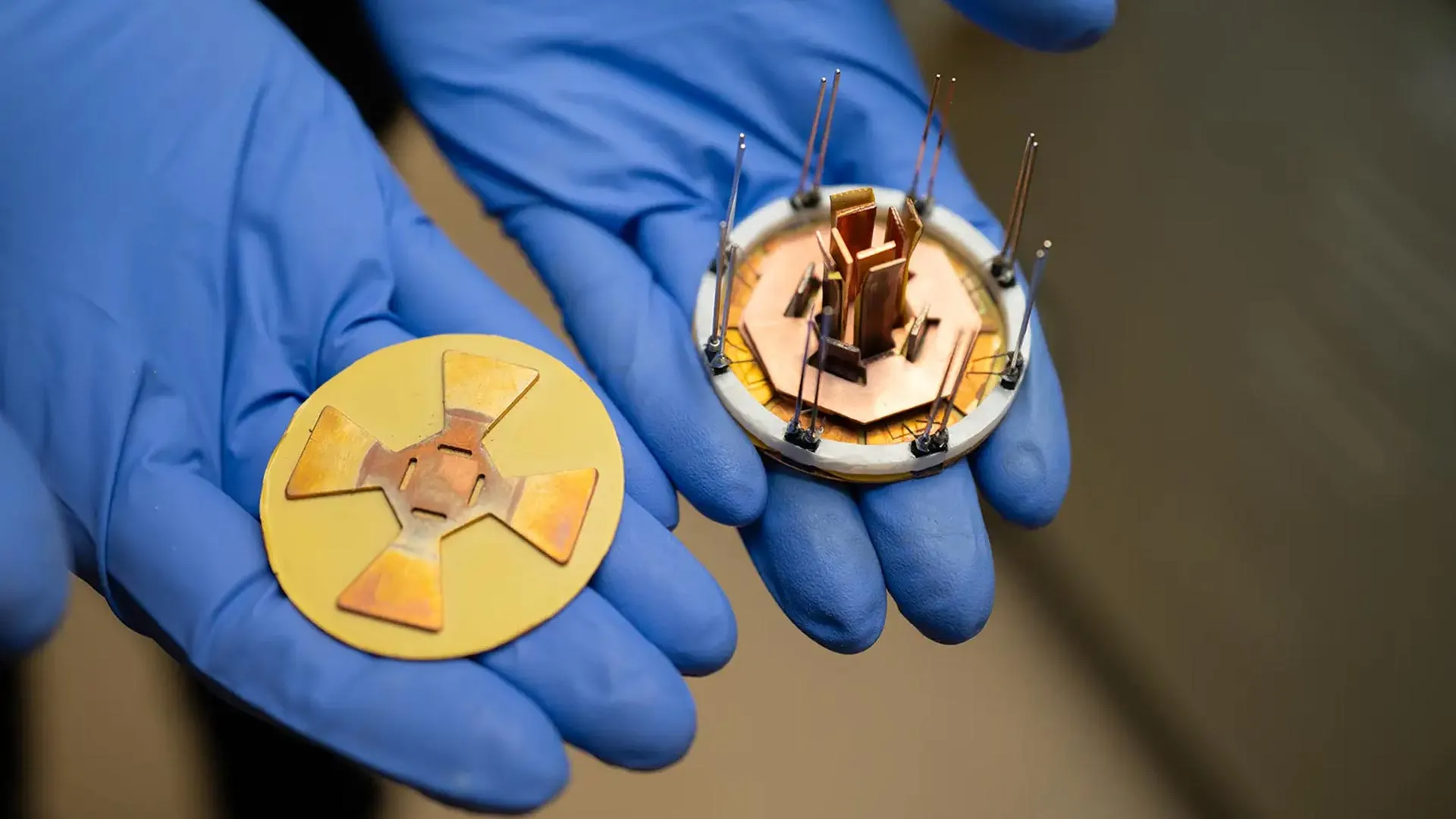
The technology is known as NREL’s Ultra-Low Inductance Smart power module, or ULIS. By using silicon carbide semiconductors, ULIS can achieve five times the energy density of earlier designs while taking up less space. That combination allows manufacturers to build equipment that is smaller, lighter, and more energy efficient. The 1200-volt, 400-amp module is well suited for data centers, electrical grids, microreactors, and heavy-duty platforms such as next-generation aircraft and military vehicles.

Why Ultra-Low Inductance Matters

A key advantage of ULIS is its exceptionally low parasitic inductance, which refers to resistance that slows changes in electrical current and limits efficient power conversion. ULIS reduces this resistance by seven to nine times compared with today’s most advanced silicon carbide power modules.

Because the system can switch electrical current extremely quickly and efficiently, it converts more of the available electricity into usable power. That capability allows ULIS to extract significantly more value from the same energy supply, making it a strong candidate for addressing growing global energy needs.

“We consider ULIS to be a true breakthrough,” said Faisal Khan, NREL’s chief power electronics researcher and the principal investigator for the project. “It’s a future-proofed, ultrafast power module that will make the next generation of power converters more affordable, efficient, and compact.”

Built for Reliability in Extreme Conditions

ULIS is designed not only for efficiency, but also for reliability in demanding environments. According to Khan, the lightweight yet powerful module can monitor its own condition and anticipate component failures before they happen.

This feature is especially critical for high-risk applications such as aviation and military operations. For aircraft operating at 30,000 feet or vehicles navigating combat zones, early failure detection can be the difference between mission success and catastrophic loss.

“ULIS was a truly organic effort, built entirely in-house here at NREL,” Khan said. “We are very excited to demonstrate its strengths in real-world settings.”

A Radical Redesign for Lower Cost Manufacturing

Many of ULIS’ performance gains come from a completely new physical design.

Traditional power modules stack semiconductor devices inside box-like packages. ULIS instead arranges its circuitry in a flat, octagonal layout. This disk-shaped structure fits more components into a smaller footprint, reducing both size and weight. At the same time, its innovative current routing minimizes magnetic interference, which helps deliver cleaner electrical output and higher overall efficiency.

“Our biggest concern was that the device switches off and on very quickly, and we needed a layout that wouldn’t create a chokepoint within the design,” said Shuofeng Zhao, an NREL power electronics researcher who designed ULIS’ flux cancellation architecture.

Early concepts explored complex three-dimensional shapes, including designs resembling flowers or hollow cylinders. However, these ideas proved too expensive or difficult to manufacture. The breakthrough came when the team simplified the concept into a nearly two-dimensional structure. Sarwar Islam, another NREL power electronics researcher, proposed the flattened design that balanced performance, cost, and manufacturability.

“We squished it flat, like a pancake,” Zhao said, “and suddenly we had a low-cost, high-performing design that was much easier to fabricate.”

Joshua Major, also part of the NREL power electronics team, developed new fabrication methods that allowed the intricate structure to be produced using only in-house tools and facilities. The result was a design that combined the electrical advantages of three-dimensional systems with the practicality of flat manufacturing.

Flexible Materials and Wireless Control

ULIS also departs from conventional materials. Traditional power modules bond copper directly to rigid ceramic bases to conduct electricity and manage heat. While effective, this approach limits flexibility.

Instead, ULIS bonds copper to a flexible polymer called Temprion. This change produces a thinner, lighter, and more adaptable structure. The material bonds to copper using only heat and pressure, and its components can be machined with widely available equipment. As a result, manufacturing costs fall into the hundreds of dollars rather than the thousands.

Another major advance allows ULIS to operate wirelessly. The module can be controlled and monitored without physical cables, functioning as a self-contained unit. This modular, Lego-like design allows it to be integrated into a wide range of systems, from data center servers to advanced aircraft and military vehicles. A patent for the low-latency wireless communication protocol, led by Sarwar Islam, is currently pending.

Designed for Future Technologies

While ULIS currently relies on advanced silicon carbide semiconductors, the design was intentionally built to evolve. The module can be adapted for future semiconductor materials, including gallium nitride and gallium oxide, which has not yet reached commercial use.

Together, these innovations support a central goal. As societies become increasingly dependent on reliable electricity, ULIS is designed to deliver efficiency without sacrificing dependability.

Where ULIS Could Make the Biggest Difference

ULIS is expected to have broad impact across multiple sectors.

In the U.S. power grid, electricity must be converted into usable forms before it reaches consumers. This process often depends on large, low-frequency equipment that wastes energy. ULIS’ fast switching improves efficiency while its ability to tolerate high temperatures may reduce long-term maintenance costs.

In aviation, the module’s ability to move electricity quickly and conserve energy enables lighter and more powerful converters. This could help make electric vertical takeoff and landing (eVTOL) aircraft more practical and commercially viable.

ULIS could also play a role in future fusion energy systems. Although commercial fusion remains under development, these systems will require compact and reliable pulsed power components. ULIS’ ultralow inductance and durable design make it well suited for that challenge.

As industries pursue more reliable electricity, advanced artificial intelligence, and next-generation vehicles, ULIS is now available for licensing.


Share Button

NHS trust used charity funds for leaving party

Bosses, in a post to staff, say in hindsight, it was not a good use of charitable funds.

Share Button

Cancer patients ‘warned for years’ about hospital water infections

John Cuddihy told BBC Scotland News his late daughter’s experiences “must continue to echo beyond her lifetime”.

Share Button

Trial launched to ‘help spot health risks early’

A pilot scheme is rolled out in the north of the Isle of Man by the public health directorate.

Share Button

I’m allergic to cold – anything below 12C and I break out in hives

Amber breaks out in hives if the temperature goes below 12C (53F) and wishes for a “normal life”.

Share Button

Alzheimer’s finger-prick test could help diagnosis

An international trial involving 1,000 volunteers will aim to detect biomarkers associated with the condition.

Share Button

A Simple Pasta-Cooking Trick Can Have A Big Impact On How Your Body Feels

Whether dealing with coeliac disease, gluten intolerance or just tummy troubles, many Americans swear their digestive issues mysteriously ease up when they travel to Europe, the supposed land of consequence-free carbs.

While some of that likely comes down to portion size and wheat quality, another often-overlooked factor is how the pasta is cooked. You’d never catch an Italian cooking their pasta beyond al dente – and sometimes, it’s even a little firmer than that.

According to Marissa Karp, founder and lead registered dietitian at MPM Nutrition in New York, the longer pasta cooks, the more its starches soften and become available to our bodies when we eat it. But more isn’t always better.

How long pasta is cooked can affect how quickly it’s digested, how quickly it raises blood sugar and how you feel after the meal – from steady and satisfied to heavy and ready for a nap.

Ahead, registered dietitians break down the different levels of pasta doneness, what noodles look and feel like at each stage, and how each one affects digestion, energy and blood sugar.

Getty Images

Firm: how it affects your digestion

Defined as two or three minutes less cook time than the package instructions, “firm” pasta sits at the very beginning of the doneness spectrum. Go ahead and ignore the box here – your spaghetti won’t be raw, but it will have more texture than most Americans are used to.

Firm pasta has the most bite to it,” Karp said. “There’s clear resistance when you press it between your teeth.”

When pasta is cooked a little firmer, your body takes longer to digest it. That means a bowl of penne won’t spike your blood sugar as quickly, according to Kimberly Rose, registered dietitian and certified diabetes educator.

That slower blood sugar spike can make a noticeable difference in how you feel afterward. Instead of the classic post-pasta slump – heavy, sleepy and weirdly hungry again an hour later – you’re more likely to feel steady and satisfied. And taking that second helping is because the pasta is genuinely delicious, not because the first bowl barely made a dent in your hunger. “Firmer pasta tends to break down more slowly, which can help people feel satisfied for longer and support steadier blood sugar when eaten in appropriate portions,” said Amanda Frankeny, a registered dietitian nutritionist.

If you’re trying to keep your blood sugar steady or you’re tired of that familiar post-pasta slump, cooking pasta a bit firmer may be worth a try. Just know that if you have a more sensitive stomach, this texture isn’t always the most comfortable.

Al dente: how it affects your digestion

In the food world, al dente has become the default way to cook pasta, much like ordering a steak medium-rare or scrambling eggs until they’re just set, not dry.

To get there, you’ll usually want to ignore the package instructions again and pull your pasta from the water about one to two minutes earlier than the package states. (If you’ve been faithfully following the box this whole time, there’s a good chance you’ve been eating softer, mushier pasta than you realised.)

Al dente is the Goldilocks texture most of us are taught to aim for: not too firm, not too soft.

“Al dente tends to be the most comfortable because it digests at a steady pace and tends to offer balanced, sustained energy,” Karp said.

That aligns with research. A 2022 study found that when pasta is cooked for less time, your body breaks down less of its starch, leading to a slower, steadier rise in blood sugar.

While “chewing your food well” has become a diet-culture cliche, 2023 research suggests the real driver is food texture. Foods that require more chewing tend to trigger stronger satiety signals, simply because digestion starts earlier and happens more gradually.

Most of us likely cook pasta to this doneness not only because it has a pleasant mouthfeel but because it’s often easier on the body.

Soft: how it affects your digestion

“Digestion begins in the mouth,” explains Rose, “and soft pasta is fastest to digest.” That’s because soft pasta requires minimal chewing. With almost no resistance for your teeth, it moves quickly from the plate to the stomach, where it’s broken down faster than firmer noodles.

That might sound counterintuitive, but research on food texture backs this up: foods that are soft and easy to chew don’t tend to keep us as full as foods that make us do a little more work. When you have to chew more, you also tend to eat more slowly, which gives your body (and gastrointestinal fluids) time to register that you’re eating.

Typically cooked to the package instructions or even a little longer, soft pasta has no bite left at the centre. This can also happen when pasta is cooked and then baked or reheated in dishes like casseroles or mac and cheese, where a second round of cooking pushes it past al dente.

That quicker breakdown is also why soft pasta is often blamed for the classic carb crash. According to Rose, “Soft pasta will raise your energy levels quickly because more starch is readily available; however, this type of energy is short-lived and may result in a drop in energy after consuming.”

When pasta is overcooked, a few things change the way your body handles it, according to a 2015 study. First, the starches become more broken down and easier to access, which means the carbs hit your system faster – giving you that quick burst of energy, followed by a drop. At the same time, the structure of both starch and protein in the pasta softens, which makes it harder for your body to digest and can lead to bloating or an upset stomach after eating.

Still, soft pasta absolutely has a place at the table. For people who have trouble chewing, sensitive digestion or who need quick, easily accessible energy, it can be a great option. According to Frankeny, “That’s not a bad thing at all. Depending on how active you are, how much you are eating and everything else is on the plate – like produce and protein – softer pasta can easily be a part of a well-rounded meal.”

Share Button

Keir Starmer Backs Down Over Hillsborough Law Changes After Backlash

Keir Starmer has backed down over plans to change the Hillsborough Law following a backlash by MPs and campaigners.

The government had been due to move an amendment to the legislation on Monday which critics said would have watered it down to protect members of the intelligence services.

The aim of the new law, which was promised in Labour’s 2024 election manifesto, is to end cover-ups by public bodies in the wake of major disasters such as the Hillsborough disaster and the Manchester Arena bombing.

Labour whips were bracing themselves for a major backbench rebellion if the vote had gone ahead.

But ministers announced on Sunday night that it was no longer moving the amendment and was seeking further talks with MPs and victims’s families.

A government spokesperson said: “This legislation will right the wrongs of the past, changing the balance of power to ensure the state can never hide from the people it should serve and putting a legal duty on officials to respond openly and honestly when things go wrong.

“The bill will make the police, intelligence agencies and the whole of government more scrutinised than they have ever been, but we can never compromise on national security.

“We will continue to work with all parties to make sure the Bill is the strongest it can possibly be, without compromising national security.”

Under the law, a “duty of candour” would be introduced making it illegal for those in positions of authority to withhold information from investigations.

The government amendment would have allowed the heads of the security services to decide whether or not to disclose information involving their operations.

Ministers insisted the change was necessary to protect national security.

But speaking on Sunday, Labour MP Ian Byrne – who was at Hillsborough on the day of the tragedy in 1989 – told the BBC he was prepared to vote against the government amendment.

Reacting to the government’s decision to pull its amendment, Byrne, the MP for Liverpool West Derby, told HuffPost UK: “I’m delighted to see this pause.

“Now I urge the government to either adopt my amendment or work with us to draft a new amendment which makes the legislation worthy of the name Hillsborough and a legacy to the 97 [Liverpool fans who died].”

Share Button

The real danger of Tylenol has nothing to do with autism

Social media and news feeds are filled with unverified claims about a possible connection between acetaminophen and autism in children. But medical experts say the far more serious and well-documented concern is something else entirely: overdose from the widely used pain and fever medication.

Acetaminophen poisoning is one of the leading causes of hospitalization and death related to non-prescription drugs in the United States, according to Kennon Heard, MD, PhD, a professor in the CU Anschutz Department of Emergency Medicine and the department’s section chief of medical toxicology.

Each year, an estimated 56,000 people visit emergency departments because of acetaminophen poisoning, and about 2,600 are hospitalized. The drug is responsible for nearly half of all acute liver failure cases in the U.S. and roughly 20% of liver transplants nationwide.

Heard has studied acetaminophen poisoning for more than 25 years. He is now helping to lead a long-term clinical trial that is testing a potential new way to reduce liver damage in severe overdose cases. The experimental approach uses a medication typically given to patients poisoned by antifreeze.

Heard says CU and Denver Health, which is home to the Rocky Mountain Poison & Drug Safety center, have played a central role in this research for decades. “have been the center of the acetaminophen research universe for the past 40 years. There’s been a long history of this type of work being done here, and it’s great to be a part of it.”

Why Acetaminophen Overdoses Happen

Acetaminophen is the main ingredient in Tylenol and many store-brand pain relievers used for mild to moderate pain and low-grade fever. It is also included in a wide range of over-the-counter products for colds, flu, sinus symptoms, and menstrual discomfort.

The medication has been used safely for decades when taken according to instructions. Problems arise when people exceed recommended doses, either by taking too much at once or by repeatedly taking more than advised over time.

“There are cases where people accidentally take too much acetaminophen,” Heard says. “Or maybe they have a really bad toothache, and they think if two is good, four is better, eight is even better, and so on. Or it’s someone who’s taking multiple repeated overdoses. Those are the people who get into trouble.”

Overdoses are also frequently linked to suicide and self-harm, Heard notes. “The No. 1 rule at the Poison Center is that if it’s available, people will take it, and a lot of people have Tylenol in their medicine chest.”

Limits of the Standard Antidote

For decades, doctors have relied on a drug called acetylcysteine as an effective antidote for acetaminophen overdose. When given early, it can prevent serious liver damage.

Its effectiveness drops sharply, however, if treatment begins more than eight hours after the overdose.

“The problem is that many patients don’t present with acetaminophen poisoning until after they have liver injury, at which point the acetylcysteine is less effective, and in some cases doesn’t really work at all,” Heard says.

Testing an Antifreeze Antidote

The current clinical trial led by Heard and his colleagues is focused on fomepizole, a drug approved to treat poisoning from ethylene glycol and methanol, substances commonly found in antifreeze. Exposure can occur accidentally, and in some cases people with alcohol use disorder have consumed antifreeze as a substitute for alcohol.

Fomepizole works by blocking enzymes known as alcohol dehydrogenase, stopping the body from converting ethylene glycol and methanol into toxic byproducts.

Heard says interest in using fomepizole for acetaminophen overdose dates back to the 1990s, when he was training in medical toxicology. Evidence came from individual patient case reports and animal studies, particularly in severe overdose cases.

More recently, research has shown that doctors are increasingly using fomepizole off-label to treat serious acetaminophen poisoning.

Richard Dart, MD, PhD, a professor of emergency medicine and Heard’s longtime mentor, ultimately suggested formally testing the drug in a clinical trial. Dart has served as director of Rocky Mountain Poison & Drug Safety since 1992.

A Proof of Concept Clinical Trial

The ongoing phase II trial is designed to determine whether adding fomepizole to standard acetylcysteine treatment can reduce liver damage in patients at high risk after acetaminophen overdose. It is considered a “proof of concept” study to see whether the combination shows enough promise to justify larger trials.

Participants are randomly assigned to receive either both medications or acetylcysteine alone. The study is double-blind, meaning neither the patients nor the researchers know which treatment each participant receives until the trial ends.

“We’ll compare the amount of liver damage, as measured by their liver enzymes, to see whether the fomepizole provides an added protective benefit beyond the standard treatment,” Heard says.

Patients are currently being enrolled at Denver Health, UCHealth University of Colorado Hospital, Children’s Hospital Colorado, and several additional sites. Enrollment has been slow due to the challenge of finding patients who meet the study criteria, but researchers hope to enroll about 40 participants within 12 to 18 months.

If the findings are positive, Heard expects the research to move into a larger trial that would examine longer-term outcomes, including survival and the need for liver transplants.

A Caution for Medicine Cabinets Everywhere

“The message that I would want to get out,” Heard says, is that people should carefully read medication labels, avoid exceeding recommended doses, and recognize that acetaminophen may be present in multiple products at home.

“We’ve started to recognize that the number of people who die from an accidental overdose is pretty close to the number of people who deliberately take an overdose,” he says.

Heard’s collaborators on the study include Dart and Andrew Monte, MD, PhD, also a professor of emergency medicine.

Share Button

Danish Prime Minister Warns Trump Over Greenland Threat: ‘Europe Will Not Be Blackmailed’

Donald Trump has been warned “Europe will not be blackmailed” after he announced plans to impose tariffs on the UK and seven other countries opposed to his plans to take over Greenland.

Danish prime minister Mette Frederiksen said her country “is receiving great support” from across the continent in the wake of the US president’s threats.

Meanwhile, the countries being targeted by Trump warned in a joint-statement that his “tariff threats undermine transatlantic relations and risk a dangerous downward spiral”.

Trump announced on Saturday that America will impose a 10% import tax imposed on Britain, Denmark, Norway, Sweden, France, Germany, the Netherlands and Finland from February 1.

That charge will rise to 25% on June 1 and remain in place until “until such time as a Deal is reached for the Complete and Total purchase of Greenland” by America.

Greenland has been a self-governing part of the kingdom of Denmark for more than 300 years.

But Trump has said that Russia and China will try to seize the Arctic island unless America takes it over.

Keir Starmer has said the US president’s threats are “completely wrong”, while culture secretary Lisa Nandy said the UK’s backing for Greenland and Denmark was “non-negotiable”.

In a statement on Sunday, Mette Frederiksen said: “I am pleased with the consistent messages from the rest of the continent: Europe will not be blackmailed.

“At the same time, it is now even clearer that this is an issue that reaches far beyond our own borders.”

She added: “We want to co-operate, and it is not we who are seeking conflict.”

A joint-statement by the UK, Denmark, Norway, Sweden, France, Germany, the Netherlands and Finland said they “are committed to strengthening Arctic security as a shared transatlantic interest”.

“We stand in full solidarity with the Kingdom of Denmark and the people of Greenland,” the statement said.

“Building on the process begun last week, we stand ready to engage in a dialogue based on the principles of sovereignty and territorial integrity that we stand firmly behind.

“Tariff threats undermine transatlantic relations and risk a dangerous downward spiral.

“We will continue to stand united and coordinated in our response.

“We are committed to upholding our sovereignty.”

Share Button