Wellness is a multi-trillion pound industry which continues to grow, what will be its focus in 2026?


Wellness is a multi-trillion pound industry which continues to grow, what will be its focus in 2026?

Vladimir Putin’s New Year speech offered a subtle snub to Donald Trump’s claims that Russia wants peace in Ukraine.
The Russian leader repeatedly praised the war – which Moscow refers to as the “special military operation” – during a three-minute celebratory address while avoiding any direct references to Ukraine.
Advertisement
Praising Russian soldiers, he said: “We seek to bring joy and warmth to those in need of care and attention – and, of course, to support our heroes, the participants of the special military operation, with both words and deeds.
“You have taken on the responsibility of fighting for your homeland, for truth and justice.
“I assure you, millions of people across Russia are with you on this New Year’s night.”
The president spoke of Russia’s allegedly impending “success”, alluding to his maximalist goals in Ukraine.
He said: “All that we envision – our hopes and plans – will certainly come true. Of course, each of us has our own – personal, special, and unique in their own way.
Advertisement
“But they are inseparable from the fate of our Motherland and from the sincere desire to serve it. After all, we are the people of Russia, together.
“The work, success, and achievements of each of us compose new chapters in its thousand-year history.”
He did not mention any kind of peace or settlement with Ukraine.
The Kremlin has made clear in recent years that it sees Ukraine as Russian territory, or part of the “Motherland”.
Advertisement
While boasting of his country’s success, Putin notably did not mention how Russia’s armed forces surpassed a million casualties in June 2025, nor how he has been forced to introduce year-round conscription to bolster his depleted army.
His pro-war remarks come as US president Trump continues to push for peace in Ukraine, even if it means rewarding Russia for its aggression.
During his latest meeting with Ukrainian president Volodymyr Zelenskyy about US peace proposals, Trump told reporters: “Russia wants to see Ukraine succeed.”
Advertisement
Trump also allegedly Ukraine and Russia are “closer than ever” to peace, though “thorny” issues remain.
The current US administration has repeatedly ignored how the war itself began when Putin invaded Ukraine in a land grab back in February 2022.
Almost four years on, Russia controls approximately a fifth of Ukraine’s sovereign land – and Putin is still trying to seize more, and refusing to compromise on peace plans.
Advertisement
Russia has also rejected any suggestions of a ceasefire, and Putin has continued to bombard Ukraine even amid frenzied international diplomatic efforts to end the war he started.

From protecting against ageing to helping you sleep, Dr Alex George lists the benefits of running.
Many clinical trials to test the use of psychedelic medicines for conditions such as depression have been underway since 2022 – with surprising results
Lately, I find myself weeping in my bed when the night sky is at its blackest and my husband, Geoff, is dead asleep on his side, his silhouette a distant mountain range. I press my face into my damp pillow to mute the occasional, plaintive chirp.
I’ve never been much of a crier, so these late-night keening sessions make no sense. I’m a 59-year-old, happily married woman, and my children are healthy and grown, yet when the lights go out and the world lies down, a single phrase repeats itself in my mind: I want my mom.
If you believe in deeply personal journalism — the kind that connects us in our hardest, most honest moments — please consider becoming a HuffPost member today.
My mother isn’t missing or gone. She lives a short 20-minute drive away in an assisted living facility. When I visit, she looks like herself, shorter than me, hair dyed brown and styled in pert curls, with a smile people say looks like mine. When she speaks, her word choices, her intonations and the way she moves her hands are all her, but if you sit with her for more than a few minutes, you learn she’s less like herself and more like a carnival hologram — repeating a limited, looping set of thoughts and comments:
“I have nine windows in my apartment.”
“My cat is the best roommate I’ve ever had.”
“Did I tell you your husband reminds me of my dad?”
For decades, my mother had been single and independent, living on her own, volunteering and singing in a local chorale. At 78, she was in excellent health and had great energy, so I was taken by surprise when she announced she’d be moving into a retirement community near my home.
“An old folks’ home?” I said. “But you’re in great shape.”
“It’s not a ‘home,’ it’s a retirement village. Just like apartment living, but I don’t have to cook anymore.”
Advertisement
“No loss for the world there,” I snorted, and she elbowed me.
Together, we visited the facility, more like a resort with scheduled activities and concerts than the 1970s nursing home my paternal grandmother had lived and died in. But still. Weaving through walkers and motorized scooters to get to the facility’s restaurant, I said, “These people, they’re nice, but they seem… elderly.”
She squared off with me. At 5’1”, she projects an air of sweet amiability, but she’s actually stubborn as an old root.
“My mother was sick my entire childhood,” she said. It was true. Her poor mother suffered for nine years, Bible in hand and disapproval on her face, until she finally died, releasing my 17-year-old mother. “I’m not doing that to you.”
Advertisement
“It’s not remotely the same! I’m older, and you’re not sick, or nasty.” I looked at her sideways. “At least most of the time.”
On our way out, we passed a locked industrial door, behind which was the “Assisted Living Wing” and “Memory Ward.” Pastel-colored cutouts of flowers and butterflies, the sort you’d see taped to a nursery school wall, decorated the door.
“What’s in there?” I asked, and made scary ghost sounds.
“You, if you keep it up.”
It never occurred to me there might be something she wasn’t telling me.
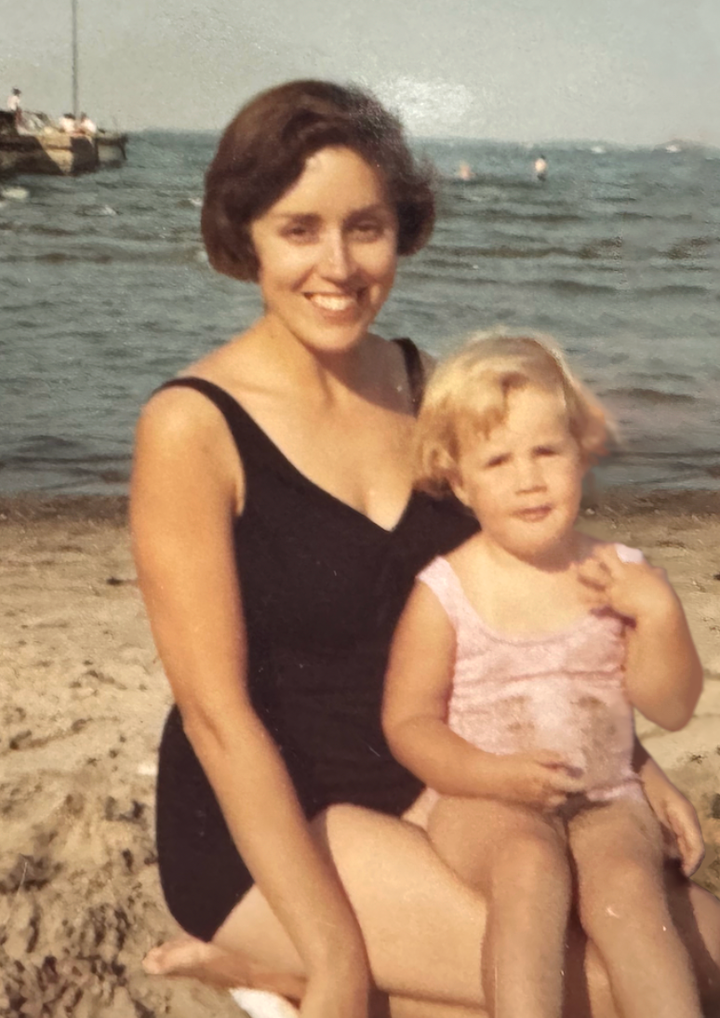
Courtesy of Kathryn Smith
Advertisement
On March 12, 2020, the day after Tom Hanks and Rita Wilson announced they had COVID-19, my mother’s Toyota Camry pulled into my driveway, and out she stepped with two suitcases, the food from her refrigerator, her recycling and her cat, named Jello, howling and spitting in its carrier.
“Just until we flatten the curve,” she said, reluctant to leave her apartment. “And not a minute more.” She lived with me for a year.
My mother and I are different people. She’s fussy. I’m casual — sloppy, even. She’s soft-spoken. I’m loud. She’s ladylike. I intentionally storm through a room. And while I know I’m not the refined young lady she hoped for as a daughter, she’s been my champion.
Advertisement
When I was young, I hated wearing dresses, so she sewed me pants. And when a male teacher told her, “Your daughter must wear dresses to school — pants are inappropriate,” she fired back, “You’re either going to let her wear pants, or you’re going to see her underwear, because she’s always upside-down on the monkey bars!” I got to wear pants.
At the beginning, we managed to find joy and beauty in our togetherness during the lockdown. We visited the local arboretum, haunted our old town, even had a picnic on the porch of our old house.
“Nobody lives here! Who’s going to care?”
We peeked in the windows and tried to see if any doors were unlocked. She stood watch for me while I crawled under the porch to see if old treasures I had hidden were still there.
Advertisement
“Nothing but spiders and dirt.”
I visited her room daily with chocolate chip cookies. “Wellness check,” I’d say, and she’d invite me into her too-warm space. I’d nudge Jello, ever a grumpy thing, off the armchair and sit down for a quick chat over the blaring television. It was during one of those visits that I first noticed something was off.
“Mom, you shouldn’t watch the news 24 hours a day. It’s grim.”
“I leave it on for the company — the voices.”
“You live with me. That’s enough voices for anyone. If you have to watch TV, can you at least watch Netflix?” I handed her the remote.
“That thing’s too complicated. I like the news,” she said and took a dainty bite of her cookie.
“For goodness’ sake! You just push this button here that says Netflix.” She waved me away.
The next day, she poured laundry detergent into our dryer.
“I don’t know what I was thinking,” she said. “I’ll pay for it.”
“It’s no big deal,” I said.
I’d once put the cereal box in the fridge and the milk in the cupboard. Our family can be spacey like that, so I wrote it off.
Advertisement
But as her memory glitched more frequently, I found myself becoming impatient. It was easier to be annoyed with her, easier to look away from what might be happening to her, from what might one day happen to me. It was easier to imagine she was being lazy-minded or stubborn.
“You just met with your surgeon two weeks ago, don’t you remember? Your pain is coming from your spine, not your hip, so you have to do physical therapy,” I told her one afternoon.
“Pardon?”
“DO YOUR PHYSICAL THERAPY! And can you wear your hearing aids? It’s very annoying to repeat myself all the time.”
Advertisement
“I don’t like physical therapy,” she said. “And anyway, you’re the only one I can’t hear.”
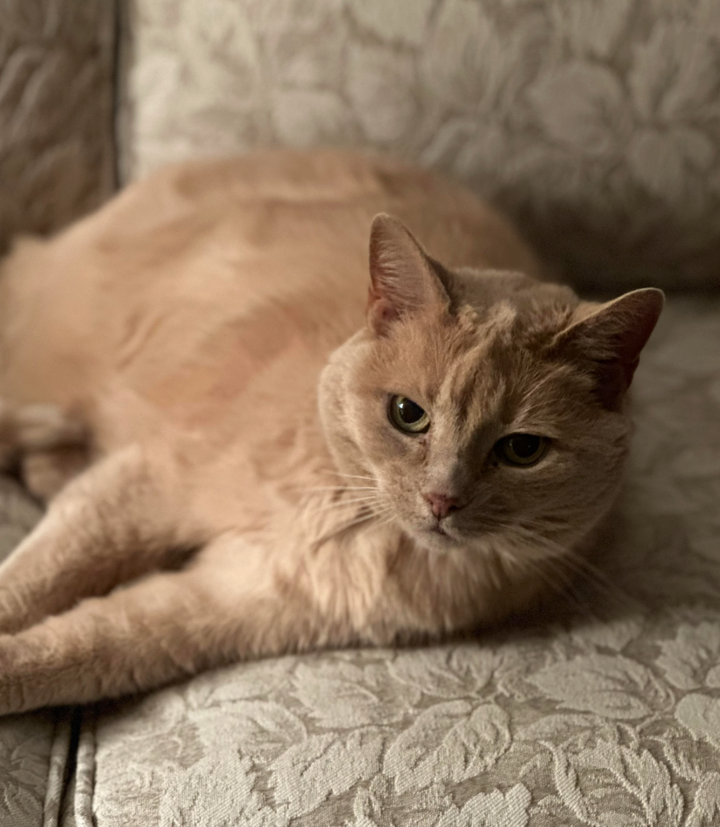
Courtesy of Kathryn Smith
Our arguments regressed. We were silly, a little petty, almost joking, but not quite. I found myself using the same words she’d spoken to me when I was young, pantomiming a role reversal we didn’t realize was well underway.
“Do as you’re told!” I’d demand, only half joking when she ate mostly chocolate.
“You’re not the boss of me!” she’d say, and cross her arms.
And then she drove into oncoming traffic with my daughter in the car. It was a close call — the other car swerved. My daughter told me she’d never let Grandma drive her again.
Advertisement
I wish I could say I took her keys that day, but I didn’t. It’s difficult — removing your parents’ means of transportation. They’re not the Uber generation. You take their keys, you take their independence.
A few weeks later, I called my mother while waiting in the social distancing line that snaked around Trader Joe’s.
“Thank goodness you called! My phone isn’t working!” she said, breathless.
“You’re on your phone now, Mom,” I said.
“I couldn’t call anyone. I couldn’t find anyone’s numbers. I was all alone!”
It wasn’t upsetting that she couldn’t work her phone for a moment — many older people struggle with technology. It was upsetting that she was panicked, desperate and at a loss for what to do, when really, all she had to do was step out of her bedroom and ask any of her grandchildren for assistance. It was upsetting because she felt helpless and afraid.
Advertisement
“What’s going on, Mom?” I asked when I got home. It never occurred to me she could be any other than the way I had always known her: capable, pragmatic and independent. I didn’t know that these days — the early days — were the good days when she remembered where she was, who she was, who I was.
The day I took her keys was the day she mistook my daughter for me.
“It was easier to be annoyed with her, easier to look away from what might be happening to her, from what might one day happen to me.”
As intelligent, sentient beings, we sure can be shockingly unaware of our own emotions and why we’re feeling them. Recently, I was hiking in a forest near my home. I came upon an elderly woman in hiking boots sitting on a fallen tree near a brook, leaning on her walking stick. I couldn’t imagine how she had gotten there.
Advertisement
“Are you OK?” I asked.
She smiled. “I’m just taking a breather. I live a mile up there.”
She pointed her stick up the steep, wooded hill. She’d come from Sweden decades earlier to marry an American who’d recently moved them into a retirement home. Like my mother, she was born on the cusp of World War II. Unlike my mother, she spoke about politics, current events, a book she was reading. Then she got up and stretched. I didn’t want her to go.
“Can I visit you, maybe help with your errands?” I asked. She looked at me, puzzled, and I felt instant embarrassment. This was not a woman who needed help with her errands. She had just walked a mile into the woods. Why would she need me to visit her?
One of my husband’s pandemic projects was to hang birdhouses all around our yard. A storm knocked one down, and four bluish babies with giant open mouths tumbled out onto the grass. Blind, chirping and barely able to move, they reminded me of the P.D. Eastman book “Are You My Mother?” about a baby bird who searches for his mother. He asks everything he comes across: a dog, a hen, a steam shovel, “Are you my mother?”
Advertisement
As I slid a spoon under the wobbly birds’ bodies and poured them back into their home, I was struck by a thought: I’m the baby bird in P.D. Eastman’s book. I’m looking for my mother, who is slipping away from me. And the lovely Swedish woman in the woods? She is not my mother.
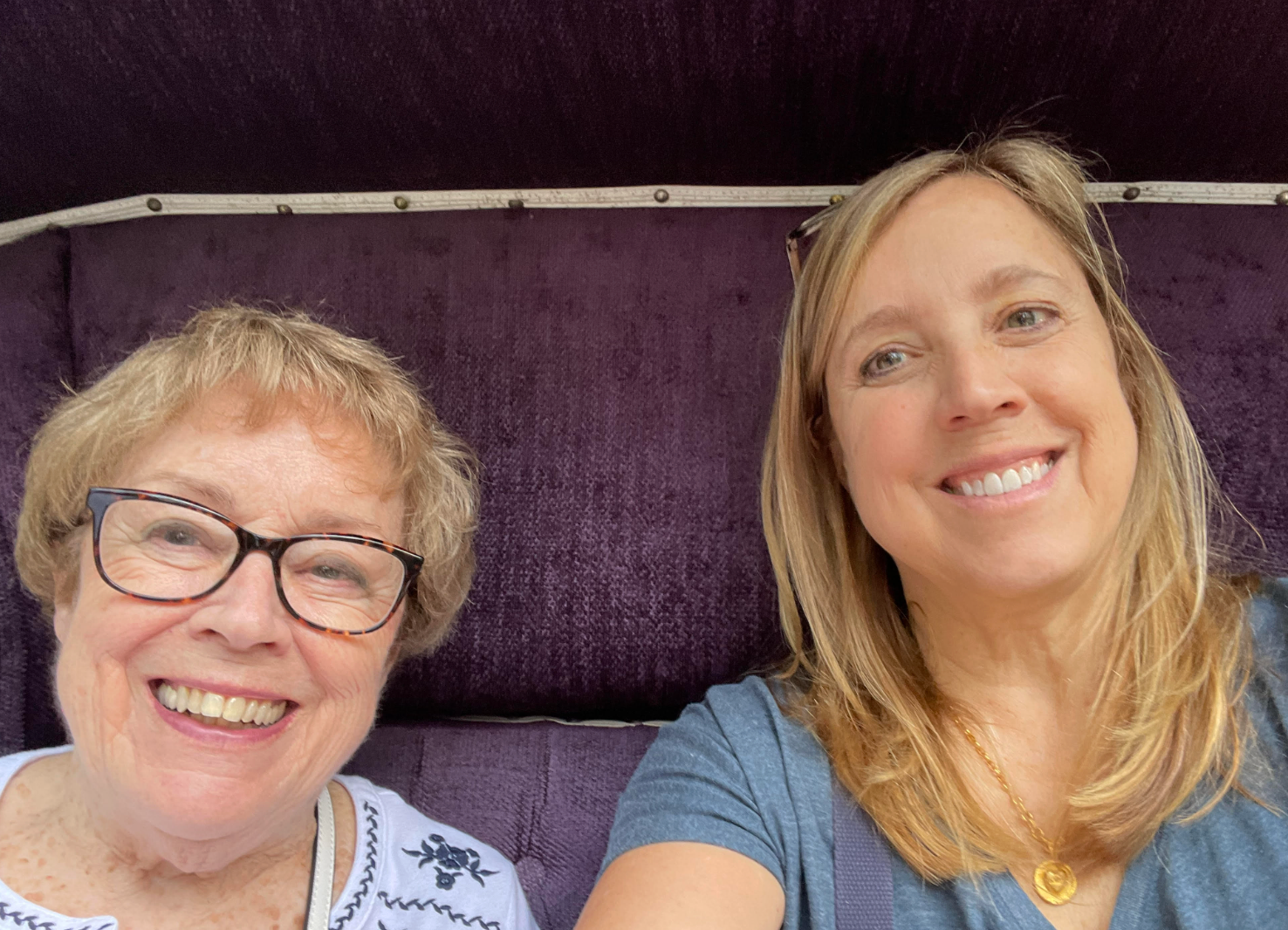
Courtesy of Kathryn Smith
Six months after my mom packed up Jello and moved back to her apartment, I got a call from the onsite nurse explaining she had accidentally consumed five weeks’ medication in two weeks. It was time for her to move into assisted living.
Advertisement
I remembered the door with the flowers and butterflies.
I believe she saw this coming. I believe she knew her mind was slipping, so she moved herself into a place where, at some point, she could get professional care, and where, like she said, she wouldn’t become a “burden.”
One of the things she says in her moments of clarity is, “My parents died young. I didn’t have anyone to model getting old for me.”
Thanks to her, I do. And thanks to her, as the child of a person who is getting old, I’m learning to be more patient, more understanding.
Advertisement
I call her daily. I visit her often. And every now and then, the mother I know returns for a cameo, then disappears just as quickly.
In her darker moments, she tells me, “I’ve had a good life, but if I could push a button and end it now, I would.” I’d like to tell her to hang on — that things will get better — but we both know that’s not true. So I just remind her she is beloved. And we list all the people who’ve loved her in her life, including the boyfriend she dumped in college.
I’m learning to love her differently, perhaps more deeply and from a place of gratitude, not of need and expectation. I’m trying to be the grown-up now — to champion her, the way she did me. It’s not easy. And in the wee hours of the night, when the loss of my mother as I knew her overtakes me, I allow myself to have a cry in my pillow.
Advertisement
Kathryn Smith has published fiction and creative nonfiction in Philadelphia Stories, poetry in Apiary, and twice won an honorable mention from Glimmer Train. She graduated with a B.S. in economics from the University of Pennsylvania and an MBA from the University of California at Berkeley. She is currently working on a memoir, “Stories of an Uncouth Girl.” You can reach her on Instagram @KathrynSmithStories.
Do you have a compelling personal story you’d like to see published on HuffPost? Find out what we’re looking for here and send us a pitch at pitch@huffpost.com.
Advertisement

Keir Starmer needs a stronger plan to defeat the “existential threat” from populism, a former Labour strategist has warned.
Chris Powell, the advertising strategist who worked on Tony Blair’s 1997 landslide victory and brother to Starmer’s national security adviser Jonathan Powell, said there was a “new and terrifying” problem facing the UK.
Advertisement
Writing for the Guardian, he said Nigel Farage’s Reform UK could represent a danger to democracy and national institutions.
He compared the up and coming right-wing party to populist parties seen around the world which have eroded political systems once they are in power.
Powell said: “Here in the UK, where is the urgently needed counter plan on a huge scale, to thwart and head off such an existential threat? It is simply not in place, nor does it appear to be even at the planning stage.
Advertisement
“We are at a very dangerous moment. We simply cannot afford to allow Reform UK to have a free run, and become established and entrenched as a credible potential government in the minds of disenchanted voters.”
He warned the longer Reform remain “unchallenged”, the more “unthreatening and risk-free” they appear to voters.
“Just hoping that Reform and Farage implode, or that the rightwing vote will somehow fracture, is potentially suicidal for our freedom and democracy,” Powell said.
Advertisement
The strategist acknowledged that Labour has started to take “small steps” to counter Reform, but called for them to go further.
He pointed to the “fundamental reset” New Labour planned in September 1995, when they were ahead in the polls.
He urged Starmer to focus on “fighting fire with fire on messaging, call out lies and expose Farage’s simplistic solutions”.
Advertisement
Urging a “top-to-bottom media and communications overhaul”, he said Starmer needs to show he is on voters’ side and develop a digital strategy to disrupt the populist narrative online.
Since Reform UK took the lead in the opinion polls, Starmer has acknowledged the party as the government’s main opposition – despite having just five MPs.
The prime minister has tried to take apart their policies on various occasions, memorably saying last month that a Reform government would “tear Britain apart”.
Advertisement
Ministers have also been more outspoken about the negative consequences of Brexit, which Eurosceptic Farage spent decades campaigning for.
However, YouGov’s latest polling shows Reform has consistently been in the lead since April and finished 2025 on 26%, while Labour and the Tories trailed on 19%.

NHS bosses say the fall is welcome, but expect freezing temperatures to increase pressure on the health service.
Celebrities always manage to keep us guessing. Remember when Justin Bieber posted about love and forgiveness, even if he didn’t deserve it? More recently, Britney Spears deleted her Instagram account after several concerning yet vague posts.
It’s not only celebrities who make cryptic posts on social media. A friend might share a photo with the caption, “People forget who was there for them”. Social media researchers call this practice vaguebooking.
Advertisement
“It’s when someone posts an intentionally vague message on social media that is designed to elicit questions or attention without fully divulging what’s wrong,” said Sanam Hafeez, a neuropsychologist and founder of Comprehend the Mind. “This behaviour is so common, but it’s not the healthiest way of communicating.”
If you come across these posts, you might wonder if you should respond or keep scrolling. Below, experts discuss the signs of vaguebooking, why people engage in this behaviour, and how to address it.
People commonly share life updates on social media, from birthday celebrations to job losses. An example of vaguebooking is posting a picture of your dog with the caption “prayers needed”. By omitting information about your dog’s condition, you might be hoping for someone to ask what’s wrong.
Advertisement
Similar to sadfishing, vaguebooking involves attention-seeking, but it’s often low on detail and context. “These posts are highly ambiguous yet personal and often occur after a romantic breakup or friendship fallout,” said Jenny Woo, Harvard-trained emotional intelligence researcher and founder/CEO of Mind Brain Emotion.
The person who is vaguebooking may not be comfortable sharing the entire story. So, they’ll hint at a breakup by posting, “I’m done being taken for granted.” Or they’ll use inspirational language to hide an insult, such as “I’m cutting toxic people out of my life because I deserve better,” Woo said.
Often, these posts leave recipients wondering what happened and how they can help, said Sofie Roos, licensed sexologist, relationship therapist and author at Passionerad. For example, posting, “I will be away for some time, I need it,” could mean that the person is dealing with an illness or taking time to focus on a new business. You can’t tell unless you ask.
Advertisement
Sometimes, people vaguebook because they’re hoping to connect but are afraid of being judged or rejected. According to research, vaguebooking is associated with greater loneliness and participation in online gossip. “Those who are lower in emotional stability or higher in introversion may use vaguebooking to test who cares enough to ask, ‘Are you OK?’” Woo said.
People also vaguebook because they’re trying to reach a specific individual and believe they have no choice but to “triangulate an audience,” Hafeez explained. Triangulation involves bringing a third party into a conflict to ease the tension. In this case, they triangulate other social media users either to gain their support or provoke a reaction from the person who upset them.
Thais Gibson, founder of The Personal Development School, agreed, saying that vaguebooking might be a last resort when you or the post’s intended recipient isn’t willing to speak and resolve your disagreement. Although it’s not a healthy approach, vaguebooking allows you to express hurt feelings indirectly. And, as it turns out, your attachment style influences how you handle conflict.
Advertisement

Tatiana Lavrova via Getty Images
You may have heard that there are four main attachment styles: secure, anxious, avoidant (dismissive avoidant), and disorganized (fearful avoidant). “Securely attached individuals are the least likely to vaguebook, because they’re the most equipped to handle conflict directly,” Gibson said. Although they tend to have unhealthy ways of dealing with conflict, people who are fearful avoidant (disorganized) aren’t as likely to turn to social media for support, she said.
Conversely, when anxiously attached individuals don’t receive validation from the person they’re fighting with, they’ll try to get it from other sources, including friends, family, or social media. “They’re looking for closeness and support, but find it difficult to ask for help,” Roos added.
Advertisement
“Surprisingly, dismissive avoidant (avoidant) is the second most likely attachment style to vaguebook,” Gibson said. Since they find it hard to be vulnerable, they often use passive-aggressive communication. For example, they might post a vengeful song about an ex or make philosophical-sounding comments, like “Whoever is meant to be with you will stay in your life.”
“Some celebrities vaguebook to speak their truth without risking a media backlash,” Woo said. Perhaps, they’re expressing regret over something they’ve done or trying to take back control of a narrative that’s been distorted in their eyes. Since celebrities live under constant scrutiny, social media allows them to share while maintaining some level of privacy, Hafeez said.
Alternatively, they could be speaking to universal themes people can relate to, such as love, forgiveness, loss, and pain. “So, when they post in broad, spiritual, or poetic terms, they can be both vulnerable and seeking connection, without giving up the whole story,” Hafeez said.
Advertisement
“Other times celebrities may use cryptic posts strategically as emotional clickbait or a cliffhanger to sustain fan engagement and curiosity,” Woo said. Roos agreed, saying that celebrities may use vaguebooking to create a buzz and stay relevant.
It’s natural to be curious when you come across a cryptic post from someone in your network. “But resist the urge to respond immediately, at least publicly,” Hafeez said. “The post could be a cry for help or an internal monologue they don’t expect anyone to read, or something in between.”
Her advice concerning family and friends was to send them a private message, such as, “Hey, I saw your post, and I wanted to check in and see how you’re doing.” This is a non-intrusive way to validate them and give them space to share if they wish. People generally feel more supported when others communicate directly as opposed to commenting on a public thread, Gibson added.
Advertisement
“If it’s someone you’re not that close to, it’s OK to just read it and move on,” Hafeez said. “Not every post is an invitation to be involved or invested.” Roos agreed, saying that it’s all right not to respond, but if you suspect the post is about you, it’s best to reach out to them directly.
Approaching conflict head-on creates strong ties in relationships. Gibson suggested saying, “Hey, I get the sense that some of these posts are about me. I could be wrong, but I hope that you would talk to me directly so we can work through it.” Here, you’re setting a boundary that if there’s an issue, you want to address it one-on-one.
“If you’re the one who’s vaguebooking, it’s not that you’re doing something really bad,” Gibson said. “You are trying to feel seen, heard, and cared for. Those are all human needs.” Talking to a trusted individual, like a therapist, can help you find more direct and honest ways of expressing your needs besides airing them on social media.
Advertisement


As temperatures fall across much of the UK, the best ways to keep people and pets warm and dry.
For the first time, children will be offered vaccination on the NHS against the common infection which, in rare cases, can be very serious.
