Eating more vitamin C can physically change your skin

Scientists at the University of Otago, Faculty of Medicine — Christchurch Ōtautahi, have identified a direct connection between how much vitamin C people eat and how well their skin produces collagen and renews itself. The findings show that skin health responds measurably to dietary vitamin C, not just topical treatments.

Published in the Journal of Investigative Dermatology, the research found that vitamin C levels in the skin closely mirror levels in the blood (plasma). Increasing intake through vitamin C rich foods was shown to raise both blood and skin concentrations.

Eating Vitamin C Raises Skin Levels and Thickness

The study followed 24 healthy adults in Aotearoa New Zealand and Germany. Participants who raised their plasma vitamin C levels by eating two vitamin C rich SunGoldTM kiwifruit each day showed a clear increase in vitamin C within their skin. This increase was associated with thicker skin (collagen production) and greater renewal of the outer skin layer.

Lead author Professor Margreet Vissers from Mātai Hāora — Centre for Redox Biology and Medicine within the Department of Pathology and Molecular Medicine described the results as striking.

The strength of the association between skin thickness and vitamin C intake is “compelling,” she explained.

Vitamin C Moves From Blood to Skin

According to Professor Vissers, the relationship between blood vitamin C and skin vitamin C stood out compared to other organs.

“We were surprised by the tight correlation between plasma vitamin C levels and those in the skin — this was much more marked than in any other organ we have investigated,” she says.

The research team also found that vitamin C circulating in the bloodstream reaches every layer of the skin and supports healthier skin function.

“We are the first to demonstrate that vitamin C in the blood circulation penetrates all layers of the skin and is associated with improved skin function. I am very proud of my team and excited about what the data is telling us.”

Why Diet Matters More Than Creams

Professor Vissers says the findings reinforce the idea that skin health begins internally, with nutrients delivered naturally through the bloodstream.

Vitamin C is essential for collagen production, which is why it is commonly added to skincare products. However, vitamin C dissolves easily in water and does not absorb well through the outer skin barrier. The study showed that skin cells are highly efficient at absorbing vitamin C from the blood, with uptake into the outer epidermal layer appearing to be a priority.

How the Study Was Conducted

The research was funded by New Zealand company Zespri International along with a University of Otago Research Grant and included two phases. The first phase examined the relationship between plasma and skin vitamin C levels using healthy skin tissue from patients undergoing elective surgical procedures at Te Whatu Ora Canterbury (with support from the Otago campus’s He Taonga Tapu — Canterbury Cancer Society Tissue Bank).

The second phase involved a controlled dietary intervention carried out in Christchurch and Germany. Each location included 12 healthy participants.

Eight Weeks of Dietary Change

Participants were asked to eat two Kiwi Gold kiwifruit daily for eight weeks. This provided the equivalent of 250 micrograms of vitamin C.

“All were instructed to consume two Kiwi Gold kiwifruit daily — the equivalent of 250 micrograms of vitamin C — for eight weeks. We then collected skin samples before and after the intervention, with separate analyses allowing us to look at the skin basal layers in Christchurch and the outer dermal skin layer and skin function tests in Germany,” Professor Vissers explains.

German participants were recruited and tested by the SGS Institute Fresenius in Hamburg, which has the technical capability to collect samples from the outer dermal skin layer (the blister “roof”). The institute evaluated skin regeneration using ultrasound measurements of skin thickness, elasticity UV protection and epidermal cell renewal to assess overall skin function.

Clear Gains in Collagen and Skin Renewal

One of the most significant findings was a measurable rise in skin thickness among participants, indicating increased collagen production along with faster regeneration of epidermal cells.

“The other really substantial finding showed a significant increase in the participants’ skin thickness levels, reflecting collagen production and an upsurge in the regeneration of their epidermal cells, in other words skin renewal,” Professor Vissers says.

Other Vitamin C Foods Likely Offer Similar Benefits

SunGold kiwifruit was selected for the study because of its consistently high vitamin C content. However, the researchers expect similar benefits from other vitamin C rich foods, especially fresh fruits and vegetables such as citrus, berries, capsicums and broccoli.

“We suggest that increasing your dietary vitamin C intake will result in effective vitamin C uptake into all compartments of the skin,” Professor Vissers says.

Daily Intake Is Key

Maintaining steady vitamin C levels in the blood is essential, since the body does not store the vitamin long term. Professor Vissers notes that healthy individuals can reach optimal plasma levels with about 250mg of vitamin C per day.

“The important thing is to keep your plasma levels optimal, which we know can be easily achieved in a healthy person with a vitamin C intake of around 250mg per day. The body however does not store the vitamin, so we recommend 5+ a day, every day, with one of those five being a high vitamin C food, as a good habit to cultivate.”


Share Button

A new superconductor breaks rules physicists thought were fixed

Something unexpected is happening inside a material called platinum-bismuth-two (PtBi2). According to a new study from researchers at IFW Dresden and the Cluster of Excellence ct.qmat, this shiny gray crystal may look ordinary, but the electrons inside it behave in ways scientists have never observed before.

In earlier work published in 2024, the team showed that only the top and bottom surfaces of PtBi2 become superconducting, meaning electrons can pair up and flow without resistance. Their latest results reveal something even more surprising. The way these electrons pair is unlike any known superconductor. Even more intriguing, the edges surrounding these superconducting surfaces naturally host elusive Majorana particles, which are considered promising building blocks for fault-tolerant quantum bits (qubits) in future quantum computers.

How PtBi2 Becomes a Topological Superconductor

The unusual behavior of PtBi2 can be understood by breaking it into three key steps.

To begin with, certain electrons are confined strictly to the top and bottom surfaces of the crystal. This happens because of a topological property of PtBi2 that arises from how electrons interact with the material’s orderly atomic structure. Topological properties are remarkably stable. They do not change unless the symmetry of the entire material is altered, either by reshaping the crystal itself or by applying an electromagnetic field.

What makes PtBi2 especially striking is that the electrons bound to the top surface are always matched by corresponding electrons on the bottom surface, regardless of how thick the crystal is. If the crystal were sliced in half, the newly exposed surfaces would immediately develop the same surface-bound electrons.

A Superconducting Surface With a Normal Interior

The second step occurs at low temperatures. The electrons confined to the surfaces begin to pair up, allowing them to move without resistance. Meanwhile, electrons inside the bulk of the material do not join this pairing and continue to behave like ordinary electrons.

This creates an unusual structure that researchers describe as a natural superconductor sandwich. The outer surfaces conduct electricity perfectly, while the interior remains a normal metal. Because the superconductivity comes from topologically protected surface electrons, PtBi2 qualifies as a topological superconductor.

Only a small number of materials are believed to host intrinsic topological superconductivity. So far, none of those candidates has been backed by consistently strong experimental evidence. PtBi2 now stands out as one of the most convincing examples yet.

A Never-Before-Seen Pattern of Electron Pairing

The final piece of the puzzle comes from exceptionally high-resolution measurements performed in Dr. Sergey Borisenko’s lab at the Leibniz Institute for Solid State and Materials Research (IFW Dresden). These experiments showed that not all surface electrons participate equally in superconductivity.

Electrons moving in six specific, evenly spaced directions on the surface refuse to pair up at all. This unusual pattern reflects the three-fold rotational symmetry of how atoms are arranged on the surface of PtBi2.

In conventional superconductors, electrons pair regardless of the direction in which they travel. Some unconventional superconductors, including the well-known cuprates that operate at relatively high temperatures, show directional pairing with four-fold symmetry. PtBi2 is the first known superconductor where pairing is restricted in a six-fold symmetric pattern.

“We have never seen this before. Not only is PtBi2 a topological superconductor, but the electron pairing that drives this superconductivity is different from all other superconductors we know of,” says Borisenko. “We don’t yet understand how this pairing comes about.”

Crystal Edges That Trap Majorana Particles

The study also confirms that PtBi2 provides a new and practical route to producing Majorana particles, which have long been sought in condensed matter physics.

“Our computations demonstrate that the topological superconductivity in PtBi2 automatically creates Majorana particles that are trapped along the edges of the material. In practice, we could artificially make step edges in the crystal, to create as many Majoranas as we want,” explains Prof. Jeroen van den Brink, Director of the IFW Institute for Theoretical Solid State Physics and principal investigator of the Würzburg-Dresden Cluster of Excellence ct.qmat.

Majorana particles come in pairs that together behave like a single electron, but individually act in fundamentally different ways. This idea of effectively splitting an electron is central to topological quantum computing, an approach designed to create qubits that are far more resistant to noise and errors.

Controlling Majoranas for Future Quantum Devices

With PtBi2‘s unusual superconductivity and edge-bound Majorana particles now identified, researchers are turning their attention to controlling these effects. One strategy involves thinning the material, which would alter the non-superconducting interior. This could transform it from a conducting metal into an insulator, preventing ordinary electrons from interfering with the Majoranas used as qubits.

Another approach involves applying a magnetic field. By shifting the energy levels of the electrons, a magnetic field could potentially move Majorana particles from the edges of the crystal to its corners. These capabilities would represent important steps toward using PtBi2 as a platform for future quantum technologies.

Share Button

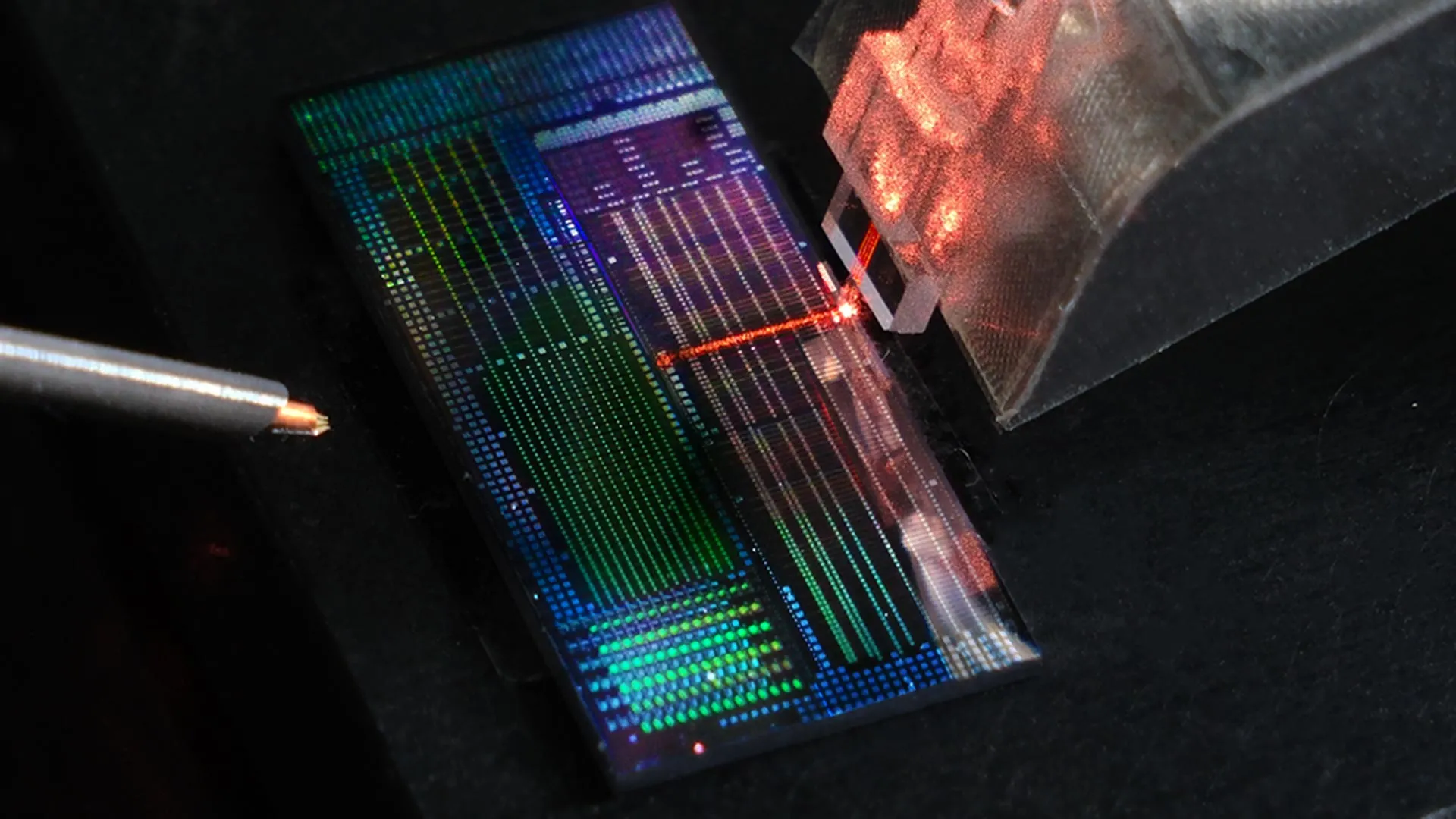
This tiny chip could change the future of quantum computing

Researchers have achieved a significant step forward in quantum computing by developing a device that is almost 100 times thinner than the width of a human hair. The work, published in the journal Nature Communications, introduces a new type of optical phase modulator designed to precisely control laser light. This capability is essential for running future quantum computers that may rely on thousands or even millions of qubits — the fundamental units used to store and process quantum information.

Just as important as its size is how the device is made. Instead of relying on custom-built laboratory equipment, the researchers used scalable manufacturing methods similar to those that produce the processors found in computers, smartphones, vehicles, and household appliances — essentially any technology powered by electricity (even toasters). This approach makes the device far more practical to produce in large numbers.

A Tiny Device Built for Real-World Scale

The research was led by Jake Freedman, an incoming PhD student in the Department of Electrical, Computer and Energy Engineering, alongside Matt Eichenfield, professor and Karl Gustafson Endowed Chair in Quantum Engineering. The team also collaborated with scientists from Sandia National Laboratories, including co-senior author Nils Otterstrom. Together, they created a device that combines small size, high performance, and low cost, making it suitable for mass production.

At the heart of the technology are microwave-frequency vibrations that oscillate billions of times per second. These vibrations allow the chip to manipulate laser light with remarkable precision.

By directly controlling the phase of a laser beam, the device can generate new laser frequencies that are both stable and efficient. This level of control is a key requirement not only for quantum computing, but also for emerging fields such as quantum sensing and quantum networking.

Why Quantum Computers Need Ultra-Precise Lasers

Some of the most promising quantum computing designs use trapped ions or trapped neutral atoms to store information. In these systems, each atom acts as a qubit. Researchers interact with these atoms by directing carefully tuned laser beams at them, effectively giving instructions that allow calculations to take place. For this to work, each laser must be adjusted with extreme precision, sometimes to within billionths of a percent.

“Creating new copies of a laser with very exact differences in frequency is one of the most important tools for working with atom- and ion-based quantum computers,” Freedman said. “But to do that at scale, you need technology that can efficiently generate those new frequencies.”

Currently, these precise frequency shifts are produced using large, table-top devices that require substantial microwave power. While effective for small experiments, these systems are impractical for the massive number of optical channels needed in future quantum computers.

“You’re not going to build a quantum computer with 100,000 bulk electro-optic modulators sitting in a warehouse full of optical tables,” Eichenfield said. “You need some much more scalable ways to manufacture them that don’t have to be hand-assembled and with long optical paths. While you’re at it, if you can make them all fit on a few small microchips and produce 100 times less heat, you’re much more likely to make it work.”

Lower Power Use, Less Heat, More Qubits

The new device generates laser frequency shifts through efficient phase modulation while using about 80 times less microwave power than many existing commercial modulators. Lower power consumption means less heat, which allows more channels to be packed closely together, even onto a single chip.

Taken together, these advantages transform the chip into a scalable system capable of coordinating the precise interactions atoms need to perform quantum calculations.

Built With the Same Technology as Modern Microchips

One of the project’s most important achievements is that the device was manufactured entirely in a fabrication facility, or fab, the same type of environment used to produce advanced microelectronics.

“CMOS fabrication is the most scalable technology humans have ever invented,” Eichenfield said.

“Every microelectronic chip in every cell phone or computer has billions of essentially identical transistors on it. So, by using CMOS fabrication, in the future, we can produce thousands or even millions of identical versions of our photonic devices, which is exactly what quantum computing will need.”

According to Otterstorm, the team took modulator technologies that were once bulky, expensive, and power intensive and redesigned them to be smaller, more efficient, and easier to integrate.

“We’re helping to push optics into its own ‘transistor revolution,’ moving away from the optical equivalent of vacuum tubes and towards scalable integrated photonic technologies,” Otterstorm said.

Toward Fully Integrated Quantum Photonic Chips

The researchers are now working on fully integrated photonic circuits that combine frequency generation, filtering, and pulse shaping on a single chip. This effort moves the field closer to a complete, operational quantum photonic platform.

Next, the team plans to partner with quantum computing companies to test these chips inside advanced trapped-ion and trapped-neutral-atom quantum computers.

“This device is one of the final pieces of the puzzle,” Freedman said. “We’re getting close to a truly scalable photonic platform capable of controlling very large numbers of qubits.”

The project received support from the U.S. Department of Energy through the Quantum Systems Accelerator program, a National Quantum Initiative Science Research Center.

Share Button

A Third Of Labour Voters Think Keir Starmer Should Step Down, Poll Finds

One in three Labour voters say Keir Starmer should step down as prime minister, according to a new poll.

A JL Partners survey, commissioned by the Independent, asked Labour voters if they thought the party had a better chance of winning the next general election if they replaced Starmer – 38% of the 1,562 adults questioned said yes.

A further 39% said getting rid of Starmer would not impact the party’s hopes at the next election, while just 13% said Labour would do worse without the prime minister at the helm and 10% did not offer an opinion.

The poll found that Labour voters have even less faith in Starmer than the general public, as only half of the wider electorate think he should step down.

James Johnson of JL Partners told the Independent: “The results underline the degree to which all voters have lost faith in Keir Starmer. What will worry Downing St most is the belief that Labour would do better under a new leader is strongest among Labour supporters themselves.”

The survey asked which Labour figure voters would like to succeed Starmer.

Manchester mayor and former cabinet minister Andy Burnham came out on top with 19% of Labour voters backing him, even though he is not an MP and therefore not eligible to be party leader.

Former deputy PM Angela Rayner came out in second place with 10% of the vote, while deputy Labour leader Lucy Powell was not far behind on 9%.

Health secretary Wes Streeting and Energy secretary Ed Miliband were both on 6% while home secretary Shabana Mahmood was on 4%.

The education secretary Bridget Phillipson was put on 3% and chief secretary to the PM Darren Jones was on 2%.

The poll also ranked all seven of Labour’s prime ministers in history – and Starmer came out in last place.

The survey comes after the Labour campaign group Labour Together secretly conducted a poll on Starmer’s popularity among its members.

The findings are a real blow to the prime minister, just 18 months on from a landslide victory.

Share Button

Trump Official Mocks Starmer’s Chief Of Staff With Bizarre Christmas Post

An official from the Trump administration appeared to mock the prime minister and his chief of staff after banning two Britons from the US.

Imran Ahmed and Clare Melford, two British-based executives who campaign against disinformation, had their American visas revoked on Christmas Eve.

This was seen as a particular blow to the Labour government due to Ahmed’s links to Keir Starmer’s top team.

Ahmed, a former adviser to cabinet minister Hilary Benn, is chief executive of the Centre for Countering Digital Hate, which was set up in 2017 by Morgan McSweeney, who is now the No.10 chief of staff.

But the US secretary of state Marco Rubio banned Ahmed and Melford for supposedly leading “efforts to coerce American platforms to punish American viewpoints they oppose”.

Then America’s under secretary of state for public diplomacy, Sarah B Rogers, celebrated the move with a slightly less diplomatic move.

She shared a post on X which read, “Hey McSweeney. Merry Christmas”, and featured an edited photo of Rogers with a Christmas hat on.

Rogers added a further festive touch by adding a Christmas tree emoji.

The Trump official said the ban comes as part of a “red line” for the US and the “extraterritorial censorship of Americans”.

Rogers had already taken aim at the UK’s Online Safety Act in interview with GB News at the start of the month, claiming: “To censor Americans in America is a deal breaker.”

When news of the visa ban broke, a UK government spokesperson said: “The UK is fully committed to upholding the right to free speech.

“While every country has the right to set its own visa rules, we support the laws and institutions which are working to keep the Internet free from the most harmful content.

“Social media platforms should not be used to disseminate child sex abuse material, incite hatred and violence, or spread fake information and videos for that purpose.”

Share Button

Unexpected Boost For Starmer As Tory Peer Admits He Would Vote Labour

A Conservative peer has offered up a surprise boost for Keir Starmer as he would still vote for Labour despite the government’s difficult time in office.

Lord Rose, the chairman of Asda, told LBC that there is widespread frustration with Labour – but suggested that’s still better than the alternatives.

“We’re in a situation now where I think many people in this country would be disappointed with the government they have elected,” Rose told LBC.

“We’ve now got a situation where I don’t believe the Conservatives can make a recovery in time for the next election.

“So let’s assume it’s the election after that.

“You are now going to find yourself in a very difficult situation in 2027, ’28, ’29, where if Labour don’t start delivering some [economic] growth, the Conservatives haven’t recovered in time, and you’ve got the other option – what are you going to vote for?

“Are you going to vote for Reform or are you going to vote for a second government?”

He said: “I would vote for another Labour government, but I would want some change in the meantime.”

Asked why he would vote for another round of Labour, he said: “It’s a question of degrees of pain, isn’t it?

“If I can’t have a resurgent Conservative Party, and they’ve got a lot of work to do to make themselves re-electable – or I’ve got the alternative, which, frankly, is supping with the devil.”

Asked what Kemi Badenoch has to do to secure the Tory peer’s vote again, he said: “She’s got to be doing more of what she’s begun now, I think, but I just think, it does, in all these things, require time, and I’m not sure time is on their side.”

<div class="js-react-hydrator" data-component-name="Twitter" data-component-id="4548" data-component-props="{"itemType":"rich","index":15,"contentIndexByType":1,"contentListType":"embed","code":"

‘Why would you vote Labour?’
‘It’s a question of degrees of pain.’

Conservative peer Lord Rose explains why he would vote against his party in future elections. pic.twitter.com/yKdhbM6eIY

— LBC (@LBC) December 25, 2025

","type":"rich","meta":{"author":"LBC","author_url":"https://twitter.com/LBC","cache_age":86400,"description":"‘Why would you vote Labour?’‘It’s a question of degrees of pain.’ Conservative peer Lord Rose explains why he would vote against his party in future elections. pic.twitter.com/yKdhbM6eIY— LBC (@LBC) December 25, 2025\n\n\n","options":{"_hide_media":{"label":"Hide photos, videos, and cards","value":false},"_maxwidth":{"label":"Adjust width","placeholder":"220-550, in px","value":""},"_theme":{"value":"","values":{"dark":"Use dark theme"}}},"provider_name":"Twitter","thumbnail_height":1080,"thumbnail_url":"https://pbs.twimg.com/media/G877yx2WIAAmJzV.jpg:large","thumbnail_width":1080,"title":"LBC on Twitter / X","type":"rich","url":"https://twitter.com/LBC/status/2004228142546739628","version":"1.0"},"flags":[],"enhancements":{},"fullBleed":false,"options":{"theme":"news","device":"desktop","editionInfo":{"id":"uk","name":"U.K.","link":"https://www.huffingtonpost.co.uk","locale":"en_GB"},"originalEdition":"uk","isMapi":false,"isAmp":false,"isMobile":false,"isAdsFree":false,"isVideoEntry":false,"isEntry":true,"isMt":false,"entryId":"694e44ade4b0414a52f6cbbc","entryPermalink":"https://www.huffingtonpost.co.uk/entry/boost-for-starmer-as-tory-peer-admits-he-would-vote-labour_uk_694e44ade4b0414a52f6cbbc","entryTagsList":"labour-party,conservative-party,kemi-badenoch,lbc","sectionSlug":"politics","deptSlug":null,"sectionRedirectUrl":null,"subcategories":"","isWide":false,"isShopping":false,"headerOverride":null,"noVideoAds":false,"disableFloat":false,"isNative":false,"commercialVideo":{"provider":"custom","site_and_category":"uk.politics","package":null},"isHighline":false,"vidibleConfigValues":{"cid":"60afc140cf94592c45d7390c","disabledWithMapiEntries":false,"overrides":{"all":"60b8e525cdd90620331baaf4"},"whitelisted":["56c5f12ee4b03a39c93c9439","56c6056ee4b01f2b7e1b5f35","59bfee7f9e451049f87f550b","5acccbaac269d609ef44c529","570278d2e4b070ff77b98217","57027b4be4b070ff77b98d5c","56fe95c4e4b0041c4242016b","570279cfe4b06d08e3629954","5ba9e8821c2e65639162ccf1","5bcd9904821576674bc55ced","5d076ca127f25f504327c72e","5b35266b158f855373e28256","5ebac2e8abddfb04f877dff2","60b8e525cdd90620331baaf4","60b64354b171b7444beaff4d","60d0d8e09340d7032ad0fb1a","60d0d90f9340d7032ad0fbeb","60d0d9949340d7032ad0fed3","60d0d9f99340d7032ad10113","60d0daa69340d7032ad104cf","60d0de02b627221e9d819408"],"playlists":{"default":"57bc306888d2ff1a7f6b5579","news":"56c6dbcee4b04edee8beb49c","politics":"56c6dbcee4b04edee8beb49c","entertainment":"56c6e7f2e4b0983aa64c60fc","tech":"56c6f70ae4b043c5bdcaebf9","parents":"56cc65c2e4b0239099455b42","lifestyle":"56cc66a9e4b01f81ef94e98c"},"playerUpdates":{"56c6056ee4b01f2b7e1b5f35":"60b8e525cdd90620331baaf4","56c5f12ee4b03a39c93c9439":"60d0d8e09340d7032ad0fb1a","59bfee7f9e451049f87f550b":"60d0d90f9340d7032ad0fbeb","5acccbaac269d609ef44c529":"60d0d9949340d7032ad0fed3","5bcd9904821576674bc55ced":"60d0d9f99340d7032ad10113","5d076ca127f25f504327c72e":"60d0daa69340d7032ad104cf","5ebac2e8abddfb04f877dff2":"60d0de02b627221e9d819408"}},"connatixConfigValues":{"defaultPlayer":"16b0ecc6-802c-4120-845f-e90629812c4d","clickToPlayPlayer":"823ac03a-0f7e-4bcb-8521-a5b091ae948d","videoPagePlayer":"05041ada-93f7-4e86-9208-e03a5b19311b","defaultPlaylist":"2e062669-71b4-41df-b17a-df6b1616bc8f"},"topConnatixThumnbailSrc":"data:image/png;base64,iVBORw0KGgoAAAANSUhEUgAAAAEAAAABCAQAAAC1HAwCAAAAC0lEQVR42mNkYAAAAAYAAjCB0C8AAAAASUVORK5CYII=","customAmpComponents":[],"ampAssetsUrl":"https://amp.assets.huffpost.com","videoTraits":null,"positionInUnitCounts":{"buzz_head":{"count":0},"buzz_body":{"count":0},"buzz_bottom":{"count":0}},"positionInSubUnitCounts":{"article_body":{"count":7},"blog_summary":{"count":0},"before_you_go_content":{"count":0}},"connatixCountsHelper":{"count":0},"buzzfeedTracking":{"context_page_id":"694e44ade4b0414a52f6cbbc","context_page_type":"buzz","destination":"huffpost","mode":"desktop","page_edition":"en-uk"},"tags":[{"name":"labour party","slug":"labour-party","links":{"relativeLink":"news/labour-party","permalink":"https://www.huffingtonpost.co.uk/news/labour-party","mobileWebLink":"https://www.huffingtonpost.co.uk/news/labour-party"},"relegenceId":4172183,"section":{"title":"Politics","slug":"politics"},"topic":{"title":"Labour Party","slug":"labour-party","overridesSectionLabel":false},"url":"https://www.huffingtonpost.co.uk/news/labour-party/"},{"name":"conservative party","slug":"conservative-party","links":{"relativeLink":"news/conservative-party","permalink":"https://www.huffingtonpost.co.uk/news/conservative-party","mobileWebLink":"https://www.huffingtonpost.co.uk/news/conservative-party"},"relegenceId":3696340,"section":{"title":"Politics","slug":"politics"},"topic":{"title":"Conservative Party","slug":"conservative-party","overridesSectionLabel":false},"url":"https://www.huffingtonpost.co.uk/news/conservative-party/"},{"name":"kemi badenoch","slug":"kemi-badenoch","links":{"relativeLink":"news/kemi-badenoch","permalink":"https://www.huffingtonpost.co.uk/news/kemi-badenoch","mobileWebLink":"https://www.huffingtonpost.co.uk/news/kemi-badenoch"},"url":"https://www.huffingtonpost.co.uk/news/kemi-badenoch/"},{"name":"LBC","slug":"lbc","links":{"relativeLink":"news/lbc","permalink":"https://www.huffingtonpost.co.uk/news/lbc","mobileWebLink":"https://www.huffingtonpost.co.uk/news/lbc"},"relegenceId":3547103,"url":"https://www.huffingtonpost.co.uk/news/lbc/"}],"isLiveblogLive":null,"isLiveblog":false,"backfillRelatedArticles":[],"signInUrl":"https://login.huffpost.com/login?dest=https%3A%2F%2Fwww.huffpost.com%2Fentry%2Fboost-for-starmer-as-tory-peer-admits-he-would-vote-labour_uk_694e44ade4b0414a52f6cbbc%3Fhp_auth_done%3D1","cetUnit":"buzz_body","enableIncontentPlayer":false,"bodyAds":["

\r\n\r\n HPGam.cmd.push(function(){\r\n\t\treturn HPGam.render(\"inline-1\", \"entry_paragraph_1\", false, false);\r\n });\r\n\r\n","

\r\n\r\n HPGam.cmd.push(function(){\r\n\t\treturn HPGam.render(\"inline\", \"entry_paragraph_2\", false, false);\r\n });\r\n\r\n","

\r\n\r\n HPGam.cmd.push(function(){\r\n\t\treturn HPGam.render(\"inline-2\", \"entry_paragraph_3\", false, false);\r\n });\r\n\r\n","

\r\n\r\n HPGam.cmd.push(function(){\r\n\t\treturn HPGam.render(\"inline-infinite\", \"repeating_dynamic_display\", false, false);\r\n });\r\n\r\n"],"adCount":0,"midArticleAdPartner":null},"isCollectionEmbed":false}”>

‘Why would you vote Labour?’
‘It’s a question of degrees of pain.’

Conservative peer Lord Rose explains why he would vote against his party in future elections. pic.twitter.com/yKdhbM6eIY

— LBC (@LBC) December 25, 2025

Share Button