Up to half of patients coming to some pharmacies are being turned away because they are not eligible.


Up to half of patients coming to some pharmacies are being turned away because they are not eligible.
British Medical Association say 30,000 medics were chasing 10,000 jobs this year.
The sun-drenched paradise of Thailand’s Phi Phi islands isn’t the usual starting point for a PhD. But for Sarah Sajedi, those soft, sandy beaches – or rather, what she found under them -inspired her pivot from a business career to an academic one.
“I was standing there looking out at this gorgeous view of the Andaman Sea, and then I looked down and beneath my feet were all these pieces of plastic, most of them water bottles,” she says.
“I’ve always had a passion for waste reduction, but I realized that this was a problem with consumption.”
Sajedi, BSc ’91, decided to return to Concordia to pursue a PhD with a focus on plastic waste. As the co-founder of ERA Environmental Management Solutions, a leading provider of environmental, health and safety software, she brought decades of experience to complement her studies.
Her latest paper, published in the Journal of Hazardous Materials, looks at the science around the health risks posed by single-use plastic water bottles. They are serious, she says, and seriously understudied.
Tiny threats, little known
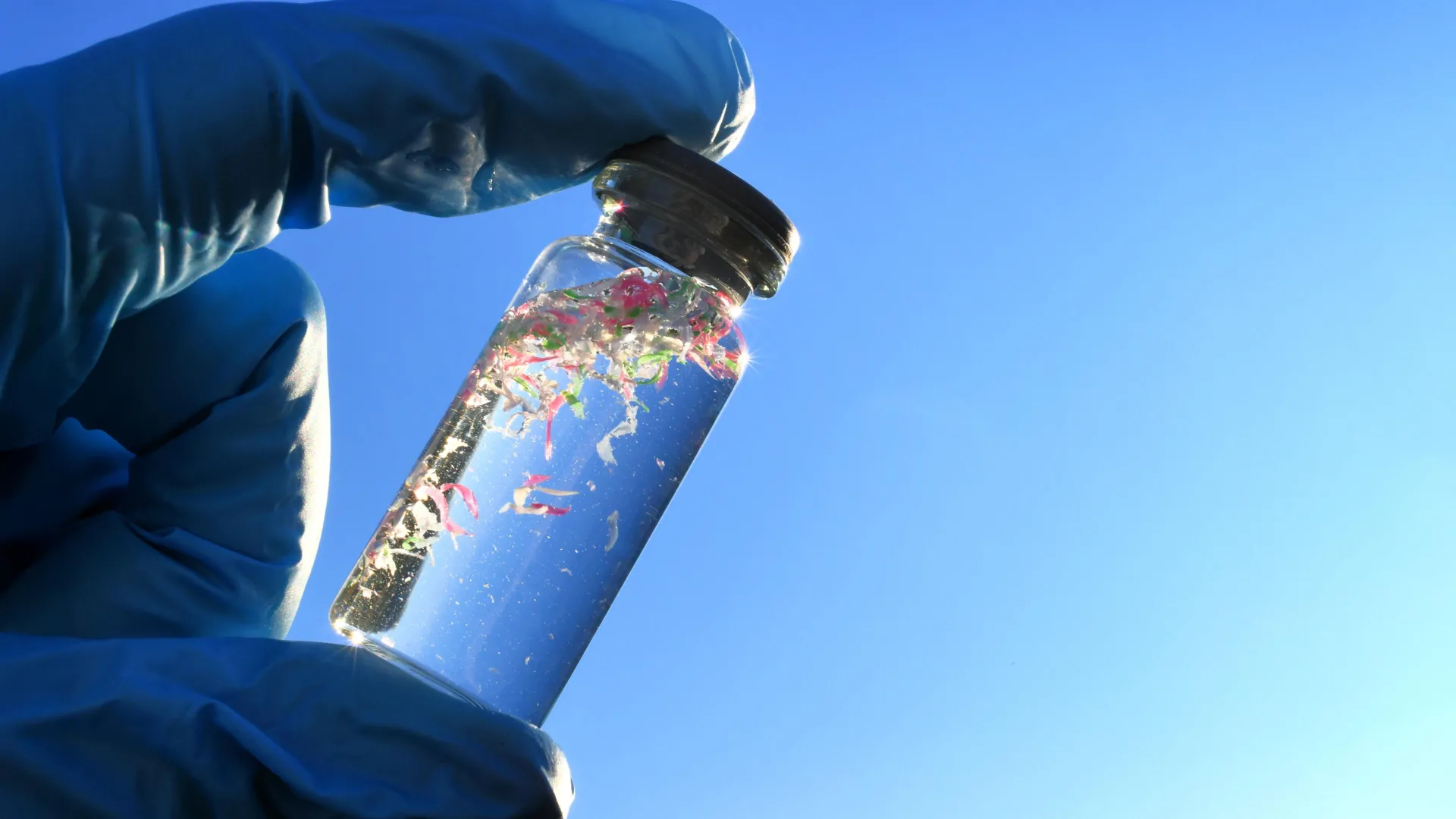
In her review of over 140 scientific articles, Sajedi writes that individuals on average ingest between 39,000 and 52,000 microplastic particles per year, and bottled water users consume 90,000 more particles than tap water consumers.
The particles are usually invisible to the naked eye. A microplastic particle can range between one micron — a thousandth of a millimeter — to five millimeters; nanoplastics are smaller than one micron.
They emerge as bottles are made, stored, transported and broken down over their lifespans. Because they are often made from low-quality plastic, they shed tiny pieces every time they are manipulated and exposed to sunlight and temperature fluctuations. And unlike other types of plastic particles, which enter human bodies through the food chain, these are ingested directly from the source.
As Sajedi notes, the health consequences can be severe. Once inside the body, these small plastics can cross biological boundaries, enter the bloodstream and reach vital organs. This can lead to chronic inflammation, oxidative stress on cells, hormonal disruption, impaired reproduction, neurological damage and various kinds of cancer. However, the long-term effects remain poorly understood due to a lack of widespread testing and standardized methods of measurement and detection.
Sajedi identifies multiple methods researchers have used to measure nano- and microplastics, each with their own strengths and weaknesses. Some, for instance, can detect very small particles but cannot identify their chemical composition. Others can provide details about their makeup but miss the smallest plastics. And the best, most advanced and most reliable tools are often extremely costly and not always available.
Education is the best prevention
Sajedi is encouraged by the legislative action that has been adopted by governments around the world aimed at limiting plastic waste. However, she notes that the most common targets are single-use plastic bags, straws and packaging. Very few address the pressing issue of single-use water bottles.
“Education is the most important action we can take,” she says. “Drinking water from plastic bottles is fine in an emergency but it is not something that should be used in daily life. People need to understand that the issue is not acute toxicity — it is chronic toxicity.”
Chunjiang An, associate professor, and Zhi Chen, professor, in the Department of Building, Civil and Environmental Engineering at the Gina Cody School of Engineering and Computer Science contributed to this paper.
This research was supported by the Natural Sciences and Engineering Research Council of Canada and Concordia University.
More than 100 million people, including at least 15 million children, use e-cigarettes, fuelling a new wave of nicotine addiction, say experts.
I’m surprised by a lot of seemingly ordinary facts, like why sleeve buttons exist and what the “most complex” word in the English language is considered to be.
So you’d best believe I’m a regular peruser of Reddit’s r/todayilearned (TIL), where netizens share the mildly interesting scraps of trivia they, well… learned, today.
Advertisement
For site user u/amateurfunk, a recent example involved the colour of button mushrooms (also known as “champignon mushrooms”).
“TIL that champignon mushrooms were originally all light brown in colour,” they wrote.
But is that true?
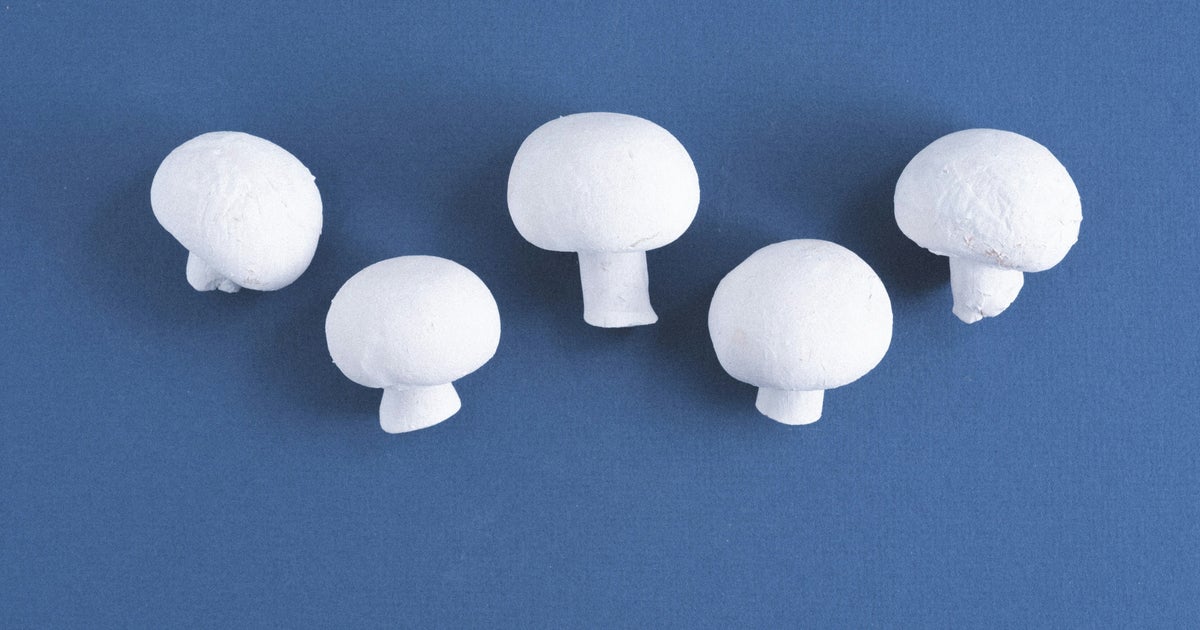
According to the Mycological Society of San Francisco (MSSF), yup, the common mushroom (sometimes called a “white button” variety) actually used to be brown.
Advertisement
The species was first grown on horse manure in 18th-century France, the MSSF explained.
It is still often grown this way because the species thrives in nitrogen-rich environments (oh!).
But in 1926, the MSSF continued, “a Pennsylvania mushroom farmer found a clump of [button mushrooms] with white caps in his mushroom bed”.
They then bred the mutates species, and now, “most of the cream-coloured store mushrooms we see today are products of this chance observation”.
And here’s a fact that shook me: button, cremini, and portobello mushrooms are actually just the same species of fungi at different stages of development.
Advertisement
This species, Agaricus bisporum, increases in flavour and deepens in colour as it ages. Button is the mildest and palest variety: its very subtle taste may have made it the most popular kind on our shelves.
Replying to the original post, Redditor u/diabloman8890 joked that the pale, creamy version we’re all used to counts as “Teenage mutant inbred mushrooms”.
“One mutation in 192[6] and now it’s the default, nature’s marketing win,” u/bebleich marvelled.
But u/Preeng was a little less impressed, commenting: “And nothing new since then? Not a blue one or a red one? Lame.”
Advertisement
Ultimately, though, as u/DConstructed pointed out, ”[Once] you cook them, they’re all brown anyway.”
There’s a new Hollywood newcomer who already has a long list of haters: Tilly Norwood, the AI-generated “actor”.
Dutch comedian Eline Van der Velden, the head of AI production studio Particle6, which developed Tilly, said she wants the AI character to be the next Scarlett Johansson.
But not if the rest of Hollywood has its way.
After Van der Velden announced what she calls “the world’s first artificial intelligence talent studio” at a film festival and said Tilly had talent agents hoping to sign her, this news of potential representation sparked widespread Hollywood backlash.
Advertisement
Multiple actors’ unions have released statements condemning Tilly. Actors have also accused Tilly’s makers of stealing real people’s images to make the AI-generated character.
“And what about the hundreds of living young women whose faces were composited together to make her?” actor Mara Wilson posted on social media. One Nashville-based musician even claims that Tilly is her doppelganger.
The company behind Tilly denies that the character was created with stolen images.
“Tilly was developed entirely from scratch using original creative design,” Particle6 said in a statement to HuffPost. “We do not and will not use any person or performer’s likeness without explicit consent and fair compensation.”
Advertisement
After outcry, Van der Velden said Tilly was “not a replacement for a human being, but a creative work – a piece of art” in a social media statement.
But no matter how original or creative you believe Tilly to be, she is definitely drawing from tired old tropes about women and raising unsettling implications for real working people, AI experts caution. Here’s what you need to know.

Advertisement
For one, Tilly replicates a narrow idea of what generative AI thinks a woman should look like.
In a Washington Post investigation of three of the leading AI image tools, the Post found that generative AI thinks beautiful women should look thin, young and white – which is exactly how Tilly looks.
Particle6 did not answer HuffPost’s questions about Tilly’s appearance.
What we see on social media – including the accounts set up for Tilly on TikTok, Facebook and Instagram – might have long-term effects on how people view their own real bodies.
Safiya Noble, a professor at the University of California, Los Angeles, and the author of the book Algorithms of Oppression, said Tilly is a continuation of the kind of distortions that social media photo filters cause people.
Advertisement
“Those distortions, even though they are seemingly unreal, they circulate so much in our culture that then are celebrated and … liked and hearted,” Noble said. “And that certainly has a psychological and emotional toll on us.“
A 2022 study on Instagram found that browsing how other people looked on the popular social media platform was linked to “detrimental outcomes” around body dissatisfaction in young women.
Above all, Tilly reveals a lot about how corporations value women’s work.
Alexandra Mateescu, a researcher with Data & Society’s Labor Futures program, said what she found most interesting and unsettling about Tilly’s existence came from a line in a Particle6 video where she appears in her first role.
Advertisement
In an AI-generated comedy sketch from Particle6, Tilly gets cast to be in a TV show. A man then states, “She’ll do anything I say; I’m already in love.”
That line suggests “this vision of this feminine, docile, cute, young actress who won’t talk back or complain about working conditions or anything,” Mateescu said.
That’s why, for Mateescu, her biggest worry with Tilly is “more about these kinds of marketing exercises being used as a cudgel, particularly for actors at the bottom of film industry hierarchies, to discourage them from demanding better working conditions under this threat of potentially being replaced”.
Advertisement
Mateescu said she has seen this power dynamic in other creative industries, like modelling. She recently co-authored a paper on how generative AI is making it easier for companies to use a model’s image and measurements and alter them without a model’s knowledge or compensation.
In her research, “people at the top of the industry, both photographers and top models, they could view AI as this creative tool in their arsenal to be able to enhance their creative practices,” Mateescu said. But struggling models doing profit-driven e-commerce catalogs were more negatively impacted. “And I think that’s sort of the same pattern we see across industries.”
In this sense, Tilly might represent a bigger existential threat to vulnerable, newer actors who do not have the same power and networks as A-list stars.
Advertisement
In Noble’s view, Tilly’s existence normalises “controlling women’s images” and the idea that it’s OK to “make women do what we want them to do. That culture is prevalent all around us”.
Tilly is not real, but it’s normal if you’re confused over what to call her. That might be by design.
Noble pointed to the character saying, “I may be AI generated, but I’m feeling very real emotions right now” in a post appearing on her Facebook page as an example of the kind of misrepresentation this AI-generated actor perpetuates.
Advertisement
“The more kind of anthropomorphised they are, the more misleading and deceptive they are to the public,” Noble said. “This is why these technologies are so incredibly dangerous.”
One way to resist is to be more careful about how you talk about AI-generated projects like Tilly.
Instead of seeing Tilly as an “actor,” as her profile describes her, or as the next Scarlett Johansson, as her creator hopes her to be, experts suggest you should see her for what she really is – a marketing product.
That’s why Noble suggests against calling Tilly art and instead categorising Tilly as the latest example of low-quality, spam-like “AI slop”.
Advertisement
And try to avoid referring to Tilly as an actor. “We should call it ‘it,’” Noble said. “We should talk about it like a machine learning model.”
“The notion of AI personhood is a marketing exercise and a legal manoeuvre that I don’t think we should buy into,” Matreescu said. “Tilly is not an actress any more than, like, Sid the sloth from the ‘Ice Age’ movies is an actor. It’s just a digital likeness.”


The number of delegates attending key events at the Conservative Party conference seems to be depressingly low, judging by photos of the main hall.
It’s the party’s first annual gathering since Kemi Badenoch won the leadership contest last November and the atmosphere appears to be particularly flat.
Advertisement
While it’s not too surprising – considering the Tories’ historic loss at the 2024 general election and how they are currently polling at just 16% according to YouGov – it’s a bleak reminder of just how much has changed for the party who were in government only 15 months ago.
Sky News’ Amanda Akass noted that it was “not exactly a packed hall” for the shadow chancellor Mel Stride’s speech today – and attached a photo of a room which appeared to be about two-thirds empty.
Advertisement
Advertisement
GB News also said it was the “quietest” Tory conference seen in the last nine years in an interview with Stride – although he tried to pass this year’s gathering off as a “turning point” for the party.
Other journalists pointed out that even regular Westminster protesters have not bothered to turn up to the Manchester gathering.
Advertisement
And acting deputy comment editor at the Telegraph, Poppy Coburn, said the “membership exodus” was palpable.
Advertisement
The embarrassing evidence of the turnout gave Reform UK an easy win, too.
Leader Nigel Farage claiming: “More people have joined Reform in the past 24 hours than were in the room for Kemi’s conference speech.”
Naturally, Labour took a pop too, comparing Stride’s claim that the Tories are the “party of hope” and “the party of the future” to the small audience size…
Advertisement
It all comes as YouGov’s latest MRP model revealed that the Conservative would win just 45 seats if an election were held tomorrow.
Advertisement
However, not every post from the conference has been negative – many fringe events seem to be attracting reasonable crowds.
Advertisement
Advertisement

The prize-winning discovery explains how the immune system attacks hostile infections, but not the body’s own cells.

This is a sparkling scene of star birth captured by NASA’s James Webb Space Telescope. What appears to be a craggy, starlit mountaintop kissed by wispy clouds is actually a cosmic dust-scape being eaten away by the blistering winds and radiation of nearby, massive, infant stars.
Called Pismis 24, this young star cluster resides in the core of the nearby Lobster Nebula, approximately 5,500 light-years from Earth in the constellation Scorpius. Home to a vibrant stellar nursery and one of the closest sites of massive star birth, Pismis 24 provides rare insight into large and massive stars. Its proximity makes this region one of the best places to explore the properties of hot young stars and how they evolve.
At the heart of this glittering cluster is the brilliant Pismis 24-1. It is at the center of a clump of stars above the jagged orange peaks, and the tallest spire is pointing directly toward it. Pismis 24-1 appears as a gigantic single star, and it was once thought to be the most massive known star. Scientists have since learned that it is composed of at least two stars, though they cannot be resolved in this image. At 74 and 66 solar masses, respectively, the two known stars are still among the most massive and luminous stars ever seen.
Captured in infrared light by Webb’s NIRCam (Near-Infrared Camera), this image reveals thousands of jewel-like stars of varying sizes and colors. The largest and most brilliant ones with the six-point diffraction spikes are the most massive stars in the cluster. Hundreds to thousands of smaller members of the cluster appear as white, yellow, and red, depending on their stellar type and the amount of dust enshrouding them. Webb also shows us tens of thousands of stars behind the cluster that are part of the Milky Way galaxy.
Super-hot, infant stars -some almost 8 times the temperature of the Sun – blast out scorching radiation and punishing winds that are sculpting a cavity into the wall of the star-forming nebula. That nebula extends far beyond NIRCam’s field of view. Only small portions of it are visible at the bottom and top right of the image. Streamers of hot, ionized gas flow off the ridges of the nebula, and wispy veils of gas and dust, illuminated by starlight, float around its towering peaks.
Dramatic spires jut from the glowing wall of gas, resisting the relentless radiation and winds. They are like fingers pointing toward the hot, young stars that have sculpted them. The fierce forces shaping and compressing these spires cause new stars to form within them. The tallest spire spans about 5.4 light-years from its tip to the bottom of the image. More than 200 of our solar systems out to Neptune’s orbit could fit into the width its tip, which is 0.14 lightyears.
In this image, the color cyan indicates hot or ionized hydrogen gas being heated up by the massive young stars. Dust molecules similar to smoke here on Earth are represented in orange. Red signifies cooler, denser molecular hydrogen. The darker the red, the denser the gas. Black denotes the densest gas, which is not emitting light. The wispy white features are dust and gas that are scattering starlight.
The James Webb Space Telescope is the world’s premier space science observatory. Webb is solving mysteries in our solar system, looking beyond to distant worlds around other stars, and probing the mysterious structures and origins of our universe and our place in it. Webb is an international program led by NASA with its partners, ESA (European Space Agency) and CSA (Canadian Space Agency).
Former England captain Lewis Moody says in an exclusive BBC interview he has “a reluctance to look the future in the face”.
