Lawyers say the earplugs were used in operations, including in Afghanistan, from 2003 onwards.


Lawyers say the earplugs were used in operations, including in Afghanistan, from 2003 onwards.

UCLA researchers have uncovered a link between “morning sickness” symptoms and the body’s natural, but complex, inflammatory response to biological and bodily changes during pregnancy.
According to the National Institutes of Health, up to 80% of early-stage pregnant mothers experience some nausea, vomiting and aversions to certain foods and smells. While uncomfortable, these symptoms are not typically a sign that anything is wrong with the health of the mother or the developing fetus, but rather an indication of a delicate balance unique to pregnant women.
“During pregnancy, a mother’s immune system faces a tricky challenge: it has to protect both her and the fetus from infection, but without accidentally attacking the fetus, whose genetic identity is half-foreign because it is half derived from the father. Normally, the immune system attacks anything that seems foreign, so in pregnancy, it has to carefully adjust to keep the fetus safe while still defending against infection,” said UCLA anthropology professor Molly Fox.
Fox is the corresponding author of the study “Of scents and cytokines: How olfactory and food aversions relate to nausea and immunomodulation in early pregnancy,” recently published in the journal Evolution, Medicine and Public Health.
The researchers believe that this delicate balance, which protects mother and fetus, is achieved by a unique mix of inflammatory responses. They function to prevent the mother’s body from rejecting the fetus, alongside adaptive behavioral mechanisms, like nausea, that encourage the mother to avoid foods that are potentially harmful, especially in the first and second trimesters when the fetus is most vulnerable.
“Nausea, vomiting or aversions to foods or smells are not indications that something is going wrong for the mother or the fetus. It’s likely an indication that everything is moving along normally, and a reflection of the body’s healthy and helpful immune response,” said UCLA anthropology professor and paper co-author Daniel Fessler.
Methodology and findings
For the study, the UCLA-led team of anthropologists and epidemiologists collected and analyzed blood samples to measure immune system molecules called cytokines. Cytokines are proteins that send signals to help the body launch a quick defense against sickness and regulate inflammation. Participants also filled out questionnaires that asked about morning sickness-related symptoms and food and smell aversions during the early stages of pregnancy. The participants were 58 Latina women in Southern California who were followed beginning in early pregnancy through the postpartum.
Sixty-four percent of study participants experienced odor or food aversions, primarily to tobacco smoke and meat. Sixty-seven percent reported nausea and 66% experienced vomiting.
The study team measured cytokines that promote inflammation (pro-inflammatory) as well as cytokines that suppress inflammation (anti-inflammatory). They found that women who experienced an aversion to tobacco smoke showed a noticeable shift toward a more inflammatory response. Food aversions, nausea and vomiting were also associated with a more pro-inflammatory immune balance.
Natural selection?
The correlation is consistent with researchers’ theory that these symptoms may be part of an evolutionary adaptation that helps pregnant mothers’ bodies minimize exposure to harmful substances, though the study’s authors caution that the evidence is not definitive and more research is needed.
They emphasized that the study allowed the team to look at both human biological and behavioral responses during pregnancy.
“In many mammals, the fetal compartment has barriers separating it from the mother’s blood supply, where her immune cells are. But in humans, we have a unique setup — fetal cells are bathed in maternal blood. Humans have the most invasive of all placentas, burrowing deep into maternal tissue. So humans need unique strategies to prevent the mother’s immune system from attacking the fetus,” said Fox.
These immunological changes may induce nausea, which in turn encourages food avoidance that might act as an additional layer of protection, according to the researchers
“Nowadays, you will see labels on packages of ground beef or soft cheese that warn pregnant women to be cautious about these products because of the risks of foodborne illness during pregnancy. Aversions to certain odors and foods, and nausea and even vomiting, appear to be evolution’s way of achieving that same objective,” said Fessler.
Practical implications
The researchers, including first author Dayoon Kwon, who just completed her Ph.D. in epidemiology at UCLA (and is now a postdoctoral fellow at Stanford), said that the study could help bolster recognition that nausea and vomiting are normal symptoms with biological underpinnings associated with healthy pregnancies. The study’s results could help in paving the way for common-sense workplace accommodations, such as more efficient deployment of health care benefits and other helpful resources to reduce stigma, excessive absences and lost productivity.
They also encourage other researchers to continue to look into the questions raised by the study, to not only explore the evolutionary questions, but to work toward providing clinicians with non- or low-invasive measures of prognoses.
Funding for this study was provided by the National Institute of Health.
Former Para-athletic world champion Stef Reid says footwear companies are failing amputees.
An undercover BBC team catch a fake doctor, a pharmacist and a nurse supplying Botox illegally without checks.

Strong Northern Lights-like activity is the standout feature of today’s weather report, which is coming at you from a strange, extrasolar world, instead of a standard TV studio. That is thanks to astronomers from Trinity College Dublin, who used the NASA/ESA/CSA James Webb Space Telescope to take a close look at the weather of a toasty nearby rogue planet, SIMP-0136.
The exquisite sensitivity of the instruments on board the space-based telescope enabled the team to see minute changes in brightness of the planet as it rotated, which were used to track changes in temperature, cloud cover and chemistry.
Surprisingly, these observations also illuminated SIMP-0136’s strong auroral activity, similar to the Northern Lights here on Earth or the powerful aurora on Jupiter, which heat up its upper atmosphere.
“These are some of the most precise measurements of the atmosphere of any extra-solar object to date, and the first time that changes in the atmospheric properties have been directly measured,” said Dr Evert Nasedkin, a Postdoctoral Fellow in Trinity College Dublin’s School of Physics, who is the lead author of the research article just published in leading international journal, Astronomy & Astrophysics.
“And at over 1,500 °C, SIMP-0136 makes this summer’s heat wave look mild,” he continued. “The precise observations we made meant we could accurately record temperature changes smaller than 5 °C. These changes in temperature were related to subtle changes in the chemical composition of this free-floating planet, which is suggestive of storms – similar to Jupiter’s Great Red Spot – rotating into view.”
Another surprise finding was the lack of variability of the clouds on SIMP-0136. One might expect changes in the cloud coverage to lead to changes in the atmosphere, similar to observing patches of clouds and blue sky here on Earth. Instead, the team found that the cloud coverage was constant over the surface of SIMP-0136. At the temperatures of SIMP-0136 these clouds are unlike those on earth, instead composed of silicate grains, similar to sand on a beach.
This is the first publication from the new ‘Exo-Aimsir’ group led by Prof. Johanna Vos in Trinity’s School of Physics, and includes contributions from all the group members, including PhD candidates Merle Schrader, Madeline Lam and Cian O’Toole.
These data were initially published by a similar team led by Allison McCarthy at Boston University, but the new analysis has revealed more details about the atmosphere.
“Different wavelengths of light are related to different atmospheric features. Similar to observing the changes in colour over the surface of the earth, the changes in the colour of SIMP-0136 are driven by changes in the atmospheric properties,” added Dr. Nasedkin. “So by using cutting-edge models, we could infer the temperature of the atmosphere, the chemical composition, and the position of the clouds.”
Prof. Vos said: “This work is exciting because it shows that by applying our state-of-the-art modelling techniques to cutting-edge datasets from JWST, we can begin to piece together the processes that drive weather in worlds beyond our solar system. Understanding these weather processes will be crucial as we continue to discover and characterize exoplanets in the future.”
“While for now these types of spectroscopic variability observations are limited to isolated brown dwarfs, like this one, future observations with the Extremely Large Telescope and eventually the Habitable Worlds Observatory will enable the study of the atmospheric dynamics of exoplanets, from Jupiter-like gas giants to rocky worlds.”
This part of the inquiry is looking at the impact the pandemic had on children and young people.
GPs are concerned they will be at the end of an “online triage tsunami” when the new system launches.

Turns out CAPTCHA actually stands for “completely automated public Turing test to tell computers and humans apart” – and LEGO, HARIBO, and Twix all have hidden meanings, too.
And my friends are probably bored by now of hearing that IKEA, ASDA, and Tesco are acronyms or portmanteaus.
Advertisement
Well, sorry to them: I’ve found another word with an unexpected meaning.
Yup, “snafu” – which refers to a situation in which nothing goes to plan, and everything that can go wrong seems to – stands for five words, and has a surprisingly military origin.
Per Merriam-Webster, snafu stands for “Situation Normal: All Fucked Up” (or “fouled up”). In other words, it suggests a scenario where chaos or confusion is the norm.
The American military slang seems to have appeared in World War II – it was explained in the Kansas City Star in 1941 as “situation normal, all fixed up” and was presented as a novel word, not suitable for use “on leave”, back then.
Advertisement
Interestingly, in that entry, the sergeant said soldiers were torn on whether the initials were a “backronym” – a word which starts out not standing for anything but is later given words for each letter.
“Most fellows” said the word “snafu” just “popped out” of the head of one of the members of the 35th division outfits, who he claimed invented the word, per the Kansas City Star.
But “after snafu got pretty well spread around, somebody decided it was a bunch of letters that stood for words,” one theory reportedly went.
Advertisement
However it began, there was a fictional character called Private Snafu who appeared in instructional cartoons in the ’40s.
Described as “the goofiest soldier in the US army,” Private Snafu seems to have been named after the slang rather than giving rise to it.
And it turns out that the person who voiced his animated persona, Mel Blanc, also provided the instantly recognisable tones of Donald Duck and Bugs Bunny.
Advertisement
The National WWII Museum in New Orleans shared that Dr Seuss – or, to give him his full name, Theodor Geisel – wrote “most” of the shorts.
As ScreenRant pointed out, the shorts didn’t just advise US soldiers on what not to do during the war (whatever Private Snafu was up to was wrong, basically). But on top of that, the cartoons kept animation studios alive during wartime as an essential industry.
Episodes of Private Snafu did not have to be approved by the Production Code Administration. That led to more raunchy scenes and swearing.
Advertisement
Though the Private Snafu clips are now in the public domain and can be viewed online, the museum warned that “the series does contain outdated cultural depictions that were common during the war”.


A senior Reform UK official was left squirming over a former leader of the party who has admitted making pro-Russia statements for cash.
Nathan Gill, who led Reform in Wales, last week pleaded guilty at the Old Bailey to eight counts of bribery between 2018 and 2019.
Advertisement
His activities were said to include making pro-Russian statements about events in Ukraine in the European Parliament and in opinion pieces to news outlets.
Gill was first elected as a UKIP member of the European Parliament in 2014 and became an MEP for the Brexit Party after the UK formally left the EU in 2020.
He led Reform UK’s 2021 Welsh Parliament election campaign but is no longer a member of the party.
On BBC Breakfast on Monday, Reform policy chief Zia Yusuf said what he had done was “appalling and totally unacceptable and treacherous”.
Advertisement
However, he then went on to accuse Labour of “smears and name calling” to deflect from the government’s record.
Asked by presenter Jon Kay if anyone else in Reform shared Gill’s views, Yusuf said: “The first time I heard his name or seen his name was in news reports.”
As he insisted “most people in the senior leadership team” of Reform had never heard of him, Kay pointed out that they had just shown a number of images of him with party leader Nigel Farage.
Advertisement
“We’ve just shown our viewers pictures of Nigel Farage with his arm around him holding a Union Flag – they obviously knew one another pretty well,” he said.
Yusuf said: “Whatever that footage is, Nigel meets tens of thousands of people on an annual basis ultimately. He can’t be held accountable for the actions of everyone he comes into contact with.
“Given he has pleaded guilty, I have no concerns in telling you that is atrocious behaviour and we condemn it.
Advertisement
“Reform is a very nascent political party and in the end what we’ve got to stick to is the issues that matter to British people, and smearing Reform, calling Reform voters names, calling us racist, these issues no longer matter.”
Watch the exchange below:

Emerald Fennell has explained how she came to cast Margot Robbie and Jacob Elordi as the leads in her new Wuthering Heights movie.
The Oscar-winning filmmaker has faced some criticism in the last year over the actors she chose to portray Catherine and Heathcliff in her much-hyped film adaptation of Emily Brontë’s classic gothic novel.
Advertisement
Many have questioned whether Margot, who turned 35 earlier this year, was the right choice for Catherine, given the character is in her late teens for much of the main story, while others have accused the film of “whitewashing” the character of Heathcliff, who is described in the book as being “dark-skinned”.
While his ethnicity is never specified in the source material, it’s been pointed out by fans that Heathcliff is subjected to racism by other characters in the book, particularly as a younger man, so the Euphoria actor’s casting in the role has been a controversial one.
Per BBC News, Emerald opened up about her reasons for casting Margot and Jacob while speaking at the Brontë family home over the weekend.
Advertisement
via Associated Press
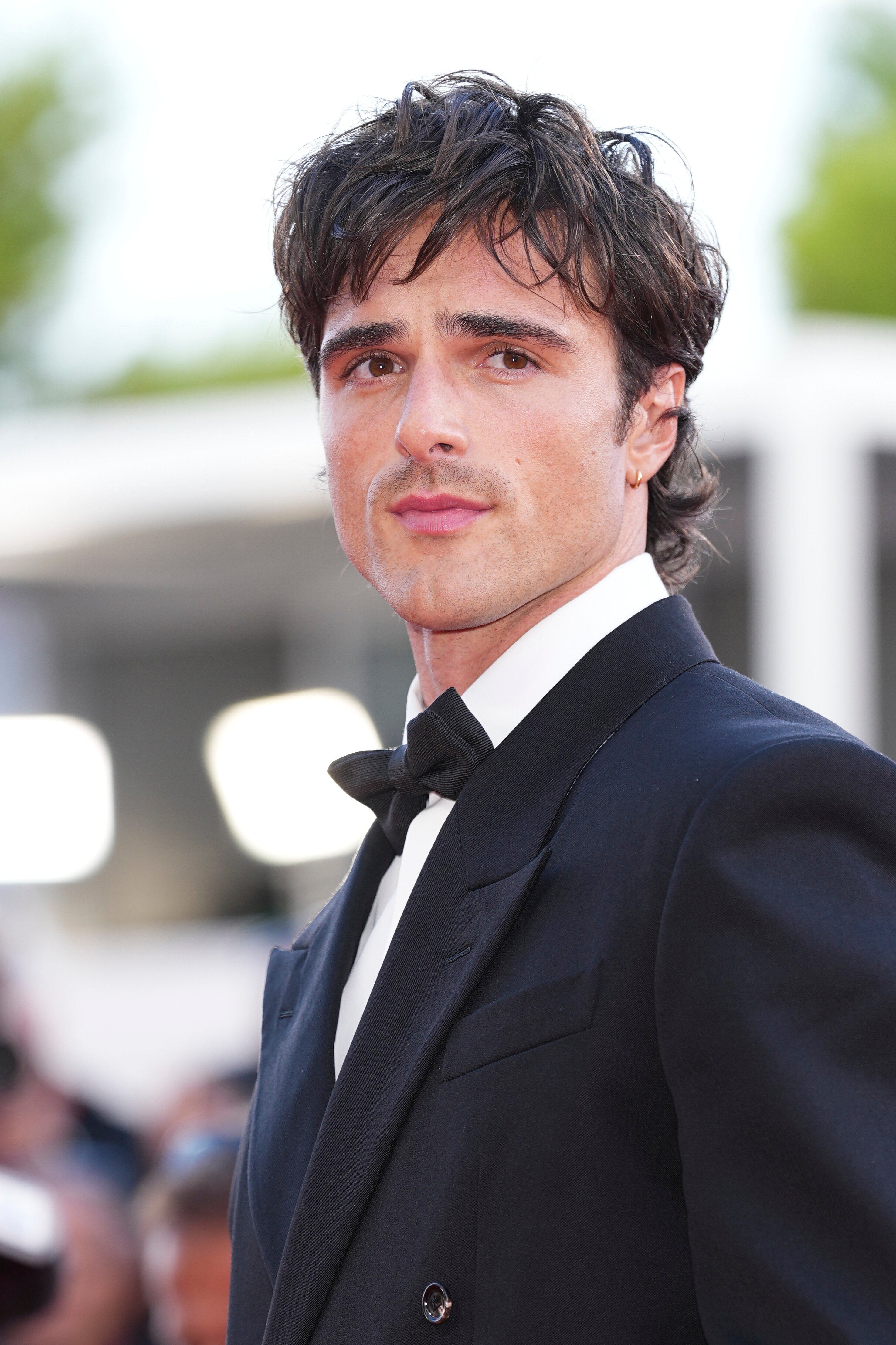
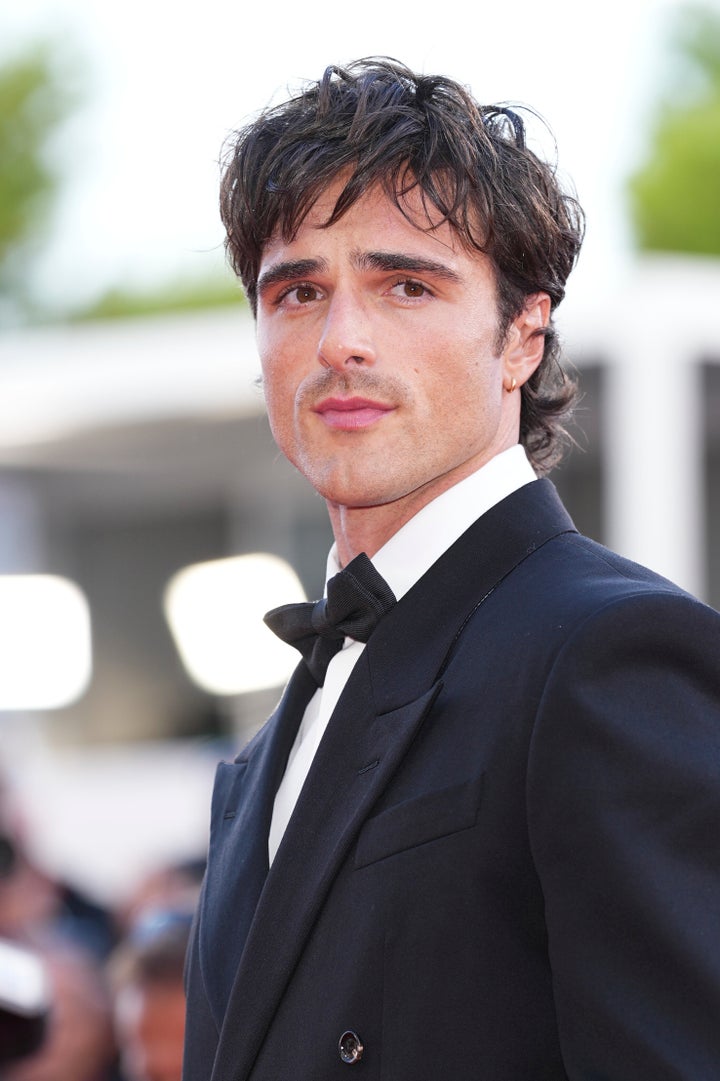
Emerald explained that the idea for Jacob to play Heathcliff occurred to her when they were working together on her most recent film, Saltburn.
“He looked exactly like the illustration of Heathcliff on the first book that I read,” Emerald recalled. “And it was so awful because I so wanted to scream. Not the professional thing to do, obviously.
Advertisement
“I had been thinking about making [a film version of Wuthering Heights], and it seemed to me he had the thing… he’s a very surprising actor.”
As for Margot, Emerald noted that she’s “not like anyone I’ve ever met – ever”, which is the same way she felt about the character when she first read Wuthering Heights.
“[Margot is] so beautiful and interesting and surprising, and she is the type of person who, like Cathy, could get away with anything,” the Promising Young Woman director said. “I think honestly she could commit a killing spree and nobody would mind. And that is who Cathy is to me. Cathy is somebody who just pushes to see how far she can go.
Advertisement
“So it needed somebody like Margot, who’s a star, not just an incredible actress – which she is – but somebody who has a power, an otherworldly power, a Godlike power, that means people lose their minds.”

via Associated Press
While Emerald and Jacob first worked together on Saltburn, she and Margot have also collaborated numerous times.
Advertisement
Margot was an executive producer on both Promising Young Woman and Saltburn, while Emerald made a brief appearance in the 2023 movie Barbie as Midge, a friend of Margot’s doll character.
Preview screenings of Wuthering Heights were reported to have first taken place earlier this year – with audiences having a big reaction to some of the artistic choices Emerald has made with her latest film.