Earth was born dry until a cosmic collision made it a blue planet

After the formation of the Solar System, it took a maximum of three million years for the chemical composition of the Earth’s precursor to be completed. This is shown by a new study by the Institute of Geological Sciences at the University of Bern. At this time, however, there were hardly any elements necessary for life such as water or carbon compounds on the young planet. Only a later planetary collision probably brought water to Earth, paving the way for life.

Earth is so far the only known planet on which life exists — with liquid water and a stable atmosphere. However, the conditions were not conducive to life when it formed. The gas-dust cloud from which all the planets in the Solar System formed was rich in volatile elements essential for life, such as hydrogen, carbon and sulphur. However, in the inner Solar System — the part closest to the Sun, where the four rocky planets Mercury, Venus, Earth and Mars and the asteroid belt are located today — these volatile elements could hardly exist: Due to the high temperature of the Sun, they did not condense and initially remained largely in the gas phase. As these gaseous substances were not incorporated into the solid rocky materials from which the planets were formed, the early precursor of the Earth, the so-called proto-Earth, also contained very little of these vital substances. Only celestial bodies that formed further away from the Sun in cooler regions were able to incorporate these components. When and how the Earth became a life-friendly planet is still not fully understood.

In a new study, researchers from the Institute of Geological Sciences at the University of Bern have now been able to show for the first time that the chemical composition of the early Earth was complete no later than three million years after the formation of the Solar System — and in a way that initially made the emergence of life impossible. Their results, recently published in the journal Science Advances, suggest that life on Earth was only made possible by a later event. Dr. Pascal Kruttasch is first author of the study, which was part of his dissertation at the Institute of Geological Sciences and was financially supported by the Swiss National Science Foundation. Kruttasch is now an SNSF Postdoc Mobility Fellow at Imperial College London.

Using a precise clock to measure the history of the Earth’s formation

The research team used a combination of isotope and element data from meteorites and terrestrial rocks to reconstruct the process of the Earth’s formation. Using model calculations, the researchers were able to narrow down in time how the chemical composition of the Earth developed in comparison to other planetary building blocks.

Kruttasch explains: “A high-precision time measurement system based on the radioactive decay of manganese-53 was used to determine the precise age. This isotope was present in the early Solar System and decayed to chromium-53 with a half-life of around 3.8 million years.” This method allowed ages to be determined with an accuracy of less than one million years for materials that are several billion years old. “These measurements were only possible because the University of Bern has internationally recognized expertise and infrastructure for the analysis of extraterrestrial materials and is a leader in the field of isotope geochemistry,” says co-author Klaus Mezger, Professor Emeritus of Geochemistry at the Institute of Geological Sciences at the University of Bern.

Life on Earth thanks to a cosmic coincidence?

Using model calculations, the research team was able to show that the chemical signature of the proto-Earth, i.e. the unique pattern of chemical substances of which it is composed, was already complete less than three million years after the formation of the Solar System. Their study thus provides empirical data on the time of formation of the original material of the young Earth. “Our Solar System formed around 4,568 million years ago. Considering that it only took up to 3 million years to determine the chemical properties of the Earth, this is surprisingly fast,” says first author Kruttasch.

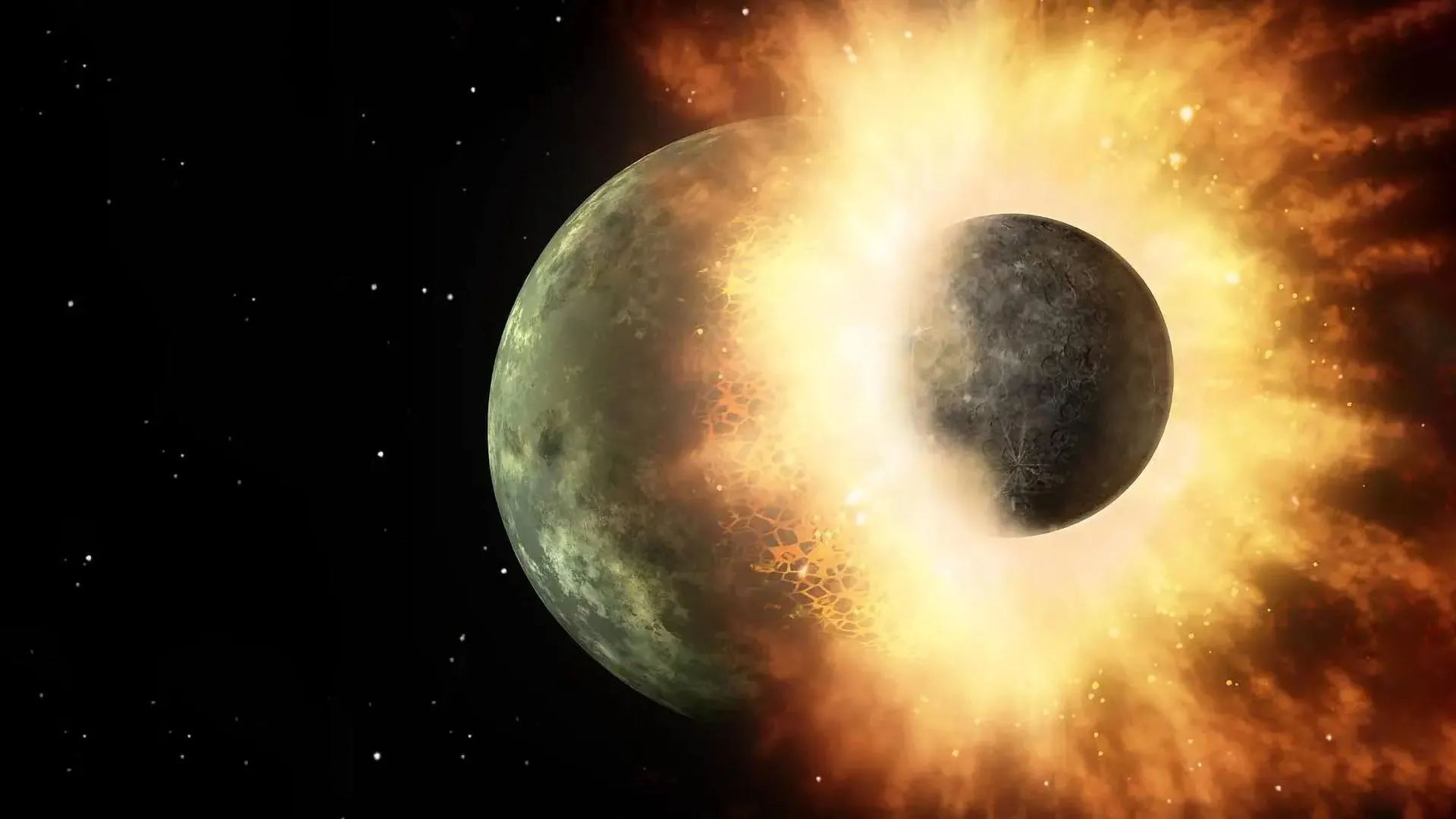
The results of the study thus support the assumption that a later collision with another planet — Theia — brought the decisive turning point and made the Earth a life-friendly planet. Theia probably formed further out in the Solar System, where volatile substances such as water accumulated. “Thanks to our results, we know that the proto-Earth was initially a dry rocky planet. It can therefore be assumed that it was only the collision with Theia that brought volatile elements to Earth and ultimately made life possible there,” says Kruttasch.

Life-friendliness in the universe cannot be taken for granted

The new study contributes significantly to our understanding of the processes in the early phase of the Solar System and provides clues as to when and how planets on which life is possible can form. “The Earth does not owe its current life-friendliness to a continuous development, but probably to a chance event — the late impact of a foreign, water-rich body. This makes it clear that life-friendliness in the universe is anything but a matter of course,” says Mezger.

The next step would be to investigate the collision event between proto-Earth and Theia in more detail. “So far, this collision event is insufficiently understood. Models are needed that can fully explain not only the physical properties of the Earth and Moon, but also their chemical composition and isotope signatures,” concludes Kruttasch.

Share Button

How weight-loss injections are turning obesity into a wealth issue

With claims of a ‘two-tier system’, could it be that these drugs are exacerbating health inequalities?

Share Button

Can England’s rugby heroes inspire more girls to stay in sport?

Sports groups hope England Women’s Rugby World Cup success can boost girls playing sport.

Share Button

Dad’s frustration over stillbirth report delay

Bereaved Thomas and Ewa Hender are querying why a report completed 18 months ago is only now available.

Share Button

Black hole discovery confirms Einstein and Hawking were right

A decade ago, scientists first detected ripples in the fabric of space-time, called gravitational waves, from the collision of two black holes. Now, thanks to improved technology and a bit of luck, a newly detected black hole merger is providing the clearest evidence yet of how black holes work — and, in the process, offering long-sought confirmation of fundamental predictions by Albert Einstein and Stephen Hawking.

The new measurements were made by the Laser Interferometer Gravitational-Wave Observatory (LIGO), with analyses led by astrophysicists Maximiliano Isi and Will Farr of the Flatiron Institute’s Center for Computational Astrophysics in New York City. The results reveal insights into the properties of black holes and the fundamental nature of space-time, hinting at how quantum physics and Einstein’s general relativity fit together.

“This is the clearest view yet of the nature of black holes,” says Isi, who is also an assistant professor at Columbia University. “We’ve found some of the strongest evidence yet that astrophysical black holes are the black holes predicted from Albert Einstein’s theory of general relativity.”

The results were reported in a paper published September 10 in Physical Review Letters by the LIGO-Virgo-KAGRA Collaboration.

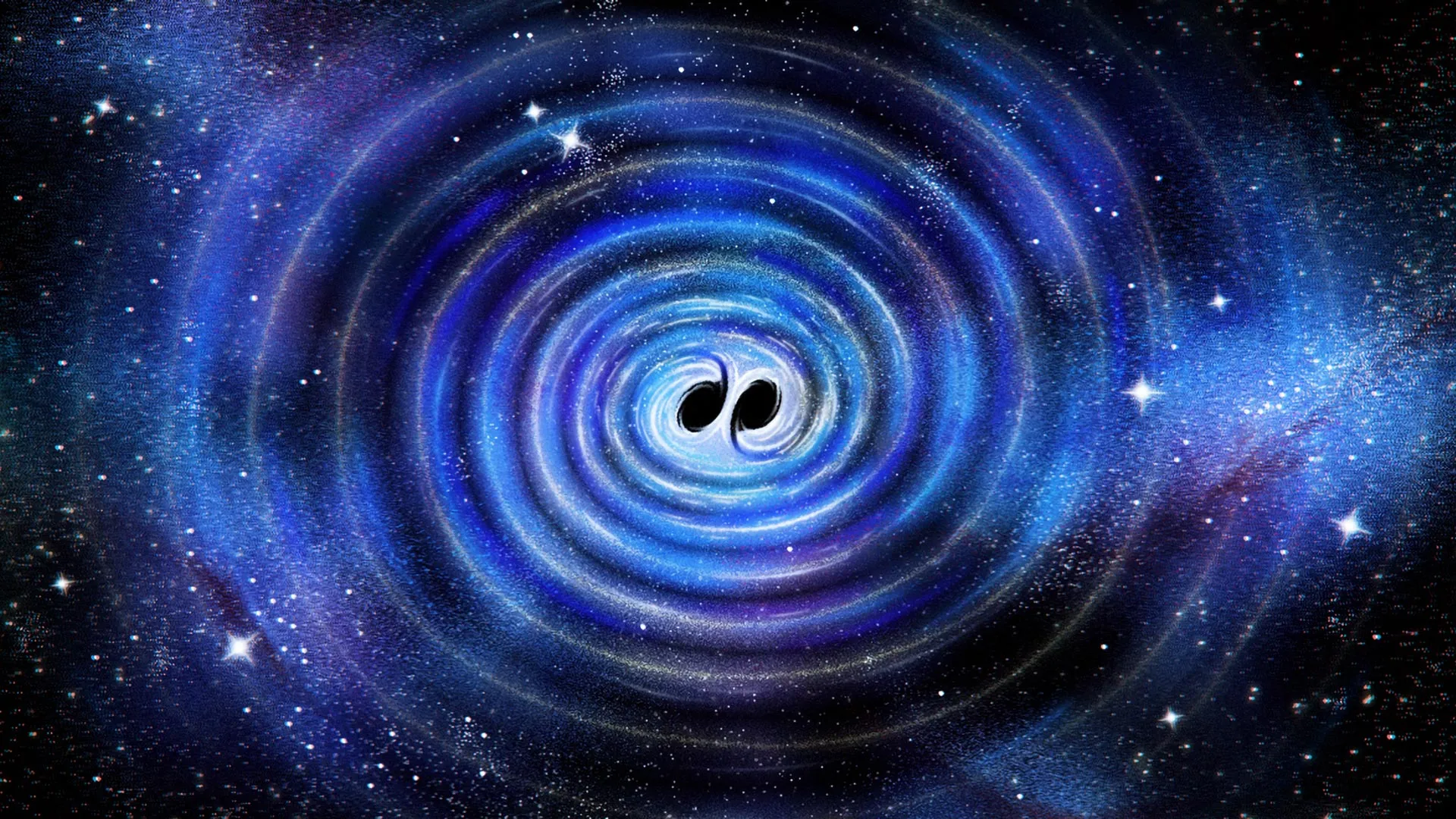
For massive stars, black holes are the final stage in their evolution. Black holes are so dense that even light cannot escape their gravity. When two black holes collide, the event distorts space itself, creating ripples in space-time that fan out across the universe, like sound waves ringing out from a struck bell.

Those space-deforming ripples, called gravitational waves, can tell scientists a great deal about the objects that created them. Just as a large iron bell makes different sounds than a smaller aluminum bell, the “sound” a black hole merger makes is specific to the properties of the black holes involved.

Scientists can detect gravitational waves with special instruments at observatories such as LIGO in the United States, Virgo in Italy and KAGRA in Japan. These instruments carefully measure how long it takes a laser to travel a given path. As gravitational waves stretch and compress space-time, the length of the instrument, and thus the light’s travel time, changes minutely. By measuring those tiny changes with great precision, scientists can use them to determine the black holes’ characteristics.

The newly reported gravitational waves were found to be created by a merger that formed a black hole with the mass of 63 suns and spinning at 100 revolutions per second. The findings come 10 years after LIGO made the first black hole merger detection. Since that landmark discovery, improvements in equipment and techniques have enabled scientists to get a much clearer look at these space-shaking events.

“The new pair of black holes are almost twins to the historic first detection in 2015,” Isi says. “But the instruments are much better, so we’re able to analyze the signal in ways that just weren’t possible 10 years ago.”

With these new signals, Isi and his colleagues got a complete look at the collision from the moment the black holes first careened into each other until the final reverberations as the merged black hole settled into its new state, which happened only milliseconds after first contact.

Previously, the final reverberations were difficult to capture, as by that point, the ringing of the black hole would be very faint. As a result, scientists couldn’t separate the ringing of the collision from that of the final black hole itself.

In 2021, Isi led a study showcasing a cutting-edge method that he, Farr and others developed to isolate certain frequencies — or ‘tones’ — using data from the 2015 black hole merger. This method proved powerful, but the 2015 measurements weren’t clear enough to confirm key predictions about black holes. With the new, more precise measurements, though, Isi and his colleagues were more confident they had successfully isolated the milliseconds-long signal of the final, settled black hole. This enabled more unambiguous tests of the nature of black holes.

“Ten milliseconds sounds really short, but our instruments are so much better now that this is enough time for us to really analyze the ringing of the final black hole,” Isi says. “With this new detection, we have an exquisitely detailed view of the signal both before and after the black hole merger.”

The new observations allowed scientists to test a key conjecture dating back decades that black holes are fundamentally simple objects. In 1963, physicist Roy Kerr used Einstein’s general relativity to mathematically describe black holes with one equation. The equation showed that astrophysical black holes can be described by just two characteristics: spin and mass. With the new, higher-quality data, the scientists were able to measure the frequency and duration of the ringing of the merged black hole more precisely than ever before. This allowed them to see that, indeed, the merged black hole is a simple object, described by just its mass and spin.

The observations were also used to test a foundational idea proposed by Stephen Hawking called Hawking’s area theorem. It states that the size of a black hole’s event horizon — the line past which nothing, not even light, can return — can only ever grow. Testing whether this theorem applies requires exceptional measurements of black holes before and after their merger. Following the first black hole merger detection in 2015, Hawking wondered if the merger signature could be used to confirm his theorem. At the time, no one thought it was possible.

By 2019, a year after Hawking’s death, methods had improved enough that a first tentative confirmation came using techniques developed by Isi, Farr, and colleagues. With four times better resolution, the new data gives scientists much more confidence that Hawking’s theorem is correct.

In confirming Hawking’s theorem, the results also hint at connections to the second law of thermodynamics. This law states that a property that measures a system’s disorder, known as entropy, must increase, or at least remain constant, over time. Understanding the thermodynamics of black holes could lead to advances in other areas of physics, including quantum gravity, which aims to merge general relativity with quantum physics.

“It’s really profound that the size of a black hole’s event horizon behaves like entropy,” Isi says. “It has very deep theoretical implications and means that some aspects of black holes can be used to mathematically probe the true nature of space and time.”

Many suspect that future black hole merger detections will only reveal more about the nature of these objects. In the next decade, detectors are expected to become 10 times more sensitive than today, allowing for more rigorous tests of black hole characteristics.

“Listening to the tones emitted by these black holes is our best hope for learning about the properties of the extreme space-times they produce,” says Farr, who is also a professor at Stony Brook University. “And as we build more and better gravitational wave detectors, the precision will continue to improve.”

“For so long this field has been pure mathematical and theoretical speculation,” Isi says. “But now we’re in a position of actually seeing these amazing processes in action, which highlights how much progress there’s been — and will continue to be — in this field.”

Share Button

Fossils in germany reveal a Jurassic sea monster with a swordfish snout

An international research team from Switzerland and Germany, led by Gaël Spicher (JURASSICA Museum, Porrentruy, Switzerland), has described a new ichthyosaur species based on fossils curated at the Urwelt-Museum Oberfranken (Bayreuth, Germany). The study was published in Museum für Naturkunde Berlin’s open-access journal Fossil Record.

The new species was named Eurhinosaurus mistelgauensis, in reference to the clay pit of Mistelgau in Upper Franconia – a fossil site that has yielded numerous important finds. “We wanted to highlight the scientific importance of the Mistelgau locality,” explains lead author and doctoral student Gaël Spicher.

Excavations in the clay pit have been conducted regularly since 1998 by the Urwelt-Museum Oberfranken, which recovered and prepared the fossils prior to their scientific study. One specimen originates from a so-called “belemnite battleground” – dense accumulations of Jurassic cephalopod remains that are characteristic of the site.

Ichthyosaurs – marine reptiles that lived during the time of the dinosaurs – show striking similarities in body shape to dolphins or tuna. The newly described species shares the elongation of the upper jaw typical for eurhinosaurs, producing a pronounced “overbite” similar to that of modern swordfish. Eurhinosaurus mistelgauensis differs from previously known species by its notably robust ribs and special features in the joint connecting the skull and the neck.

“The naming of a new species emphasizes the significance of the Urwelt-Museum Oberfranken’s fossil collections for understanding Jurassic marine ecosystems,” says museum director Dr. Serjoscha Evers, who was not involved in the study. “The Mistelgau site continues to provide rare insights into a time period that is otherwise scarcely documented worldwide.”

Further studies on the Mistelgau material are in preparation. These include analyses of injuries preserved in the ichthyosaur skeletons, which may shed light on the ecology and life history of these ancient marine reptiles.

Share Button

My Son Was 1 Day Old When I Learned Our Family Had Been Exposed To Measles. Here’s What Happened Next.

I’m at the hospital when I get the call. It’s a Thursday morning, not even 24 hours since my C-section. I’m watching my newborn son nap in his bassinet and trying to enjoy my first meal since surgery.

The caller ID says CHKD Children’s Hospital, so I answer. My 16-month-old daughter was just released from that hospital earlier in the week following a severe bacterial infection that caused her lymph nodes to swell an extraordinary amount.

“Hello?” I say, worried that they uncovered something concerning in her bloodwork.

“Hello, I’m a paediatrician at Norfolk Children’s Hospital. I’m calling to check on Camille, and to let you know that she may have been exposed to the measles during her stay with us.”

My heart dropped, and the post-surgery nausea that had nearly subsided suddenly returned.

The doctor proceeded to tell me that she was reading from a script, and that they (under the advisement of the Virginia Department of Health) were recommending that all young children exposed receive their second measles vaccine as soon as possible. She then asked me about the vaccination status of everyone else who visited my daughter at the hospital, including myself, my parents, my husband and my almost-3-year-old.

Thankfully, both of my daughters had their first measles shot, which grants immunity in up to 95% of individuals. However, I now have a vulnerable infant to consider, and even a small chance of exposing him to this virus with no protection is too big of a risk.

So, under the advice of our paediatrician, I decided to give both of my daughters their second measles-mumps-rubella vaccine early. I didn’t feel entirely comfortable with this decision — especially with my 16-month-old just recovering from an infection and borderline immunocompromised. But it was the best decision available to me.

And because of parents who opt out of vaccinating their kids, I was put in the position to make it.

The recent measles scare in Virginia came from a student at a local elementary school. Though the individual’s vaccination status was not directly stated in a letter from the Virginia Beach Department of Health or in an interview with officials, several local outlets have taken this opportunity to advocate for the safety and continued necessity of childhood vaccinations. Of the 1,491 confirmed cases of measles in the U.S. this year, 92% occurred in individuals who were unvaccinated (or who had an unknown vaccination status).

In fact, 2025 boasts more measles cases since the disease was considered eliminated in 2000 — and more than any other year in the past three decades.

Low vaccination rates caused by vaccine hesitancy and anti-vaccine movements are largely to blame.

In other words, parents who choose not to vaccinate their children play a major role in these outbreaks ― which will continue to rise if nothing changes.

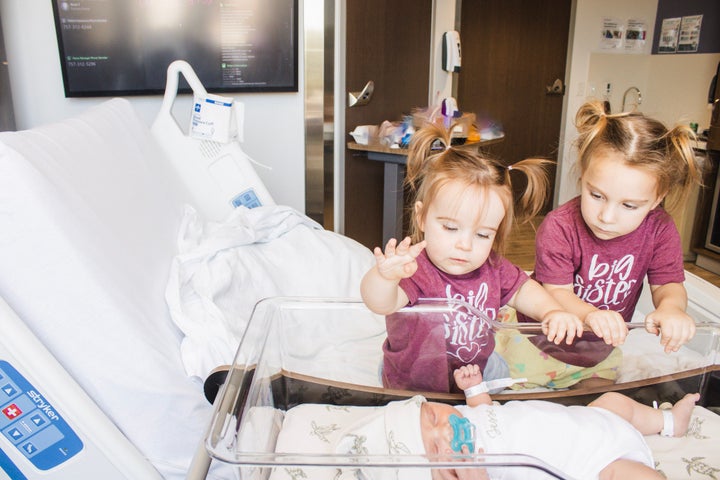
The author's two daughters visiting their newest sibling at the hospital.

Photo Courtesy Of Lauren Gumpert

The author’s two daughters visiting their newest sibling at the hospital.

As parents, we make hundreds of decisions on a daily basis — some inconsequential, others less so. We’re constantly weighing pros and cons, risks and benefits. In a world that feels more disconnected than ever — when we can bury our heads into our phones and surround ourselves with an echo chamber of conspiratorial ideas — it’s easy to lose sight of the bigger picture.

So let’s zoom out for a minute. In 1900, infectious diseases (such as pneumonia, influenza and measles) killed about 18% of children. Before vaccines and other public health measures, 1 in 5 children did not live to see their first birthday.

Compare that reality to today, when less than 1% of children die before their fifth birthday.

Back then, childhood was inherently dangerous. Even if they lived, those who became infected with a virus such as measles often suffered long-term side effects such as brain damage and a permanently weakened immune system.

The success of public health measures such as vaccines has given people a false sense of security, leading many to conclude that once-tragic diseases are no longer a threat. But it’s only thanks to science that illness and death among children is no longer commonplace.

Nowadays, it’s easy to take our health for granted — especially with anti-vaccine conspiracy theorist Robert F. Kennedy Jr. steering the narrative at the helm of the Department of Health and Human Services. We have the luxury of arguing over genetically modified organisms and artificial food colors and doubting the effectiveness of the very things that have kept us safe for the past half-century.

I won’t pretend to understand the various circumstances that might lead a parent not to vaccinate their child.

But I do know that as parents (and human beings), we have a responsibility to protect all children. I’m reminded of a quote by author and activist Glennon Doyle who said, “There’s no such thing as other people’s children.” We have an obligation to protect those who cannot opt to protect themselves. This is why I keep my kids home when they’re sick, why I advocate for stricter gun laws and — yes — why I vaccinate my kids.

Because measles is an airborne disease, one infected person can easily pass it on to 18 other people. To achieve herd immunity, 95% of the population must be fully vaccinated. Unfortunately, vaccination rates among children have continued to decline since the COVID-19 pandemic, with only 92.5% of kindergartners in the U.S. reportedly vaccinated against measles last year.

Just this week, a school-aged child in California died due to a delayed measles-related complication known as subacute sclerosing panencephalitis (SSPE). The child contracted the disease in infancy before they were eligible for vaccination. If infected, my newborn son could suffer the same fate.

I don’t want my kids — or anyone else’s — to become another preventable casualty.

So, both of my daughters received their second MMR vaccine ahead of schedule. However, we still aren’t out of the woods, because measles symptoms can appear as late as 21 days after exposure. Additionally, about 5% of children who receive their second vaccine develop a measles-like rash and fever, so it can be difficult to determine whether they have the disease.

Now I’m left to wonder and stress about every little bump that surfaces on my daughters’ skin. And if one of them does develop symptoms, I’ll have to contact the Virginia Department of Health to get them tested, because I can’t bring them to the paediatrician and risk exposing other vulnerable children.

I understand why many parents have grown to distrust medical institutions. I’ve also had my fair share of negative experiences that sometimes make me doubt doctors’ recommendations and interventions.

With so much misinformation circulating on social media, knowing whom to trust can be difficult. But I’m asking you to trust me — a fellow parent, personally affected by your choices, who sincerely wants the best for all of our kids. I’m asking you to trust the health care professionals who have treated your sick child instead of the influencers on social media (who are trying to sell you something) or the corrupt politicians like RFK Jr., who seems to change his opinion often to suit his political agenda.

Despite the fact that a link between vaccines and autism has been disproven over and over, RFK Jr. continues to spread lies and misinformation. He promised Americans that he would find a cause for the “autism epidemic” — a pursuit that won him support among many parents. However, with no formal medical or public health training, the secretary of health continues to undermine the scientific process by hiring incompetent individuals and misappropriating resources to maintain his base of support. For example, he recently employed a known pseudoscientist to uncover a link between vaccines and autism (which, as previously stated, studies have found does not exist).

In light of recent threats to vaccine access, 34 scientific and medical organisations including the American Association of Immunologists and the American College of Physicians have come together to produce a statement reaffirming the safety and effectiveness of vaccines.

With so many conspiracy theories circulating on the internet, it can be difficult to know who to trust. As a result, many parents fail to recognise the far-reaching implications of their choices. A once-standard public health measure has become politicised and exploited — and our children will suffer because of it.

Mother Teresa said: “If we have no peace, it is because we have forgotten that we belong to each other.”

The consequences of a decision like not vaccinating your child are not hypothetical. By now, hundreds of families in Virginia Beach like mine have been affected by one family’s choices. None of us live on an island, and our actions continue to ripple outward and affect others in unexpected ways.

In this life, we have no choice but to rely on each other. As parents, we have the power to end preventable deaths by vaccinating our children. I hope the vaccine skeptics among us will find the strength to do what’s necessary to keep all of our children safe.

Do you have a compelling personal story you’d like to see published on HuffPost? Find out what we’re looking for here and send us a pitch at pitch@huffpost.com.

Share Button

AI Is Coming For Jobs – But This Surprising Age Group Faces The Biggest Risk

While many fear that artificial intelligence is killing their careers, there is now new data to back it up. According to a recent paper, AI is indeed coming for certain people’s jobs.

Stanford University professor Erik Brynjolfsson, along with research scientist Ruyu Chen and postgraduate student Bharat Chandar, analysed millions of payroll records from ADP, the largest payroll provider in the U.S., from late 2022 to this summer to learn who is being most impacted by AI disruption.

Analyzing data from this timeframe is revealing because late 2022 is when OpenAI’s ChatGPT was introduced to the masses. Since then, AI has become a dominant force in our lives, upending whole industries and creating an anxious workforce that worries about being replaced.

But not everyone is affected in the same way. What the researchers found was that one age group, in particular, is vulnerable to AI displacement ― and it might not be who you think.

Entry-Level Workers Under 25 Are The Most At Risk Of Losing Jobs To AI

A new Stanford paper shows exactly who AI is replacing at work.

pixelfit via Getty Images

A new Stanford paper shows exactly who AI is replacing at work.

“The AI revolution is beginning to have a significant and disproportionate impact on entry-level workers in the American labor market,” the Stanford study stated. In the most AI-exposed fields, like software development and customer service, workers ages 22–25 “have experienced a 13% relative decline in employment.”

This finding held even when researchers accounted for factors like interest rate changes, more people being hired after COVID, and remote-friendly jobs.

Chen, one of the study’s authors, told HuffPost that the reason young people are especially vulnerable is that AI is great at doing “textbook knowledge” that college students learn to do.

“Entry-level workers are doing some very well-defined tasks” like analyzing large sets of coding data and basic production work, Chen said. And “AI is pretty good at handling those tasks.”

That’s why older workers have an advantage. While employment opportunities for young people under 25 have shrunk, according to the study, employment for older workers ages 35–49 actually grew during this time period.

That’s because for this age group, hard-won, on-the-job training is invaluable. “They have so much intensive knowledge that AI is not able to replace. They know they can handle customer relationships. They have some firm-specific experience,” Chen said.

David Kryscynski, a professor of human resource management at Rutgers University, said the Stanford paper’s findings align with what he has seen in his research.

“It is much easier for companies to simply not hire new workers than it is to downsize, so it makes sense that this age group would be disproportionately affected,” Kryscynski said.

But Kryscynski doesn’t think older, more experienced workers should come away from this study feeling like their jobs are safe from AI.

“They may be safer for now, but I doubt this safety will last long. Companies will face difficult challenges as AI continues to improve, and they will be forced to reskill,” Kryscynski said. “Age will probably be less important than job type and skills.”

What Can Young People Do To Avoid Getting Replaced By AI

For young people who have been worrying whether the tough labor market is in their heads, the study provides grim confirmation that it’s not.

But all hope is not lost. Some jobs that AI can’t yet automate are actually booming for young people under 25, such as working as a nursing and home health aide. For “health aides, actually, the employment for younger workers is increasing because health aides require lots of social interactions,” Chen said.

But if you are in this age bracket and don’t want to work this kind of job, focus on building unique human skills that AI cannot yet do.

“Carefully consider your abilities to socially interact with other humans, your empathetic skills, your soft communication skills, your leadership abilities, your ability to navigate conflict situations gracefully, your tools to manage morally ambiguous situations,” Kryscynski said.

“If you want to stand out in the future workforce, then avoid offloading your thinking to AI.”

– David Kryscynski, a professor of human resource management at Rutgers University

And when you can, do “cognitive pushups,” he added. Research finds that people who are less experienced at a task rely more heavily on AI-generated answers ― which can often be wrong ― and exert less critical thinking. But wrestling with thorny projects and learning how to deal with difficult co-workers are how you grow.

“One of the things we are seeing with AI is that it makes things too easy. We are seeing a decrease in willingness to struggle through hard things in this newer generation of employees,” Kryscynski said. “If you want to stand out in the future workforce, then avoid offloading your thinking to AI and purposefully invest in challenging tasks that will challenge your brain to connect complex ideas, wrestle with moral ambiguities.”

“There will be a difference between those who are replaced by AI and those who are running the AI in the future, and I suspect that one of these key differences will be about willingness to struggle through challenging cognitive tasks,” Kryscynski said.

Share Button

Most Labour Members Want Keir Starmer Replaced As Leader Before Next Election

Most Labour members want Keir Starmer to be replaced as party leader before the next general election, a damning new poll has found.

The Survation analysis for the LabourList website found that 53% believe a new leader should be in charge the next time voters go to the polls.

Only 31% back Starmer still being leader then, despite the party winning a landslide election victory just 15 months ago.

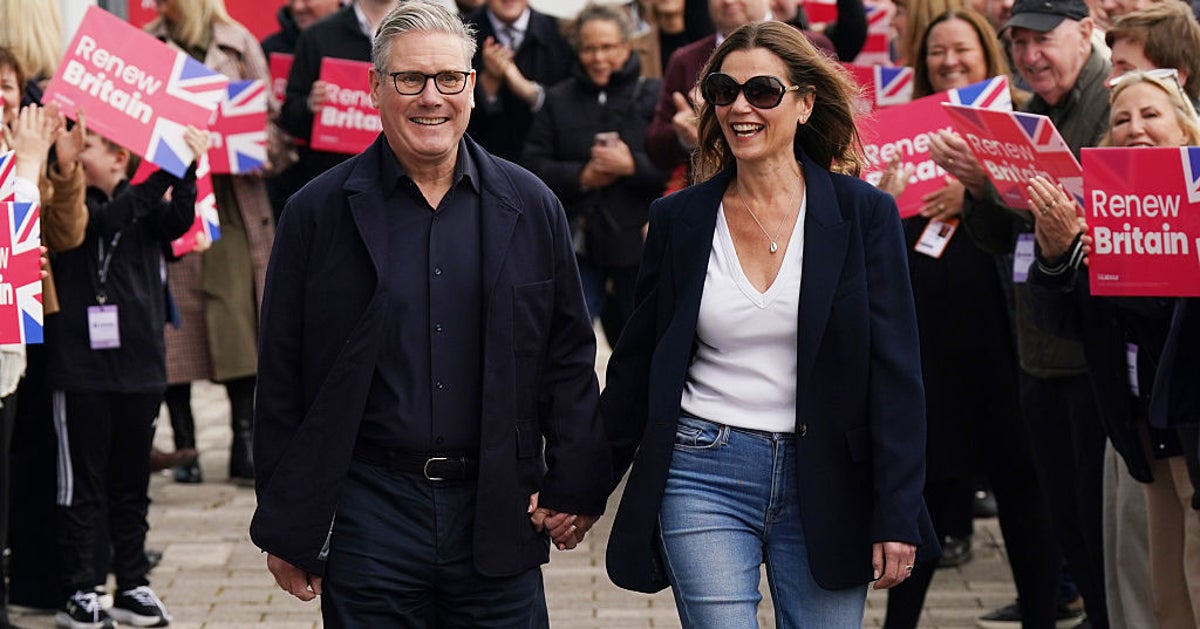
The grim findings for the prime minister were revealed as Labour members begin to gather in Liverpool for the party’s annual conference.

They increase the pressure on Starmer to use the event to convince his critics that he can turn around the government’s fortunes.

He will make his keynote speech on Tuesday, in which he is expected to set out his vision for the UK’s future and say he is in a “battle for the soul of the country” against Nigel Farage and Reform UK.

On Sunday With Laura Kuenssberg on BBC1, the PM insisted he needed more time to improve living standards, the NHS and national security.

He said: “I just need the space to get on and do what we need to do, to do those three things above all else, but also – in a world which is more volatile than any of us have known for a very long time – to ensure that the United Kingdom is safe and secure.

“We have got the fight of our lives ahead of us, because we’ve got to take on Reform, we’ve got to beat them.

“So now is not the time for introspection or navel-gazing. There is a fight that we are all in together and every single member of our party and our movement, actually everyone who cares about what this country is, whether they vote Labour or otherwise, it’s the fight of our lives for who we are as a country. We need to be in that fight united, not navel-gazing.”

Share Button

Living with purpose may protect your brain from dementia

Research into Blue Zones — regions of the world where people tend to live longer — shows that having a sense of purpose in life may help people live longer.

Now, new research from UC Davis shows that having a sense of purpose in life may have another benefit as people age: reducing the risk of dementia.

The new study, published in The American Journal of Geriatric Psychiatry, followed over 13,000 adults aged 45 and older for up to 15 years.

Researchers found that people who reported a higher sense of purpose in life were about 28% less likely to develop cognitive impairment — including mild cognitive impairment and dementia.

The protective effect of having a purpose was seen across racial and ethnic groups. It also remained significant even after accounting for education, depression and the APOE4 gene, which is a known risk factor for Alzheimer’s disease.

Purpose in life helps the brain stay resilient

“Our findings show that having a sense of purpose helps the brain stay resilient with age,” said Aliza Wingo, senior author and professor in the UC Davis Department of Psychiatry and Behavioral Sciences. “Even for people with a genetic risk for Alzheimer’s disease, sense of purpose was linked to a later onset and lower likelihood of developing dementia.”

Participants were not specifically asked about the activities that gave their life purpose. Previous studies on aging, though, have found a wide rang of activities give older adults a sense of life purpose, sometimes referred to as “ikigai.” These include:

  • Relationships: Caring for family, spending time with grandchildren or supporting a spouse or friend.
  • Work or volunteering: Continuing professional work, mentoring or contributing to community causes.
  • Spirituality or faith: Religious beliefs, spiritual practices or involvement in faith-based communities.
  • Personal goals: Pursuing hobbies, learning new skills or setting and achieving personal milestones.
  • Helping others: Acts of kindness, philanthropy, caregiving or advocacy work.

Purpose delays onset of cognitive decline

Researchers also found that people with higher purpose tended to experience cognitive decline later than those with lower purpose. On average, the delay in onset was very modest — about 1.4 months over an eight-year period, after considering the effects of age, education, depressive symptoms, and genetic risk. However, it is meaningful when compared to current treatments.

“While medications like lecanemab and donanemab can modestly delay symptoms of cognitive impairment in Alzheimer’s disease, they come with risks and costs,” said Nicholas C. Howard, first author and public health researcher at UC Davis. “Purpose in life is free, safe and accessible. It’s something people can build through relationships, goals and meaningful activities.”

Methods and limitations of study

Participants in the study were part of the Health and Retirement Study, a nationally representative survey funded by the National Institute on Aging. All had normal cognitive health at the beginning of the study.

Researchers used a seven-item survey from the Ryff Measures of Psychological Well-being.Participants had six possible responses (from “strongly agree” to “strongly disagree”) for statements such as: “I am an active person in carrying out the plans I set for myself” and “I have a sense of direction and purpose in my life.” Their answers were scored and averaged to obtain a well-being number between 1 and 6, with higher values indicating a strong sense of purpose in life.

Their cognitive health was tracked using a telephone-based test every two years.

The researchers noted the study has many strengths, including the size of the population studied. However, a key limitation is that although there was an association, the study did not prove higher levels of purpose caused the lowered rates of dementia.

Findings support role of psychological well-being

Still, the findings support the idea that psychological well-being plays a key role in healthy aging, said Thomas Wingo, a co-author of the study and a professor and neurologist at UC Davis Health. Wingo hopes future studies will explore whether purpose-building interventions can help prevent dementia.

“What’s exciting about this study is that people may be able to ‘think’ themselves into better health. Purpose in life is something we can nurture,” he said. “It’s never too early — or too late — to start thinking about what gives your life meaning.”

Share Button