Ozzy Osbourne’s Family Pay Their Respects Ahead Of His Funeral Alongside Thousands Of Fans

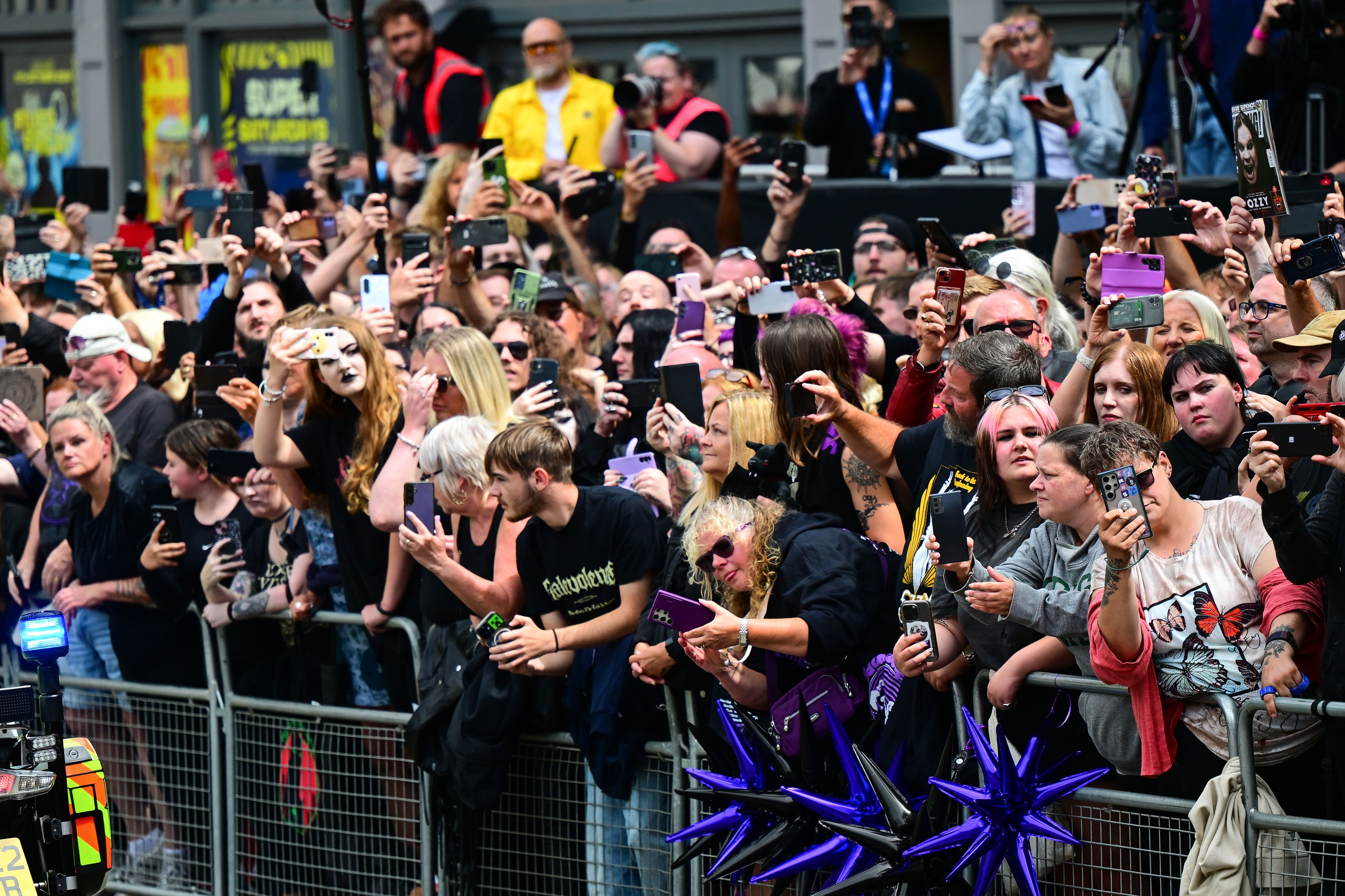
Ozzy Osbourne’s family joined thousands of mourners who gathered on Wednesday to pay their respects to the rock icon.

The late Black Sabbath frontman’s funeral procession took place in Birmingham on Wednesday afternoon, ahead of a more private service for family and friends.

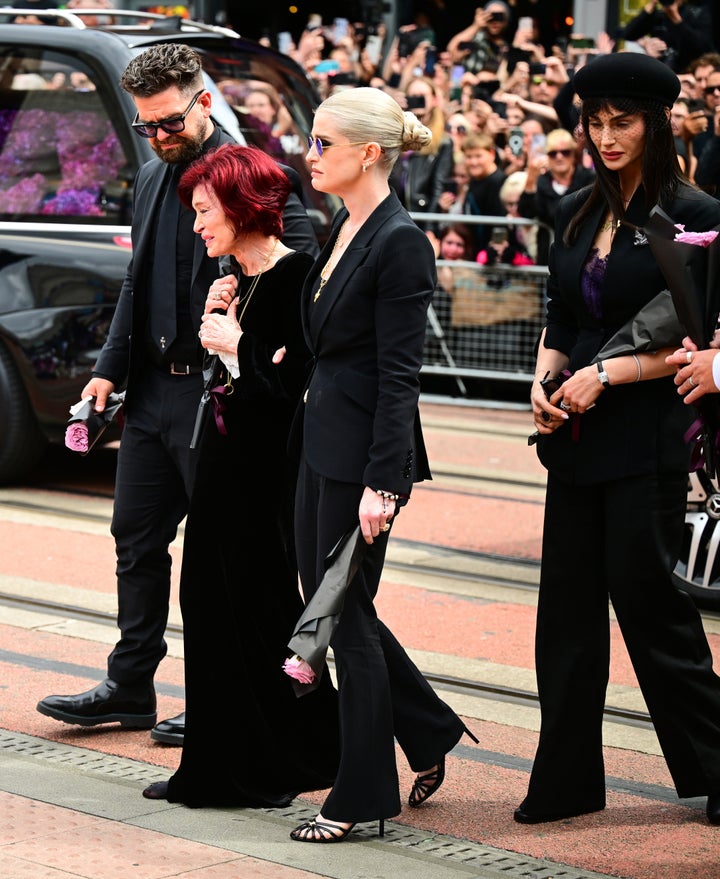
In addition to the hundreds upon hundreds of fans who lined the streets as part of his funeral procession, the late rocker’s wife, Sharon Osbourne, and their three children, Aimee, Kelly and Jack, were also pictured Birmingham.

Jack, Sharon, Kelly and Aimee Osbourne pictured at the funeral procession of Ozzy Osbourne

Victoria Jones/Shutterstock

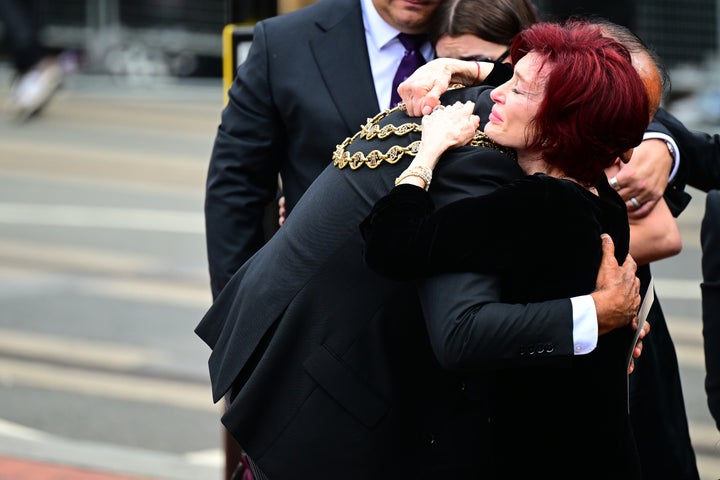
A tearful Sharon was seen embracing Birmingham’s Lord Mayor Zafar Iqbal, who declared that Ozzy was “more than a music legend — he was a son of Birmingham”.

“We know how much this moment will mean to his fans,” Iqbal added.

Sharon Osbourne embraces the Lord Mayor of Birmingham

Victoria Jones/Shutterstock

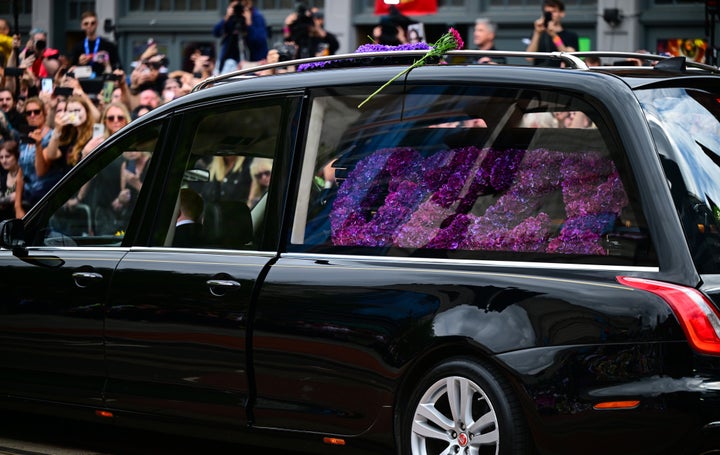
As Ozzy’s hearse passed – adorned with purple flowers including a wreath spelling out the Grammy winner’s name – fans were also heard chanting: “Ozzy, Ozzy, Ozzy, oi, oi, oi.”

Ozzy – whose legal name was John Michael Osbourne – died earlier this month at the age of 76. He had previously been vocal about his health issues, which included Parkinson’s disease, with which he was diagnosed in 2003, although he did not disclose this publicly until 2020.

Two weeks before his death, Ozzy and his Black Sabbath bandmates reunited for one last show, dubbed Back To The Beginning, which saw around 45,000 fans gathering at Birmingham’s Villa Park stadium to see him performing tracks like War Pigs and Paranoid.

Ozzy Osbourne's hearse was adorned with purple floral arrangements
Ozzy Osbourne’s hearse was adorned with purple floral arrangements

Victoria Jones/Shutterstock

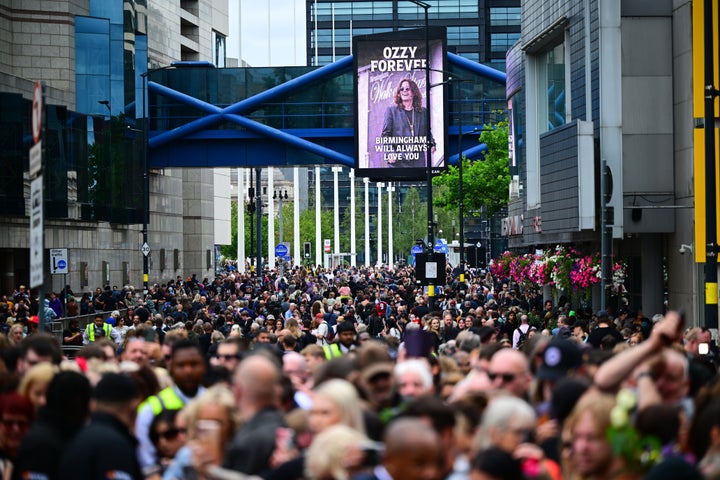
The streets of Birmingham were lined with people hoping to pay their respects to rock royalty

Victoria Jones/Shutterstock

Electronic billboards also appeared around Birmingham with the message: "Ozzy forever... Birmingham will always love you."
Electronic billboards also appeared around Birmingham with the message: “Ozzy forever… Birmingham will always love you.”

Victoria Jones/Shutterstock

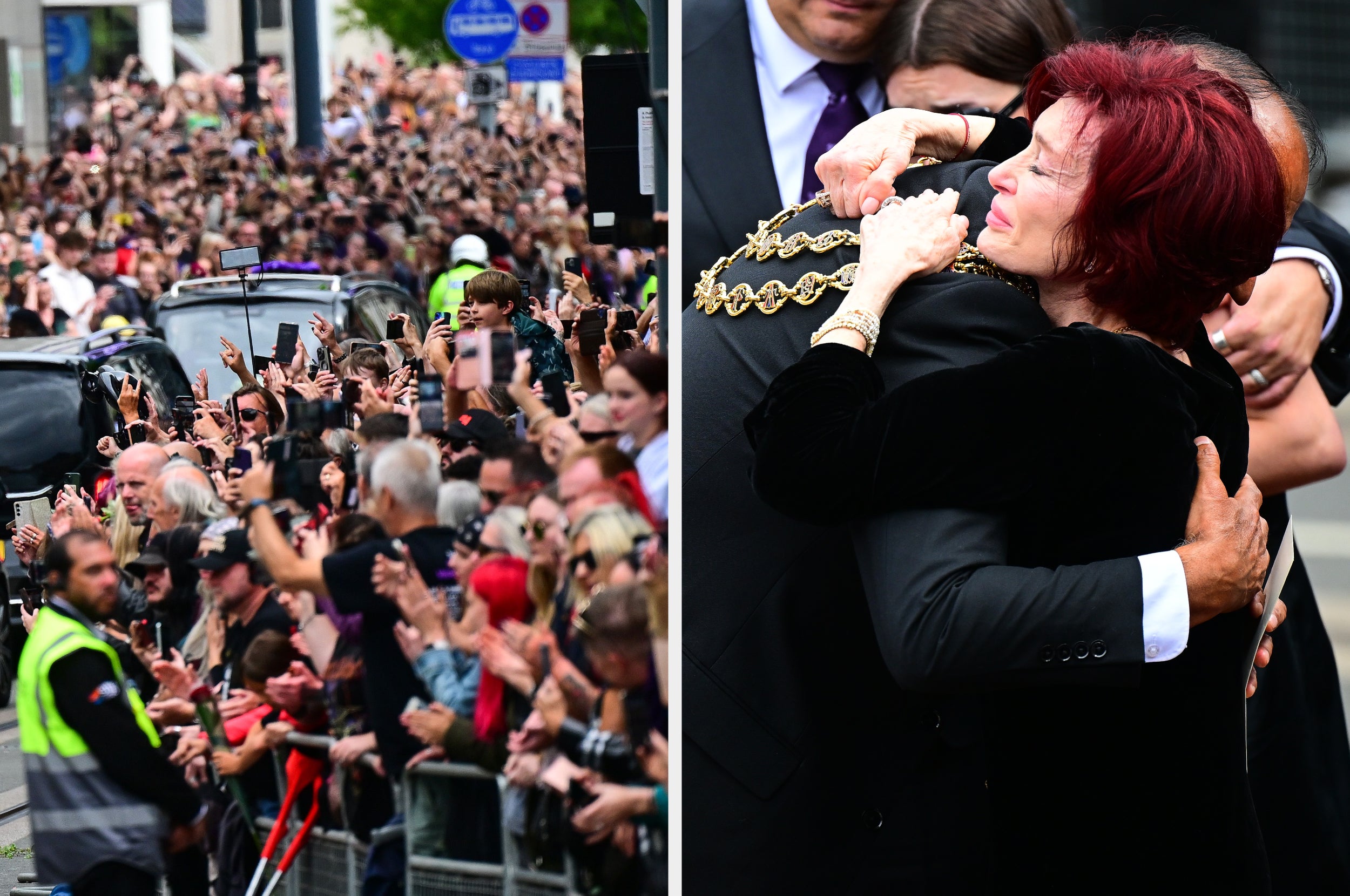
Fans chanted "Ozzy, Ozzy, Ozzy, oi, oi, oi!" as the Black Sabbath's hearse passed by
Fans chanted “Ozzy, Ozzy, Ozzy, oi, oi, oi!” as the Black Sabbath’s hearse passed by

Victoria Jones/Shutterstock

As well as his children, Aimee, Kelly and Jack – the latter two of whom rose to fame when they appeared alongside their parents in the groundbreaking reality show The Osbournes – Ozzy was also a dad to two more children, Jessica and Louis, from his marriage to his first wife, Thelma Riley.

During this relationship, he also adopted Riley’s five-year-old son Elliot.

Share Button

Blow To Labour As Reform Voters Prefer Jeremy Corbyn To Keir Starmer On Almost Every Metric

Reform UK voters generally prefer Jeremy Corbyn to Keir Starmer, a surprising new poll has found.

As first reported by Novara Media, a survey of 2,000 UK adults – conducted by Merlin Strategy over the weekend – showed Reform voters believe the former Labour leader has better qualities than the current prime minister.

The poll showed 65% of respondents think Corbyn was more authentic, 67% said he was for working people, 57% think he was hardworking, 64% believe he’s honest and 54% say he’s intelligent.

A further 70% said they believe Corbyn makes radical decisions, 64% say he is principled, 69% say he represents change, 62% say he’s strong and 59% say he’s trustworthy.

And, crucially, 61% said they believe the Islington North MP understands “people like me”.

Starmer won on only one metric – he’s seen as better on the world stage than Corbyn.

However, the poll did not show whether or not this would push Farage supporters to actually vote for Corbyn’s new party.

Still, the research will be a real blow to the Labour government, considering it has moved away from hard-left policies touted by figures like Corbyn, in favour of winning back Reform voters.

The right-wing populist party has soared in popularity over the last year and now consistently leads in opinion polls by a healthy margin – despite having just four MPs.

So the government has been trying to win back that support.

Labour’s political director Claire Reynolds even told the party’s MPs in May that Reform UK voters are “our people”, but they’re just “pissed off” with the government right now.

It’s well-known that Starmer’s increasingly hardline anti-immigration policies have failed to cut through to Farage’s growing body of supporters – as Reform UK currently have a seven-point lead on Labour.

However, it will rub salt in the wound to know that Corbyn, Starmer’s predecessor who was expelled from the party over a row related to antisemitism, is more respected than the prime minister.

Starmer has tried to present it as a major strength that he moved Labour away from Corbyn’s policies after the party’s disastrous performance in the 2019 general election.

But, the Islington North MP is now setting up his own left-wing party – which is yet to be named – and already has 500,000 sign-ups expressing interest.

Zarah Sultana, a suspended Labour MP who quit the party to join Corbyn’s new group, told Novara Media that Starmer’s “spent years chasing Reform voters, echoing their rhetoric, even mimicking Enoch Powell. And for what? They still prefer Jeremy Corbyn.”

Corbyn himself told the outlet: “The Labour government is here to appease Reform. We are here to defeat Reform.”

Share Button

Streeting invites doctors for fresh talks next week

But the health secretary says he will not negotiate on pay, adding that the union has lost goodwill with their five-day walkout.

Share Button

E.coli infections rise due to salad leaf outbreaks

Parents should wash their children’s hands with soap and warm water before food, say health officials.

Share Button

Why did resident doctors strike and what are they paid?

Resident doctors in England went on strike over pay for five days at the end of July 2025.

Share Button

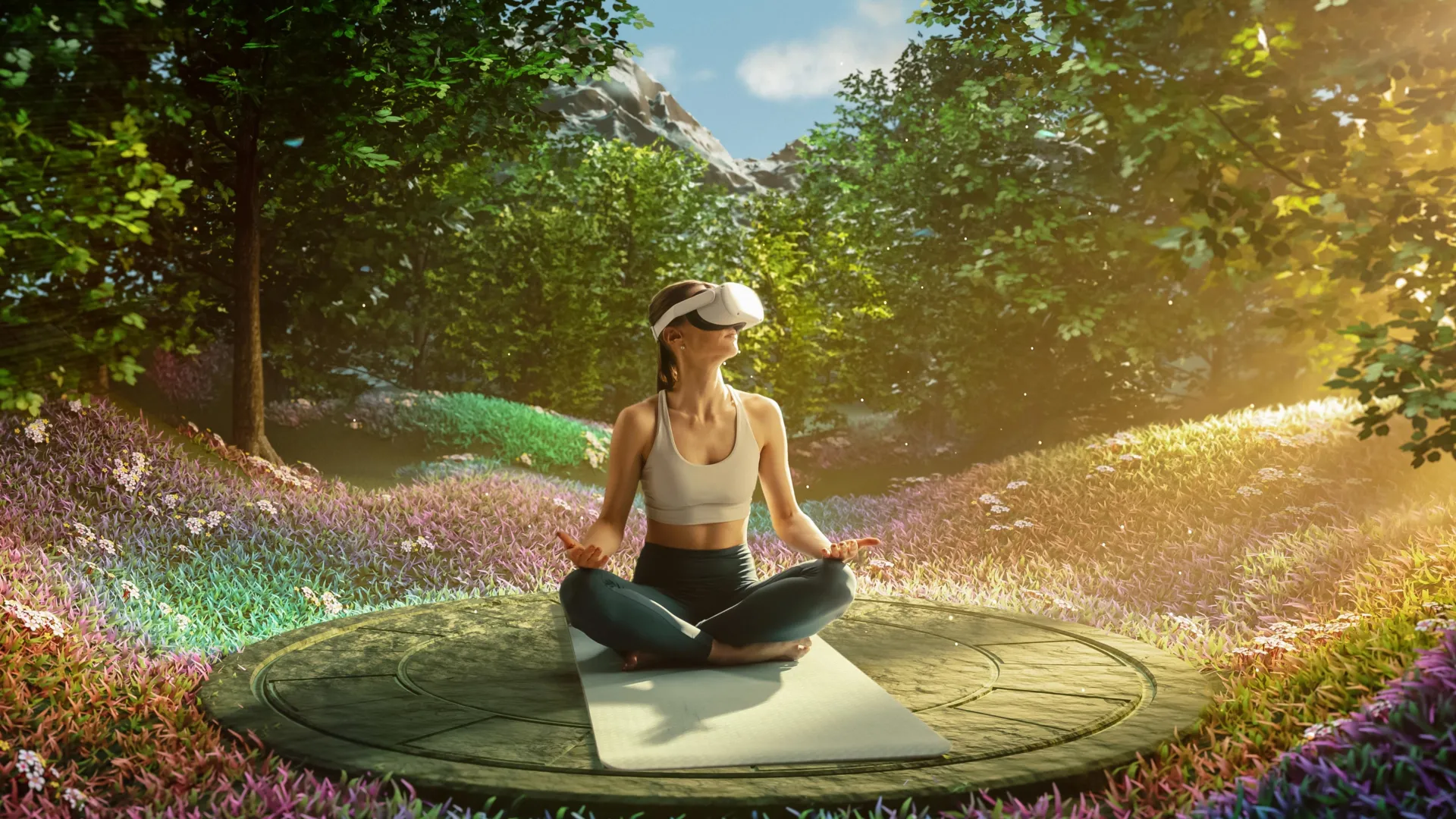
Pain relief without pills? VR nature scenes trigger the brain’s healing switch

Immersing in virtual reality (VR) nature scenes helped relieve symptoms that are often seen in people living with long-term pain, with those who felt more present experiencing the strongest effects.

A new study led by the University of Exeter, published in the journal Pain, tested the impact of immersive 360-degree nature films delivered using VR compared with 2D video images in reducing experience of pain, finding VR almost twice as effective.

Long-term (chronic) pain typically lasts more than three months and is particularly difficult to treat. The researchers simulated this type of pain in healthy participants, finding that nature VR had an effect similar to that of painkillers, which endured for at least five minutes after the VR experience had ended.

Dr Sam Hughes, Senior Lecturer in Pain Neuroscience at the University of Exeter, led the study. He said: “We’ve seen a growing body of evidence show that exposure to nature can help reduce short term, everyday pain, but there has been less research into how this might work for people living with chronic or longer-term pain. Also, not everyone is able to get out for walks in nature, particularly those living with long term health conditions like chronic pain. Our study is the first to look at the effect of prolonged exposure to a virtual reality nature scene on symptoms seen during long term pain sensitivity. Our results suggest that immersive nature experiences can reduce the development of this pain sensitivity through an enhanced sense of presence and through harnessing the brains in-built pain suppression systems”

The study, which was funded by the Academy of Medical Sciences, involved 29 healthy participants who were shown two types of nature scene after having pain delivered on the forearm using electric shocks. On the first visit, they measured the changes in pain that occur over a 50-minute period following the electric shocks and showed how the healthy participants developed sensitivity to sharp pricking stimuli in the absence of any nature scenes. The results showed that the participants developed a type of sensitivity that closely resembles that seen in people living with nerve pain — which occurs due to changes in how pain signals are processed in the brain and spinal cord.

On the second visit, they immersed the same participants in a 45-minute virtual reality 360-degree experience of the waterfalls of Oregon to see how this could change how the development of pain sensitivity. The scene was specially chosen to maximize therapeutic effects.

In the second visit, they explored the same scene, but on a 2D screen.

They completed questionnaires on their experience of pain after watching the scenes in each case, and also on how present they felt in each experience, and to what extent they felt the nature scenes to be restorative[LV1] .

On a separate visit, participants underwent MRI brain scans at the University of Exeter’s Mireille Gillings Neuroimaging Centre. Researchers administered a cold gel to illicit a type of ongoing pain and then scanned participants to study how their brains respond.

The researchers found that the immersive VR experience significantly reduced the development and spread of feelings of pain sensitivity to pricking stimuli, and these pain-reducing effects were still there even at the end of the 45-minute experience.

The more present the person felt during the VR experience, the stronger this pain-relieving effect. The fMRI brain scans also revealed that people with stronger connectivity in brain regions involved in modulating pain responses experienced less pain. The results suggest that nature scenes delivered using VR can help to change how pain signals are transmitted in the brain and spinal cord during long-term pain conditions.

Dr Sonia Medina, of the University of Exeter Medical School and one of the authors on the study, said: “We think VR has a particularly strong effect on reducing experience of pain because it’s so immersive. It really created that feeling of being present in nature – and we found the pain – reducing effect was greatest in people for whom that perception was strongest. We hope our study leads to more research to investigate further how exposure to nature effects our pain responses, so we could one day see nature scenes incorporated into ways of reducing pain for people in settings like care homes or hospitals.”

The paper is titled ‘Immersion in nature through virtual reality attenuates the development and spread of mechanical secondary hyperalgesia: a role for insulo-thalamic effective connectivity’ and is published in the journal Pain.

Share Button

The doctor strike has ended – what comes next?

With doctors returning to work after five-day walkout, is there an opportunity for talks to re-start?

Share Button

Hospital trust to launch endometriosis study

The two-year project involves 70 patients recruited in north Staffordshire and Birminmgham.

Share Button

‘I was a shopping addict – it needs to be taken more seriously’

People with experience of compulsive buying say more NHS help is needed to tackle the issue.

Share Button

I’ve stopped life-saving medication says man exhausted by fight for NHS care

Tim Hull, who has a rare neurological condition, says his quality of life is “very, very low”.

Share Button