The Cute Reason Dogs Love Digging In The Bin (And How To Stop It)

There is nothing worse than coming home from a busy work day, putting down your bag, and walking into the kitchen to see the contents of the bin are quite simply… all over the place.

Then your pooch looks at you with those sweet eyes and their tail wagging and you just cannot stay mad at them, even if their favourite hobby is nothing short of disgusting.

Why do they do it, though? Especially if there isn’t actually any food in there? Is it for the love of the game?

Well, kind of.

Why dogs love to dig in the trash

“Never forget that dogs are descended from grey wolves,” said BBC Science Focus Magazine.

They may feel like our furry babies but in reality, these domesticated pups still have a little wildness in their bones.

The experts added: “Our pampered pets have inherited the wolves’ keen sense of smell and scavenging tendencies, making ‘playing’ with rubbish a favourite pastime for some.

“Wild wolves also roll in strong-smelling substances, such as faeces, to mask their scent when they’re hunting.”

This will also sound familiar for dog owners who find themselves regularly scrubbing fox poo off their dog’s paws (and coat). Lovely.

How to stop dogs from rummaging through bins

The pet experts over at Pets4Homes advise:

  • Keep your dog out of rooms containing bins unless supervised, using doors or baby gates as barriers.
  • Use bins with secure, childproof lids that cannot be easily knocked off by your dog.
  • Anchor outdoor wheelie bins to walls or fences and add catches to prevent your dog from tipping them over (remember to release catches on bin collection day to avoid issues).
  • If your dog tends to go after other people’s bins during walks, consider using a well-fitting muzzle and keep them on a lead when near bins.

Good luck!

Share Button

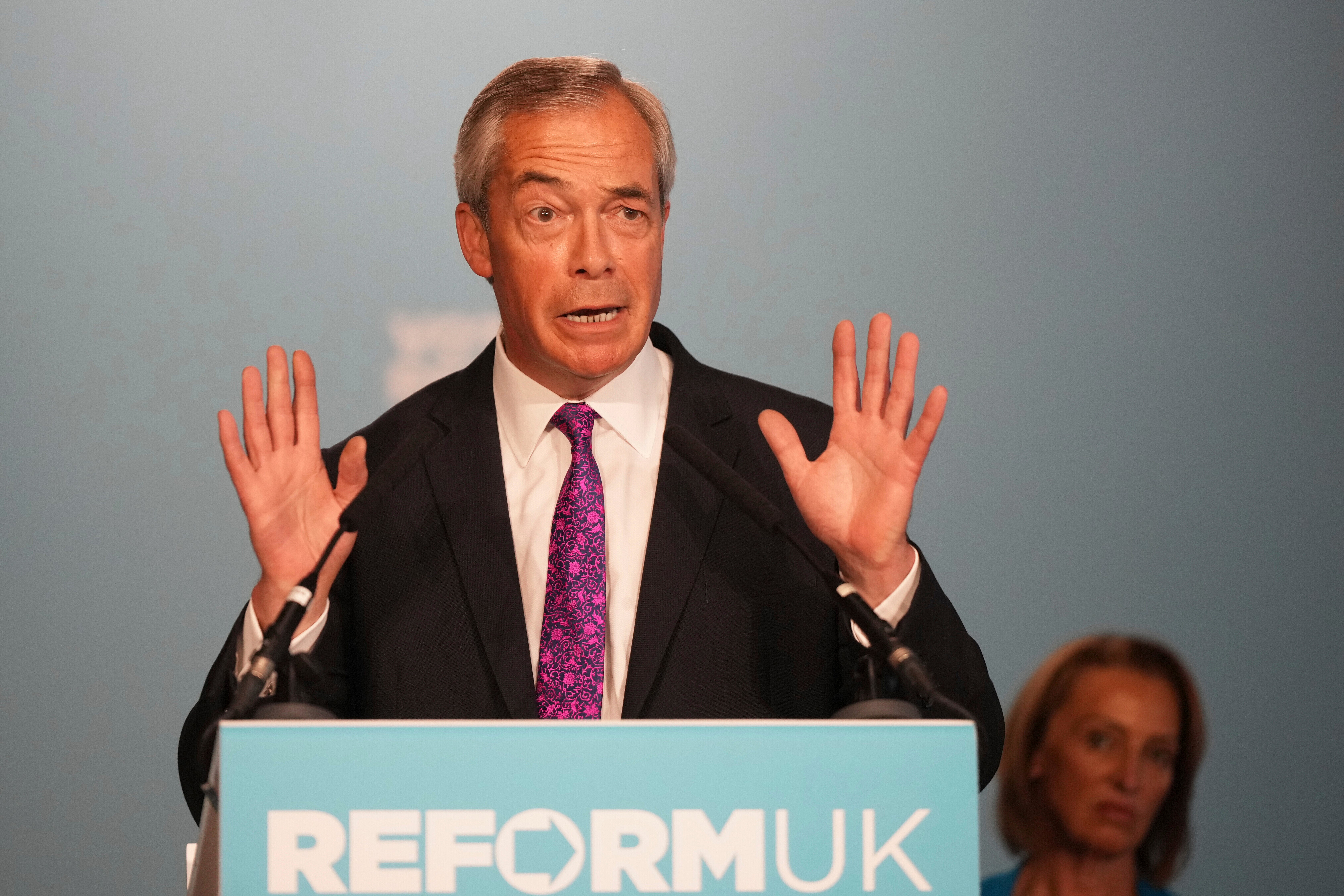
Nigel Farage Modestly Claims Starmer Is ‘Completely Obsessed With Me’

Nigel Farage has accused Keir Starmer of being “completely obsessed with me” in a new jibe at the government.

His remarks come after technology secretary Peter Kyle hit back at Reform UK for saying they would repeal the Online Safety Act – and alleged Farage would have been on the same side as Jimmy Savile, the late prolific sexual predator.

The Reform UK leader has subsequently called for an apology from the government over the claim.

Speaking about the incident again on LBC today, he said it was all “absolutely appalling” – and suggested Labour were “completely obsessed” with him.

The MP for Clacton-on-Sea said: “I thought [the Savile comment] was incredibly badly judged.”

He pointed out that Labour was outraged when ex-Tory prime minister Boris Johnson attacked Starmer in 2022 by saying he failed to prosecute Savile when he was the director of public prosecutions – although there was no evidence to support Johnson’s claim at the time.

Still, Farage said: “The levels of moral indignation that we got from Labour on this, ‘how dare Johnson do this’ – and yet they use this Savile analogy.”

The LBC presenter said: “The papers are all reporting it was authorised by No.10, that line. Can you believe that?”

Farage paused, then replied: “I think they’re losing the plot in every way, yes, and I think we’re at a place where, the PM in particular, and others, they’ve become completely obsessed with me.”

Labour have repeatedly pivoted to treating Reform UK as their main competitors instead of the Tories, who are the second largest party in parliament and the official opposition.

After Reform secured hundreds of council seats in May’s local elections, Labour’s political director Claire Reynolds told the party’s MPs: “Reform voters are not necessarily right wing. They are our people and they are pissed off.”

Starmer himself told his chief of staff Morgan McSweeney that they should be targeting Reform UK as the “real opposition” that same month.

And the party has been consistently leading in the polls, even securing a record nine-point lead over Labour in June according to Ipsos.

Former Labour leader Jeremy Corbyn – who is trying to set up his own party –even told Novara Media: “The Labour government is here to appease Reform.”

But insiders shrugged off Farage’s remark, suggesting what he really meant was he does not like scrutiny.

The Labour Party has declined to comment.

Share Button

‘I Hate It’: Jason Momoa Is Not Happy With The Results As He Shaves Off His Beard For Film Role

With Jason Momoa currently getting ready to reprise his role as Duncan Idaho in the upcoming third Dune film, he’s had to undergo quite a transformation to get into character – namely, shaving off his beard for the first time in six years.

The last time Jason was seen bare-faced was in the first instalment in Denis Villeneuve’s Oscar-winning sci-fi saga.

Because of this, he has once again had to break out the clippers to step back into the role of Duncan.

In a video posted on Instagram on Wednesday evening (in collaboration with his water brand Manalalu), Jason explained that he’d been growing his beard in the six years since shooting the first Dune film.

Jason Momoa at the premiere of Dune in 2021, as we're more used to seeing him
Jason Momoa at the premiere of Dune in 2021, as we’re more used to seeing him

via Associated Press

As he began shaving off his facial hair, he declared: “This is the kick off. Dune 3.”

“Only for you Denis,” he said.

It seem Jason wasn’t too impressed with the results, though, lamenting: “Aw, man… god damn it. I hate it.”

Watch the video for yourself below:

Denis Villeneuve’s adaptation of the novel Dune was initially envisaged as a two-part saga. However, it later emerged that he would also be bringing Frank Herbert’s follow-up novel Dune Messiah to the big screen, under the title Dune: Part Three.

It’s already been confirmed that Timothée Chalamet, Zendaya and Florence Pugh will all be reprising their roles from previous Dune movies in the new film, which is currently scheduled for release in December 2026.

Since then, it was also revealed that Jason’s son Nakoa-Wolf Momoa will be making his big-screen debut in Dune: Part Three as Leto, the son of Timothée and Zendaya’s characters.

Earlier this month, Jason was keen to shoot down the suggestion that any nepotism was at play when it came to Nakoa-Wolf’s casting, insisting that he landed his part on the film all “on his own”.

Share Button

Reversing Alzheimer’s damage: Two cancer drugs demonstrate surprising power

Scientists at UC San Francisco and Gladstone Institutes have identified cancer drugs that promise to reverse the changes that occur in the brain during Alzheimer’s, potentially slowing or even reversing its symptoms.

The study first analyzed how Alzheimer’s disease altered gene expression in single cells in the human brain. Then, researchers looked for existing drugs that were already approved by the Food and Drug Administration (FDA) and cause the opposite changes to gene expression.

They were looking specifically for drugs that would reverse the gene expression changes in neurons and in other types of brain cells called glia, all of which are damaged or altered in Alzheimer’s disease.

Next, the researchers analyzed millions of electronic medical records to show that patients who took some of these drugs as part of their treatment for other conditions were less likely to get Alzheimer’s disease.

When they tested a combination of the two top drugs — both of which are cancer medications — in a mouse model of Alzheimer’s, it reduced brain degeneration in the mice, and even restored their ability to remember.

“Alzheimer’s disease comes with complex changes to the brain, which has made it tough to study and treat, but our computational tools opened up the possibility of tackling the complexity directly,” said Marina Sirota, PhD, the interim director of the UCSF Bakar Computational Health Sciences Institute, professor of pediatrics, and co-senior author of the paper. “We’re excited that our computational approach led us to a potential combination therapy for Alzheimer’s based on existing FDA-approved medications.”

The findings appeared in Cell on July 21. The research was funded in part by the National Institutes of Health and the National Science Foundation.

Big data from patients and cells points to a new Alzheimer’s therapy

Alzheimer’s disease affects 7 million people in the U.S. and causes a relentless decline in cognition, learning, and memory. Yet decades of research have only produced two FDA-approved drugs, neither of which can meaningfully slow this decline.

“Alzheimer’s is likely the result of numerous alterations in many genes and proteins that, together, disrupt brain health,” said Yadong Huang, MD, PhD, senior investigator and director of the Center for Translational Advancement at Gladstone, professor of neurology and pathology at UCSF, and co-senior author of the paper. “This makes it very challenging for drug development — which traditionally produces one drug for a single gene or protein that drives disease.”

The team took publicly available data from three studies of the Alzheimer’s brain that measured single-cell gene expression in brain cells from deceased donors with or without Alzheimer’s disease. They used this data to produce gene expression signatures for Alzheimer’s disease in neurons and glia.

The researchers compared these signatures with those found in the Connectivity Map, a database of results from testing the effects of thousands of drugs on gene expression in human cells.

Out of 1,300 drugs, 86 reversed the Alzheimer’s disease gene expression signature in one cell type, and 25 reversed the signature in several cell types in the brain. But just 10 had already been approved by the FDA for use in humans.

Poring through records housed in the UC Health Data Warehouse, which includes anonymized health information on 1.4 million people over the age of 65, the group found that several of these drugs seemed to have reduced the risk of developing Alzheimer’s disease over time.

“Thanks to all these existing data sources, we went from 1,300 drugs, to 86, to 10, to just 5,” said Yaqiao Li, PhD, a former UCSF graduate student in Sirota’s lab who is now a postdoctoral scholar in Huang’s lab at Gladstone and the lead author of the paper. “In particular, the rich data collected by all the UC health centers pointed us straight to the most promising drugs. It’s kind of like a mock clinical trial.”

A combination therapy poised for primetime

Li, Huang, and Sirota chose 2 cancer drugs out of the top 5 drug candidates for laboratory testing. They predicted one drug, letrozole, would remedy Alzheimer’s in neurons; and another, irinotecan, would help glia. Letrozole is usually used to treat breast cancer; irinotecan is usually used to treat colon and lung cancer.

The team used a mouse model of aggressive Alzheimer’s disease with multiple disease-related mutations. As the mice aged, symptoms resembling Alzheimer’s emerged, and they were treated with one or both drugs.

The combination of the two cancer drugs reversed multiple aspects of Alzheimer’s in the animal model. It undid the gene expression signatures in neurons and glia that had emerged as the disease progressed. It reduced both the formation of toxic clumps of proteins and brain degeneration. And, importantly, it restored memory.

“It’s so exciting to see the validation of the computational data in a widely used Alzheimer’s mouse model,” Huang said. He expects the research to advance soon to a clinical trial so the team can directly test the combination therapy in Alzheimer’s patients.

“If completely independent data sources, such as single-cell expression data and clinical records, guide us to the same pathways and the same drugs, and then resolve Alzheimer’s in a genetic model, then maybe we’re onto something,” Sirota said. “We’re hopeful this can be swiftly translated into a real solution for millions of patients with Alzheimer’s.”

Authors: Other UCSF authors are Carlota Pereda Serras, MS, Jessica Blumenfeld, Xinyu Tang, PhD, Antara Rao, PhD, Sarah Woldemariam, PhD, Alice Tang, PhD, Tomiko Oskotsky, MD, and Michael J Keiser, PhD. Other Gladstone Institutes authors are Min Xie, PhD, Yanxia Hao, Elise Deng, You Young Chun, Julia Holtzman, Alice An, Seo Yeon Yoon, MBA, Alex Zhang, Jeffrey Simms, MA, and Iris Lo.

Funding: This study was supported by the National Institute on Aging (R01AG060393, R01AG057683, RF1AG076647, R01AG078164, and P01AG073082), the National Science Foundation (2034836), and the Dolby Family Fund.


Share Button

Boost our pay or risk strike action, warn nurse leaders

Royal College of Nursing wants urgent talks on way NHS contract works, warning nurses feel undervalued.

Share Button

Sara Pascoe: ‘I don’t know how relationships survive parenthood’

The comedian talks about some of the things she has struggled with as a new mother in her forties.

Share Button

Fat melts away—but so does muscle: What Ozempic users need to know

Popular GLP-1 drugs help many people drop tremendous amounts of weight, but the drugs fail to provide a key improvement in heart and lung function essential for long-term good health, University of Virginia experts warn in a new paper.

The researchers emphasize that weight loss associated with GLP-1 drugs has many clear health benefits for people with obesity, type 2 diabetes and heart failure, including improving blood-sugar control, short-term cardiorenal benefits and improvements in survival outcomes. But doctors may need to consider recommending exercise programs or develop other approaches, such as nutrition supplements or complementary medications, to help GLP-1 patients get the full cardiorespiratory benefits of substantial weight loss over the long-run, the researchers say.

“Some patients literally told me that they felt that they were losing muscle or muscle was slipping away from them while they were on these medications,” said researcher Zhenqi Liu, MD, Professor of Medicine and James M. Moss Professor of Diabetes at the University of Virginia School of Medicine and former chief of UVA Health’s Division of Endocrinology and Metabolism. “This is a serious concern. Muscle, especially axial muscle, is essential for posture, physical function and overall well-being. Losing lean body mass can increase the risk of cardiovascular disease, all-cause mortality and diminished quality of life. We need to make sure that patients prescribed these medications aren’t already at risk for malnutrition or low muscle mass.”

About GLP-1 Drugs

While GLP-1 drugs help people lose fat, this comes with loss of fat-free mass, of which muscle makes up 40% to 50%. In fact, fat-free mass lost accounts for 25-40% of the total pounds lost, while age-related declines in fat-free mass are only 8% per decade.

Liu and his collaborators, graduate student Nathan R. Weeldreyer and Siddhartha S. Angadi, PhD, Associate Professor of Kinesiology at UVA’s School of Education and Human Development, wanted to better understand the potential long-term consequences of this muscle loss, so they reviewed available data on the drugs’ effects on cardiorespiratory fitness, or CRF.

CRF (or VO2max) is a measure of how well the body can use oxygen during exercise. It is a handy way for doctors to assess how well the heart, lungs, muscle and blood vessels work together, and it is used to predict all-cause and cardiovascular mortality (risk of death).

Patients with obesity often have low CRF. In some cases, this is because the person lacks muscle mass; in others, a person may have enough muscle, but the quality of that muscle is compromised by fat that has penetrated it.

“Cardiorespiratory fitness is a potent predictor of all-cause and cardiovascular mortality risk across a range of populations, including obesity, diabetes and heart failure,” said Angadi, a cardiovascular exercise physiologist with UVA’s Department of Kinesiology. “In a recent study by our group that examined mortality outcomes from almost 400,000 individuals across the world, we found that CRF was far superior to overweight or obesity status for predicting the risk of death. In fact, once CRF was factored in, body weight failed to predict the risk of mortality. This is why it’s so important to understand the effects of this new class of drugs on it.”

In their review of the available medical literature, the researchers found that GLP-1 drugs improve certain measures of heart function, yet those improvements don’t translate into significant improvements in VO2max.

Some small studies, they note, have suggested that exercise can help improve VO2max for patients taking GLP-1 drugs, but these had poor controls and larger, well-designed studies are needed to bear that out.

Ensuring Healthy Weight Loss

The researchers ultimately conclude that GLP-1 drugs “significantly reduce body weight and adiposity, along with a substantial FFM [fat-free mass] loss, but with no clear evidence of CRF enhancement.” They remain concerned that this could take a toll on patients’ metabolic health, healthspan/frailty and overall longevity. They are urging additional research to better understand the effects of the drugs and ensure patients get the best possible outcomes.

They note, however, that there are promising signs that we may be able to develop medications to help, such as a monoclonal antibody already in the pipeline that may be able to offset lean-muscle loss.

“This is an area of active research, and we are hopeful that better solutions are coming soon,” Liu said. “But for now it is important that patients prescribed GLP-1 drugs have conversations with their healthcare providers about strategies to preserve muscle mass. The American Diabetes Association recommends screening for malnutrition and low muscle mass risk before starting these medications and promoting adequate protein intake and regular exercise throughout treatment.”

“Finally,” Angadi added, “exercise training during GLP1 therapy remains to be assessed in its ability to preserve or improve VO2max during GLP1 therapy.”

Findings Published

The researchers have published their findings in JCEM, the Journal of Clinical Endocrinology & Metabolism. The work was supported by the National Institutes of Health, grants R01DK124344 and R01DK125330.

Share Button

Doctors’ union agrees to resume talks with Streeting

But the health secretary says he will not negotiate on pay, adding that the union has lost goodwill with their five-day walkout.

Share Button

Major healthcare equipment firm on brink of failure

NRS Healthcare, which provides wheelchairs, hoists and other equipment, is expected to run out of cash by the end of the week, the BBC understands.

Share Button

‘TACO’ No More? Trump Signals No Extension To Tariff Deadline

President Donald Trump is holding firm on his Friday deadline to slap tariffs on countries without a trade agreement with the US.

Trump looked to defy his “TACO” – “Trump Always Chickens Out” – nickname by saying that his cut-off point will not be extended beyond August 1.

“THE AUGUST FIRST DEADLINE IS THE AUGUST FIRST DEADLINE — IT STANDS STRONG, AND WILL NOT BE EXTENDED. A BIG DAY FOR AMERICA!!!” Trump wrote on his Truth Social social media platform on Wednesday.

Trump earned the sobriquet from the financial press for repeatedly delaying new taxes on goods sent to the US.

The president has spoken about agreements on trade deals with the European Union and nations including the UK and Japan, though many of the details have yet to be formalised.

It means a slew of countries will face higher tariffs under Trump’s “Liberation Day” trade policy, a plan most economists say will lead to higher prices for American consumers.

The list looks likely to include India, which has the world’s fifth-largest economy, after Trump said on Wednesday the country faces a 25% tariff from Friday, plus an additional import tax because of India’s purchasing of Russian oil.

Trump said on Truth Social that India “is our friend,” but its “Tariffs are far too high” on US goods.

The president has used tariffs as a battering ram to reshape global trade in America’s favour, though the move has created economic uncertainty amid fears the policy will cause a US slowdown and stoke inflation.

Share Button