Young coral use metabolic tricks to resist bleaching

Coral larvae reduce their metabolism and increase nitrogen uptake to resist bleaching in high temperatures, according to a study published November 12 in the open-access journal PLOS Biology by Ariana S. Huffmyer of the University of Washington, US, and colleagues.

High ocean temperatures cause coral bleaching, which results from the disruption of the relationship between corals and their symbiotic algae, an increasing concern as global temperatures rise. However, relatively little research has examined the effects of high temperatures during early life stages of corals.

In this study, Huffmyer and colleagues exposed coral larvae to high temperatures at the Hawai’i Institute of Marine Biology. For three days during their first week of development, the larvae and their algal symbionts were treated to temperatures 2.5 degrees Celsius above ambient temperature, similar to expected changes in seawater due to climate change. The coral larvae showed no signs of bleaching in the heated water, and they were able to maintain rates of algal photosynthesis and the supply of carbon-based nutrition from the algae to the host. However, there was a 19% reduction in coral metabolism, as well as increased uptake and storage of nitrogen by the coral, both of which are apparent strategies that improve coral survival.

Reduced metabolism allows the coral to conserve energy and resources, also seen in adult corals during bleaching. The change in nitrogen cycling seems to be an adaptation by the coral to limit the amount of nitrogen available to the algae, thus preventing algal overgrowth and the destabilization of the coral-algae relationship.

It remains unclear how effective these strategies are at higher temperatures and for longer durations. Further research into the details and limitations of coral reaction to high temperatures will provide crucial knowledge for predicting coral response and protecting coral reefs as global temperatures continue to rise.

The authors add, “This research reveals that coral larvae must invest in their nutritional partnership with algae to withstand stress, offering key insights into strategies to avoid bleaching in earliest life stages of corals.”

Share Button

RuPaul’s Drag Race UK Favourite Tayce Joins Strictly Come Dancing Christmas Special


Tayce is set to make history as the first drag performer to compete on Strictly Come Dancing.

On Tuesday evening, it was revealed that the RuPaul’s Drag Race UK finalist will be one of six celebrities taking part in Strictly’s annual Christmas special next month.

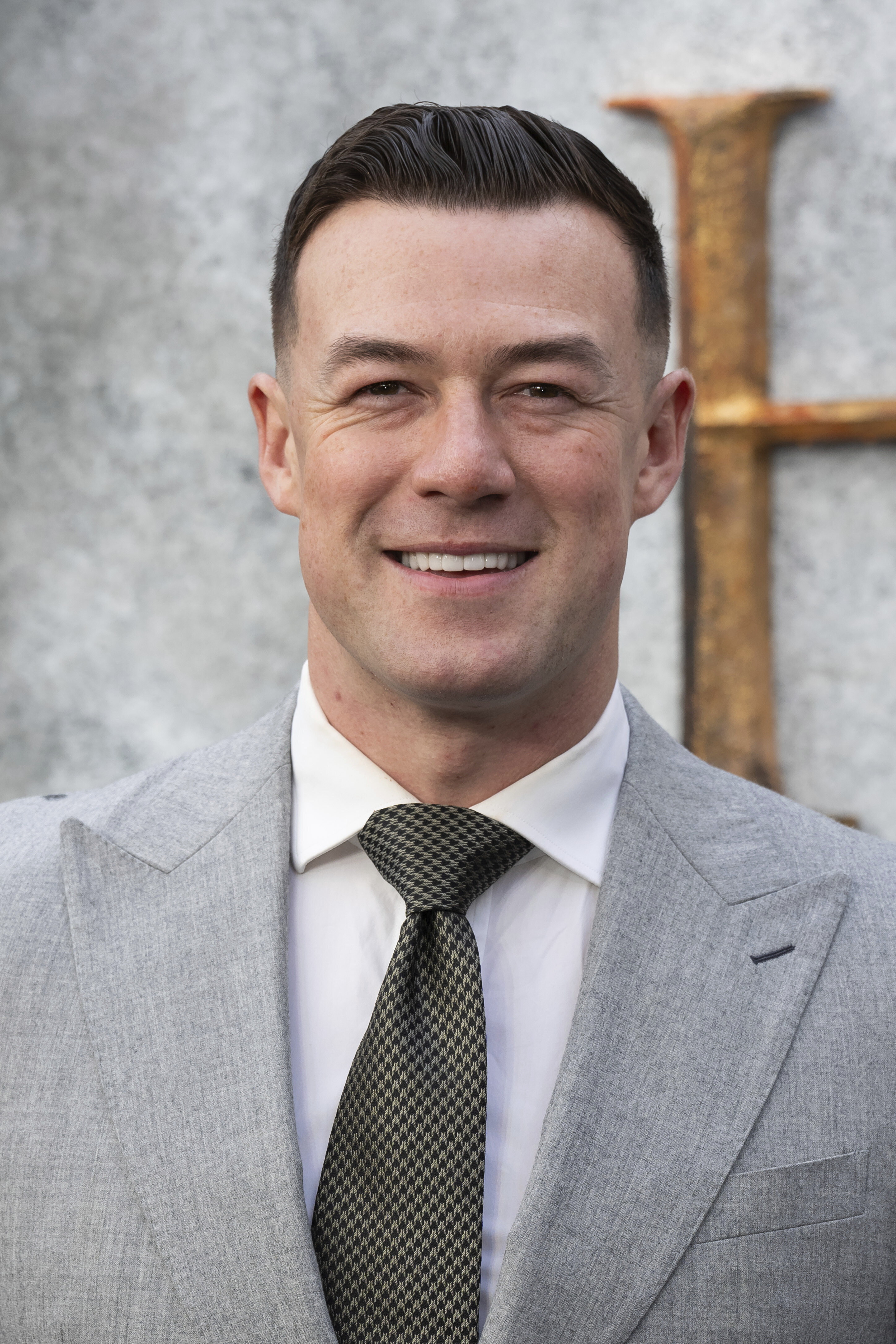
She’ll be performing in the one-off special alongside professional dancer Kai Widdrington.

Kai Widdrington
Kai Widdrington

via Associated Press

“I cannot wait to sleigh on the Strictly ballroom floor,” she enthused. “My partner and I are going to dance for our lives!”

Tayce added: “In all seriousness, it’s an incredible honour to be the first drag artist to be taking part in Strictly Come Dancing.

“I hope I do all of my Drag Race and Welsh fans proud! Sign me up for all the glitz, glam and disco balls.”

Tayce will be competing on Strictly's Christmas special next month
Tayce will be competing on Strictly’s Christmas special next month

The Welsh queen first rose to prominence on the second season of Drag Race UK back in 2021.

After winning fans’ hearts with her brilliant one-liners, amazing looks and iconic lip syncs to the likes of Memory, You Don’t Have To Say You Love Me and Last Thing On My Mind, Tayce wound up finishing as runner-up behind eventual winner Lawrence Chaney.

She and Lawrence also formed half of the girl group the United Kingdolls, alongside Bimini and A’Whora, who even managed to crack the UK singles chart with their musical offering UK Hun.

Tayce is the second star to be announced for this year’s Strictly Christmas special, following on from comedian Josh Widdicombe on Monday.

The other four celebrities on the line-up will be announced later this week.

Josh Widdicombe is taking part in this year's Strictly Christmas special
Josh Widdicombe is taking part in this year’s Strictly Christmas special

Traditionally, the Strictly Christmas episode features six new celebs competing in a one-off special for the Silver Star trophy.

However, two of the contestants on this year’s regular series of Strictly are former Christmas champions.

JLS singer JB Gill triumphed on Christmas Day back in 2012, while Jamie Borthwick’s festive win was a little more recent.

The EastEnders star came out on top during the 2023 Christmas special, during which he and Nancy Xu landed a perfect score for their Quickstep routine.

Share Button

Assisted dying could stop harrowing deaths, says MP behind bill

Adults expected to die within six months would be eligible under the proposals for England and Wales.

Share Button

‘I might be dead before a decision is made’: Terminally-ill people on assisted dying

Nik is worried assisted dying could lead to coercion – but Elise, who has cancer, wants the choice.

Share Button

Giving robots superhuman vision using radio signals

In the race to develop robust perception systems for robots, one persistent challenge has been operating in bad weather and harsh conditions. For example, traditional, light-based vision sensors such as cameras or LiDAR (Light Detection And Ranging) fail in heavy smoke and fog.

However, nature has shown that vision doesn’t have to be constrained by light’s limitations — many organisms have evolved ways to perceive their environment without relying on light. Bats navigate using the echoes of sound waves, while sharks hunt by sensing electrical fields from their prey’s movements.

Radio waves, whose wavelengths are orders of magnitude longer than light waves, can better penetrate smoke and fog, and can even see through certain materials — all capabilities beyond human vision. Yet robots have traditionally relied on a limited toolbox: they either use cameras and LiDAR, which provide detailed images but fail in challenging conditions, or traditional radar, which can see through walls and other occlusions but produces crude, low-resolution images.

Now, researchers from the University of Pennsylvania School of Engineering and Applied Science (Penn Engineering) have developed PanoRadar, a new tool to give robots superhuman vision by transforming simple radio waves into detailed, 3D views of the environment.

“Our initial question was whether we could combine the best of both sensing modalities,” says Mingmin Zhao, Assistant Professor in Computer and Information Science. “The robustness of radio signals, which is resilient to fog and other challenging conditions, and the high resolution of visual sensors.”

In a paper to be presented at the 2024 International Conference on Mobile Computing and Networking (MobiCom), Zhao and his team from the Wireless, Audio, Vision, and Electronics for Sensing (WAVES) Lab and the Penn Research In Embedded Computing and Integrated Systems Engineering (PRECISE) Center, including doctoral student Haowen Lai, recent master’s graduate Gaoxiang Luo and undergraduate research assistant Yifei (Freddy) Liu, describe how PanoRadar leverages radio waves and artificial intelligence (AI) to let robots navigate even the most challenging environments, like smoke-filled buildings or foggy roads.

PanoRadar is a sensor that operates like a lighthouse that sweeps its beam in a circle to scan the entire horizon. The system consists of a rotating vertical array of antennas that scans its surroundings. As they rotate, these antennas send out radio waves and listen for their reflections from the environment, much like how a lighthouse’s beam reveals the presence of ships and coastal features.

Thanks to the power of AI, PanoRadar goes beyond this simple scanning strategy. Unlike a lighthouse that simply illuminates different areas as it rotates, PanoRadar cleverly combines measurements from all rotation angles to enhance its imaging resolution. While the sensor itself is only a fraction of the cost of typically expensive LiDAR systems, this rotation strategy creates a dense array of virtual measurement points, which allows PanoRadar to achieve imaging resolution comparable to LiDAR. “The key innovation is in how we process these radio wave measurements,” explains Zhao. “Our signal processing and machine learning algorithms are able to extract rich 3D information from the environment.”

One of the biggest challenges Zhao’s team faced was developing algorithms to maintain high-resolution imaging while the robot moves. “To achieve LiDAR-comparable resolution with radio signals, we needed to combine measurements from many different positions with sub-millimeter accuracy,” explains Lai, the lead author of the paper. “This becomes particularly challenging when the robot is moving, as even small motion errors can significantly impact the imaging quality.”

Another challenge the team tackled was teaching their system to understand what it sees. “Indoor environments have consistent patterns and geometries,” says Luo. “We leveraged these patterns to help our AI system interpret the radar signals, similar to how humans learn to make sense of what they see.” During the training process, the machine learning model relied on LiDAR data to check its understanding against reality and was able to continue to improve itself.

“Our field tests across different buildings showed how radio sensing can excel where traditional sensors struggle,” says Liu. “The system maintains precise tracking through smoke and can even map spaces with glass walls.” This is because radio waves aren’t easily blocked by airborne particles, and the system can even “capture” things that LiDAR can’t, like glass surfaces. PanoRadar’s high resolution also means it can accurately detect people, a critical feature for applications like autonomous vehicles and rescue missions in hazardous environments.

Looking ahead, the team plans to explore how PanoRadar could work alongside other sensing technologies like cameras and LiDAR, creating more robust, multi-modal perception systems for robots. The team is also expanding their tests to include various robotic platforms and autonomous vehicles. “For high-stakes tasks, having multiple ways of sensing the environment is crucial,” says Zhao. “Each sensor has its strengths and weaknesses, and by combining them intelligently, we can create robots that are better equipped to handle real-world challenges.”

This study was conducted at the University of Pennsylvania School of Engineering and Applied Science and supported by a faculty startup fund.

Share Button

Facing the wind: How trees behave across various forest settings and weather events

Destructive winds during storms and cyclones often cause tree failures, especially through uprooting and stem breakage. However, how trees respond to wind under various forest configurations and weather conditions remains unclear. A recent study on Cryptomeria japonica plots shows that trees dissipate wind energy by switching between two swaying behaviors at specific wind speeds, offering insights that may help in improved forest management to minimize damage caused by storms.

Extreme weather events, such as tropical and extratropical cyclones and tornadoes, can cause widespread damage to forests, leading to environmental and financial losses. When trees fall during these storms, ecosystems might be disrupted, increasing forest management costs. As climate change worsens, severe storms are expected to become more frequent, making it crucial to understand how forests respond to wind stress.

Grasping the mechanisms behind tree failure is key to developing strategies for mitigation. While previous studies have explored how trees react to wind, it is unclear whether these responses remain consistent across different forest configurations — characterized by tree spacing and density — and weather conditions.

In this vein, a team of researchers led by Associate Professor Kana Kamimura from the School of Science and Technology at Shinshu University, Japan, investigated tree movements under various forest configurations and weather conditions, including how trees resist winds. The research team included Kazuki Nanko, Asako Matsumoto, and Saneyoshi Ueno from the Forestry and Forest Products Research Institute, Japan, and Barry Gardiner from the University of Freiburg, Germany, and the Institut Européen de la Forêt Cultivée, France. This paper was made available online on August 27, 2024, and was published on November 1, 2024, in Volume 571 of Forest Ecology and Management.

Explaining their motivation behind the study, Prof. Kamimura says, “Several techniques have been developed to predict wind damage. However, they largely depend on empirical data and parameters, and overlook how wind damage occurs. Our research aims to shed light on how winds directly impact trees and how trees reduce the stress from winds to survive.”

To achieve this, researchers set up two experimental plots of Cryptomeria japonica trees, commonly known as the Japanese cedar, in November 2017 in the experimental forests operated by the Forestry and Forest Products Research Institute, Kasumigaura City, Japan. In the first plot, P-100 consisted of 3,000 trees per hectare, creating a dense forest. In the second plot, P-50, half of the trees were removed for this research, leaving 1,500 trees per hectare to mimic thinning practices. Over two years, the team monitored 24 trees in the dense plot and 12 in the thinned plot, using trunk-mounted sensors to track tree sway during various wind conditions. The monitoring period included multiple typhoons, such as Typhoon Trami, in 2018, which caused significant damage to the thinned plot.

The researchers found that cedar trees exhibit two distinct swaying patterns depending on wind speed. In light winds, the trees swayed at around 2 to 2.3 cycles per second, with their branches absorbing much of the wind energy, protecting the trunks and roots from wind stress. However, at higher wind speeds, the trees shifted to a slower swaying pattern of 0.2 to 0.5 cycles per second. In this phase, the whole tree swayed together, transferring force across the trunk and roots, increasing the probability of breakage or uprooting.

Interestingly, the transition between these two swaying modes occurred at different wind speeds, depending on the forest density. In the dense plot, the trees switched patterns at wind speeds between 1.79 and 7.44 meters per second. In contrast, in the thinned plot, the transition occurred at slightly lower wind speeds, ranging from 1.57 to 5.63 meters per second.

Using an uprooted tree as a reference, researchers assessed the resistance to damage in the thinned P-50 over a 10-minute period during Typhoon Trami. They found that the actual resistance was only 48% of the expected resistance estimated through controlled tree-pulling experiments.

Prof. Kamimura elaborates, “The 52% difference between actual and expected resistance values was likely due to the roots weakening because of strong winds, even before the winds became more severe. This root fatigue occurred because the trees moved more due to less support from nearby trees and more wind penetrating the plot.” This also explains why the trees in the dense P-100 were not damaged during Typhoon Trami.

This study offers valuable insights for balancing thinning with wind resistance in forest management to support sustainable forestry practices, and help forests withstand extreme climate changes. While thinning promotes tree growth, it can also make forests more vulnerable to storms, especially soon after thinning. Prof. Kamimura concludes, “With more frequent storms in a changing climate, forest management practices must adapt to maintain resilience.”


Share Button

Sue Gray Is Not Coming Back To Work For Starmer As Ex-Chief Of Staff ‘Rejects New Role’

Keir Starmer’s former chief of staff Sue Gray is not coming back to work with the PM, HuffPost UK understands.

No.10 announced on October 6 that she was being made the prime minister’s envoy for nations and regions as part of a major Downing Street shake-up.

At the time, Starmer said he was “delighted” that she had accepted the newly-created role.

But it has now been confirmed that she will not be starting the job after all.

The prime minister’s spokesperson told reporters on Tuesday: “I can confirm she has now decided to not take up the role.

“Subsequent to that, we confirmed she was taking a break and I can now update she has decided not to take up the role following her break.”

They said she had already “played a vital role strengthening relations with nations and regions”, for which she had the PM’s thanks.

They did not say if she had been paid during her break between jobs.

No.10 said the envoy role will now be kept “under review”, adding: “Beyond that, respectfully, we won’t comment further on individual staffing matters.”

The comments come hours after a source close to the former chief of staff told the Financial Times: “Sue has taken a decision not to take the role. She’s going to focus on other things.

“She’s taken time to think about it properly, talking to stakeholders, but ultimately she’s decided she doesn’t want to do it.”

However, a cabinet minister told HuffPost UK that it had been No.10′s decision for her not to do the job.

Gray, who attracted national attention after leading the civil service’s partygate probe during Boris Johnson’s premiership, was appointed Starmer’s chief of staff when Labour was still in opposition.

She continued in the role after the election, but clashed with Morgan McSweeney, Starmer’s director of strategy.

After weeks of No.10 turmoil, Gray was sacked and replaced by McSweeney.

She immediately went on what the PM’s official spokesman described as a “short” break and never returned to take up her new job.

In a statement in October, Gray said she was “pleased to accept the new envoy role.”

The PM also issued a statement saying he was “delighted she would continue to support our work”.

But the job change was seen by many as a demotion, especially as it was not clear exactly what the new role would entail – or if it would even be paid.

After weeks of silence from Gray, No.10 confirmed to HuffPost UK that she would not be coming back to work for the PM.

A Downing Street source then told the BBC: “We think she has made the right decision.”

Gray went on a “short break” after quitting as Starmer’s chief of staff, where she had been paid more than the prime minister with an annual salary of £170,000.

She did not attend a regional investment summit in mid-October, as she was taking “a bit of downtime” following an intense period in the spotlight, according to cabinet office minister Pat McFadden.

The Guardian reported on Tuesday that Starmer was planning to withdraw the job offer to Gray allegedly due to concerns about the media attention which could stop her from working effectively.

A government source told the newspaper: “Sue hasn’t been told for sure that the job is no longer on offer, but she has been warned that this is the direction of travel. The way some people are behaving towards her is really horrible.”

Share Button

Assisted dying bill: What is in proposed law?

The proposed law would allow some terminally ill adults to end their own lives. But there are requirements.

Share Button

Strictly Announces First Star On Christmas Special Line-Up – And We’re Off To A Strong Start

As if the promise of Blackpool in a few days wasn’t an exciting enough prospect for Strictly Come Dancing, the first celebrity taking part in this year’s Christmas special has now been unveiled.

And folks, we’re off to a good start.

On Monday evening, it was revealed that comedian Josh Widdicombe would be getting his dancing shoes on this festive season, with an appearance in Strictly’s annual Christmas Day special.

“I am utterly terrified this will end in humiliation and worried I’m going to be so bad I will ruin Christmas for the nation,” he admitted, questioning: “Why have I done this?”

Josh Widdicombe is taking part in this year's Strictly Christmas special
Josh Widdicombe is taking part in this year’s Strictly Christmas special

Josh will be paired with Kauren Hauer in the Christmas special, competing alongside five more famous contestants to be revealed in the coming days.

The stand-up comedian is known for his appearances on shows like Taskmaster, Have I Got News For You and Live At The Apollo, as well as co-hosting the podcast Parenting Hell with fellow comic Rob Beckett.

Traditionally, the Strictly Christmas episode will see six brand new celebrities competing in a one-off special for the Silver Star trophy.

However, two of the contestants on this year’s regular series of Strictly are former Christmas winners.

JLS singer JB Gill triumphed on Christmas Day back in 2012, while Jamie Borthwick’s festive victory was much more recent.

The EastEnders star came out on top during last year’s Christmas special, where he and Nancy Xu landed a perfect score for their Quickstep routine.

Strictly will continue to announce the Christmas line-up for 2024 over the next week on spin-off show It Takes Two.

Share Button

Covid inquiry told Treasury blocked NHS bed request

NHS England chief executive Amanda Pritchard says the decision, in July 2020, was very disappointing.

Share Button