It could take over 40 years for PFAS to leave groundwater

Per- and polyfluoroalkyl chemicals, known commonly as PFAS, could take over 40 years to flush out of contaminated groundwater in North Carolina’s Cumberland and Bladen counties, according to a new study from North Carolina State University. The study used a novel combination of data on PFAS, groundwater age-dating tracers, and groundwater flux to forecast PFAS concentrations in groundwater discharging to tributaries of the Cape Fear River in North Carolina.

The researchers sampled groundwater in two different watersheds adjacent to the Fayetteville Works fluorochemical plant in Bladen County.

“There’s a huge area of PFAS contaminated groundwater — including residential and agricultural land — which impacts the population in two ways,” says David Genereux, professor of marine, earth and atmospheric sciences at NC State and leader of the study.

“First, there are over 7,000 private wells whose users are directly affected by the contamination. Second, groundwater carrying PFAS discharges into tributaries of the Cape Fear River, which affects downstream users of river water in and near Wilmington.”

The researchers tested the samples they took to determine PFAS types and levels, then used groundwater age-dating tracers, coupled with atmospheric contamination data from the N.C. Department of Environmental Quality and the rate of groundwater flow, to create a model that estimated both past and future PFAS concentrations in the groundwater discharging to tributary streams.

They detected PFAS in groundwater up to 43 years old, and concentrations of the two most commonly found PFAS — hexafluoropropylene oxide-dimer acid (HFPO−DA) and perfluoro-2-methoxypropanoic acid (PMPA) — averaged 229 and 498 nanograms per liter (ng/L), respectively. For comparison, the maximum contaminant level (MCL) issued by the U.S. Environmental Protection Agency for HFPO-DA in public drinking water is 10 ng/L. MCLs are enforceable drinking water standards.

“These results suggest it could take decades for natural groundwater flow to flush out groundwater PFAS still present from the ‘high emission years,’ roughly the period between 1980 and 2019,” Genereux says. “And this could be an underestimate; the time scale could be longer if PFAS is diffusing into and out of low-permeability zones (clay layers and lenses) below the water table.”

The researchers point out that although air emissions of PFAS are substantially lower now than they were prior to 2019, they are not zero, so some atmospheric deposition of PFAS seems likely to continue to feed into the groundwater.

“Even a best-case scenario — without further atmospheric deposition — would mean that PFAS emitted in past decades will slowly flush from groundwater to surface water for about 40 more years,” Genereux says. “We expect groundwater PFAS contamination to be a multi-decade problem, and our work puts some specific numbers behind that. We plan to build on this work by modeling future PFAS at individual drinking water wells and working with toxicologists to relate past PFAS levels at wells to observable health outcomes.”


Share Button

Covid inquiry told of trust do-not-resuscitate rule

Patients’ families were “horrified but not surprised” when told the blanket policy had been in place.

Share Button

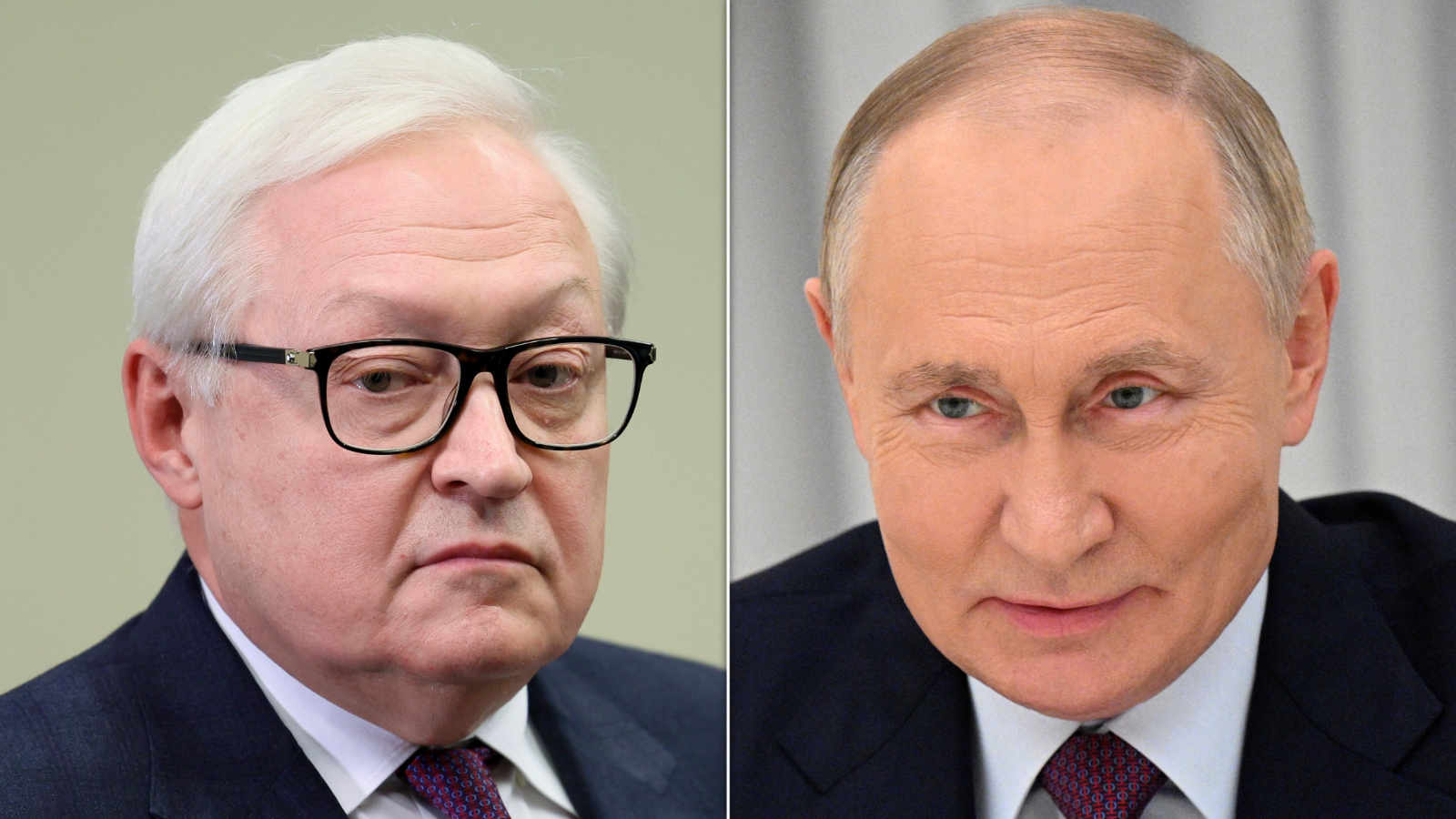
Putin Ally Unveils Bizarre Theory Why Ukraine War Really Started, And Refuses To Blame Russia

One of Vladimir Putin’s ministers has a new theory about the “root cause” of the Ukraine war – and, unsurprisingly, he doesn’t say the Russian president’s own land grab is to blame.

Russia’s deputy foreign minister, Sergei Ryabkov, pinned the two-and-a-half year conflict on the US and Ukraine’s “fantasies” on Thursday.

According to Russian state news agency TASS, Ryabkov said: “It has been repeatedly said that Washington’s policy of connivance with Kyiv’s most destructive, far-reaching plans and fantasies is by and large the root cause [of] this acute crisis, fraught with high risks and the possibility of sliding into a full-scale conflict between Russia and the historic West.”

Putin decided to invade Ukraine in February 2022, baselessly claiming Kyiv was run by “neo-Nazis” – Ukraine quickly wrote it off as a land grab and has been trying to expel the Russians ever since.

Like the rest of the West, the US has been supporting Ukraine in its self-defence by providing weapons and substantial funds.

But Washington has so far refused to let Kyiv fire Western-supplied missiles into Russian land out of fear it would expand the regional conflict into a global war.

The Pentagon said last month that “no one capability” would change the outcome of the war, but has not officially ruled out changing the restrictions around using long-range missiles.

And Ryabkov claimed these words were still not enough to reassure Moscow that the conflict would escalate.

He said: “We need not some signals, but real evidence that there is an understanding of the futility of unconditional support for the minions in Kyiv, and of the dangers that are exacerbated in a situation where this policy is not revised.”

Russia has been bombarding Ukraine for more than two years.

The Russian minister’s remarks also follow Ukrainian president Volodymyr Zelenskyy’s bold prediction that the war could end in 2025, as long as their allies continue to support Kyiv.

Share Button

Here’s What Love Is Blind’s ‘Sleep Test’ Really Involves

US Love Is Blind fans will know that Stephen Richardson’s fallout with fiancee Monica Davis involved scandal, sex, and… a sleep test.

Among other shady behaviour, the most recent episode of American Love Is Blind saw Monica finding sexts to another woman on Stephen’s phone that were sent while he was engaged to her.

He said of the event, “I did make a completely stupid mistake while being drunk at a sleep test with somebody who texted me.”

We don’t know if he was actually doing a sleep test at the time, and his actions were obviously slimy regardless.

But if you’re anything like us, you might be wondering what a sleep test even is ― and it turns out it can be a pretty useful tool (that said, the secret to a truly seamless sleep is a clear conscience).

What’s a sleep test?

According to healthcare provider Cleveland Clinic’s site, a sleep test, or sleep study, is officially known as a polysomnogram.

It’s a “diagnostic test that tracks and records how multiple body systems work while you’re asleep,” they say. It’s used to diagnose sleep disorders.

It tracks things like your heart brain, and respiratory system as you sleep. It can be used to spot things like insomnia, sleepwalking, and sleep paralysis.

Sleep studies are “similar” to an oximetry test, which “involves wearing an oxygen monitor on a finger during sleep and can often be done at home.”

The NHS says these can be helpful if you have signs of sleep apnoea.

When you’re awake, symptoms of sleep apnoea may show up if you:

  • feel very tired
  • find it hard to concentrate
  • have mood swings
  • have a headache when you wake up.

At night, your partner may notice your:

  • breathing stopping and starting
  • making gasping, snorting or choking noises
  • waking up a lot
  • loud snoring.

What if I want one of these tests?

If you’re worried about your sleep habits, your doctor may refer you to specialist clinics which can facilitate sleep investigations.

Studies range from heart monitoring options (a respiratory polygraph) to inpatient observation and movement monitors (actigraphy).

Inpatient observations are the “polysomnograms” we mentioned earlier.

For what it’s worth, sleep studies usually ask participants not to drink ahead of the exam, or to only have as much as you usually do.

Share Button

3 Unexpected Ways That Menopause Impacts Your Skin

According to Menopause Support UK, there are approximately 13 million peri or post menopausal women in the UK.

Despite it being so common, and something that all women will go through eventually, there is so much we still don’t know about menopause. It’s not all hot flushes and mood swings.

In fact, according to Rebecca Elsdon, advanced skin specialist and owner of the re/skin clinic, “It’s important to shift the conversation from ‘fighting’ ageing to embracing skin health at every stage. After all, ageing is a privilege, and the focus should be on feeling confident in one’s skin, regardless of age.”

Elsdon partnered with global beauty and wellness brand Fresha, to discuss three skin issues you may not know are linked to menopause – and how to tackle them with the right skincare regime…

Sensitive to bruising and infections

Elsdon revealed that, as oestrogen levels drop, so does the skin’s ability to repair itself. Meaning that your skin may become more prone to infections and super sensitive to the environment. Suddenly, redness, irritation, and even conditions like rosacea can appear out of nowhere, with delayed wound healing also affecting the skin.

What to do: Strengthen your skin’s defences with antioxidant-rich products. Look for formulas with vitamin C and E to help your skin stand up to environmental stressors.

Visible dark spots

Hormonal shifts often make hyperpigmentation, like melasma or sunspots, more visible. These stubborn spots can linger and feel impossible to shift. However, according to Elsdon, the solution is quite simple.

What to do: Brightening ingredients like tranexamic acid, niacinamide, and vitamin C can help even out your skin tone. For tougher pigmentation, professional treatments like chemical peels or laser therapy might be the answer!

Yeast overgrowth

Finally, Elsdon revealed that a drop in oestrogen can mess with your skin’s natural microbiome, leading to yeast infections, especially in areas like skin folds. It’s an issue many women face but don’t often talk about.

What to do: Keep the area clean, use breathable fabrics like cotton, and if necessary, apply an anti-fungal cream. For extra protection, probiotic skincare can help restore your skin’s balance.

Share Button

Time to fix NHS as long waits continue, experts say

Government is urged to show commitment to the NHS at the Budget, as experts sound the alarm over missed targets.

Share Button

Police identify 24 suspects over hospital drug deaths

Several people are being investigated for alleged gross negligence manslaughter over the deaths.

Share Button

UK firm GSK to pay $2.2bn over Zantac cancer claims

The firm has reached agreements with law firms representing about 80,000, or 93%, of claimants.

Share Button

Families criticise redacted report into disgraced surgeon

A heavily-redacted report on cases linked to surgeon Yaser Jabbar should be released in full, parents say.

Share Button

In double breakthrough, mathematician solves two long-standing problems

A Rutgers University-New Brunswick professor who has devoted his career to resolving the mysteries of higher mathematics has solved two separate, fundamental problems that have perplexed mathematicians for decades.

The solutions to these long-standing problems could further enhance our understanding of symmetries of structures and objects in nature and science, and of long-term behavior of various random processes arising in fields ranging from chemistry and physics to engineering, computer science and economics.

Pham Tiep, the Joshua Barlaz Distinguished Professor of Mathematics in the Rutgers School of Arts and Science’s Department of Mathematics, has completed a proof of the 1955 Height Zero Conjecture posed by Richard Brauer, a leading German-American mathematician who died in 1977. Proof of the conjecture — commonly viewed as one of the most outstanding challenges in a field of math known as the representation theory of finite groups — was published in the September issue of the Annals of Mathematics.

“A conjecture is an idea that you believe has some validity,” said Tiep, who has thought about the Brauer problem for most of his career and worked on it intensively for the past 10 years. “But conjectures have to be proven.I was hoping to advance the field. I never expected to be able to solve this one.”

In a sense, Tiep and his colleagues have been following a blueprint of challenges Brauer laid out for them in a series of mathematical conjectures posed and published in the 1950-60s.

“Some mathematicians have this rare intellect,” Tiep said of Brauer. “It’s as though they came from another planet or from another world. They are capable of seeing hidden phenomena that others can’t.”

In the second advance, Tiep solved a difficult problem in what is known as the Deligne-Lusztig theory, part of the foundational machinery of representation theory. The breakthrough touches on traces, an important feature of a rectangular array known as a matrix. The trace of a matrix is the sum of its diagonal elements. The work is detailed in two papers, one was published in Inventiones mathematicae, vol. 235 (2024), the second in Annals, vol. 200 (2024).

“Tiep’s high-quality work and expertise on finite groups has allowed Rutgers to maintain its status as a top world-wide center in the subject,” said Stephen Miller, a Distinguished Professor and Chair of the Department of Mathematics. “One of the great accomplishments in 20th century mathematics was the classification of the so-called but perhaps misleadingly named ‘simple’ finite groups, and it is synonymous with Rutgers — it was led from here and many of the most interesting examples were discovered here. Through his amazing stretch of strong work, Tiep brings international visibility to our department.”

Insights from the solution are likely to greatly enhance mathematicians’ understanding of traces, Tiep said. The solution also provides insights that could lead to breakthroughs in other important problems in mathematics, including conjectures posed by the University of Florida mathematician John Thompson and the Israeli mathematician Alexander Lubotzky, he added.

Both breakthroughs are advances in the field of representation theory of finite groups, a subset of algebra. Representation theory is an important tool in many areas of math, including number theory and algebraic geometry as well as in the physical sciences, including particle physics. Through mathematical objects known as groups, representation theory also has been used to study symmetry in molecules, encrypt messages and produce error-correcting codes.

Following the principles of representation theory, mathematicians take abstract shapes that exist in Euclidean geometry — some of them extremely complex — and transform them into arrays of numbers. This can be achieved by identifying certain points that exist in each three- or higher-dimensional shape and converting them to numbers placed in rows and columns.

The reverse operation must work, too, Tiep said: One needs to be able to reconstitute the shape from the sequence of numbers.

Unlike many of his colleagues in the physical sciences who often employ complex devices to advance their work, Tiep said he uses only a pen and paper to conduct his research, which so far has resulted in five books and more than 200 papers in leading mathematical journals.

He jots down math formulas or sentences indicating chains of logic. He also engages in continual conversations — in person or on Zoom — with colleagues as they proceed step by step through a proof.

But progress can come from internal reflection, Tiep said, and ideas burst forth when he is least expecting it.

“Maybe I’m walking with our children or doing some gardening with my wife or just doing something in the kitchen,” he said. “My wife says she always knows when I’m thinking about math.”

On the first proof, Tiep collaborated with Gunter Malle of Technische Universität Kaiserslautern in Germany, Gabriel Navarro of Universitat de València in Spain and Amanda Schaeffer Fry, a former graduate student of Tiep’s who is now at the University of Denver.

For the second breakthrough, Tiep worked with Robert Guralnick of the University of Southern California and Michael Larsen of Indiana University. On the first of two papers that tackle the mathematical problems on traces and solve them, Tiep worked with Guralnick and Larsen. Tiep and Larsen are co-authors of the second paper.

“Tiep and coauthors have obtained bounds on traces which are about as good as we could ever expect to obtain,” Miller said. “It’s a mature subject which is important from many angles, so progress is hard — and applications are many.”

Share Button