Doctors had expected the child would die after UK court ruled his ventilator should be turned off.


Doctors had expected the child would die after UK court ruled his ventilator should be turned off.

Cancer incidence trends in 2021 largely returned to what they were before the COVID-19 pandemic, according to a study by researchers at the National Institutes of Health (NIH). However, there was little evidence of a rebound in incidence that would account for the decline in diagnoses in 2020, when screening and other medical care was disrupted. One exception was breast cancer, where the researchers did see an uptick in diagnoses of advanced-stage disease in 2021. The study appears Sept. 24, 2024, in the Journal of the National Cancer Institute.
A previous study showed that new cancer diagnoses fell abruptly in early 2020, as did the volume of pathology reports, suggesting that many cancers were not being diagnosed in a timely manner. To determine whether these missed diagnoses were caught in 2021, possibly as more advanced cancers, researchers from NIH’s National Cancer Institute (NCI) compared observed cancer incidence rates for 2021 with those expected from pre-pandemic trends using data from NCI’s Surveillance, Epidemiology, and End Results Program.
A full recovery in cancer incidence should appear as an increase over pre-pandemic levels (also known as a rebound) to account for the missed diagnoses. The researchers looked at cancer overall, as well as five major cancer types that vary in how they are typically detected: through screening (female breast and prostate cancer), due to symptoms (lung and bronchus and pancreatic cancer), or incidentally during other medical procedures (thyroid cancer).
Cancer incidence rates overall and for most specific cancers approached pre-pandemic levels, with no significant rebound to account for the 2020 decline. However, in addition to an uptick in new diagnoses of advanced breast cancer in 2021, the data also provided some evidence of an increase in diagnoses of advanced pancreatic cancer. Also, new diagnoses of thyroid cancers in 2021 were still below pre-pandemic levels.
The researchers concluded that 2021 was a transition year that was still affected by new variants and new waves of COVID-19 cases, which continued to impact medical care. They said the findings highlight the need for ongoing monitoring to understand the long-term impacts of the pandemic on cancer diagnoses and outcomes.

A study, published in the journal Nature Communications by an international team of climate scientists and permafrost experts shows that, according to new climate computer model simulations, global warming will accelerate permafrost thawing and as a result lead to an abrupt intensification of wildfires in the Subarctic and Arctic regions of northern Canada and Siberia.
Recent observational trends suggest that warm and unusually dry conditions have already intensified wildfires in the Arctic region. To understand and simulate how future anthropogenic warming will affect wildfire occurrences, it is important to consider the role of accelerated permafrost thawing, because it strongly controls the water content of the soil — a key factor in wildfire burning. Recent climate models did not fully consider the interaction between global warming, northern high latitude permafrost thawing, soil water and fires.
The new study uses permafrost and wildfire data generated by one of the most comprehensive earth system models — the Community Earth System Model. It is the first model of its kind, which captures the coupling between soil water, permafrost and wildfires in an integrated way. To better separate the anthropogenic effect of increasing greenhouse gas emissions from naturally occurring variations in climate, the scientists used an ensemble of 50 past-to-future simulations covering the period from 1850-2100 CE (SSP3-7.0 greenhouse gas emission scenario), which was recently conducted by scientists from the IBS Center for Climate Physics, Busan (South Korea) and the National Center for Atmospheric Research in Boulder, Colorado (United States) on the IBS supercomputer Aleph.
With this ensemble modelling approach, the team demonstrated that by the mid to late 21st century anthropogenic permafrost thawing in the Subarctic and Arctic regions will be quite extensive. In many areas, the excess soil water can drain quickly, which leads to a sudden drop in soil moisture, subsequent surface warming and atmospheric drying. “These conditions will intensify wildfires,” says Dr. In-Won Kim, lead author of the study and postdoctoral researcher at the IBS Center for Climate Physics in Busan, South Korea. “In the second half of this century, our model simulations show an abrupt switch from virtually no fires to very intensive fires within just a few years” she adds.
These future trends will be further exacerbated by the fact that vegetation biomass is likely to increase in high latitude areas due to increasing atmospheric CO2 concentrations. This so-called CO2 fertilization effect therefore provides extra fire fuel.
“To better simulate the future degradation of the complex permafrost landscape, it is necessary to further improve small-scale hydrological processes in earth system models using extended observational datasets,” says Associate Prof. Hanna Lee, co-author of the study at the Norwegian University of Science and Technology, in Trondheim, Norway.
“Wildfires release carbon dioxide, and black and organic carbon into the atmosphere, which can affect climate and feed back to the permafrost thawing processes in the Arctic. However, interactions between fire emissions and the atmospheric processes have not been fully integrated into earth system computer models yet. Further consideration of this aspect would be the next step,” says Prof. Axel Timmermann, co-author of the study and director of the ICCP and Distinguished Professor at Pusan National University.

The skeletal remains of a senior officer of Sir John Franklin’s 1845 Northwest Passage expedition have been identified by researchers from the University of Waterloo and Lakehead University using DNA and genealogical analyses.
In April of 1848 James Fitzjames of HMS Erebus helped lead 105 survivors from their ice-trapped ships in an attempt to escape the Arctic. None would survive. Since the mid-19th century, remains of dozens of them have been found around King William Island, Nunavut.
The identification was made possible by a DNA sample from a living descendant, which matched the DNA that was discovered at the archaeological site on King William Island where 451 bones from at least 13 Franklin sailors were found.
“We worked with a good quality sample that allowed us to generate a Y-chromosome profile, and we were lucky enough to obtain a match,” said Stephen Fratpietro of Lakehead’s Paleo-DNA lab.
Fitzjames is just the second of those 105 to be positively identified, joining John Gregory, engineer aboard HMS Erebus, whom the team identified in 2021.
“The identification of Fitzjames’ remains provides new insights about the expedition’s sad ending,” said Dr. Douglas Stenton, adjunct professor of anthropology at Waterloo.
In the 1850s Inuit told searchers they had seen evidence that survivors had resorted to cannibalism, shocking some Europeans. Those accounts were fully corroborated in 1997 by the late Dr. Anne Keenleyside who found cut marks on nearly one-quarter of the human bones at NgLj-2, proving that the bodies of at least four of the men who died there had been subject to cannibalism.
Fitzjames’ mandible is one of the bones exhibiting multiple cut marks, demonstrating that after his death his body was subject to cannibalism. “This shows that he predeceased at least some of the other sailors who perished, and that neither rank nor status was the governing principle in the final desperate days of the expedition as they strove to save themselves,” said Stenton.
19th century Europeans believed that all cannibalism was morally reprehensible, but the researchers emphasize that we now understand much more about what is known as survival or starvation cannibalism and can empathize with those forced to resort to it. “It demonstrates the level of desperation that the Franklin sailors must have felt to do something they would have considered abhorrent,” said Dr. Robert Park, Waterloo anthropology professor. “Ever since the expedition disappeared into the Arctic 179 years ago there has been widespread interest in its ultimate fate, generating many speculative books and articles and, most recently, a popular television miniseries which turned it into a horror story with cannibalism as one of its themes. Meticulous archaeological research like this shows that the true story is just as interesting, and that there is still more to learn,” said Park.
The remains of Fitzjames and the other sailors who perished with him now rest in a memorial cairn at the site with a commemorative plaque.
Descendants of members of the Franklin expedition are encouraged to contact Stenton. “We are extremely grateful to this family for sharing their history with us and for providing DNA samples, and welcome opportunities to work with other descendants of members of the Franklin expedition to see if their DNA can be used to identify other individuals.”
“Identification of a Senior Officer from Sir John Franklin’s Northwest Passage Expedition” by Stenton, Fratpietro and Park was published in the Journal of Archaeological Science: Reports. The research was funded by the Government of Nunavut and the University of Waterloo.

What could be more exciting than Lady Gaga tapping into her most eccentric side to play Harley Quinn in a new musical, we here you ask?
How about a new album from the Grammy winner inspired by her performance in the film?
Gaga has been teasing something big in relation to her stint in Joker: Folie À Deux for the past few days, with cryptic posts on her Instagram featuring messages like “I’m ready for my interview”, “no duct tape no mission” and “moondust gets everywhere”.
And she confirmed this to be the case on Tuesday afternoon when she revealed plans to release Harley Quinn, a “companion album to Joker: Folie À Deux” this Friday.
The album’s tracklist reveals the album will include a mix of covers featured in the Joker sequel – including songs popularised by Frank Sinatra, Judy Garland and The Carpenters – as well as original songs inspired by Gaga’s interpretation of Harley Quinn.
However, this song will not feature on Gaga’s album, nor will it appear on Harlequin.
Joker: Folie À Deux hits cinemas on Friday 4 October.


According to the BBC, 67% percent of millennials in the UK shop secondhand, and according to a report commissioned by the online retailer ThredUp, two in five items in Gen Z’s closet are pre-owned.
It’s fair to say that shopping secondhand is very much in, and with so many charity shops to choose from, as well as the boom in apps like Vinted and Depop , who can blame us for bagging pre-loved bargains rather than buying brand new fast fashion?
Advertisement
However, while this is becoming more and more popular, it does mean that finding real treasures is getting a little harder. Between keywords on apps and packed clothing rails in shops, how do you find exactly the vibes you’ve been looking for?
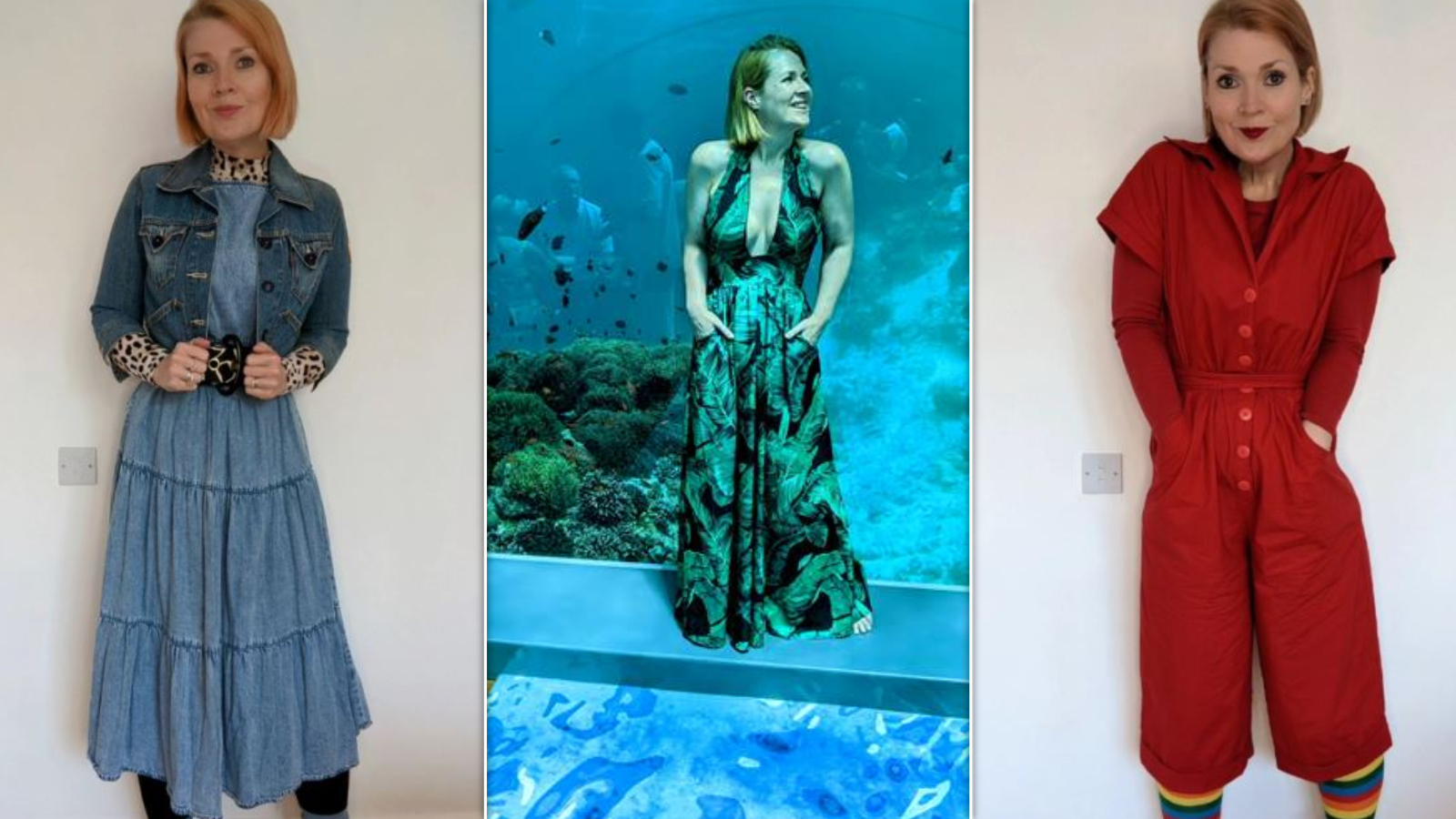
HuffPost UK spoke with Abigail Owen, an Oxfam online shop merchandiser who hasn’t actually bought new clothes for over a decade, who has shared her tips for nabbing the best secondhand finds out there.
Owen said: “Shopping in charity shops is like the most exciting treasure hunt. When I find something so exciting, it feels like it was serendipity… like it was waiting there just for me.”
She also said that 99% of her clothes are pre-loved and the only exceptions are leggings, underwear and a couple of band t-shirts from tours. Even her swimwear is pre-loved!
Advertisement
With this in mind, these are her tips for a great thrifting session:
While charity shops often do mean that we’re getting gorgeous finds for under a tenner, Owen shares: “I have paid as little as 99p when shopping secondhand, but my most expensive charity shop purchase was my gorgeous blue, vintage Christian Louboutin heels (with original red sole!) from the Oxfam Online shop for £150, which I absolutely adore.”
Sometimes, the real benefit of shopping secondhand is actually that the clothes just feel better when they’ve been pre-loved. Owen shared the clothes that feel best when bought from charity shops:

With the Great British Bake Off set to return today, most of us (ie. me) have grand ideas of baking alongside the show.
Inevitably, though, life gets in the way ― after all, the show does air on a school night.
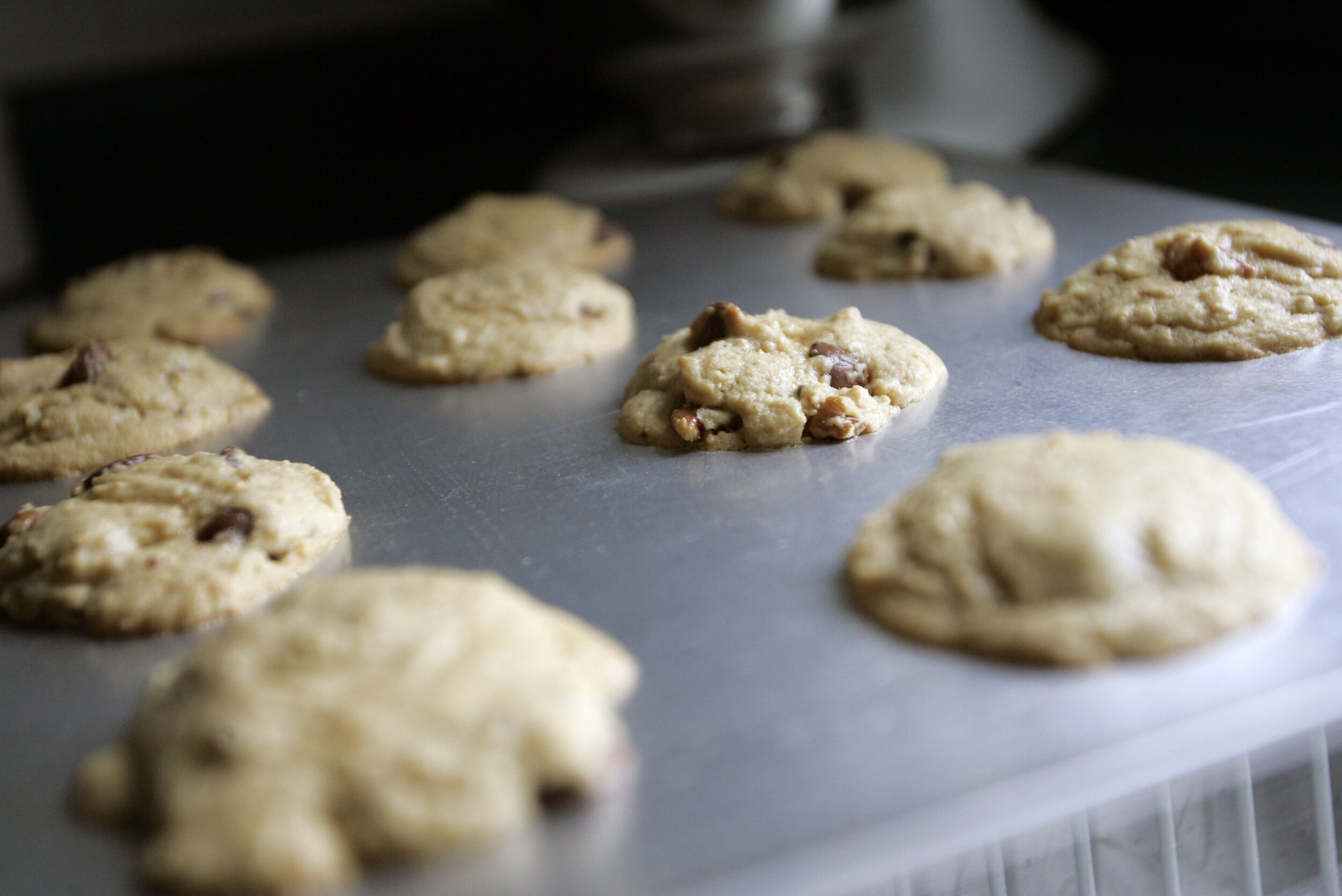
Luckily, though, Philips’ in-house air fryer chef Martin Senders has a delicious cookie recipe that takes a measly eight minutes to cook in everyone’s favourite time-saving appliance.
Advertisement
“We can’t all be born ‘Star Baker’, so any technology that makes baking more of a breeze is always welcome ― and that’s exactly what the Airfryer does,” Senders told HuffPost UK over email.
“An Airfryer works by circulating hot air, making it perfect for golden, perfectly risen bakes with no soggy bottom’ in sight,” he added.
Cookies in particular do well in the devices, as it’s really easy to achieve that drool-worthy soft inside and crips exterior.
Senders’ recipe serves eight, he says.
The ingredients are:
60g milk chocolate
60g dark chocolate
160g plain flour
2 pinches of salt
1 teaspoon of baking powder
2 tablespoons of cocoa powder
100g softened unsalted butter
70g white sugar
2 tablespoons of milk
40g almond flakes.
To make the cookies, he says, you should follow these steps:
Coarsely chop both types of chocolate, and combine then combine the flour, salt, baking powder and cocoa powder in a bowl and mix until incorporated.
Add the softened butter and sugar to a bowl and beat until fluffy. Add the milk and continue mixing. Gradually add the flour mixture while continuing to mix until evenly combined. Add the chopped chocolate and mix until just incorporated.
Shape the dough into about eight balls and let them rest in the refrigerator for 30 minutes. Flatten them into a cookie shape.
Dip the bottom of your cookies in flaked almonds, before placing four of them into the Airfryer basket and cooking for 8 minutes at 160 degrees. Repeat this step for the remaining cookies.
Let cookies sit for around five minutes to cool before serving.
Cookie dough balls can be wrapped in baking paper and stored in an airtight container in the fridge for up to three days.
If you still haven’t used up all the biccies by then, you can store them in the freezer for up to three months by placing the individually-wrapped cookies in a freezer bag ― just pop them in the air fryer for a little longer than you would when fresh when you fancy one.
Swiss police arrest several people after the controversial pod is used for the first time.
India has reported its first mpox case with the new strain that has been linked to the outbreak in Africa.
BBC Spotlight has discovered 44 disabled children have gone into care in Northern Ireland since the start of the pandemic.
