Keir Starmer To Warn Of More Pain To Come As He Pledges To ‘Build A New Britain’

Keir Starmer will today warn voters that there is more pain to come – but pledge that it will be worth it to “build a new Britain”.

The prime minister will deliver the tough message in his keynote speech to the Labour conference in Liverpool.

Starmer is under huge pressure from his MPs to deliver a more upbeat message after a difficult first two-and-a-half months in power.

The conference has also been largely overshadowed by the ongoing row over the freebies accepted by the Labour leader and other senior party figures.

Chancellor Rachel Reeves’ decision to axe winter fuel payments for millions of pensioners has also led to intense criticism of the government, not least from Labour’s trade union backers.

Attempting to turn the page on those controversies, the PM will call on the people of Britain to work with him to turn around the country’s fortunes.

He will say: “The politics of national renewal are collective. They involve a shared struggle.

“A project that says, to everyone, this will be tough in the short-term, but in the long-term – it’s the right thing to do for our country. And we all benefit from that.”

Starmer – who has previously warned that “things will get worse before we get better” and that next month’s Budget will be “painful” – will add: “The truth is that if we take tough long-term decisions now … then that light at the end of this tunnel, that Britain that belongs to you, we get there much more quickly.”

The prime minister will say that he does not want to give the country “false hope” about what lies ahead, and once again lay the blame for the country’s problems on the legacy left by the Tories.

He will said: “It will be hard. That’s not rhetoric, it’s reality. It’s not just that financial black hole, the £22 billion of unfunded spending commitments, concealed from our country by the Tories, it’s not just the societal black hole – our decimated public services leaving communities held together by little more than good will – it’s also the political black hole.

“Just because we all want low taxes and good public services does not mean that the iron law of properly funding policies can be ignored.

“We have the seen the damage that does, and I will not let that happen again. I will not let Tory economic recklessness hold back the working people of this country.”

Setting out his long-term vision for the UK, Starmer will say: “Through the power unleashed by renewal, we can build a country that gives equal voice to every person.

“A country that won’t expect you to change who you are, just to get on. A country that doesn’t just work for you and your family, but one that recognises you, sees you, and respects you as part of our story. A Britain that belongs to you.”

Share Button

New approach to defibrillation may improve cardiac arrest outcomes

Joshua Lupton, M.D., has no memory of his own cardiac arrest in 2016. He only knows that first responders resuscitated his heart with a shock from a defibrillator, ultimately leading to his complete recovery and putting him among fewer than one in 10 people nationwide who survive cardiac arrest outside of a hospital.

He attributes his survival to the rapid defibrillation he received from first responders — but not everybody is so fortunate.

Now, as lead author on a new observational study published in the journal JAMA Network Open, he and co-authors from Oregon Health & Science University say the study suggests the position in which responders initially place the two defibrillator pads on the body may make a significant difference in returning spontaneous blood circulation after shock from a defibrillator.

“The less time that you’re in cardiac arrest, the better,” said Lupton, assistant professor of emergency medicine in the OHSU School of Medicine. “The longer your brain has low blood flow, the lower your chances of having a good outcome.”

Researchers used data from the Portland Cardiac Arrest Epidemiologic Registry, which comprehensively recorded the placement position of defibrillation pads from July 1, 2019, through June 30, 2023. For purposes of the study, researchers reviewed 255 cases treated by Tualatin Valley Fire & Rescue, where the two pads were placed either at the front and side or front and back.

They found placing the pads in front and back had 2.64-fold greater odds of returning spontaneous blood circulation, compared with placing the pads on the person’s front and side.

The current common knowledge among health care professionals is that pad placement — whether front and side, or front and back — is equally beneficial in cardiac arrest. The researchers cautioned that their new study is only observational and not a definitive clinical trial. Yet, given the crucial importance of reviving the heartbeat as quickly as possible, the results do suggest a benefit from placing the pads on the front and back rather than the front and side.

“The key is, you want energy that goes from one pad to the other through the heart,” said senior author Mohamud Daya, M.D., professor of emergency medicine in the OHSU School of Medicine.

Placing the pads in the front and back may effectively “sandwich” the heart, raising the possibility that the electrical current will be delivered more comprehensively to the organ.

However, that’s not readily possible in many cases. For example, the patient may be overweight or positioned in such a way that they can’t be easily moved.

“It can be hard to roll people,” said Daya, who also serves as medical director for Tualatin Valley Fire & Rescue. “Emergency medical responders can often do it, but the lay public may not be able to move a person. It’s also important to deliver the electrical current as quickly as possible.”

In that respect, pad placement is only one factor among many in successfully treating cardiac arrest.

Lupton survived his cardiac arrest and went on to complete medical school at the very hospital where he spent several days recovering in the intensive care unit — Johns Hopkins University in Baltimore. The episode led him to alter the focus of his research so that he could examine ways to optimize early care for cardiac arrest patients.

The results of the new study surprised him.

“I didn’t expect to see such a big difference,” he said. “The fact that we did may light a fire in the medical community to fund some additional research to learn more.”

The research was supported by the Zoll Foundation, grant award 1018439; the Society for Academic Emergency Medicine Foundation, grant award RE2020-0000000167; and the National Institute of Neurological Disorders and Stroke of the National Institutes of Health, award U24NS100657 and National Center for Advancing Translational Sciences, award UL1TR002369. The content is solely the responsibility of the authors and does not necessarily represent the official views of the NIH.

Share Button

New research identifies critical gaps in mental health care for adults with schizophrenia spectrum disorders

New research finds that adults with schizophrenia spectrum disorders have high rates of comorbid mental and substance use disorders and significant social and economic disadvantages, and only 26% received minimally adequate treatment. Meeting the needs of people with schizophrenia spectrum disorders will require innovative interventions and implementation to improve access to and use of evidence-based approaches, the authors argue. The research was published today in Psychiatric Services in Advance.

The researchers, led by Natalie Bareis, Ph.D., with Columbia University Irving Medical Center and New York State Psychiatric Institute, examined national data that were collected from Oct. 2020 to Oct. 2022 on 4,764 adults aged 18 to 65 in the Substance Abuse and Mental Health Services Agency-sponsored U.S. Mental and Substance Use Disorders Prevalence Study (MDPS). Using sampling weights, the authors compared sociodemographic characteristics and comorbid behavioral health conditions of individuals with or without schizophrenia spectrum disorders (schizophrenia, schizoaffective, and schizophreniform disorders).

Among 114 adults with schizophrenia spectrum disorders, the most common comorbid conditions were major depressive episode (52%) and alcohol use (23%), cannabis use (20%), and posttraumatic stress disorders (17%). Both suicidal ideation and suicide attempts in the past year were significantly more likely among individuals with schizophrenia spectrum disorders than among those without them.

While almost everyone with schizophrenia spectrum disorders in this sample had health care coverage, about 70% had any type of mental health treatment in the past year and only about 30% were currently taking an antipsychotic. While many individuals with schizophrenia spectrum disorders may recover, most of the individuals in the survey were unemployed and most had serious functional impairment.

Available, effective treatments and services include antipsychotic medications, individual placement and support, programs to promote employment, assertive community treatment, and coordinated specialty care for first-episode psychosis.

“The MDPS is an update to decades old surveys of psychiatric disorders in the U.S. It had a focus on identifying schizophrenia spectrum disorders by administering the Structured Clinical Interview for the DSM-5 to all participants,” Bareis noted. “We had hoped that during this period, with the advent of new treatments and services, the circumstances of individuals with schizophrenia spectrum disorders would have improved. Instead, persistent high rates of poverty, unemployment, and poor functioning suggest that existing treatment and social welfare approaches are not meeting the needs of many people with schizophrenia spectrum disorders. Policies to improve access to and use of existing evidence-based interventions are essential.”

Share Button

Biologist pioneers increased protein in staple crops, helps alleviate global protein shortage

A Mississippi State biologist’s groundbreaking research in improving global nutrition and sustainability is featured this week in New Phytologist.

Ling Li, an associate professor in the MSU Department of Biological Sciences, has spent more than a decade studying rice and soybean crops, with the goal of providing a new strategy for crop improvement to increase protein content. Her work offers a potential solution to combat global protein deficiency, a condition affecting millions, particularly children, contributing to cognitive impairments, stunted growth and susceptibility to diseases like Kwashiorkor, a severe form of malnutrition caused primarily by a deficiency in dietary protein.

“With rising concerns about protein deficiency and the environmental impact of animal-based protein sources, boosting plant protein content is crucial for improving both human health and sustainability,” Li said.

Li’s research — which includes more than 10 years of field work and field data to support her findings — focuses on optimizing the genetic expression of rice and soybean plants, resulting in increased protein levels and reduced carbohydrate content. Her novel approach uses gene editing to remove repressor elements from noncoding DNA sequences, unlocking the potential for higher protein production in crops. This strategy not only offers improved nutritional value but also promotes more sustainable agricultural practices by reducing the reliance on animal-derived proteins.

The U.S. Department of Agriculture’s Animal Plant Health Inspection Service determined Li’s gene-edited high-protein crops can be listed as nonregulatory soybean and rice, she said.

The findings provide a promising blueprint for enhancing crop productivity and nutritional quality through precise genome editing, with far-reaching implications for global food security and environmental sustainability.

Li’s research includes collaboration with the Bing Yang Lab at the University of Missouri and the Dan Voytas Lab at the University of Minnesota.

Share Button

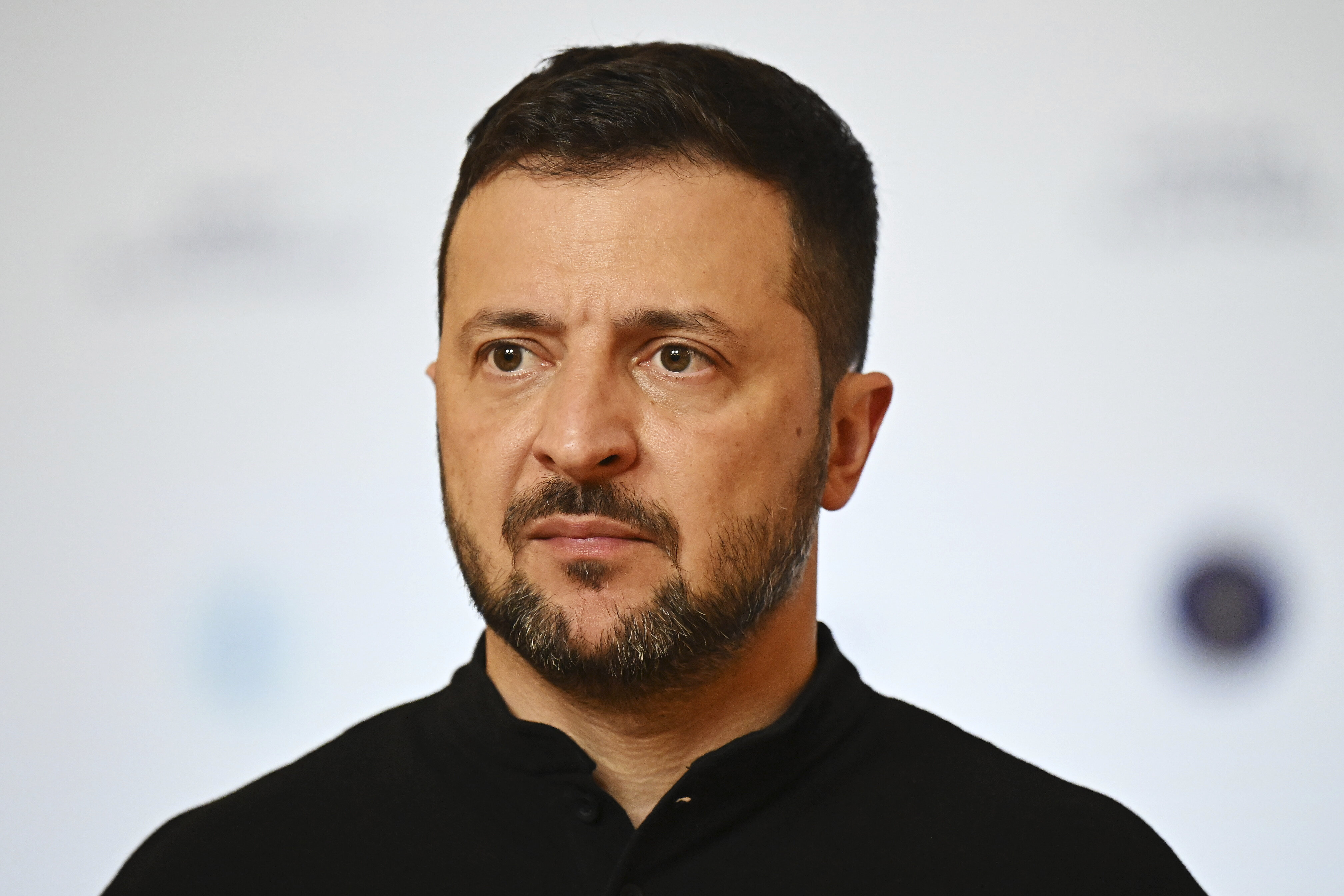
Zelenskyy Hits Out Leaders Who ‘Flirt’ With Vladimir Putin In Angry Dig

Ukrainian president Volodymyr Zelenskyy just slammed the world leaders who “flirt” with Russia’s Vladimir Putin.

It comes amid speculation a second Trump administration would be less sympathetic to Ukraine’s cause than the White House currently is.

Republican nominee and former US president Trump has only said that he wants the war in Ukraine to end, not who he wants to win.

Pundits believe Trump could even end up pushing Ukraine to cede land to Putin just in an effort to end the violent conflict.

Still, in a weekend interview with the New Yorker, Zelenskyy did not name which politicians he was talking about when he expressed concerns about Putin’s relationships with international counterparts.

Zelenskyy said: “A lot of world leaders want to have some sort of dealings with Putin, to reach agreements, to conduct some business with him.

“I look at such leaders and realise that they are very interested in playing this game—and for them, unfortunately, it really is a game.

“But what makes a real leader? A leader is someone whom Putin needs for something, not a person who needs Putin.

“Flirting with him is not a sign of strength.”

While the war in Ukraine has left Putin pretty isolated on the world stage – particularly when it comes to former allies in the West – he still has a handful of supporters, like China’s Xi Jinping and India’s Narendra Modi.

However, if Trump were to be re-elected and reduce US support for Ukraine, there’s little doubt that would shift the war into Russia’s favour.

When questioned about Trump’s plans to “stop” the Ukraine war, Zelenskyy said: “My feeling is that Trump doesn’t really know how to stop the war even if he might think he knows how.

“With this war, oftentimes, the deeper you look at it the less you understand.

“I’ve seen many leaders who were convinced they knew how to end it tomorrow, and as they waded deeper into it, they realised it’s not that simple.”

He also said he believes Trump’s running mate, JD Vance, is “too radical” and has a plan to “give up our territories” as part of a Ukrainian sacrifice.

Zelenskyy declared it to be an “awful idea” and said while there was “no way this could ever happen”, Vance was still sending “dangerous signals”.

He added: “Whichever president or vice-president raises this prospect—that ending the war hinges on cementing the status quo, with Ukraine simply giving up its land—should be held responsible for potentially starting a global war.

“Because such a person would be implying that this kind of behaviour is acceptable.”

Share Button

This Is The Worst Thing To Do If You Wake Up At 3AM And Can’t Get Back To Sleep

Here’s what happened to me last night: I went to bed at 10pm, for a 6:30am wake-up and finally got to sleep at midnight.

Then, I woke up again at 1am and panicked until 3am about the next morning.

If you’re interested, I didn’t end up making that early work-out. But if I’d considered leaving my bed rather than simply stressing about the next day, some experts think I might have stood a chance.

Speaking to healthcare provider John’s Hopkins, sleep expert Dr Luis F. Buenaver said that staying in bed when you can’t sleep isn’t just likely to keep you up longer ― it can ruin your kips in the future too.

How does staying in bed affect your sleep?

It “will lead your brain and body to associate your bed with wakefulness instead of with sleep”, Dr Buenaver said.

That can have a longer-term effect on your ability to nod off once your head hits the pillow, so he says you should get up after around 20 minutes of sleeplessness.

“Sit in a comfortable chair in another room,” he advised. “Read a book, with just enough lights on so that you can see the print comfortably.”

Don’t do any work or pay any bills in that time, and if you start stressing about those or other issues, try distracting yourself with music or audiobooks.

You should only go back to bed when you’re feeling drowsy.

“It can be difficult leaving a warm, comfortable bed after waking up in the middle of the night,” the sleep expert said.

“But think of this step as an investment in better sleep — if not tonight then tomorrow night and in the future.”

Any other advice?

I’m definitely guilty of scrolling mindlessly through TikTok after my 3am jolts awake, but sleep expert Dr Jeff Rogers told Bustle that’s the worst thing I can possibly do.

“The blue light from your phone mimics daylight and suppresses the production of melatonin, the hormone which regulates your sleep-wake cycle,” he shared with the publication.

And while you might want to try switching rooms after 20 minutes, Wendy Troxel, a senior behavioural scientist at Rand Corps, told CNN that clock-watching is generally a bad idea.

“Clock watching becomes habitual, and that habitual response of frustration and anxiety also causes a stress response in the body,” she said.

“You look at the clock… and immediately might grit your teeth. You think of all the demands… how awful it is going to be when you’re sleep-deprived,” she added.

If that sounds like you, Dr Buenaver says it’s fine to guess when your 20 minutes have passed.

Share Button

Nurses in England say 5.5% pay rise not enough

Nurses are determined to “stand up for themselves”, the head of the Royal College of Nursing says.

Share Button

Government to review most Tory new-hospital schemes

The government calls the Tory-backed hospital-building programme in England “undeliverable and unaffordable”.

Share Button

Girl, 2, dies from same rare disorder as brother

Isabelle Cooper’s family thank supporters of their campaign for awareness of PPA2 deficiency.

Share Button

Trade Union Boss Accuses Keir Starmer Of Leading UK Towards ‘Austerity Mark 2’

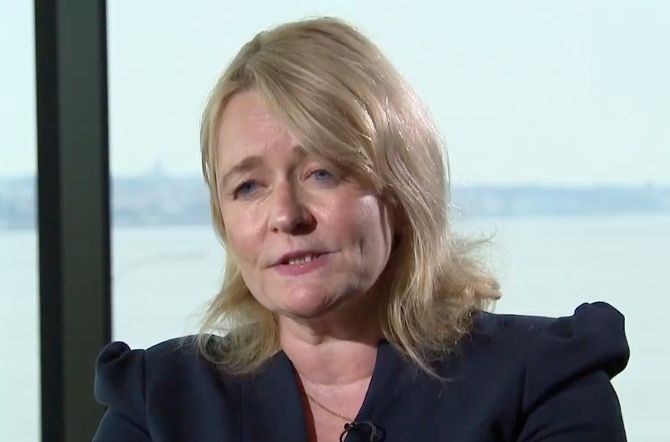
A leading trade union boss has accused Keir Starmer of leading the UK towards “austerity mark 2” as she launched a bitter attack on the prime minister.

Sharon Graham, general secretary of Unite – which has donated more than £500,000 to Labour MPs this year – urged the prime minister to ditch the “cruel” policy of scrapping winter fuel payments for 10 million pensioners.

She made her comments on Sunday Morning with Trevor Phillips on Sky News as Labour’s annual conference kicks off in Liverpool.

Asked what she wanted to hear in Starmer’s keynote speech on Tuesday, Graham said: “I think the priority that I’d like to hear from him is that
he’s going to reverse the decision on the winter fuel allowance. It’s a cruel policy. He needs to reverse it. And I’d like him to say that he’s made a misstep and to reverse that
policy.

“I’d also like him to say that we’re not going to take this country down austerity mark 2. People voted for change. They need to see change. And he needs to reverse the winter fuel allowance [decision] and let people have that £300 they can put their heating on this winter.”

She later added: “I’ve got a million workers in my union and pensioners.

“But the reality is the mood music here is that they are taking away from the poorest in our society now. And actually the conversation they’re having is walking us into austerity mark 2.

“Nobody wants to see that. Workers don’t want to see it, communities don’t want to see it. And I can tell you, the pensioners don’t want to see it either.”

Graham said the government should introduce a 1% wealth tax on the richest people in the country, which she claimed would raise £25 billion.

“That would take away the so-called black hole, job done, and
we’d have £3 billion left over.”

Share Button